Prisons routinely ignore guidelines on dying inmates’ end-of-life choices

posted in: All news | 0

By Renuka Rayasam, KFF Health News

Brian Rigsby was lying with his right wrist shackled to a hospital bed in Montgomery, Alabama, when he learned he didn’t have long to live.

It was September 2023, and Rigsby, 46, had been brought to Jackson Hospital from an Alabama state prison 10 days earlier after complaining of pain and swelling in his abdomen. Doctors found that untreated hepatitis C had caused irreversible damage to Rigsby’s liver, according to his medical records.

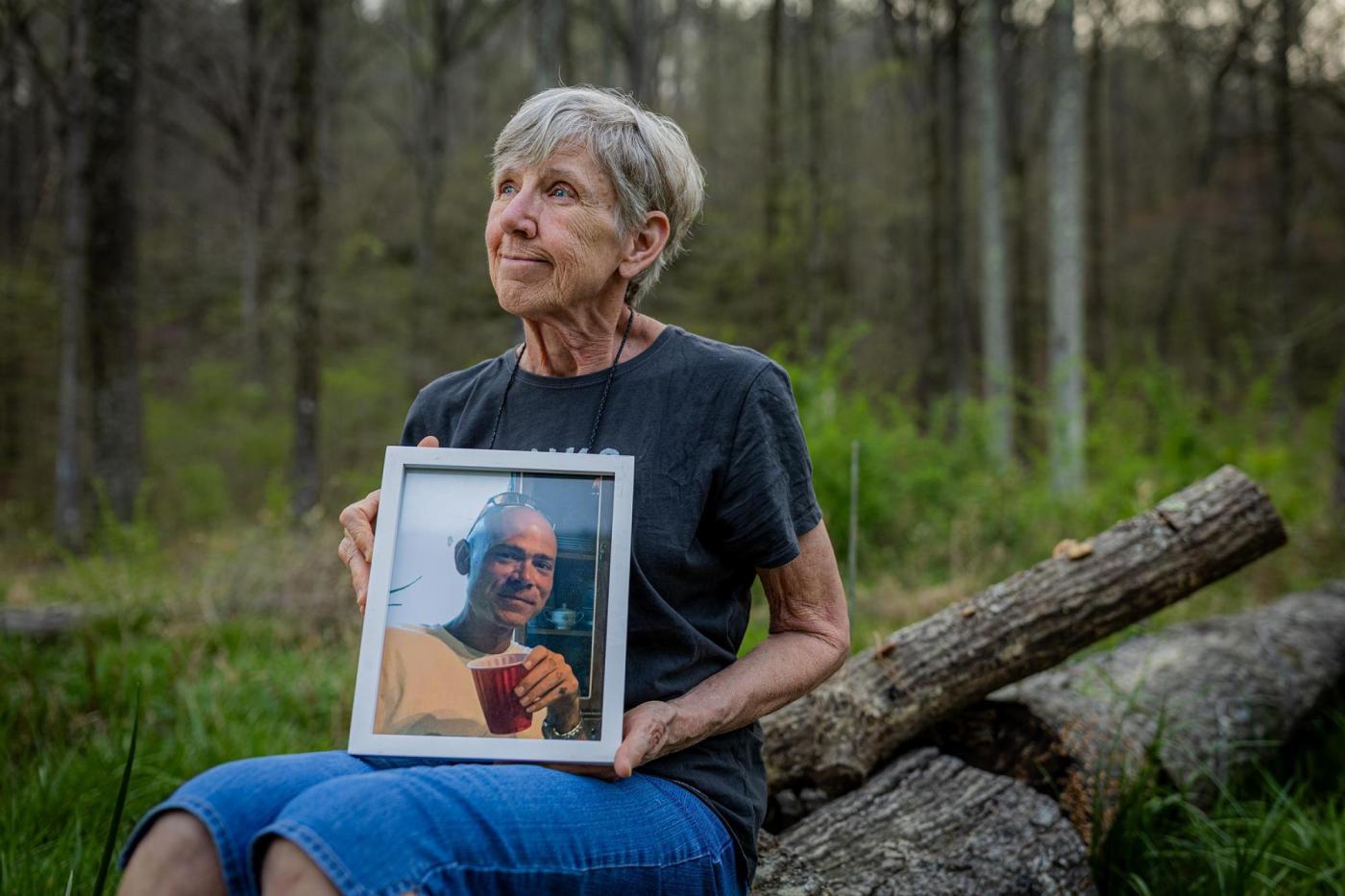
Rigsby decided to stop efforts to treat his illness and to decline lifesaving care, a decision he made with his parents. And Rigsby’s mother, Pamela Moser, tried to get her son released to hospice care through Alabama’s medical furlough policy, so that their family could manage his end-of-life care as they saw fit.

But there wasn’t enough time for the furlough request to be considered.

After learning that Rigsby was on palliative care, the staff at YesCare, a private prison health company that has a $1 billion contract with the Alabama Department of Corrections, told the hospital it would stop paying for his stay and then transferred him back to Staton Correctional Facility in Elmore, according to the hospital record his mom provided to KFF Health News.

Moser never saw or spoke to her son again.

“The last day I went to see him in the hospital, I was hoping he would take his last breath,” said Moser, a former hospice nurse. “That is how bad I didn’t want him to go to the infirmary” at the prison.

A week later, Rigsby died of liver failure in the infirmary, according to his autopsy report.

Officials at the corrections department and YesCare did not respond to requests for comment.

As the country’s incarcerated population ages rapidly, thousands die behind bars each year. For some researchers, medical providers, and families of terminally ill people in custody, Rigsby’s situation — and Moser’s frustration — are familiar: Incarcerated people typically have little say over the care they receive at the end of their lives.

That’s despite a broad consensus among standards boards, policymakers, and health care providers that terminally ill people in custody should receive treatment that minimizes suffering and allows them to be actively involved in care planning.

But such guidelines aren’t binding. State policies on end-of-life care vary widely, and they generally give much leeway to correctional officers, according to a 2021 study led by Georgia State University. The result is that correctional officers and medical contractors make the decisions, and they focus more on security concerns than easing the emotional, spiritual, and physical pain of the dying, say researchers and families.

People in jails and prisons often die while shackled to beds, separated from loved ones, and with minimal pain medication, said Nicole Mushero, a geriatrician at Boston University’s Chobanian & Avedisian School of Medicine who studies and works with incarcerated patients.

“When you’re coming at this from a health care perspective, it’s kind of shocking,” Mushero said.

Security vs. Autonomy

Patients are often suspended or dropped from their health coverage, including commercial insurance or Medicaid, when incarcerated. Jails and prisons have their own systems for providing health care, often funded by state and local budgets, and therefore aren’t subject to the same oversight as other public or private systems.

The National Commission on Correctional Health Care, which accredits programs at correctional facilities across the country, says terminally ill people in custody should be allowed to make decisions about treatment options, such as whether to accept life-sustaining care, and appoint a person who can make medical decisions for them.

Jails and prisons should also provide patients with pain medication that wouldn’t otherwise be available to them, allow extra visits with loved ones, and consider them for medical release programs that let them receive hospice care in their communities, said Amy Panagopoulos, vice president of accreditation at the commission. That approach is often at odds with security and safety rules of jails and prisons, so facility leaders may be heavily involved in care decisions, she said.

As a result, the commission plans to release updated standards this summer to provide more details on how facilities should handle end-of-life care to ensure incarcerated patients are more involved in the process.

Related Articles


Former Sen. Bob Casey reflects on Biden’s diagnosis, his own cancer fight


Dozens sickened in expanding salmonella outbreak linked to recalled cucumbers


Even where abortion is still legal, many brick-and-mortar clinics are closing


Winds push smoke from Canadian wildfires south into US and worsen air quality


CDC removes language that says healthy kids should get COVID shots

State laws on medical decision-making, informed consent, and patient privacy apply even to incarcerated patients, said Gregory Dober, who teaches biomedical ethics and is a prison monitor with the Pennsylvania Prison Society, a nonprofit that supports incarcerated patients and their families.

But correctional officers and their medical contractors often prioritize security instead, Dober said.

The Federal Bureau of Prisons allows guards to override do-not-resuscitate orders if they interfere with the security and orderly operation of the institution, according to the agency’s patient care guide.

“This is a wildly understudied area,” said Ben Parks, who teaches medical ethics at Mercy College of Ohio. “In the end, it’s all about the state control of a prisoner’s life.”

About a third of all people who died in federal custody between 2004 and 2022 had a do-not-resuscitate order, according to Bureau of Prisons data obtained by KFF Health News through a Freedom of Information Act request.

The prison bureau’s policy of forcing CPR on patients is cruel, Parks said. CPR can break ribs and bruise organs, with a low likelihood of success. That is why people sign do-not-resuscitate orders refusing the treatment, he said.

“This is the inversion of the death penalty,” Parks said. “Resuscitation against your will.”

Cut Off From Family

In addition, corrections officials decide whether and when to reach out to a patient’s friends or relatives, said Erin Kitt-Lewis, a Penn State College of Nursing associate research professor who has studied the care of older adults in prisons. As a result, terminally ill people in custody often can’t involve their families in end-of-life care decisions.

That was the case for Adam Spurgeon, who was incarcerated in a state prison in Tennessee, his mother said. One morning in November 2018, Kathy Spurgeon got a call from hospital officials in Nashville saying her son had only hours to live, she said.

About a month earlier, she had learned from her son that he had had heart surgery and developed an infection, she said. But she didn’t know much about his treatment.

Around noon, she arrived at the hospital, about a three-hour drive west of where she lives. Adam, 32, died that evening.

Dorinda Carter, communications director at the Tennessee Department of Correction, declined to comment on Spurgeon’s case. “It is our policy to not comment on an individual inmate’s medical care,” she said in an email.

Kathy Spurgeon said providers who treated Adam outside of prison were too deferential to guards.

And physicians who work with incarcerated patients say that can be the case: Even when terminally ill people in custody are treated at hospitals, correctional officers still end up dictating the terms of care.

Hospital staff members often don’t understand the rights of incarcerated patients and are unsure about state laws and hospital policies, said Pria Anand, a neurologist who has treated incarcerated patients in hospitals. “The biggest problem is uncertainty,” she said.

Correctional officers sometimes tell hospital staffers they can’t contact next of kin for security reasons, or they won’t tell a patient about discharge plans because of worries they might escape, Anand said.

And care frequently takes place within prisons, which often are not equipped to handle the complexities of hospice decision-making, including types of treatment, when to stop treatment, and who can make those decisions, said Laura Musselman, director of communications at the Humane Prison Hospice Project, which provides training and education to improve end-of-life care for incarcerated patients.

“Our prison system was not designed to provide care for anyone, especially not people who are chronically ill, terminally ill, older, actively dying,” said Musselman, who noted that her group’s training has 15 modules to cover all aspects of end-of-life care, including grief support, hands-on caregiving, and paperwork.

Rigsby struggled with mental health and addiction for most of his adult life, including a stint in prison for a drug-related robbery. A parole violation in 2018 landed him back in prison.

At Jackson Hospital, Rigsby was given hydromorphone, a powerful pain medication, as well as the anxiety drug lorazepam. Before he was transferred back to prison, a nurse with YesCare — one of the country’s biggest prison health care providers, which has been sued over substandard care —assured hospital staffers he would be provided with the same level of pain medication and oxygen he had received at the hospital, his medical records show.

But Moser said she doesn’t know whether he spent his last days in pain or peace. The state wouldn’t provide Moser with Rigsby’s medical records from the prison, she said. She said she wasn’t allowed to visit her son in the infirmary — and wasn’t told why.

Moser called the infirmary to comfort her son before his death, but staffers told her he couldn’t make it to the phone and they couldn’t take one to him, she said.

Instead, Moser said, she left messages for prison officials to tell her son she loved him.

“It breaks my heart that he could not talk with his mother during his last days,” said Moser, whose son died on Oct. 4, 2023.

Two weeks later, she drove to Woodstock, Alabama, to collect his remains from a crematorium.

KFF Health News data editor Holly K. Hacker contributed to this report.

©2025 KFF Health News. Distributed by Tribune Content Agency, LLC.

Two shot Friday night outside 3M Arena at Mariucci on UMN campus

posted in: All news | 0

Two people were shot Friday night and one person was arrested following a Wayzata High School graduation ceremony held on the University of Minnesota campus, police said.

University authorities notified students that the 8:20 p.m. shooting occurred outside 3M Arena at Mariucci following the ceremony. University of Minnesota police responded and two people were taken by ambulance to Hennepin County Medical Center.

Their condition was unknown Saturday morning.

Gov. Tim Walz expressed his thoughts on X.

“Horrific news of a shooting near Mariucci Arena during a graduation event tonight – a time of celebration that should never have turned into one of fear and sadness,” he wrote.

The suspect in the shooting is in custody and authorities say they don’t believe there is any ongoing threat to the public. The investigation by university police, Minneapolis police and the Hennepin County sheriff’s office is continuing.

Related Articles


Charges to be dismissed in St. Paul sexual assault case


Toxicology result brings second charge in Wisconsin crash that killed restaurant owner David Burley


Maplewood shooting: St. Paul man fired on car while kids cowered nearby, charges say


Sean ‘Diddy’ Combs’ lawyers say ex-assistant’s social media posts undercut her rape allegation


Bloodhounds hunting ‘Devil in the Ozarks’ fugitive are seen as key part of manhunt


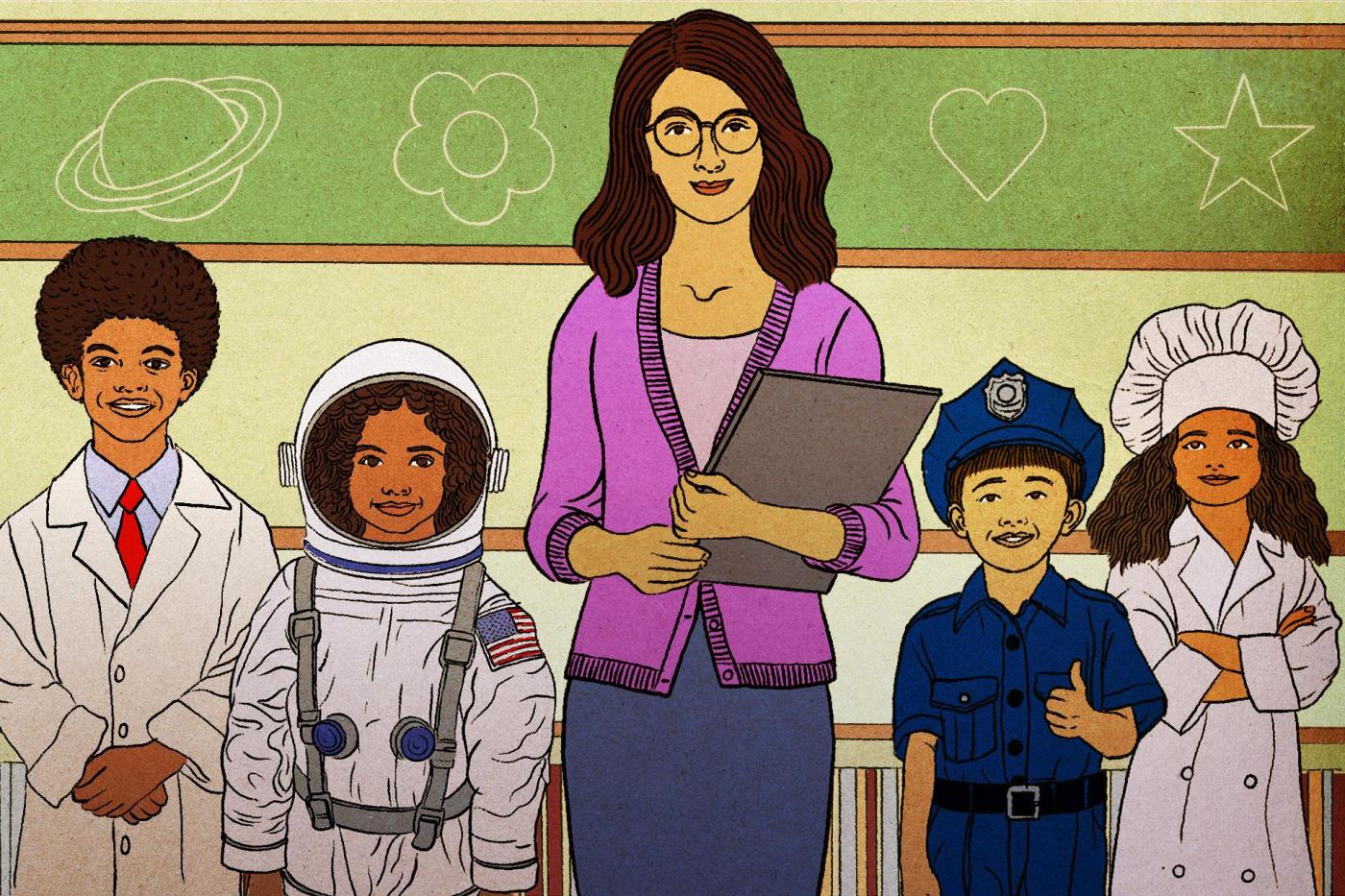
Astronaut one day, artist the next: How to help children explore the world of careers

posted in: All news | 0

By CATHY BUSSEWITZ

NEW YORK (AP) — When Angelina Rivera was a third grader, she wanted to be a scientist and was excited by bugs, rocks and everything in the natural world.

But a family trip to visit relatives in Honduras changed her perspective. Police stopped her family’s car and aggressively questioned her father about a crime someone else committed the night before. The experience left Rivera, then 8, shaken but also realizing that people may be treated differently based on their appearance and location.

Over time, that pivotal experience evolved into an interest in politics. After studying international relations in college, Rivera, now 22, works as an assistant at the Consulate General of Japan in Detroit.

“The more I tried to explore different interests(,) … I found that it was hard for me to ignore that urge, that calling, to go into diplomacy,” she said.

Sometimes career paths follow a straight line, with early life ambitions setting us on a clear path to training or a degree and a specific profession. Just as often, circumstance, luck, exposure and a willingness to adapt to change influence what we do for a living.

Developmental psychologists and career counselors recommend exposing children to a wide variety of career paths at a young age.

“It’s not so that they’ll pick a career, but that they will realize that there’s lots of opportunities and not limit themselves out of careers,” said Jennifer Curry, a Louisiana State University professor who researches career and college readiness.

Sometimes children assume they can’t work certain jobs because of their gender, race or background, Curry said. “That’s what we’re trying to avoid, because kids do start limiting very young, like age 5,” she said.

Here’s what experts have to say about how to talk with kids about careers.

Start young

Toddlers begin making sense of occupations while visiting a pediatrician’s office or waving to garbage truck crews. Encourage their curiosity by pointing out the people working at a post office or bakery, or appearing in books or on television.

You can ask young children, “What jobs do you see? What kind of things do they do?” advised Curry, who consults on career content for the PBS show “Skillsville,” which is geared toward children ages 4-8.

Once kids identify different jobs in the community, they can try those roles while playing at home.

Related Articles


Chinese student struck a chord emphasizing humanity during Harvard commencement speech


FACT FOCUS: Trump’s claims about remedial math at Harvard don’t add up


Trump’s education secretary threatens to pull funding from NY over its Native American mascot ban


Forest Lake School Board hears input on possible contentious policy changes


The US academic partnership with China, under strain for years, faces its biggest threat

If children enjoy pretending to be a doctor, explain that nurses, X-ray technicians and receptionists also work in hospitals. If they love building with Legos, talk about how architects, construction workers, brick masons and welders all played a part in building a certain bridge, Curry said.

“If we were to give kids lots of exposure and access, and ask them, ‘What do you think of yourself in that career? It seems to me you enjoy this kind of thing,’ that can really open the door for kids to see themselves and those possibilities.” Curry said.

There are many occupations that children don’t learn about in early reader books, which frequently portray police officers, firefighters or doctors. After finding no children’s books about public relations, Curtis Sparrer wrote one, placing a 10-year-old at the center of the action.

Sparrer, who co-founded a public relations agency, Bospar, wanted to help young readers avoid the confusion he felt growing up, when movies made him think being an actor meant flying around on spaceships. Before he found his niche in PR, he worked in television production but didn’t enjoy the late-night shifts.

“Once you figure out what you really liked and why you liked it, you can really zero in on your passion,” Sparrer said.

Aside from topic interests, there are personality traits to consider. Children know from an early age whether they like to be around a lot of people or by themselves, whether they prefer using their hands or enjoy reading, according to Jobs for the Future CEO Maria Flynn.

“Very early you can start helping kids get a sense of what are they drawn to, and make that connection, how those skills and attributes show up in jobs,” said Flynn, whose nonprofit organization focus on education and workforce initiatives that advance economic opportunities.

When her daughter played video games with friends, Flynn noticed strong communication skills and pointed out that providing clear direction to teammates and solving problems together were skills she could apply in future jobs.

Exploring careers through school

Some U.S. high schools offer elective courses in fields like marketing, computer science and health care. They also are again investing in vocational classes such as wood shop, welding and mechanics, which fell out of fashion as school systems came under criticism for not preparing enough students for college. Meanwhile, some middle schools are offering career exploration courses.

“Really help them see — at an earlier age, even in middle school — what is the apprenticeship option? How does that work?” Flynn said. “How does the pay work on things like that? What are different trade school options?”

Some young people have questioned the value of four-year degrees because of spiraling costs, student debt loads and difficulty finding jobs. Many want to be able to earn and learn at the same time, Flynn said.

Enrollment in two-year and four-year college programs remains below where it stood before the COVID pandemic, according to the National Student Clearinghouse Research Center. By contrast, enrollment in two-year vocational programs that emphasize learning skilled trades has grown, surpassing pre-pandemic levels, the non-profit organization said.

“The public has really started to get the message about the benefits” and is seeing career and technical education as a viable option, said Catherine Imperatore, research and content director at the Association for Career and Technical Education, a nonprofit organization that advocates for career-readiness initiatives.

Programs offering certificates in fields such as information technology and health care are providing another path to a stable job and decent salary, she said.

Preparing for a world of AI

In addition to exposing children to career routes through early conversations and school courses, experts recommend teaching children about artificial intelligence and how it is reshaping the world and work.

Employers are looking for people who can leverage AI to make their workplaces more efficient, but many employees don’t know how to comfortably use the technology, said Hadi Partovi, founder and CEO of Code.org, a nonprofit that works to expand K-12 access to computer science education.

Partovi encourages parents and teachers to help children learn about artificial intelligence at a young age. For example, they can speak with first and second graders about the benefits and drawbacks of self-driving cars, he said. Children also would benefit by learning to write computer programs, ideally when they’ve learned to read, although even preschoolers can learn some skills, Partovi said.

If parents are unfamiliar with AI, they can learn about it alongside their children while also encouraging enduring skills such as resiliency, curiosity, collaboration and teamwork, Flynn, of Jobs for the Future, said.

“We are living in an ever-changing world, and I think it’s important for kids at a young age to start getting used to the fact that things are moving and changing quickly,” Partovi said. “Teaching kids how to harness AI is going to be the most important thing after reading and writing.”

Share your stories and questions about workplace wellness at cbussewitz@ap.org. Follow AP’s Be Well coverage, focusing on wellness, fitness, diet and mental health at https://apnews.com/hub/be-well.

Homebuying options remain slim for middle-income earners

posted in: All news | 0

By Tim Henderson, Stateline.org

Like many moderate-income workers, public school teachers Julia and Scott Whitnall didn’t think they’d become homeowners in their early 30s. Especially in California.

Related Articles


Sellers outnumber prospective homebuyers as high prices and mortgage rates skew the housing market


Average rate on a US 30-year mortgage rises to 6.89%, its highest level since early February


A little bit of farm, a little bit of suburbia: That’s the recipe for Agritopia


Homeowners spend on renovations and repairs despite the uncertain economy and higher prices


Average rate on a US 30-year mortgage rises to 6.86%, its highest level since mid-February

“We never felt homeownership was in our cards. But we did it!” Julia Whitnall said. “We’re extremely happy.”

The couple moved May 16 to a $509,000 two-bedroom house in Ripon, east of San Francisco in the Central Valley region.

It wasn’t easy. Despite a relatively high combined income of $140,000 from their nearby jobs, they had to compromise on size and take on extra work at summer camps to pull it off. Then they had to exercise patience as the sellers struggled to find a new home.

High interest rates and high prices in a still-competitive housing market continue to make it tough for first-time buyers, even those with good but moderate incomes.

On a national level, households making $75,000 to $100,000 — typical of teachers, nurses and skilled trades workers in many states — face a daunting lack of homes they can afford. That’s according to new research by the National Association of Realtors and Realtor.com based on listings in March of this year compared with 2024. However, the numbers showed an encouraging 20% increase in homes for sale, affordable or not.

Despite more houses for sale, those moderate-income buyers — which the report called “middle- and upper-middle-income buyers” — are much more hard-pressed to find an affordable home than they were in 2019, when almost half the homes on the market were affordable to them. This year they can afford only 21.2% of homes on the market — a slight improvement compared with 20.8% in 2024, according to the report.

It also found that a few states are improving in affordability for people in the $75,000-to-$100,000 income range. But many states are not.

The largest affordability gaps are in California, Hawaii, Idaho, Massachusetts and Montana, where such households can afford fewer than 12% of houses on the market. By contrast, they could afford about half the houses for sale in Illinois, Indiana, Iowa, Ohio and West Virginia.

There’s progress in states that are adding more housing at moderate price points: Arizona, Colorado, Delaware, Florida and Utah, according to the Realtors report.

Balanced markets

Nationwide, to get home markets back in line with moderate-income families, the United States needs 416,000 more homes for sale at or below $255,000, according to the report.

“In many places, we’re still seeing a huge mismatch between income levels and what’s available to buy for moderate-income families,” said Nadia Evangelou, the National Association of Realtors’ senior economist and director of real estate research.

“We are no longer in crisis mode, but we are still very far from where we need to be. We can’t fix it overnight. It will take years,” Evangelou said.

Heather, who asked not to share her last name for privacy reasons, said she can’t even think of buying a house near her job on Long Island, New York. She makes more than $100,000 as a registered nurse and her family makes $170,000 with her husband’s job in building maintenance. But $4,400 in rent and $2,000 in monthly day care costs for three children have them living paycheck to paycheck.

“We can’t even afford a small car repair, let alone a mortgage in our hometown” of Ronkonkoma in Suffolk County, Heather said. Their jobs exposed her and her husband to risks in the pandemic that her neighbors avoided with remote work, she said. But she now feels like she’s in worse shape financially than she was in 2019 and considers moving away.

“All of our hard work feels like it was for nothing,” Heather said. “It’s disheartening that we can’t afford to live where we grew up, but that’s the reality we are facing.”

Some states can still be a refuge of affordability.

Ashley and Tristan Jonas bought a $252,000 house in northwest Ohio after three years of getting shut out by higher or all-cash offers. Ashley Jonas, 32, trained as a teacher but now works in skilled trades as a project coordinator for a countertop company, and the couple makes about $140,000 with Tristan Jonas’ job as a computer programmer.

“We happened to hit the market at the right time in 2025,” Ashley Jonas said. “We bid on this house just as [President Donald] Trump was announcing tariffs. I think a lot of people were holding their coin purses. We weren’t.”

Help for teachers

Teachers, who generally make less than nurses or trades workers, are particularly squeezed. Some states, facing teacher shortages in local schools, are working to raise pay. And increasingly, some schools and hospitals are providing housing to lure more teachers and nurses.

“We lose so many teachers because they can’t find housing here,” said Autumn Rivera, a 20-year teaching veteran and 2022 Colorado Teacher of the Year. Despite her experience and credentials, Rivera said she can’t contemplate buying even a townhouse in the rural resort town of Glenwood Springs, where she teaches.

Prices for those townhouses now start in the $700,000 range, more than twice what they were when she last considered buying in 2019. Rivera feels lucky to have a reasonable rent by sharing a home with its owner, but many teachers in her Roaring Fork Schools need the 117 apartments provided by the district with affordable rent, she said. The district hopes the apartments will allow teachers to save up for a home; it has also built 14 houses for staff with Habitat for Humanity and Holy Cross Energy.

One way to make homebuying more feasible for teachers is to pay them more — a strategy that paid off for New Mexico, one of the few bright spots in a different report on teachers’ inability to afford housing, which was published this month by the National Council on Teacher Quality, a research and advocacy group.

Beginning teachers in Albuquerque saw a 60% increase in pay between 2019 and 2025, which fell just short of a 65% jump in home prices, according to the report. The report credited a state law that raised teacher salaries, including starting pay, by $10,000.

“We’re dealing with the issue of teachers being able to live in the communities where they’re actually working,” said state Rep. Joy Garratt, a Democrat who sponsored a new law, signed in April, that sets higher minimum salaries for teachers effective July 1.

Detroit schools also gave teachers with advanced degrees a pay boost of up to 50% since 2019, about the same increase as home prices, according to the report from the National Council on Teacher Quality. Albuquerque and Detroit are on the report’s list of most affordable places for beginning teachers to live.

But nationally, on average, experienced teachers who started in 2019 are less able to afford a home now than when they began, according to the report.

“Teacher pay has gone up 24% in the last five years, which some might say is solid growth, and yet the increase in house for purchase has gone up 47%,” said Heather Peske, the organization’s president.

“Housing prices are critical to being able to attract and keep great teachers,” Peske said. “People will be leaving the profession trying to find something that pays enough for housing. And bottom line, kids won’t get as good an education.”

Stateline reporter Tim Henderson can be reached at thenderson@stateline.org.

©2025 States Newsroom. Visit at stateline.org. Distributed by Tribune Content Agency, LLC.