Bruce Yandle: Trump’s policy reversals — a new way to govern?

posted in: All news | 0

“If all else fails, push the start button, look for smoke, and repair what is burning.” During my 15 years working with industry, this was common advice when dealing with troublesome complex electric controls that just would not respond to a more scientific analysis. And it worked. Should we expect a president hellbent on changing the world order to apply the same approach?

Flipping policy switches on and off might not sound scientific, but despite chaos and missteps, there’s at least something to be said for the idea.

Maybe it’s the rush to get things done. Or perhaps it’s the fact that Trump is relying on executive orders rather than on legislation with hearings to mandate much of what he envisions. In any case, the Trump administration is now famous for hitting a policy start button, seeing smoke and then, when alarms go off, reversing position.

How else might we explain the large number of policy reversals that occurred in the president’s first 100 days back in office? Consider a handful of examples.

Just a week into his new term, Trump’s Office of Management and Budget (OMB) issued a freeze order on all federal loans and grants in an effort to make certain that all funded programs would abide by the new administration’s tamped-down Diversity, Equity and Inclusion guidelines. But the outcry from state and local governments that rely on federal funding for day-to-day operations was so loud that OMB quickly reversed its order.

Then, in February, the Trump administration announced an end of free COVID testing, a mainstay program in fighting the pandemic. When the Department of Health and Human Services indicated that the agency would thus be destroying 160 million unused tests, political alarms went off and the policy was reversed.

More famously, after growing impatient with the Federal Reserve Open Market Committee for not cutting interest rates, Trump decided to hit the start button and blow them out of the water. He called the Fed Chair Jerome Powell a “major loser” and indicated he should be fired… immediately.

When world financial markets sensed that America’s central bank was about to be run by politics, interest rates rose, respect for the dollar fell and the end of American economic exceptionalism was posited. Smoke was everywhere.  Trump backed away, softened the tone of his relationship with Fed Chair Powell and moved on to tilt with other windmills.

Another tilting occurred when Trump took on China by imposing a 145% tariff on all its exports to the United States, the functional equivalent of an embargo. China responded by laying on 125% tariffs on U.S. exports and indicated a willingness to engage in a trade war or any war that became necessary.

Markets shuddered. American retailers cried foul and indicated Santa Claus’s sled would be empty. Apple and other U.S. smart phone producers offered up end-of-world industry forecasts.

In short, the circuits turned red and the smoke was dense. Trump dramatically altered his policy position. The trade war with China suddenly de-intensified, at least for the next 90 days.

Finally, Elon Musk’s DOGE activities brought their own host of circuit tests that generated smoke and reversals. There were sweeping actions taken to fire thousands of federal government workers only to rush to rehire some when it was learned that they filled critical jobs involving nuclear weapons or controlling a raging bird flu epidemic.

Some look squarely at these policy reversals and see evidence that we have the equivalent of Keystone Cops running the federal government — officials who don’t seem to know what they are doing, but they do it anyway. Alternatively, and in at least some of these situations, we might consider the old “push the start button and look for smoke” explanation.

In a rush to bring dramatic change, the Trump administration seems to agree with Ralph Waldo Emerson that “consistency is a hobgoblin of small minds.” When things change, they change. Policy reversals are messy, but some might be a necessary part of Trump’s intended revolution.

Bruce Yandle is a distinguished adjunct fellow with the Mercatus Center at George Mason University, dean emeritus of the Clemson College of Business and Behavioral Sciences and a former executive director of the Federal Trade Commission. He wrote this column for the Chicago Tribune.

Related Articles


David French: Why Trump is mad at ‘sleasebag’ Leonard Leo


Cory Franklin: The lessons of ‘Shoeless’ Joe Jackson and the MLB’s rewriting of history


Clive Crook: The US is about to discover if deficits don’t matter


Parmy Olson: AI sometimes deceives to survive. Does anybody care?


Maureen Dowd: Dance$ with emolument$
Newark mayor sues New Jersey’s top federal prosecutor after arrest at immigration detention site

posted in: All news | 0

By MIKE CATALINI

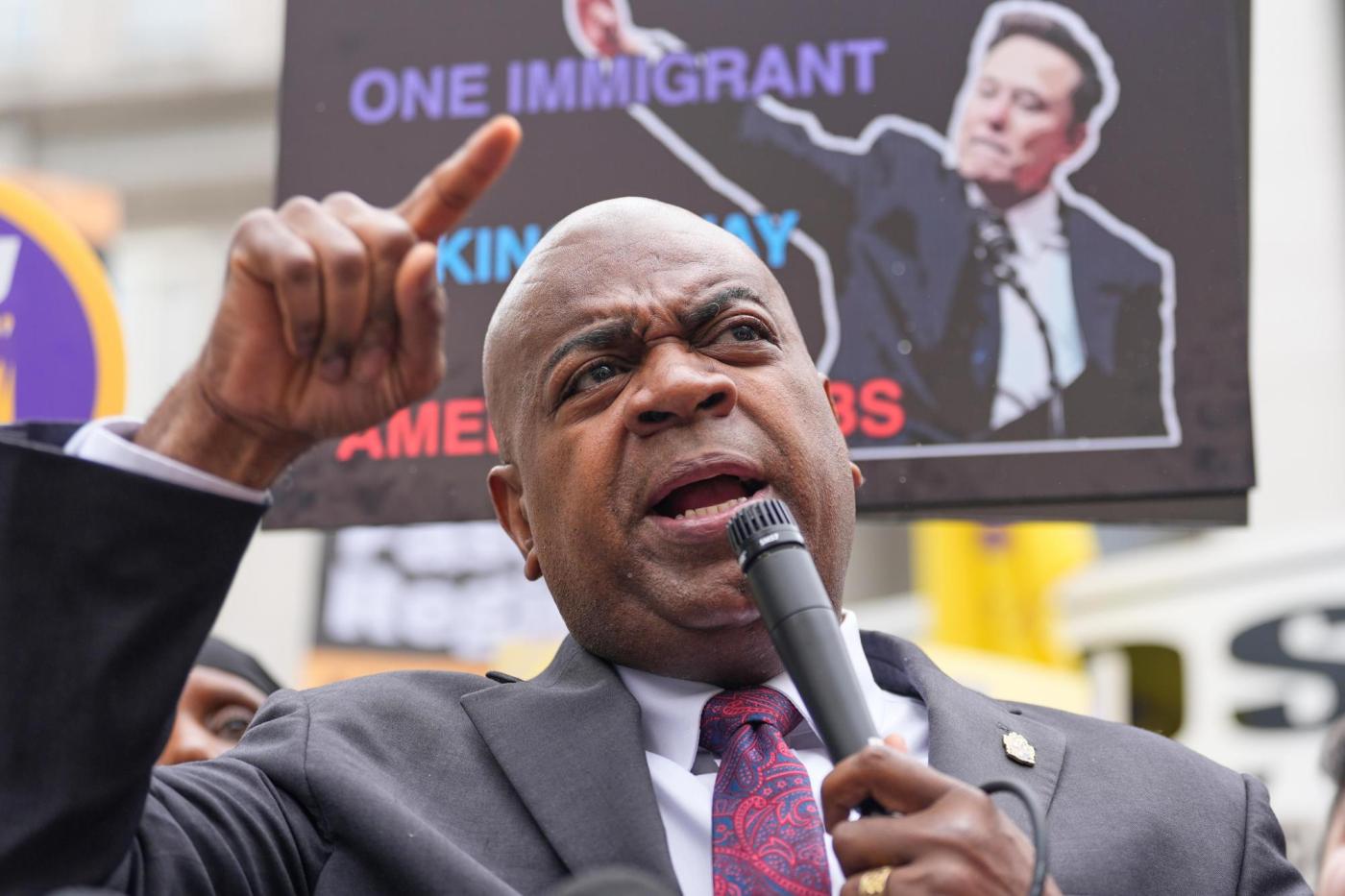
NEWARK, N.J. (AP) — Newark Mayor Ras Baraka sued New Jersey’s top federal prosecutor on Tuesday over his arrest on a trespassing charge at a federal immigration detention facility, saying the Trump-appointed attorney had pursued the case out of political spite.

Baraka, who leads New Jersey’s biggest city, is a candidate in a crowded primary field for the Democratic nomination for governor next Tuesday. The lawsuit against interim U.S. Attorney for New Jersey Alina Habba coincided with the day early in-person voting began.

The lawsuit seeks damages for “false arrest and malicious prosecution,” and also accuses Habba of defamation for comments she made about his case, which was later dropped.

Citing a post on X in which Habba said Baraka “committed trespass,” the lawsuit says Habba issued a “defamatory statement” and authorized his “false arrest” despite “clear evidence that Mayor Baraka had not committed the petty offense of ‘defiant trespass.’” The suit also names Ricky Patel, the Homeland Security Investigations agent in charge in Newark.

“This is not about revenge,” Baraka said during a news conference. “Ultimately, it’s about them taking accountability for what they did.”

Emails seeking comment were left Tuesday with Habba’s office and the Homeland Security Department, where Patel works.

The episode outside the Delaney Hall federal immigration detention center has had dramatic fallout. It began on May 9 when Baraka tried to join three Democratic members of Congress — Rob Menendez, LaMonica McIver and Bonnie Watson Coleman — who went to the facility for an oversight tour, something authorized under federal law. Baraka, an outspoken critic of Trump’s immigration crackdown and the detention center, was denied entry.

Video from the event showed him walking from the facility side of the fence to the street side, where other people had been protesting, and then uniformed officials came to arrest him. As they did, people could be heard in the video saying to protect the mayor. The video shows a crowd forming and pushing as officials led off a handcuffed Baraka.

He was initially charged with trespass, but Habba dropped that charge last month and charged McIver with two counts of assaulting officers stemming from her role in the skirmish at the facility’s gate.

U.S. Magistrate Judge Andre Espinosa rebuked Habba’s office after moving to dismiss the charges. “The hasty arrest of Newark Mayor Ras Baraka, followed swiftly by the dismissal of these trespassing charges a mere 13 days later, suggests a worrisome misstep by your Office,” he wrote.

McIver decried the charges and signaled she plans to fight them. A preliminary hearing is scheduled later this month.

Delaney Hall, a 1,000-bed facility, opened earlier this year as a federal immigration detention facility. Florida-based Geo Group Inc., which owns and operates the property, was awarded a 15-year contract valued at $1 billion in February. The announcement was part of the president’s plans to sharply increase detention beds nationwide from a budget of about 41,000 beds this year.

Baraka sued Geo soon after that deal was announced.

Then, on May 23, the Trump Justice Department filed a suit against Newark and three other New Jersey cities over their so-called sanctuary policies. There is no legal definition for sanctuary city policies, but they generally limit cooperation by local law enforcement with federal immigration officers.

Related Articles


Meta becomes the latest big tech company turning to nuclear power for its AI needs


Wall Street drifts as financial markets worldwide hold relatively steady


Dollar General posts record sales as bargain stores attract more people anxious about the economy


Man accused of trying to get witness against him deported by writing letters threatening Trump


US growth likely to slow to 1.6% this year, hobbled by Trump’s trade wars, OECD says

New Jersey’s attorney general has a statewide directive in place prohibiting local police from collaborating in federal civil immigration matters. The policies are aimed at barring cooperation on civil enforcement matters, not at blocking cooperation on criminal matters. They specifically carve out exceptions for when Immigration and Customs Enforcement supplies police with a judicial criminal warrant. The Justice Department said, though, the cities won’t notify ICE when they’ve made criminal arrests, according to the suit.

It’s unclear whether Baraka’s role in these fights with the Trump administration is having an effect on his campaign for governor. He’s one of six candidates seeking the Democratic nomination in the June 10 election to succeed term-limited Democratic Gov. Phil Murphy.

In a video ad in the election’s final weeks, Baraka has embraced a theme his rivals are also pushing: affordability. He says he’ll cut taxes. While some of the images show him standing in front of what appears to be Delaney Hall, he doesn’t mention immigration or the arrest specifically, saying: “I’ll keep Trump out of your homes and out of your lives.”

Trump has endorsed Jack Ciattarelli, one of several Republicans running in the gubernatorial primary. Ciattarelli has said if he’s elected, his first executive order would be to end any sanctuary policies for immigrants in the country illegally.

Associated Press writer Alanna Durkin Richer in Washington contributed to this report.

US job openings rose unexpectedly in April, a sign the American labor market remains resilient

posted in: All news | 0

By PAUL WISEMAN, AP Economics Writer

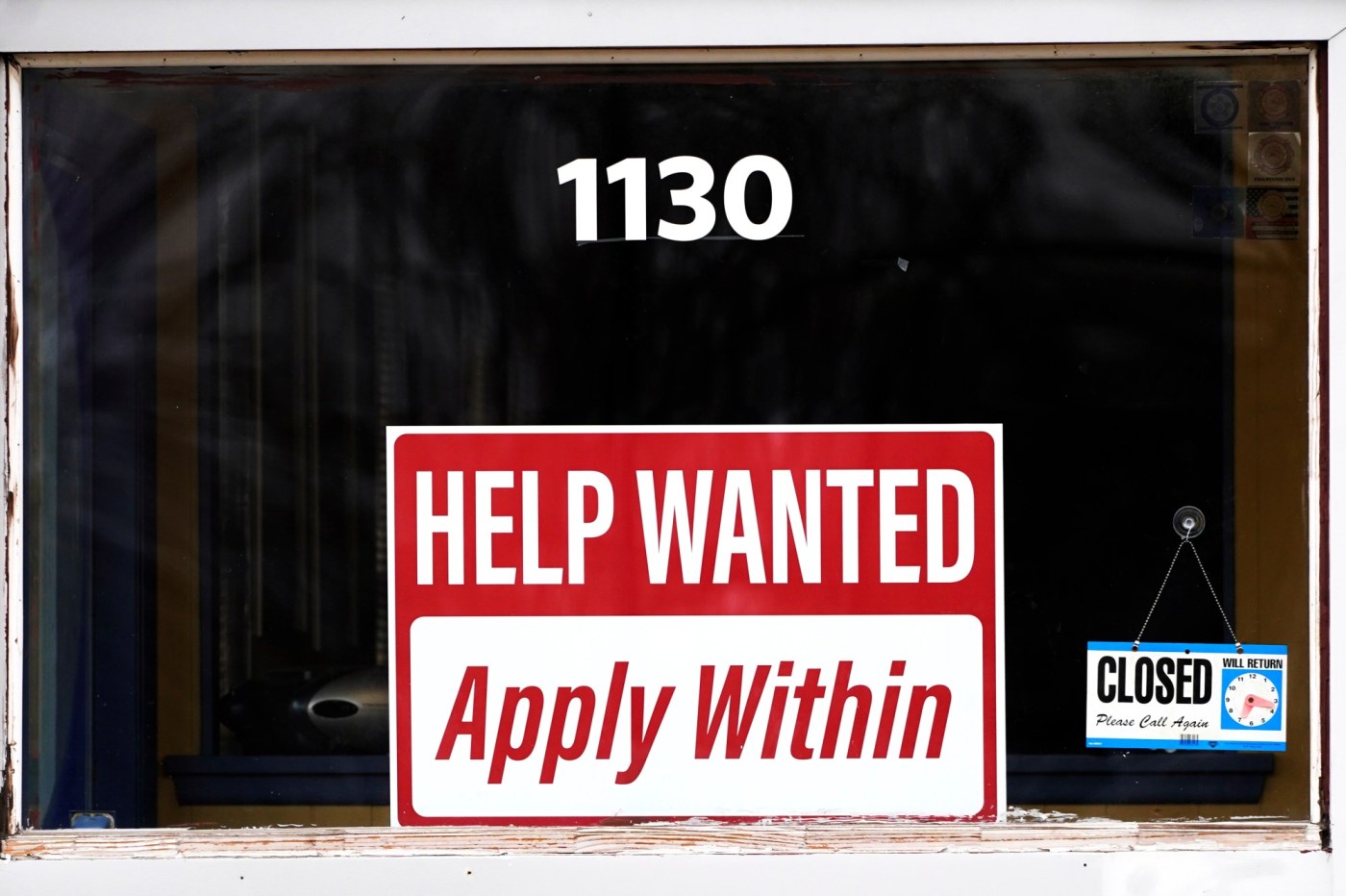
WASHINGTON (AP) — U.S. job openings rose unexpectedly in April, showing that the labor market remains resilient in the face of uncertainty arising from President Donald Trump’s trade wars.

Related Articles


Wall Street drifts as financial markets worldwide hold relatively steady


Dollar General posts record sales as bargain stores attract more people anxious about the economy


US growth likely to slow to 1.6% this year, hobbled by Trump’s trade wars, OECD says


One Tech Tip: How to use your smartphone to photograph the Northern Lights


Campbell’s Co. says sales rise as more Americans cook meals at home

The Labor Department reported Tuesday that employers posted 7.4 million job vacancies in April, up from 7.2 million in March. Economists had expected openings to drift down to 7.1 million.

But the number of Americans quitting their jobs— a sign of confidence in their prospects — fell, and layoffs ticked higher. And in another sign the job market has cooled from the hiring boom of 2021-2023, the Labor Department reported one job every unemployed person. As recently as December 2022, there were two vacancies for every jobless American.

Openings remain high by historical standards but have dropped sharply since peaking at 12.1 million in March 2022, when the economy was still roaring back COVID-19 lockdowns.

The Labor Department’s Job Openings and Labor Turnover Summary showed little evidence of cuts to the federal workforce by billionaire Elon Musk’s Department of Government Efficiency. Openings for federal jobs rose to 134,000 in April from 121,000 in March. And federal layoffs fell to 4,000 from 8,000 in March and 19,000 in February.

Although it has decelerated, the American job market has remained resilient in the face of high interest rates engineered by the Federal Reserve in 2022 and 2023 to fight a resurgence of inflation.

The economic outlook is uncertain, largely because of Trump’s economic policies — huge taxes on imports, purges of federal workers and the deportation of immigrants working in the United States illegally.

Carl Weinberg, chief economist at High Frequency Economics, said the JOLTS report shows that companies are waiting to see how Trump’s policies play out. “Once companies are more certain that bad times are coming, they will start to shed workers,” he wrote in a commentary. “However, the economy is still near full employment. We suspect companies are still hoarding workers until they are very, very sure about an economic downturn.″

The Labor Department is expected to report Friday that employers added 130,000 jobs last month, down from 177,000 in April. The unemployment rate is expected to stay at a low 4.2%, according to a survey of forecasters by the data firm FactSet.

Meta becomes the latest big tech company turning to nuclear power for its AI needs

posted in: All news | 0

By MATT OTT, Associated Press Business Writer

WASHINGTON (AP) — Meta has cut a 20-year deal to secure nuclear power to help meet surging demand for artificial intelligence and other computing needs at Facebook’s parent company.

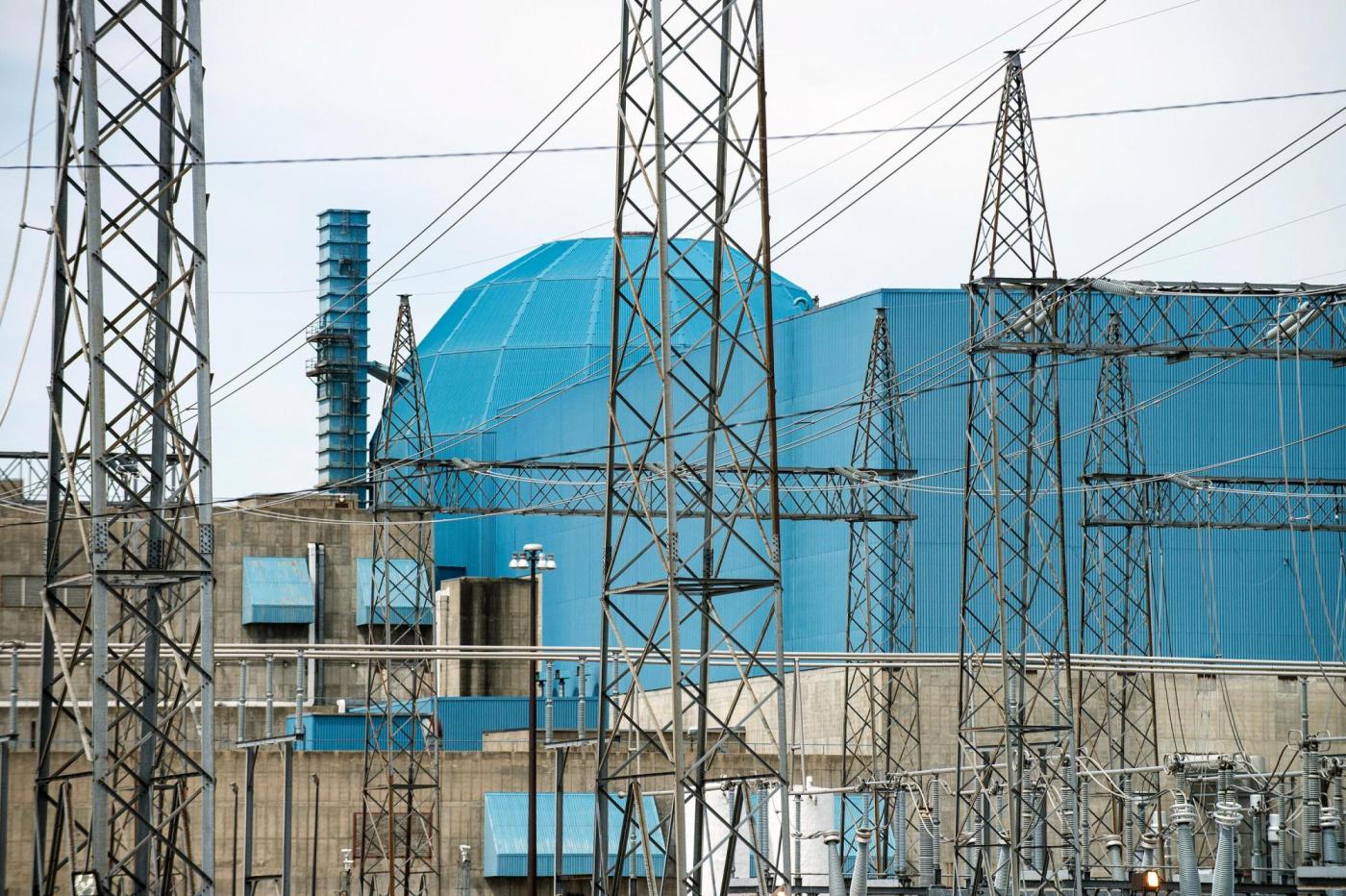
The investment with Meta will also expand the output of a Constellation Energy Illinois nuclear plant.

The agreement announced Tuesday is just the latest in a string of tech-nuclear partnerships as the use of AI expands. Financial details of the agreement were not disclosed.

Constellation’s Clinton Clean Energy Center was actually slated to close in 2017 after years of financial losses but was saved by legislation in Illinois establishing a zero-emission credit program to support the plant into 2027. The Meta-Constellation deal takes effect in June of 2027, when the state’s taxpayer funded zero-emission credit program expires.

With the arrival of Meta, Clinton’s clean energy output will expand by 30 megawatts, preserve 1,100 local jobs and bring in $13.5 million in annual tax revenue, according to the companies.

“Securing clean, reliable energy is necessary to continue advancing our AI ambitions,” said Urvi Parekh, Meta’s head of global energy.

Constellation, the owner of the shuttered Three Mile Island nuclear power plant, said in September that it planned to restart the reactor so tech giant Microsoft could secure power to supply its data centers. Three Mile Island, located on the Susquehanna River just outside Harrisburg, Pennsylvania, was the site of the nation’s worst commercial nuclear power accident in 1979.

Related Articles


Wall Street drifts as financial markets worldwide hold relatively steady


Dollar General posts record sales as bargain stores attract more people anxious about the economy


Man accused of trying to get witness against him deported by writing letters threatening Trump


US growth likely to slow to 1.6% this year, hobbled by Trump’s trade wars, OECD says


Today in History: June 3, the Zoot Suit Riots begin in Los Angeles

Also last fall, Amazon said it was investing in small nuclear reactors, two days after a similar announcement by Google. Additionally, Google announced last month that it was investing in three advanced nuclear energy projects with Elementl Power.

U.S. states have been positioning themselves to meet the tech industry’s power needs as policymakers consider expanding subsidies and gutting regulatory obstacles.

Last year, 25 states passed legislation to support advanced nuclear energy, and lawmakers this year have introduced over 200 bills supportive of nuclear energy, according to the trade association Nuclear Energy Institute.

Advanced reactor designs from competing firms are filling up the federal government’s regulatory pipeline as the industry touts them as a reliable, climate-friendly way to meet electricity demands from tech giants desperate to power their fast-growing artificial intelligence platforms.

Amazon, Google and Microsoft also have been investing in solar and wind technologies, which make electricity without producing greenhouse gas emissions.