For Ramadan, the monthlong Muslim holiday of fasting which begins this year on Tuesday evening, Feb. 17, families and friends gather for festive dinners to break the fast.
Tahini, sesame seed paste, is a nutritional powerhouse that’s well suited for Ramadan dishes. Popular in Middle Eastern cooking, its flavor profile — nutty, slightly bitter and creamy —makes it versatile in the kitchen. Most tahini dishes are savory appetizers but tahini is also used in sweet specialties like halva. Thus it is useful for iftar, the sunset meal, and for suhoor, the pre-dawn meal eaten before the day’s fasting.
While meat is a traditional staple for iftar, appetizers are often plant-based. Made with vegetables and grains, their fiber promotes satiety, enabling people to eat less meat. Because tahini is rich in heart-healthy monounsaturated fats and protein, it provides an energy boost and helps people feel full for longer.
Basic tahini sauce, made of tahini paste mixed with lemon juice, garlic and water, is a luscious-textured sauce often served with grilled vegetables, salads, fish and falafel, and can replace cream in dressings and dips. Like natural peanut butter, tahini should be stirred before being used.
Tahini’s bitterness balances the intense sweetness of dates, the traditional Ramadan break-the-fast food; stuffing dates with tahini is a Ramadan treat. A popular breakfast spread is tahini mixed with date molasses; in Istanbul, some call such a spread “Turkish Nutella” or “liquid halva”.
Quinoa patties are served with chanterelles and topped with tahini sauce. (Photo by Yakir Levy)
Quinoa Patties with Chanterelles and Tahini Sauce
Quinoa patties become an elegant dish when dressed up with tahini sauce and exotic mushrooms. You can substitute shiitakes or oyster mushrooms for the chanterelles.
Yield: 3 or 4 servings
INGREDIENTS
Tahini sauce:
1 small garlic clove, minced
3 tablespoons tahini paste, stirred before measuring
1 to 2 tablespoons lemon juice
1 to 2 tablespoons water
Salt to taste
Quinoa patties and chanterelles:
3 tablespoons extra virgin olive oil
One 1.1-pound (500-gram) roll of cooked quinoa, cut in 6 to 8 slices
Salt and freshly ground pepper
1/2 pound fresh chanterelles
1 garlic clove, minced
Red pepper flakes to taste
DIRECTIONS
1. Tahini sauce: In a mini food processor blend garlic, tahini paste, 1 tablespoon lemon juice, 1 tablespoon water and salt. Add more lemon juice or water to adjust consistency and taste.
2. Quinoa patties: Heat 2 tablespoons olive oil in a heavy-bottomed skillet over medium-high heat. Season quinoa slices with salt and pepper; add to pan. Sear quinoa slices on both sides until golden brown. Remove from pan.
3. Chanterelles: Add remaining tablespoon olive oil to pan and heat over medium-high heat. Add mushrooms; cook for 8 minutes or until browned. Add garlic, salt, pepper and pepper flakes and cook about 1 minute.
4. Serve quinoa patties with chanterelles and tahini sauce.
A platter of roasted vegetable is served with Pepper-Swirled Tahini. (Photo by Yakir Levy)
Pepper-Swirled Tahini with Roasted Vegetables
Greek yogurt makes tahini creamier and a good counterpoint for the pepper sauce.
Yield: 4 servings
INGREDIENTS
Tahini yogurt sauce:
1 small garlic clove, minced
3 tablespoons tahini paste, stirred before measuring
1 to 2 tablespoons lemon juice
1 to 2 tablespoons water
1/2 cup Greek yogurt
Salt to taste
2 pounds vegetables, such as whole Anaheim or jalapeño peppers, medium-wide strips of sweet peppers, sliced Chinese eggplants, sliced zucchini, half slices sweet onions, halved cremini mushrooms
2 tablespoons extra virgin olive oil, or to taste
Salt, freshly ground pepper and Aleppo or other semi-hot red pepper to taste
1/2 cup thick salsa such as taqueria-style salsa
DIRECTIONS
1. Tahini yogurt sauce: In a mini food processor blend garlic, tahini paste, 1 tablespoon lemon juice, 1 tablespoon water and salt. Transfer to a bowl. Stir in yogurt. Add more lemon juice or water to adjust consistency and taste.
2. Heat oven or air fryer toaster oven to 400 degrees. In a bowl toss vegetables with enough olive oil to moisten them. Sprinkle with salt, black and red pepper; toss to combine.
3. Spread vegetables on a baking sheet (lined with parchment paper or foil if desired). Roast for 10 minutes. Turn over; drizzle with more olive oil if needed. Roast for 10 to 15 more minutes or until tender. (They roast faster in an air fryer toaster oven or convection oven than in a standard oven.)
4. Put whole peppers in a bowl, cover and let stand for 10 minutes. Peel when cool enough to handle. Remove caps; scrape out pepper seeds.
5. Arrange vegetables on a plate. Set a bowl of salsa in center of plate. Spoon tahini yogurt sauce onto salsa’s center. With a knife, swirl tahini sauce gently into salsa.
Red Pepper Baba Ghanoush is made with roasted Chinese eggplant, tahini sauce, roasted peppers and labneh. (Photo by Yakir Levy)
Red Pepper Baba Ghanoush
Chinese eggplants roast quickly and are easy to turn into a creamy red pepper dip. Just add tahini sauce, roasted peppers from a jar, and labneh — strained yogurt that is almost as thick as cheese.
Yield: 3 or 4 servings
INGREDIENTS
1 1/2 pounds Chinese eggplants
2 large garlic cloves, minced
3 to 4 tablespoons tahini paste (stirred before measuring)
1 to 2 tablespoons strained fresh lemon juice
1 to 2 tablespoons water
2 fire-roasted peppers (from a jar)
2 to 4 tablespoons labneh (or Greek yogurt)
Salt and freshly ground black pepper
Extra virgin olive oil (for drizzling)
2 teaspoons chopped Italian parsley (garnish)
DIRECTIONS
1. Preheat broiler or Roast function of air fryer toaster oven (convection oven). Prick each eggplant 3 or 4 times with a sharp knife.
2. Broil or roast eggplants, turning a few times, until very tender when pressed on neck end, about 15 to 20 minutes. Remove eggplants; let stand until cool enough to handle.
3. Cut off eggplant caps. Halve eggplants lengthwise. Scoop out eggplant pulp. Chop pulp with a knife.
4. Make red pepper tahini sauce by blending minced garlic, tahini paste, 1 tablespoon lemon juice and 1 tablespoon water in a food processor. Add roasted peppers and blend until smooth.
5. Add labneh and pulse until blended. Add chopped eggplant pulp; pulse just until mixture is blended. Gradually add more water or lemon juice if needed. Season with salt and pepper.
6. Spread on a serving plate or on bread. Serve drizzled with olive oil and sprinkled with parsley.
Persimmon Cake is topped with a halva glaze made with powdered sugar and lemon juice as well as chopped pistachios. (Photo by Yakir Levy)
Persimmon Cake with Halva Glaze
In this cake’s glaze a touch of tahini balances the sweetness of the powdered sugar. Use soft persimmons for the puree; slice firm persimmons for garnish.
Yield: 2 small cakes (32 small portions)
INGREDIENTS
Persimmon cake:
2 cups all purpose flour (260 grams)
1 teaspoon ground cinnamon
3 teaspoons baking soda
1/4 teaspoon salt
1/2 cup unsalted butter (4 ounces or 110 grams), room temperature
1 1/3 cups granulated sugar (240 grams)
2 large eggs, beaten
1/2 teaspoon vanilla extract
2 1/2 cups persimmon puree (4 or 5 persimmons)
1 cup dried cranberries
2/3 cup red walnuts, chopped
Persimmon halva glaze:
2 cups powdered sugar
4 teaspoons lemon juice
4 tablespoons persimmon puree
2 teaspoons tahini paste (stirred before measuring), or to taste
Garnish:
About 1/3 cup chopped pistachios
Slices of small firm persimmons
DIRECTIONS
1. Cake: Heat oven to 350 degrees. Line two 7 1/2-inch square pans with foil. Butter foil.
2. Mix flour, cinnamon, baking soda and salt.
3. With a stand mixer, beat butter until smooth; add sugar and beat until smooth. Add eggs; beat until well blended. Add vanilla; beat until blended.
4. Add half of dry ingredient mixture to butter mixture; stir until blended. Stir in persimmon puree, followed by remaining dry ingredient mixture. Stir until blended. Stir in dried cranberries and walnuts.
5. Spoon batter into pans. Smooth tops. Bake until a toothpick inserted in center of each cake comes out clean, about 25 to 30 minutes.
6. Cool cake in pans on racks for 10 minutes. Turn out onto cake racks. Let cool completely.
7. Glaze: Whisk half of powdered sugar with the lemon juice until blended. Whisk in remaining powdered sugar. Add persimmon puree and whisk until blended. Whisk in tahini.
8. Spread glaze in thin layer over cakes. Sprinkle with pistachios. Let stand several hours or refrigerate overnight until glaze sets.
9. Cut cake in pieces and put on a serving plate. Surround with persimmon slices.
This Mushroom Tahini Toast is inspired by a recipe in Dr. Michael Crupain’s latest book, “The Power Five: Essential Foods for Optimum Health.” (Photo by Yakir Levy)
Mushroom Tahini Toast
For this appetizer inspired by a recipe from Dr. Michael Crupain’s latest book, “The Power Five: Essential Foods for Optimum Health,” you spread toast with pure tahini paste, then top it with sauteed mushrooms.
Yield: 4 or 5 servings
INGREDIENTS
1 pound exotic mushrooms, such as shiitake, oyster or maitake
1/2 teaspoon Turkish pepper flakes, Aleppo pepper or other pepper flakes
3 tablespoons extra virgin olive oil
3 garlic cloves, minced
1 shallot, finely chopped
1 teaspoon fresh thyme leaves, chopped
Salt to taste
1 cup dry white wine
3 tablespoons tahini paste
4 or 5 slices whole wheat or sourdough bread, toasted and rubbed with a raw garlic clove
DIRECTIONS
1. Coarsely chop mushrooms; add to a bowl with pepper flakes and oil. Toss to coat mushrooms.
2. Cook mushrooms in a large, heavy-bottomed skillet over medium-high heat for 8 to 10 minutes or until browned. Add garlic, shallot, thyme and salt. Sauté for 4 minutes or until shallot is soft. Stir in wine; cook until evaporated. If mixture is too dry, add 1 to 2 tablespoons water.
3. Spread tahini on toast. Spoon mushrooms over toast, sprinkle with salt, and serve.
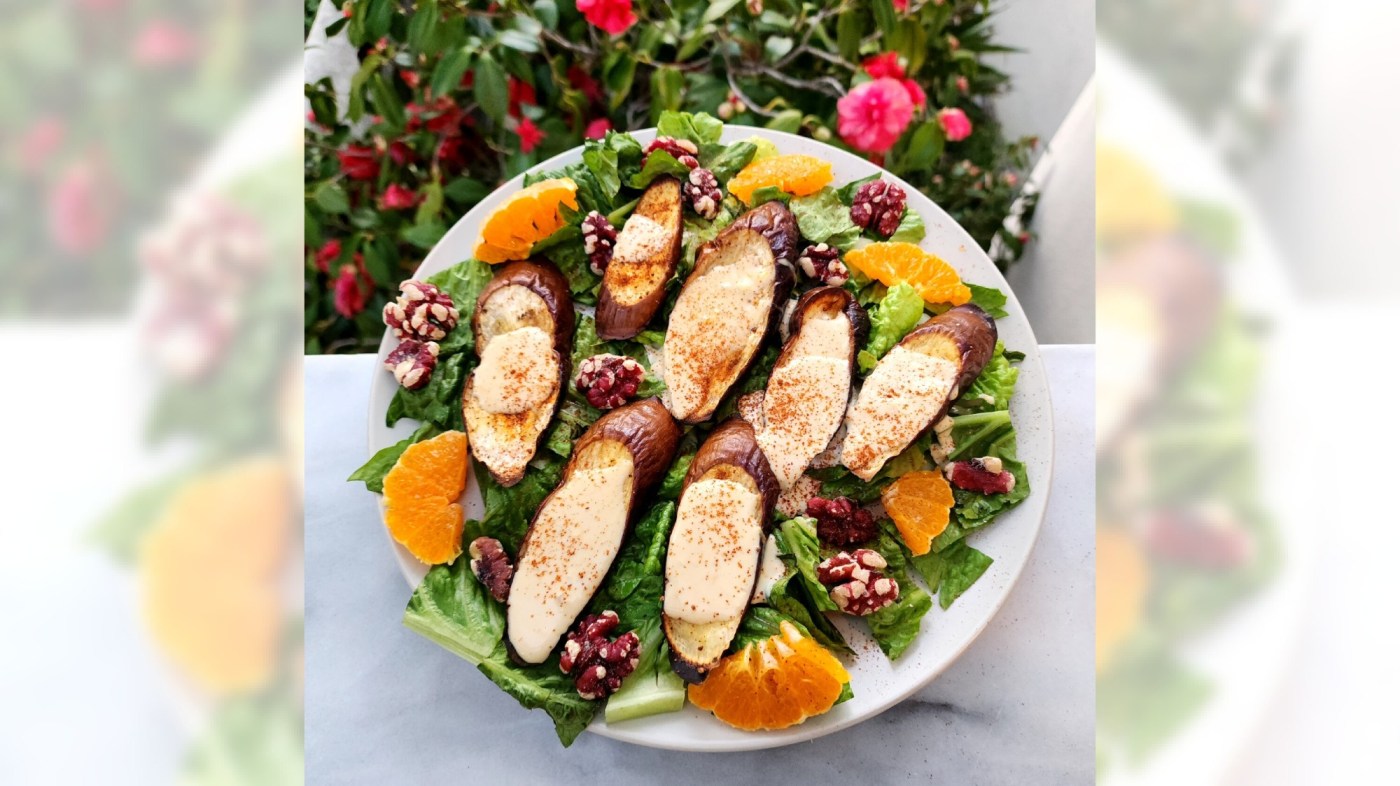
Roasted Eggplant Salad with Tangerine Tahini balances sweet tangerine juice with lemon juice, minced garlic, salt and red pepper powder. (Photo by Yakir Levy)
Roasted Eggplant Salad with Tangerine Tahini
Adding sweet tangerine juice to tahini sauce might seem surprising but tahini eggplant drizzled with silan (date syrup) is popular in Israeli restaurants. Our dish isn’t sweet. Tangerine zest, lemon juice, minced garlic, salt and red pepper powder balance the flavor.
Yield: 2 or 3 servings
INGREDIENTS
Tangerine tahini sauce:
1/2 teaspoon minced garlic
1 tablespoon fresh lemon juice, or to taste
2 to 3 tablespoons tangerine juice
1/4 cup plus 2 tablespoons tahini, stirred before measuring
Pinch of salt, or to taste
1 tablespoon cold water (optional), more if needed
1/2 teaspoon grated tangerine zest, or more to taste
Roasted Eggplant and Salad:
1 Chinese eggplant (about 9-10 ounces), sliced diagonally 3/8 to 1/2 inch thick
2 tablespoons plus 1 teaspoon extra virgin olive oil
Salt, freshly ground pepper and hot red pepper powder to taste
5 romaine or other lettuce leaves, cut in bite size pieces
1 teaspoon lemon juice
1 tangerine, cut in rounds, then in half slices
Walnuts, preferably red (garnish)
DIRECTIONS
1. Tangerine tahini sauce: In a medium bowl mix garlic, lemon juice and tangerine juice. Stir in tahini paste. Keep stirring until sauce is smooth and thick but still pourable. Add more tangerine juice or water, 1 teaspoon at a time, to adjust consistency and taste. Stir in tangerine zest. (You will have extra sauce to enjoy for 2 days.)
2. Preheat oven to 400 degrees. If you like, line a roasting pan with foil. Set eggplant slices in pan. Brush them with about 1 tablespoon olive oil; sprinkle with salt and black and red pepper. Turn them over; repeat brushing with olive oil and sprinkling seasonings. Roast for 17 to 25 minutes (or 15 minutes using the Roast function of an air fryer toaster oven), turning them once, or until tender to your taste.
3. Make a bed of chopped lettuce; drizzle with light dressing made by whisking 1 teaspoon olive oil with 1 teaspoon lemon juice and a pinch of salt. Set eggplant slices on lettuce and spoon tangerine tahini sauce over them. Garnish with tangerine pieces and walnuts.
Faye Levy is the author of “Feast from the Mideast.”
Related Articles
Recipe: Make these delicious S’Mores Brownies for Valentine’s Day
Recipe: Make this Beef, Mushroom and Carrot Stir-Fry for Lunar New Year
Bowls of inspiration: Three beloved dishes in soup form
Five weeknight dishes: Chilly? Chili.
Marcus Samuelsson shares a comfort-food recipe for oxtail pepperpot with dumplings