How to face down estate planning paralysis

posted in: All news | 0

By Kimberly Palmer, NerdWallet

The investing information provided on this page is for educational purposes only. NerdWallet, Inc. does not offer advisory or brokerage services, nor does it recommend or advise investors to buy or sell particular stocks, securities or other investments.

When certified financial planner (CFP) AJ Ayers helped clients with their basic estate planning documents, she noticed they often got stuck on one step: finalizing the paperwork.

Related Articles


US applications for jobless benefits falls to 227,000 last week, remaining at recent healthy levels


WhatsApp says Russia has tried to fully block the messaging app


St. Paul City Council: Hotels should tell ICE they’re not welcome


Protesters in multiple states press Target to oppose the immigration crackdown in Minnesota


Instagram chief says he does not believe people can get clinically addicted to social media

“They would create an online estate plan and then wouldn’t complete the step where you need a notary to watch you sign it with two witnesses,” she says.

To remove that hurdle, Ayers and her team at Brooklyn Fi — a financial planning firm in New York — threw a series of “martinis and mortality” parties. Clients could bring their prepared documents to notarize while socializing.

The series was such a hit that she’s already done four more. And she’s noticed more of her clients following through.

If you’re also struggling to complete your estate planning, here are some more ways to finally get it done.

Add the task to your calendar

You may not have a fun notary event to attend, but you can make a date with yourself to get it done. Translation: Pick a time and place and put it on your calendar. First, finish your paperwork. Then, find a notary at your local bank, credit union or even a UPS Store.

“It’s just an administrative hurdle for clients who lead busy lives,” Ayers says.

Just like visiting the dentist or arranging an annual check-up, you have to schedule it. You can even plan to reward yourself with your favorite beverage after you get home to make sure you keep the self-made appointment.

Take inventory

Estate planning can feel emotional and overwhelming. Saundra Whitaker-Bryant, an accredited financial counselor who holds a doctorate in business management, suggests starting by simply writing down your assets and what’s valuable to you.

“No matter what you have, it’s yours and it’s valuable,” she says. That may include a small bank account, a digital asset like a social media account or a piece of jewelry with sentimental value.

“People will come to me and say, ‘I don’t have anything,’” Maryland-based Whitaker-Bryant says. But when she presses them, she learns that they have a house, a bank account and other assets that they want to leave to their loved ones.

Writing down all of that information is an important step, and it’s easy. She says it often helps people overcome their hesitancy to even think about estate planning.

Seek the support you need

Estate planning needs vary greatly. Those with simple situations may be able to rely on online templates and services to draft their documents. Others may need to hire a lawyer to help them.

People who don’t have kids may need a professional fiduciary to make decisions if they are incapacitated, says Nashville-area based Jay Zigmont, CFP and founder of Childfree Trust.

“The whole estate system assumes you have a next of kin, and if you don’t, it breaks down,” he says. Childfree Trust offers a fiduciary to serve in that role if needed.

“We essentially become their next of kin,” Zigmont says. “It’s about who will make decisions for you when you’re alive.”

Websites like Trust & Will, LegalZoom and FreeWill offer other estate planning options.

Get motivation from your loved ones

Without an estate plan in place, family members are often left scrambling. Managing someone’s finances if they become incapacitated — or settling an estate if they die — is a complex process that can involve lawyers, courts and lots of paperwork.

Even as a financial expert, Beth Pinsker, a CFP in New York, found the task challenging when she had to suddenly take over her mom’s finances.

Her book, “My Mother’s Money: A Guide to Financial Caregiving” aims to help others through what she learned.

“It’s so much easier to do these things beforehand than to suffer the consequences of not doing them,” she says.

Your loved ones can more easily make medical and financial decisions for you, if needed, with the proper estate planning documents in place.

Given the so-called Great Wealth Transfer — which refers to assets being inherited by Gen X, Millennials and Gen Z — it’s more important than ever to get those tasks done.

“You need some kind of instruction document and legal authorization for somebody to be in charge after you die,” Pinsker says.

Once your documents are done and official, you and your loved ones can live with less worry.

More From NerdWallet

Is ‘Income Stacking’ a Good Way to Build Wealth?
Is FIRE Still Realistic?
12 Months of Trump: How Did the Economy Fare?

Kimberly Palmer writes for NerdWallet. Email: kpalmer@nerdwallet.com. Twitter: @kimberlypalmer.

U.S. allies at NATO focus on Europe as the Trump administration steps back

posted in: All news | 0

By LORNE COOK, Associated Press

BRUSSELS (AP) — European allies at NATO on Thursday brushed aside concerns that the United States has stepped back from its leadership role of the world’s biggest security organization, leaving them and Canada to do the lion’s share of defending Europe.

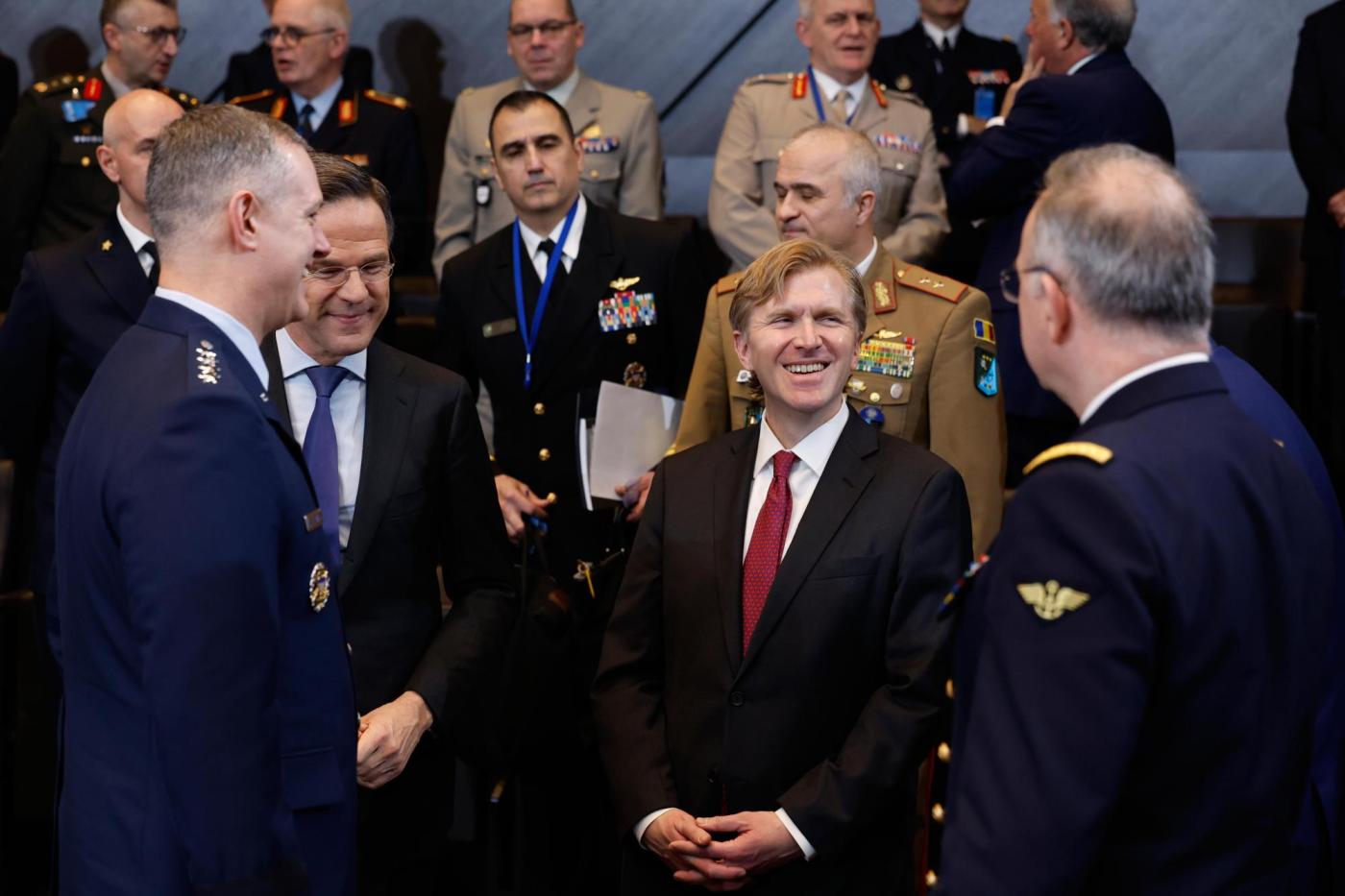
A general view of the round table during a meeting of the North Atlantic Council in Defense Ministers Session at NATO headquarters in Brussels, Thursday, Feb. 12, 2026. (AP Photo/Geert Vanden Wijngaert)

U.S. Defense Secretary Pete Hegseth did not attend Thursday’s gathering of defense ministers at NATO headquarters in Brussels. His no-show came after Secretary of State Marco Rubio skipped the last meeting of NATO foreign ministers in December.

It’s rare for members of a U.S. administration to miss a meeting of the organization’s top decision-making body, the North Atlantic Council, at the level of ministers, let alone two meetings in a row. Under Secretary of Defense Elbridge Colby was sent in Hegseth’s place.

“Sadly for him, he is missing a good party,” Icelandic Foreign Minister Þorgerður Katrín Gunnarsdóttir told reporters. “Of course, it’s always better that the ministers attend here, but I would not describe it as a bad signal.”

“I’m not disappointed,” German Defense Minister Boris Pistorius said. “Each of us has a full agenda. And one time the American defense minister is here, and one time not, so it’s his decision and his duties he has to fulfill.”

How times have changed

When asked what NATO’s purpose was in its infancy in 1949, NATO’s first secretary-general, the British general and diplomat Lord Hastings Ismay, was reputed to have replied: “To keep the Americans in, the Russians out and the Germans down.”

Related Articles


WhatsApp says Russia has tried to fully block the messaging app


Syria says its forces have taken over al-Tanf base after a handover from the US


Today in History: February 12, Pope Francis meets Russian Orthodox Church’s leader


Police identify suspect in Canada school shooting as 18-year-old


New revelations from Epstein files take a toll across Europe

Nowadays, Germany is stepping up. After Russia invaded Ukraine four years ago, it vowed to spend$118 billion to modernize its armed forces in coming years.

A big part of NATO Secretary-General Mark Rutte’s job is to keep the Americans in.

“They have to take care of the whole world. This is the United States,” Rutte told reporters before chairing the meeting. “I totally accept it, agree with it.”

“They have always consistently pleaded for Europe doing more, Canada doing more, taking more care of the defense of NATO territory, of course in conjunction with the United States,” he said.

That means more European spending on conventional weapons and defense, while the U.S. guarantees NATO’s nuclear deterrent.

But doubts linger, and surprises from the Trump administration cannot be ruled out. Allies still wonder whether more U.S. troops will be withdrawn from Europe.

“What for me is the most important is the no-surprise policy that has been agreed between the NATO secretary-general and the U.S.,” Dutch Defense Minister Ruben Brekelmans said.

Stepping back

Publicly at least, the Trump administration is doing much less at NATO. A year ago, Hegseth warned that America’s security priorities lie elsewhere and that Europe would have to look after itself, and Ukraine in its battle against Russia’s full-scale invasion.

Supplies of U.S. guns and money that were sent to Ukraine by the previous administration of President Joe Biden have dried up under Trump. European allies and Canada are obliged to buy weapons from the United States to donate now.

Western backers of Ukraine were also meeting at NATO on Thursday to drum up more military support. A scheme proudly championed by the Pentagon under Biden, the Ukraine Defense Contact Group is now chaired by the U.K. and Germany.

U.K. Defense Secretary John Healey announced that Britain would provide “an extra half a billion pounds ($682 million) in urgent air defense to Ukraine. This is Britain being a force for good in the world, building a new deal for European security within NATO.”

Sweden also intends to fund the purchase of more American weapons. The Netherlands will send more flight simulators to help Ukrainian fighter pilots train to fly F-16 jets.

Arctic Sentry

The one “deliverable” from Thursday’s meeting was the announcement that NATO would launch Arctic Sentry, its response to U.S. security concerns in the high north, and an attempt to dissuade Trump from trying to seize Greenland.

It’s ostensibly aimed at countering Russian and Chinese activities or influence in the Arctic region.

But Arctic Sentry is essentially a rebranding exercise. National drills already underway in the region, like those run by Denmark and Norway, will be brought under the NATO umbrella and overseen by the organization’s military chief.

It is not a long-term NATO operation or mission.

Denmark, France, Germany will take part in the “military activities” happening under Arctic Sentry, but they have not said in what way. Finland and Sweden are likely to get involved. Belgium is considering what role it might play.

It remains unclear what role, if any, the United States will take.

“It can’t just be more from the United States,” U.S. Ambassador to NATO Matthew Whitaker said ahead of Thursday’s meeting. “We need capable allies that are ready and strong, that can bring assets to all of these areas of our collective security.”

Trump’s renewed threats last month to annex Greenland — a semiautonomous territory of NATO ally Denmark — have deeply shaken the rest of the alliance. NATO’s primary role is to defend the territory of its 32 member states, not to undermine it.

European allies and Canada hope that Arctic Sentry and ongoing talks between the Trump administration, Denmark and Greenland will allow NATO to move on from the dispute and focus on Europe’s real security priority, Russia’s war on Ukraine.

Belgian Defense Minister Theo Francken said the Arctic security arrangement at least means that “we stop having some food fights over the Atlantic.”

“I think that the Greenland saga was not the best moment of NATO (over) the last 76 years,” he told reporters. “It was a crisis that was not needed.”

My Home Is Treated Like a War Zone. That Militarization Expanded to Minnesota.

posted in: All news | 0

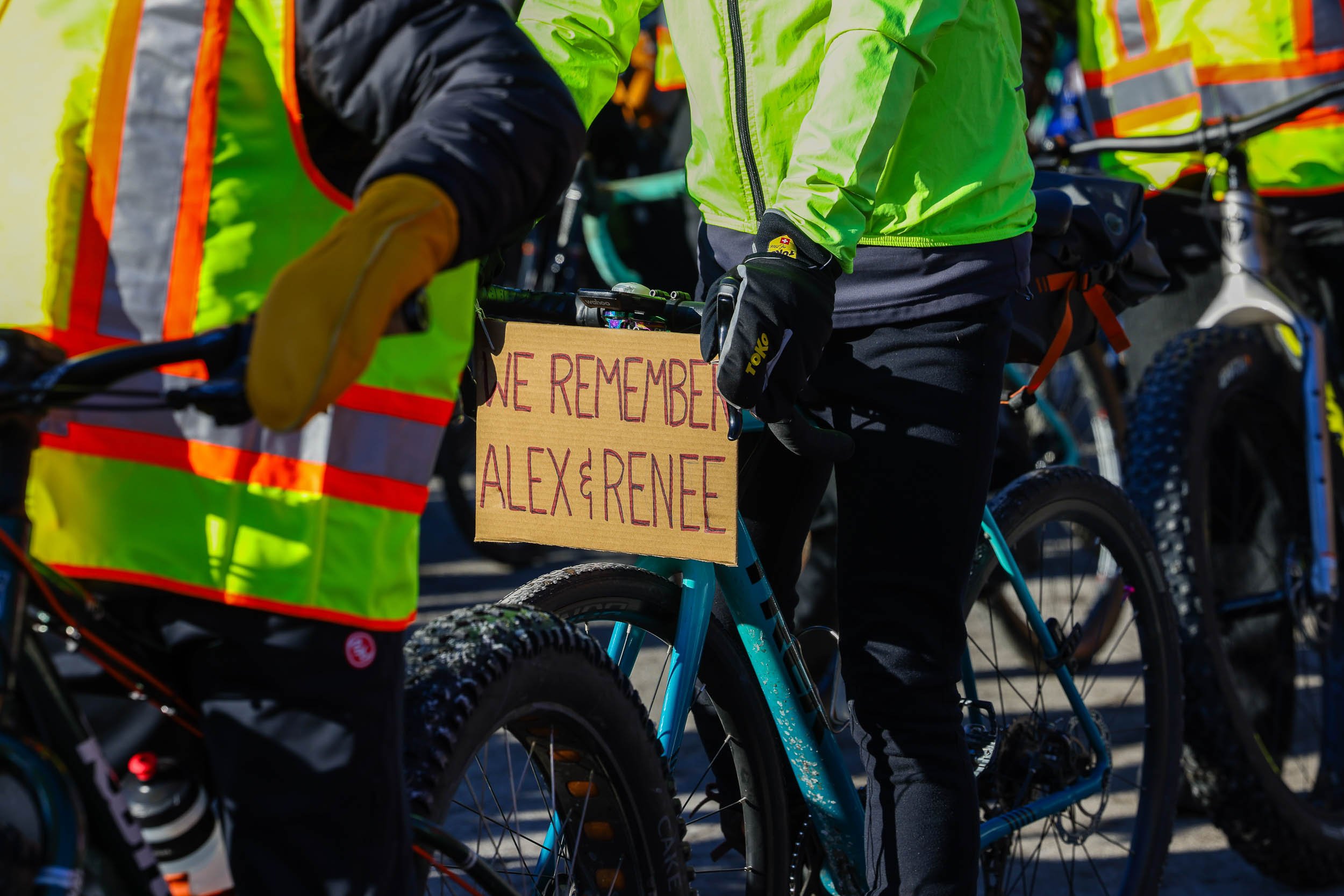
The two shooters during the killing of Alex Pretti in Minnesota on January 24 were Customs and Border Protection (CBP) agents from South Texas. The same place I’m from. 

For years, local activists and community leaders here have demanded the demilitarization of the border. For decades, natural landscapes, rivers, and deserts have been used as a means, along with the border wall, to violently deter and kill migrants. For generations, Border Patrol has maintained a high presence in South Texas and has operated with minimal oversight and accountability, shaping a culture in which terrorizing immigrants and their families has become part of our daily life.

That this culture traveled with these agents far from the border underscores how practices developed in the name of immigration enforcement are no longer confined to border communities. They are exported. 

A protest sign in Minneapolis on January 31 (Shutterstock)

I grew up in Laredo in a working-class family less than a mile from the Rio Grande. For so long, we have normalized CBP agents keeping a watchful eye on us  and our neighborhoods. I now live in Brownsville, about four hours downriver. South Texas has not only been my home for most of my life, but it has also been the breeding grounds for evolving tactics of policing, racial profiling, and surveillance. 

Many of us here live with the mechanization of militarization and surveillance embedded into our psyches. We know where the checkpoints are. We warn one another when the Border Patrol is nearby. In public space, we adjust our bodies and behavior, attempting to go unnoticed, offering smiles of compliance as a way to disarm. 

As a kid, I witnessed the contrast between the Border Patrol’s green-striped SUVs and my mother, a Mexican immigrant herself, who handed out sandwiches wrapped in tin foil and disposable cups filled with Kool-Aid to border-crossers—often men, who looked parched and carried nothing more than a backpack. I heard my father call them mojaditos, and he would demand my mom stop giving them food. But my mother kept doing what she and I felt was the right thing. I knew that she saw herself in these men. 

Border agents have killed before. In 2018, Romualdo Barrera shot a young Indigenous woman from Guatemala in the head as she was hiding from sight in Rio Bravo, near Laredo. There have been many violent murders at the hands of Border Patrol agents. This is not an aberration but part of a broader federal apparatus built and refined over decades. That apparatus is sustained by enormous public investment and a parallel infrastructure of propaganda, one that manufactures public consent for an economy and governing logic based on framing migrants as criminals.

When I was a kid, I loved peering over the rails of the international bridge, or the edge of Tres Laredos Park, to watch the river. One day, I witnessed a man struggling for his life, his head barely above water. He was pulled out by CBP and was instructed by the officers to enter their passenger transport van. Why couldn’t he just stay on this side?, I thought as a child. I understood the absurdity that was border policy at age 7. 

I learned that brown skin, worn clothing, wet garments, and walking could be a sign that you didn’t have legal permission to inhabit this side. Racial profiling and classism informed surveillance operations on the border. 

Texas has a long history of policing mexicanos and Native peoples. The Tribal Chairman of the Carrizo/Comecrudo Tribe of Texas says that his Native ancestors would hide their identities to avoid being killed. After the United States and Mexico became sovereign nations, Texas was stolen and annexed, and an influx of Anglo settlers immigrated into South Texas, working alongside the Texas Rangers to instill terror in the local mexicanos. All to create an industrial agriculture-based economy through which the new local white power structure was created.

The Border Patrol was established in 1924. Agrobusinessmen needed an exploitable labor force to seed, steward, and harvest. The Border Patrol, along with the Texas Rangers and agrobusinessmen, collaborated to create a disposable and temporary labor force, one that could be controlled through the constant threat of deportation.  

In her book Migra!: A History of the U.S. Border Patrol, Kelly Lytle Hernández describes the early majority of Border Patrol agents as white working-class and landless men who joined as a way to advance themselves into the power structure. She tells of early Mexican Border Patrolmen, who came from middle-class families and sought proximity to the white elite. In the racial structure of South Texas, your status as a Border Patrol agent could afford you more power.  

These middle-class mexicanos embraced U.S. institutions and capitalism. Meanwhile, the migrant, brown, and non-English-speaking people became a barrier, perceived as getting in between their access to whiteness. 

“We are not Mexican; we are Mexican-American,” was a sentiment I heard echoed in my Laredo high school in the early 2000s.  I am not like them; they didn’t come the right way. I internalized this racism, rejecting Spanish in middle school, afraid of being perceived as poor or uneducated. So many of us on the border have internalized racist narratives about ourselves. 

Joining the Border Patrol has historically been and still is a marker of social mobility, affording people here the chance to earn a stable living wage. But doing this work requires people to fail to form their own belief systems, and to comply with the propaganda the immigration enforcement machine creates. Agents must learn not to see themselves in the people they police. That separation is not incidental; it is necessary. 

In this way, the Border Patrol becomes more than employment. It becomes an identity, a form of self-erasure rooted in the assertion: I am American, not Mexican.  

When I read the description of one of the two agents, Jesus Ochoa, in Propublica, including his interest in collecting guns, I was struck by how much he resembled other men in our community. For so long, CBP and the U.S. Army have been recruiting Mexican men in our community. Young men are tracked into manual labor jobs, the military, or CBP. 

The South Texas border apparatus is like a factory-conveyor belt; our culture is extracted, and acceptance is offered through guns, uniforms, and allegiance. Forming an identity is so critical to the human experience, and propaganda offers one.  

These dynamics also perpetuate systems of exploitation within our communities. A large number of Border Patrol agents are from our communities, which have large undocumented populations, and many even have undocumented relatives themselves. Yet the border is a hostile environment for undocumented people. This region has a high number of wage theft cases involving undocumented workers. 

The border wall and a Border Patrol pickup in Hidalgo County in 2018 (Gus Bova)

From a young age, we are taught that Mexico is inferior, that our neighbor cities are less developed. These narratives come from a long history that has justified U.S imperialism and neocolonial interventions in other countries. In Harvest of Empire: The Untold Story of Latinos in America, Juan González documents U.S. intervention and its role in destabilizing and overthrowing democratic structures across Latin America driving displacement and migration. Border militarization exists to protect the stolen wealth that has been accumulated by the United States.

It is time for us to collectively imagine and demand a future without Border Patrol and without Immigration and Custom Enforcement. We have witnessed, locally and now nationally, the consequences of a century-old, violent federal apparatus with total impunity. South Texas has been transformed into a surveillance economy, sustained by massive federal investment in militarization rather than in people. 

We cannot continue to accept or rely on jobs that require violence against our own communities. Instead, we need investment in border economies that centers on cultural wealth, protecting local ecosystems, and opportunities that express the collective care we have for each other.

The post My Home Is Treated Like a War Zone. That Militarization Expanded to Minnesota. appeared first on The Texas Observer.

US applications for jobless benefits falls to 227,000 last week, remaining at recent healthy levels

posted in: All news | 0

By MATT OTT, Associated Press Business Writer

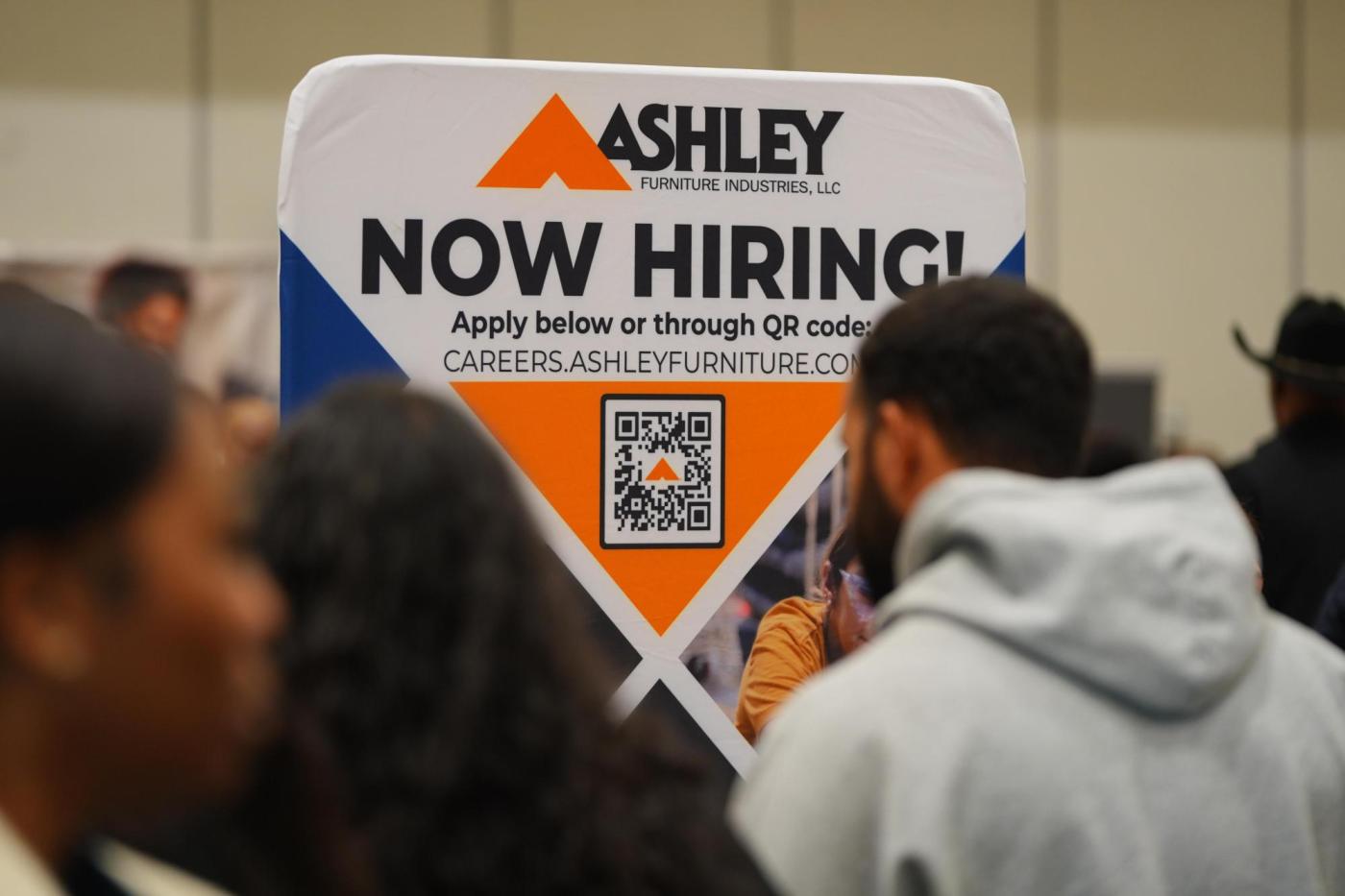
WASHINGTON (AP) — The number of Americans applying for unemployment benefits fell last week, remaining within the historically healthy range of the past few years.

Related Articles


WhatsApp says Russia has tried to fully block the messaging app


St. Paul City Council: Hotels should tell ICE they’re not welcome


Protesters in multiple states press Target to oppose the immigration crackdown in Minnesota


Instagram chief says he does not believe people can get clinically addicted to social media


Kraft Heinz pauses plans to split into 2 companies, says its problems are ‘fixable’

Applications for jobless aid for the week ending Feb. 7 fell by 5,000 to 227,000 from the previous week, the Labor Department reported Thursday. That’s basically in line with the 226,000 new applications that analysts surveyed by the data firm FactSet had forecast.

Filings for unemployment benefits are viewed as representative of U.S. layoffs and are close to a real-time indicator of the health of the job market.

The four-week moving average of jobless claims, which balances out some of the weekly volatility, rose by 7,000 to 219,500.

The total number of Americans filing for jobless benefits for the previous week ending Jan. 31 increase by 21,000 to 1.86 million, the government said.