Does That Building Have Stabilized Apartments? It’ll Soon Be Easier to Know

posted in: All news | 0

The City Council’s just-passed “Rent Transparency Act” will require landlords of buildings with regulated units to display a sign in common areas disclosing that status. “Many tenants living in rent stabilized units don’t know how to determine their legal rent, and in turn, bad landlords have gotten away with illegal rent overcharges and have illegally deregulated units and whole buildings,” said Councilmember Sandy Nurse, who sponsored it.

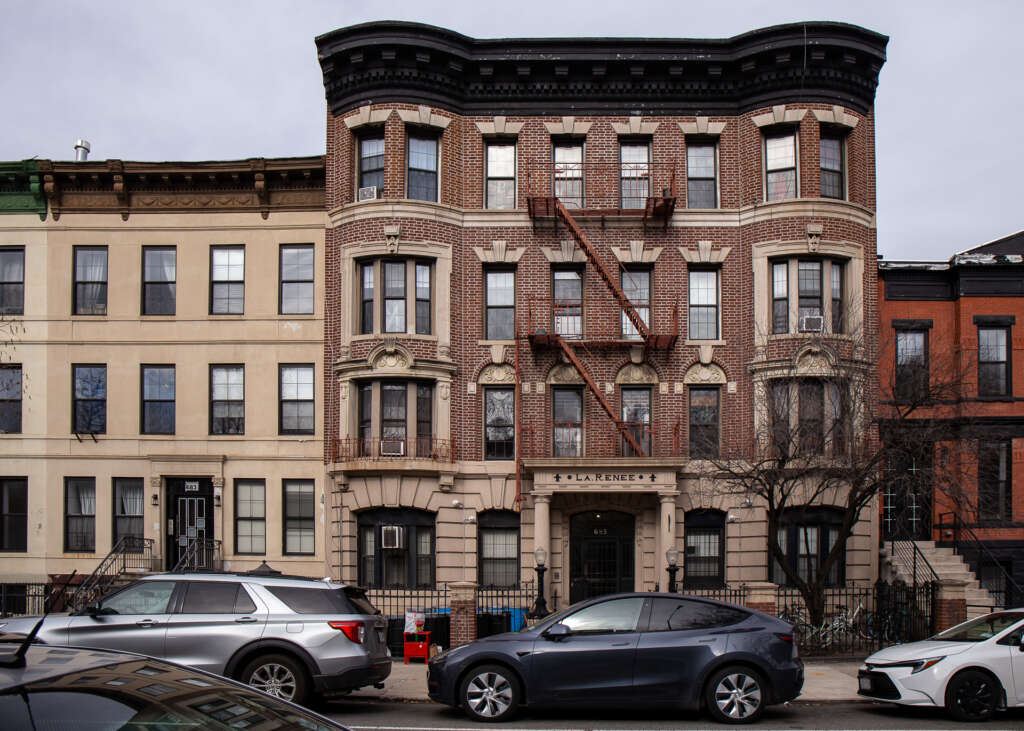
Apartments in Brooklyn. (Photo by Adi Talwar)


There are roughly 1 million rent stabilized apartments in New York City—units where tenants are entitled to certain protections, including limits on how much their landlord can raise the rent each year—though they aren’t always easy to identify.

But a bill passed by the City Council Thursday will require property owners to post bilingual signs in the common areas of buildings that contain regulated units, disclosing that status as well as letting tenants know they can request the rent history of their own apartment from the state.

“Many tenants living in rent stabilized units don’t know how to determine their legal rent, and in turn, bad landlords have gotten away with illegal rent overcharges and have illegally deregulated units and whole buildings,” said Councilmember Sandy Nurse, who sponsored the bill, said at Thursday’s Council meeting, where the Rent Transparency Act passed unanimously.

In New York City, apartments are typically stabilized if they meet certain rent law criteria—if they’re in buildings built before 1974 with six or more rental units, for example, or if their owners received tax breaks in exchange for keeping rents affordable. Landlords are required to register their regulated units each year, and share a copy of that registration with the tenant. The state’s Division of Housing and Community Renewal (DHCR) maintains a database of those properties.

In testimony during a City Council hearing on the bill late last year, the Real Estate Board of New York, which represents landlords and developers, cited those existing requirements as to why the proposal was “unnecessary,” and said the signs could sow confusion among non-regulated tenants in a building with regulated units, “to mistakenly believe they are entitled to the same rights as rent stabilized tenants.”

“Rent regulated housing owners are already subject to numerous notification requirements, and every rent stabilized tenant receives a lease rider that provides this information,” the group said at the time.

But not all owners comply with the annual registration requirements, making it hard for tenants to know if they’re being overcharged unless they request a rent history for their apartment from the state and do the math themselves.

“It’s happening across the board. There’s 2.5 million rent stabilized tenants,” Nurse told City Limits in a recent interview. She said she’s experienced this confusion herself, having only learned her own apartment was regulated after a housing organizer, who was helping other tenants in the building at the time, suggested she get her rent history from DHCR.

“I just went through my third lease renewal in which the landlord acted as if we hadn’t had the conversation several times, and tried to jack up the rent well beyond what was legally allowed for a rent stabilized unit,” she said. She said she sent the owner a screenshot of her rent history, and they were then forced to offer her the legally-adjusted rent.

“This is me as a councilmember, knowing what I know and having this experience and education level in terms of city government,” Nurse said. “The average New Yorker doesn’t know.”

The law is expected to take effect around the end of the year, Nurse said. The city’s Department of Housing, Preservation and Development will distribute the notification signs to landlords, and they’ll include information in both English and Spanish.

“This building contains one or more units that are subject to the Rent Stabilization Law of 1969. To find out if your unit is registered as rent stabilized, contact the New York State Division of Housing and Community Renewal (DHCR),” the signs are expected to read, according to legislations. “Owners of such buildings must submit an annual filing to DHCR and provide each tenant with a copy of the information that pertains to their unit. Owners that fail to file may be subject to penalties.”

Enforcement will be largely “driven by people who live in the buildings,” Nurse said, as well as HPD staff who will look for the signs when inspecting buildings with regulated units.

 The reach the editor, contact Jeanmarie@citylimits.org

Want to republish this story? Find City Limits’ reprint policy here.

The post Does That Building Have Stabilized Apartments? It’ll Soon Be Easier to Know appeared first on City Limits.

The Massive U.S. Pipeline Buildout Is Mostly for Gas Going Overseas

posted in: All news | 0

Editor’s Note: This article originally appeared at Inside Climate News, a nonprofit, independent news organization that covers climate, energy, and the environment. It is republished with permission. Sign up for their newsletter here.

More than three-quarters of new gas pipeline capacity currently under development in the U.S. would feed additional liquefied natural gas exports rather than supporting domestic energy needs, a new report concludes. 

Greenhouse gas emissions tied to that new capacity would be far larger than the current climate pollution from all coal-fired power plants nationwide, according to the report, published Monday by the Center for Energy & Environmental Analysis. CEEA is a recently formed think tank based in Arlington, Virginia, that focuses on energy and environmental policy.

“The money flowing to gas pipeline infrastructure is not slowing and is intended to push US gas production even higher from its current record levels,” Jeremy Symons, president of the CEEA and a former federal climate policy advisor, said in a written statement. “This buildout will extend our dependency on natural gas for decades to come, slowing the transition to cleaner, more affordable alternatives.”

Planned natural gas transmission pipelines would add 99 billion cubic feet per day of additional capacity, a figure just below the total volume of U.S. natural gas production in 2024, according to the report. The 10 largest planned pipelines across the country—and 80 percent of total capacity of active pipeline projects—are intended to export gas overseas as LNG, based on the authors’ assessment of federal data and other public records.

The additional gas shipments would have significant implications for climate change. If all of the pipelines are built and run at full capacity, carbon dioxide emissions from burning this additional gas would be two and half times greater than the CO2 currently released from all U.S. coal-fired power plants, the report found.

This doesn’t include emissions of methane, a climate super pollutant and the primary component of natural gas. Methane emissions occur at every step of the natural gas supply chain—from wellheads and pipelines to LNG vessels and end users—as the gas leaks or is intentionally vented.

Methane emissions from the additional pipelines would pack a climate punch nearly twice that of CO2 emissions from coal-fired power plants over a 20-year period, according to the report.

The amount of gas leaks from the oil and gas sector will likely increase as the Trump administration rolls back the industry’s methane regulations, the report noted.

“We know from hundreds of thousands of aerial and satellite measurements that methane leaks from oil and gas production are far worse than we previously realized, which makes the climate footprint of natural gas as bad as coal in many regions of the country,” said Danny Richter, a senior fellow with CEEA and the report’s lead author. “We had a clear path to clean up the methane problem, including the methane emissions reduction program enacted by Congress in 2022 as well as EPA regulations for the oil and gas industry. But that pathway has been shut down by the current administration.” 

A fee on excessive methane emissions from oil and gas producers implemented under the Biden administration was rescinded by the Trump administration on May 12.

“It is clear from the beginning of this ‘report’ that it was created with the outcome already determined and no desire to provide facts,” an EPA spokesperson told Inside Climate News. “U.S. methane emissions have been falling for decades thanks to American innovation, not heavy-handed government regulations, while domestic production of oil and gas has exponentially increased. According to EPA, methane emissions in the United States decreased by 19% between 1990 and 2022.”

Measurements in the field have repeatedly shown that reported methane emissions far understate actual releases.

The American Petroleum Institute, an oil and gas industry group, did not respond to a request for comment.

The report is based on U.S. Department of Energy data on 104 pipeline projects currently under development. It is unclear whether all of the planned pipelines will be built. Fifty-four of the projects, slightly more than half of all pipelines under development, have either not yet been approved or are on hold.

This includes one of the largest proposed pipelines, the $45 billion Alaska Nikiski LNG project. The pipe, which proponents have sought for decades, would transport gas 805 miles from Alaska’s North Slope to an LNG export terminal in southern Alaska. Completing the proposed export terminal, a retrofit of an existing import terminal, is included in the project’s projected cost. 

The developer, the Alaska Gasline Development Corp, has applied for permits for the pipeline, many of which were approved during the last Trump administration, but still requires more.

President Donald Trump has directed agencies to speed up permitting and roll back environmental protections. He touted the Alaska Nikiski LNG project in an address to Congress earlier this year as “truly spectacular” and said “the permitting is gotten.”

Arvind Ravikumar, co-director of the Energy Emissions Modeling and Data Lab at the University of Texas at Austin, cautioned that the report included figures for carbon dioxide emissions of gas burned by end users in other countries that import the LNG.

“The way international carbon accounting works in this space is that you count only those emissions that happen within your national border,” Ravikumar said.

However, David Lyon, a senior methane scientist with the Environmental Defense Fund, said including emissions from burning the gas, wherever it occurs, made sense.

“Climate change is global,” Lyon said. “If we are just exporting our emissions to other countries, that’s still going to cause climate change and have impact.”

However, Lyon noted that in some cases, building gas pipelines could actually help reduce emissions. For example, in the Permian basin of West Texas and southeastern New Mexico—the largest oil and gas producing region in the country—gas is often flared, or vented, due to a lack of sufficient pipeline capacity.

In such cases, additional pipelines could help reduce flaring and its associated emissions. But it would be better to avoid drilling new wells in areas that lack sufficient pipeline capacity in the first place, Lyon added.

In comparing greenhouse gas emissions associated with the planned pipelines to those of coal-power plants, the report only compares CO2 emissions between the two fuel sources. Elsewhere, the report discusses methane emissions from the gas supply chain, but does not consider methane emissions from coal mines that feed coal-fired power plants. A recent peer-reviewed study comparing the greenhouse gas emissions of LNG and coal found methane emissions from coal mines were relatively modest compared to coal’s CO2 emissions.

In addition to permitting issues, economic forces could also limit the number of pipeline projects that get built in the coming years, or the extent to which completed pipelines operate at full capacity.

China, the world’s largest importer of LNG, stopped taking U.S. gas entirely in March in response to U.S. tariffs on Chinese goods.

Symons said the ongoing pipeline buildout could commit the U.S. to significantly larger LNG exports for decades to come.

“This locks in more fossil fuel dependency that future presidents won’t be able to make go away,” he said. “Policies like tax incentives come and go, but pipelines are forever.”

The post The Massive U.S. Pipeline Buildout Is Mostly for Gas Going Overseas appeared first on The Texas Observer.

Will Texas Workers Ever Get a Break from the Summer Heat?

posted in: All news | 0

On April 15, Annie Fierro of the Workers Defense Action Fund arrived at a state House committee hearing in Austin to support a bill that sought to prevent workplace heat-related illnesses and deaths. 

Fierro chose to share written testimony from Ignacio, a Houston member of Workers Defense who she said was unable to get time off to attend the hearing. For over 25 years, she explained, Ignacio had worked as a finisher for construction projects. Laboring inside un-airconditioned buildings filled with chemical vapors and little ventilation in Texas’ scorching summers is a regular part of his job. Then, in March 2024, he was hospitalized with kidney failure that he attributes to working without sufficient breaks or water through Texas’ sweltering heat. He now receives dialysis 12 hours a week. 

After his employer learned about his condition, his pay was docked, and he’s still not given time for water breaks. 

“I am just one of the thousands of Texas workers that suffer poor and unsafe conditions on the job,” Fierro read.

But, in the end, the proposed legislation died—part of yet another unsuccessful effort to bolster protections for workers in increasing heat. 

Republican lawmakers in Texas have long rejected legislation meant to prevent work-related heat illnesses and deaths. During the record-breaking summer heat wave of 2023, Governor Greg Abbott also signed into law the so-called “Death Star” bill, banning many local ordinances including those passed in Austin and Dallas that mandated rest breaks for construction workers. (The law was ruled unconstitutional by a lower state court and remains tied up in appeals.) That year, the federal Bureau of Labor Statistics (BLS) reported that 14 Texans died from workplace heat exposure, though BLS statistics undercount heat deaths in particular.

Worker advocates had hoped relief would come from the Biden administration. Since October 2021, federal officials have been developing a new Occupational Safety and Health Administration (OSHA) rule that would specifically require employers to protect workers from heat exposure. The proposed heat rule would require employers to have a heat acclimatization plan and provide workers a rest break every two hours if the heat index exceeds 90 degrees. It was published last August, and the public comment period closed in January. A virtual hearing, open to anyone, is set for June 16

That hearing is considered a milestone for workplace health and safety, given that the National Institute for Occupational Safety and Health (NIOSH)—a federal agency that researches and recommends worker health and safety protections—first recommended a heat rule more than fifty years ago. But it is unclear how the Trump administration will now proceed.

Without a federal heat safety rule, workers who complain to OSHA about being forced to work with insufficient water and breaks in increasingly high temperatures must rely on a catch-all section of statute called the “general duty clause,” which broadly requires employers to maintain workplaces without “recognized hazards.” But fines and sanctions based on the general duty clause are more vulnerable to administrative and legal challenges from employers—even after government inspectors document problems in investigations of heat-related deaths. Having a specific standard for preventing heat illnesses and deaths would give employers clearer guidance and strengthen OSHA’s enforcement ability, experts say. 

From 2011 to 2022, the federal Bureau of Labor Statistics (BLS) reported that 479 workers in the United States died from heat exposure while nearly 34,000 suffered heat-related illnesses or injuries on the job. OSHA has stated that these numbers are “likely vast underestimates.” The nonprofit Public Citizen has estimated that up to 2,000 deaths and 170,000 injuries occur annually from workplace heat exposure. Texas leads the nation in workplace fatalities and illnesses, including those from heat exposure, according to the BLS data. 

“For far too long, Texas workers have been forced to work through extreme heat—at times even losing their lives,” said U.S. Representative Greg Casar, who has been pushing for workplace protections from the heat for more than a decade. “The basic rights of all workers—and lives—are at stake.”

But, even after the June hearing, there will be a long way to go for OSHA to finalize the new rule. According to a congressional report, it typically takes OSHA 4 to 12 years to issue a new standard. 

Barab predicted that one of two things may happen under the Trump administration. “Even if they want to, they may not have the resources or the staff to finish up a standard in the next three years,” he said, or: “They could try to issue a very weak standard that would basically look like they were doing something that really wouldn’t have any teeth in it.”

The administration could also move to kill the standard altogether, though Barab said that to do so, “There are a number of lengthy steps they need to go through (assuming they will actually comply with the law.) So they may prefer to let it wither.” 

Already, the Trump administration has cut federal employees who oversee standards for workers’ health and safety. In April, more than 85 percent of the NIOSH workforce was fired. On May 12, some were reinstated, though the agency remains gutted. 

The administration is also terminating leases for 11 OSHA offices, including the one in Houston, home to many of the nation’s largest oil and gas companies. While OSHA officials continue to conduct inspections, Barab told the Observer that Trump has cut 10 percent of its workforce and more layoffs could be coming. “We’re not quite sure what’s in the cards in terms of … downsizing and reorganization of OSHA.”

As part of a wider push to wipe out workplace, environmental, financial, and other regulations years in the making, Trump also issued an executive order in mid-April entitled “Unleashing Prosperity Through Deregulation,” which requires 10 regulations to be repealed for every new one added. That means an OSHA heat rule could require the undoing of other workplace protections. 

In February, Trump tapped David Keeling, a former executive for Amazon and UPS, to lead OSHA. On April 30, The Lever reported that during the time Keeling served as vice president of global health and safety at UPS, from 2018 to 2021, and as the director of road and transportation safety at Amazon, from 2021 to 2023, OSHA fined those businesses $2 million for more than 300 workplace safety citations. 

Keeling has not yet been confirmed by the U.S. Senate and did not reply to an interview request for this story. A spokesperson for the U.S. Department of Labor told the Observer, “Given that Mr. Keeling is going through the nomination process, we are unable to comment on his potential leadership at OSHA.”

No Republican administration has issued a major OSHA standard since the George H. W. Bush administration, except when ordered to do so by the courts, Barab told the Observer.

Some Texas businesses already are lobbying against OSHA’s proposed heat rule and have filed comments arguing that OSHA-mandated rest breaks are unnecessary even in extreme heat. The Associated Builders and Contractors criticized the proposed rule’s “one size fits all” approach and stated, “Heat triggers should be determined by the contractor and those deemed competent persons in the field.” Jay Bragg, an associate director with the Texas Farm Bureau wrote that already “Farm workers are generally encouraged to take breaks as needed.” 

A letter from the Texas International Produce Association stated, “Workers in Texas are acclimated to these conditions and have developed the capacity and skill-sets to work effectively under these temperatures.”

But David Chincanchan, the policy director for Texas’s Workers Defense Action Fund, argues that those kinds of comments do not reflect workers’ experiences. “There will always be employers who refuse to do the right thing unless they are required,” Chincanchan said.

The Observer previously reported how Antelmo Ramirez, a 57-year-old father, grandfather, and husband, died in 2021 from hyperthermia while working at the Tesla Gigafactory construction site near Austin. In another story, the Observer revealed how the U.S. Postal Service (USPS) falsified heat illness prevention training records, including that of Eugene Gates, a Dallas postal worker, who died in 2023 while lugging mail in 98-degree weather. 

In an interview, Homer Hernandez, a San Antonio postal worker and a legislative chair of the National Association of Letter Carriers, told the Observer that most Texas mail carriers are still driving un-airconditioned trucks, though USPS promised last October to provide more vehicles with air conditioning. 

In the meantime, Texas workers like Ignacio, whose story was shared with legislators in April, face increasing risks as temperatures continue to climb. A record-breaking heat wave swept Texas in May with temperatures exceeding 100 degrees in many cities.

The Climate Prediction Center forecasts above average temperatures statewide this summer. John Nielsen-Gammon, director of the Southern Regional Climate Center and Texas State Climatologist, advised that workers exposed to the heat must take frequent breaks and drink plenty of water to prevent illnesses. “Each person should be monitoring their own symptoms,” Gammon said. This includes dizziness, headaches, nausea, and cramps, which when left untreated, can lead to a breakdown of organs, then death.

But until there are more protections in place, many workers, like Ignacio, say they must continue to endanger their health to make ends meet. 

“When my employer learned about my situation, he started to treat me differently because of my health problems. He paid me less. … He didn’t allow me to take even short breaks to drink water and cool down my body,” read Fierro. “Workers like me who do their work honorably deserve to be treated with dignity and respect.”

The post Will Texas Workers Ever Get a Break from the Summer Heat? appeared first on The Texas Observer.

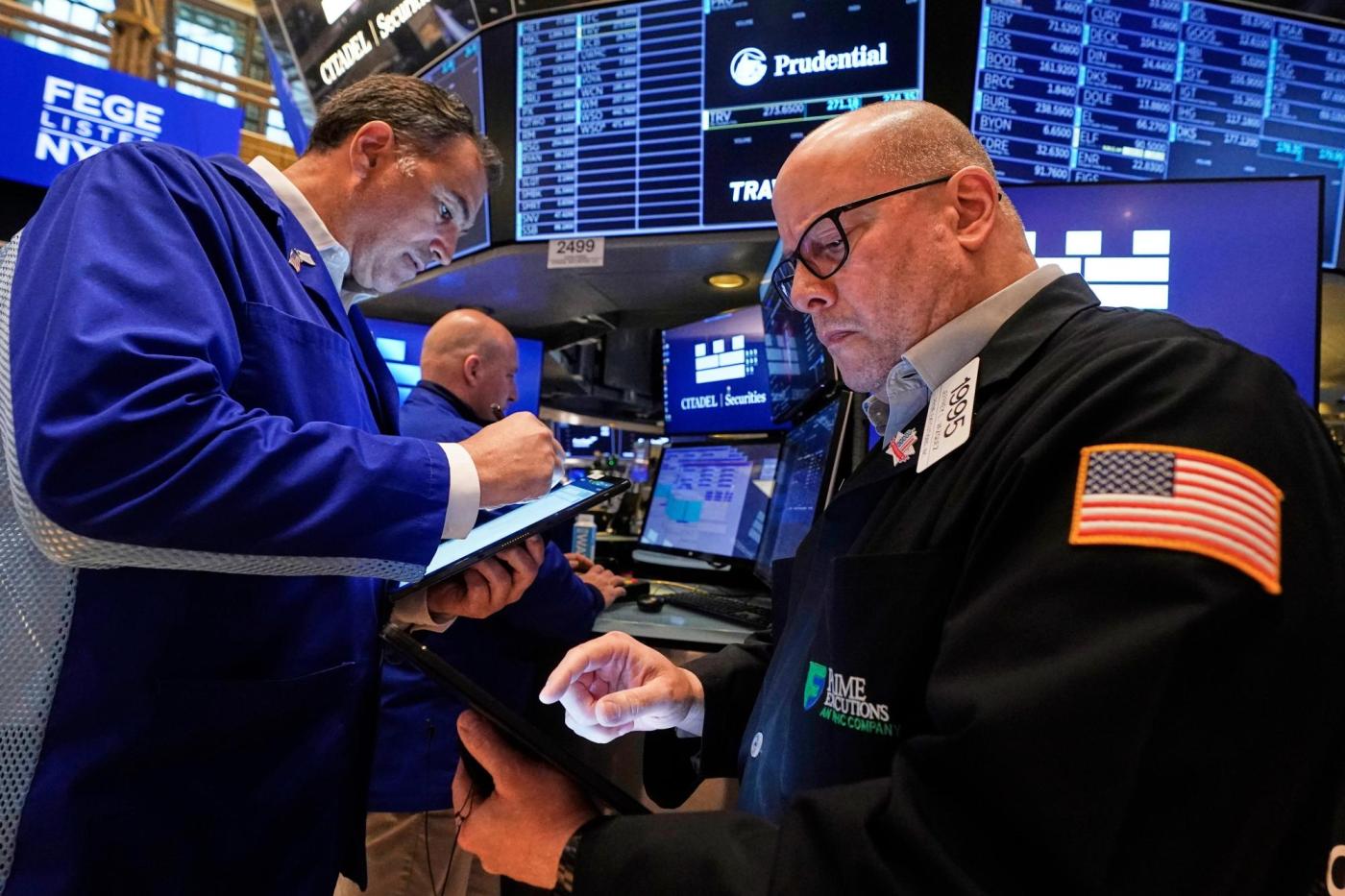
Wall Street drifts as financial markets worldwide hold relatively steady

posted in: All news | 0

By STAN CHOE, Associated Press Business Writer

NEW YORK (AP) — U.S. stocks are drifting on Tuesday, and financial markets worldwide are holding relatively steady as the wait continues for more updates on President Donald Trump’s tariffs and how much they’re affecting the economy.

The S&P 500 was virtually unchanged in early trading, coming off a modest gain that added to its stellar May, and is within 3.4% of its all-time high set earlier this year. The Dow Jones Industrial Average was up 30 points, or 0.1%, as of 9:35 a.m. Eastern time, and the Nasdaq composite was flat.

Dollar General jumped 12.9% for one of the market’s bigger gains after reporting stronger profit and revenue for the start of the year than analysts expected. The discount retailer also raised its forecasts for profit and revenue over the full year, though it cautioned that “uncertainty exists for the remainder of the year” because of tariffs and how they might affect its customers.

Related Articles


Dollar General posts record sales as bargain stores attract more people anxious about the economy


Man accused of trying to get witness against him deported by writing letters threatening Trump


US growth likely to slow to 1.6% this year, hobbled by Trump’s trade wars, OECD says


Today in History: June 3, the Zoot Suit Riots begin in Los Angeles


Romanian man pleads guilty to ‘swatting’ plot that targeted an ex-US president and lawmakers

Many other companies have cut or withdrawn their financial forecasts for the upcoming year because of the uncertainty caused by Trump’s on-again-off-again rollout of tariffs. The Organization for Economic Cooperation and Development said on Tuesday that it’s forecasting 1.6% growth for the U.S. economy this year, down from 2.8% last year.

But while Trump’s tariffs have certainly made U.S. households feel more pessimistic about where the economy and inflation are heading, reports have suggested only a moderate hit so far. Manufacturers have begun to feel the effects, but the overall job market has remained solid overall with layoffs remaining relatively low, and inflation has not taken off.

A report later in the morning will show how many job openings U.S. employers were advertising at the end of April. That will lead into a more important report on Friday, which will show how much hiring and firing U.S. employers did in May. Economists expect to see overall hiring slowed from April’s level.

On the trade front, hopes are still high on Wall Street that Trump will reach trade deals with other countries that will ultimately lower tariffs, particularly with the world’s second-largest economy. The U.S. side said President Donald Trump was expecting to speak with Chinese leader Xi Jinping this week. A Chinese foreign ministry spokesperson said Tuesday that they had no information on that.

On Wall Street, Constellation Energy rose 5.7% after signing a 20-year deal to provide Meta Platforms with power from its nuclear plant in Clinton, Illinois.

In the bond market, Treasury yields eased a bit. The yield on the 10-year Treasury fell to 4.42% from 4.46% late Monday.

It’s a cooldown following a sharp rise for yields over the last two months, in part on worries about how the U.S. government may be set to add trillions of dollars to its debt through tax cuts. Besides making it more expensive for U.S. households and businesses to borrow money, higher Treasury yields can also discourage investors from paying high prices for stocks and other investments.

In stock markets abroad, indexes were mixed amid mostly modest moves across Europe and Asia.

Hong Kong was an exception, where the Hang Seng jumped 1.5%. That came despite a report showing Chinese manufacturing activity slowed in May.

South Korean markets were closed for a snap presidential election triggered by the ouster of Yoon Suk Yeol, a conservative who now faces an explosive trial on rebellion charges over his short-lived imposition of martial law in December.

AP Business Writers Matt Ott and Elaine Kurtenbach contributed.