Migrants and ICE officers contend with heat, smog and illness after detoured South Sudan flight

posted in: All news | 0

By LINDSAY WHITEHURST

WASHINGTON (AP) — Migrants placed on a deportation flight originally bound for South Sudan are now being held in a converted shipping container on a U.S. naval base in Djibouti, where the men and their guards are contending with baking hot temperatures, smoke from nearby burn pits and the looming threat of rocket attacks, the Trump administration said.

Related Articles


What the Trump travel ban means for the 2026 World Cup and 2028 Olympic Games


Germany’s Merz says he found Trump open to dialogue and committed to NATO


Pentagon watchdog investigates if staffers were asked to delete Hegseth’s Signal messages


How Trump’s pick for surgeon general uses her big online following to make money


Federal vs. state power at issue in a hearing over Trump’s election overhaul executive order

Officials outlined grim conditions in court documents filed Thursday before a federal judge overseeing a lawsuit challenging Immigration and Customs Enforcement efforts to swiftly remove migrants to countries they didn’t come from.

Authorities landed the flight at the base in Djibouti, about 1,000 miles (1,600 kilometers) from South Sudan, more than two weeks ago after U.S. District Judge Brian E. Murphy in Boston found the Trump administration had violated his order by swiftly sending eight migrants from countries including Cuba and Vietnam to the east African nation.

The judge said that men from other countries must have a real chance to raise fears about dangers they could face in South Sudan.

The men’s lawyers, though, have still not been able to talk to them, said Robyn Barnard, senior director of refugee advocacy at Human Rights First, whose stated mission is to ensure the United States is a global leader on human rights. Barnard spoke Friday at a hearing of Democratic members of Congress and said some family members of the men had been able to talk to them Thursday.

The migrants have been previously convicted of serious crimes in the U.S., and President Donald Trump’s administration has said that it was unable to return them quickly to their home countries. The Justice Department has also appealed to the Supreme Court to immediately intervene and allow swift deportations to third countries to resume.

The case comes amid a sweeping immigration crackdown by the Republican administration, which has pledged to deport millions of people who are living in the United States illegally. The legal fight became another flashpoint as the administration rails against judges whose rulings have slowed the president’s policies.

The Trump administration said the converted conference room in the shipping container is the only viable place to house the men on the base in Djibouti, where outdoor daily temperatures rise above 100 degrees Fahrenheit (38 degrees Celsius), according to the declaration from an ICE official.

Nearby burn pits are used to dispose of trash and human waste, and the smog cloud makes it hard to breathe, sickening both ICE officers guarding the men and the detainees, the documents state. They don’t have access to all the medication they need to protect against infection, and the ICE officers were unable to complete anti-malarial treatment before landing, an ICE official said.

“It is unknown how long the medical supply will last,” Mellissa B. Harper, acting executive deputy associate director of enforcement and removal operations, said in the declaration.

The group also lacks protective gear in case of a rocket attack from terrorist groups in Yemen, a risk outlined by the Department of Defense, the documents state.

Associated Press writer Rebecca Santana contributed to this story.
Trump administration asks Supreme Court to leave mass layoffs at Education Department in place

posted in: All news | 0

By MARK SHERMAN

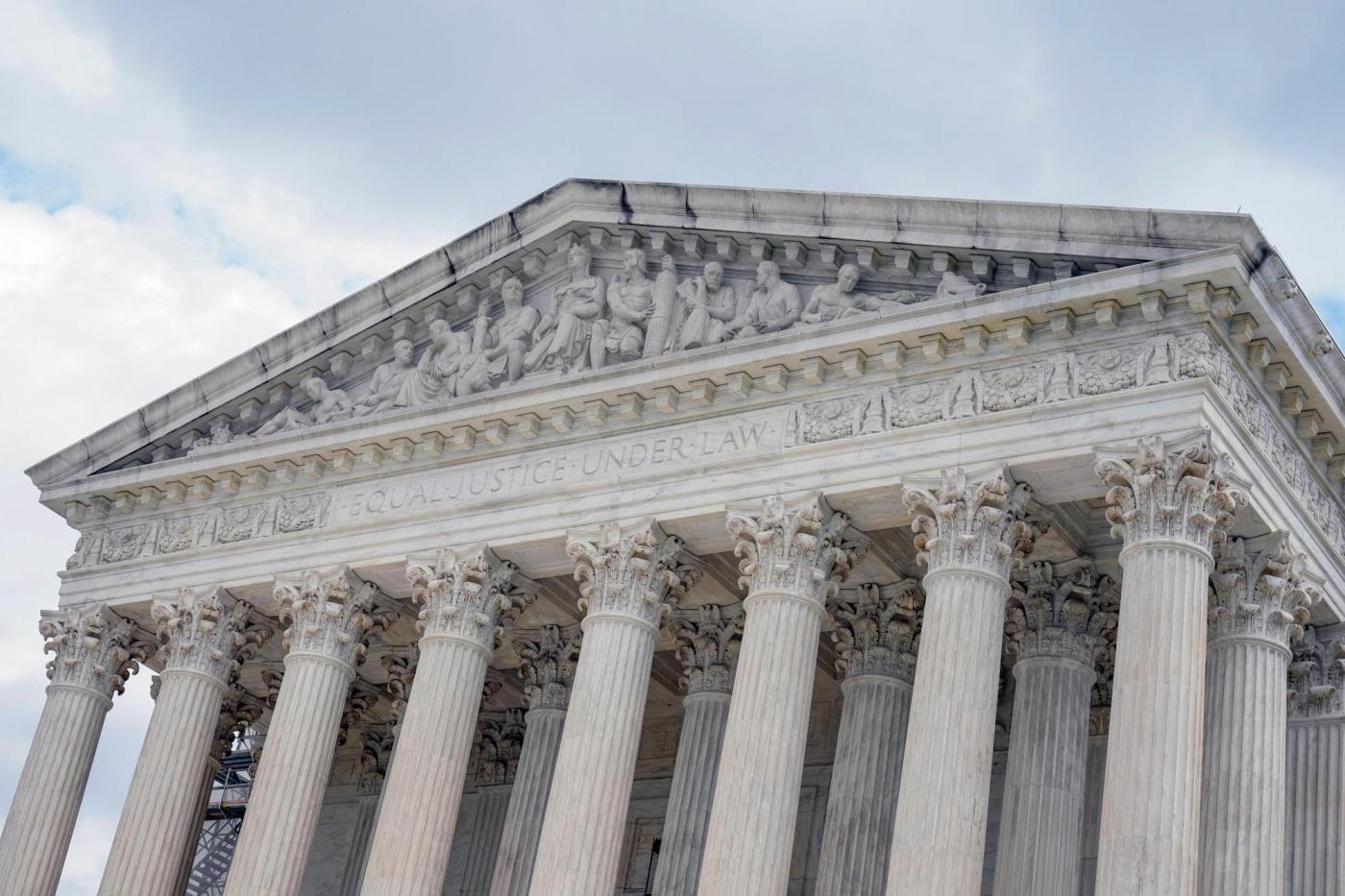
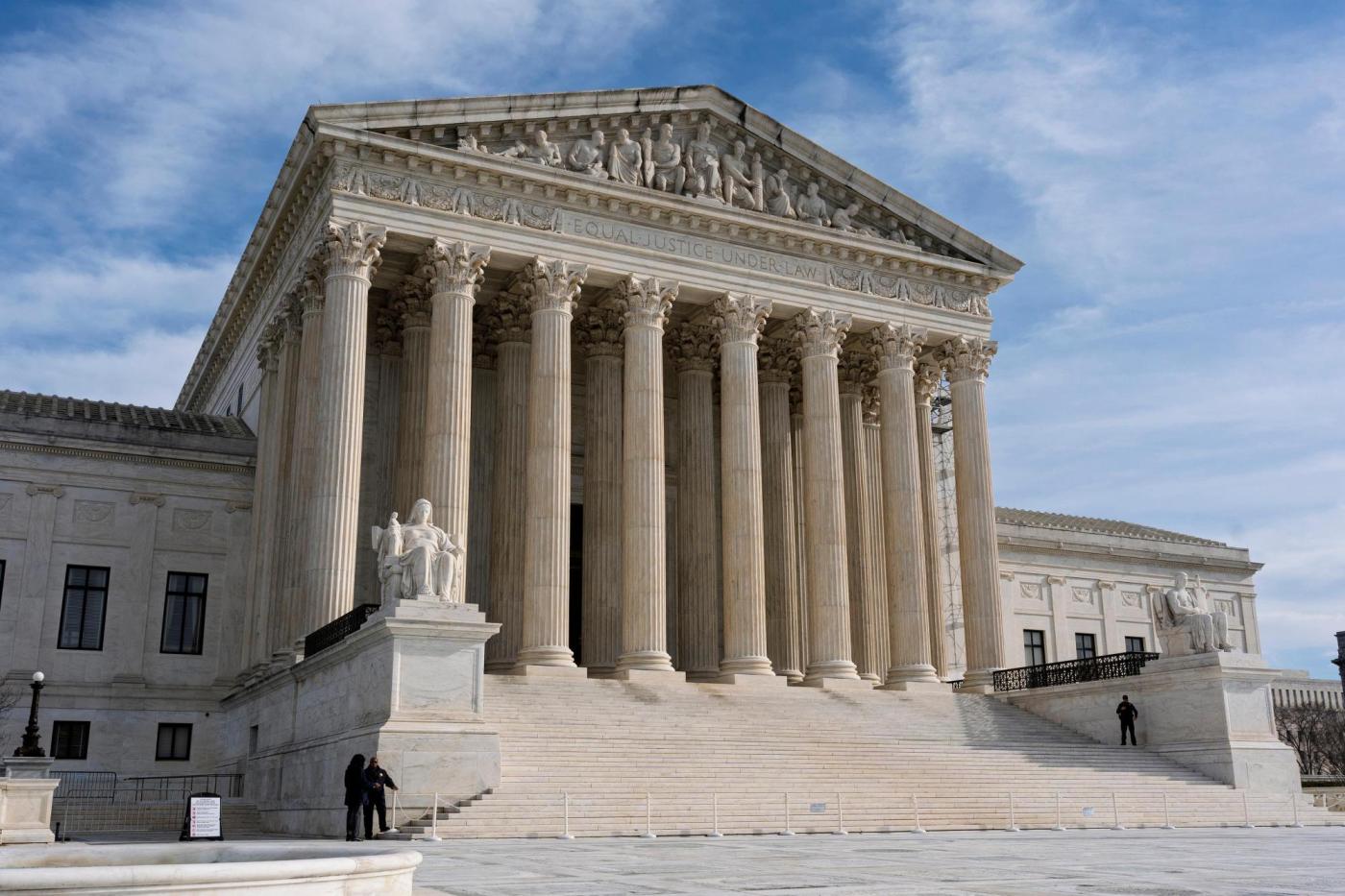
WASHINGTON (AP) — President Donald Trump’s administration on Friday asked the Supreme Court to pause a court order to reinstate Education Department employees who were fired in mass layoffs as part of his plan to dismantle the agency.

The Justice Department’s emergency appeal to the high court said U.S. District Judge Myong Joun in Boston exceeded his authority last month when he issued a preliminary injunction reversing the layoffs of nearly 1,400 people and putting the broader plan on hold.

Joun’s order has blocked one of the Republican president’s biggest campaign promises and effectively stalled the effort to wind down the department. A federal appeals court refused to put the order on hold while the administration appealed.

The judge wrote that the layoffs “will likely cripple the department.”

But Solicitor General D. John Sauer wrote on Friday that Joun was substituting his policy preferences for those of the Trump administration.

The layoffs help put in the place the “policy of streamlining the department and eliminating discretionary functions that, in the administration’s view, are better left to the states,” Sauer wrote.

He also pointed out that the Supreme Court in April voted 5-4 to block Joun’s earlier order seeking to keep in place Education Department teacher-training grants.

The current case involves two consolidated lawsuits that said Trump’s plan amounted to an illegal closure of the Education Department.

One suit was filed by the Somerville and Easthampton school districts in Massachusetts along with the American Federation of Teachers and other education groups. The other suit was filed by a coalition of 21 Democratic attorneys general.

The suits argued that layoffs left the department unable to carry out responsibilities required by Congress, including duties to support special education, distribute financial aid and enforce civil rights laws.

Trump has made it a priority to shut down the Education Department, though he has acknowledged that only Congress has the authority to do that. In the meantime, Trump issued a March order directing Education Secretary Linda McMahon to wind it down “to the maximum extent appropriate and permitted by law.”

Related Articles


What the Trump travel ban means for the 2026 World Cup and 2028 Olympic Games


Germany’s Merz says he found Trump open to dialogue and committed to NATO


Pentagon watchdog investigates if staffers were asked to delete Hegseth’s Signal messages


How Trump’s pick for surgeon general uses her big online following to make money


Federal vs. state power at issue in a hearing over Trump’s election overhaul executive order

Trump later said the department’s functions will be parceled to other agencies, suggesting that federal student loans should be managed by the Small Business Administration and programs involving students with disabilities would be absorbed by the Department of Health and Human Services. Those changes have not yet happened.

The president argues that the Education Department has been overtaken by liberals and has failed to spur improvements to the nation’s lagging academic scores. He has promised to “return education to the states.”

Opponents note that K-12 education is already mostly overseen by states and cities.

Democrats have blasted the Trump administration’s Education Department budget, which seeks a 15% budget cut including a $4.5 billion cut in K-12 funding as part of the agency’s downsizing.

Associated Press writer Collin Binkley contributed to this report.

Follow the AP’s coverage of the U.S. Supreme Court at https://apnews.com/hub/us-supreme-court.

Jury deliberations resume in Harvey Weinstein’s sex crimes retrial

posted in: All news | 0

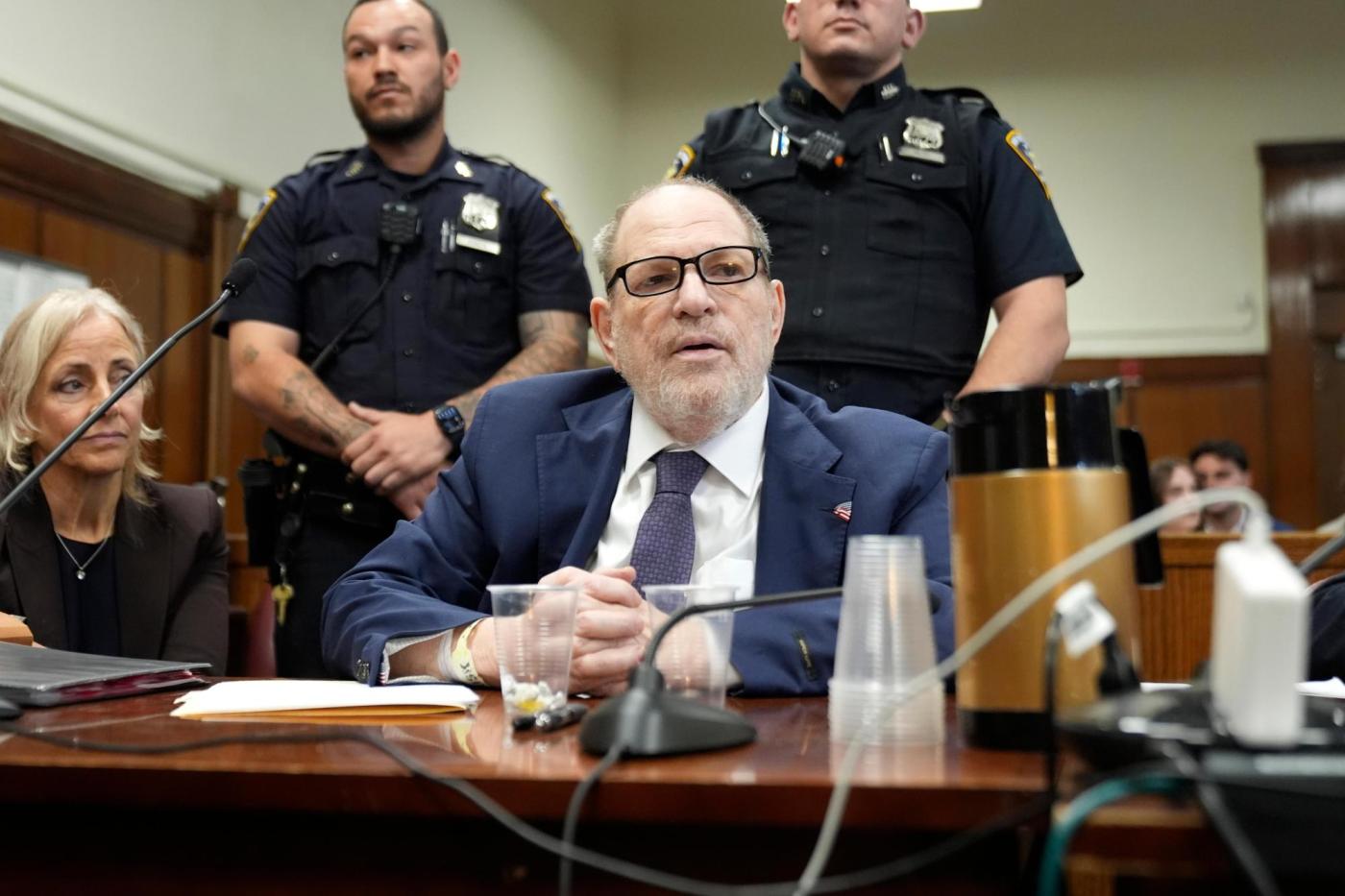
NEW YORK (AP) — A Manhattan jury resumed deliberations Friday in Harvey Weinstein ’s sex crimes retrial after ending its first day without reaching a verdict in a case that encapsulated the #MeToo movement.

The panel, which was handed the case Thursday morning, has requested to hear a readback of some testimony from two of Weinstein’s accusers, as well as to see medical records from one of those women.

Related Articles


Wall Street gains ground following a solid jobs report


Midea recalling 1.7 million of its popular air conditioners due to mold concern


Hiring in the US slows, though employers still added a solid 139,000 jobs in May


Judge puts temporary hold on Trump’s latest ban on Harvard’s foreign students


Today in History: June 6, Allies land in Normandy on D-Day

The jury of seven women and five men is considering two counts of criminal sex act and one count of rape against the 73-year-old Oscar-winning movie producer, with the criminal sex act charges the higher-degree felonies. Weinstein has pleaded not guilty.

Sexual misconduct allegations against Weinstein propelled the #MeToo movement in 2017.

He was eventually convicted of sex crimes in New York and California, but the New York conviction was overturned last year, leading to the retrial before a new jury and a different judge.

Jurors heard more than five weeks of testimony, including lengthy testimony from three accusers.

Stephen L. Carter: The Supreme Court got the Environmental Policy Act case right

posted in: All news | 0

There’s an old Hollywood joke where a screenwriter goes to pitch a romantic comedy, and the producer listens in silence, then exclaims, “Sounds great! Throw in a couple of car chases, and you’ve got a movie!” The joke has endless variants: the screenwriter is pitching a zombie thriller, or a period biopic — whatever the writer pitches, the producer’s punch line remains the same.

That humoresque comes to mind in light of last week’s decision by the U.S. Supreme Court in Seven County Infrastructure Coalition v. Eagle County, which is being described, correctly, as sharply circumscribing the ability of litigants to use the National Environmental Policy Act (NEPA) to stack new review requirements on projects already approved by federal agencies.

Because if you ask anybody who’s trying to build, say, new infrastructure to support the power needs of AI — or just the growth of the digital world generally — the worry isn’t having to get agency approval to break ground. It’s all those car chases that the courts might insist they’ve got to add in before they’ve “got a movie.”

That is, all the studies that must be done that have little to do with either their project or its primary goal.

The case before the court was relatively straightforward. The U.S. Surface Transportation Board (yes, I know, nobody who isn’t in railroads has heard of it; suffice to say it inherited some of the authority of the old Interstate Commerce Commission) approved an 88-mile rail line to connect the rich oilfields of Utah’s Uinta Basin with refineries on the Gulf Coast.

As required by federal law, the board completed an environmental impact statement, which, in Justice Brett Kavanaugh’s words, “clocked in at more than 3,600 pages.” The board approved the project.

The U.S. Court of Appeals for the DC Circuit threw it out. Why? The pertinent reasons are that although the board considered the environmental impact of the railway line itself, it did not adequately take into account other reasonably foreseeable effects — in particular, that the convenience of carrying oil from the Uinta Basin to the Gulf Coast would increase drilling in the first and refining in the second.

Movie, meet car chase.

The Supreme Court was unanimous in its judgment that the DC Circuit erred, though it split on the reasons. Justice Kavanaugh, writing for the majority, noted that NEPA requires agencies to consider the environmental impact but says nothing about how much weight to give it. He scolded the DC Circuit for not showing sufficient deference to the Surface Transportation Board. (Hold on, didn’t the justices say just last year — oh, never mind.)

Then, he got to the heart of the matter. NEPA requires a federal agency only to consider the environmental impact of the particular project it is being asked to approve — not of “separate projects” that it might generate, such as “a housing development that might someday be built near a highway.”

OK, maybe a NIMBY would prefer that the agency take into account that housing development and its attendant needs — or, in this case, the increase in drilling and refining — but the majority’s legal analysis is not only clear but sensible. Deciding whether oil should be drilled or refineries built is the domain of other agencies, and they will produce their own environmental impact studies. The Surface Transportation Board does only railroads.

Perhaps the justices should have said no more. But as Justice Sonia Sotomayor points out in her concurring opinion, joined by two other justices, the majority also opines on the policy implications. Here’s Justice Kavanaugh:

“NEPA has transformed from a modest procedural requirement into a blunt and haphazard tool employed by project opponents (who may not always be entirely motivated by concern for the environment) to try to stop or at least slow down new infrastructure and construction projects.”

And this:

“Fewer projects make it to the finish line. Indeed, fewer projects make it to the starting line. Those that survive often end up costing much more than is anticipated or necessary, both for the agency preparing the EIS and for the builder of the project.

“And that in turn means fewer and more expensive railroads, airports, wind turbines, transmission lines, dams, housing developments, highways, bridges, subways, stadiums, arenas, data centers, and the like. And that also means fewer jobs, as new projects become difficult to finance and build in a timely fashion.”

All this because, again quoting the majority opinion, “(a) 1970 legislative acorn has grown over the years into a judicial oak that has hindered infrastructure development ‘under the guise’ of just a little more process.”

Nicely put — but on the merits of the case, Justice Sotomayor is, of course, correct. Even if NEPA litigation does make building infrastructure enormously difficult, that fact does not seem a proper tool for interpreting the statute.

Nevertheless, even if the policy analysis does not belong in the opinion, I do think the majority gets the argument right. Take a single example: According to a RAND study released earlier this year, by 2027, the power requirements for AI data centers worldwide will approach the total power capacity of California.

By 2030, the study estimates, a single AI training center could have power requirements “equivalent to eight nuclear reactors.” Now imagine all that generating capacity approved by relevant agencies but turned back by the courts under NEPA because the agencies had not sufficiently considered the indirect effects of unrelated projects outside their jurisdiction.

So, here’s the thing: the majority reached the right legal result but should have stayed away from policy. Still, if we’re going to build the infrastructure we need, we have to stop demanding that they throw in all those car chases.

Stephen L. Carter is a Bloomberg Opinion columnist, a professor of law at Yale University and author of “Invisible: The Story of the Black Woman Lawyer Who Took Down America’s Most Powerful Mobster.”

Related Articles


Thomas Friedman: We Are Being Governed by the Trump Organization Inc.


Lisa Jarvis: The MAHA report’s errors are just the start of its problems


Daniel J. Stone: Biden’s cancer diagnosis should be a teaching moment


Sarah McLaughlin: Once, international students feared Beijing’s wrath. Now Trump is the threat


Allison Schrager: Break up Columbia? Maybe, and the rest of the Ivy League, too