The organizers of the largest food-truck event in the east metro are gearing up for this weekend’s “Food Truck Extravaganza,” hosted by the Greater Stillwater Chamber of Commerce.
More than 40 food trucks are expected to converge from 11 a.m. to 8 p.m. Saturday, June 14, at the Washington County Fairgrounds in Baytown Township for what is being billed as the “ultimate destination for culinary adventure and community fun.”
In addition to food, the event will feature live music, children’s activities, a beer and wine tent and a marketplace.
The event also will feature a “Military Row” that will include representatives of the four branches of the U.S. military, the Minnesota National Guard and Washington County Sheriff’s Office.
“It’s going to be another year of amazing food, great music and a fantastic community atmosphere,” said Robin Anthony-Evenson, president of the Greater Stillwater Chamber of Commerce. “This event has become a highlight of the summer — bringing all sorts of people together to celebrate and support local businesses.”
Admission is $10; children younger than 5 get in free. Pets are welcome, but they must be leashed. Parking is free.
A portion of the event’s proceeds will be given to the Chamber of Commerce’s scholarship fund, which supports area students planning to further their education in the trades.
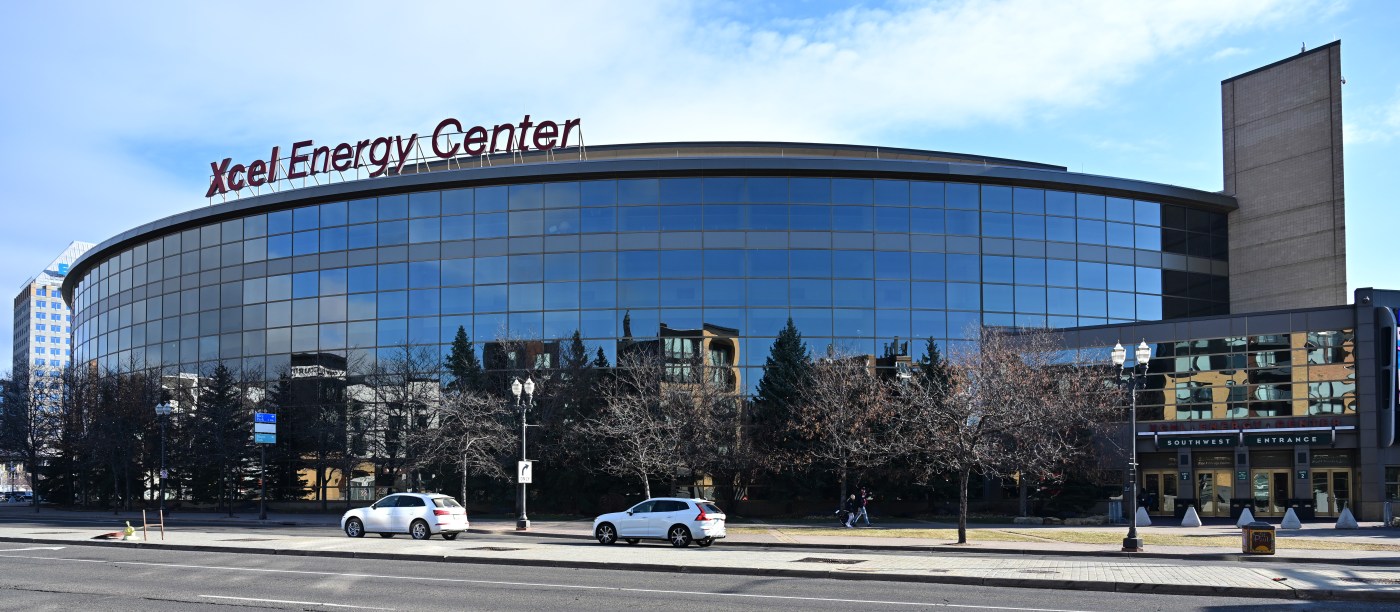
For the second year in a row, the Xcel Energy Center came out of the legislative session with nothing — a frustrating shut-out for both the Minnesota Wild and the St. Paul mayor’s office.
Since at least the fall of 2023, St. Paul Mayor Melvin Carter and Minnesota Wild owner Craig Leipold have discussed a sweeping remodel of the downtown Xcel Energy Center, the popular home of professional hockey in Minnesota, which also doubles as a celebrated concert hall.
Efforts to secure $2 million in planning and pre-design funds from state lawmakers were unsuccessful last year, and a much larger ask this March — about $395 million in state appropriations bonds — drew skepticism from key lawmakers, including state Rep. Maria Isa Perez-Vega, who represents the district.
Some lawmakers called the process unwieldly from start to finish, and questioned why the city requested the money in 2023, when a nearly $18 billion state budget surplus loomed large. The surplus is projected to dwindle to a shortfall by 2028-2029. The Xcel Energy Center remodel was the city’s priority legislative request, topping an expansive list of proposals that was not approved by the St. Paul City Council until March 26, or more than halfway through the legislative session.
A tough year
Even some supporters called the request large, late and messy.
“All of the above,” said state Sen. Sandy Pappas, DFL-St. Paul, who chairs the Senate Capital Investment Committee, on Wednesday. “We had a (projected budget) deficit this year. We just don’t have a Legislature right now that is very supportive of sports arenas.”
Pappas said she was willing to carry a bill that would extend the city’s existing half-cent sales tax — which currently funds St. Paul’s Neighborhood STAR and Cultural STAR grant programs, as well as basic maintenance at the X — to pay for some of the proposed arena improvements. To her knowledge, the proposal never found a House sponsor. Perez-Vega, a logical partner, was not on board.
“We had a small, $700 million bonding bill we didn’t even know if we were going to get passed. And the governor had big asks,” Pappas said. “He wanted a new Bureau of Criminal Apprehension building in Mankato. He wanted a new building for State Patrol. … He wanted 45% of the bonding bill to be asset preservation for the state buildings and higher ed.”
When Carter and Leipold presented their initial funding ask for the X to the House Capital Investment Committee on March 20, it was little more than a concept plan, as they had yet to secure a bill sponsor. Perez-Vega objected at the time to being surprised with such a large request in the “front yard of my community.”
“If this is the number one priority for the city that I love … I’d like to see more effort to deliver this information to my office,” Perez-Vega said, after listing a long line of competing St. Paul priorities, from homelessness to climate concerns, where tax dollars could be spent.
A pared down proposal
In early May, Carter and Leipold presented a new plan to lawmakers. The $769 million remodel of the Xcel Center would be pared down to a $488 million upgrade, freezing proposed improvements to the adjoining RiverCentre convention center complex and the Roy Wilkins Auditorium until an unspecified later date.
The funding request to lawmakers dropped from nearly $400 million in state bond funds to $50 million, with the team promising $238 million and any cost overruns. The city and potential partners, such as Ramsey County, would be on the hook for $200 million, though county officials at the time seemed non-committal.
Leipold said at the time the goal was to create a “modern, best-in-class” facility that keeps up with changing tastes of sports fans, with low-cost, lounge-style seating areas and other fresh amenities. Even in the plan’s trimmer version, the state’s contribution would have helped expand the north wall along Fifth Street to improve the northeast entrance security area, increase disability access, update restroom plumbing and reduce pedestrian congestion.
Calling the fate of downtown and the X closely linked, Carter wanted to see public-facing improvements that would better connect the arena to Seventh Street, Rice Park and the Landmark Center, creating a continuous entertainment district. Under the title “Project Wow,” the Wild attempted to draw the U.S. Hockey Hall of Fame from Eveleth, Minn. to downtown St. Paul, an effort that drew mixed reaction from lawmakers.
Best path forward
The Xcel Energy Center, which opened in 2000, welcomed a million visitors to Wild and Frost hockey games, concerts, performances and other gatherings in the first three months of this year alone. The arena complex draws more than 2.1 million visitors and $383 million in spending annually, according to the city.
Pappas said she had been able to convince the city to stick to asking for appropriations bonds, which lawmakers consider and fund separately from general obligation bonds. In 2012, Gov. Mark Dayton linked funding for construction of U.S. Bank Stadium in Minneapolis, the home of the Minnesota Vikings, to electronic pull-tabs.
“The best path forward for the Xcel is appropriations bonds, with some kind of new funding source to pay off the debt,” Pappas said Wednesday. “I don’t know what that would be.”
“It would have been easier to consider this request in 2023, because we had that big surplus, and we had one-time money,” she added. “We have a lot of sports arenas that could be coming to the state for money, and I just don’t think legislators want to go there.”
Related Articles
Concert review: Maynard James Keenan and pals celebrate his 61st birthday at the X
Frost championship celebration livens up Xcel Energy Center
Evanescence will headline the 93X Family Reunion concert at Xcel Energy Center
Rising pop star Benson Boone to kick off his first arena tour in St. Paul
St. Paul, MN Wild trim Xcel Center’s state request from $400M to $50M
Brian Wilson, the Beach Boys’ visionary and fragile leader whose genius for melody, arrangements and wide-eyed self-expression inspired “Good Vibrations,” “California Girls” and other summertime anthems and made him one of the world’s most influential recording artists, has died at 82.
Wilson’s family posted news of his death to his website and social media accounts Wednesday. Further details weren’t immediately available. Since May 2024, Wilson had been under a court conservatorship to oversee his personal and medical affairs, with Wilson’s longtime representatives, publicist Jean Sievers and manager LeeAnn Hard, in charge.
The eldest and last surviving of three musical brothers — Brian played bass, Carl lead guitar and Dennis drums — he and his fellow Beach Boys rose in the 1960s from local California band to national hitmakers to international ambassadors of surf and sun. Wilson himself was celebrated for his gifts and pitied for his demons. He was one of rock’s great Romantics, a tormented man who in his peak years embarked on an ever-steeper path to aural perfection, the one true sound.
The Beach Boys rank among the most popular groups of the rock era, with more than 30 singles in the Top 40 and worldwide sales of more than 100 million. The 1966 album “Pet Sounds” was voted No. 2 in a 2003 Rolling Stone list of the best 500 albums, losing out, as Wilson had done before, to the Beatles’ “Sgt. Pepper’s Lonely Hearts Club Band.” The Beach Boys, who also featured Wilson cousin Mike Love and childhood friend Al Jardine, were voted into the Rock and Roll Hall of Fame in 1988.
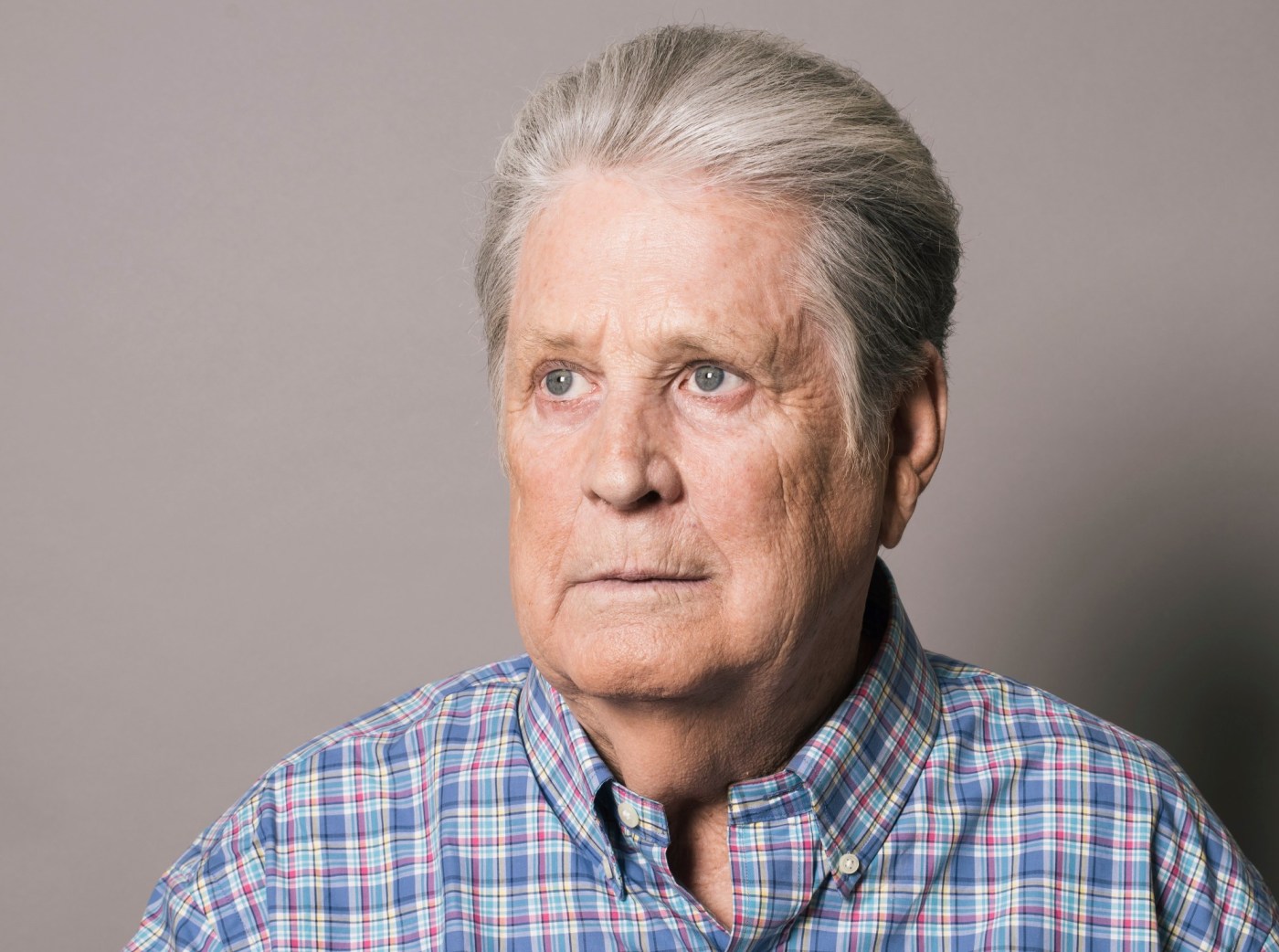
FILE – Musician Brian Wilson poses for a portrait in Los Angeles on June 2, 2015. (Photo by Casey Curry/Invision/AP, File)
(EDITORS NOTE: Image has been digitally converted to black and white.) Musician Brain Wilson performs Pet Sounds at the Pantages Theatre on May 26, 2017 in Los Angeles, California. (Photo by Kevin Winter/Getty Images)
Musician Brain Wilson performs Pet Sounds at the Pantages Theatre on May 26, 2017 in Los Angeles, California. (Photo by Kevin Winter/Getty Images)
(L-R) Brian Wilson and Al Jardine of The Beach Boys attend A GRAMMY Salute to The Beach Boys at Dolby Theatre on February 08, 2023 in Hollywood, California. (Photo by Matt Winkelmeyer/Getty Images for The Recording Academy)
Brian Wilson onstage at Reel To Reel: Brian Wilson: Long Promised Road at The GRAMMY Museum on December 09, 2021 in Los Angeles, California. (Photo by Rebecca Sapp/Getty Images for The Recording Academy)
Musician Brian Wilson performs at Roadside Attraction’s “Love and Mercy” DVD release and music celebration with Brian Wilson at the Vibrato Jazz Club on October 12, 2015 in Los Angeles, California. (Photo by Kevin Winter/Getty Images)
Musicians Brain Wilson (L) and Al Jardine perform Pet Sounds at the Pantages Theatre on May 26, 2017 in Los Angeles, California. (Photo by Kevin Winter/Getty Images)
1 of 7
FILE – Musician Brian Wilson poses for a portrait in Los Angeles on June 2, 2015. (Photo by Casey Curry/Invision/AP, File)
Wilson feuded with Love over songwriting credits, but peers otherwise adored him beyond envy, from Elton John and Bruce Springsteen to Smokey Robinson and Carole King. The Who’s drummer, Keith Moon, fantasized about joining the Beach Boys. Paul McCartney cited “Pet Sounds” as a direct inspiration on the Beatles and the ballad “God Only Knows” as among his favorite songs, often bringing him to tears.
Wilson moved and fascinated fans and musicians long after he stopped having hits. In his later years, Wilson and a devoted entourage of younger musicians performed “Pet Sounds” and his restored opus, “Smile,” before worshipful crowds in concert halls. Meanwhile, The Go-Go’s, Lindsey Buckingham, Animal Collective and Janelle Monáe were among a wide range of artists who emulated him, whether as a master of crafting pop music or as a pioneer of pulling it apart.
An endless summer
The Beach Boys’ music was like an ongoing party, with Wilson as host and wallflower. He was a tall, shy man, partially deaf (allegedly because of beatings by his father, Murry Wilson), with a sweet, crooked grin, and he rarely touched a surfboard unless a photographer was around. But out of the lifestyle that he observed and such musical influences as Chuck Berry and the Four Freshmen, he conjured a golden soundscape — sweet melodies, shining harmonies, vignettes of beaches, cars and girls — that resonated across time and climates.
Decades after its first release, a Beach Boys song can still conjure instant summer — the wake-up guitar riff that opens “Surfin’ USA”; the melting vocals of “Don’t Worry Baby”; the chants of “fun, fun, fun” or “good, good, GOOD, good vibrations”; the behind-the-wheel chorus “’Round, ’round, get around, I get around.” Beach Boys songs have endured from turntables and transistor radios to boom boxes and iPhones, or any device that could lay on a beach towel or be placed upright in the sand.
The band’s innocent appeal survived the group’s increasingly troubled back story, whether Brian’s many personal trials, the feuds and lawsuits among band members or the alcoholism of Dennis Wilson, who drowned in 1983. Brian Wilson’s ambition raised the Beach Boys beyond the pleasures of their early hits and into a world transcendent, eccentric and destructive. They seemed to live out every fantasy, and many nightmares, of the California myth they helped create.
From the suburbs to the national stage
Brian Wilson was born June 20, 1942, two days after McCartney. His musical gifts were soon obvious, and as a boy he was playing piano and teaching his brothers to sing harmony. The Beach Boys started as a neighborhood act, rehearsing in Brian’s bedroom and in the garage of their house in suburban Hawthorne, California. Surf music, mostly instrumental in its early years, was catching on locally: Dennis Wilson, the group’s only real surfer, suggested they cash in. Brian and Love hastily wrote up their first single, “Surfin,’” a minor hit released in 1961.
They wanted to call themselves the Pendletones, in honor of a popular flannel shirt they wore in early publicity photos. But when they first saw the pressings for “Surfin,’” they discovered the record label had tagged them “The Beach Boys.” Other decisions were handled by their father, a musician of some frustration who hired himself as manager and holy terror. By mid-decade, Murry Wilson had been displaced and Brian, who had been running the band’s recording sessions almost from the start, was in charge, making the Beach Boys the rare group of the time to work without an outside producer.
Related Articles
Juneteenth started with handbills proclaiming freedom. Here’s what they said
Pulse massacre survivors are set to revisit the nightclub before it’s razed
Aid groups weigh how much more they can help if FEMA reduces its disaster response
Your rights as a protester: What to know and what to do if you’re detained
Veterans are divided over the Army’s big parade, being held on Trump’s birthday
Their breakthrough came in early 1963 with “Surfin’ USA,” so closely modeled on Berry’s “Sweet Little Sixteen” that Berry successfully sued to get a songwriting credit. It was their first Top 10 hit and a boast to the nation: “If everybody had an ocean / across the USA / then everybody’d be surfin,’ / like Cali-for-nye-ay.” From 1963-66, they were rarely off the charts, hitting No. 1 with “I Get Around” and “Help Me, Rhonda” and narrowly missing with “California Girls” and “Fun, Fun, Fun.” For television appearances, they wore candy-striped shirts and grinned as they mimed their latest hit, with a hot rod or surfboard nearby.
Their music echoed private differences. Wilson often contrasted his own bright falsetto with Love’s nasal, deadpan tenor. The extroverted Love was out front on the fast songs, but when it was time for a slow one, Brian took over. “The Warmth of the Sun” was a song of despair and consolation that Wilson alleged — to some skepticism — he wrote the morning after President John F. Kennedy was assassinated. “Don’t Worry Baby,” a ballad equally intoxicating and heartbreaking, was a leading man’s confession of doubt and dependence, an early sign of Brian’s crippling anxieties.
Stress and exhaustion led to a breakdown in 1964 and his retirement from touring, his place soon filled by Bruce Johnston, who remained with the group for decades. Wilson was an admirer of Phil Spector’s “Wall of Sound” productions and emulated him on Beach Boys tracks, adding sleigh bells to “Dance, Dance, Dance” or arranging a mini-theme park of guitar, horns, percussion and organ as the overture to “California Girls.”
By the mid-1960s, the Beach Boys were being held up as the country’s answer to the Beatles, a friendly game embraced by each group, transporting pop music to the level of “art” and leaving Wilson a broken man.
The Beach Boys vs. The Beatles
The Beatles opened with “Rubber Soul,” released in late 1965 and their first studio album made without the distractions of movies or touring. It was immediately praised as a major advance, the lyrics far more personal and the music far more subtle and sophisticated than such earlier hits as “She Loves You” and “A Hard Day’s Night.” Wilson would recall getting high and listening to the record for the first time, promising himself he would not only keep up with the British band, but top them.
Wilson worked for months on what became “Pet Sounds,” and months on the single “Good Vibrations.” He hired an outside lyricist, Tony Asher, and used various studios, with dozens of musicians and instruments ranging from violins to bongos to the harpsichord. The air seemed to cool on some tracks and the mood turn reflective, autumnal. From “I Know There’s an Answer” to “You Still Believe in Me,” many of the songs were ballads, reveries, brushstrokes of melody, culminating in the sonic wonders of “Good Vibrations,” a psychedelic montage that at times sounded as if recorded in outer space.
The results were momentous, yet disappointing. “Good Vibrations” was the group’s first million-seller and “Pet Sounds,” which included the hits “Sloop John B” and “Wouldn’t It Be Nice,” awed McCartney, John Lennon and Eric Clapton among others. Widely regarded as a new kind of rock LP, it was more suited to headphones than to the radio, a “concept” album in which individual songs built to a unified experience, so elaborately crafted in the studio that “Pet Sounds” couldn’t be replicated live with the technology of the time. Wilson was likened not just to the Beatles, but to Mozart and George Gershwin, whose “Rhapsody in Blue” had inspired him since childhood.
But the album didn’t chart as highly as previous Beach Boys releases and was treated indifferently by the U.S. record label, Capitol. The Beatles, meanwhile, were absorbing lessons from the Beach Boys and teaching some in return. “Revolver” and “Sgt. Pepper,” the Beatles’ next two albums, drew upon the Beach Boys’ vocal tapestries and melodic bass lines and even upon the animal sounds from the title track of “Pet Sounds.” The Beatles’ epic “A Day in the Life” reconfirmed the British band as kings of the pop world and “Sgt. Pepper” as the album to beat.
All eyes turned to Wilson and his intended masterpiece — a “teenage symphony to God” he called “Smile.” It was a whimsical cycle of songs on nature and American folklore written with lyricist Van Dyke Parks. The production bordered on method acting; for a song about fire, Wilson wore a fire helmet in the studio. The other Beach Boys were confused, and strained to work with him. A shaken Wilson delayed “Smile,” then canceled it.
Remnants, including the songs “Heroes and Villains” and “Wind Chimes” were re-recorded and issued in September 1967 on “Smiley Smile,” dismissed by Carl Wilson as a “bunt instead of a grand slam.” The stripped down “Wild Honey,” released three months later, became a critical favorite but didn’t restore the band’s reputation. The Beach Boys soon descended into an oldies act, out of touch with the radical ’60s, and Wilson withdrew into seclusion.
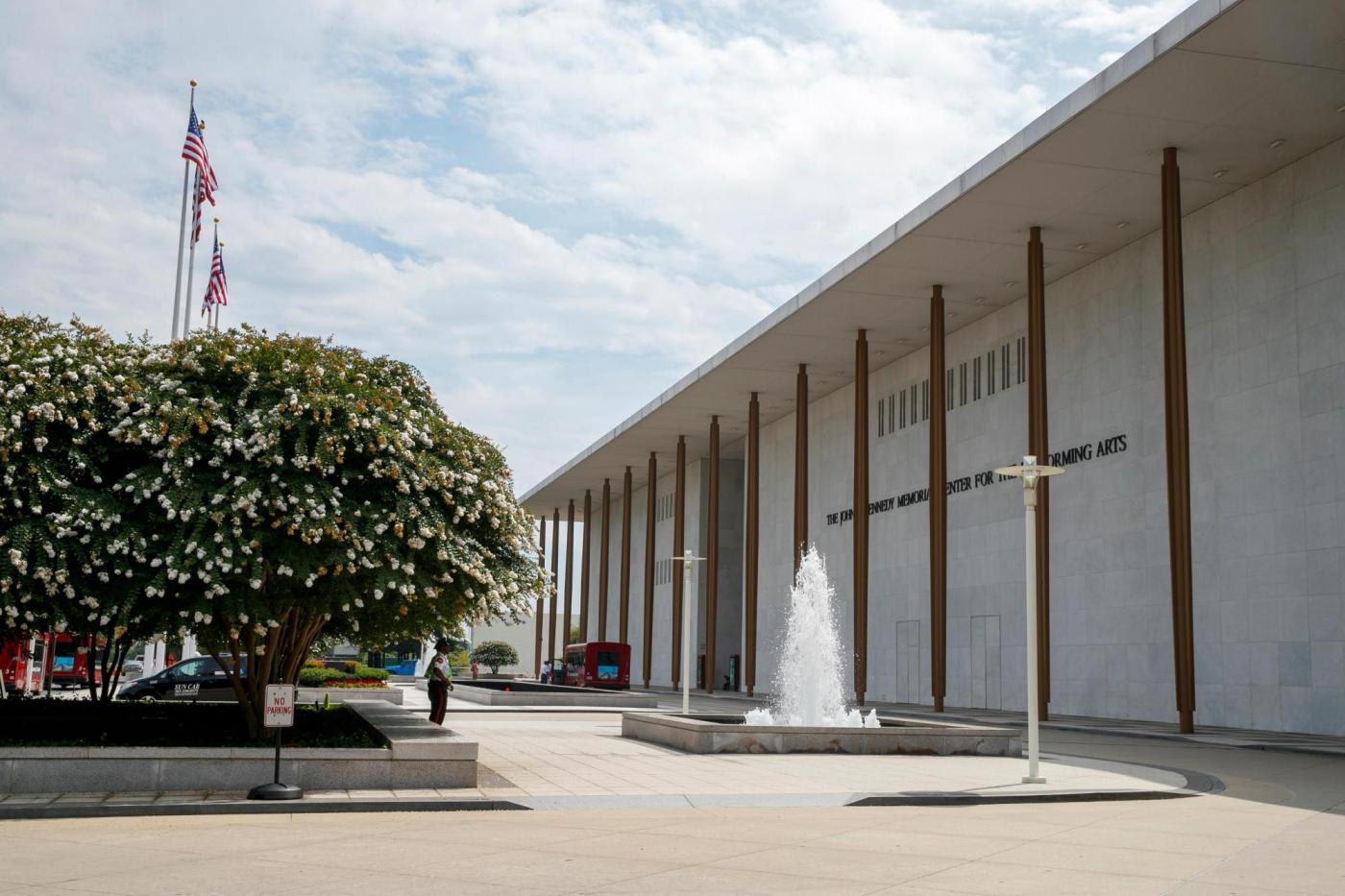
WASHINGTON (AP) — President Donald Trump is set to take a seat at Wednesday’s opening night of the award-winning musical “Les Misérables” at the Kennedy Center, where he replaced the previous leadership with loyalists, had himself installed as chairman and pledged to rid the performing arts venue of programming he has complained is “woke” and too focused on leftist ideology and political correctness.
Related Articles
Aid groups weigh how much more they can help if FEMA reduces its disaster response
Veterans are divided over the Army’s big parade, being held on Trump’s birthday
What’s targeted in Trump’s request for $9.4 billion in budget cuts from Congress
Trump says US gets rare earth minerals from China and tariffs on Chinese goods will total 55%
Trump hails favorable federal appeals court ruling on his sweeping tariff policy as a ‘great’ win
The Republican president’s attendance at the sold-out showing of the Tony Award-winning tale of redemption in 19th century France comes as he has focused more than any recent predecessor on the arts center along the Potomac River that is a memorial to a slain Democratic president.
Presidents’ involvement in the Kennedy Center’s affairs had been limited to naming members to the board of trustees and attending the taping of its annual honors program in the fall.
But after returning to office in January, Trump stunned the arts world by firing the Kennedy Center’s longtime director and board and replacing them with loyalists, who then named him as chairman, and promising to overhaul its programming, management and even appearance as part of an effort to put his stamp on the national arts scene.
Trump’s appearance in the Opera House on Wednesday, accompanied by first lady Melania Trump, will also mark his first time at a Kennedy Center performance as president. He avoided the venue after entertainment industry pushback to his policies in his first term in office, breaking with presidential tradition by never attending the annual Kennedy Center Honors taping.
His moves have upset some of the center’s patrons and performers.
In March, the audience booed Vice President JD Vance and his wife, Usha, after they slipped into upper-level seats in the Concert Hall to hear the National Symphony Orchestra. Trump appointed Usha Vance to the Kennedy Center board along with White House chief of staff Susie Wiles, Attorney General Pam Bondi and Fox News Channel hosts Maria Bartiromo and Laura Ingraham, among other supporters.
Sales of subscription packages are said to have declined since Trump’s takeover, and several touring productions, including “Hamilton,” have canceled planned runs at the center. Artists such as actor Issa Rae and musician Rhiannon Giddens scrapped scheduled appearances, and Kennedy Center consultants including musician Ben Folds and singer Renée Fleming have resigned.
Understudies may perform Wednesday night due to boycotts by “Les Misérables” cast members.
Since returning to the White House in January, Trump has adopted a more aggressive posture toward the arts. The White House has taken steps to cancel millions of dollars in previously awarded federal humanities grants to arts and culture groups, and Trump’s budget blueprint proposed eliminating the National Endowment for the Arts and the National Endowment for the Humanities.
Trump has also targeted Smithsonian museums by signing executive orders to restrict their funding and by attempting to fire the director of the National Portrait Gallery.
Trump hosted the board at the White House for dinner in May and said congressional Republicans have pushed for more than $250 million for repairs and maintenance at the Kennedy Center. He claimed that “tremendous amounts of money” had been spent at the center but “they certainly didn’t spend it on wallpaper, carpet or painting.”
He characterized previous programming as “out of control with rampant political propaganda” and said it featured “some very inappropriate shows,” including a “Marxist anti-police performance” and “Lesbian-only Shakespeare.”
Trump cited some drag show performances as a reason to take control of the center, though next season’s theater lineup includes ”Mrs. Doubtfire,” which tells the story of a divorced man who disguises himself as a female nanny so he can spend time with his children.
Trump also visited the Kennedy Center in March to preside over a board meeting and take a tour.
The Kennedy Center, which is supported by government money and private donations, opened in 1971 and for decades has been seen as an apolitical celebration of the arts.
It was first conceived in the late 1950s, during the administration of Republican President Dwight Eisenhower, who backed a bill from the Democratic-led Congress calling for a National Culture Center. In the early 1960s, Democratic President John F. Kennedy launched a fundraising initiative, and his successor, President Lyndon B. Johnson, signed into law a 1964 bill renaming the project the John F. Kennedy Memorial Center for the Performing Arts. Kennedy had been assassinated the year before.