Guns kill more US children than other causes, but state policies can help, study finds

posted in: All news | 0

By Nada Hassanein, Stateline.org

More American children and teens die from firearms than any other cause, but there are more deaths — and wider racial disparities — in states with more permissive gun policies, according to a new study.

The study, published in the medical journal JAMA Pediatrics on June 9, analyzes trends in state firearm policies and kids’ deaths since 2010, after the landmark U.S. Supreme Court decision in McDonald v. City of Chicago. The ruling struck down the city’s handgun ban, clearing the way for many states to make it easier for people to buy and carry guns.

The study authors split states into three groups: “most permissive,” “permissive” and “strict,” based on the stringency of their firearm policies. Those policies include safe storage laws, background checks and so-called Stand Your Ground laws. The researchers analyzed homicide and suicide rates and the children’s race.

Using statistical methods, the researchers calculated 6,029 excess deaths in the most permissive states between 2011 and 2023, compared with the number of deaths that would have been expected under the states’ pre-McDonald rules. There were 1,424 excess deaths in the states in the middle category.

In total, about 17,000 deaths were expected in the post-decision period, but 23,000 occurred, said lead author Dr. Jeremy Faust, an emergency physician at Brigham and Women’s Hospital in Boston, in an interview.

Among the eight states with the strictest laws, four — California, Maryland, New York and Rhode Island — saw statistically significant decreases in their pediatric firearm death rates. Illinois, which was directly affected by the court’s decision in the McDonald case, and Connecticut saw increases in their rates. In Massachusetts and New Jersey, the changes were not statistically significant.

Related Articles


Trump says Gabbard was ‘wrong’ about Iran and Israeli strikes could be ‘very hard to stop’


San Diego clergy visit federal immigration court to bear witness during crackdown on migrants


Court blocks Louisiana law requiring schools to post Ten Commandments in classrooms


Federal judge blocks Trump effort to keep Harvard from hosting foreign students


Police in northeast Ohio arrest man who allegedly menaced GOP US Rep. Max Miller on interstate

The rate increased in all but four (Alaska, Arizona, Nebraska and South Dakota) of the 41 states in the two permissive categories. (Hawaii was not included in the study due its low rates of firearm deaths.)

Non-Hispanic Black children and teens saw the largest increase in firearm deaths in the 41 states with looser gun laws. Those youths’ mortality rates increased, but by a much smaller amount, in the states with strict laws.

Experts say the study underscores the power of policy to help prevent firearm deaths among children and teens. The analysis comes less than a month after the release of a federal report on children’s health that purported to highlight the drivers of poor health in America’s children but failed to include anything on firearm injuries — the leading cause of death for children and teens in 2020 and 2021, according to the federal Centers for Disease Control and Prevention.

Trauma surgeon Dr. Marie Crandall, chair of surgery at MetroHealth medical center and a professor at Case Western Reserve University School of Medicine in Cleveland, researches gun violence. She previously practiced at a Jacksonville, Florida, urban trauma unit, where she frequently saw children and teens caught in gun violence.

“When I see children come in with 10 holes in them that I can’t save — that is a loss. That is a completely preventable death, and it is deeply emotionally scarring to have to have those conversations with families when we know, as a society, there are things we could do to de-escalate,” said Crandall, who wasn’t involved in the new study.

In her state of Ohio, firearm death rates among children and teens increased from 1.6 per 100,000 kids in the decade before the McDonald decision to 2.8 after it, according to the study. Ohio was categorized in the group with the most permissive laws.

The study adds to previous research that shows state laws around child access to firearms, such as safe storage and background checks, tend to be associated with fewer child firearm deaths.

“We know that child access prevention decreases unintentional injuries and suicides of children. So having your firearms locked, unloaded, stored separately from ammunition, decreases the likelihood of childhood injuries,” Crandall said. “More stringent regulation of those things also decreases childhood injuries.”

But she said it’s hard to be optimistic about more stringent regulation when the current administration dismisses gun violence as a public health emergency. The Trump administration earlier this year took down an advisory from the former U.S. surgeon general, issued last year, that emphasized gun violence as a public health crisis.

Faust, the lead author of the new study, stressed that firearm injuries and deaths were notably missing from the Make America Healthy Again Commission report on children’s health. He said the failure to include them illustrates the politicization of a major public health emergency for America’s kids.

“It’s hard to take them seriously if they’re omitting the leading cause of death,” Faust said. “They’re whiffing, they’re shanking. They’re deciding on a political basis not to do it. I would say by omitting it, they’re politicizing it.”

Faust and pediatric trauma surgeon Dr. Chethan Sathya, who directs the Center for Gun Violence Prevention at the Northwell Health system in New York, each pointed to the development of car seat laws and public health education, as examples of preventive strategies that helped reduce childhood fatalities. They support a similar approach to curbing youth gun deaths.

“We really have to apply a public health framework to this issue, not a political one, and we’ve done that with other issues in the past,” said Sathya, who wasn’t involved in the study and oversees his hospital’s firearm injury prevention programs. “There’s no question that this is a public health issue.”

In Louisiana, which the study categorized as one of the 30 most permissive states, the child firearm mortality rate increased from 4.1 per 100,000 kids in the pre-McDonald period to 5.7 after it — the nation’s highest rate. The study period only goes to 2023, but the state last year enacted a permitless carry law, allowing people to carry guns in public without undergoing background checks. And just last month, Louisiana legislators defeated a bill that would have created the crime of improper firearm storage.

Louisiana Democratic state Rep. Matthew Willard, who sponsored the safe storage legislation, said during the floor debate that its purpose was to protect children. Louisiana had the highest rate of unintentional shootings by children between 2015 to 2022, according to the research arm of Everytown for Gun Safety, which advocates for stricter gun access. Willard cited that statistic on the floor.

But Republican opponents said Willard’s proposal would infringe on residents’ gun rights and make it more difficult for them to use guns in self-defense.

“Nobody needs to come in our houses and tell us what to do with our guns. I think this is ridiculous,” Republican state Rep. R. Dewith Carrier said during the debate.

Another Republican opponent, state Rep. Troy Romero, said he was concerned that having a firearm locked away would make it harder for an adult to quickly access it.

“If it’s behind a locked drawer, how in the world are you going, at 2 or 3 in the morning, going to be able to protect your family if somebody intrudes or comes into your home?” Romero said.

Gun violence researcher Julia Fleckman, an assistant professor, and her team at Tulane University in New Orleans have started to collect data on the impact of the state’s permitless carry law.

“It places a disproportionate impact on really vulnerable people, really, our most vulnerable people,” Fleckman said, noting kids bear the brunt of legislators’ decisions. “They don’t have a lot of control over this or the decisions we’re making.”

In South Carolina, another one of the most permissive states, the mortality rate increased from 2.3 to 3.9 per 100,000 kids in the time before and after the McDonald decision. South Carolina Democratic state Rep. JA Moore, who lost his adult sister in the 2015 racist shooting that killed nine at a Charleston church, said state policy alone isn’t enough. He implored his colleagues to also examine their perception of guns.

“We have a culture here in South Carolina that doesn’t lend itself to a more safe South Carolina,” said Moore, who added he’s been advocating for background checks and stricter carry laws. “There is a need for a culture change in our state, in our country, when it comes to guns and our relationships with guns as Americans, realizing that these are deadly weapons.”

And investing in safer neighborhoods is crucial, he said.

“People are hurt by guns in places that they’re more comfortable, like their homes in their own neighborhoods,” he said.

Community-based interventions are important to stemming violence, experts said. Crandall, the Cleveland surgeon, said there’s emerging evidence that hospital-based and community-based violence prevention programs decrease the likelihood of violent and firearm-related injury.

Such programs aim to break cycles of violence by connecting injured patients with community engagement services. After New York City implemented its hospital-based violence interruption program, two-thirds of 3,500 violent trauma patients treated at five hospitals received community prevention services.

After her 33-year-old son was killed in her neighborhood in 2019, Michelle Bell started M-PAC Cleveland — “More Prayer, Activity & Conversation” — a nonprofit collaborative of people who have lost loved ones to violent crime. She’s encountered many grieving parents who lost their children to gunfire. The group advocates and educates for safe storage laws and holds peer grief support groups.

She also partners with the school district in a program that shares stories of gun violence’s long-lasting impact on surviving children, families and communities and nonviolent interpersonal conflict resolution.

“Oftentimes, the family that has lost the child, the child’s life has been taken by gun violence, there are other children in the home,” she said.

“It’s so devastating. It’s just so tragic that the No. 1 cause of death for children 18 and under is gun violence,” Bell continued.

The decision to “pull a trigger,” she said, changes a “lifetime of not only yours, but so many other people.”

Stateline is part of States Newsroom, a national nonprofit news organization focused on state policy.

©2025 States Newsroom. Visit at stateline.org. Distributed by Tribune Content Agency, LLC.
‘Expensive and complicated’: Most rural hospitals no longer deliver babies

posted in: All news | 0

By Anna Claire Vollers, Stateline.org

Nine months after Monroe County Hospital in rural South Alabama closed its labor and delivery department in October 2023, Grove Hill Memorial Hospital in neighboring Clarke County also stopped delivering babies.

Both hospitals are located in an agricultural swath of the state that’s home to most of its poorest counties. Many residents of the region don’t even have a nearby emergency department.

Stacey Gilchrist is a nurse and administrator who’s spent her 40-year career in Thomasville, a small town about 20 minutes north of Grove Hill. Thomasville’s hospital shut down entirely last September over financial difficulties. Thomasville Regional hadn’t had a labor and delivery unit for years, but women in labor still showed up at its ER when they knew they wouldn’t make it to the nearest delivering hospital.

“We had several close calls where people could not make it even to Grove Hill when they were delivering there,” Gilchrist told Stateline shortly after the Thomasville hospital closed. She recalled how Thomasville nurses worked to save the lives of a mother and baby who’d delivered early in their ER, as staff waited for neonatal specialists to arrive by ambulance from a distant delivering hospital.

“It would give you chills to see what all they had to do. They had to get inventive,” she said, but the mother and baby survived.

Now many families must drive more than an hour to reach the nearest birthing hospital.

Nationwide, most rural hospitals no longer offer obstetric services. Since the end of 2020, more than 100 rural hospitals have stopped delivering babies, according to a new report from the Center for Healthcare Quality & Payment Reform, a national policy center focused on solving health care issues through overhauling insurance payments. Fewer than 1,000 rural hospitals nationwide still have labor and delivery services.

Across the nation, two rural labor and delivery departments shut their doors every month on average, said Harold Miller, the center’s president and CEO.

“It’s the perfect storm,” Miller told Stateline. “The number of births are going down, everything is more expensive in rural areas, health insurance plans don’t cover the cost of births, and hospitals don’t have the resources to offset those losses because they’re losing money on other services, too.”

Staffing shortages, low Medicaid reimbursement payments and declining birth rates have contributed to the closures. Some states have responded by changing how Medicaid funds are spent, by allowing the opening of freestanding birth centers, or by encouraging urban-based obstetricians to open satellite clinics in rural areas.

Yet the losses continue. Thirty-six states have lost at least one rural labor and delivery unit since the end of 2020, according to the report. Sixteen have lost three or more. Indiana has lost 12, accounting for a third of its rural hospital labor and delivery units.

In rural counties the loss of hospital-based obstetric care is associated with increases in births in hospital emergency rooms, studies have found. The share of women without adequate prenatal care also increases in rural counties that lose hospital obstetric services.

And researchers have seen an increase in preterm births — when a baby is born three or more weeks early — following rural labor and delivery closures. Babies born too early have higher rates of death and disability.

Births are expensive

The decline in hospital-based maternity care has been decades in the making.

Traditionally, hospitals lose money on obstetrics. It costs more to maintain a labor and delivery department than a hospital gets paid by insurance to deliver a baby. This is especially true for rural hospitals, which see fewer births and therefore less revenue than urban areas.

“It is expensive and complicated for any hospital to have labor and delivery because it’s a 24/7 service,” said Miller.

A labor and delivery unit must always have certain staff available or on call, including a physician who can perform cesarean sections, nurses with obstetric training, and an anesthetist for C-sections and labor pain management.

“There’s a minimum fixed cost you incur (as a hospital) to have all of that, regardless of how many births there are,” Miller said.

In most cases, insurers don’t pay hospitals to maintain that standby capacity; they’re paid per birth. Hospitals cover their losses on obstetrics with revenue they get from more lucrative services.

For a larger urban hospital with thousands of births a year, the fixed costs might be manageable. For smaller rural hospitals, they’re much harder to justify. Some have had to jettison their obstetric services just to keep the doors open.

“You can’t subsidize a losing service when you don’t have profit coming in from other services,” Miller said.

And staffing is a persistent problem.

Harrison County Hospital in Corydon, Indiana, a small town on the border with Kentucky, ended its obstetric services in March after hospital leaders said they were unable to recruit an obstetric provider. It was the only delivering hospital in the county, averaging about 400 births a year.

And most providers don’t want to remain on call 24/7, a particular problem in rural regions that might have just one or two physicians trained in obstetrics. In many rural areas, family physicians with obstetrical training fill the role of both obstetricians and general practitioners.

Related Articles


Guns kill more US children than other causes, but state policies can help, study finds


How to stay cool in the heat wave hitting parts of the US — even without air conditioning


More employers adopting ICHRAs, giving workers money to buy their own health insurance


NFL widows struggled to care for ex-players with CTE. They say a new study minimizes their pain


Natural disasters may be shaping babies’ brains

Ripple effects

Even before Harrison County Hospital suspended its obstetrical services, some patients were already driving more than 30 minutes for care, the Indiana Capital Chronicle reported. The closure means the drive could be 50 minutes to reach a hospital with a labor and delivery department, or to see providers for prenatal visits.

Longer drive times can be risky, resulting in more scheduled inductions and C-sections because families are scared to risk going into labor naturally and then facing a harrowing hourlong drive to the hospital.

Having fewer labor and delivery units could further burden ambulance services already stretched thin in rural areas.

And hospitals often serve as a hub for other maternity-related services that help keep mothers and babies healthy.

“Other things we’ve seen in rural counties that have hospital-based OB care is that you’re more likely to have other supportive things, like maternal mental health support, postpartum groups, lactation support, access to doula care and midwifery services,” said Katy Kozhimannil, a professor at the University of Minnesota School of Public Health, whose research focuses in part on maternal health policy with a focus on rural communities.

State action

Medicaid, the state-federal public insurance for people with low incomes, pays for nearly half of all births in rural areas nationwide. And women who live in rural communities and small towns are more likely to be covered by Medicaid than women in metro areas.

Experts say one way to save rural labor and delivery in many places would be to bump up Medicaid payments.

As congressional Republicans debate President Donald Trump’s tax and spending plan, they’re considering which portions of Medicaid to slash to help pay for the bill’s tax cuts. Maternity services aren’t on the chopping block.

But if Congress reduces federal funding for some portions of Medicaid, states — and hospitals — will have to figure out how to offset that loss. The ripple effects could translate into less money for rural hospitals overall, meaning some may no longer be able to afford labor and delivery services.

“Cuts to Medicaid are going to be felt disproportionately in rural areas where Medicaid makes up a higher proportion of labor and delivery and for services in general,” Kozhimannil said. “It is a hugely important payer at rural hospitals, and for birth in particular.”

And though private insurers often pay more than Medicaid for birth services, Miller believes states shouldn’t let companies off the hook.

“The data shows that in many cases, commercial insurance plans operating in a state are not paying adequately for labor and delivery,” Miller said. “Hospitals will tell you it’s not just Medicaid; it’s also commercial insurance.”

He’d like to see state insurance regulators pressure private insurance to pay more. More than 40% of births in rural communities are covered by private insurance.

Yet there’s no one magic bullet that will fix every rural hospital’s bottom line, Miller said: “For every hospital I’ve talked to, it’s been a different set of circumstances.”

©2025 States Newsroom. Visit at stateline.org. Distributed by Tribune Content Agency, LLC.

Kull, Lewitus: Americans want to rein in presidential power

posted in: All news | 0

President Donald Trump has been attempting to expand presidential power more than any president in recent history, in large part by asserting powers that have been held by Congress, including federal funding and tariffs. Public opinion research has shown clearly and consistently that large majorities — often bipartisan — oppose expanding presidential powers and support giving Congress more power.

The Pew Research Center has asked for nearly a decade whether presidents should not have to “worry so much about Congress and the courts” or if giving presidents more power is “too risky.” Over seven in 10 have consistently said that giving presidents more power would be too risky, including majorities of Democrats and Republicans, no matter which party is in power. In February 2025, 66% of Republicans and 89% of Democrats took this position.

Very few support presidents being able to act unilaterally in defiance of the other branches of government.

An AP-NORC poll in March 2024 found just two in 10 saying it would be “a good thing” for presidents to be able to change policy without Congress or the courts. The president being able to disobey federal court rulings is supported by just 14%, per a recent Ipsos/Reuters poll; and support rises to just three in 10 when told that the court ruling could impede the president’s ability to prevent a terrorist attack, per a recent Annenberg Public Policy Center poll.

As political scientist Andrew Reeves noted in his 2022 book “No Blank Check,” in which he analyzed decades of public opinion data, the public has consistently “express(ed) low levels of support for presidents acting unilaterally,” and that “even when the president changed, these views shifted only slightly over time.”

Specific expansions of presidential power have been met with large public opposition. President Trump has declared he has the authority to directly control federal agencies that were designed by Congress to be independent from presidents. Two-thirds oppose presidents having this authority, including majorities of Republicans (52%) and Democrats (81%), according to a March 2025 survey by the Program for Public Consultation (PPC). A YouGov poll found just a quarter (24%) of respondents said it is acceptable for the president to “(assert) control over previously independent federal government agencies.”

The March PPC survey also found that majorities of about two in three prefer to keep seven currently independent agencies free from direct presidential control (FCC, FTC, SEC, NLRB, FEC, OSC, and the Federal Reserve’s regulatory arm), including majorities of Republicans in all but one case (the FTC).

The Trump administration has asserted it has the authority to refuse to spend funds allocated by Congress, known as impoundment. In the March PPC survey, 63% opposed presidents having the power to impound funds, with Republicans being roughly divided. A New York Times/Siena poll found a majority opposition to presidents being able to “eliminate government programs enacted by Congress” (54%, with just 21% in favor). A similar majority opposed presidents having the power to “impose tariffs without authorization from Congress.”

The effort to give the president more direct control over the hiring and firing of civil servants is broadly opposed. Over six in 10 Americans oppose the idea of “allowing presidents to fire civil service workers for any reason,” including a 47% plurality of Republicans, according to a June 2024 YouGov poll. A majority find the idea of presidents “dismissing officials because they are perceived as disloyal to the president” unacceptable, per another YouGov poll. Even the more narrow proposal in a recent Executive Order that allows policy-related civil servants to be replaced for any reason under the direction of the president is opposed by a majority (55%) in a PPC survey.

Not only do Americans oppose expanding presidential powers but they favor reining presidents in and giving Congress a greater role. Six in 10 oppose presidents being able to directly change policy, such as through executive order, without Congress voting on them, according to YouGov and Annenberg polls.

Even on national defense — where presidents are typically understood to have the most discretion — the majority of Americans support taking away power from presidents and giving it to Congress. Six in 10 favor requiring congressional approval for military operations initiated by presidents (Republicans 53%, Democrats 62%), according to a 2022 PPC survey. Another bipartisan majority of six in 10 favor requiring congressional approval for presidents making arms sales over $14 million. And a 2019 PPC survey found a bipartisan majority of nearly seven in 10 in favor of requiring congressional approval and a formal declaration of war by Congress in order for a president to use nuclear weapons first in a military engagement.

Efforts to expand presidential power are not unique to President Trump. Over the last few decades, political scientists agree that the balance has shifted toward the presidency, as a result of presidents taking more power or Congress giving it to them.

One may wonder why Americans favor giving Congress more power when Americans express so much dissatisfaction with them. Though the public is frustrated with congressional gridlock and believes it is too responsive to moneyed interests, Americans appear to nonetheless embrace the Founders’ idea that there should be a balance of power and see the office of the presidency as holding too much power.

Steven Kull is director of the University of Maryland’s Program for Public Consultation. Evan Lewitus is a senior research analyst for the Program for Public Consultation. They wrote this column for The Fulcrum, a nonprofit, nonpartisan news platform covering efforts to fix our governing systems.

Related Articles


Daniel DePetris: Iranian supreme leader’s options are limited in war with Israel


Elizabeth Shackelford: East African governments turn up repression as the U.S. turns away


David M. Drucker: Will Republican gains among Hispanic voters last?


Abby McCloskey: Vouchers aren’t enough to fix U.S. schools


Andreas Kluth: Republicans are (almost) ready for maximum pressure on Russia

Suspected assassin was one of hundreds Walz appointed to various boards

posted in: All news | 0

Rumors have swirled this past week about the political affiliations of Vance Boelter, the 57-year-old man now facing state and federal charges for the shootings of two Minnesota lawmakers and their spouses.

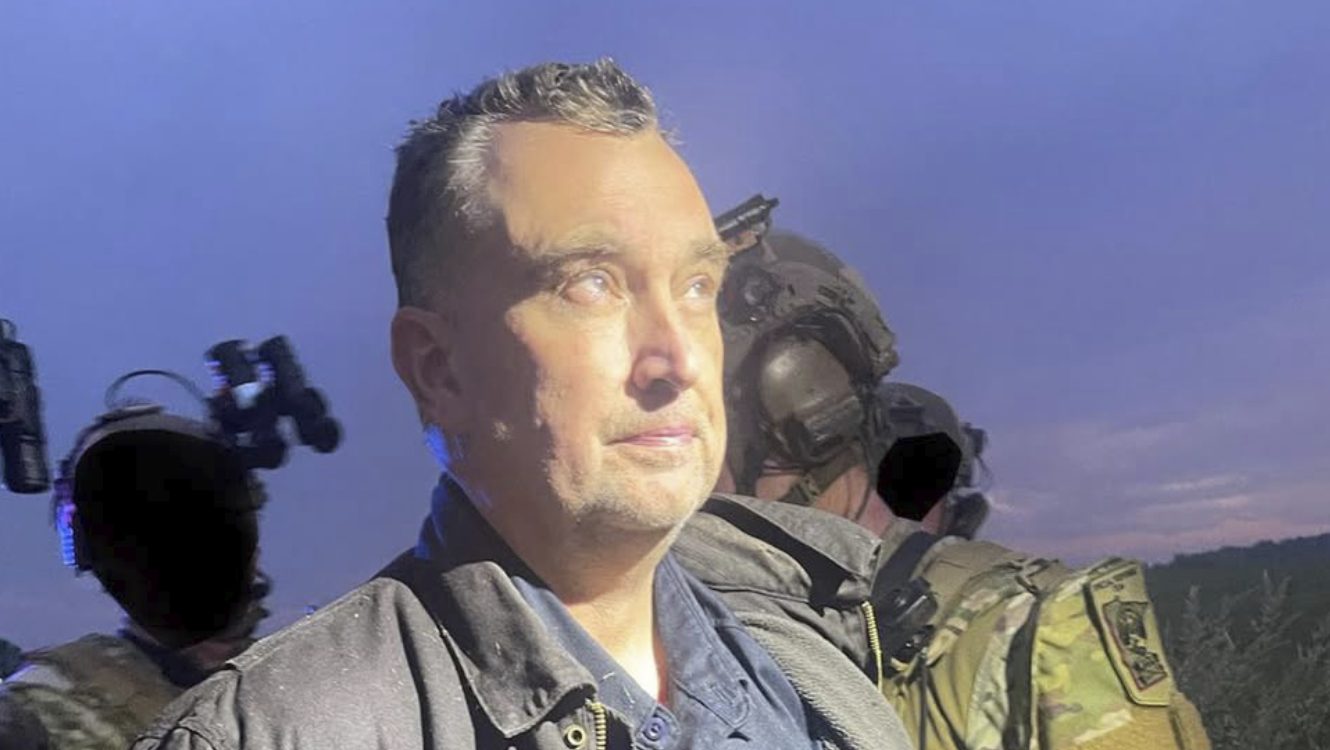
This photo made available by the Ramsey County Sheriff’s Office shows Vance Luther Boelter, the man accused of assassinating the top Democrat in the Minnesota House, as he was arrested late Sunday, June 15, 2025. (Ramsey County Sheriff’s Office via AP)

One of the most prevalent is that Boelter had ties to Democratic-Farmer-Labor Gov. Tim Walz — and that he may have been a Democrat himself — because of his appointment to a state workforce development board by Walz in 2019.

National conservative social media figures and even Republican President Donald Trump have noted Boelter’s appointment to the Governor’s Workforce Development Board, an advisory body of around 60 members from business, labor groups and state government.

Some, like U.S. Sen. Mike Lee, R-Utah, have implied Boelter aligned with the political left, though later deleted posts after backlash from Democrats, including Minnesota’s U.S. Sen. Tina Smith.

Based on the nature of state board appointments and reports of Boelter’s political background, claims of ties to the DFL are spurious.

First appointed by Gov. Dayton

Boelter, who has a history of voting for Republicans, attending Trump rallies and expressing anti-abortion views, was first appointed to the workforce board by DFL Gov. Mark Dayton in 2016. But his personal political views had no bearing on his appointment to a state board.

“(Board) volunteers are selected without regard to political party or affiliation,” the state Department of Employment and Economic Development said in a statement. “Individuals are not required to declare their political party when applying through the Secretary of State’s Boards & Commissions, and people of all political persuasions serve on them.”

The Minnesota governor’s office says it appoints hundreds of people to more than 130 boards, commissions, task forces and advisory councils every year. Boelter was one of those appointees. Members apply to be on the board through the Minnesota secretary of state’s office.

Thousands serve on the boards, and they don’t have a close connection to the governor’s office or make policy decisions for the state. Boards instead gather input from groups to produce reports to help guide policy-making.

In a 2023 report including Boelter’s name, the board recommended policies including more collaboration between job programs and higher education and more support for immigrant job programs.

Minnesota’s workforce development board exists because of a requirement from the federal government. The Workforce Innovation and Opportunity Act compels the state to have such a body to advise the governor on the state workforce system.

Served with Sen. Hoffman

Boelter was on the workforce board from 2016 to 2023, and during his tenure, he served with many business leaders, labor group representatives, university officials and state lawmakers of both parties, including state Sen. John Hoffman, the DFL lawmaker from Champlin he is accused of shooting.

This combo from photos provided by Minnesota Legislature shows from left, Senator John A. Hoffman and Rep. Melissa Hortman. (Minnesota Legislature / Associated Press)

As of last weekend, investigators were exploring whether Boelter and the victims knew each other, according to Drew Evans, superintendent of the Minnesota Bureau of Criminal Apprehension.

“There is certainly some overlap with some public meetings, I will say, with Sen. Hoffman and the individual, but we don’t know the nature of the relationship or if they actually knew each other,” Evans said.

Republicans also have served on the board.

State Sen. Carla Nelson of Rochester remains on the board. Rep. Bernie Perryman, R-St. Augusta, is on the board now, but Rep. Barb Haley, R-Red Wing, served at the same time as Boelter. Lawmakers of both parties from the House and Senate are appointed to the board.

Board members meet in person quarterly and remotely a few other times a year for subcommittees on disability equity and other areas like manufacturing. They occasionally publish reports on workforce and labor issues.

Boelter appears in public meeting records of the board a few times. Records from 2018 and on show he participated through rote actions like seconding a motion to approve previous meeting minutes.

Members of the workforce board are volunteers and only receive compensation upon request, according to Mary Haugen, a spokesperson with DEED. That includes car mileage, parking, $55 per diem, hotels and meals.

Background

When Boelter first joined the workforce development board in 2016, he described himself as an executive at Western Refining, later acquired by Tesoro, a Texas-based oil and gas corporation that also operated convenience stores.

Over the years, his listed affiliation on the board website evolved — first into a “general manager” at Marathon-Speedway, which acquired Tesoro in 2018 and owned the Speedway convenience store chain. Later, his listed affiliation changed to “general manager” with 7-Eleven, which acquired Speedway in 2021.

Boelter had been involved in the convenience store food business for years, according to his LinkedIn profile and other online sources.

At one point, he worked for Greencore, an Ireland-based convenience store food company, which acquired a site in Shakopee in 2014 and exited the U.S. in 2018. In an email, Greencore confirmed he was a former employee. 7-Eleven didn’t respond to multiple emails seeking details of Boelter’s involvement with the company.

Boelter has not been on the workforce development board after his last three-year term expired in 2023. He’s run a private security company with his wife, known as Praetorian Guard Security Services, since 2019.

Boelter once engaged with Minnesota Africans United, a nonprofit supporting African immigrant communities in the state, though the organization said he “was never hired, paid, or contracted by Minnesota Africans United. He has never served in any official (or unofficial) capacity as a representative of our organization,” and participated in a virtual webinar once in 2022.

Boelter’s LinkedIn page lists a bachelor’s degree in international relations from St. Cloud State University and a master’s degree and doctorate of education from Cardinal Stritch University, a defunct Catholic institution in Milwaukee. It also states experience with 7-Eleven; Greencore; Del Monte; Johnsonville Sausage of Wisconsin; and Nestle/Gerber. The precise nature of his work was unclear. The online résumé also lists him as CEO of the Red Lion Group.

Boelter referenced three years of work with the Red Lion Group in the Democratic Republic of the Congo and his interest in getting involved in the U.S. food industry again. It’s unclear what the company did.

Boelter faces federal charges in the shooting spree that killed former House Speaker Melissa Hortman, DFL-Brooklyn Park, and her husband, Mark, and injured Hoffman and his wife, Yvette. Boelter visited the homes of two additional lawmakers that same night and had notebooks naming dozens more targets, federal prosecutors said Monday.

A GoFundMe site has been set up for the Hortmans’ children and another for the Hoffmans.

Related Articles


Suspect in Minnesota attacks was a doomsday prepper, investigator says


Lobbyist accused of threatening shooting at MN Capitol charged with felony


Sen. John Hoffman, wife say daughter alerted police to politically motivated shootings


Lobbyist in custody for ‘threat of violence’ at Minnesota Capitol


UMN hikes tuition 6.5%, makes program cuts at all campuses