By MICHAEL PHILLIS and ALEXA ST. JOHN, Associated Press
WASHINGTON (AP) — The Trump administration is dropping plans to allow continued use of the last type of asbestos legally allowed in U.S. manufacturing after an outcry from asbestos opponents.
The Environmental Protection Agency said in a court filing Monday that it will now defend the Biden administration’s ban of chrysotile asbestos, which is used in products like brake blocks and sheet gaskets.
The carcinogenic chemical has been mostly phased out in the U.S., but last year, the agency under former President Joe Biden sought to finish the decadeslong fight with a comprehensive ban. The EPA in 2024 said “exposure to asbestos is known to cause lung cancer, mesothelioma, ovarian cancer, and laryngeal cancer, and it is linked to more than 40,000 deaths in the U.S. each year.”
Related Articles
Trump caught off guard by Pentagon’s abrupt move to pause Ukraine weapons deliveries, AP sources say
Noem says first responders in Texas ‘still looking for a lot of little girls’ missing after flood
Trump Media files for ‘Crypto Blue Chip ETF’ with SEC
A look at the countries that received Trump’s tariff letters
10 held in Texas immigration detention center shooting that was ‘planned ambush,’ US attorney says
The EPA had said in a federal appeals court filing last month that parts of the ban may have gone “beyond what is necessary to eliminate the unreasonable risk” and that other options such as requiring workplace protection measures might eliminate that risk. The agency said it planned a roughly 30-month process to write new rules.
But industry associations have already filed suit against the Biden administration’s ban. So has the Asbestos Disease Awareness Organization, which fights asbestos-related diseases and believes the ban isn’t as airtight as it needs to be. The nonprofit opposed pausing the case so the EPA could revisit the rule, arguing that any new proposal would likely be met by lawsuits, too.
All the work that’s gone into the current litigation shouldn’t be wasted, the nonprofit said. And a pause would also mean a delay in the rule’s implementation.
Lynn Ann Dekleva, the agency’s deputy assistant administrator of the Office of Chemical Safety and Pollution Prevention, said in a Monday filing that the EPA won’t go through a process to rewrite the rule.
The EPA now says the Biden administration “failed to adequately protect chemical industry workers from health risks posed by chrysotile asbestos.”
“To remedy the previous Administration’s approach, we notified the court that we intend to reconsider the applicability of interim workplace protection requirements during the replacement of asbestos gaskets for all workers,” EPA Press Secretary Brigit Hirsch said in a statement.
Linda Reinstein, president and CEO of the Asbestos Disease Awareness Organization, said she was elated the EPA isn’t going to reconsider the Biden administration’s ban. She speculated that the EPA didn’t like public reaction to its position. But she said the EPA’s new statement doesn’t make sense – the EPA should be talking about a ban, not workplace protections, and it should be protecting all workers, not just those involved with gaskets.
The New York Times was first to report the development.
Chrysotile asbestos is found in products such as brake blocks, asbestos diaphragms and sheet gaskets and was banned under the Toxic Substances Control Act, which was broadened in 2016. The Biden administration said it moved forward with a ban after decades of inadequate protections and delays in setting better standards.
The EPA’s previous move to reconsider the ban had been among dozens of deregulatory actions in the first months of the Trump administration.
“This is just the beginning of the public backlash against the Trump administration’s plans to roll back 31 standards that protect the air we breathe and the water we drink,” said Michelle Roos, executive director of the Environmental Protection Network. “Public health is not up for negotiation.”
The American Chemistry Council trade group declined to comment.
St. John reported from Detroit.
The Associated Press receives support from the Walton Family Foundation for coverage of water and environmental policy. The AP is solely responsible for all content. For all of AP’s environmental coverage, visit https://apnews.com/hub/climate-and-environment
Like just about everyone who grew up at a time when a few networks decided what Americans watched on their television sets, author Todd S. Purdum knew all of the antics of Lucy and Ricky Ricardo, the characters played by Lucille Ball and Desi Arnaz, on the ’50s sitcom “I Love Lucy.”
“It was unavoidable in syndication,” says Purdum, 65, on a recent video call. Though he’s too young to have seen its original run, “I Love Lucy” always seemed to be on, he says.
Lucille Ball as Lucy was the star around whom Arnaz as Ricky, and William Frawley and Vivian Vance as neighbors Fred and Ethel Mertz, orbited in each of the 180 episodes of “I Love Lucy” that originally aired from October 1951 to May 1957.
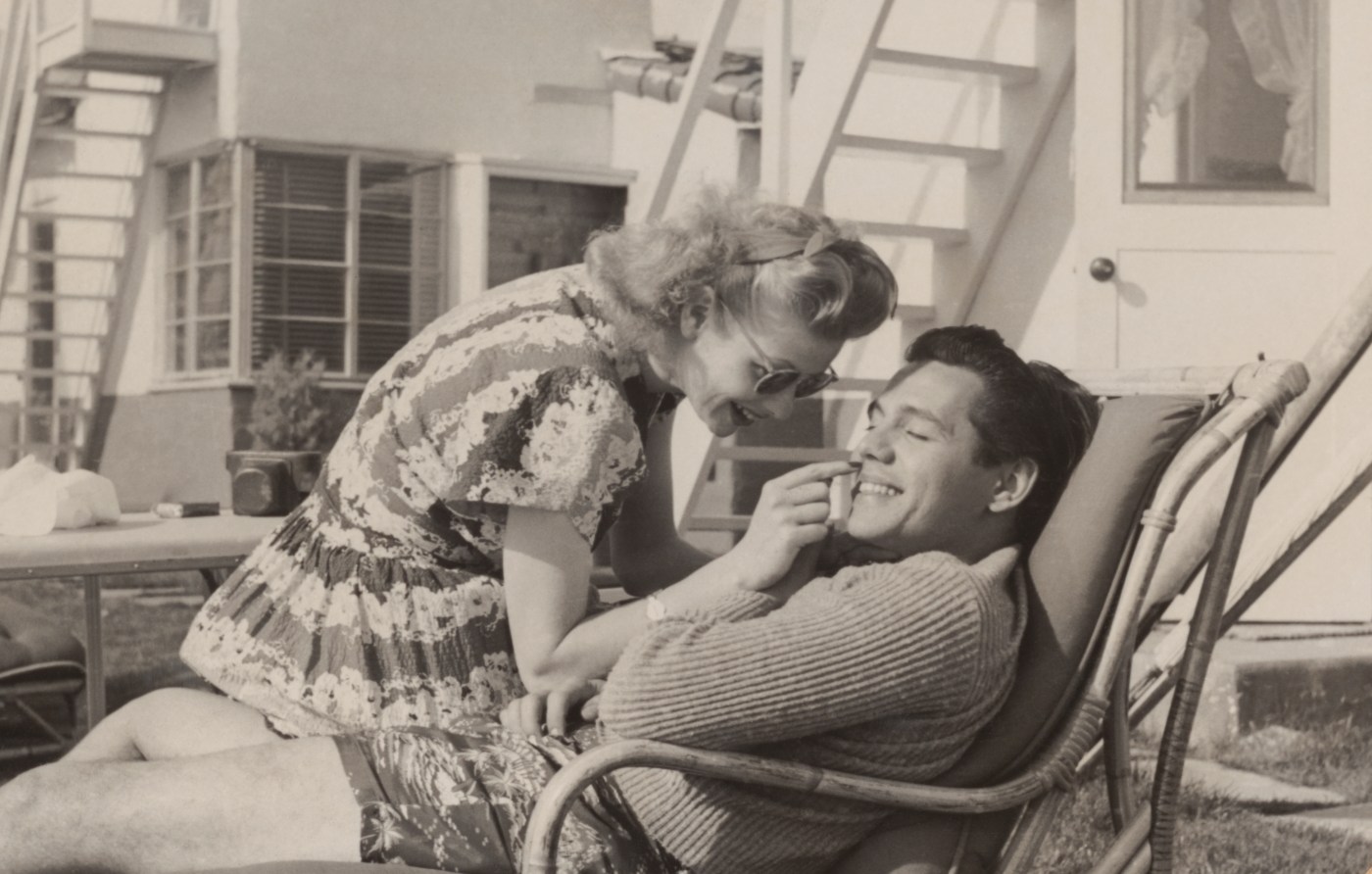
Comedian-actress Lucille Ball and her husband, musician-actor Desi Arnaz from the comedy series, “I Love Lucy,” are shown here in an undated photographer. Writer Todd S. Purdum’s new book, “Desi Arnaz: The Man Who Invented Television,” examines the life and career of Arnaz whose contributions to the show and TV in general have often been underappreciated. (Associated Press photo)
The Ricardos and the Mertzes, from left to right, actors Vivian Vance, Lucille Ball, Desi Arnaz and William Frawley, gather for the holidays in the “I Love Lucy Christmas Special”, an episode of the original “I Love Lucy” series. Writer Todd S. Purdum’s new book, “Desi Arnaz: The Man Who Invented Television,” examines the life and career of Arnaz whose contributions to the show “I Love Lucy” and TV in general have often been underappreciated. (Associated Press Photo)
Writer Todd S. Purdum’s new book, “Desi Arnaz: The Man Who Invented Television,” examines the life and career of Arnaz whose contributions to the show “I Love Lucy” and TV in general have often been underappreciated. (Book jacket courtesy of Simon & Schuster)
Writer Todd S. Purdum’s new book, “Desi Arnaz: The Man Who Invented Television,” examines the life and career of Arnaz whose contributions to the show “I Love Lucy” and TV in general have often been underappreciated. (Photo by Jeffrey MacMillan)
Television producer, musician and actor Desi Arnaz seen here on July 2, 1955. Writer Todd S. Purdum’s new book, “Desi Arnaz: The Man Who Invented Television,” examines the life and career of Arnaz whose contributions to the show “I Love Lucy” and TV in general have often been underappreciated. (Associated Press photo)
Lucille Ball and Desi Arnaz sign a contract. Writer Todd S. Purdum’s new book, “Desi Arnaz: The Man Who Invented Television,” was published on June 3, 2025, and tells the story of the “I Love Lucy” stars life and career from the less-reported point of view of Arnaz. (Courtesy of Ben White/Herald Examiner/Los Angeles Public Library)
The cast and creators of “I Love Lucy,” left to writer producer-writer Jess Oppenheimer, actress Lucille Ball, actor Desi Arnaz, and actress Vivian Vance, after winning Emmy Awards in the mid-1950s. Writer Todd S. Purdum’s new book, “Desi Arnaz: The Man Who Invented Television,” examines the life and career of Arnaz whose contributions to the show and TV in general have often been underappreciated. (Associated Press Photo)
Band leader Desi Arnaz watches as his wife actress Lucille Ball dances with their friend actor Van Johnson during a party at Ciro’s in Hollywood, Feb. 13, 1946. Writer Todd S. Purdum’s new book, “Desi Arnaz: The Man Who Invented Television,” examines the life and career of Arnaz whose contributions to the show “I Love Lucy” and TV in general have often been underappreciated. (Associated Press Photo)
Actor and producer Desi Arnaz is shown on July 14, 1978 in New York. Writer Todd S. Purdum’s new book, “Desi Arnaz: The Man Who Invented Television,” examines the life and career of Arnaz whose contributions to the show “I Love Lucy” and TV in general have often been underappreciated. (AP Photo/Richard Drew)
Lucille Ball and Desi Arnaz check a script for a forthcoming sequence to be filmed for “I Love Lucy.” Writer Todd S. Purdum’s new book, “Desi Arnaz: The Man Who Invented Television,” was published on June 3, 2025, and tells the story of the “I Love Lucy” stars life and career from the less-reported point of view of Arnaz. (Photo courtesy of Bettmann / Getty Images)
Desi Arnaz and Lucille Ball accept the award for best comedy show for “I Love Lucy,” during the 1953 Emmy Awards at the Hollywood Palladium on Feb. 11, 1954 in Hollywood, California. Writer Todd S. Purdum’s new book, “Desi Arnaz: The Man Who Invented Television,” examines the life and career of Arnaz whose contributions to the show “I Love Lucy” and TV in general have often been underappreciated. (Photo by TVA/PictureGroup/Invision for the Academy of Television Arts & Sciences/AP Images)
Desi Arnaz warms up the audience and introduces his wife and costar Lucille Ball before filming an episode of “I Love Lucy” in Oct. 1952. Writer Todd S. Purdum’s new book, “Desi Arnaz: The Man Who Invented Television,” was published on June 3, 2025, and tells the story of the “I Love Lucy” stars life and career from the less-reported point of view of Arnaz. ( Photo courtesy of Bettmann/Getty Images)
Stage and movie actor Desi Arnaz carries his new bride, actress Lucille Ball, across the threshold of a theater dressing room in Greenwich, Conn., on Nov. 30, 1940. Writer Todd S. Purdum’s new book, “Desi Arnaz: The Man Who Invented Television,” examines the life and career of Arnaz whose contributions to the show “I Love Lucy” and TV in general have often been underappreciated. (Associated Press Photo)
Lucille Ball is pictured with her husband Desi Arnaz and their two children, Desi Jr. and Lucie, in Los Angeles in1955. Writer Todd S. Purdum’s new book, “Desi Arnaz: The Man Who Invented Television,” examines the life and career of Arnaz whose contributions to the show “I Love Lucy” and TV in general have often been underappreciated. (Associated Press Photo)
Television star Desi Arnaz at the Del Mar Racetrack in 1957. Writer Todd S. Purdum’s new book, “Desi Arnaz: The Man Who Invented Television,” examines the life and career of Arnaz whose contributions to the show “I Love Lucy” and TV in general have often been underappreciated. (Associated Press Photo)
Comedian George Gobel, right, gets chucked under the chin by Lucille Ball as her husband Desi Arnaz looks on at the Television Academy’s seventh annual awards dinner at the Moulin Rouge in Los Angeles on March 7, 1955. Writer Todd S. Purdum’s new book, “Desi Arnaz: The Man Who Invented Television,” examines the life and career of Arnaz whose contributions to the show “I Love Lucy” and TV in general have often been underappreciated. (AP Photo/Dick Strobel)
Desi Arnaz and Lucille Ball, seen here in an image from the documentary “Lucy and Desi,” directed by Amy Poehler. Writer Todd S. Purdum’s new book, “Desi Arnaz: The Man Who Invented Television,” was published on June 3, 2025, and tells the story of the “I Love Lucy” stars life and career from the less-reported point of view of Arnaz. (Courtesy of Desilu, too)
Lucille Ball, left, appears in a scene from “I Love Lucy” with cast members Desi Arnaz, center, Vivian Vance and William Frawley in this undated photo from the 1950s. Writer Todd S. Purdum’s new book, “Desi Arnaz: The Man Who Invented Television,” was published on June 3, 2025, and tells the story of the “I Love Lucy” stars life and career from the less-reported point of view of Arnaz. (AP Photo/CBS Photo Archive)
Desi Arnaz and Lucille Ball, seen here in an image from the documentary “Lucy and Desi,” directed by Amy Poehler. Writer Todd S. Purdum’s new book, “Desi Arnaz: The Man Who Invented Television,” was published on June 3, 2025, and tells the story of the “I Love Lucy” stars life and career from the less-reported point of view of Arnaz. (Courtesy of Desilu, too)
1 of 19
Comedian-actress Lucille Ball and her husband, musician-actor Desi Arnaz from the comedy series, “I Love Lucy,” are shown here in an undated photographer. Writer Todd S. Purdum’s new book, “Desi Arnaz: The Man Who Invented Television,” examines the life and career of Arnaz whose contributions to the show and TV in general have often been underappreciated. (Associated Press photo)
And it’s Lucy whose voice and visage come first to mind when “I Love Lucy,” which played in reruns for decades after it ended, is remembered today.
For good reason, too. Ball was a brilliant comedian, her timing impeccable, her pratfalls hilarious, her physical comedy perfection. And no matter how frustrated or worked up Lucy might have made Ricky, played by her real-life husband Arnaz, by the end of each episode she was always back in his good graces.
Over the years, Purdum gradually learned more about Arnaz. He read his 1976 memoir, “A Book.” He knew elements of his Cuban origins, his reinvention after immigrating to the United States as a teenager, first as the leader of a Latin dance band, later as an actor, his twin careers by the time he met and married Ball in November 1940.
And Purdum knew that Arnaz had played a significant role in the creation of “I Love Lucy” and the formation of Desilu Productions, which in addition to “I Love Lucy” also made many more TV shows including “The Untouchables,” “Mission: Impossible,” and “Star Trek.”
“But I didn’t really understand the full depth of the fascinating aspects of his life in Cuba and his family life,” Purdum says. “And then the whole role that he played in the early days of television.”
“Desi Arnaz: The Man Who Invented Television” is the book Purdum began to write when in 2020 the pandemic upended a career in journalism that included several decades as a New York Times reporter followed by stints at Vanity Fair and the Atlantic.
The book rebalances the history of the relationship of Arnaz and Ball, both on screen and off, giving Arnaz’s side of the story in more depth and detail than earlier biographies. It also explores ways in which Arnaz, through good fortune and a canny business sense, changed the making of television in ways that still influence the industry today.
“It seemed, at a moment when the culture was interested in re-examining the lives of people who might have been overlooked in their day, that he would make an interesting subject,” Purdum says of the decision to take up the story he tells in the book.
“And the more I got to know, the more I was impressed.”
Desi discovers TV
In many ways, “I Love Lucy” sprang from the desires of Ball and Arnaz to have more time together by collaborating on something with the stability of an ongoing TV show.
Given the success that “I Love Lucy” later found, it might have seemed a small thing to contact the right people, cast the show, and get it on the air.
It was, in fact, anything but simple.
The first hurdle, as Purdum writes, was a fear that audiences would not welcome an interracial couple or Arnaz’s accented English into their homes every week.
“One thing I found interesting about Desi was he didn’t take the first ‘no’ as the definitive answer,” Purdum says. “So if CBS said, ‘No, we don’t want this,’ he kept going.
Arnaz organized a cross-country comedy tour for him and Ball as a kind of proof of concept for the TV show they wanted to make, Purdum says. “Taking the vaudeville tour to do an end-run around them and prove that the audience would accept it, that’s a pretty clever move.”
The network and ad execs who held the purse strings also initially insisted that Arnaz and Ball make the show in New York City, like nearly every other TV show at the time.
There was no easy way to broadcast a show across the continent as television and the 1950s began, so programs aired live from New York in the Eastern and Central time zones, where the majority of the population then lived, with copies later broadcast to the less-populated western states.
Arnaz and his team proposed something entirely different for “I Love Lucy.” They would shoot it live in Hollywood with three film cameras simultaneously capturing the action on the set. It would quickly be edited and then provided a few days later to air in the entire country in the crisp black-and-white of 35 millimeter film.
“He didn’t do it by himself, but he’s leading the charge that filmed the show with the three-camera system and synchronization,” Purdum says of what remains a standard way of shooting sitcoms today.
“This led to filming becoming the norm,” he says. “I mean, live television still persisted for news and special events, but quickly other people, especially for half-hour sitcoms, wanted to film television programs.
“And that led to the transfer of the center of the business from New York to L.A.”
Value in the vault
The original contract to make “I Love Lucy” also granted Arnaz full ownership of the episodes after they aired. At the time, the networks didn’t see any value in a show past its original broadcast. The idea of reruns or syndication didn’t exist and even Arnaz wasn’t sure what he’d be able to do with the filmed episodes.
“He acknowledged that he didn’t quite know,” Purdum says. “There’s some suggestion that he thought they could maybe be valuable for foreign sales. But he’s the first to acknowledge that he had a lot of bravado for pretending he knew what this would amount to.”
A kind of instinct was there from the start, he says of Arnaz’s ability to sense what television might become.
“There’s a quote he gave to Earl Wilson, the Broadway columnist, in 1958, about how someday you’ll have a TV as big as your wall, as big as your house,” Purdum says. “So there was a part of him that clearly was visionary. He was also the beneficiary of, I don’t say dumb luck, but informed luck.
“One of the lines I love in E.B. White’s essay ‘Here Is New York,’ about people who come to New York from other places, is ‘No one should come to New York to live unless he is willing to be lucky,’” Purdum says..
“I think there was a part of Desi that was willing to be lucky. He made his own luck.”
A great love affair
“I Love Lucy” ended in the spring of 1957. The marriage of Arnaz and Ball ended in divorce three years later.
The couple had experienced success beyond their dreams with the show. Their Desilu Productions studio was booming. They had two young children, Lucie and Desi Jr., whom they adored.
But the grind of making a weekly TV show combined with Arnaz’s heavy drinking and constant infidelity, and the almost daily clamor of the couple’s battles, finally took its toll on a relationship their friends had always considered one of “great love affairs of all time,” Purdum says.
“They never stopped loving each other,” he says. “They couldn’t be together. They had a great deal of capacity to hurt each other, it seems to me, but they never stopped having this essential connection.”
Years earlier in their relationship, it was easy to see how much they were in love, Purdum says.
“You can see on the show, their obvious attraction to each other, their obvious chemistry,” he says. “It’s pretty palpable.
“Clearly, there was just a sheer animal magnetism, a physical attraction that must have been very real,” he says. “It’s always been remarked that Lucy was the rare female comedian who was absolutely radiant. She had been a showgirl at times.
“And Desi, the pictures of him as a young man, before age and alcohol took their toll, he was devastatingly handsome.”
The couple may have also been drawn together by early traumas each experienced as children. Arnaz’s family fled Cuba after a change in the government and had to restart their lives from scratch in the United States.
“Lucy also had what I think you could call unprocessed childhood trauma,” Purdum says. “Her father died before she was three. She shunted around to different relatives.”
Both also became responsible, financially and otherwise, for their mothers, he adds.
“On some level, that was something that caused tension, but it also must have drawn them together,” Purdum says. “Because they felt a mutual obligation to be the breadwinners and caregivers for their extended family.”
In some ways, the paradox of “I Love Lucy” was that the show Arnaz and Ball created to save their marriage contributed to the opposite outcome, he adds.
“It didn’t single-handedly break up their marriage, but it helped create the stresses and tensions,” Purdum says. “And the 24-7 working together, that probably only exacerbated the tensions, and in the end was part of what drove them apart.”
The industry leaves Desi
In the years that followed, as “I Love Lucy” became ubiquitous in reruns everywhere, Arnaz’s fortunes slowly declined as Ball’s held steady with several Desi-less spinoffs and reboots of the show that made her a superstar.
Arnaz eventually sold his share of Desilu Productions to Ball and struck out to create his own shows as an independent producer. “The Mothers-In-Law” was a modest success. A sitcom with Carol Channing never got off the ground.
“Bernie Weitzman, a Desilu executive, said [Arnaz] didn’t leave the industry, the industry left him,” Purdum says. “Because he was what they call in the insurance business an assigned risk, a bad risk.”
Alcoholism, the absence of Ball as his creative partner, and the under-recognition of all of his innovations in the television industry further contributed to the decline of Arnaz as a Hollywood player.
“The people who had dealt with him intimately knew the role he was playing,” Purdum says. “But the broader industry probably tended to typecast him as just a funny, accented second banana. There was a gulf between the people who really knew the role he played and the people who were too willing to assume that he was just an appendage to Lucy.”
Not that Ball ever failed to hail her husband during and after their marriage for all that he’d created.
“And Lucie Arnaz said you have to know that she took no joy in that,” he says. “She just did it dutifully because she had to keep the company going, and it wasn’t anything she was proud of or liked. She considered that was really Desi doing all of that.”
Ricky loved Lucy
The second season premiere of “I Love Lucy” is an episode titled “Job Switching,” though most people just think of it as the one where Lucy and Ethel get jobs at the chocolate factory.” It’s considered one of the most classic moments in television history as Lucy and Ethel are overwhelmed by the speed at which chocolate candies come flying down the factory conveyor belt at them.
It’s also one of the great Ricky episodes, Purdum says, though the storyline of Ricky and Fred taking on kitchen duties for a day is less remembered.
“He and Fred are making dinner, and he’s got an arroz con pollo on the stove with four pounds of rice for four people,” Purdum says. “The rice explodes and he’s slipping, and he fell once by accident and realized what a laugh it got and then arranged to fall two more times before the scene ended.”
As the title suggested, “I Love Lucy” was a show seen through Ricky’s eyes, which in hindsight further underscores the importance of his contributions to the work.
“He’s like, ‘Are you kidding me?’” Purdum says of Ricky’s reactions to each new situation Lucy gets herself into. “He’s the window, our pathway, into the life of Lucy of the Ricardos, and that’s a very, very important role.
“If he weren’t ultimately sympathetic, if the character were a jerk, it wouldn’t work,” he says. “You have to know that he gets exasperated with her. But I think of that comment from Martin Leeds, the Desilu executive:
“‘There was nothing she could do that he wouldn’t love her.’ “
Related Articles
Readers and writers: Two books take clear-eyed view of health care system’s flaws
Literary calendar for week of July 6
8 graphic nonfiction books that use comics to unlock memoir, history and more
Literary calendar for week of June 29
Readers and writers: Twin Cities baker/writer in midst of marathon contemplation of MIA painting
St. Paul firefighters used a rope system Tuesday to rescue a man who was in a sewer for several days.
The department’s Advanced Technical Rescue Team responded about 10:35 a.m. to find the man 10 to 12 feet below ground in a sewer opening, according to Deputy Fire Chief Jamie Smith. It was in the area of Union Gospel Mission on East University Avenue near Lafayette Road.
The man was conscious and alert, said he’d been there for three to four days, and he couldn’t get out on his own, Smith said.
The team used its rope system to lower a rescuer to the man and raised them both up to street level. St. Paul fire department’s EMS evaluated the man at the scene and took him to a hospital in stable condition for further evaluation.
There wasn’t immediate information about how the man became trapped in the sewer.
Related Articles
After Texas floods that killed campers, here’s what to consider when sending your kids to camp
St. Croix motorcyclist dies of injuries from July 3 crash
13-year-old Minnesota boy dies after July 4 firework hits him
Joe Soucheray: Grate, more pointless, dangerous vandalism in St. Paul
Funeral planned for Minnesota state trooper who drowned in South Dakota
The mayor’s Charter Revision Commission drafted a series of proposals to streamline and speed up the public review process for new development. If approved, they’ll go before voters in the November general election.
Voters during last year’s general election. A set of proposals to change the City Charter around land use rules could be on the ballot this November. (Photo by Adi Talwar)
In response to New York City’s housing shortage and affordability crisis, Mayor Eric Adams appointed the Charter Revision Commission (CRC) in December 2024, a 13-member panel dedicated to proposing amendments to the city charter, a document outlining the rules and regulations of city government.
This year, the CRC is prioritizing housing and land use procedures, with its primary concern being the slow-moving city approval process for new developments. The Commission aims to reform the Uniform Land Use Review Procedure (ULURP), arguing in an interim report released last week that the current system hampers the city’s ability to build affordable housing efficiently by delaying projects and raising costs of construction.
The report broke down how the existing process is not only lengthy—often taking more than six months—but also expensive, with applications for special permits ranging from $2,040 for smaller projects to $29,485 for larger developments.
To address this, the CRC drafted a series of land-use proposals dedicated to streamlining the Uniform Land Use Review Procedure, or ULURP (as well as a separate measure to reschedule municipal elections to even-numbered years, so they run concurrently with presidential elections).
The Commission is expected to vote on the measures later this month. If approved, the final proposals would be put before voters as ballot questions in this November’s general election.
“The Commission’s interim report includes a strong set of proposals that meet the moment for New York City. Together, they can help build a more affordable city and a more responsive government,” said Richard Buery, chair of the 2025 CRC.
But some of the propositions are likely to draw controversy, particularly those that could diminish the role of New York City Council members in land use decisions. The Council has convened its own charter revision commission, the NYC Commission to Strengthen Local Democracy, and has criticized the mayor’s as an effort to block theirs from getting proposals on the ballot.
In March, the City Council passed a resolution asking Albany lawmakers to protect the current charter revision process, taking issue with Mayor Adams’ 2024 Commission, which they say was rushed. It accused the mayor of weaponizing his authority by approving specific proposals without sufficient public input.
“A mayor’s authority to propose charter revisions should not include the power to block ballot access for other stakeholders in local democracy or be unfettered to bypass transparency,” read the Council’s press release accompanying the resolution.
This year’s mayoral Commission, which is distinct from last year’s, has held 10 public hearings since January, and “is an independent Commission,” Buery stressed at one such hearing Monday night, the last before the CRC votes on its proposals.
“In making our recommendation to the city’s voters, we are bound only by our judgment, and by our values. We have really striven to pursue ideas, regardless of who proposed them, regardless of who supports them, regardless of who opposes them,” he said.
An affordable housing development under construction in East New York in 2020 (City Limits/Adi Talwar)
A speedier method for approving affordable housing
The Board of Standards and Appeals (BSA) is the agency responsible for resolving disputes over zoning and land use issues. It often reviews appeals and special permission requests from developers seeking to build in areas where zoning laws would typically restrict construction.
Building on the BSA’s authority to grant zoning exceptions, the CRC proposes a new zoning action that creates a fast-track review process for publicly financed affordable housing projects.
This new action only applies to developments funded by the Housing Development Fund Corporation—the legal vehicle offering loans to nonprofit organizations that develop low-income housing projects around the city.
Once an application is filed under The Fast Track Zoning Action, the BSA would be required to put the request at the top of the list, starting the 60-day review process immediately. The board then must hold a hearing on the application within three months of the filing date, cutting the ULURP process by half.
Additionally, projects proposed within the 12 community districts that produced the fewest affordable apartments over the last five years will receive a fast-tracked review procedure in order to promote the Fair Housing Framework, targeting neighborhoods where local pushback has stalled or blocked new housing.
Expedited process for minor land use projects
The Commission also proposes a new Expedited Land Use Review Procedure (ELURP) to provide faster approval for small-scale development and infrastructure projects that the CRC says New Yorkers have been calling for—such as raising street grades to prevent flooding or installing solar panels on public land.
“These modestly-sized buildings can be a key source of naturally affordable housing that is especially conducive to ownership opportunities,” said Casey Burkowitz, the press secretary at the Department of City Planning. For Burkowitz, the length and cost of the ULURP process limits participation to large-scale projects, as only they can absorb the time and expense required for review.
ELURP would reduce the review process for modestly-sized rezoning applications by four months. As with ULURP, the local community board and the borough president will be the first to review the application. A decision must be made within 60 days, and afterwards, the City Planning Commission has one month to hold a public hearing to either authorize or shut down the project.
Unlike ULURP, ELURP requires the community board and the borough president to review each project concurrently to save time. The proposed process also skips the City Council’s three-month evaluation procedure, the mayoral veto, and finally, the highly debated member-deference practice.
Members of the City Council at a stated meeting in December. (Emil Cohen/NYC Council Media Unit)
The New Appeals Board
Currently, the City Council has de-facto veto power during the approval process through a practice called “member deference,” in which lawmakers typically defer to the local councilmember when it comes to land use votes in their respective district.
Councilmembers say the custom holds them accountable to their constituents and ensures local control over neighborhoods. But critics say it stifles growth in certain parts of the city where leaders are opposed to new development, fueling inequities when it comes to affordable housing production.
Last year, for example, Brooklyn City Council District 42—which spans East New York, East Flatbush and Brownsville—saw more than 1,400 new affordable units, while districts in Eastern Queens and Manhattan’s west side saw zero, according to an annual analysis by the New York Housing Conference.
The Commission proposes the creation of a New Appeals Board made up of the borough president, City Council speaker, and the mayor, which would have the power to reverse the Council’s decision on a land use application with a two-thirds majority vote.
The CRC said that “elevating borough-and city-wide perspectives in the land use process would strike a better balance between local input and citywide needs,” while also creating opportunities for growth in areas where “member deference” has halted housing development.
The idea faced backlash from some councilmembers and local New Yorkers.
“I am very much opposed to the limiting of City Council’s role in decisions taken by the ULURP process,” one resident wrote in written testimony to the CRC. “The City Council is the people’s voice and must not be limited, especially in zoning questions which affect our neighborhoods and lives.”