Twins’ Royce Lewis adapts offseason program: ‘This kid wants to be a star’

posted in: All news | 0

FORT MYERS, Fla. — One of the first things that struck new manager Derek Shelton when he went to visit Royce Lewis in Texas just days after his hiring was the third baseman’s ability to order barbecue well.

The second was his maturity.

Shelton was familiar with Lewis from his first stint in the organization. He was the team’s bench coach in 2018-19 when Lewis was a highly-touted prospect in the organization. But Lewis has grown into a much different player and person in the intervening years.

It’s very likely that the 26-year-old’s upcoming season will determine a lot about how the team’s season plays out. That’s part of the reason why Shelton made it a point to visit Lewis in person during his first couple weeks on the job.

“For us to be the team we want to be, Royce Lewis has to be on the field,” Shelton said.

And much of his offseason was geared towards just that. Lewis made seismic changes this offseason, hiring a private hitting coach and changing up his training routine in response to a difficult 2025 season.

Fully healthy this winter — Lewis dealt with two hamstring strains but played in a career-high 106 games last season — he finally decided to switch over to the workout plan suggested by his agent, Scott Boras.

“Boras, every time any injury or anything would come up, he’s like ‘I’m trying to tell you, you weren’t hurt when we were working with you,’ ” Lewis said. “He’s always been reeling me back. I made that transition, and it’s just more powerful, more explosive, more volume.”

Lewis hadn’t back squatted in years — since maybe 2018 or 2019, he estimated — but he incorporated that back into the routine. At first, his body was sore, and he said he was “hating” it. But then he realized the benefits of adding volume and stress to the body this winter in an attempt to avoid the muscle strains that have plagued him in recent seasons.

Another big change Lewis made was hiring a private hitting coach — aside from Twins hitting coaches, he had primarily been working with his father, William — to work with for the first time in his career. Lewis linked up with Jeremy Isenhower, who also works with Kansas City star Bobby Witt Jr. and former Twin Jorge Polanco, this winter.

“(Polanco) said, ‘Papi, this is the guy. I promise,’” Lewis said. “He worked with this guy, and he almost was like the last year of his career … and then he had a career year last year.”

Lewis traveled from his home in the Dallas area to Houston to meet with Isenhower and estimated he saw him around eight times. The changes weren’t geared towards altering his swing, Lewis said, noting the work was focused more on the preset and his loading mechanism.

One thing Isenhower mentioned after watching film of Lewis is that it seemed like he was using five different batting stances in one game, which was a surprising observation to the third baseman.

“I didn’t think so. It doesn’t feel like that, but I was just going up there as an athlete,” Lewis said. “He told me he thinks the best (hitters) are preset. He gave me 12 examples of the best hitters in the league. I said “OK. What do I need to do?’ It felt weird for a month and a half.”

The trips to Houston came with another benefit, too: a reunion with former teammate Carlos Correa. In between wrestling and Mario Kart with Correa and his two young sons, Correa kept him well fed, serving him pancakes, oatmeal, scrambled eggs and burgers, all of which drew rave reviews.

“He makes the best food of all time,” Lewis said. “I’ve got to put that on the record.”

Now, after an offseason that he described as his “favorite,” he hopes he can channel his work into results.

The third baseman is coming off a season in which he hit .237 with 13 home runs and 52 runs batted in. His .671 OPS was the lowest of his career, and his 83 OPS+ is a number that is 17 percent below the league-average hitter.

Near the beginning of the offseason when Shelton sat down with Lewis, he wanted to see where Lewis was at. He liked what he heard and has seen since.

“This kid wants to be a star. And to be a star, you have to take care of your body. You have to put yourself in a situation where you’re seeking external advice,” Shelton said. “And then, No. 3, you have to have the maturity to realize that you’ve made some mistakes. And he was very clear in all those things with me. … The thing that stands out, is when you’re willing to say, ‘I need to do some things differently.’ That’s the sign of maturity in my mind.”

Related Articles


All-star reliever Liam Hendriks looks to revive career with Twins


Newborn, WBC prep helped Twins starter Joe Ryan tune out the ‘unknown’ in offseason


Twins add more bullpen depth, acquire Anthony Banda, Liam Hendriks


Five Twins questions as spring training gets underway


Top prospects, familiar veteran among Twins’ non-roster invites

National Park Service seeks final input on St. Croix River management plan

posted in: All news | 0

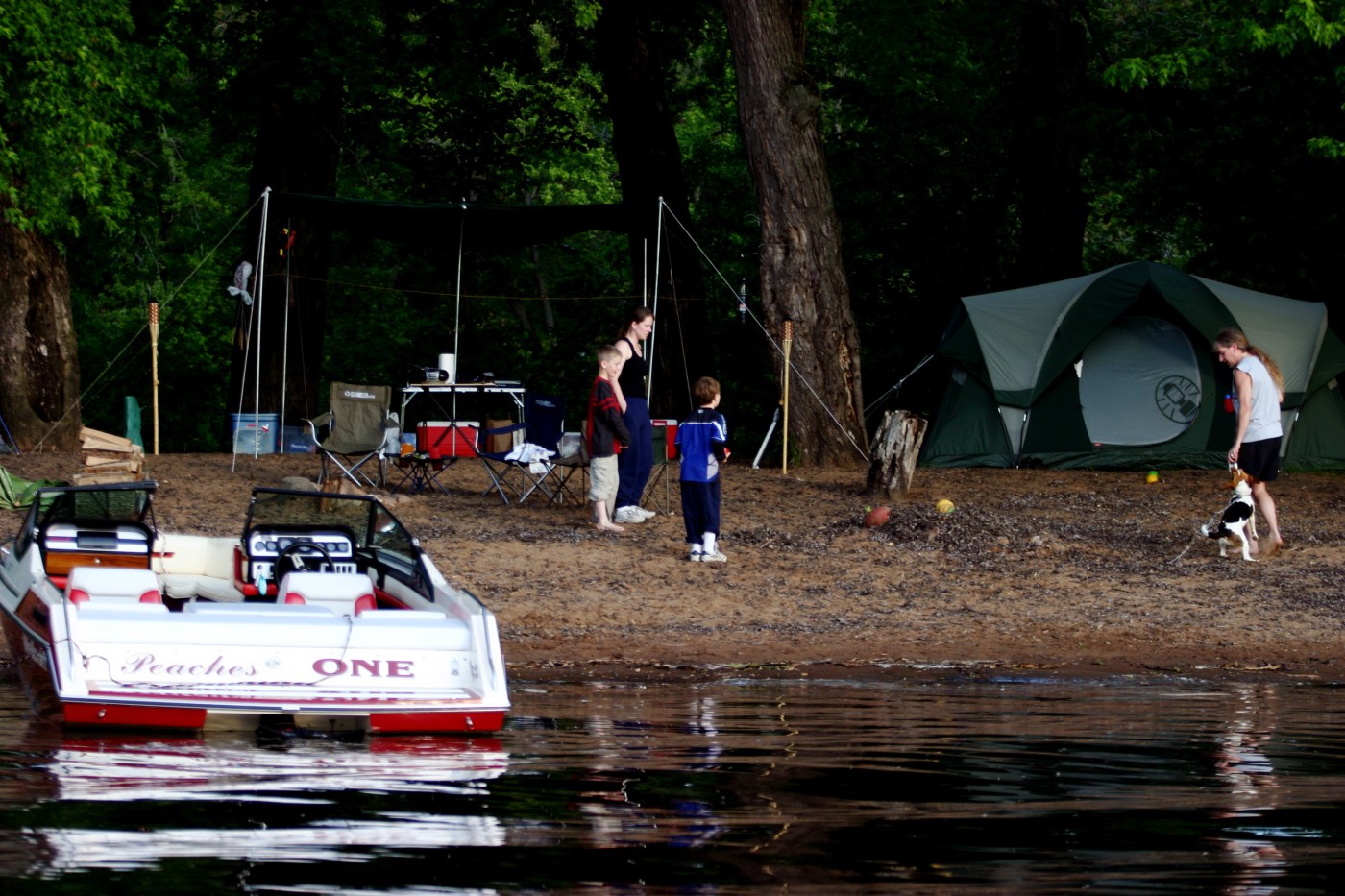
Campers could be asked to pay to reserve camping spots under changes being proposed for the St. Croix National Scenic Riverway as part of the final draft of a new management plan.

National Park Service officials are seeking public feedback on the proposed changes as part of the creation of a 146-page comprehensive river management plan that will guide the future of the St. Croix and Namekagon rivers. Comments will be accepted until Feb. 21.

The plan outlines the Park Service’s long-term management approach “for protecting and enhancing the outstanding natural, cultural and recreational values that led to the riverway’s designation as part of the National Wild and Scenic Rivers system,” said Nate Toering, a spokesman for the St. Croix National Scenic Riverway.

Once finalized, the plan will guide National Park Service decision-making on lands it manages within the riverway, Toering said, but any actual regulatory changes would require separate public processes and steps.

Camping reservations

Canoeists paddle up the St. Croix River to see the cliffs on the Minnesota side of the river near St. Croix Falls, Wis., on Saturday, Aug. 2, 2008. (Chris Kelleher / Special to the Pioneer Press)

One of the major changes being proposed concerns camping, which has become an issue with park visitors reporting difficulty securing campsites along the river and confusion over when a permit is required.

“This was based on feedback we received about people having a difficult time finding camp spots,” Toering said.

Visitors currently need to abide by different rules based on their location within the riverway. A permit is required for camping south of the dam in St. Croix Falls, Wis., while regulations north of the dam do not require visitors to obtain permits.

Park Service officials are considering implementing a zone-based reservation system for all Park Service-owned and managed sites in the St. Croix National Scenic Riverway via www.recreation.gov.

The number of available permits would not exceed the number of campsites available in each zone, according to the plan.

The zone-based reservation system would balance “letting campers know that they will have a spot in advance, but also have the freedom and flexibility to pick that spot while on the water,” Toering said.

It also would help support campsite maintenance and educate visitors on park rules, Toering said.

A camping permit would also be required for camping on designated islands south of the High Bridge to the Boom Site in the Lower St. Croix. Examples include Pillar Island and Mile Long Island, Toering said.

The plan does not directly impose new camping fees or reservation requirements. Those changes would require an additional public process, he said.

Boat speeds

A pleasure boat travels south on the St. Croix River near Stillwater in an aerial photo taken Thursday, July 20, 2017. (John Autey / Pioneer Press)

The plan does not directly implement new speed zones or boating restrictions. Any changes to speed zones would require further study, public engagement and separate rulemaking, Toering said.

Park Service officials instead plan to adopt a “three-phased approach” when it comes to any possible restrictions on boat speeds, Toering said.

First, Park Service officials will begin monitoring to determine if desired conditions are being achieved under current regulations.

Next, officials will implement emergency restrictions/closures through the Superintendent’s Compendium if monitoring determines that desired conditions are not being achieved. The compendium, which is updated annually, identifies visiting hours, closures, permit requirements and camping regulations and prohibits certain recreational activities (such as paintballing and geocaching) within the boundaries of the St. Croix National Scenic Riverway.

Finally, Park Service officials would work with officials from the Minnesota and Wisconsin Departments of Natural Resources to identify and implement alternate strategies to achieve desired conditions.

Also of note: Going forward and for the purpose of the plan, Park Service officials will use the term “no-wake” to include areas of “flat wake,” “no-wake” and “slow-no-wake” speed. The different terms and slightly different definitions related to wakes have created confusion for various user groups, according to the plan.

Multi-year planning process

Related Articles


Get into national parks free on Feb. 16 — but there’s a catch


US ski resorts turn to drones to make it snow amid dire drought


Skywatch: A disgraced charioteer turned goat farmer


‘Frozen water out?’ White Bear Lake Ice-Out Contest organizer contemplates name change, sticks with original


After ‘ICE out’ messages were destroyed, snow sculptors recreate their works in Minneapolis

Park Service officials began the planning process in 2023 and hosted nine public engagement sessions across the region. The current comment period marks the third and final opportunity for public input, Toering said.

“We encourage everyone to read the full draft online and share their feedback through the official comment portal,” he said. “This is a key opportunity to provide input directly on the proposed content before the plan is finalized.”

Comments can be submitted until Feb. 21 at parkplanning.nps.gov/sacnriverplan or by mail to St. Croix National Scenic Riverway (Attn: Superintendent), 401 N. Hamilton St., St. Croix Falls, WI 54024.

Tommies roundup: Women’s hoop wins, hockey falls

posted in: All news | 0

The St. Thomas women’s basketball and hockey teams both took part in conference competition Saturday, with mixed results. The Tommies won on the hardcourt, but fell on the ice as the regular season nears its conclusion

Basketball: St. Thomas 73, Omaha 43

St. Thomas got back to .500, both overall and in Summit League play, with its third consecutive victory — a 73-43 pasting of visiting Omaha.

Four Tommies scored in double digits, led by Faith Feuerbach’s 13 points. Feuerbach tied the Mavericks’ Regan Juenemann for the game high in scoring, while three of her UST teammates — Alyssa Sand, Jada Hood and Autumn McCall — scored 12 points each.

St. Thomas shot 57.7% from the field in the second half. They finished the game 6 of 15 from 3-point range and scored 28 points off 22 Omaha turnovers. They also outscored Omaha 46-24 in the paint.

The Tommies (13-13 overall, 6-6 Summit) took control early, outscoring Omaha (4-24, 2-11) by 10 points in the first quarter, and never looked back in the 30-point triumph.

With the win, the UST remained in a fourth-place tie in the Summit standings with Oral Roberts, which also won on Saturday. St. Thomas faces its toughest test of the season with a trip to conference-leading North Dakota State (22-2, 11-0) on Thursday at 7 p.m.

Hockey: Minnesota-Duluth 3, St. Thomas 0

The St. Thomas women’s hockey team lost again at Minnesota-Duluth Saturday, as the 10th-ranked Bulldogs finished off a two-game sweep of the Tommies with a 3-0 win.

It was a loss that wasn’t for lack of trying, as UST launched 33 shots at the UMD net. However, Bulldogs goaltender Eve Gascon stood tall against the onslaught for the shutout victory. Tommies netminder Julia Minotti made 20 saves, but allowed one goal in each of the first and second periods. The hosts’ final tally came with 39 seconds to go in the game after St. Thomas pulled Minotti for the extra attacker.

The Tommies (12-19-1 overall, 7-18-1 WCHA) finished the weekend in seventh place in the conference standings with two games remaining in the regular season. However, UST remains mathematically alive to finish as high as fifth depending on the outcomes next weekend. St. Thomas can direct its own destiny to move up to fifth as it hosts current fifth-place side Minnesota State (13-17-2, 7-17-2) for a two-game set next Friday and Saturday, with both games starting at 2 p.m.

The Mavericks (24 points) are currently one point ahead of the Tommies (23). St. Cloud State (11-19-2, 7-17-2) currently sits in fifth place with 27 points, but plays No. 1-ranked Wisconsin (27-3-2, 21-3-2) next weekend. If St. Thomas is able to sweep MSU and the heavily-favored Badgers are able to do the same to the Huskies, the Tommies would leap to sole possession of fifth in the final standings.

Related Articles


Women’s hockey: Gophers swept by Buckeyes


Women’s hockey: Tommies blanked by No. 10 UMD


Gophers hockey: Men win in shootout, women fall in 2 vs. 3 battle


Men’s hockey: For St. Thomas’ Chase Cheslock, it’s all about the assist


Women’s basketball: Gophers win seventh straight game

Epstein’s girlfriend married a woman, showing how he gamed immigration

posted in: All news | 0

By Francesca Maglione, Tom Schoenberg, Maya Davis and Silla Brush, Bloomberg News

In early 2013, Jeffrey Epstein’s girlfriend, Karyna Shuliak, was stressed about her U.S. visa status. Later that year, she married an American citizen and her worries were gone.

A Green Card followed, and, in 2018, citizenship. Then Shuliak divorced her spouse: a woman named Jennifer who had been in a relationship with Kimbal Musk after Epstein connected them.

“Now that she’s an american you should throw her a big ole party,” one of Epstein’s go-to immigration lawyers messaged on the day of Shuliak’s naturalization interview. “with a mechanical bull, red white and blue balloons, and deep fried snickers bars on flag toothpicks.”

Shuliak’s immigration story — and the stories of several other women revealed in a cache of files released by the U.S. Department of Justice — show how Epstein used student visas, English language courses and sham marriages to make sure the women in his orbit stayed right where he wanted them.

The convicted pedophile had arranged for Shuliak’s admission to Columbia University’s dental school, as a transfer student from Belarus who hadn’t finished her degree, via a complicated process that began in 2011. After she got in, communications between her and members of the Ivy League school’s international student office show her immigration case was another hurdle to clear.

“I am so sorry if you were given the run a round with the immigration office today,” an official at Columbia’s dental school wrote to Shuliak in July 2012. “At this time I believe that everything is fine with your immigration status.” Columbia and the official didn’t respond to a request for comment.

Epstein, apparently, wanted to be sure of Shuliak’s immigration status. He reached out to his network seeking help to quietly restore her student visa.

“I don’t want to ask as I prefer her not to be a part of my file,” Epstein wrote in late 2012 to Ian Osborne, a British investor who appears multiple times in the files. “I recall you had a good lawyer friend for immigrarion in washington.”

Osborne said he had someone with links to the highest level at the Immigration and Naturalization Service. That person, Osborne said, was Greg Craig, then a Skadden, Arps, Slate, Meagher & Flom partner, and former White House counsel to President Barack Obama.

Craig “uses an excellent specialist immigration law firm — and then gives Ali Mayorkas over at INS the heads-up,” Osborne wrote, name-dropping the then-head of the U.S. immigration agency, who later served as Secretary of Homeland Security under President Joe Biden. “I will call you later today to coordinate.” Osborne appears to use the old name for the current U.S. Citizenship and Immigration Services.

The email led to Skadden lawyers meeting with Epstein and Osborne on a conference call and enlisting help from an immigration company they brought in. Craig, according to one message, was also scheduled to join the call. It’s unclear if he did. One Skadden lawyer later suggested Epstein could contact the immigration company himself, or Skadden could reach out to another one.

Mayorkas isn’t mentioned again in the messages, and there’s no indication he was ever aware of the matter. He didn’t immediately respond to a request for comment.

“I wholeheartedly regret that I ever met, or had any association whatsoever with, Epstein,” Osborne said in a statement, adding that he was not aware of Epstein’s illegal behavior. Craig, now at another law firm, didn’t respond to requests for comment.

After some back and forth, the feedback that Epstein received was far from straightforward: Shuliak had overstayed her student visa — making reinstatement difficult — and even if she left the country and applied for a new one it might not be granted, one of the lawyers relayed. She also had a pending asylum case, which the lawyer called “directly inconsistent with a temporary intention to remain in the U.S. and return to one’s home country after studies.”

Epstein had a decision to make.

“We will need to decide if pushing the asylum and redoing it, is a more like path to sucess than the prosecutorial descretion re the reinstatement,” Epstein wrote back.

Skadden declined to comment. A person familiar with the situation said Skadden was never engaged to represent Epstein. The Skadden lawyers, this person said, referred Epstein to another law firm and received no payment for their involvement.

It’s not clear exactly when Epstein stopped communicating with Skadden, but the messages dried up.

By August 2013, Epstein was emailing directly with another immigration lawyer: Arda Beskardes.

“We should also talk about the marriage asap. are you in NYC?” Beskardes wrote to Epstein and a redacted email address that month.

A month later, Shuliak was in touch: “ Can we meet sometime tomorrow? That will be me and Jen,” she wrote to the lawyer.

On October 9, 2013, Shuliak got married in New York. The name of the person she married was redacted on their certificate of marriage registration, but both of them were listed as living at 301 East 66th Street in New York, an address that appears repeatedly in the files as somewhere that many women and prominent guests associated with Epstein stayed.

The next day, Shuliak reached out to Beskardes and asked for an appointment. A little more than a week later, Beskardes reached out again, “so are we proceeding?”

“Yes Arda, sorry for the delay, waiting for the rest of the info from Jen,” Shuliak wrote back. Records from later that year show that Shuliak and Jennifer had a joint bank account. (Bloomberg News is withholding Jennifer’s last name for privacy reasons.)

In mid-2014, Shuliak applied for a “family based” Green Card, and by December, an interview was scheduled.

“I have received my green card!! Thank you so much for all your help!!!” Shuliak wrote to Beskardes in January 2015.

Three years later, Shuliak was in the process of becoming a naturalized U.S. citizen. By May, she was an American, and Beskardes was suggesting party themes.

In October of the same year, Shuliak was already working on getting divorced. Less than a year later, it was done.

Beskardes, Shuliak and Jennifer didn’t respond to requests for comment.

Almost a decade earlier, Shuliak had taken an important step in her immigration journey. In November 2010, a transcript shows, she started a course at the Spanish American Institute, an English-language school now in Midtown Manhattan.

The course, and others like it, appear to be a common first step that Epstein took to secure legal U.S. status for foreign women. In many cases, enrollment got the women the paperwork that was required to get a student visa — as long as they could demonstrate sufficient funds (as much as $20,000 today) — either in their bank accounts or from a financial sponsor.

Epstein sponsored and paid fees for multiple women, according to emails, Skype messages and bank statements.

“This is the english language school that anna in paris would like to join,” Epstein wrote in 2017 to a redacted email address, mentioning the American Language Communication Center, a school that closed in 2019. “Get an I 20 issued and get a visa shees russian but staying in paris.”

The English courses often helped them prepare for the TOEFL exam, a standard requirement for foreign students wanting to study at U.S. colleges. Epstein appears to have made sure that the women could study for the test wherever they were staying.

“Jeffrey is in need of TOEFL books again for the island,” one of his employees wrote in a 2015 email. “Can you please go to Barnes and Noble and buy 2 each of the below books (or something similar) Then Fed Ex them to the island for tomorrow delivery.” Epstein later requested 10 TOEFL prep books for his Paris apartment, emails show.

People in Epstein’s orbit also helped keep women in the U.S. Darren Indyke, Epstein’s longtime legal adviser, filed an application for a work visa on behalf of a woman whose name was redacted in the Justice Department files. The letter cited her work with Epstein’s foundation on a volunteer basis and also referenced her career as a model.

In a separate case, Beskardes provided a lengthy explanation for why someone described as an interior designer should be granted a work visa, after the immigration service requested more information.

The O-1 visa — reserved for foreign workers with “extraordinary ability or achievement” — was a common category that Epstein’s circle used to apply on behalf of various women. Several lawyers, including Arda, filed petitions for the visas, citing the applicants’ extraordinary abilities in fashion modeling, communications and public relations and art curation. It’s unclear how many were successful.

Epstein at one point guaranteed a $1 million credit line to agency MC2 Model Management, according to a sworn deposition by a former company bookkeeper. The agency’s founder, Jean-Luc Brunel, was alleged in a civil lawsuit to have brought girls as young as age 12 to the U.S. for sexual purposes and provided them to his friends including Epstein. Brunel died by suicide in 2022 while facing rape charges.

“Mr. Epstein was paying for the visas. But, you know, all the visas were done through — through Karin’s or MC Squared,” the former bookkeeper said in the deposition, referring to the agency’s former name.

In 2012, Epstein exchanged emails about an unidentified woman’s student visa status. “Call immigration, does she need an I 20 with her visa ???” he wrote.

The messages show two people with redacted addresses scrambling to try to get an answer before a flight that was due to leave the following morning, and later expressing relief that the woman didn’t end up getting on the plane.

“I am glad she didn’t go,” one of the people wrote. “I felt sick at the thought of her coming back on Je plane and something going wrong.”

———

(Amanda Albright and Dana Hull contributed.)

©2026 Bloomberg L.P. Visit bloomberg.com. Distributed by Tribune Content Agency, LLC.