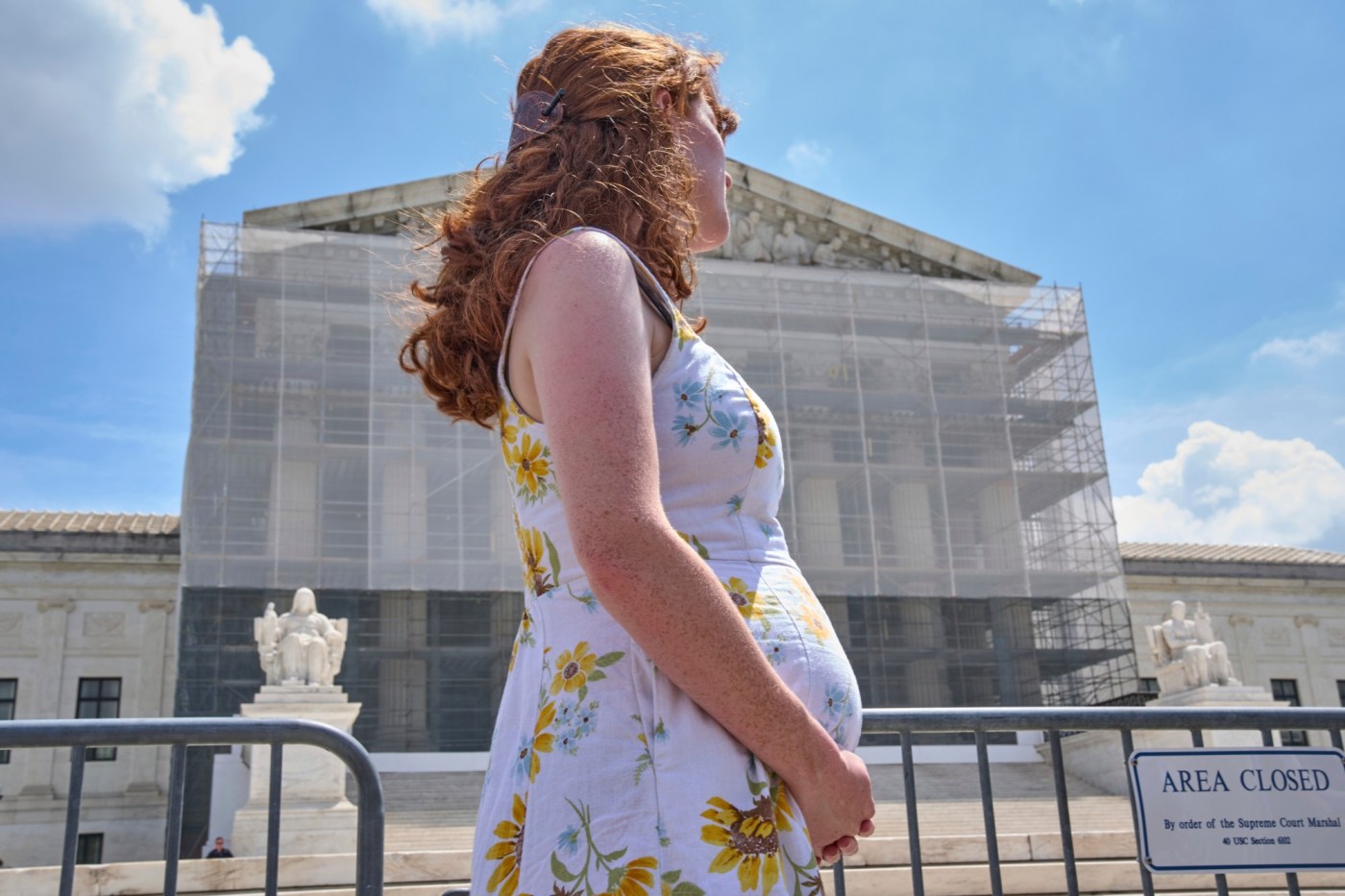
What’s next for President Donald Trump’s birthright citizenship order in the courts

posted in: All news | 0

By HOLLY RAMER and MIKE CATALINI, Associated Press

CONCORD, N.H. (AP) — The legal fight over President Donald Trump’s order ending birthright citizenship is advancing on a path toward the U.S. Supreme Court.

A New Hampshire federal judge on Thursday issued a ruling prohibiting the president’s January executive order ending birthright citizenship for children born to those without legal status from taking effect anywhere in the U.S.

The judge’s preliminary injunction and certification of a class-action lawsuit blocks the order, though it included a seven-day stay to allow for appeal.

The district court judge’s decision comes less than a month after the Supreme Court limited lower courts from issuing nationwide injunctions without settling the underlying question of the constitutionality of the president’s order. The high court also left open the possibility that birthright citizenship challenges could remain blocked nationwide.

Here’s what to know about birthright citizenship and what happens next.

What birthright citizenship means

Birthright citizenship makes anyone born in the United States an American citizen, including children born to mothers in the country illegally.

The practice goes back to soon after the Civil War, when Congress ratified the Constitution’s 14th Amendment, in part to ensure that Black people, including former slaves, had citizenship.

“All persons born or naturalized in the United States and subject to the jurisdiction thereof, are citizens of the United States,” the amendment states.

Thirty years later, Wong Kim Ark, a man born in the U.S. to Chinese parents, was refused reentry into the U.S. after traveling overseas. His lawsuit led to the Supreme Court explicitly ruling that the amendment gives citizenship to anyone born in the U.S., no matter their parents’ legal status.

It has been seen since then as an intrinsic part of U.S. law, with only a handful of exceptions, such as for children born in the U.S. to foreign diplomats.

Related Articles


White House budget director accuses Fed chair of violating building rules in renovation


Freed from ICE detention, Mahmoud Khalil files $20 million claim against Trump administration


Man accused of attempting to assassinate Trump wants to represent himself in Florida case


What to know — and what isn’t known yet — about US tax deductions for tips and overtime pay


Liberians confused and angry after Trump’s ‘condescending’ praise for their leader’s English

Trump has long said he wants to do away with birthright citizenship

Trump’s executive order, signed in January, seeks to deny citizenship to children who are born to people who are living in the U.S. illegally or temporarily. It is part of the hard-line immigration agenda of the president, who has called birthright citizenship a “magnet for illegal immigration.”

Trump and his supporters focus on one phrase in the amendment — “subject to the jurisdiction thereof” – saying it means the U.S. can deny citizenship to babies born to women in the country illegally.

A series of federal judges have said that is not true, and issued nationwide injunctions stopping his order from taking effect.

“I’ve been on the bench for over four decades. I can’t remember another case where the question presented was as clear as this one is. This is a blatantly unconstitutional order,” U.S. District Judge John Coughenour said at a hearing earlier this year in his Seattle courtroom.

The justices didn’t say if Trump’s order is constitutional

The high court’s ruling was a major victory for the Trump administration in that it limited an individual judge’s authority in granting nationwide injunctions based on individual plaintiffs.

The administration hailed the ruling as a monumental check on the powers of individual district court judges, whom Trump supporters have argued want to usurp the president’s authority with rulings blocking his priorities around immigration and other matters.

But the Supreme Court did not address the merits of Trump’s bid to enforce his birthright citizenship executive order, and it left the door open for class action lawsuits challenging it.

The Supreme Court said district judges generally can’t issue nationwide injunctions. But the court didn’t rule out whether judges could accomplish much the same thing by a different legal means, a class action.

Various legal pathways

New Hampshire District Court Judge Joseph Laplante’s decision comes amid legal challenges to the president’s order in district and appellate courts across the country.

Among the other cases pending are lawsuits brought by some two dozen states and cities, immigrant rights advocates and mothers and mothers-to-be.

A district court judge in Maryland is considering arguments over how to proceed since the Supreme Court’s opinion limiting nationwide injunctions.

New Jersey and other states’ attorneys general are arguing a nationwide pause of the order is warranted under the high court’s recent opinion and that it’s up to federal government to propose other remedies for the courts to consider.

Boston College law professor Daniel Kanstroom, an immigration law expert, said he thinks the case is bound for the Supreme Court.

“The stakes in this case could not possibly be higher,” he said. “It affects millions of people. It affects the whole nature of our immigration system. And it in many ways, it affects the continuing question of how we reacted to slavery and to the Civil War and what the 14th Amendment was about in the first place.”

Associated Press writers Tim Sullivan, Alanna Durkin Richer, Mark Sherman and Lindsay Whitehurst in Washington contributed to this report.
White House budget director accuses Fed chair of violating building rules in renovation

posted in: All news | 0

By JOSH BOAK, Associated Press

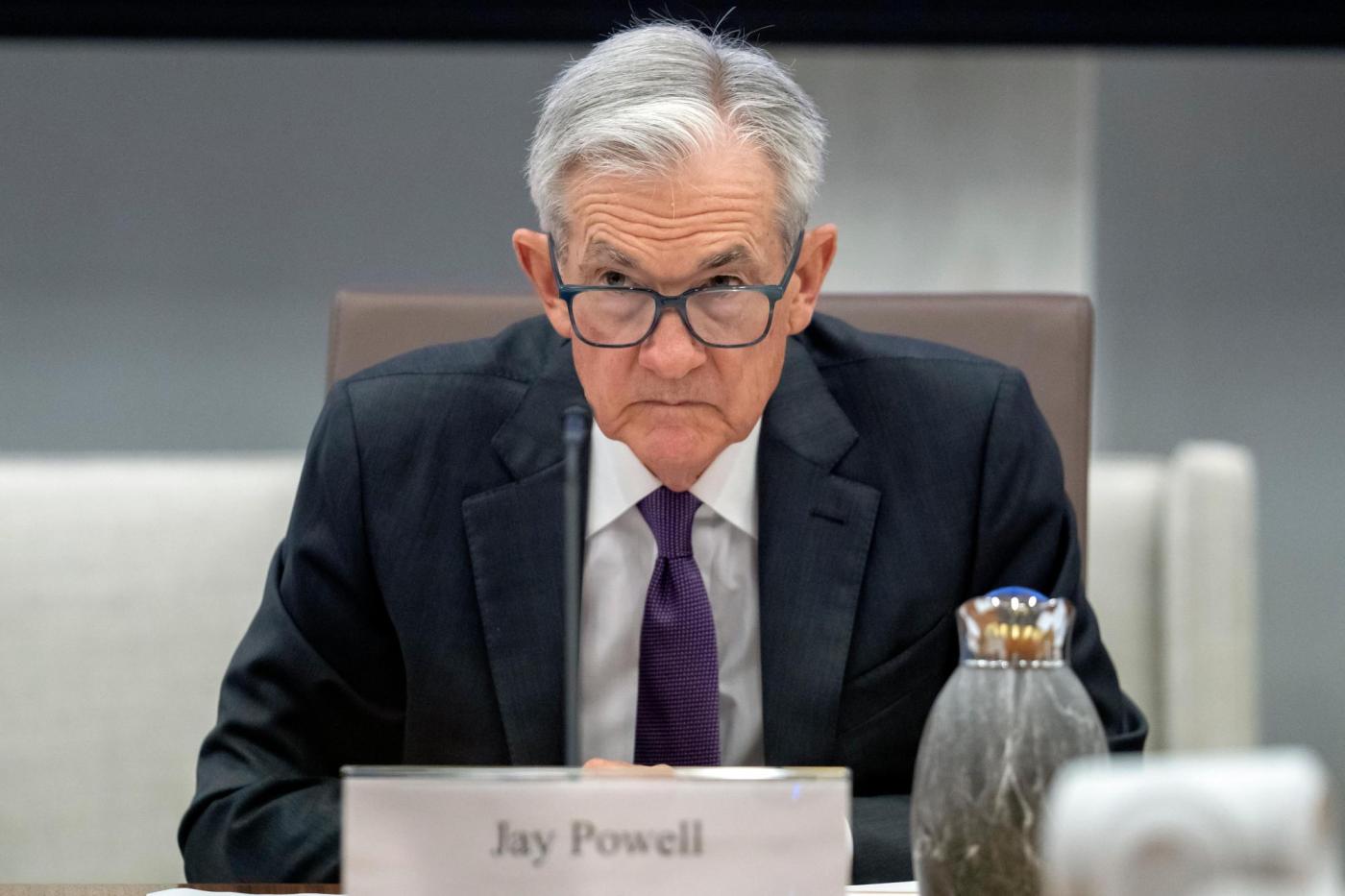
WASHINGTON (AP) — White House budget director Russell Vought suggested in a Thursday letter that Federal Reserve Chair Jerome Powell is in violation of government building rules in the renovation of the Fed’s headquarters.

Vought, in a letter he shared on social media, called the initial renovation plans featuring rooftop terrace gardens, VIP dining rooms and premium marble an “ostentatious overhaul.” Vought also suggested that Powell misled Congress by saying the headquarters had never had a serious renovation, saying that a 1999-2003 update of its roof and building systems counts as a “comprehensive” renovation.

It appears part of a larger pressure campaign by the Trump administration to pressure the Fed chair into departing before his term ends in May 2026. Powell has declined to reduce interest rates until the U.S. central bank has a better understanding of the impact that President Donald Trump’s import tax hikes could have on inflation.

Fed officials did not respond to an email seeking a response to the White House letter. Powell said in Senate testimony last month that some of the elements in the 2021 plan such as the dining rooms and rooftop terraces are no longer part of the project for the 90-year-old Marriner S. Eccles Building.

Related Articles


What’s next for President Donald Trump’s birthright citizenship order in the courts


Freed from ICE detention, Mahmoud Khalil files $20 million claim against Trump administration


Man accused of attempting to assassinate Trump wants to represent himself in Florida case


What to know — and what isn’t known yet — about US tax deductions for tips and overtime pay


Liberians confused and angry after Trump’s ‘condescending’ praise for their leader’s English

The Supreme Court said in May that it could block any attempts by the White House to dismiss Powell, noting as part of a separate ruling that the Fed “is a uniquely structured, quasi-private entity.”

Trump said at Tuesday’s Cabinet meeting that Powell “should resign immediately” and be replaced by someone who would lower rates, as the U.S. president believes that high inflation is no longer a risk to the U.S. economy.

As Trump sees it, a rate cut would reduce the costs of government borrowing in ways that make mortgages, auto loans and other forms of consumer debt cheaper. But a rate cut could also lead to more money flowing into the economy and push up inflation, worsening affordability as the financial markets ultimately determine the interest charged on the national debt.

In Thursday’s letter, Vought sent Powell a series of questions about whether the renovation project complies with federal standards. Vought said that Powell’s testimony about changes to the 2021 plan “appears to reveal” that the renovation is not in compliance with the National Planning Capital Act.

The Fed sees political independence as an essential value for setting monetary policy, allowing it to act without the interests of elections and focus instead on its dual mandate of stabilizing prices and maximizing employment.

Trump has repeatedly berated Powell on his social media site Truth Social, nicknaming the Fed chair “Too Late.” On June 30, Trump sent Powell a handwritten note saying that his decision to hold rates steady had “cost the USA a fortune” in the form of higher servicing costs on the national debt.

The risk of prematurely lowering rates is that higher inflation could be ignited. The Fed’s preferred measure of inflation, the personal consumption expenditures price index, is at 2.3%, slightly higher than the Fed’s 2% target.

Inflation has fallen after spiking to a four-decade high in June 2022, but the uncertainty on the size and impact of Trump’s tariffs and how they flow through the U.S. economy has caused the Fed to pause after multiple rate cuts last year.

Opinion: NYC’s Next Mayor Can Make a Clean Energy Grid a Reality

posted in: All news | 0

“Right now, New York City’s energy grid is working overtime to keep up with demand that is rising more quickly by the day because of electric devices, electric vehicles, and AI. That puts the city at real risk for more blackouts, like we saw in 2019, and that risk will only grow.”

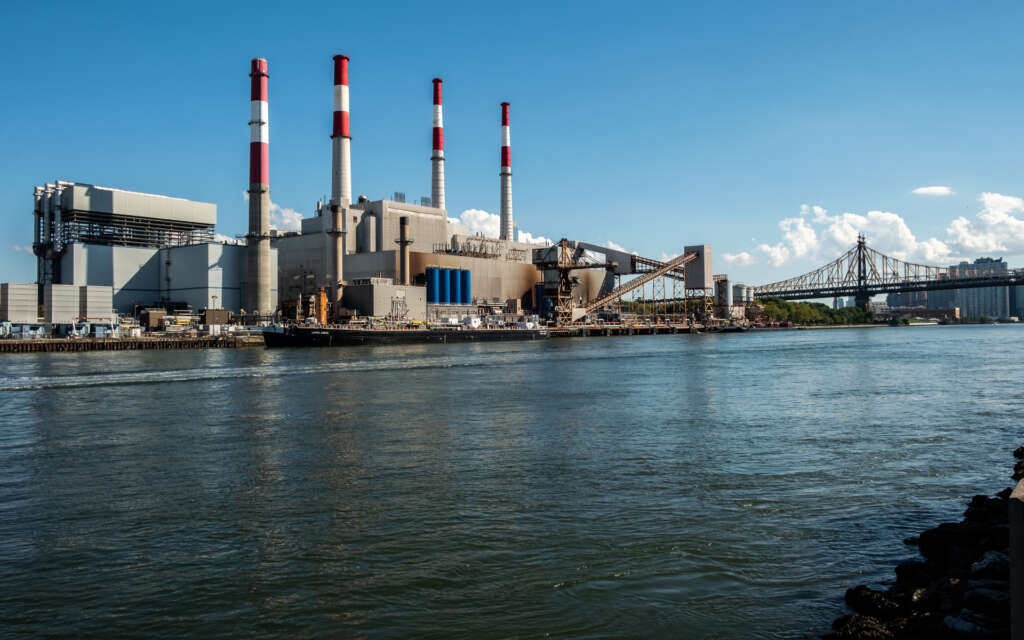
The Ravenswood Generating Station in Queens, which represents more than 20 percent of New York City’s generation capacity. (Photo by Adi Talwar)

Next to skyrocketing rents and economic shockwaves created by the federal government, New York City’s mayoral candidates might not think clean energy is an urgent problem, or a problem they can fix.

They’re wrong on both accounts.

Right now, New York City’s energy grid is working overtime to keep up with demand that is rising more quickly by the day because of electric devices, electric vehicles, and AI. That puts the city at real risk for more blackouts, like we saw in 2019, and that risk will only grow.

The most likely outcome is that Con Ed will be required to increase the use of so-called “peaker plants” this summer. This is bad news for New York City residents.

Peaker plants use oil or natural gas to produce energy, spewing much higher rates of greenhouse gases into the air. Not surprisingly, they’re mostly located in the same low-income communities of color already dealing with higher rates of asthma or other problems because of energy production. They’re also expensive, at a time when New Yorkers are facing potential double-digit rate hikes for power costs. 

Other solutions, like the city’s mandated building retrofits or building new nuclear plants, could help solve the energy grid problem. But they’ll take decades to really get off the ground, assuming safety concerns about nuclear plants can be met.

But believe it or not, there’s a straightforward solution to the energy grid problem that we can advance in a few years, not a few decades. And if we do it right, it will return much-needed dollars to the communities that have been most affected by the pollution caused by energy creation.

We can build coalitions and communities of people who simply agree to use less energy. 

This is called “demand flexibility.” For example, if enough building owners and tenants agree to allow a utility to raise the temperature (via the internet) in their building a few degrees on a hot day or allow the utility to tap into their EV car or solar battery, this has the same effect as having an additional power plant to supply energy. 

Organizations that put together such agreements between building owners, community residents, and utilities are called Virtual Power Plants (VPPs).

Here’s where the next mayor comes in. With a focused effort, New York City’s mayor could relieve significant pressure on the energy grid, save New Yorkers money, ease pollution in communities of color and light the way forward for more communities. 

New York City has many assets that could be assembled into VPPs. The New York City Housing Authority (NYCHA) has 177,000 apartment units, the Housing and Preservation Department has subsidized 150,000 apartments over the last 10 years alone, and 1,100 school buildings could be added, as well as CUNY campuses. As the city transitions to EV school buses, seldom used in the summer, their batteries could also feed the grid. 

Altogether, the city could organize a municipal VPP that would go a long way towards stabilizing the grid—at least for now. 

In addition, the city has an abundance of community and tenant organizations who are trusted in their communities that could do outreach to sign-up residents to join community-owned, or “CIVIC VPPs.”

A little over five years ago, these same community organizations worked with the City to convince residents to fill out the Census, with great success. Civic VPPs could partner with local tech start-up companies emerging in the VPP space to connect resident households to the grid. 

Even if only a small portion of people joined right away, this Civic VPP effort could immediately relieve pressure on the grid, allowing closure of peaker plants, which create such serious health risks that the state has ordered them to shut down.

Not only would that keep communities healthier, it will also save people a lot of money. Over the past 15 years, Con Ed has charged ratepayers around $5 billion to operate these peaker plants. 

Once VPPs are put in place, and peaker plants closed, some of the savings should be returned to VPPs that help maintain the grid. Some of the savings could also be used to beef up public school vocational education in needed green construction skills, helping to meet the city’s coming green workforce needs. It might also support civic education to help strengthen the underlying civic capacity that will be needed to broaden such efforts over time.

A city-supported clean energy planning initiative could also enable larger, more effective, and more inclusive clean energy collaborations beyond VPPs. For example, Boston Medical Center (BMC), a safety net hospital, not only retrofitted its buildings for energy efficiency (lowering its energy bill), it also partnered with MIT to build a solar field in North Carolina. Revenue from the solar field is being used to subsidize utility bills for patients in Boston unable to afford air conditioning or heat. New York could create projects like BMC’s hundreds of times over, but only if there is leadership from City Hall. 

By providing leadership and support, City Hall could even help stem the effects of the Trump Administration’s move to strip $2 billion worth of EPA “Community Change grants” designed to support exactly this kind of organizing and work.

A stable grid and clean air for the city’s future will depend on the next mayor. With the right leadership from City Hall, it can be reality, and sooner than we think.

J. Phillip Thompson is a professor of urban planning at MIT and the former deputy mayor for strategic planning initiatives under the de Blasio administration.

The post Opinion: NYC’s Next Mayor Can Make a Clean Energy Grid a Reality appeared first on City Limits.

DACA recipient among those at Alligator Alcatraz, attorney says

posted in: All news | 0

A DACA recipient who has lived in Central Florida for nearly 25 years has been detained in the Alligator Alcatraz detention facility in the Everglades after being picked up for driving with a suspended license.

The 36-year-old man who is legally in the United States was transferred from the Orange County Jail early Saturday, his attorney told the Orlando Sentinel.

The man is a recipient of Deferred Action for Childhood Arrivals, or DACA, a 2012 program that shields undocumented people who arrived here as children from deportation.

Josephine Arroyo, his Orlando-based attorney, declined to name her client fearing retaliation against him at the Everglades facility. She’s only spoken to him once since his arrival there early Saturday, and Arroyo said the man described swarming mosquitoes, non-working toilets and “horrific food.”

“It’s not a detention facility that is going to be up to par with the requirements necessarily, so yeah, it’s horrible,” she said. “Never in a million years did I think our client would be there, especially given his legal status and his charge of driving with a suspended license.”

The man’s circumstances deepen the emerging questions about the use of the new detention center in the Everglades, which President Donald Trump said would hold “the worst of the worst” when he visited upon its opening last week.

Reporting by many media outlets suggests multiple detainees sent to that facility have committed only minor crimes in the U.S., and Arroyo contends her client should not be in detention at all.

Arroyo said her client was issued a citation in Florida’s Seminole County last year for driving with a suspended license and the court mailed him a notice to appear to an address where he no longer lived.

Because he missed the court hearing, a warrant was issued, she said.

Earlier this year, he was pulled over for having a broken mirror in Orange County, where she said the law enforcement officer saw the warrant for his arrest in the court system and took him into custody.

Arroyo said she has since provided the court with the man’s valid driver’s license, and the charge was lessened to a civil citation. She has petitioned Immigration and Customs Enforcement to issue the man a bond so he can be released, but wasn’t sure if that would be granted or how long the process would take.

U.S. Immigrations and Customs Enforcement did tell her Alligator Alcatraz wasn’t yet able to support attorney visits, which she found concerning.

She spoke to her client by phone after he called his brother, who included her on the call.

“Those that are inside are literally voiceless, and it’s important that they have access to their attorneys who can be that voice,” Arroyo said. “Immigrants have constitutional rights and rights to due process solely by being here on American soil, and a lot of people forget about that.”

Florida’s Division of Emergency Management and ICE’s press office didn’t respond to a request for comment prior to publication.

First announced on June 19, the immigration detention facility was swiftly set up by the DeSantis administration at an airport used for training flights deep in the Everglades. It is expected to eventually have capacity for about 3,000 detainees.

The Miami Herald reported earlier this week on similar reports of dire conditions at the detention facility, citing conversations with the wives of men detained there. A spokesperson for the Division of Emergency Management denied the Herald’s reporting, stating “Bug and environmental factors are minimized in the facility,” and that “all plumbing systems are working and operational.”

The Orange County Jail confirmed this week that some number of people detained at the jail – which has an agreement with ICE to house federal inmates, including those on immigration detainers – were subsequently transferred to Alligator Alcatraz.

Related Articles


Freed from ICE detention, Mahmoud Khalil files $20 million claim against Trump administration


Man accused of attempting to assassinate Trump wants to represent himself in Florida case


Judge will consider Abrego Garcia’s request to try to avoid deportation before his trial


How to help victims of the Texas floods from afar


A century after a man was convicted of teaching evolution, the debate on religion in schools rages

An Orlando woman who did not want to be identified because of fears of retaliation said one of her family members has been transferred to the Everglades detention center from a county jail.

She said he was detained during a routine immigration field office check-in after the Trump administration revoked his temporary legal status.

The woman said he was able to call her from the detention center and told her he doesn’t know when he’ll get a hearing before an immigration judge or how long he could be at the facility.

The man told her it was difficult to tell if it was day or night inside the facility, which is made up of large tents, and mosquitoes and sweltering heat made it difficult to be outdoors.

“There is no rhyme or reason for who they pick up or why they pick them up,” she said. “I am devastated. What makes it worse is the comments people make. They forget these are human beings and people’s loved ones.”

State Rep. Anna Eskamani, D-Orlando, one of several Democratic lawmakers prevented from entering Alligator Alcatraz last week, said she had concerns about a tour scheduled by the state this upcoming weekend.

“We’re glad to see public pressure forcing the state of Florida to open its doors,” she said. “But let’s be clear: this isn’t a field trip — it’s oversight. The law grants us the right to enter these facilities unannounced, at any time. … Floridians deserve genuine transparency, not curated photo opportunities, and we will continue to push for that type of unfettered access.”

rygillespie@orlandosentinel.com, sswisher@orlandosentinel.com