‘I Have Real Fears’: Bronx Community Members Blast Proposal to Add More Road to Cross Bronx Expressway

posted in: All news | 0

In a letter addressed to the state’s Department of Transportation, Bronx residents called adding a mile-long stretch to the Cross Bronx Expressway a “dangerous and unacceptable” solution to renovating some of its aging infrastructure.

A rendering of the one of the possibilities under consideration, which would build a traffic diversion “connector” road with a series of sub-options for its uses (NYSDOT)

A proposal to repair five Cross Bronx Expressway (CBE) bridges along Interstate 95, that could involve building a mile-long, highway-like structure over the Bronx River and Starlight Park to bypass traffic, is shaking up members of the Bronx community.

More than two dozen community organizations delivered a letter to the state’s Department of Transportation (NYSDOT) last week urging the department to skip the added structure and repair the bridges instead with minimal impact to the community. 

Adding to the expressway, which is already considered one of the most congested roads in the nation, could amp up pollution in a neighborhood where children face higher rates of asthma-related hospital visits than any other borough.

“I have real fears. I know many kids in our neighborhood have asthma and are getting sent to the hospital on a regular basis. I don’t want that for my kid,” said Victoria Toro, a Bronx-born and raised outreach manager at the non-profit Bronx River Alliance.

The NYSDOT has presented two possible solutions to modernize the bridges that are still up for discussion. One includes building a so-called traffic diversion “connector” road with a series of sub-options for its uses—including the possibility of a bike and pedestrian path—while the second solution skips the connector road and suggests standard bridge repairs instead.

But officials argued that construction plans would be reduced by two years with option one, and the state has already been awarded a $150 million federal grant to build the connector road, spreading fears among residents that the DOT will choose that approach.

“The project is not an expansion of the expressway and a number of options are being considered to accommodate existing expressway traffic and improve bike/pedestrian connectivity,” a DOT spokesperson said in an email. 

“The NYSDOT is committed to robust community engagement at every step in the process and the selection of an option will be informed by public input.”

Option 1 would build a “traffic diversion structure” adjacent to the expressway. (NYSDOT)

Community members have already offered criticism for the current proposal. Especially since the traffic diversion structure in option one would pass right by Bronx River Houses, a public housing complex that over 3,000 residents call home. 

“Currently, the air pollution from the Cross Bronx Expressway is so toxic that those of us who live in Bronx River Houses cannot open our windows. Ever,” Norma Saunders, president of the Tenant Association for Bronx River Houses, said in a press release.

“The idea that the State wants to make it wider to add traffic and bring it even closer to our homes is like a death threat,” she added.

Option one or option two?

Constructed between 1947 and 1958, the CBE’s five corroding bridges are nearing the end of their service life as many of their steel and concrete parts are deteriorating.

To tackle the problem, DOT is working on an environmental assessment that analyzes the potential social, economic, and environmental impacts of two possible solutions.

A draft of the assessment will be published sometime later this year, according to the DOT. And after a public comment period concludes, it will release a final draft with a decision on which solution was chosen. The timeline for construction will be determined when this process wraps, the department says.

Option one includes building a “connector road” to divert traffic between Boston Road and Rosedale Avenue, which officials say will be necessary to allow cars to bypass construction while bridge renovations are underway. After construction wraps, however, DOT suggests keeping the structure and converting it into a permanent road. 

Those who oppose the addition of the connector road fear that it would harm the Bronx River beneath it and contribute to poorer air quality in the neighborhood.  

The letter delivered by Bronx community groups to the DOT calls option one “dangerous and unacceptable.” Adding the parallel roadway will increase heat to the river habitat, they argue, and increase the need to manage stormwater “which is currently not properly controlled from existing highway infrastructure.”

A hot bed for industrial activity since the 1800s, the Bronx River already receives 455 million gallons of untreated sewage a year, and residents fear it will face more pollution with new construction. 

The Bronx River runs underneath the Cross Bronx Expressway, prompting local concerns about the impact of construction on the local waterway. (Adi Talwar/City Limits)

Industrial warehouses and traffic congestion also contribute to elevated levels of air pollution in the region. One recent study that tracked air pollution throughout the course of a day found that “the Bronx has the worst air quality of any New York City borough”.

To ease concerns raised by the community, DOT told City Limits that the Bronx River would be protected via appropriate soil erosion and sediment control measures. And the agency promised to conduct an air quality analysis as part of its environmental assessment to evaluate the potential impacts of traffic pattern changes to air quality. 

Plus, option one includes a series of possible uses for the connector once construction is completed that could allow for less traffic congestion. DOT’s menu of alternate uses for the road include a mix of approaches, from having a four lane highway with general traffic lanes alongside a bus corridor to a smaller bike- and pedestrian-only path.

Still, community members aren’t convinced. They explain in their letter to the DOT that option two, which doesn’t include the traffic diversion structure, is a better alternative. 

The second option would include instead a series of standard repairs to the deteriorating bridges like the Boston Road Bridge. And it would add some smaller structures, like a new ramp from the southbound Bronx River Parkway to the westbound Cross Bronx Expressway, plus a new roundabout on Sheridan Boulevard.

The letter does, however, take issue with some aspects of that option as well. Residents don’t like that it includes the construction of a shared-use path along the CBE that would connect the Bronx River Greenway to local streets. 

The path “would be unusable due to its isolation and proximity to the Cross Bronx traffic,” the letter says. By adding this extra stretch, the state would be saddling themselves with “an additional maintenance burden” that would only “further widen the Expressway’s mainline” and leave it “vulnerable to future use by private vehicles.”

Option 2 would include instead a series of standard repairs to the deteriorating bridges. And it would add some smaller structures, like a new ramp from the southbound Bronx River Parkway to the westbound Cross Bronx Expressway, plus a new roundabout on Sheridan Boulevard. (NYSDOT)

Making the connection 

On the other hand, the state argues that the neighborhood needs to be better connected so that people and goods can get from east to west with more ease.  

A disconnected and irregular street grid, plus the fact that Bronx subway lines only run north to south, contribute to the problem. 

But community and environmental advocates say there are other ways to get people and goods from east to west without adding more highways. 

The Bronx River Alliance, for one, is cooking up a list of granular recommendations for the DOT on how to enhance east-to-west connectivity for commuters by improving current streets and adding new pedestrian and bike routes.

They also point out that the surrounding waterways should be used more as an alternate route to moving commercial goods around the area. They urge the city to invest more in its Blue Highway program, which encourages waterborne freight transportation by private companies.

Environmental advocates also note that the city should be thinking of the bridge repairs as a chance to come up with new, creative solutions to the city’s larger congestion problem.

“We support prioritizing safety by replacing the bridges,” said Tiffany-Ann Taylor, vice president for transportation at the Regional Plan Association. 

“But in the same vein, this is an opportunity to think about how we are moving goods and people in our region, and if our policies align with our future goals of reducing our dependency on roadway infrastructure,” she added.

To reach the reporter behind this story, contact Mariana@citylimits.org. To reach the editor, contact Jeanmarie@citylimits.org

Want to republish this story? Find City Limits’ reprint policy here.

The post ‘I Have Real Fears’: Bronx Community Members Blast Proposal to Add More Road to Cross Bronx Expressway appeared first on City Limits.

Netanyahu’s governing coalition is fracturing. Here’s what it means for Israel and Gaza

posted in: All news | 0

By TIA GOLDENBERG

TEL AVIV, Israel (AP) — Israeli Prime Minister Benjamin Netanyahu’s government suffered a serious blow on Tuesday when an ultra-Orthodox party announced it was bolting the coalition.

Related Articles


EU ministers request more detail from Israel on aid deal for Gaza


Israeli strikes kill at least 31 in Gaza as UN agencies warn of fuel crisis


A recap of the trial over the Trump administration’s crackdown on pro-Palestinian campus protesters


Europe unveils deal for more food and fuel for Gaza. Israeli strike kills 15 waiting outside clinic


What to know as Yemen’s Houthi rebels launch new, more violent attacks on ships in the Red Sea

While this doesn’t immediately threaten Netanyahu’s rule, it could set in motion his government’s demise, although that could still be months away. It also could complicate efforts to halt the war in Gaza.

United Torah Judaism’s two factions said they were leaving the government because of disagreements over a proposed law that would end broad exemptions for religious students from enlistment into the military.

Military service is compulsory for most Jewish Israelis, and the issue of exemptions has long divided the country. Those rifts have only widened since the start of the war in Gaza as demand for military manpower has grown and hundreds of soldiers have been killed.

The threat to the government “looks more serious than ever,” said Shuki Friedman, vice president of the Jewish People Policy Institute, a Jerusalem think tank.

Netanyahu is on trial for alleged corruption, and critics say he wants to hang on to power so that he can use his office as a bully pulpit to rally supporters and lash out against prosecutors and judges. That makes him all the more vulnerable to the whims of his coalition allies.

Here is a look at Netanyahu’s political predicament and some potential scenarios:

The ultra-Orthodox are key partners

Netanyahu, Israel’s longest serving leader, has long relied on the ultra-Orthodox parties to prop up his governments.

Without UTJ, his coalition holds just 61 out of parliament’s 120 seats. That means Netanyahu will be more susceptible to pressure from other elements within his government, especially far-right parties who strongly oppose ending the war in Gaza.

The political shake up isn’t likely to completely derail ceasefire talks, but it could complicate how flexible Netanyahu can be in his concessions to Hamas, which has been designated as a terrorist organization by the United States, Canada and the European Union.

A second ultra-Orthodox party is also considering bolting the government over the draft issue. That would give Netanyahu a minority in parliament and make governing almost impossible.

The ultra-Orthodox military exemptions have divided Israel

A decades-old arrangement by Israel’s first prime minister granted hundreds of ultra-Orthodox men exemptions from compulsory Israeli service. Over the years, those exemptions ballooned into the thousands and created deep divisions in Israel.

The ultra-Orthodox say their men are serving the country by studying sacred Jewish texts and preserving centuries’ old tradition. They fear that mandatory enlistment will dilute adherents’ connection to the faith.

But most Jewish Israelis see the exemption as unfair, as well as the generous government stipends granted to many ultra-Orthodox men who study instead of work throughout adulthood. That bitterness has only worsened during nearly two years of war.

The politically powerful ultra-Orthodox parties have long had outsize influence in Israel’s fragmented political system and used that status to extract major concessions for their constituents.

But a court last year ruled Netanyahu’s government must enlist the ultra-Orthodox so long as there is no new law codifying the exemptions.

Netanyahu’s coalition has been trying to find a path forward on a new law. But his base is largely opposed to granting sweeping draft exemptions and a key lawmaker has stood in the way of giving the ultra-Orthodox a law they can get behind, prompting their exit.

The political shake up comes during Gaza ceasefire talks

The resignations don’t take effect for 48 hours, so Netanyahu will likely spend the next two days seeking a compromise. But that won’t be easy because the Supreme Court has said the old system of exemptions amounts to discrimination against the secular majority.

That does not mean the government will collapse.

Netanyahu’s opponents cannot submit a motion to dissolve parliament until the end of the year because of procedural reasons. And with parliament’s summer recess beginning later this month, the parties could use that time to find a compromise and return to the government.

Cabinet Minister Miki Zohar, from Netanyahu’s Likud party, said he was hopeful the religious party could be coaxed back to the coalition. “God willing, everything will be fine,” he said. A Likud spokesman did not immediately respond to a request for comment.

Once the departures become official, Netanyahu will have a razor-thin majority. The far-right parties within it could threaten to leave the coalition, further weakening him, if he gives in to too many of Hamas’ demands.

Hamas wants a permanent end to the war as part of any ceasefire deal. Netanyahu’s hard-line partners are open to a temporary truce, but say the war cannot end until Hamas is destroyed.

If they or any other party leave the coalition, Netanyahu will have a minority government, and that will make it almost impossible to govern and likely lead to its collapse. But he could still find ways to approve a ceasefire deal, including with support from the political opposition.

Israel may be on the path toward early elections

Netanyahu could seek to shore up his coalition by appeasing the far-right and agreeing for now to just a partial, 60-day ceasefire with Hamas, promising his governing partners that he can still resume the war once it expires.

But Netanyahu is balancing those political constraints with pressure from the Trump administration, which is pressing Israel to wrap up the war.

Gayil Talshir, a political scientist at the Hebrew University of Jerusalem, said she expects Netanyahu to work during those 60 days to shift the narrative away from the draft exemptions and the war in Gaza, toward something that could potentially give him an electoral boost – like an expansion of U.S.-led normalization deals between Israel and Arab or Muslim countries.

Once the 60-day ceasefire is up, Netanyahu could bend to U.S. pressure to end the war and bring home the remaining hostages in Gaza — a move most Israelis would support.

Elections are currently scheduled for October 2026. But if Netanyahu feels like he has improved his political standing, he may want to call elections before then.

Camel rides, live music and kebabs: Middle Eastern Festival in West St. Paul this weekend

posted in: All news | 0

The 15th annual St. George Middle Eastern Festival will return to West St. Paul this weekend for a cultural celebration featuring food, dancing, live Arabic music and camel rides.

The event will be from noon to 10 p.m. Saturday and noon to 6 p.m. Sunday at the St. George Antiochian Orthodox Church.

“It’s more of all the same fun we’ve had at the last 14 festivals,” founding chair Anthony Rezcallah said.

The St. George Dance Troupe and Lebanese singer John Khoury will perform at the event. Middle Eastern cuisine, such as falafel and kebab wraps, will be served. There will be a bake sale, a silent auction and a children’s tent with games and activities.

The event is free. Visitors can park in front of the church at 1250 Oakdale Ave. in West St. Paul.

For more information, visit mideastfest.com/.

Related Articles


What to expect at Lumberjack Days 2025


Hudson RiverFest will celebrate conservation


This fall, explore all of Minnesota’s art crawls


‘What makes a team win?’ 10 things a Woodbury podcaster learned from local leaders


Skywatch: Lyra weaves quite a tale

Republicans are considering changes to Trump’s request for $9.4 billion in spending cuts

posted in: All news | 0

By KEVIN FREKING

WASHINGTON (AP) — Senate Republicans were exploring changes Tuesday to President Donald Trump’s request to cancel $9.4 billion in previously approved spending targeted by his Department of Government Efficiency, signaling potential difficulties ahead of an important test vote.

Related Articles


World’s premier cancer institute faces crippling cuts and chaos


Immigration agents demand tenant information from landlords, stirring questions and confusion


Capital One, Walmart: A look at some of the consumer cases dropped by the CFPB under Trump


Mike Waltz pledges to make UN ‘great again’ at Senate confirmation hearing


With Epstein conspiracy theories, Trump faces a crisis of his own making

The president is looking to claw back $1.1 billion of funding authority from the Corporation for Public Broadcasting and about $8.3 billion from foreign aid programs that aim to fight famine and disease and promote global stability. Congress has until Friday to get a bill to the president’s desk for his signature or the spending stands.

Senate Majority Leader John Thune, R-S.D., said some GOP senators would like to see “modest changes” to the bill. He’ll need nearly every Republican senator on board to get the package approved, but some are questioning the severity of the cuts to public media and to a global health program known as PEPFAR that has saved millions of lives since it was established under then-President George W. Bush.

“We’re trying to find out if there’s a path forward that gets us 51 (votes) and stays consistent with what the White House proposed in terms of a rescissions package,” Thune told reporters.

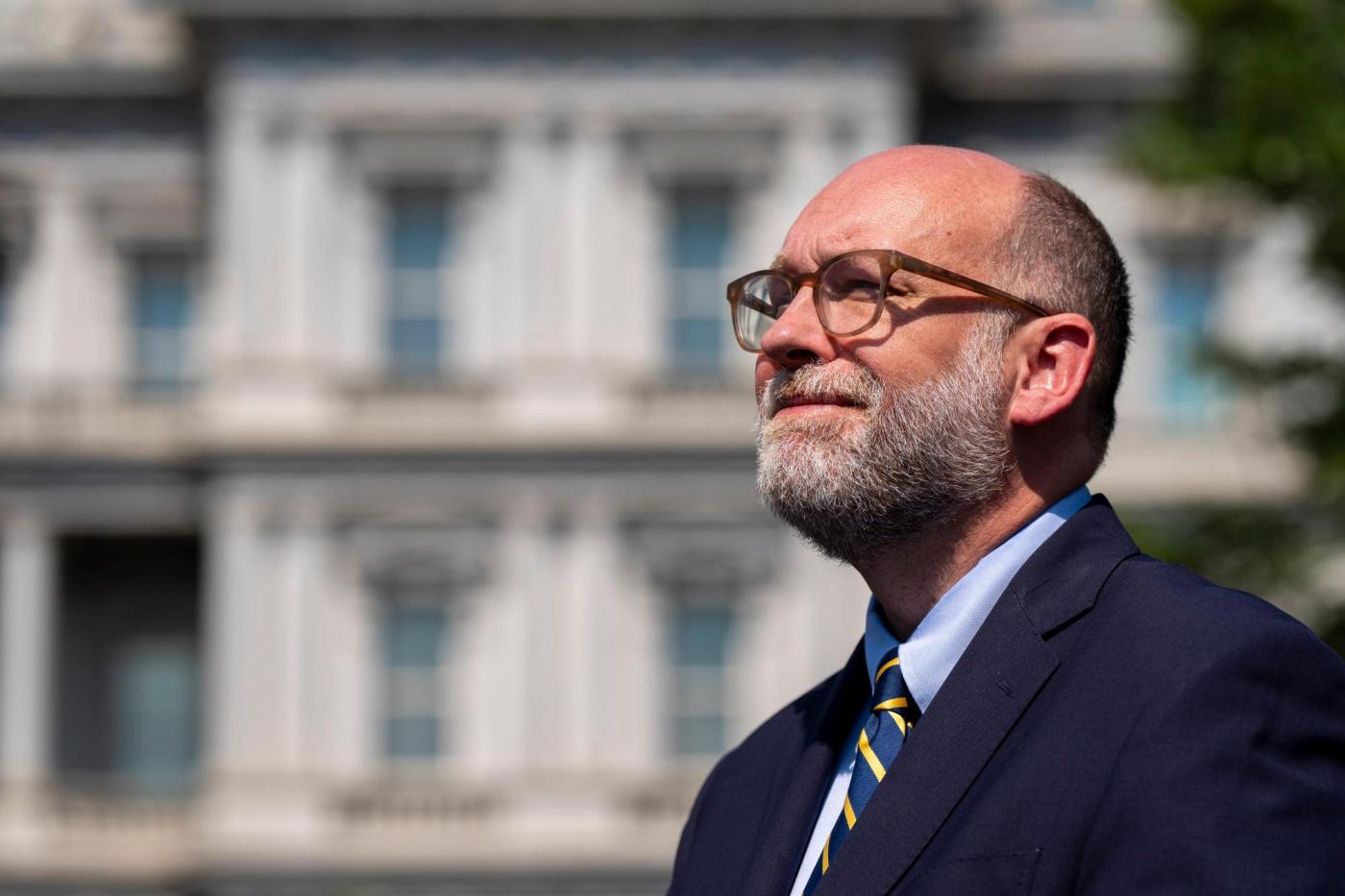
Republicans were expected to hear directly from Russ Vought, the director of the White House Office of Management and Budget, during their weekly conference luncheon on Tuesday as the White House worked to address their concerns.

The White House campaign to win over potential holdouts was already having some success. Sen. Mike Rounds, R-S.D., tweeted that he would vote to support the measure after working with the administration to “find Green New Deal money that could be reallocated to continue grants to tribal radio stations without interruption.”

Sen. Susan Collins of Maine, the Republican chairman of the Senate Appropriations Committee, said she still had questions about what the administration was seeking to cut from global health programs.

Other senators are worried that the cuts to public media could decimate many of the 1,500 local radio and television stations around the country that rely on some federal funding to operate. The Corporation for Public Broadcasting distributes more than 70% of its funding to those stations.

Democrats are expected to unanimously oppose the package. They see the president’s request as an effort to erode the Senate filibuster. They also warn it’s absurd to expect them to work with Republicans on bipartisan spending measures if Republicans turn around a few months later and use their majority to cut the parts they don’t like.

“It shreds the appropriations process,” said Sen. Angus King, an independent from Maine who caucuses with Democrats. “The Appropriations Committee, and indeed this body becomes a rubber stamp for whatever the administration wants.”

If senators vote to take up the bill, it sets up the potential for 10 hours of debate plus votes on scores of potentially thorny amendments in what is known as a vote-a-rama. The House has already shown its support for the president’s request with a mostly party line 214-212 vote, but if the Senate amends the bill, it will have to go back to the House for another vote.

“We’re encouraging our Senate partners over there to get the job done and to pass it as it is,” House Speaker Mike Johnson said Tuesday. “That’s what we did.”

Republicans who vote against the measure also face the prospect of incurring Trump’s wrath. He has issued a warning on his social media site directly aimed at individual Senate Republicans who may be considering voting against the rescissions package. He said it was important that all Republicans adhere to the bill and in particular defund the Corporation for Public Broadcasting.

“Any Republican that votes to allow this monstrosity to continue broadcasting will not have my support or Endorsement,” he said.

Congressional correspondent Lisa Mascaro and staff writer Stephen Groves contributed to this report.