The House is poised to OK Trump’s $9 billion cut to public broadcasting and foreign aid

posted in: All news | 0

By KEVIN FREKING and MARY CLARE JALONICK

WASHINGTON (AP) — The House is expected late Thursday to approve President Donald Trump’s request to claw back about $9 billion for public broadcasting and foreign aid as Republicans target institutions and programs they view as bloated or out of step with their agenda.

Related Articles


State Department layoffs affect key Trump priorities like intelligence, energy and China


Consultant, claiming White House backing, called Colorado clerks to gain access to voting machines


Trump administration hands over Medicaid recipients’ personal data, including addresses, to ICE


Border Patrol hiring spree offers lessons as another immigration agency embarks on massive growth


Urban League declares a ‘state of emergency’ for civil rights in the US in response to Trump

The White House had described the package as a test case and said that if Congress went along, more would come. The House’s approval would mark the first time in decades that a president has successfully submitted such a rescissions request to Congress, and even then the results were more mixed. Unlike other presidents, Trump is getting nearly all the cuts he requested.

Opponents voiced concerns not only about the programs targeted, but about Congress ceding its spending powers to the executive branch as investments approved on a bipartisan basis are being subsequently canceled on party-line votes. No Democrats supported the measure when it passed the Senate, 51-48, in the early morning hours Thursday. Two Republicans also voted no.

“We need to get back to fiscal sanity and this is an important step,” House Speaker Mike Johnson, R-La., told reporters.

The package cancels about $1.1 billion for the Corporation for Public Broadcasting and nearly $8 billion for a variety of foreign aid programs, many designed to help countries where drought, disease and political unrest endure.

The effort to claw back a sliver of federal spending comes just weeks after Republicans also muscled through Trump’s tax and spending cut bill without any Democratic support. The Congressional Budget Office has projected that measure will increase the U.S. debt by about $3.3 trillion over the coming decade.

A heavy blow to the Corporation for Public Broadcasting

The cancellation of $1.1 billion for the CPR represents the full amount it is due to receive during the next two budget years.

The White House says the public media system is politically biased and an unnecessary expense.

The corporation distributes more than two-thirds of the money to more than 1,500 locally operated public television and radio stations, with much of the remainder assigned to National Public Radio and the Public Broadcasting Service to support national programming.

Democrats were unsuccessful in restoring in the Senate.

Lawmakers with large rural constituencies have voiced particular concern about what the cuts to public broadcasting could mean for some local public stations in their state.

Sen. Lisa Murkowski, R-Ala., said Tuesday that the stations are “not just your news — it is your tsunami alert, it is your landslide alert, it is your volcano alert.”

Less than a day later, as the Senate debated the bill, a 7.3 magnitude earthquake struck off the remote Alaska Peninsula, triggering tsunami warnings on local public broadcasting stations that advised people to get to higher ground.

Sen. Mike Rounds, R-S.D., said he secured a deal from the White House that some money administered by the Interior Department would be repurposed to subsidize Native American public radio stations in about a dozen states.

But Kate Riley, president and CEO of America’s Public Television Stations, a network of locally owned and operated stations, said that deal was “at best a short-term, half-measure that will still result in cuts and reduced service at the stations it purports to save.”

Inside the cuts to foreign aid

Among the foreign aid cuts are $800 million for a program that provides emergency shelter, water and family reunification for refugees and $496 million to provide food, water and health care for countries hit by natural disasters and conflicts. There also is a $4.15 billion cut for programs that aim to boost economies and democratic institutions in developing nations.

Democrats argued that the Republican administration’s animus toward foreign aid programs would hurt America’s standing in the world and create a vacuum for China to fill.

Sen. Brian Schatz, D-Hawaii, said the amount it takes to save a starving child or prevent the transmission of disease is minuscule, even as the investments secure cooperation with the U.S. on other issues. The cuts made to foreign aid programs through Trump’s Department of Government Efficiency were having life-and-death consequences around the world, he said.

“People are dying right now, not in spite of us but because of us,” Schatz said. “We are causing death.”

After objections from several Republicans, GOP leaders took out a $400 million cut to PEPFAR, a politically popular program to combat HIV/AIDS that is credited with saving millions of lives since its creation under Republican President George W. Bush.

Looking ahead to future spending fights

Democrats say the bill upends a legislative process that typically requires lawmakers from both parties to work together to fund the nation’s priorities.

Triggered by the official rescissions request from the White House, the legislation only needs a simple majority vote to advance instead of the 60 votes usually required to break a filibuster. That meant Republicans could use their 53-47 majority to pass it along party lines.

In the end, two Republican senators, Murkowski and Sen. Susan Collins of Maine, joined with Democrats in voting against the bill, though a few other Republicans also raised concerns about the process.

“Let’s not make a habit of this,” said Senate Armed Services Committee Chairman Roger Wicker of Mississippi, who voted for the bill but said he was wary that the White House wasn’t providing enough information on what exactly will be cut.

Russ Vought, the director of the Office of Management and Budget, said the imminent successful passage of the rescissions shows “enthusiasm” for getting the nation’s fiscal situation under control.

“We’re happy to go to great lengths to get this thing done,” he said during a breakfast with reporters hosted by the Christian Science Monitor.

In response to questions about the relatively small size of the cuts — $9 billion — Vought said that was because “I knew it would be hard” to pass in Congress.

Vought said another rescissions package is ’likely to come soon.”

“But we’re not there yet,” he said.

Associated Press writers Becky Bohrer in Juneau, Alaska, and Seung Min Kim contributed to this report.

An Idaho judge has lifted a sweeping gag order in Bryan Kohberger’s quadruple murder case

posted in: All news | 0

By REBECCA BOONE, Associated Press

BOISE, Idaho (AP) — An Idaho judge lifted a sweeping gag order Thursday in Bryan Kohberger’s quadruple murder case.

Related Articles


Trump administration hands over nation’s Medicaid enrollee data, including addresses, to ICE


Juul can continue selling its tobacco and menthol e-cigarettes, FDA says


Urban League declares a ‘state of emergency’ for civil rights in the US in response to Trump


Nationwide protests planned against Trump’s immigration crackdown and health care cuts


Connie Francis, whose hit songs included ‘Who’s Sorry Now?’ and ‘Pretty Little Baby,’ dies at 87

Bryan Kohberger avoided a potential death sentence by pleading guilty earlier this month to the brutal stabbing deaths of four University of Idaho students at a rental home near campus in 2022.

A coalition of news organizations including The Associated Press had asked the court to lift the gag order since a trial is no longer planned. They renewed their request after Kohberger pleaded guilty.

During a hearing Thursday morning, 4th District Judge Steven Hippler agreed that lifting the gag order would protect the First Amendment rights of the public and press.

“The primary purpose of the non-dissemination order, which is to ensure that we can seat an impartial jury, is no longer at play,” Hippler said. He said he couldn’t not justify continuing the gag order because the public has the right to receive information about the case, and those rights are “paramount.”

A different judge in Moscow, Idaho, originally issued the gag order early in the case, saying additional publicity could harm Kohberger’s right to a fair trial.

Kohberger admitted to breaking into the rental home through a sliding door and killing the four friends, who had no connection with him.

Prosecutors said he spent months carefully planning the attack, and that his studies as a criminal justice graduate student at Washington State University helped him take steps to cover up his tracks.

State Department layoffs affect key Trump priorities like intelligence, energy and China

posted in: All news | 0

By FARNOUSH AMIRI and MATTHEW LEE

WASHINGTON (AP) — One employee coordinated intelligence activities. Another worked to leverage U.S. energy interests abroad. And a third was an expert on strategic competition with China.

They are just some of the more than 1,300 State Department employees fired last week, eliminating hundreds of years of institutional knowledge and experience.

The move has stunned America’s diplomatic workforce, not only as their careers abruptly end but as they wonder who — if anyone — will fill in on what they call critical work to keep the U.S. safe and competitive on the world stage.

Many of the positions and offices “abolished” Friday under Secretary of State Marco Rubio’s dramatic reorganization plan overlap with priorities President Donald Trump has laid out for his second term, such as combating visa fraud and countering China. Other cuts could have wide impact on everyday life, including processing Americans’ passport applications.

Trump administration officials have defended the mass dismissals, saying they are overdue and necessary to make the department leaner and more efficient.

Where the State Department cuts are hitting

Among the employees laid off are more than 100 people who worked in the Bureau of Consular Affairs, which is self-funded from passport and visa fees.

That includes half of a team that investigated passport fraud and 23 people who oversaw contracts to provide American citizen services, including processing passport applications, in the U.S. and abroad, according to a list compiled by current and former foreign service officers and sent to Congress this week.

Others fired included experts responsible for dealing with visa fraud and money laundering in Russia and Eastern Europe as well as transnational criminal organizations and migrant worker visa fraud in Mexico and Central America.

A small team that had worked on multilateral engagements in the Bureau of East Asian and Pacific Affairs, including supporting Rubio’s trip to Malaysia last week, also were fired as Rubio was flying back to Washington from Kuala Lumpur, according to the list.

A handful of employees said their small office was eliminated even though it was doing work on immigration that the administration had deemed a priority. They thought their jobs were safe, and several were on vacation when the notices started rolling in.

“It came out of the blue, and there’s no one left to do what we were doing,” said one of the laid-off employees, who has more than 30 years of experience.

Fired employees speak out about their work

In interviews with The Associated Press, more than half a dozen employees who got notice to clear out their desks described their work as crucial. For some, the government spent tens of thousands of dollars investing in their language skills, providing training or moving them and their families from one overseas posting to another.

They spoke on the condition of anonymity, fearing reprisal from the agency where they remain on the payroll until September.

“The American people aren’t getting all of the facts about what the department has done,” said a civil service officer working in intelligence who was fired last week.

Related Articles


The House is poised to OK Trump’s $9 billion cut to public broadcasting and foreign aid


Consultant, claiming White House backing, called Colorado clerks to gain access to voting machines


Trump administration hands over Medicaid recipients’ personal data, including addresses, to ICE


Border Patrol hiring spree offers lessons as another immigration agency embarks on massive growth


Urban League declares a ‘state of emergency’ for civil rights in the US in response to Trump

The person said the intelligence work their team had been doing has now been transferred to an office that doesn’t have the capacity to handle the sensitive material and coordination required.

One senior official, who was fired after 26 years in the foreign service, said their office was working to maintain U.S. energy dominance abroad. Rubio testified at his confirmation hearing earlier this year that energy would be “a centerpiece of our foreign policy.”

“The fact that they got rid of all the energy experts who would promote oil and gas sales overseas clearly undermines everything that they’re saying,” the official said.

At least seven intelligence analysts who specialized in Russia and Ukraine issues, as well as five fluent Chinese speakers, also were let go, according to two of the employees.

A staffer focused on strategic competition with China said the decision to lay off staff who had institutional and cultural knowledge of China and spoke the language could leave the U.S. exposed.

He added that Rubio had recently labeled the country as “the most significant long-term risk to the United States.”

The State Department says it needs to be nimble

Although the dismissals were less severe than many feared, they’re a major concern for staffers being tasked with additional duties to make up for losses in key areas like intelligence and research, consular affairs, diplomatic security, energy, and international and educational organizations.

Before a panel of deeply skeptical Democratic lawmakers, Michael Rigas, the State Department official who sent employees the layoff notices, tried Wednesday to allay concerns that the cuts would have a devastating impact on U.S. diplomacy.

He denied allegations that the layoffs were conducted in a haphazard and irresponsible manner to the detriment of national security.

Rigas, deputy secretary of state for management, made the case to the Senate Foreign Relations Committee that the department with more than 76,000 employees worldwide had grown exponentially and that a massive reorganization was needed to keep it relevant and nimble to respond to foreign crises and policy challenges.

The department “became large and began to lose its way,” becoming “ineffectual bureaucratically,” spokesperson Tammy Bruce told reporters Wednesday. She added that it wasn’t “the fault of the people who were in those seats, but the structure itself.”

Rigas said those laid off Friday are on administrative leave — foreign service officers for 120 days, and civil servants for 20 days — and they could have the opportunity to apply for other positions once a government-wide hiring freeze is lifted.

Booker confronts Trump administration official

Some senators were not buying Rigas’ argument, and sharp disagreements erupted into a shouting match after New Jersey Democrat Cory Booker accused Rigas of lying to lawmakers this week over the extent of the staff reductions.

Booker was visibly angry as he wielded a list of what he said were misstatements, half-truths or lies in Rigas’ testimony before the House Foreign Affairs Committee a day earlier about the firings.

“I don’t trust you, Mr. Rigas,” Booker said. “Your statements lack veracity.”

“This is outrageous,” Rigas replied as he tried to respond over multiple interruptions from Booker.

Booker’s list resembled the one compiled by current and former foreign service officers identifying certain eliminated positions that Rigas said had been largely spared.

“Sir, you have not been truthful,” Booker said. “I have watched you lie to this committee, I have watched you lie to the House committee.”

Amiri reported from New York.

Border Patrol hiring spree offers lessons as another immigration agency embarks on massive growth

posted in: All news | 0

By VALERIE GONZALEZ and ELLIOT SPAGAT

McALLEN, Texas (AP) — In 2006, top U.S. Border Patrol officials were asked how long it would take to hire 6,000 agents, a roughly 50% increase at the time. Michael Fisher, then deputy chief in San Diego, says the officials concluded they would need five years.

Related Articles


Urban League declares a ‘state of emergency’ for civil rights in the US in response to Trump


Nationwide protests planned against Trump’s immigration crackdown and health care cuts


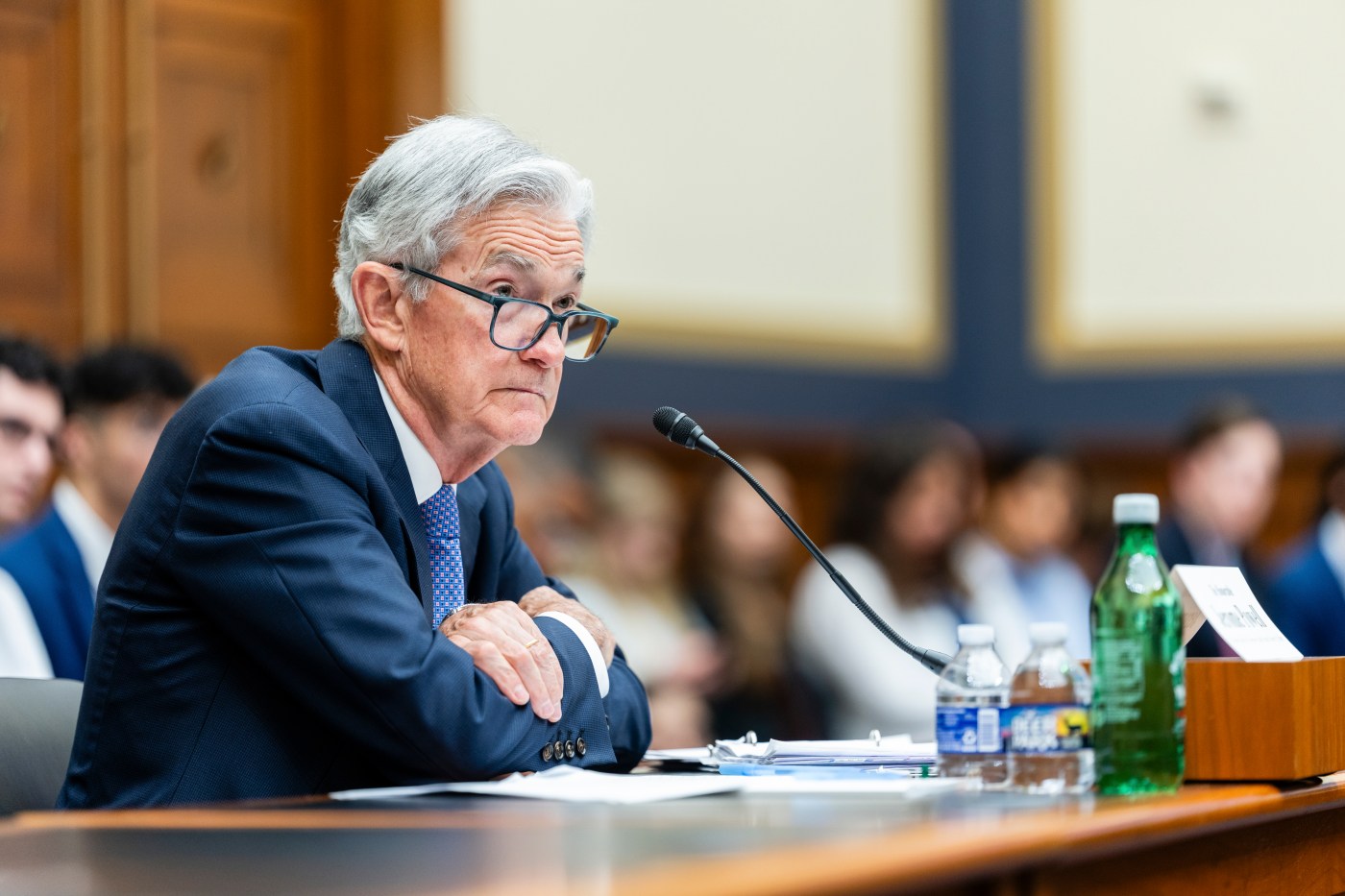
Republican senators caution Trump against firing Fed chair Jerome Powell


Trump’s approval rating on immigration and government spending has slipped, new poll finds


Trump tries to blame others as tensions rise around handling of Epstein case

“You have 2 1/2 years,” Fisher recalls being told.

With Immigration and Customs Enforcement now preparing to add 10,000 employees within five years to assist with President Donald Trump’s mass deportation efforts, the Border Patrol’s torrid expansion in the early 2000s serves as a cautionary tale. Hiring and training standards were changed and arrests for employee misconduct rose. Pressure to turbo-charge growth can also lead to attrition.

“If they don’t uphold pretty rigorous standards and background checks, you can end up hiring the wrong people, and then you pay a huge price in how the public perceives them,” said Gil Kerlikowske, who was commissioner of Customs and Border Protection, the Border Patrol’s parent agency, from 2014 to 2017.

ICE, the main agency responsible for arresting and deporting people within the U.S., is set to get $76.5 billion, nearly 10 times its annual budget, under a bill Trump signed on July 4. Most of that money is for detention, but some is for hiring and other uses. The White House says ICE will grow from 20,000 employees to about 30,000.

“To do it today is an effort that needs to start years ago,” said Matthew Hudak, former Border Patrol deputy chief. “The funding is there, but it is nearly impossible to bring in that many people that quickly because you hit challenges.”

Sponsoring a NASCAR race car and bull riding contests

The Border Patrol nearly doubled its workforce from 11,264 agents in October 2005 to 21,444 agents six years later.

To recruit officers, the agency sponsored a NASCAR race car and bull riding contests. It aired ads during Dallas Cowboys football games. It advertised at military bases. Billboards and job fairs hundreds of miles from the border promised fulfilling careers, resulting in thousands of applications a week.

Federal agents ride on horseback at MacArthur Park, Monday, July 7, 2025, in Los Angeles. Their uniforms read “Police U.S. Border Patrol,” and “HSI,” which stands for Homeland Security Investigations. (AP Photo/Damian Dovarganes)

The agency also loosened some hiring guidelines and training requirements. The age limit for new hires was raised to 40 years old from 37. Spanish language training was cut by up to 30 days, some training was moved online and other instruction was shifted to the field to lessen time at a training academy that the agency opened in Artesia, New Mexico, during the hiring surge, according to a Government Accountability Office report.

Arrests for illegal crossings fell to their lowest levels in decades — a sign for some that the strategy succeeded.

But other measurements were more troubling.

In 2008, the Border Patrol struggled to keep new agents, with about 20% failing to graduate from the academy and more leaving after returning to their stations.

Arrests of CBP employees for misconduct increased to 336 in the 2012 fiscal year from 190 seven years earlier. The agency saw a spate of high-profile corruption cases, including agents accused of smuggling people across the border or working with drug cartels to bring illegal drugs into the U.S.

FILE – U.S. Immigration and Customs Enforcement officers wait to detain a person, Jan. 27, 2025, in Silver Spring, Md. (AP Photo/Alex Brandon, File)

The polygraph pass rate for new applicants tumbled to 33% in 2012 from 58% four years earlier. While the accuracy of the tests came under scrutiny, one applicant admitted that his brother-in-law, a known Mexican drug smuggler, asked him to use his employment to facilitate cocaine trafficking. Another admitted to using marijuana 9,000 times, including the night before the exam.

A 2015 Homeland Security report found that the number of investigators assigned to internal wrongdoing was “woefully inadequate” for the agency’s growth.

“Any time you have massive political pressure to beef up overnight, it never turns out well,” said T.J. Bonner, the former president of the Border Patrol agents union who retired in 2011. “Too many corners have to be cut. Then when things go wrong. the fingers get pointed.”

Stiff competition for qualified applicants

ICE and Homeland Security did not respond to questions about lessons that the Border Patrol’s hiring spree or detailed plans for hiring at ICE.

“The unprecedented funding for ICE will enable my hard-working officers and agents to continue making America safe again by identifying, arresting and removing criminal aliens from our communities,” Todd Lyons, the acting ICE director, said after Trump signed the bill.

Federal agents ride on and armored vehicle at MacArthur Park Monday, July 7, 2025, in Los Angeles. (AP Photo/Damian Dovarganes)

Critics say the administration’s policy to target anyone in the country illegally, not just those with criminal records, could lead to abuses. Stephen Miller, Trump’s deputy chief of staff and lead architect of his immigration policies, had set an aggressive target of at least 3,000 arrests a day even before any additional hiring.

“When there are no priorities, everybody’s a priority,” said Nayna Gupta, policy director of the American Immigration Council. “You’re very likely to see confusion, delay, wrongful arrest, more mistakes when law enforcement agencies, especially large ones, don’t have clear direction and guidance for prioritization.”

Chuck Wexler, executive director of the Police Executive Research Forum, said competition for qualified law enforcement is tough, with departments now offering signing bonuses of $10,000 to $100,000.

Border Patrol staffing has yet to return to its peaks of the early 2010s. Trump tried to increase staffing in his first term. A contract with consulting firm Accenture PLC cost $13.6 million to set up in 2018 and resulted in only two hires over 10 months.

A Border Patrol agent looks on as a family from Colombia is detained and escorted to a bus by federal agents following an appearance at immigration court Monday, July 14, 2025, in San Antonio. (AP Photo/Eric Gay)

Trump’s bill allocates about $170 billion for border and immigration enforcement, with $4.1 billion for CBP hiring that includes 3,000 more Border Patrol agents. It comes at a time of historically low crossings after they reached a record high in December 2023.

Spagat reported from San Diego.