US home sales fall in June as prices soar to new heights

posted in: All news | 0

By ALEX VEIGA, Associated Press Business Writer

LOS ANGELES (AP) — Sales of previously occupied U.S. homes slid in June to the slowest pace since last September as mortgage rates remained elevated and national median sales prices hit unprecedented levels.

Existing home sales fell 2.7% last month from May to a seasonally adjusted annual rate of 3.93 million units, the National Association of Realtors said Wednesday.

Related Articles


US stocks head for another record and Japan’s market rallies after trade deal


Families of the Idaho students Bryan Kohberger stabbed to death are set to see him sentenced


Doctor who supplied Matthew Perry ketamine and called him a ‘moron’ is set to enter guilty plea


Today in History: July 23, the 1967 Detroit riot begins


Erik Menendez is in hospital for a medical condition. His attorney seeks his release

Sales were flat compared with June last year. The latest home sales fell short of the 4.01 million pace economists were expecting, according to FactSet.

Home prices increased on an annual basis for the 24th consecutive month. The national median sales price rose 2% in June from a year earlier to $435,300, an all-time high.

The U.S. housing market has been in a slump since early 2022, when mortgage rates began to climb from pandemic-era lows. Home sales fell last year to their lowest level in nearly 30 years.

So far this year, the average rate on a 30-year mortgage has remained relatively close to 7%, according to mortgage buyer Freddie Mac.

Homes purchased last month likely went under contract in May and June, when the average rate on a 30-year mortgage ranged from 6.76% to 6.89%.

High mortgage rates can add hundreds of dollars a month in costs for borrowers, limiting their purchasing power. The trend is a key reason for why this year’s spring homebuying season has been a bust.

“The second half of the year really depends on what happens with mortgage rates,” said Lawrence Yun, NAR’s chief economist.

The affordability constraints are limiting the activity of first-time buyers. They accounted for 30% of homes sales last month, unchanged from May. Historically, they made up 40% of home sales.

Home shoppers who can afford to buy at current mortgage rates or pay in cash are benefiting from more properties on the market.

There were 1.53 million unsold homes at the end of last month, down 0.6% from May, but up nearly 16% from June last year, NAR said. That’s still well below the roughly 2 million homes for sale that was typical before the pandemic, however.

June’s month-end inventory translates to a 4.7-month supply at the current sales pace, up from a 4.6-month pace at the end of May and 4 months in June last year. Traditionally, a 5- to 6-month supply is considered a balanced market between buyers and sellers.

Homes for sale are staying on the market longer as sales remain in the doldrums. Properties typically remained on the market for 27 days last month before selling, up from 22 days in June last year, NAR said.

Far beyond Harvard, conservative efforts to reshape higher education are gaining steam

posted in: All news | 0

By HEATHER HOLLINGSWORTH, Associated Press

Ken Beckley never went to Harvard, but he has been wearing a crimson Harvard cap in a show of solidarity. As he sees it, the Trump administration’s attacks on the school echo a case of government overreach at his own alma mater, Indiana University.

Beckley, a former head of the school’s alumni association, rallied fellow graduates this spring in an unsuccessful effort to stop Gov. Mike Braun, a Republican, from removing three alumni-elected members from Indiana University’s Board of Trustees and handpicking their replacements.

No government effort to influence a university — private or public — has gotten more attention than the clash at Harvard, where the Trump administration has frozen billions of dollars in federal funding as it seeks a series of policy changes. But far beyond the Ivy League, Republican officials are targeting public universities in several states with efforts seeking similar ends.

Guests walk on the campus of Indiana University, Thursday, July 17, 2025, in Bloomington, Ind. (AP Photo/Darron Cummings)

“What’s happened nationally is now affecting Indiana,” said Beckley, who bought Harvard caps in bulk and passes them out to friends.

Officials in conservative states took aim at higher education before President Donald Trump began his second term, driven in part by the belief that colleges are out of touch — too liberal and loading up students with too much debt. The first efforts focused on critical race theory, an academic framework centered on the idea that racism is embedded in the nation’s institutions, and then on diversity, equity and inclusion programs.

Since Trump took office, officials in states including Indiana, Florida, Ohio, Texas, Iowa and Idaho increasingly have focused on university governance — rules for who picks university presidents and boards and how much control they exert over curriculums and faculty tenure.

As at Harvard, which Trump has decried as overly influenced by liberal thinking, those state officials have sought to reduce the power of faculty members and students.

“They’ve realized that they can take a bit of a step further, that they can advance their policy priorities through those levers they have through the state university system,” said Preston Cooper, a senior fellow who studies higher education policy at the conservative American Enterprise Institute.

State officials push for more conservative leadership

In Indiana, Braun said he picked new trustees who will guide the school “back in the right direction.” They include an anti-abortion attorney and a former ESPN host who was disciplined because she criticized the company’s policy requiring employees to be vaccinated against COVID-19.

Students walk on the campus of Indiana University, Thursday, July 17, 2025, in Bloomington, Ind. (AP Photo/Darron Cummings)

Braun’s administration has ramped up scrutiny of hiring practices at colleges statewide. Indiana’s attorney general, Todd Rokita, has sent letters to the University of Notre Dame, Butler University and DePauw University questioning the legality of their DEI programs.

Butler, a private, liberal arts school in Indianapolis, was founded by an abolitionist in the decade leading up to the Civil War and admitted women and students of color from the start.

“I hope that Butler will uphold the standards they were founded on,” said Edyn Curry, president of Butler’s Black Student Union.

In Florida, the state university system board in June rejected longtime academic Santa Ono for the presidency at the University of Florida, despite a unanimous vote of approval by the school’s own Board of Trustees. The unprecedented reversal followed criticism from conservatives about Ono’s past support for DEI programs.

That followed the conservative makeover of New College of Florida, a small liberal arts school once known as the state’s most progressive. After Republican Gov. Ron DeSantis appointed a group of conservatives to its governing board, many faculty left, including Amy Reid, who now manages a team focused on higher education at the free-expression group PEN America.

“When our students started organizing at New College, one of their slogans was ‘Your Campus is Next,’” said Reid, who saw the gender studies program she directed defunded and then cut. “So no, we’re not surprised when you see other states redefining what can be in a general education class, because we’ve seen it happen already.”

Changes have met limited resistance

The changes at several public universities are proceeding without battles of the kind seen at Harvard. In a standoff seen widely as a test of private universities’ independence, Harvard has filed lawsuits against the administration’s moves to cut its federal funding and block its ability to host international students.

In Iowa, new DEI restrictions are taking effect in July for community colleges. And the board that governs the state’s three public universities is weighing doing something similar to Idaho, where a new law imposes restrictions on requiring students to take DEI-related courses to meet graduation requirements.

Related Articles


Trump’s favorability has fallen among AAPI adults since last year, AAPI Data/AP-NORC poll finds


From tech podcasts to policy: Trump’s new AI plan leans heavily on Silicon Valley industry ideas


Flurry of trade deals offers relief for some Asian countries, while others wait


Trump likes renaming people, places and things. He’s not the first to deploy that perk of power


Trump says a China trip is ‘not too distant’ as trade tensions ease

Historically, the Iowa board has been focused on big-picture issues like setting tuition rates and approving degree programs. Now, there’s a perceived sense that faculty should not be solely responsible for academic matters and that the trustees should play a more active role, said Joseph Yockey, a professor at the University of Iowa College of Law and the former president of Iowa’s faculty senate.

“What we started to see more recently is trustees losing confidence,” Yockey said.

A new law in Ohio bans DEI programs at public colleges and universities and also strips faculty of certain collective bargaining rights and tenure protections.

There are few guardrails limiting how far oversight boards can change public institutions, said Isabel McMullen, a doctoral candidate at the University of Wisconsin who researches higher education.

“For a board that really does want to wreak havoc on an institution and overthrow a bunch of different programs, I think if a board is interested in doing that, I don’t really see what’s stopping them aside from students and faculty really organizing against it,” McMullen said.

Defenders of academic freedom see threats on several fronts

The initiatives on state and federal levels have led to widespread concerns about an erosion of college’s independence from politics, said Isaac Kamola, director of the Center for the Defense of Academic Freedom at the American Association of University Professors.

“They have to not only face an attack from the state legislature, but also from the federal government as well,” said Kamola, who is also a professor of political science at Trinity College in Hartford, Connecticut.

In Texas, Republican Gov. Greg Abbott signed a pair of bills in June that impose new limits on student protests and give gubernatorial-appointed boards that oversee the state’s universities new powers to control the curriculum and eliminate degree programs.

Cameron Samuels, executive director of Students Engaged in Advancing Texas, an advocacy group, said politicians in the state are taking control of universities to dictate what is acceptable.

“When someone controls the dissemination of ideas, that is a really dangerous sign for the future of democracy,” Samuels said.

The 21-year-old who is transgender and nonbinary went to college in Massachusetts and got into Harvard for graduate school, but as the Trump administration began targeting the institution, Samuels instead chose to return to their home state and attend the University of Texas in Austin.

“I at least knew what to expect,” Samuels said.

The Associated Press’ education coverage receives financial support from multiple private foundations. AP is solely responsible for all content. Find AP’s standards for working with philanthropies, a list of supporters and funded coverage areas at AP.org.

Trump’s favorability has fallen among AAPI adults since last year, AAPI Data/AP-NORC poll finds

posted in: All news | 0

By THOMAS BEAUMONT and LINLEY SANDERS, Associated Press

A small but fast-growing group of people in the United States have soured somewhat on President Donald Trump this year, as they worry about high costs and fear new tariff policies will further raise their personal expenses, a new poll finds.

The percentage of Asian Americans, Native Hawaiians and Pacific Islanders with an unfavorable opinion of Trump rose to 71% in July, from 60% in December, according to a national survey by AAPI Data and The Associated Press-NORC Center for Public Affairs Research.

Notably, AAPI adults who describe themselves as independent are especially likely to have cooled on Trump. About 7 in 10 AAPI independents have a “very” or “somewhat” unfavorable opinion of the Republican president, up roughly 20 percentage points since December.

Related Articles


From tech podcasts to policy: Trump’s new AI plan leans heavily on Silicon Valley industry ideas


Flurry of trade deals offers relief for some Asian countries, while others wait


Trump likes renaming people, places and things. He’s not the first to deploy that perk of power


Trump says a China trip is ‘not too distant’ as trade tensions ease


Columbia University says it has suspended and expelled students who participated in protests

The poll is part of an ongoing project exploring the views of Asian Americans, Native Hawaiians and Pacific Islanders, whose views are usually not highlighted in other surveys because of small sample sizes and lack of linguistic representation.

AAPI independents’ unfavorable view of Trump is higher than his unfavorable rating among independent adults overall, which was 52% in a June AP-NORC poll, having nudged slightly higher from 44% in December.

Economic concerns could be playing a central role. About 8 in 10 AAPI adults expect Trump’s tariff policies will increase the cost of consumer goods, the poll found, while only about 4 in 10 think those policies will boost domestic manufacturing and just 2 in 10 anticipate more U.S. jobs as a result.

“To me, it seems like a lot of not-really-well-thought-out things that are happening,” said Michael Ida, a 56-year-old independent in Hawaii who teaches high school advanced-placement calculus. “In the process, there’s a lot of collateral damage and fallout that’s hurting a lot of people.” Ida was referring specifically to government spending cuts, including for education.

AAPI adults represent a small segment of the U.S. population, making up about 7% of the nation’s residents in 2023, according to a Pew Research Center analysis of government data. Likewise, they are hardly a pro-Trump voting bloc generally. In last year’s election, English-speaking Asian U.S. voters shifted slightly toward Trump, but with only about a third supporting him, up from 29% in 2020, according to AP VoteCast, a survey of the American electorate conducted in all 50 states.

The new poll also suggests that they are especially likely to be worried about the economy’s trajectory, and remain anxious about high costs.

About two-thirds of AAPI adults, 65%, say they are “extremely” or “very” concerned about the possibility of the U.S. economy going into a recession, higher than the 53% of the Americans generally who said the same in an April AP-NORC survey.

“On the economy, you saw AAPI voters shift — not in a big way, but shift nonetheless — toward Trump” in the 2024 election, said Karthick Ramakrishnan, executive director of AAPI Data and researcher at the University of California, Berkeley. “They are not seeing big economic benefits pan out. Quite the contrary, they are seeing big economic risks on the horizon based on Trump’s action on tariffs.”

Shopan Hafiz, a 39-year-old independent and engineer at Intel in Oregon, described his view of Trump as “very unfavorable,” and bemoaned the Republican president’s tariff policy, which he expected to hit American consumers harder in the coming months.

“With all the tariffs, I don’t think it’s going to help,” Hafiz said. “All the tariffs will ultimately be paid by U.S. nationals, and inflation is going to get worse.”

The poll comes in the midst of Trump’s on-and-off threats to impose tariffs for what he says is his goal of leveling the nation’s trade imbalance. Inflation rose in June to its highest level since February as Trump’s tariffs pushed up the cost of household goods, from groceries to appliances.

Consumer prices rose 2.7% in June from a year earlier, the Labor Department said last week, up from an annual increase of 2.4% in May. On a monthly basis, prices climbed 0.3% from May to June, after rising just 0.1% the previous month.

Like Hafiz, Ida, the teacher in Hawaii, did not vote for Trump last year. Instead, both voted for Libertarian Party nominee Chase Oliver. Hafiz’s decision was in opposition to the two major U.S. parties’ support for Israel in its war in Gaza. Ida said the two major parties had become “too extreme.”

Ida is among the roughly two-thirds of AAPI adults who say they are at least “very concerned” about the cost of groceries. He’s noticed fear of higher prices in his Pacific island state, and even more within the ethnic businesses, in light of Hawaii’s reliance on shipped goods.

“Here in Hawaii, because we’re so isolated, everything comes on a ship or a plane,” he said. “We’re especially vulnerable to prices rising and disruptions in the supply chain. There’s definitely some anxiety there.”

The poll of 1,130 U.S. adults who are Asian American, Native Hawaiian and Pacific Islanders was conducted June 3-11, 2025, using a sample drawn from NORC’s probability-based Amplify AAPI Panel, designed to be representative of the Asian American, Native Hawaiian, and Pacific Islander population. Online and telephone interviews were offered in English, the Chinese dialects of Mandarin and Cantonese, Vietnamese and Korean. The margin of sampling error for all respondents is plus or minus 4.7 percentage points.

US stocks head for another record and Japan’s market rallies after trade deal

posted in: All news | 0

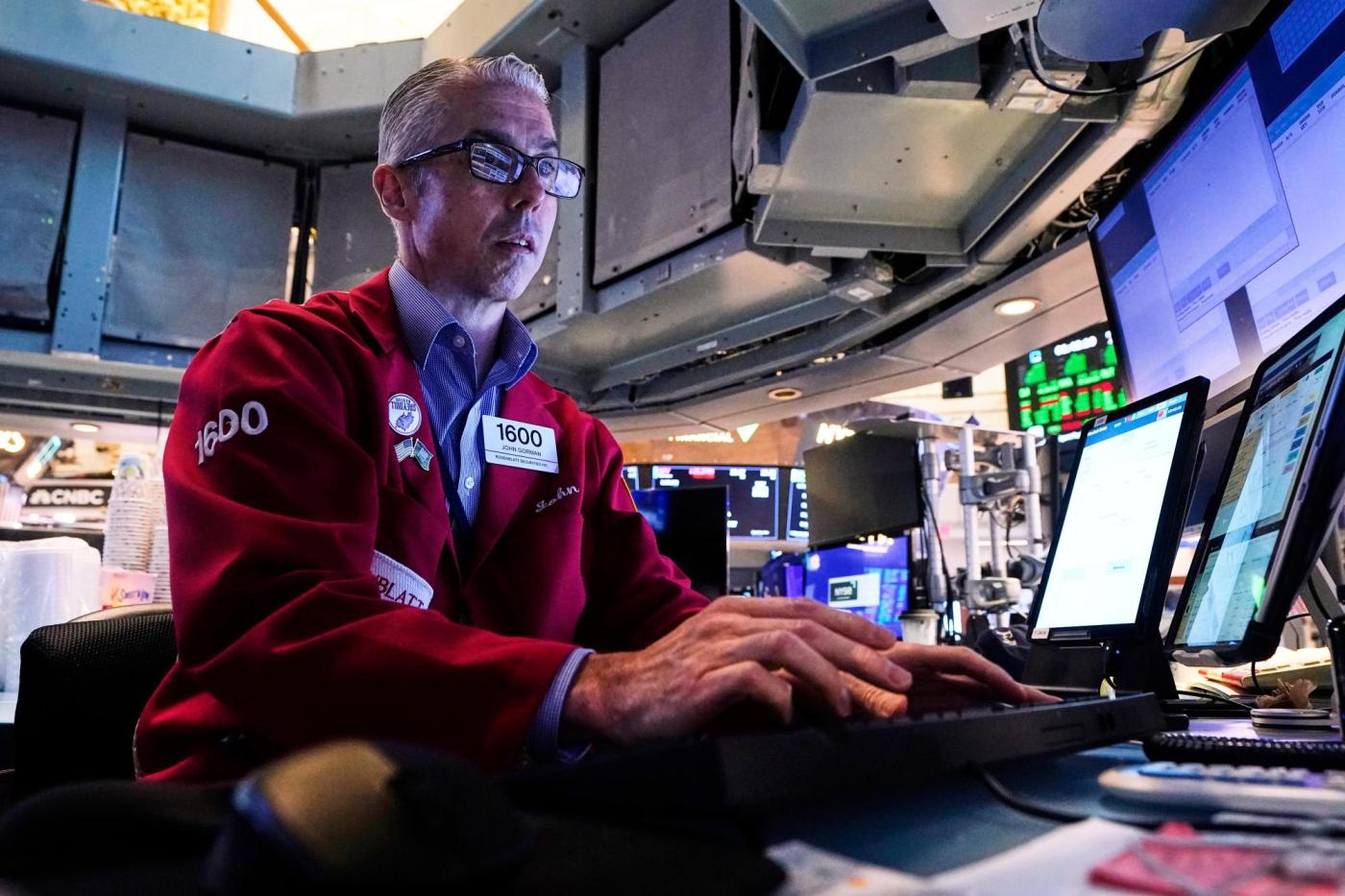
NEW YORK (AP) — U.S. stocks are rising toward another record following a trade deal between the world’s No. 1 and No. 4 economies, one that would lower proposed tariffs on Japanese imports to the United States.

The S&P 500 was 0.3% higher in early trading Wednesday, coming off its latest all-time high. The Dow Jones Industrial Average was up 219 points, and the Nasdaq composite was up 0.2%.

The Nikkei 225 rallied 3.5% in Tokyo after President Donald Trump announced a trade framework that would place a 15% tax on imports from Japan. That’s lower than the 25% rate Trump had earlier threatened.