The 12 Communities Where Mayor Adams’ Charter Commission Could ‘Fast Track’ Affordable Housing

posted in: All news | 0

Adams’ Charter Revision Commission has proposed measures to accelerate affordable housing production in the parts of the city that have produced the least, a move that has drawn criticism from councilmembers and community boards.

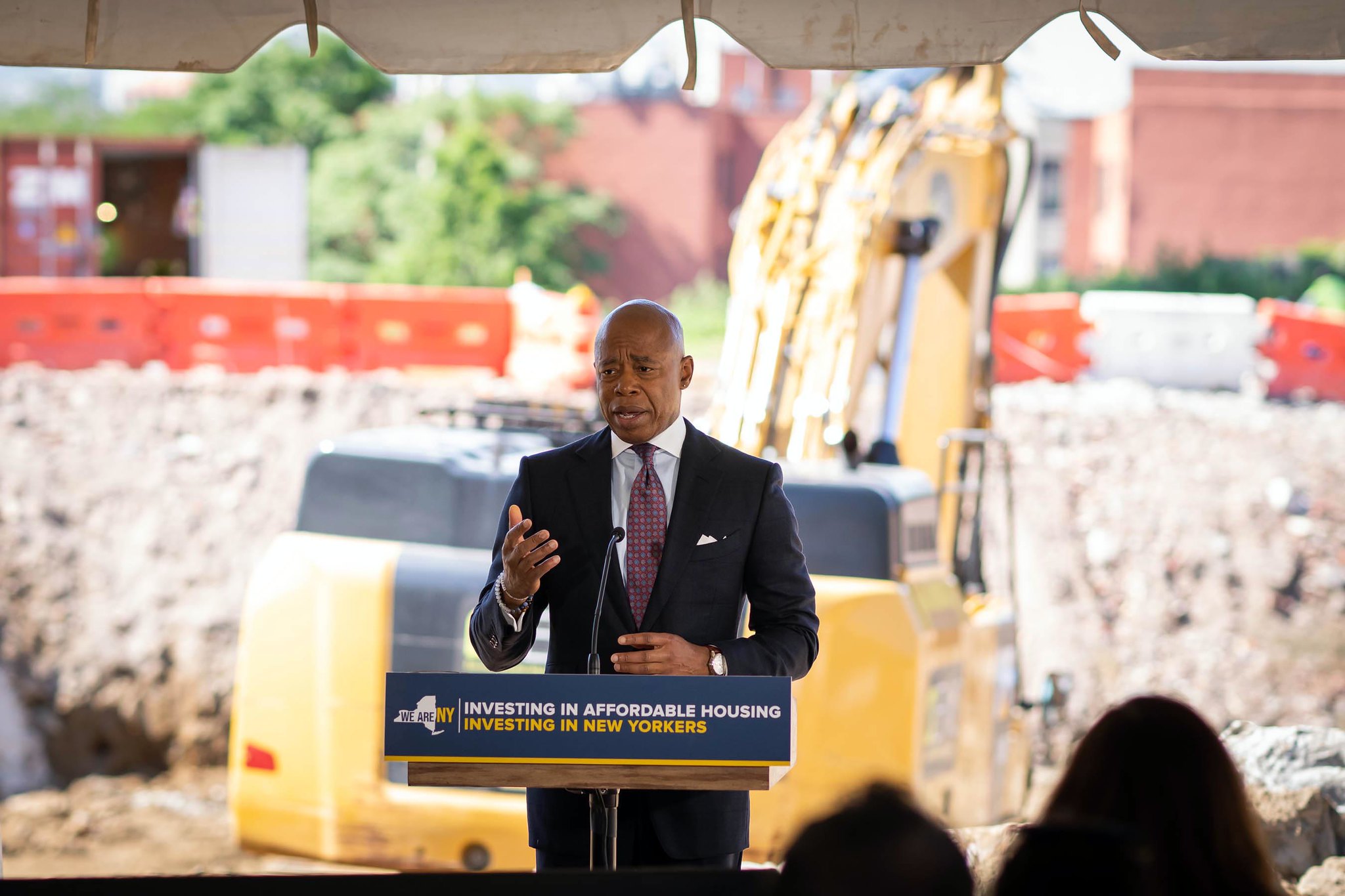
Mayor Eric Adams at the groundbreaking for an affordable housing project in 2022. (Ed Reed/Mayoral Photography Office)

On this lawmakers agree: there isn’t enough affordable housing in New York City. But how to build it, and where? Not so much.

Mayor Eric Adams’ Charter Commission voted Monday to advance four land use ballot proposals aimed at reducing the time and cost to producing housing. But they would come at a price: some erosion of the City Council’s powers over land use.

New Yorkers will get to vote on the plans in November’s general election. 

One of the changes targets specific neighborhoods. The affordable housing “fast track” would half how long it takes new projects with income-restricted units to go through land use review in certain community districts that have produced less affordable housing than the rest of the city.

The commission and its supporters say that will make it easier to build, while detractors say it will limit the local community’s voice in how their neighborhood looks.

“If you are in the bottom 12 community districts for affordable housing production, it is because virtually nothing is being built in the community district at all. So communities don’t have a voice,” said Alec Schierenbeck, executive director of the Charter Revision Commission. 

Communities and councilmembers can’t weigh in on projects when nothing is being proposed, he argued, hoping it will spur more development.

The “fast track,” if enacted, would affect large swaths of the city. That could potentially include Council Speaker Adrienne Adams’ district where it overlaps with Queens Community Board 10.

Speaker Adams, who opposes the proposal, touted the Council’s ability to deliver on affordable housing, pointing to investments in her home borough of Queens. 

“Accountability to ensure every community contributes to the creation of housing is essential, but it does not require taking away communities’ power to negotiate increased affordability and investments from developers,” she told City Limits in a statement.

Who would be subject to the ‘fast track’ (hypothetically)?

The 12 community districts that have produced the least affordable housing in the past five years have just over a year to permit more, or risk being subject to the fast track.

While the Charter Commission did not name the 12 community boards currently lagging on affordable housing, City Limits followed their formula for affordable housing production to find out which districts would be subject to the rule if it went into effect today.

Two community boards in Manhattan, four in Queens, four in Brooklyn, and two in Staten Island would be in the bottom 12 by rate of new affordable construction compared to their existing housing stock. No Bronx districts would qualify currently.  

Many of those are outlying areas of the city that haven’t produced much housing at all, much less affordable housing—but some high density parts of the city would also land in the bottom 12 were the rule to take effect today.

A City Council analysis of the fast track proposal shared with City Limits mirrored these patterns.

Community districts don’t cleanly overlap with City Council districts, but the bottom 12 community boards in City Limits’ analysis cover portions of the city represented by Republican councilmembers on the South Shore of Staten Island, Southern Brooklyn and Northeast Queens.

The potentially affected areas also include much of the districts of Democrats Justin Brannan in Bay Ridge, Robert Holden in Maspeth, and Gale Brewer on the Upper West Side.

“You’re going to see a mix of neighborhoods that haven’t built affordable housing because they don’t want to and ones that haven’t built affordable housing because doing so is so expensive and complex,” said Jessica Katz, former chief housing officer under the Adams administration.

“Take Manhattan off the list,” Brewer told City Limits in a phone call. “We want affordable housing,” she added, noting that it’s harder to get affordable housing built in her already-dense district compared to others.

“Come up with a different formula,” she said.

Brannan and Holden did not respond to requests for comment before publication.

The disparity in housing production persists whether you look at community boards or Council districts. According to the New York Housing conference, in the last year the top seven City Council districts produced as much housing as the other 44 districts combined.

The Charter Commission report said the top 10 Council districts, on average, produced 751 affordable units a year while the bottom 10 produced just three.

Holden and Joann Ariola’s neighboring Queens districts produced just 245 affordable units between them from 2014-2024, among the 10 lowest totals among council districts in a separate NYHC analysis published earlier this year. Over the last decade, Bronx Council districts accounted for five of the 10 areas that saw the greatest number of new affordable units.

How would the ‘fast track’ work?

Under the charter change, the city would run the numbers in October 2026 and produce a report classifying community boards based on the number of affordable units produced in the past five years compared to the total number of units currently in the district.

From there, the bottom 12 communities would be subject to the “fast track” for any land use application that triggers the city’s mandatory inclusionary housing rules–either through a neighborhood rezoning or an individual application for a building of more than 10 units.

The local community board and borough president would then review the proposal simultaneously, as opposed to one after the other, as is the case currently. After those 60 days, the City Planning Commission would have 30 days to vote. If approved, it would advance the project to the City Council. 

“The Fast Track is narrowly targeted to address the need to build affordable housing in the few districts that build the least, while leaving the ordinary process of public review in place for the lion’s share of all changes,” wrote the Charter Commission in its report.

A City Council meeting in 2022. Councilmembers have condemned the “fast track” proposal. (Adi Talwar/City Limits)

Why is it controversial?

The Charter Commission says that the measures are “modest” and seek to create new pathways to build housing in parts of the city where it is currently time consuming and expensive to do so.

But leaders in the City Council disagree, arguing that the changes would undermine their role in the land use process. Community board leaders, who make advisory votes on land use applications in their district, mostly opposed the changes in testimony before the commission.

Part of the resistance, sources say, might be due to the fact that the Charter Commission has Mayor Adams’ name attached. A joint statement from Council leadership Monday described the commission as a political power play, calling it a “self-serving narrative in support of expanded mayoral power.”

They pointed to the Council’s Fair Housing Framework—which will set production targets for neighborhoods, but stops short of mandating new development—and the passage of City of Yes as evidence of the Council’s motivation to do more on housing.

“There’s no question that we have to change the status quo in favor of building more housing. While I share some of the concerns about how the proposals might undermine our ability to shape outcomes in our own districts, I also believe that we have to take bold action to tackle the housing crisis. The old way isn’t working, and it’s time for something new,” said Keith Powers, whose Eastside Manhattan district could be partially subject to the “fast track” alongside fellow member Julie Menin from the Upper East Side.

A spokesperson for Powers emphasized that building housing is particularly difficult in his district, and said that projects currently in the pipeline might bump them out of the bottom tier by next year. Manhattan Board 6 in Stuyvesant Town and Turtle Bay was 13th lowest on affordable housing production, and Manhattan Community Board 8 on the Upper East side was fifth lowest, when City Limits ran its analysis.

“I think this is really ramming something down people’s throats,” said Brewer. She argued the way to get things done is to work with councilmembers and community boards, not shame them.

‘Appeals board’ also ruffles feathers

Separately, the commission has taken aim at the longstanding practice of “member deference” on land use issues. Under member deference, the Council only advances land use changes if the local councilmember signs off.

The third proposed ballot measure would create a new appeals board, made up of the mayor, council speaker, and representative borough president, which could reverse the Council’s decisions on qualifying affordable housing projects.

The commission argued in its report that councilmembers have bargained down the number of apartments (and affordable units) in potential developments as a result of their review power. An unknowable number of units, the report says, are never even proposed.

“When someone proposes an affordable housing development, the first thing they do is look up who the City Council member is, and if the City Council member is someone who will never say yes to an affordable housing development, they don’t do anything with that site at all,” said Schierenbeck.

“This is really creating an accountability mechanism, a backstop for bad faith actors,” said Annemarie Gray, executive director of the pro-housing group Open New York.

Councilmembers say they are just fighting for the best deal for their community, and pointed the blame at Mayor Adams.

A group of 28 councilmembers, from Democratic Socialists to Republican Joann Ariola, condemned the suite of charter proposals in a statement, saying “unlike this commission, we believe the input of communities, elected officials, and organized labor can make development projects better.”

A building under construction in Brooklyn in 2022. (Adi Talwar/City Limits)

How can communities get off the hot seat?

A lot can change in a year. If the ballot measure passes, communities will still have 10 months before the City Council would officially designate the 12 community boards that produced the least affordable housing for their size.

The City of Yes for Housing Opportunity, which passed late last year, was designed to unlock development potential in areas of the city that were lagging behind on housing production. If some of that construction comes to fruition, the balance could shift.

City of Yes included several carveouts to facilitate its passage through the City Council. The Charter Commission’s packages require no such review—many councilmembers who voted against City of Yes, or, like Brannan, secured an exception to aid their district, are the same councilmembers who may be subject to fast-tracking.

Ariola, a Republican representing Queens, said her stance was not in opposition to affordable housing generally, but wanting to make sure new development is “smart” and not overburdening infrastructure in her district, arguments reminiscent of the debate over City of Yes.

Ariola and Holden both voted no on City of Yes last year.

Community boards could build their way out of the dog house. For example, permitting 90 new units of affordable housing in Ozone Park and Howard Beach, where just 12 new affordable units were built since July 2020, would bump Queens Community District 10 from the third-lowest to out of the bottom 12.

You can weigh in on November’s ballot

On Monday, the commission voted to advance a ballot measure creating the affordable housing fast track, alongside three other land use proposals.

In addition to the affordable housing fast track and the affordable housing review board, the charter changes would streamline the review period for affordable housing developments of a smaller size.

Others include the affordable housing appeals board that can override the City Council, simplified review for modest housing and infrastructure projects, and creating a digital city map.

Look out for those proposals on your ballot on election day, when voters will consider land use reforms as well as a proposal to move New York City’s mayoral elections to presidential election years.

To reach the reporter behind this story, contact Patrick@citylimits.org. To reach the editor, contact Jeanmarie@citylimits.org

Want to republish this story? Find City Limits’ reprint policy here.

The post The 12 Communities Where Mayor Adams’ Charter Commission Could ‘Fast Track’ Affordable Housing appeared first on City Limits.
Small Brazilian coffee producers fear for the future after Trump’s 50% tariff

posted in: All news | 0

By ELÉONORE HUGHES and DIARLEI RODRIGUES

PORCIUNCULA, Brazil (AP) — Brazilian José Natal da Silva often tends to his modest coffee plantation in the interior of Rio de Janeiro state in the middle of the night, sacrificing sleep to fend off pests that could inflict harm on his precious crops.

Related Articles


Australia to reduce US beef import restrictions denounced by Trump as a ban


Zelenskyy announces new anti-graft bill in Ukraine after public outcry and EU criticism


France’s first couple sue Candace Owens for defamation over claims that Brigitte Macron is a man


48 people die in a passenger plane crash in Russia’s Far East, officials say


Today in History: July 24, Apollo 11 returns home from the moon

But anxiety has troubled his shut-eye even more in recent weeks, following President Donald Trump’s announcement earlier this month of a 50% tariff on Brazilian imported goods, which experts expect to drive down the price of coffee in Brazil.

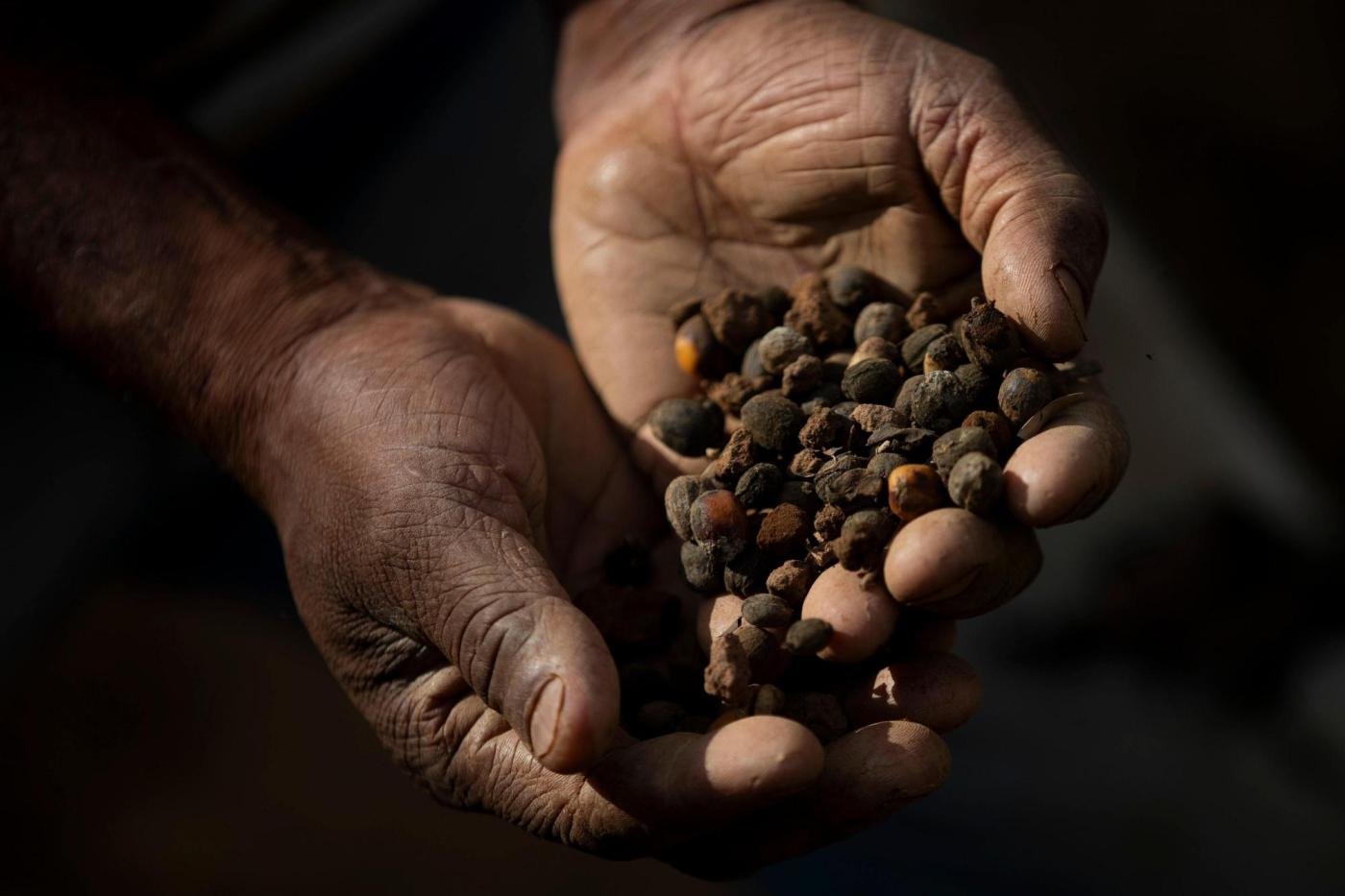
Da Silva sighed as he recounted his fears, sitting on the dry earth surrounded by his glossy green arabica coffee shrubs, in the small municipality of Porciuncula.

“We’re sad because we struggle so much. We spend years battling to get somewhere. And suddenly, everything starts falling apart, and we’re going to lose everything,” da Silva said. “How are we going to survive?”

Tariff linked to Bolsonaro trial

Trump’s tariff on Brazil is overtly political. In his public letter detailing the reasons for the hike, the U.S. president called the trial of his ally, former President Jair Bolsonaro, a “ witch hunt.” Bolsonaro is accused of masterminding a coup to overturn his 2022 election loss to left-leaning President Luiz Inácio Lula da Silva.

The tariff has sparked ripples of fear in Brazil, particularly among sectors with deep ties to the American market such as beef, orange juice — and coffee. Minor coffee producers say the import tax will hit their margins and adds to the uncertainty already generated by an increasingly dry and unpredictable climate.

Brazil, the world’s largest coffee producer, exports around 85% of its production. The United States is the country’s top coffee buyer and represents around 16% of exports, according to Brazil’s coffee exporters council Cecafe.

The president of Cecafe’s deliberative council, Márcio Ferreira, told journalists last week that he thinks the U.S. will continue to import Brazilian coffee, even with the hefty tariff. “It’s obvious that neither the United States nor any other source can give up on Brazil, even if it’s tariffed,” he said.

Tariff could hurt competitiveness of Brazilian coffee in U.S.

But the tariff will likely decrease Brazilian coffee’s competitiveness in the U.S. and naturally reduce demand, said Leandro Gilio, a professor of global agribusiness at Insper business school in Sao Paulo.

“There’s no way we can quickly redirect our coffee production to other markets,” Gilio said. “This principally affects small producers, who have less financial power to make investments or support themselves in a period like this.”

Family farmers produce more than two-thirds of Brazilian coffee. They are a majority in Rio state’s northwestern region, where most of the state’s coffee production lies.

Coffee farming is the primary economic activity in these municipalities. In Porciuncula, which neighbors Brazil’s largest coffee-producing state Minas Gerais, gentle mountains are layered with symmetrical lines of coffee shrubs.

Da Silva, who wore a straw hat for protection from the sun and a crucifix around his neck, owns around 40,000 coffee trees. He started working in the fields when he was 12.

Besides coffee, he grows cassava, squash, bananas, oranges and lemons and has a few chickens that provide fresh eggs. “We have them because of the fear of not being able to eat. We wouldn’t manage if everything were bought, because the profit is very low,” he said.

Last year, drought — made more likely by human-caused climate change — devastated large swathes of da Silva’s production. The reduction in supply pushed coffee prices up, but only after many small-scale farmers had already sold all their crops.

Since peaking in February, prices of arabica have fallen, dropping 33% by July, according to the University of Sao Paulo’s Center for Advanced Studies in Applied Economics, which provides renowned commodity price reports.

“When you make an investment, counting on a certain price for coffee, and then when you go to sell it the price is 20-30% less than you calculated, it breaks the producers,” said Paulo Vitor Menezes Freitas, 31, who also owns a modest plantation of around 35,000 coffee trees in the nearby municipality of Varre-Sai.

The demands of coffee farming

Life out in the fields is tough, according to Menezes Freitas.

During harvest season, he sometimes gets up at 3 a.m. to turn on a coffee drier, going to bed as late as midnight. The rest of the year is less intense, but still, there are few to no breaks because there’s always work to do, he said.

Menezes Freitas, who is expecting his first child in October, said the tariff’s announcement increased his fears for the future.

“It’s scary. It feels like you’re on shaky ground. If things get worse, what will we do? People will start pulling out their coffee and finding other ways to survive because they won’t have the means to continue,” he said.

In addition to slashing the value of his coffee beans, Menezes Freitas said the tariff will impact machinery and aluminum — goods that producers like him use every day.

“We hope this calms down. Hopefully, they’ll come to their senses and remove that tariff. I think it would be better for both the United States and Brazil,” he said.

Floodplains Belong to the Rivers

posted in: All news | 0

I’ve had it with hearing the same story over and over again—another 100-year-plus rainfall event, another tragic result from people occupying the floodplain without an adequate warning system. More pain. More loss.

The bottom line is—we Texans keep doing the same thing over and over and expecting a different result. We are not going to change this narrative until we change our view of climate change and of living and developing in the floodplain.

The storm that hit Kerrville was similar to prior rainfall events from 1987 and 2002 that led to flooding on the Guadalupe River. (As well as more historic floods, like one from 1932.) Those risks were known, though perhaps the rainfall intensity and rate of the river’s rise were a bit more extreme than in the past.

The intensity of the storm in Kerrville and its failure to move was similar to what Houston saw with Tropical Storm Allison in 2001 and Hurricane Harvey in 2017. Texans are experiencing larger storm events over shorter time periods. 

Our climate is changing and our rainfall patterns—and drought patterns—are proving it repeatedly.

After Harvey, the National Oceanic And Atmospheric Administration (NOAA) redid the historic rainfall analysis in NOAA Atlas 14. In the process, the standard for what is defined as a 100-year flood was updated for Houston from about 13 inches of rainfall in about 24 hours to about 17 inches in 24 hours, an increase of more than 30 percent. However, Dr. Phil Bedient of the Severe Storm Prediction, Education and Evacuation from Disaster Center (SSPEED Center) at Rice University is of the opinion that that is an underestimate, given that Houston has experienced five storms since 1995 that exceeded even that new 100-year rainfall amount. 

The science is clear. The Earth’s atmosphere is getting hotter with global temperatures rising about 1 degree Celsius on average from 1900 to 2000.  A hotter atmosphere can hold more water than a cooler one, and hotter temperatures lead to more evaporation. And with tropical systems such as Barry that hit Tampico five days before the Hill Country flood, massive amounts of tropical rain arrived further inland.  

But rather than raining out over the mountains of Mexico as predicted, much of Barry’s atmospheric moisture made its way to Central Texas where it fell in a concentrated area. A low-pressure system just sat over the Hill Country, flooding not only the Guadalupe River area but also the Llano, San Saba, and San Gabriel Rivers north and west of Austin where people also died. 

What this tells me is that our Texas rivers, bayous, creeks, and streams are more flood-prone today than ever. Although Texans have been doing flood-prevention planning, most of those analyses are based on the statistics from past storms without attempts being made to better define the current reality. More importantly, we don’t treat floodplains with the respect they deserve and demand. 

I was around when the first floodplain maps were developed in Harris County in the late 1970s. I watched these maps being treated like political footballs since land-use controls affected areas designated as floodways or 100-year floodplains under federal law.

State and local leaders treated this new regulatory effort with contempt, with some calling it a federal intrusion that interfered with private land-use decisions. Due to controversy over the initial maps, Harris County became the first county in the United States given permission to do its own floodplain mapping. Over time, I watched the mapped floodplain on some of our bayous changing from larger to smaller and back again throughout the 1980s and into the ’90s.  

When Allison hit in 2001, we remapped Harris County floodplains to update for new development that had added more concrete and more drainage channels—changes that had increased the flooding downstream. But the estimated rainfall amounts were not adjusted at that time. Instead, Allison was treated as a freak event, way beyond a 100-year storm. Then Hurricane Harvey came along—a storm that some said was a multi-thousand-year storm. And then Imelda arrived in northeastern Harris County, once again breaking records.

After NOAA adjusted its rain estimates, Harris County and the City of Houston adopted the 500-year floodplain for regulatory purposes and new floodplain maps were commissioned in 2019. But we’ve been waiting for them to be issued for six years now.

I do not know why we have reached mid-way in 2025 without new maps. I know that they will be painful when published. I know that as much as 30 to 40 percent of Harris County may end up in the 100-year floodplain. And I know that as many as 150,000 or more homes will be inside these floodplains. I also know that these areas are much more dangerous now with more intense rain events.  

Houston and Texas need to get smart about floodplains. The rainfall flooding we experience in Houston is typically gentler than the raging wall of water that came down the Guadalupe River, but it is no less damaging. You may avoid death, but your property will be damaged, and first responders could be put at risk trying to rescue you.  

We need changes. First, we need to make a commitment to understand our changing climate and address it honestly. We need to fully fund NOAA and the National Weather Service and the Federal Emergency Management Agency (FEMA). We need to develop comprehensive flood warning systems that can better alert potential flood victims. We need floodplain maps that are accurate and dependable. We need an engineering community that understands and honestly conveys what science is telling us. And we need to evacuate floodplains as efficiently and as soon as we can.

Floodplains belong to the rivers. For too long, we have tried to make them part of the property of humans and a place for human habitation. That simply cannot continue—not without more tragedies like those we have just witnessed on the Guadalupe and in Houston. 

The post Floodplains Belong to the Rivers appeared first on The Texas Observer.

Trump’s onetime friendship with Jeffrey Epstein is well-known — and also documented in records

posted in: All news | 0

By ERIC TUCKER, Associated Press

WASHINGTON (AP) — The revelation that Attorney General Pam Bondi told President Donald Trump that his name was in the Jeffrey Epstein files has focused fresh attention on the president’s relationship with the wealthy financier and the Justice Department’s announcement this month that it would not be releasing any additional documents from the case.

But at least some of the information in the briefing to Trump, which The Wall Street Journal said took place in May, should not have been a surprise.

The president’s association with Epstein is well-established and his name was included in records that his own Justice Department released back in February as part of an effort to satisfy public interest in information from the sex-trafficking investigation.

Trump has never been accused of wrongdoing in connection with Epstein and the mere inclusion of someone’s name in files from the investigation does not imply otherwise. Epstein, who killed himself in jail in 2019 while awaiting trial, also had many prominent friends in political and celebrity circles besides Trump.

Trump’s ties to Epstein

It should have been no shock to Trump that his name would be found in records related to Epstein.

The February document dump from the Justice Department included references to Trump in Epstein’s phone book and his name was also mentioned in flight logs for Epstein’s private plane.

Related Articles


Australia to reduce US beef import restrictions denounced by Trump as a ban


Man accused of attempting to assassinate Trump returns to court and hopes to represent himself


Trump will visit Federal Reserve in escalation of campaign to pressure Powell to cut interest rates


Trump’s trip to Scotland highlights his complex relationship with his mother’s homeland


Appeals court finds Trump’s effort to end birthright citizenship unconstitutional, upholds block

Over the years, thousands of pages of records have been released through lawsuits, Epstein’s criminal dockets, public disclosures and Freedom of Information Act requests. In January 2024, a court unsealed the final batch of a trove of documents that had been collected as evidence in a lawsuit filed by Epstein victim Virginia Giuffre.

Records made public also include 2016 deposition in which an accuser recounted spending several hours with Epstein at Trump’s Atlantic City casino but didn’t say if she actually met Trump and did not accuse him of any wrongdoing. Trump has also said that he once thought Epstein was a “terrific guy,” but that they later had a falling out.

“I knew him like everybody in Palm Beach knew him,” Trump said in 2019 when video footage unearthed by NBC News following Epstein’s federal indictment showed the two chatting at a party at Trump’s Mar-a-Lago estate in 1992, when the now president was newly divorced. ”He was a fixture in Palm Beach. I had a falling-out with him a long time ago. I don’t think I’ve spoken to him for 15 years.”

The department’s decision to not release additional files from the case

The Justice Department stunned conspiracy theorists, online sleuths and elements of Trump’s base this month when it released a two-page letter saying that a so-called Epstein “client list” that Bondi had once intimated was on her desk did not exist and that officials did not plan to release any additional documents from its investigation despite an earlier commitment to provide transparency.

Whether Bondi’s briefing to Trump in May influenced that decision is unclear.

The Justice Department did not comment directly on her meeting with Trump but Bondi and Deputy Attorney General Todd Blanche said in a joint statement that a review of the Epstein files showed that there was nothing warranting further investigation or prosecution.

“As part of our routine briefing,” the statement said, “we made the President aware of our findings.”