US stocks hang around their records as GM and others show how tariffs are impacting them

posted in: All news | 0

By STAN CHOE, Associated Press Business Writer

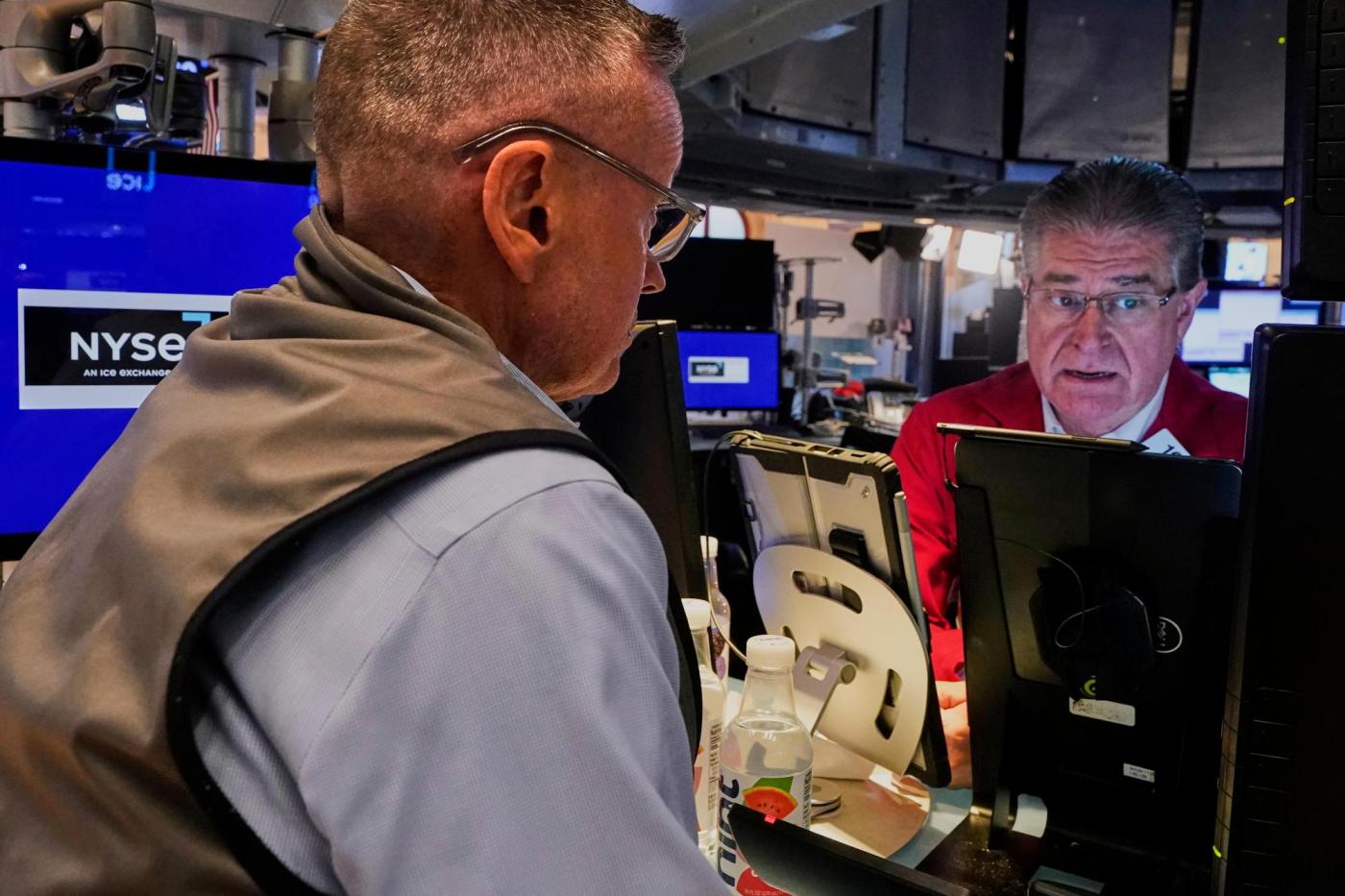
NEW YORK (AP) — Wall Street is hanging around its records on Tuesday following some mixed profit reports, as General Motors and other big U.S. companies give updates on how much President Donald Trump’s tariffs are hurting or helping them.

The S&P 500 was virtually unchanged in early trading, a day after inching to its latest all-time high. The Dow Jones Industrial Average was up 27 points, or 0.1%, as of 9:35 a.m. Eastern time, and the Nasdaq composite was slipping 0.1% after setting its own record.

Related Articles


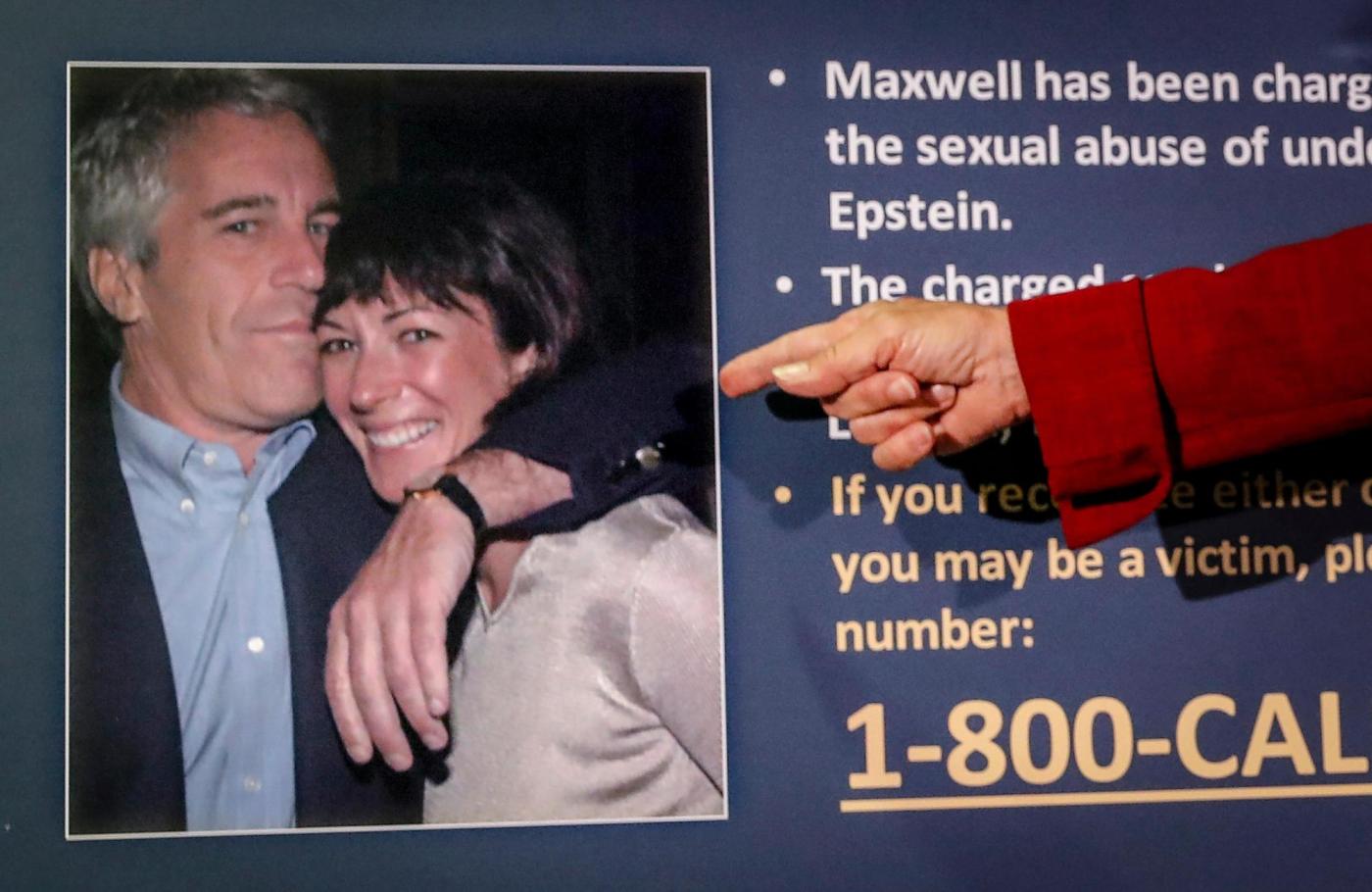
Justice Department wants to interview Jeffrey Epstein’s former girlfriend Ghislaine Maxwell


Can you ever expect privacy in public? Coldplay kiss camera saga tells us a lot about the answer


San Francisco to ban homeless people from living in RVs with new parking limit


Today in History: July 22, First solo around-the-world flight


Mountain lion bites 4-year-old on popular national park trail, injuring child

General Motors dropped 5.2% despite reporting a stronger profit for the spring than analysts expected. The automaker said it’s still expecting a $4 billion to $5 billion hit to its results over 2025 because of tariffs and that it hopes to mitigate 30% of that. GM also said it will feel more pain because of tariffs in the current quarter than it did during the spring.

That helped to offset big gains for some homebuilders after they reported stronger profits for the spring than Wall Street had forecast. D.R. Horton rallied 10.2%, and PulteGroup rose 7.7%. That was even as both companies said customers are continuing to deal with challenging conditions, including higher mortgage rates and an uncertain economy.

So far, the U.S. economy seems to be powering through all the uncertainty created by Trump’s on-and-off tariffs. Many of Trump’s stiff proposed taxes on imports are currently on pause, and the next big deadline is Aug. 1. Talks are underway with other countries on possible trade deals that could lower the proposed tariffs before they kick in.

But companies are already feeling effects. Genuine Parts, the Atlanta-based company that sells auto and industrial replacement parts around the world, trimmed its profit forecast for the full year in order to incorporate “all U.S. tariffs currently in effect,” along with its updated expectations for business conditions in the second half of the year.

Its stock rose 2.5% after it reported a stronger profit for the latest quarter than analysts expected.

Coca-Cola fell 1.6% even though it likewise delivered a stronger profit than forecast. Its revenue for the quarter only edged past analysts’ expectations, and it said that higher prices that it charged helped offset sales of fewer cases during the spring.

In the bond market, Treasury yields held relatively steady as traders continue to expect the Federal Reserve to wait until September at the earliest to resume cutting interest rates.

Fed Chair Jerome Powell has been insisting he wants to see more data about how Trump’s tariffs are affecting inflation and the economy before the Fed makes its next move. That’s despite often angry criticism from Trump, who has been lobbying for more cuts to rates to happen sooner.

The yield on the 10-year Treasury eased to 4.36% from 4.38% late Monday.

In stock markets abroad, Japan’s Nikkei 225 initially jumped after reopening from a holiday on Monday but then fell back to a modest loss of 0.1%.

In Asian trading, Japan’s benchmark surged and then fell back as it reopened from a holiday Monday following the ruling coalition’s loss of its upper house majority in Sunday’s election. The Nikkei 225 shed 0.1%.

Analysts said the market initially climbed on relief that Prime Minister Shigeru Ishiba vowed to stay in office despite a loss for his ruling coalition in an upper-house election Sunday. But the results have only added to political uncertainty and left his government without the heft needed to push through legislation.

A breakthrough in trade talks with the U.S. might win Ishiba a reprieve, but so far there’s been scant sign of progress in negotiating away the threat of higher tariffs on Japan’s exports to the U.S. beginning Aug. 1.

Indexes were mixed elsewhere in Asia and dipped across much of Europe.

AP Business Writers Matt Ott and Elaine Kurtenbach contributed.
Coca-Cola confirms a cane-sugar version of its trademark cola is coming to the US this fall

posted in: All news | 0

By DEE-ANN DURBIN, Associated Press Business Writer

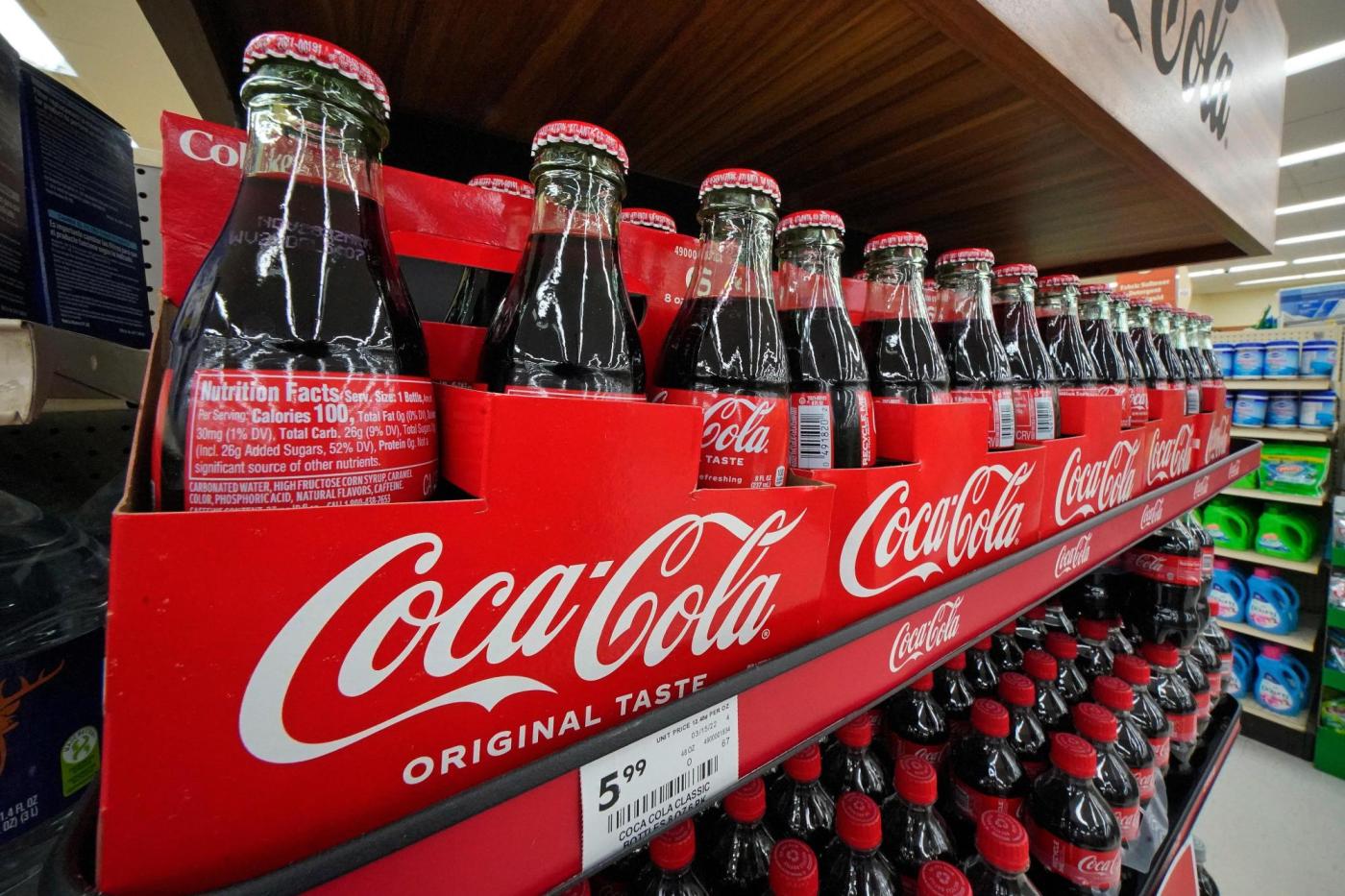
Coca-Cola said Tuesday it will add a cane-sugar version of its trademark cola to its U.S. lineup this fall, confirming a recent announcement by President Donald Trump.

Trump said in a social media post last week that Coca-Cola had agreed to use real cane sugar in its flagship product in the U.S. instead of high-fructose corn syrup. Coke didn’t immediately confirm the change, but promised new offerings soon.

On Tuesday, Coca-Cola Chairman and CEO James Quincey said Coke will expand its product range “to reflect consumer interest in differentiated experiences.” Coke currently sells Mexican Coke, which is made with cane sugar, in the U.S.

Bottles of Mexican Coca-Cola are displayed at a grocery store in Mount Prospect, Ill., Thursday, July 17, 2025. (AP Photo/Nam Y. Huh)

“We appreciate the president’s enthusiasm for our Coca-Cola brand,” Quincey said in a conference call with investors Tuesday. “This addition is designed to complement our strong core portfolio and offer more choice across occasions and preferences.”

Coca-Cola reported better-than-expected earnings in the second quarter as higher prices offset weaker sales volumes.

Case volumes fell 1% globally and 1% in North America, but Coke said Tuesday that pricing rose 6% for the April-June period.

Global case volumes of Coca-Cola fell 1%, mostly due to weaker sales in Latin America. One bright spot was Coca-Cola Zero Sugar, which saw volumes grow 14%.

Related Articles


Justice Department wants to interview Jeffrey Epstein’s former girlfriend Ghislaine Maxwell


Can you ever expect privacy in public? Coldplay kiss camera saga tells us a lot about the answer


San Francisco to ban homeless people from living in RVs with new parking limit


Today in History: July 22, First solo around-the-world flight


Mountain lion bites 4-year-old on popular national park trail, injuring child

Traditional Coca-Cola still far outsells the zero-sugar variety, but consumer demand for zero-sugar versions is growing much more quickly.

Global case volumes of juice, dairy and plant-based beverages fell 4%, Coke said. Sports drink case volumes were down 3%, as higher demand in North America was offset by declines in Latin America.

Revenue for the Atlanta company rose 1% to $12.5 billion. Adjusted for one-time items, quarterly revenue was $12.6 billion. That was in line with Wall Street’s forecast, according to analysts polled by FactSet.

Net income jumped 58% to $3.8 billion. Its adjusted net income was 87 cents, which was higher than the 83 cents Wall Street forecast.

Coke said Tuesday it now expects full-year adjusted earnings to grow 8%. At the start of the year, Coke had expected earnings to grow 8% to 10%, but in April it lowered that range to 7% to 9%. Coke earned $2.88 per share in 2024.

Shares of Coca-Cola Co. were down slightly early Tuesday as were all major U.S. markets.

Justice Department wants to interview Jeffrey Epstein’s former girlfriend Ghislaine Maxwell

posted in: All news | 0

By ERIC TUCKER, Associated Press

WASHINGTON (AP) — The Department of Justice wants to interview Jeffrey Epstein’s former girlfriend Ghislaine Maxwell, who was convicted of helping the financier sexually abuse underage girls and is now serving a lengthy prison sentence, a senior official said Tuesday.

If Maxwell “has information about anyone who has committed crimes against victims, the FBI and the DOJ will hear what she has to say,” Deputy Attorney General Todd Blanche said in a post on X, adding that President Donald Trump ”has told us to release all credible evidence.” A lawyer for Maxwell confirmed there were discussions with the government.

Related Articles


Can you ever expect privacy in public? Coldplay kiss camera saga tells us a lot about the answer


San Francisco to ban homeless people from living in RVs with new parking limit


Today in History: July 22, First solo around-the-world flight


Mountain lion bites 4-year-old on popular national park trail, injuring child


Beloved ballpark therapy bunny, Alex The Great, has died after complications from cancer

The overture to attorneys for Maxwell, who in 2022 was sentenced to 20 years in prison, is part of an ongoing Justice Department effort to cast itself as transparent following fierce backlash from parts of Trump’s base over an earlier refusal to release additional records in the Epstein investigation.

As part of that effort, the Justice Department, acting at the direction of the Republican president, last week asked a judge to unseal grand jury transcripts from the case. That decision is ultimately up to the judge.

Epstein, who killed himself in his New York jail cell in 2019 while awaiting trial, sexually abused children hundreds of times over more than a decade, exploiting vulnerable girls as young as 14, authorities say. He couldn’t have done so without the help of Maxwell, his longtime companion, prosecutors say.

The Justice Department had said in a two-page memo this month that it had not uncovered evidence to charge anyone else in connection with Epstein’s abuse. But Blanche said in his social media post that the Justice Department “does not shy away from uncomfortable truths, nor from the responsibility to pursue justice wherever the facts may lead.”

He said in his post that, at the direction of Attorney General Pam Bondi, he has “communicated with counsel for Ms. Maxwell to determine whether she would be willing to speak with prosecutors from the Department.” He said he anticipated meeting with Maxwell in the coming days.

A lawyer for Maxwell, David Oscar Markus, said Tuesday in a statement: “I can confirm that we are in discussions with the government and that Ghislaine will always testify truthfully. We are grateful to President Trump for his commitment to uncovering the truth in this case.”

Lydia Polgreen: Contrast: While China builds, Trump meddles and threatens

posted in: All news | 0

Earlier this month, the right-wing president of the United States wrote a pointed letter to the left-wing president of Brazil. With typical brio, Donald Trump threatened to impose steep tariffs as punishment for, among other sins, the prosecution of Jair Bolsonaro, the former president who is facing criminal charges for his attempt to hold on to power after his electoral defeat in 2022. “This Trial should not be taking place,” Trump wrote. “It is a Witch Hunt that should end IMMEDIATELY!”

It caused quite a stir. Yet lost amid the fracas was a much quieter, potentially more consequential document signed just a few days earlier in Brazil: an agreement between Chinese and Brazilian state-backed companies to begin the first steps toward building a rail line that would connect Brazil’s Atlantic coast to a Chinese-built deepwater port on Peru’s Pacific coast. If built, the roughly 2,800-mile line could transform large parts of Brazil and its neighbors, speeding goods to and from Asian markets.

It was a neat illustration of the contrasting approaches China and the United States have taken to their growing rivalry. China offers countries help building a new rail line; Trump bullies them and meddles in their politics.

The surreal first six months of Trump’s second stint as president have offered up endless drama, danger and intrigue. By that standard his tussle with Luiz Inácio Lula da Silva, Brazil’s president, seems like small beer. But it was a revealing moment, illuminating how Trump’s recklessness compounds America’s central foreign policy problem of the past two decades: How should the United States execute an elegant dismount from its increasingly unsustainable place atop a crumbling global order? And how can it midwife a new order that protects American interests and prestige without bearing the cost, in blood and treasure, of military and economic primacy?

These are difficult, thorny questions. Yet instead of answers, Trump offers threats, tantrums and tariffs, to the profound detriment of American interests.

China’s astonishing economic rise, coupled with its turn toward deeper authoritarianism under Xi Jinping, has made answering these challenges more difficult. China now seems to most of the American foreign policy establishment, and even more so to Trump, too powerful to be left unconfronted by the United States. But this line of thinking risks missing America’s best and most easily leveraged asset in the tussle for global dominance with China: Most countries don’t want to choose sides between hegemons. They prefer a world of benign and open competition in which the United States plays an important, if less dominant, role.

Nowhere is that truer, perhaps, than Brazil. A vast nation, bigger than the contiguous United States, it is a good stand-in for many of the world’s middle powers. Contrary to the famous quip that Brazil is the country of the future and always will be, it has managed to become the world’s 10th-largest economy, just a whisker smaller than Canada. It has a long tradition of hedging its relationships with a range of big powers — the United States, China and the European Union — while trying to advance its ambition to be a key player in world affairs.

As the United States’ position as the sole superpower has waned and Brazilian leaders have vied to shape an increasingly multipolar landscape, those efforts have picked up. That has involved, unquestionably, a deepening of its economic and diplomatic relationship with China, its biggest trading partner. Lula traveled to Beijing in May for his third bilateral meeting with Xi since returning to the presidency in 2023, declaring that “our relationship with China will be indestructible.”

The two countries are founding members of the BRICS group, a bloc of mostly developing middle-income countries that includes a number of American antagonists — Russia and, more recently, Iran. American officials have long been wary of BRICS, which has sought in various, mostly marginal ways to thwart American power. But Trump has been outright antagonistic. This month, as Lula played host to the BRICS summit, Trump blasted off a social media post threatening to slap additional tariffs on any nation “aligning themselves with the Anti-American policies of BRICS.”

Some countries within BRICS would like the organization to be more forthrightly antagonistic to the United States, but Brazil, along with India and South Africa, has been resolutely opposed to turning it into an anti-American or anti-Western bloc. “Brazil knows that China is indispensable and the United States is irreplaceable,” Hussein Kalout, a Brazilian political scientist who previously served as the country’s special secretary for strategic affairs, told me. “Brazil will never make a binary choice. That is not an option.”

Indeed, Brazil has much to lose in alienating the United States, and its growing ties with China are as much a symptom of American vinegar as Chinese honey. It does a huge amount of business with the United States, running a trade surplus in America’s favor of about $7 billion last year. America is Brazil’s largest source of foreign direct investment, rising steadily over the past decade in everything from green energy to manufacturing. Lula and Trump may be ideological opposites, but if they were ever to meet, they would have plenty of pragmatic reasons to get along.

Instead, Trump has chosen antagonism. Part of his calculation, clearly, is political. But if Trump thought he was helping Bolsonaro’s right-wing supporters win back power by undermining Lula, his letter appears to have had the opposite effect. Lula, once one of the world’s most popular and celebrated leaders, won a very narrow victory in 2023. His popularity has sagged as he struggles to deliver on his election promise to bring down prices and improve the economy. Thanks to Trump’s attacks, Brazilians are rallying around their president.

But the spat shows something deeper and more important. For many rising powers, China’s supposedly revisionist designs on reshaping the globe pale in comparison to Trump’s shocking use of tariffs, sanctions and military firepower. “From a Brazilian perspective, the country firmly seeking to change the underlying dynamics of the global order is the United States,” Oliver Stuenkel, a Brazilian German political scientist who has written extensively about BRICS, told me. America, not China, is the wrecker.

This is a shock to the world, and a terrible shame for America. Trump is missing an opportunity that his two predecessors — Barack Obama and Joe Biden — let slip through their fingers: to use America’s waning dominance to shape a new, more egalitarian multipolar order that preserves American influence and power while making room for others to rise. This would be no easy task, requiring painful choices about core American values and commitments.

Related Articles


Patrick Knight: What’s the plan if our expansive new family-leave law doesn’t work as imagined?


Letters: With allegations of more huge fraud in Minnesota, these questions come to mind


ML Cavanaugh: We desperately need a dose of ‘Truth, Justice, and the American Way’


Jonathan Levin: Powell’s caution on tariff-driven inflation is right


David Brooks: America’s response to the new Cold War is weak and self-defeating. We can do better

Even as Trump pledged to avoid foreign wars and entanglements, his vision of peace seems predicated on a form of “America first” dominance that invites the chaos he promises to avoid. This stance makes violent confrontation with China, the only real rival to American primacy, seem almost inevitable — and the return of the grim contestation that characterized the Cold War more likely, whether China desires it or not.

What is certain is that many countries — rich and poor, declining and rising — definitely do not want this.

Lydia Polgreen writes a column for the New York Times.