Netanyahu says Israel considering alternatives to ceasefire talks with Hamas, deepening uncertainty

posted in: All news | 0

By SAMY MAGDY and WAFAA SHURAFA, Associated Press

CAIRO (AP) — Israeli Prime Minister Benjamin Netanyahu said Friday his government was considering “alternative options” to ceasefire talks with Hamas after Israel and the U.S. recalled their negotiating teams, throwing the future of the negotiations into further uncertainty.

Netanyahu’s statement came as a Hamas official said negotiations were expected to resume next week and portrayed the recall of the Israeli and American delegations as a pressure tactic.

The teams left Qatar on Thursday as President Donald Trump’s special envoy, Steve Witkoff, said Hamas’ latest response to proposals for a deal showed a “lack of desire” to reach a truce. Witkoff said the U.S. will look at “alternative options,” without elaborating.

White House special envoy Steve Witkoff waits for the arrival of President Donald Trump at Teterboro Airport in Teterboro, N.J., en route to attend the Club World Cup final soccer match, Sunday, July 13, 2025. (AP Photo/Jacquelyn Martin)

In a statement released by his office, Netanyahu echoed Witkoff, saying, “Hamas is the obstacle to a hostage release deal.”

“Together with our U.S. allies, we are now considering alternative options to bring our hostages home, end Hamas’s terror rule, and secure lasting peace for Israel and our region,” he said. He did not elaborate. Israel’s government didn’t immediately respond to whether negotiations would resume next week.

A breakthrough on a ceasefire deal between Israel and Hamas has eluded the Trump administration as humanitarian conditions worsen in Gaza. Israel has come under mounting pressure as hunger among Gaza’s more than 2 million people has worsened and deaths related to malnutrition have accelerated.

Hamas has been designated as a terrorist organization by the United States, Canada and the European Union.

In recent days more then two dozen Western-aligned countries and more than 100 charity and human rights groups have called for an end to the war, harshly criticizing Israel’s blockade and a new aid delivery model it has rolled out. The charities and rights groups said even their own staff were struggling to get enough food.

On Thursday, French President Emmanuel Macron announced that France would recognize Palestine as a state, saying, “The urgent thing today is that the war in Gaza stops and the civilian population is saved.″

Hamas official Bassem Naim said Friday that he was told the Israeli delegation returned home for consultations and would return early next week to resume ceasefire negotiations.

Hamas said that Witkoff’s remarks were meant to pressure the group for Netanyahu’s benefit during the next round of talks and that in recent days negotiations had made progress. Naim said several gaps had been nearly solved, such as the agenda of the ceasefire, guarantees to continue negotiating to reach a permanent agreement and how humanitarian aid would be delivered.

The sides have held weeks of talks in Qatar, reporting small signs of progress but no major breakthroughs. Officials have said a main sticking point is the redeployment of Israeli troops after any ceasefire takes place.

Related Articles


Acquaintance of suspect in Taylor Swift concert plot convicted at trial in Austria


Fires engulf Turkey’s Mediterranean coast as government declares 2 disaster zones


European and Iranian diplomats meet in Istanbul as return of sanctions looms over nuclear deadlock


Today in History: July 25, Tuskegee Syphilis Study exposed


What’s behind the clash between Thailand and Cambodia that left at least 11 dead

The deal under discussion is expected to include an initial 60-day ceasefire in which Hamas would release 10 living hostages and the remains of 18 others in phases in exchange for Palestinians imprisoned by Israel. Aid supplies would be ramped up, and the two sides would hold negotiations on a lasting ceasefire.

The talks have been bogged down over competing demands for ending the war. Hamas says it will only release all hostages in exchange for a full Israeli withdrawal and end to the war. Israel says it will not agree to end the conflict until Hamas gives up power and disarms. The group says it is prepared to leave power but not surrender its weapons.

Hamas is believed to be holding the hostages in different locations, including tunnels, and says it has ordered its guards to kill them if Israeli forces approach.

Some 50 hostages remain in Gaza but fewer than half are believed to be alive. Their families say the start-stop talks are excruciating.

“I thought that maybe something will come from the time that the negotiation, Israeli team were in Doha,” said Yehuda Cohen, whose son Nimrod is being held hostage. “And when I heard that they’re coming back, I ask myself: When will this nightmare end?”

Meanwhile Israeli strikes continued across Gaza.

At least 22 people were killed since Thursday night, according to hospital records at Nasser Hospital where the bodies arrived. Some were killed in strikes, others and others were killed while seeking aid, said the hospital.

Shurafa reported from Deir al-Balah, Gaza Strip.

Delicious, home-cooked meals can still be on the menu even in a wonky vacation rental

posted in: All news | 0

By KATIE WORKMAN, Associated Press

We are officially in the thick of summer. If we’re lucky, we might get a break from the routine and head for the beach, the mountains or maybe discover a new city.

For many, that means renting a vacation home — with an unfamiliar kitchen.

At home, you probably have a variety of cooking utensils, a meaningful collection of herbs and spices, and the ability to select just the right pan for your dish. But as you step into your Airbnb or Vrbo, you’re suddenly left wondering where to even put your groceries.

Related Articles


Giant trolls have a message for humans about protecting the planet


Making Rocky Mountain National Park more accessible for visitors with disabilities


I-494 in Inver Grove Heights closing over weekend for construction


Travel: Experience Kauai’s magical, mystical North Shore


Everything is bigger at San Diego Comic-Con this year. Except Hollywood.

There’s a weird pleasure (at least for nerds like me) in pulling together a meal in a sparse, funky rental-house kitchen. It’s like a reality cooking show challenge. Can you make an omelet in a saucepan? Perhaps you don’t have fresh oregano … maybe those parsley stems will work? Can you stretch that small bottle of olive oil through the last two days of your trip? I’ll call that conundrum, and I’ll raise you a half a jar of gherkins.

During rental home vacations, it’s kind of fun to be untethered from the normal cooking routine. Believe you me, I’m racing out for fried clams at the local seafood joint as many nights as my budget and waistband allow. But for the meals I’m cooking, I’m relinquishing notions of perfection in favor of scrappiness.

Picked up a whole lot of cherry tomatoes at a farmstand? You’re making cherry tomato antipasti salad with some canned artichoke hearts, olives, onions and a quick vinaigrette. Maybe throw in some cubed provolone or diced salami. Peaches getting a bit too soft? Time for a smoothie.

There’s something liberating — and a little bit ridiculous — about cooking in a vacation rental kitchen.

Bring some essentials of your own

Before you go, consider packing a minimalist “kitchen survival kit.” It doesn’t have to be much: A sharp knife, a cutting board, salt and pepper, and whatever pantry staples you know you’ll need to get started.

For me, I might pack olive oil, vinegar, lemons, Dijon mustard and a couple of my favorite herbs and spices. I also always bring zipper-top bags and some small containers for leftovers or taking food on the go.

Use the rental’s features (and lack thereof) to your advantage

Think about dishes that can stretch ingredients, and about welcome substitutions. A big grain salad — made with rice, quinoa or couscous — is endlessly customizable and can be served cold or at room temperature (think lakeside lunch or a backyard meal).

A recipe for cherry tomato antipasti salad is displayed in New York. (Cheyenne Cohen via AP)

I would also start with things that don’t require an oven — you never know if it heats unevenly, or at all (it might be a glorified bread box). A stovetop pasta tossed with sauteed garlic and olive oil is always a win. Add red pepper flakes and grated Parmesan if you have it.

Grills are often available and can be a vacation cook’s best friend — as long as you’ve got an ample supply of the right fuel for it. Grill up simply seasoned chicken breasts or New York Strip steaks for dinner and very intentionally make extra — those leftovers will be perfect sliced and used for sandwiches, quesadillas, salads or wraps. Extra grilled corn might become a corn soup or chowder, a corn salad or something to add to a stir-fry.

Think about brushing some slices of country bread with olive oil, sprinkling with flaky salt and toasting them lightly on the grill. Top with fresh sliced or chopped tomatoes with some basil, or turn them into whatever type of bruschetta you can whip up from your farmstand haul. Think caponata, sauteed chard or maybe a heap of sliced grilled peppers with some fresh goat cheese.

Bread meant for bruschetta is toasted on a grill in New Milford, Conn. on May 19, 2021. (Cheyenne Cohen via AP)

Salads are always on the docket. Again, easy to improvise with farmers market ingredients. But this is your vacation, and you should feel free to play. Try a melon and cucumber salad with a bit of feta and a squeeze of lime juice, or a chopped vegetable salad bolstered with protein-packed chickpeas.

Think creatively and accept imperfection

As you come to the end of your trip and you need to use things up, get creative. That half jar of pickles will add a briny punch to a potato salad. That nub of leftover cheese and that last bunch of spinach will be great chopped up and added to scrambled eggs or a frittata.

Cook what feels manageable, what makes use of local ingredients and what gives you more time outside with your people. Yes, you might be chopping vegetables with a serrated steak knife. Yes, there might be a little sand in the pasta salad as you serve it up on the beach. That’s OK.

Some of the best vacation meals come from embracing the fact that you’re cooking without your usual tools and supplies. That’s half the fun. I once made a great dinner from fresh scallops, a box of pasta, olive oil and a jug of margarita mix. That was 20 years ago, and we all still remember it.

Peach and plum yogurt smoothie

Peach and plum smoothies are displayed in New York on Aug. 17, 2017. (Katie Workman via AP)

For their versatility and simplicity, smoothies can make for a vacation staple.

This is your smoothie template. Swap around fruits, yogurt flavors, sweeteners and see if you can find a NutriBullet in the back of the cabinet. Also, if you plan ahead, you might freeze your fruit for a thicker smoothie, or just add some ice. If you’ve got some fresh mint, toss that in, too.

Ingredients:

1 cup (8 ounces) vanilla Greek yogurt

1 cup (8 ounces) peach yogurt

1 tablespoon honey or agave, or to taste

2 cups cubed peeled peaches

2 cups cubed peeled plums

Instructions:

1. Place the vanilla yogurt, peach yogurt, honey, peaches and plums in a blender. Blend well.

2. Pour into glasses and serve.

Recipe: Summer berry bars with lemon glaze are easier than pie

posted in: All news | 0

By Gretchen McKay, Pittsburgh Post-Gazette

Summer heat often makes baking less than desirable, so if you’re going to heat up the kitchen to make dessert, you gotta make it worth every bead of sweat that collects on your forehead.

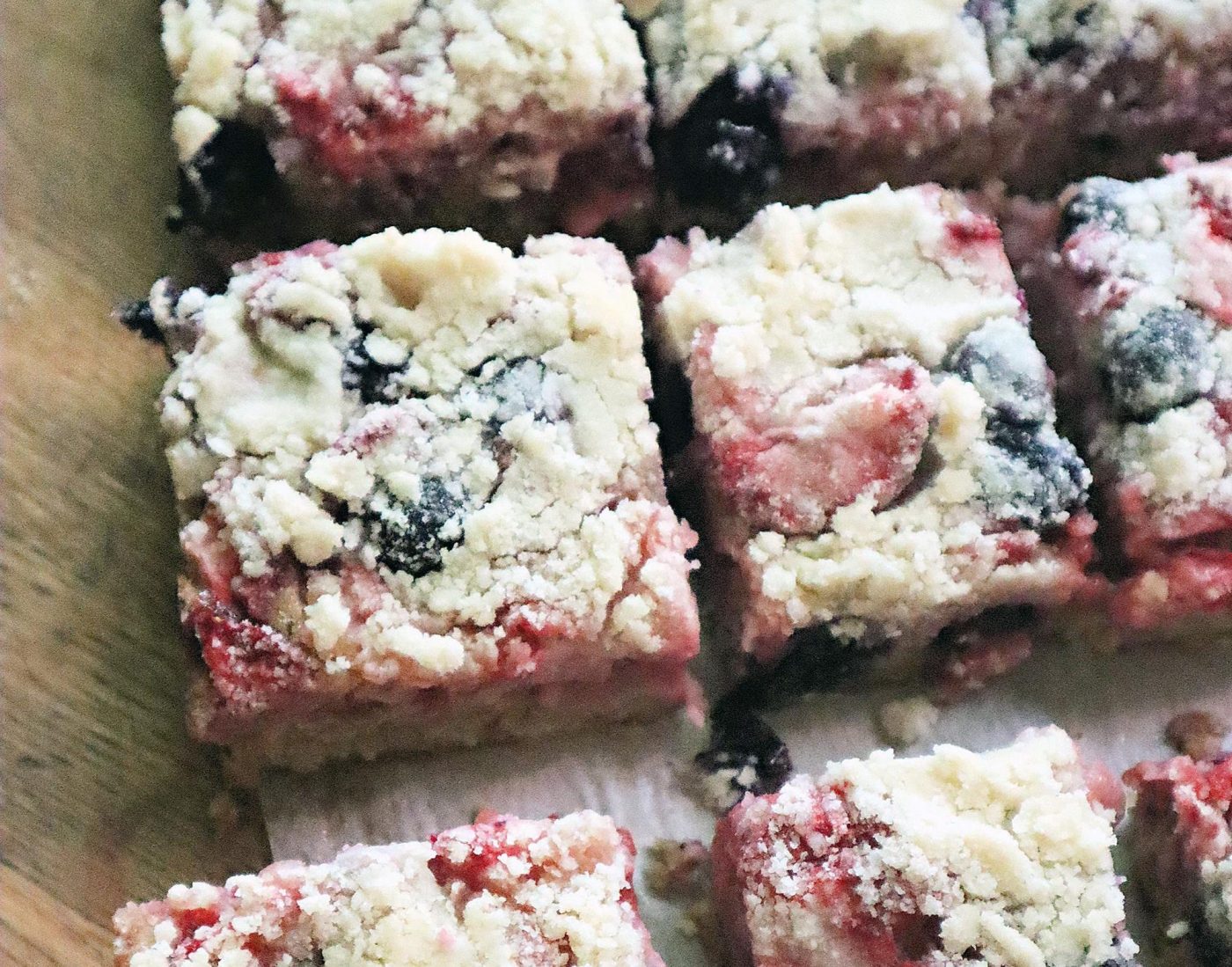
These berry crumb bars are worth it and then some.

Built on a forgiving shortbread-like crust (it’s supposed to be crumbly) and topped with gooey seasonal fruit, they offer all the great taste of a summer pie but are so much easier to make since you don’t have to bother with mixing and rolling out dough.

How easy is this recipe? While a food processor or KitchenAid mixer will certainly speed things along, all you really need to cut in the butter that helps create the crumbly bottom layer is a fork or pastry cutter and some good old-fashioned elbow grease.

I used a mix of blueberries and strawberries because the two fruits have such complementary flavors and are always easy to find, often on sale. Also, two contrasting colors are always more visually appealing in a dessert than one.

If you’re worried about the butter and sugar content, at least know this: Both fruits are fairly low-cal and packed with vitamin C and other nutrients. Also, blueberries are famous for their high antioxidant content.

Be sure to allow the bars to cool completely on a wire rack before slicing into squares or they will crumble. The original recipe finished the bars with a simple lemon glaze, but I served them without.

Lemon Strawberry Crumb Bars

These crumbly summer berry bars are filled with a mix of strawberries and blueberries. (Gretchen McKay/The Pittsburgh Post-Gazette/TNS)

Serves 16; PG tested

INGREDIENTS

3 cups all-purpose flour, spooned and leveled

1 teaspoon baking powder

1/2 teaspoon salt

1 cup unsalted butter, very cold and cubed

1 large egg

1 large egg yolk

1 cup packed light or dark brown sugar

2 teaspoons pure vanilla extract

2 cups chopped strawberries

2 cups blueberries

1/3 cup granulated sugar

1 1/2 tablespoons cornstarch

1 teaspoon lemon zest

For optional glaze

1 cup confectioners’ sugar, sifted

2 tablespoons fresh lemon juice (about 1 lemon)

Related Articles


Delicious, home-cooked meals can still be on the menu even in a wonky vacation rental


Recipe: When peaches are in season, make this delectable dessert


Spicy-sweet gochujang elevates this simple chicken stir-fry


A look at Starbucks and its Pumpkin Spice Latte, which returns to US menus Aug. 26


Gretchen’s table: Singapore shrimp burgers offer a sweet and spicy take on a summer classic

DIRECTIONS

Preheat oven to 350 degrees. Line the bottom and sides of a 9-by-13-inch baking pan with parchment paper, leaving an overhang on the sides to lift the finished bars out. (This makes cutting easier!) Set aside.
Make the crumble mixture for the crust and topping: Whisk flour, baking powder and salt together in a large bowl.
Add cubed butter and using a pastry cutter or two forks, cut in the butter until all the flour is coated and resembles pea-sized crumbles. (I whisked the ingredients together in a food processor.)
Whisk egg, egg yolk, brown sugar and vanilla together in a small bowl. Pour over the flour/butter mixture and gently mix together until the mixture resembles moist, crumbly sand.
Use your hands if needed — the mixture comes together easier with your hands than a spoon.
You will have about 6 cups of the crust/crumble mixture. Set 2 cups aside.
Pour the remaining crumble mixture into the prepared pan and flatten down with your hands or a flat spatula to form an even crust. It will be a little crumbly — that’s OK. Set aside.
Make filling: In large bowl, mix strawberries, blueberries, granulated sugar, cornstarch and lemon zest together. Spoon evenly over crust.
Crumble the remaining butter/flour mixture on top and gently press down so it’s snug on the strawberry layer.
Bake for 45-50 minutes or until the top is lightly browned and the strawberry filling is bubbling on the sides. (My bars took about 55 minutes.)
Remove from the oven and place the pan on a wire rack. Allow to cool completely.
If adding a glaze, whisk the glaze ingredients together and drizzle on top of the bars (or you can drizzle on individual squares).
Lift the cooled bars out using the overhang on the sides. Cut into squares.
Cover and store leftover bars (with or without icing) at room temperature for up to 2 days, in the refrigerator for up to 1 week and in freezer for up to 3 months (arrange in even layers between sheets of parchment). To serve frozen bars, thaw overnight in the refrigerator, then bring to room temperature before serving.

Adapted from sallysbakingaddiction.com

©2025 PG Publishing Co. Visit at post-gazette.com. Distributed by Tribune Content Agency, LLC.

Cuts to food benefits stand in the way of RFK Jr.’s goals for a healthier national diet

posted in: All news | 0

By Renuka Rayasam, KFF Health News

ALBANY, Ga. — Belinda McLoyd has been thinking about peanut butter.

Related Articles


The US fertility rate reached a new low in 2024, CDC data shows


Smoky air from Canadian wildfires descends on Minnesota through Friday


Even grave errors at rehab hospitals go unpenalized and undisclosed


FDA panel on the use of antidepressants during pregnancy is alarming experts


What to know about soda sweeteners as sugar returns to American Coke

McLoyd, 64, receives a small monthly payment through the federal Supplemental Nutrition Assistance Program, previously known as food stamps.

“They don’t give you that much to work with,” she said. To fit her tight budget, she eats ramen noodles — high on sodium and low on nutrition — multiple times a week.

If she had more money, said McLoyd, who has been diagnosed with multiple sclerosis and heart problems, she’d buy more grapes, melons, chuck roast, ground turkey, cabbage, and turnip greens. That’s what she did when lawmakers nearly doubled her SNAP benefit during the pandemic.

But now that a GOP-led Congress has approved $186 billion in cuts to the food assistance program through 2034, McLoyd, who worked in retail until she retired in 2016, isn’t sure how she will be able to eat any healthy food if her benefits get reduced again.

McLoyd said her only hope for healthy eating might be to resort to peanut butter, which she heard “has everything” in it.

“I get whatever I can get,” said McLoyd, who uses a walker to get around her senior community in southwestern Georgia. “I try to eat healthy, but some things I can’t, because I don’t have enough money to take care of that.”

The second Trump administration has said that healthy eating is a priority. It released a “Make America Healthy Again” report citing poor diet as a cause of childhood illnesses and chronic diseases. And it’s allowing states — including Arkansas, Idaho, and Utah — to limit purchases of unhealthy food with federal SNAP benefits for the first time in the history of the century-old anti-hunger program.

President Donald Trump also signed a tax and spending law on July 4 that will shift costs to states and make it harder for people to qualify for SNAP by expanding existing work requirements. The bill cuts about 20% of SNAP’s budget, the deepest cut the program has faced. About 40 million people now receive SNAP payments, but 3 million of them will lose their nutrition assistance completely, and millions more will see their benefits reduced, according to an analysis of an earlier version of the bill by the nonpartisan Congressional Budget Office.

Researchers say SNAP cuts run counter to efforts to help people prevent chronic illness through healthy food.

“People are going to have to rely on cheaper food, which we know is more likely to be processed, less healthy,” said Kate Bauer, an associate professor of nutritional sciences at the University of Michigan School of Public Health.

“It’s, ‘Oh, we care about health — but for the rich people,’” she said.

About 47 million people lived in households with limited or uncertain access to food in 2023, according to the U.S. Department of Agriculture. The agency’s research shows that people living in food-insecure households are more likely to develop hypertension, arthritis, diabetes, asthma, and chronic obstructive pulmonary disease.

The Trump administration counters that the funding cuts would not harm people who receive benefits.

“This is total fearmongering,” said White House spokesperson Anna Kelly in an email. “The bill will ultimately strengthen SNAP for those who need it by implementing cost-sharing measures with states and commonsense work requirements.”

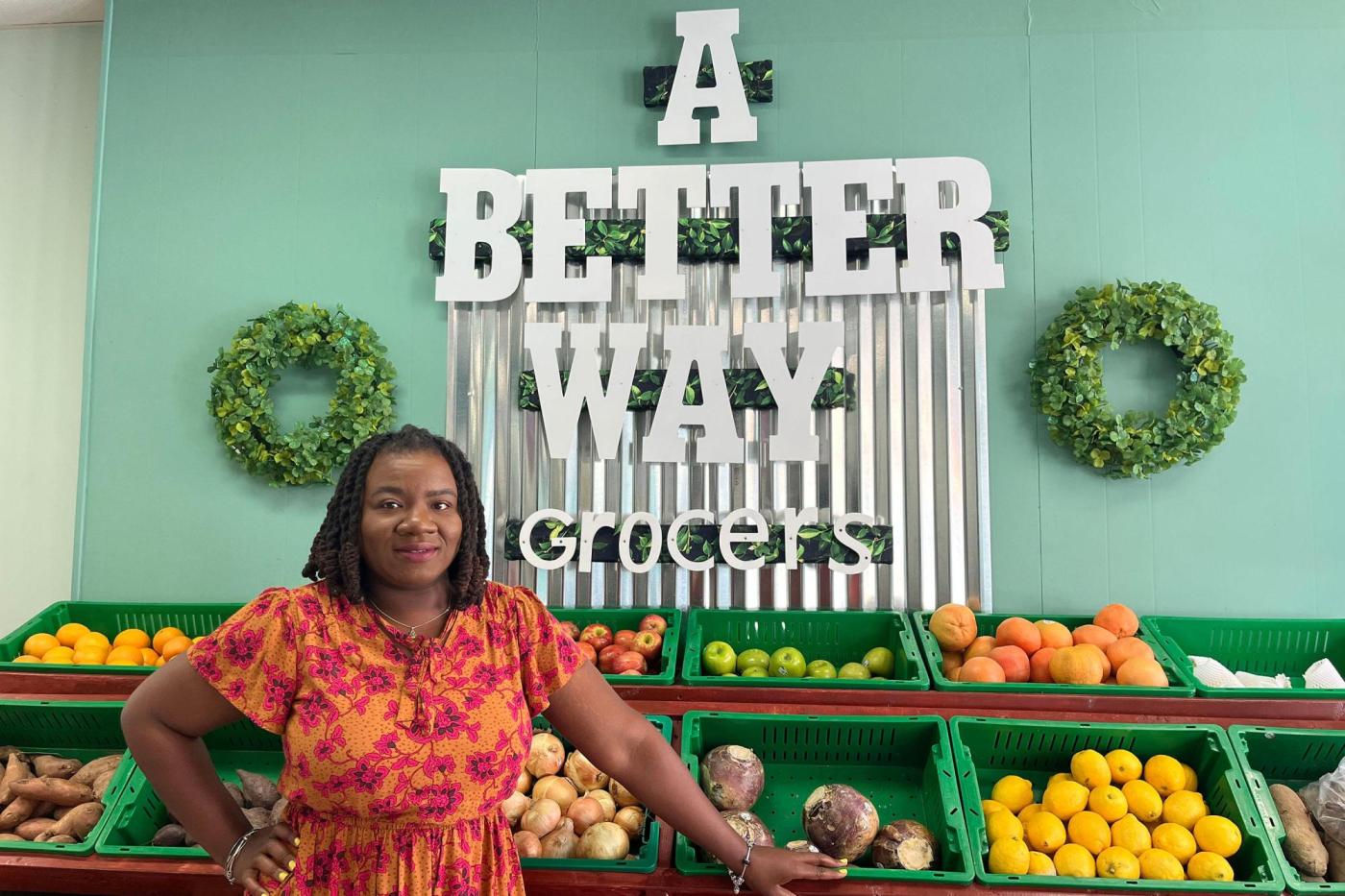
McLoyd and other residents in Georgia’s Dougherty County, where Albany is located, already face steep barriers to accessing healthy food, from tight budgets and high rates of poverty to a lack of grocery stores and transportation, said Tiffany Terrell, who founded A Better Way Grocers in 2017 to bring fresh food to people who can’t travel to a grocery store.

Belinda McLoyd and other residents in southwestern Georgia’ s Dougherty County face steep barriers to accessing healthy food, from tight budgets and high poverty rates to limited access to grocery stores and transportation. (Renuka Rayasam/KFF Health News/TNS)

More than a third of residents receive SNAP benefits in the rural, majority-Black county that W.E.B. Du Bois described as “the heart of the Black Belt” and a place “of curiously mingled hope and pain,” where people struggled to get ahead in a land of former cotton plantations, in his 1903 book, “The Souls of Black Folk.”

Terrell said that a healthier diet could mitigate many of the illnesses she sees in her community. In 2017, she replaced school bus seats with shelves stocked with fruits, vegetables, meats, and eggs and drove her mobile grocery store around to senior communities, public housing developments, and rural areas.

But cuts to food assistance will devastate the region, setting back efforts to help residents boost their diet with fruits, vegetables, and other nutritious food and tackle chronic disease, she said.

Terrell saw how SNAP recipients like McLoyd ate healthier when food assistance rose during the pandemic. They got eggs, instead of ramen noodles, and fresh meat and produce, instead of canned sausages.

Starting in 2020, SNAP recipients received extra pandemic assistance, which corresponded to a 9% decrease in people saying there was sometimes or often not enough food to eat, according to the Institute for Policy Research at Northwestern University. Once those payments ended in 2023, more families had trouble purchasing enough food, according to a study published in Health Affairs in October. Non-Hispanic Black families, in particular, saw an increase in anxiety, the study found.

“We know that even short periods of food insecurity for kids can really significantly harm their long-term health and cognitive development,” said Katie Bergh, a senior policy analyst on the food assistance team at the Center on Budget Policy and Priorities. Cuts to SNAP “will put a healthy diet even farther out of reach for these families.”

The Trump administration said it’s boosting healthy eating for low-income Americans through restrictions on what they can buy with SNAP benefits. It has begun approving state requests to limit the purchase of soda and candy with SNAP benefits.

Research shows that programs encouraging SNAP recipients to buy healthy food are more effective than regulating what they can buy. (Renuka Rayasam/KFF Health News/TNS)

“Thank you to the governors of Indiana, Arkansas, Idaho, Utah, Iowa, and Nebraska for their bold leadership and unwavering commitment to Make America Healthy Again,” said Health and Human Services Secretary Robert F. Kennedy Jr. in a press release about the requests. “I call on every governor in the nation to submit a SNAP waiver to eliminate sugary drinks — taxpayer dollars should never bankroll products that fuel the chronic disease epidemic.”

Although states have asked for such restrictions in the past, previous administrations, including the first Trump administration, never approved them.

Research shows that programs encouraging people to buy healthy food are more effective than regulating what they can buy. Such limits increase stigma on families that receive benefits, are burdensome to retailers, and often difficult to implement, researchers say.

“People make incredibly tough choices to survive,” said Gina Plata-Nino, the deputy director of SNAP at the Food Research & Action Center, a nonprofit advocacy group, and a former senior policy adviser in the Biden administration.

Tiffany Terrell said that a healthier diet could mitigate many of the illnesses she sees in her southwestern Georgia community. (Renuka Rayasam/KFF Health News/TNS)

“It’s not about soda and candy,” she said. “It’s about access.”

Terrell said she is unsure how people will survive if their food benefits are further trimmed.

“What are we thinking people are going to do?” said Terrell of A Better Way Grocers, who also opened a bustling community market last year that sells fresh juices, smoothies, and wellness shots in downtown Albany. “We’ll have people choosing between food and bills.”

That’s true for Stephen Harrison, 22, whose monthly SNAP benefit supports him, along with his parents and younger brother. During the pandemic, he used the extra assistance to buy strawberries and grapes, but now he comes into A Better Way Grocers to buy an orange when he can.

Stephen Harrison’ s monthly SNAP benefit supports him along with his mom, dad and brother. (Renuka Rayasam/KFF Health News/TNS)

Harrison, who is studying culinary arts at Albany Technical College, said his family budgets carefully to afford meals like pork chops with cornbread and collard greens, but he said that, if his benefits are cut, the family will have to resort to cheaper foods.

“I’d buy hot dogs,” he said with a shrug.

©2025 KFF Health News. Distributed by Tribune Content Agency, LLC.