Frankie Capan III didn’t retain his PGA Tour status as a rookie – what’s next?

posted in: All news | 0

Frankie Capan III finished 127th on the PGA Tour’s season-long points list, two spots away from achieving conditional status for the 2026 campaign, and 27 spots below the cutoff to maintain full status.

Capan entered the final tournament in 124th position, but he missed the cut over the weekend at the fall finale — the RSM Classic, which allowed three players to jump him in the standings.

After placing in a tie for 12th at the American Express Championship in mid-January, Capan went 20 straight individual events without a top-40 finish.

It was a strong fall for the recently-turned 26-year-old, who logged a pair of top-six finishes over his last five starts. Capan climbed 27 spots in the season-long standings over the last two months of play.

But his struggles from February through September dug Capan too deep of a hole from which to climb out.

For the season, Capan finished 12th on the PGA Tour in strokes gained putting, but he was outside the top 170 in strokes gained on approach and strokes gained off the tee.

Still, he made $1,108,327 in winnings this season.

So what’s next for the North Oaks native, who was Minnesota’s lone member of golf’s top tour in 2025?

Capan will have one more shot to regain PGA Tour status for next season at the final stage of Q School from Dec. 11-14 at the Dye’s Valley Course at TPC Sawgrass in Florida.

Capan is exempt into the final stage. The top five finishers at that event earn PGA Tour status for 2026.

Any other result, and Capan will go back to the Korn Ferry Tour next season. Capan finished third on the Korn Ferry Tour points list in 2024 to earn his promotion to the PGA Tour, and he would need another top-20 season-long finish to get back onto the top tour in 2027

.

Related Articles


Frankie Capan III finishes T-3 in Bermuda, inching toward PGA Tour status


North Oaks’ Frankie Capan III in hunt at PGA Tour event in Bermuda


Woodbury Topgolf set to open at the end of the month


Minnesota’s Frankie Capan III in contention heading into final round of Sanderson Farms


Historic Bethpage Black set to host ‘biggest golf event ever’ with 2025 Ryder Cup

August trial set in case challenging Miami land transfer for Trump’s presidential library

posted in: All news | 0

By KATE PAYNE

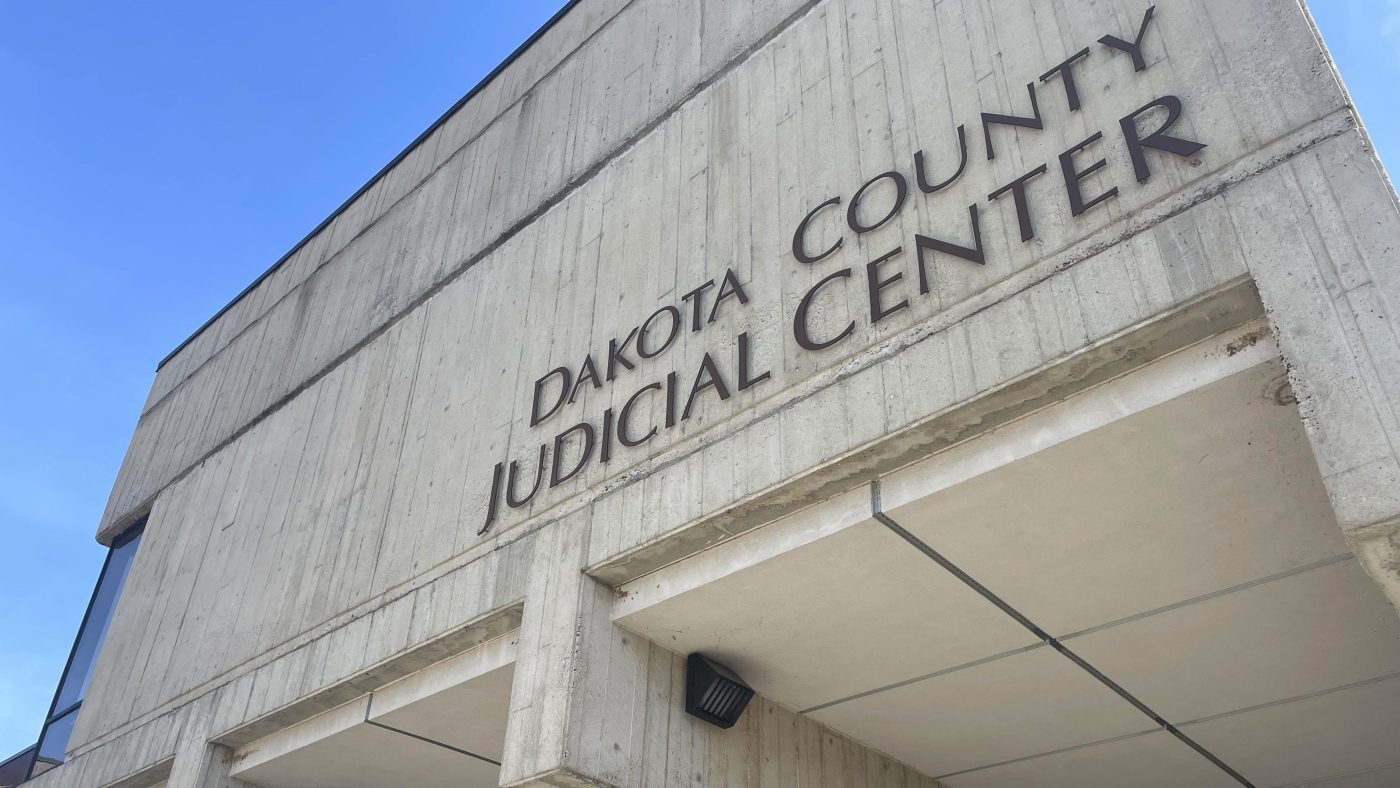
A trial has been set for August 2026 in a lawsuit seeking to block the transfer of a parcel of prime Miami real estate to be used for President Donald Trump’s presidential library.

Related Articles


Trump administration plan to reduce access to some student loans angers nurses, health care groups


Lawmakers question legality of Border Patrol license plate reader program


BBC leaders grilled by lawmakers over its standards after Trump threatened to sue


Justice Department renews bid to unseal Jeffrey Epstein grand jury materials


Judge dismisses Comey, James indictments after finding that prosecutor was illegally appointed

The decision Monday by Circuit Judge Mavel Ruiz in Miami will further delay Miami Dade College’s plans to formally transfer the sizable plot of land to the state of Florida, which intends to gift it to the foundation for the planned library.

Miami activist Marvin Dunn, a retired professor and chronicler of local Black history, filed the lawsuit arguing that the college board violated Florida’s Government in the Sunshine law by not providing sufficient notice for its special meeting on Sept. 23, when it voted to give up the nearly 3-acre (1.2-hectare) property.

Last month, Ruiz sided with Dunn and granted a temporary injunction that bars the transfer of the property, at least for now.

Attorneys for the college had asked the judge to stay the trial proceedings pending an appellate court’s review. Instead, Ruiz scheduled the trial to begin Aug. 3, though she acknowledged that could change, depending on how the appeals court proceeds.

The property is a developer’s dream and is valued at more than $67 million, according to a 2025 assessment by the Miami-Dade County property appraiser. One real estate expert wagered that the parcel — one of the last undeveloped lots on an iconic stretch of palm tree-lined Biscayne Boulevard — could sell for hundreds of millions of dollars more.

Kate Payne is a corps member for The Associated Press/Report for America Statehouse News Initiative. Report for America is a nonprofit national service program that places journalists in local newsrooms to report on undercovered issues.

One of the 1921 Tulsa Race Massacre’s last survivors, Viola Ford Fletcher, dies age 111

posted in: All news | 0

By JAMIE STENGLE

DALLAS (AP) — Viola Ford Fletcher, who as one of the last survivors of the 1921 Tulsa Race Massacre in Oklahoma spent her later years seeking justice for the deadly attack by a white mob on the thriving Black community where she lived as a child, has died. She was 111.

Related Articles


Lawmakers question legality of Border Patrol license plate reader program


Boeing’s troubled capsule won’t carry astronauts on next space station flight


Justice Department renews bid to unseal Jeffrey Epstein grand jury materials


Judge dismisses Comey, James indictments after finding that prosecutor was illegally appointed


Melania Trump welcomes Christmas tree to the White House

Her grandson Ike Howard said Monday that she died surrounded by family at a Tulsa hospital. Sustained by a strong faith, she raised three children, worked as a welder in a shipyard during World War II and spent decades caring for families as a housekeeper.

She was 7 when the two-day attack began on Tulsa’s Greenwood district on May 31, 1921, after a local newspaper published a sensationalized report about a Black man accused of assaulting a white woman. As a white mob grew outside the courthouse, Black Tulsans with guns who hoped to prevent the man’s lynching began showing up. White residents responded with overwhelming force. Hundreds of people were killed and homes were burned and looted, leaving over 30 city blocks decimated in the prosperous community known as Black Wall Street.

“I could never forget the charred remains of our once-thriving community, the smoke billowing in the air, and the terror-stricken faces of my neighbors,” she wrote in her 2023 memoir, “Don’t Let Them Bury My Story.”

As her family left in a horse-drawn buggy, her eyes burned from the smoke and ash, she wrote. She described seeing piles of bodies in the streets and watching as a white man shot a Black man in the head, then fired toward her family.

She told The Associated Press in an interview the year her memoir was published that fear of reprisals influenced her years of near-silence about the massacre. She wrote the book with Howard, her grandson, who said he had to persuade her to tell her story.

“We don’t want history to repeat itself so we do need to educate people about what happened and try to get people to understand why you need to be made whole, why you need to be repaired,” Howard told the AP in 2024. “The generational wealth that was lost, the home, all the belongings, everything was lost in one night.”

The attack went largely unremembered for decades. In Oklahoma, wider discussions began when the state formed a commission in 1997 to investigate the violence.

Fletcher, who in 2021 testified before Congress about what she went through, joined her younger brother, Hughes Van Ellis, and another massacre survivor, Lessie Benningfield Randle, in a lawsuit seeking reparations. The Oklahoma Supreme Court dismissed it in June 2024, saying their grievances did not fall within the scope of the state’s public nuisance statute.

“For as long as we remain in this lifetime, we will continue to shine a light on one of the darkest days in American history,” Fletcher and Randle said in a statement at the time. Van Ellis had died a year earlier, at the age of 102.

In this 1921 image provided by the Library of Congress, smoke billows over Tulsa, Okla. For decades, when it was discussed at all, the killing of hundreds of people in a prosperous black business district in 1921 was referred to as the Tulsa race riot. Under new standards developed by teachers for approaching the topic, students are encouraged to consider the differences between labeling it a “massacre” instead of a “riot,” as it is still commemorated in state laws. (Alvin C. Krupnick Co./Library of Congress via AP)

A Justice Department review, launched under the Emmett Till Unsolved Civil Rights Crime Act and released in January 2024, outlined the massacre’s scope and impact. It concluded that federal prosecution may have been possible a century ago, but there was no longer an avenue to bring a criminal case.

The city has been looking for ways to help descendants of the massacre’s victims without giving direct cash payments. Some of the last living survivors, including Fletcher, received donations from groups but have not received any payments from the city or state.

Fletcher, born in Oklahoma on May 10, 1914, spent most of her early years in Greenwood. It was an oasis for Black people during segregation, she wrote in her memoir. Her family had a nice home, she said, and the community had everything from doctors to grocery stores to restaurants and banks.

Forced to flee during the massacre, her family became nomadic, living out of a tent as they worked in the fields as sharecroppers. She didn’t finish school beyond the fourth grade.

At the age of 16, she returned to Tulsa, where she got a job cleaning and creating window displays in a department store, she wrote in her memoir. She then met Robert Fletcher, and they married and moved to California. During World War II, she worked in a Los Angeles shipyard as a welder, she wrote.

She eventually left her husband, who was physically abusive, and gave birth to their son, Robert Ford Fletcher, she wrote. Longing to be closer to her family, she returned to Oklahoma and settled north of Tulsa in Bartlesville.

Fletcher wrote that her faith and the close-knit Black community gave her the support she needed to raise her children. She had another son, James Edward Ford, and a daughter, Debra Stein Ford, from other relationships.

She worked for decades as a housekeeper, doing everything in those homes from cooking to cleaning to caring for children, Howard said. She worked until she was 85.

She eventually returned to Tulsa to live. Howard said his grandmother hoped the move would help in her fight for justice.

Howard said the reaction his grandmother got when she started speaking out was therapeutic for her.

“This whole process has been helpful,” Howard said.

PODCAST: ¿Qué ocurrió en la redada migratoria con helicóptero y cientos de agentes en Chicago?

posted in: All news | 0

Esta redada fue parte de una campaña en Chicago contra la inmigración ilegal llamada “Operation Midway Blitz”, que comenzó en septiembre con algunas detenciones en barrios latinos, se extendió por la ciudad y duró un par de meses.

Los agentes del Servicio de Inmigración y Control de Aduanas de Estados Unidos en las instalaciones del ICE en Chicago, el 3 de octubre de 2025. (Foto del DHS por Tia Dufour)

Poco después de medianoche del 30 de septiembre, un helicóptero Black Hawk sobrevolaba un edificio de la zona sur de Chicago. Los equipos SWAT descendieron por cuerdas. Tumbaron puertas. Las familias fueron despertadas por granadas aturdidoras.

Tras la operación, la administración Trump afirmó que su objetivo eran los miembros de una violenta banda venezolana, el Tren de Aragua, y que en el edificio se encontrarían pruebas de una grave amenaza.

Sin embargo, una investigación de ProPublica muestra la diferencia entre lo que los funcionarios de inmigración dijeron y lo que los reporteros han recabado.

Unos 37 residentes fueron arrestados, algunos llevados a prisiones y centros de detención y luego deportados, sin que se les acusara de ningún delito.

En las ocho audiencias a las que el medio independiente asistió, en ninguna, dijeron, se mencionó la pertenencia a pandillas. En cambio, los jueces concedieron la salida voluntaria o la deportación, lo que sugiere que no son considerados como amenaza.

Esta redada fue parte de una campaña en Chicago contra la inmigración ilegal llamada “Operation Midway Blitz”, que comenzó en septiembre con algunas detenciones en barrios latinos, se extendió por la ciudad y duró un par de meses.

En estos meses, la operación en Chicago dio lugar a más de 3.200 arrestos, entre estos a ciudadanos estadounidenses e inmigrantes, dos tiroteos distintos —uno mortal—y lesiones a un pastor que protestaba fuera de un centro de detención.

Según los datos federales presentados ante el tribunal por el Departamento de Seguridad Nacional de los Estados Unidos como parte de una demanda judicial, de los 614 inmigrantes detenidos en la “Operation Midway Blitz”, solo 16 tenían antecedentes penales significativos, representando el 2.5 por ciento, como reportó primero el Chicago Tribune.

Así que para hablar sobre el reportaje, las personas que fueron arrestadas y las que fueron deportadas, invitamos a Melissa Sanchez, quien es reportera de ProPublica y una de las autoras del reportaje.

Más detalles en nuestra conversación a continuación.

Ciudad Sin Límites, el proyecto en español de City Limits, y El Diario de Nueva York se han unido para crear el pódcast “El Diario Sin Límites” para hablar sobre latinos y política. Para no perderse ningún episodio de nuestro pódcast “El Diario Sin Límites” síguenos en Spotify, Soundcloud, Apple Pódcast y Stitcher. Todos los episodios están allí. ¡Suscríbete!

The post PODCAST: ¿Qué ocurrió en la redada migratoria con helicóptero y cientos de agentes en Chicago? appeared first on City Limits.