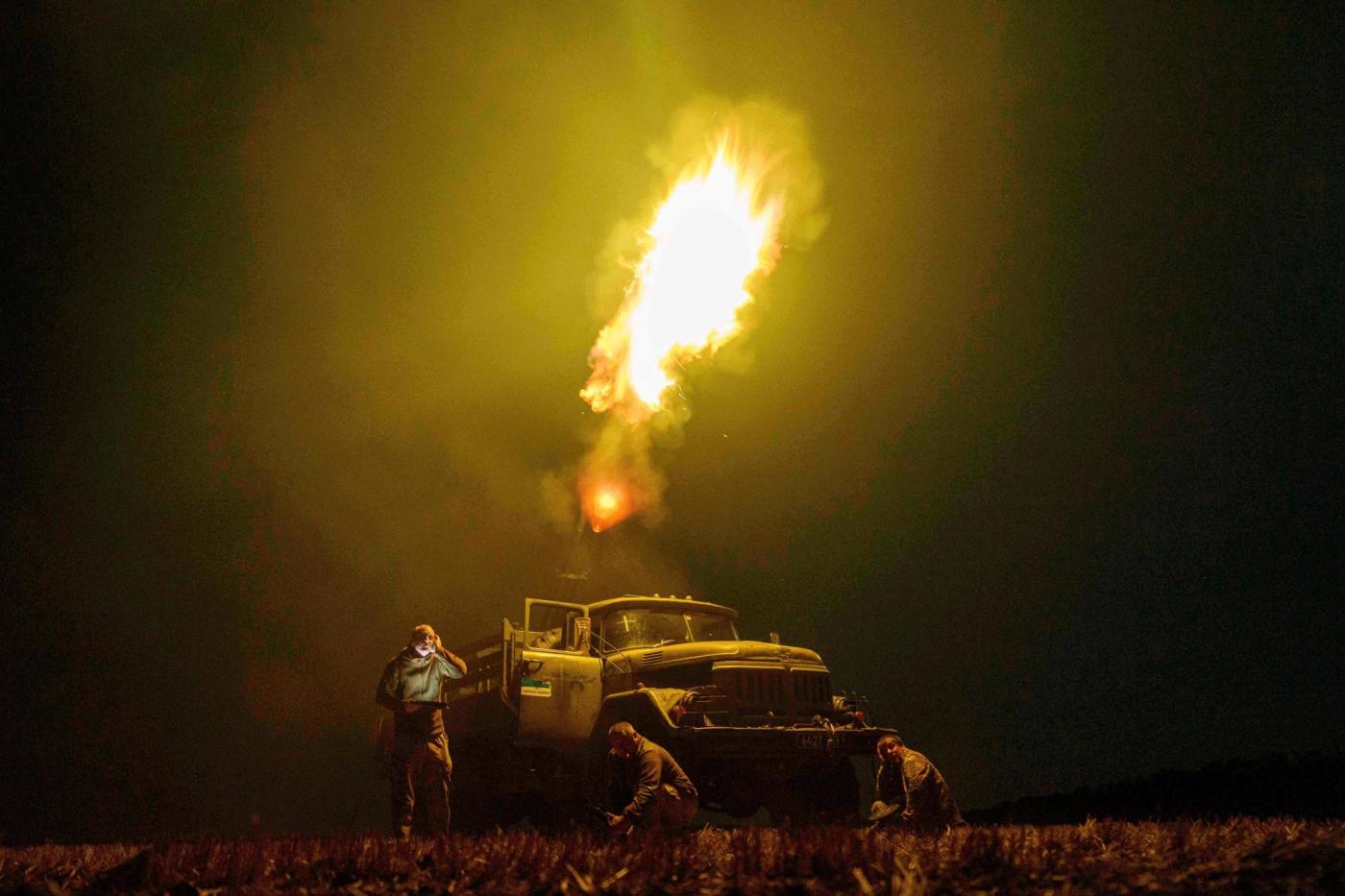
KYIV, Ukraine (AP) — A Ukrainian drone attack killed one person and wounded two others in a region some 260 miles east of Moscow, a Russian official said Monday, as fighting continued ahead of Friday’s Russia-U.S. summit in which President Vladimir Putin seeks a peace deal to lock in Moscow’s gains.
Related Articles
A pause on higher tariffs for China is due to expire Tuesday. Here’s what to know
Israel targets and kills Al Jazeera correspondent Anas al-Sharif in Gaza as journalist toll grows
Europe and Ukraine leaders seek talks with Trump to defend their interests ahead of US-Russia summit
Netanyahu defends new military offensive in Gaza and says it will be wider than announced
Today in History: August 11, first prisoners reach Alcatraz
Nizhny Novgorod region Gov. Gleb Nikitin said in a statement that drones targeted two “industrial zones” and caused the casualties and unspecified damage.
A Ukrainian official said at least four drones launched by the security services, or SBU, struck a plant in Arzamas city that produced components for Kinzhal hypersonic missiles.
The official, who spoke on condition of anonymity to discuss operations, said the Plandin plant produces gyroscopic devices, control systems and on-board computers for the missiles and is an “absolutely legitimate target” because it is part of the Russian military-industrial complex that works for the war against Ukraine.
Russia’s Defense Ministry said its air defenses intercepted and destroyed a total of 39 Ukrainian drones overnight and Monday morning over several Russian regions as well as over the Crimean peninsula that Russia annexed in 2014.
Friday’s summit, which U.S. President Donald Trump will host in Alaska, sees Putin unwavering on his demands to keep all the Ukrainian territory his forces now occupy and to prevent Kyiv from joining NATO, with the long-term aim of keeping Ukraine under Moscow’s sphere of influence.
Putin believes he has the advantage on the ground as Ukrainian forces struggle to hold back Russian advances along the 1,000-kilometer (600-mile) front. On the front lines, few Ukrainian soldiers believe there’s an end in sight to the war.
Ukrainian President Volodymyr Zelenskyy insists he will never consent to any Russian annexation of Ukrainian territory nor give up his country’s bid for NATO membership. European leaders have rallied behind Ukraine, saying peace can’t be resolved without Kyiv.
With Europeans and Ukrainians so far not invited to the summit, Germany sought to prepare by inviting Trump, Zelenskyy, the NATO chief and several other European leaders for a virtual meeting on Wednesday.
The German chancellery said the talks would seek additional ways to pressure Russia and prepare for peace negotiations and “related issues of territorial claims and security.”
Steffen Meyer, spokesperson for German Chancellor Friedrich Merz, said earlier Monday that the German government “has always emphasized that borders must not be shifted by force” and that Ukraine should decide its own fate “independently and autonomously..
MIAMI (AP) — When Republican Sen. Bernie Moreno visits Colombia this week as part of a three-nation tour of Latin America, it will be something of a homecoming.
Related Articles
Trump has said abortion is a state issue. His judicial picks could shape it nationally for decades
Trial to start on whether deployment of National Guard to Los Angeles violated federal law
Ousted FDA vaccine chief Vinay Prasad is returning to the agency
Europe and Ukraine leaders seek talks with Trump to defend their interests ahead of US-Russia summit
Trump’s big bill is powering his mass deportations. Congress is starting to ask questions
The Ohio senator, who defeated an incumbent last year with the help of Donald Trump’s endorsement and the highest political ad spending in U.S. Senate race history, was born in Bogota and has brothers who are heavyweights in politics and business there.
Moreno has emerged as an interlocutor for conservatives in Latin America seeking to connect with the Trump administration.
In an interview with The Associated Press ahead of the trip, he expressed deep concern about Colombia’s direction under left-wing President Gustavo Petro and suggested that U.S. sanctions, higher tariffs or other retaliatory action might be needed to steer it straight.
The recent criminal conviction of former President Alvaro Uribe, a conservative icon, was an attempt to “silence” the man who saved Colombia from guerrilla violence, Moreno said. Meanwhile, record cocaine production has left the United States less secure — and Colombia vulnerable to being decertified by the White House for failing to cooperate in the war on drugs.
“The purpose of the trip is to understand all the dynamics before any decision is made,” said Moreno, who will meet with both Petro and Uribe, as well as business leaders and local officials. “But there’s nothing that’s taken off the table at this point and there’s nothing that’s directly being contemplated.”
Elected with Trump’s support
Moreno, a luxury car dealer from Cleveland, defeated incumbent Democrat Sherrod Brown last year and became Ohio’s senior senator on practically his first day in office after his close friend JD Vance resigned the Senate to become vice president.
In Congress, Moreno has mimicked Trump’s rhetoric to attack top Senate Democrat Chuck Schumer as a “miserable old man out of a Dickens novel,” called on the Federal Reserve to cut interest rates and threatened to subpoena California officials over their response to anti-ICE protests in Los Angeles.
On Latin America, he’s been similarly outspoken, slamming Petro on social media as a “socialist dictator” and accusing Mexico of being on the path to becoming a “narco state.”
FILE – Colombia’s President Gustavo Petro attends a military ceremony in Bogota, Colombia, June 6, 2025. (AP Photo/Ivan Valencia, File)
FILE – Supporters of former Colombian President Alvaro Uribe hold cutouts of his face outside the court where he was found guilty of witness tampering and bribery, in Bogota, Colombia, July 28, 2025. (AP Photo/Fernando Vergara, File)
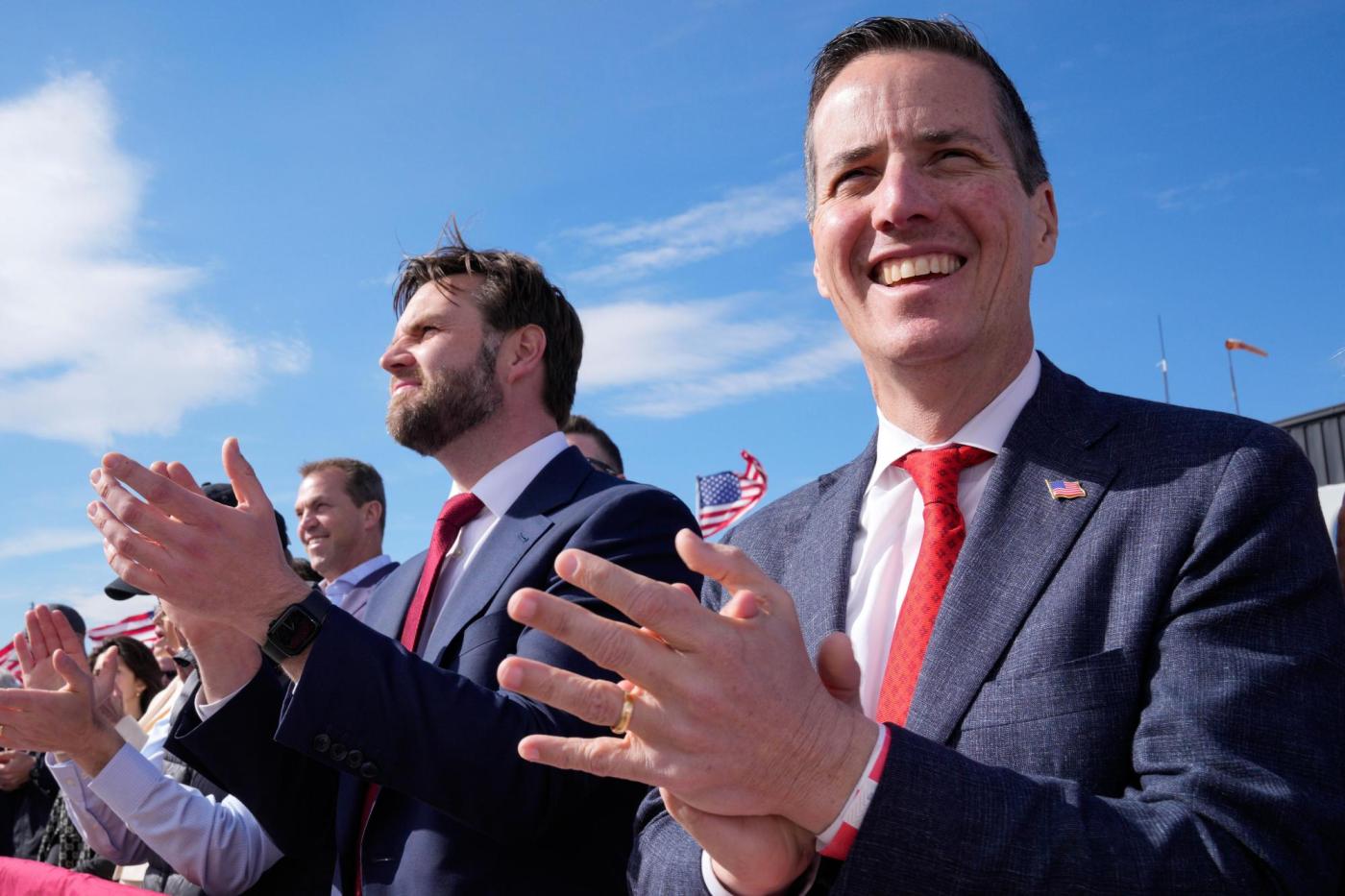
Ohio Republican Senate candidate Bernie Moreno raises his right fist during a rally for Republican vice presidential candidate Sen. JD Vance, R-Ohio, in Middletown, Ohio, July 22, 2024. (AP Photo/Paul Vernon, File)
1 of 3
FILE – Colombia’s President Gustavo Petro attends a military ceremony in Bogota, Colombia, June 6, 2025. (AP Photo/Ivan Valencia, File)
Such comments barely register in blue-collar Ohio, but they’ve garnered attention in Latin America. That despite the fact Moreno hasn’t lived in the region for decades, speaks Spanish with a U.S. accent and doesn’t sit on the Senate Foreign Relations Committee.
“He’s somebody to watch,” said Michael Shifter, the former president of the Inter-American Dialogue in Washington. “He’s one of the most loyal Trump supporters in the senate and given his background in Latin America he could be influential on policy.”
Moreno, 58, starts his first congressional delegation to Latin America on Monday for two days of meetings in Mexico City with officials including President Claudia Sheinbaum. He’ll be accompanied by Terrance Cole, the head of the Drug Enforcement Administration, who is making his first overseas trip since being confirmed by the Senate last month to head the premier federal narcotics agency.
Seeking cooperation with Mexico on fentanyl
Moreno, in the pre-trip interview, said that Sheinbaum has done more to combat the flow of fentanyl into the U.S. than her predecessor and mentor Andrés Manuel López Obrador, who he described as a “total disaster.” But he said more cooperation is needed, and he’d like to see Mexico allow the DEA to participate in judicial wiretaps like it has for decades in Colombia and allow it to bring back a plane used in bilateral investigations that López Obrador grounded.
“The corruption becomes so pervasive, that if it’s left unchecked, it’s kind of like treating cancer,” said Moreno. “Mexico has to just come to the realization that it does not have the resources to completely wipe out the drug cartels. And it’s only going to be by asking the U.S. for help that we can actually accomplish that.”
Plans to tour the Panama Canal
From Mexico, Moreno heads to Panama, where he’ll tour the Panama Canal with Trump’s new ambassador to the country, Kevin Marino Cabrera.
In March, a Hong Kong-based conglomerate struck a deal that would’ve handed control of two ports on either end of the U.S.-built canal to American investment firm BlackRock Inc. The deal was heralded by Trump, who had threatened to take back the canal to curb Chinese influence.
However, the deal has since drawn scrutiny from antitrust authorities in Beijing and last month the seller said it was seeking to add a strategic partner from mainland China — reportedly state-owned shipping company Cosco — to the deal.
“Cosco you might as well say is the actual communist party,” said Moreno. “There’s no scenario in which Cosco can be part of the Panamanian ports.”
‘We want Colombia to be strong’
On the final leg of the tour in Colombia, Moreno will be joined by another Colombian American senator: Ruben Gallego, Democrat of Arizona. In contrast to Moreno, who was born into privilege and counts among his siblings a former ambassador to the U.S., Gallego and his three sisters were raised by an immigrant single mother on a secretary’s paycheck.
Despite their different upbringings, the two have made common cause in seeking to uphold the tradition of bilateral U.S. support for Colombia, for decades Washington’s staunchest ally in the region. It’s a task made harder by deepening polarization in both countries.
The recent sentencing of Uribe to 12 years of house arrest in a long-running witness tampering case has jolted the nation’s politics with nine months to go before decisive presidential elections. The former president is barred from running but remains a powerful leader, and Moreno said his absence from the campaign trail could alter the playing field.
He also worries that surging cocaine production could once again lead to a “narcotization” of a bilateral relationship that should be about trade, investment and mutual prosperity.
“We want Colombia to be strong, we want Colombia to be healthy, we want Colombia to be prosperous and secure, and I think the people of Colombia want the exact same thing,” he added. “So, the question is, how do we get there?”
SAN FRANCISCO (AP) — A federal judge in San Francisco will consider evidence and hear arguments on whether the Trump administration violated federal law when it deployed National Guard soldiers and U.S. Marines to Los Angeles following protests over immigration raids this summer.
Related Articles
Ousted FDA vaccine chief Vinay Prasad is returning to the agency
Germany invites Trump, Zelenskyy, NATO, EU leaders to a virtual meeting before Trump-Putin summit
Trump’s big bill is powering his mass deportations. Congress is starting to ask questions
Texas Legislature to take another swing at redistricting vote as Democrats extend their walkout
Watch live: Trump says he’s placing Washington police under federal control and deploying the National Guard
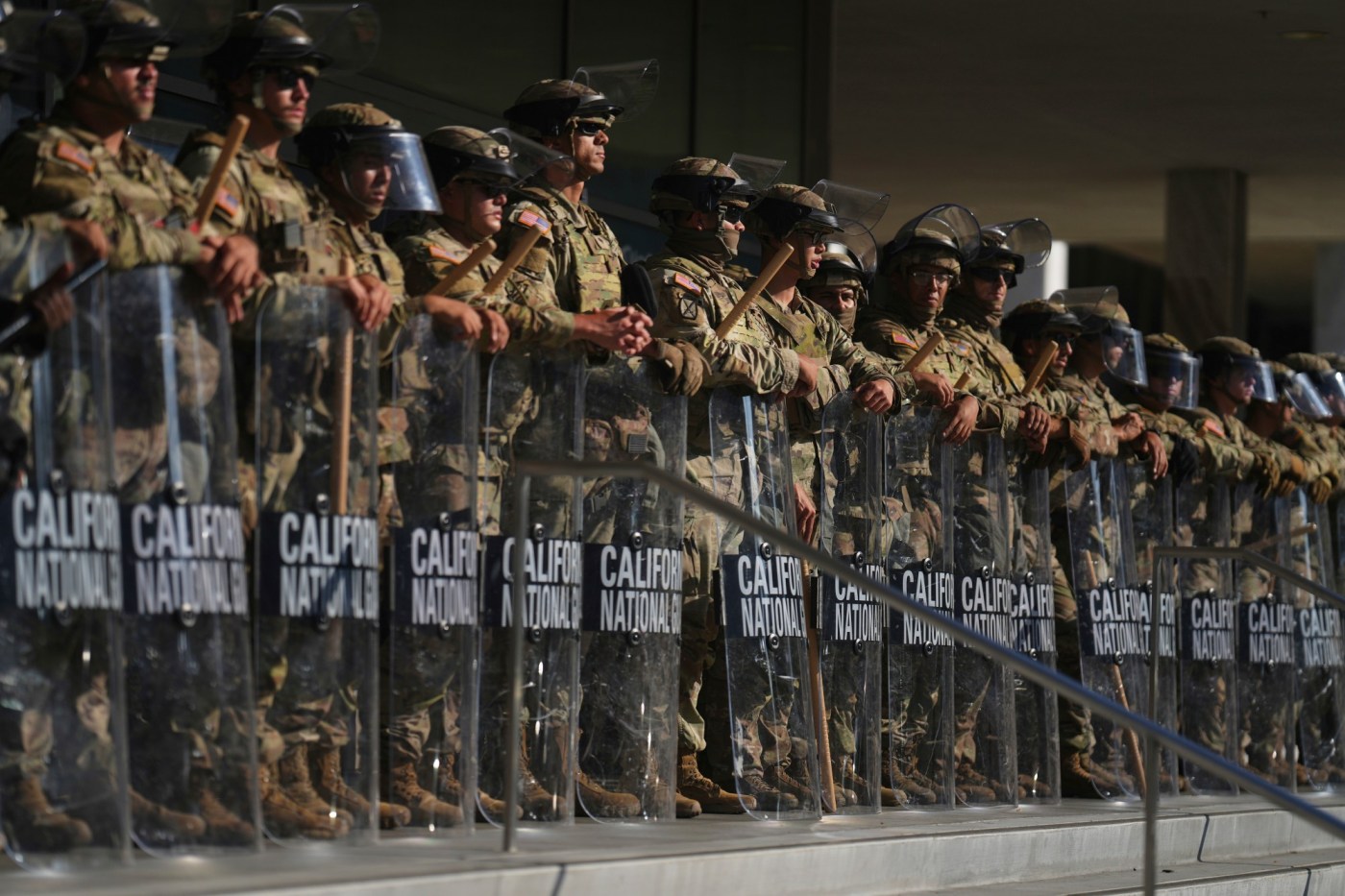
The Trump administration federalized California National Guard members and sent them to the second largest U.S. city over the objections of Gov. Gavin Newsom and city leaders, after protests erupted June 7 when Immigration and Customs Enforcement officers arrested people at multiple locations.
California is asking Judge Charles Breyer to order the Trump administration to return control of the remaining troops to the state and to stop the federal government from using military troops in California “to execute or assist in the execution of federal law or any civilian law enforcement functions by any federal agent or officer.”
The 1878 Posse Comitatus Act prevents the president from using the military as a domestic police force. The case could set precedent for how Trump can deploy the guard in the future in California or other states.
The Department of Defense ordered the deployment of roughly 4,000 California National Guard troops and 700 Marines. Most of the troops have since left but 250 National Guard members remain, according to the latest figures provided by the Pentagon. The remaining troops are at the Joint Forces Training Base, in Los Alamitos, according to Newsom
Newsom won an early victory from Breyer, who found the Trump administration had violated the Tenth Amendment, which defines power between federal and state governments, and exceeded its authority.
The Trump administration immediately filed an appeal arguing that courts can’t second guess the president’s decisions and secured a temporary halt from the appeals court, allowing control of the California National Guard to stay in federal hands as the lawsuit continues to unfold.
After their deployment, the soldiers accompanied federal immigration officers on immigration raids in Los Angeles and at two marijuana farm sites in Ventura County while Marines mostly stood guard around a federal building in downtown Los Angeles that includes a detention center at the core of protests.
The Trump administration argued the troops were needed to protect federal buildings and personnel in Los Angeles, which has been a battleground in the federal government’s aggressive immigration strategy. Since June, federal agents have rounded up immigrants without legal status to be in the U.S. from Home Depots, car washes, bus stops, and farms. Some U.S. citizens have also been detained.
Ernesto Santacruz Jr., the field office director for the Department of Homeland Security in Los Angeles, said in court documents that the troops were needed because local law enforcement had been slow to respond when a crowd gathered outside the federal building to protest the June 7 immigration arrests.
“The presence of the National Guard and Marines has played an essential role in protecting federal property and personnel from the violent mobs,” Santacruz said.
After opposition from the Trump administration, Breyer issued an order allowing California’s attorneys to take Santacruz’s deposition. They also took a declaration from a military official on the National Guard and Marines role in Los Angeles.
The Trump administration’s attorneys argued in court filings last week the case should be canceled because the claims under the Posse Comitatus Act “fail as a matter of law.” They argued that there is a law that gives the president the authority to call on the National Guard to enforce U.S. laws when federal law enforcement isn’t enough.
Trump federalized members of the California National Guard under Section 12406 of Title 10, which allows the president to call the National Guard into federal service when the country “is invaded,” when “there is a rebellion or danger of a rebellion against the authority of the Government,” or when the president is otherwise unable “to execute the laws of the United States.”
Breyer found the protests in Los Angeles “fall far short of ‘rebellion.’”
“Next week’s trial is not cancelled,” he said in a ruling ordering the three-day bench trial.
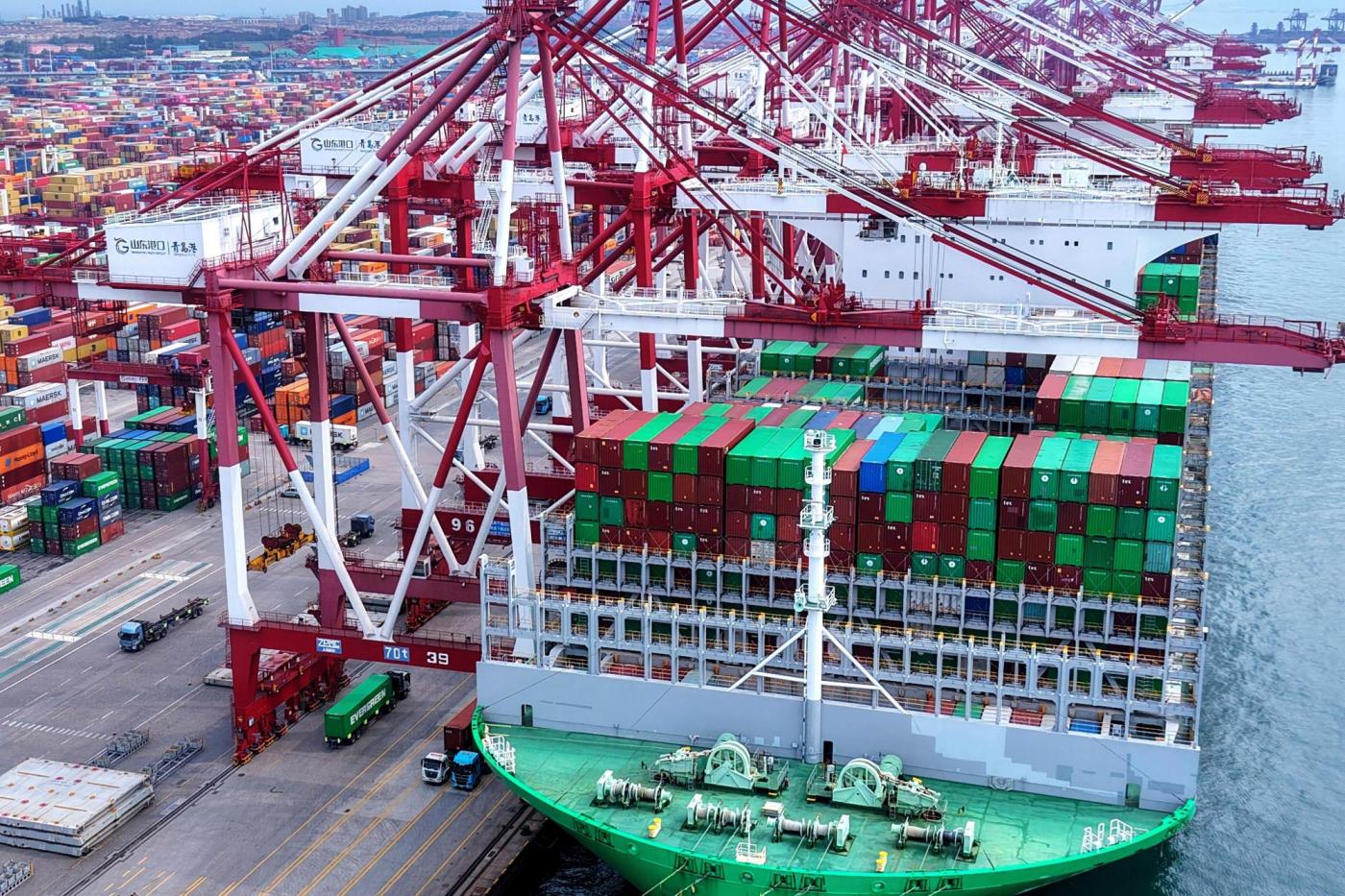
TAIPEI, Taiwan (AP) — A 90-day pause on imposing higher tariffs on China is due to expire on Tuesday and it is unclear if it will be extended.
After the most recent round of China-U.S. trade talks, held late last month in Stockholm, Chinese and U.S. officials said they expected the deadline to be extended for another 90 days. The U.S. side said the decision was up to President Donald Trump. So far there has been no formal announcement about whether he will endorse an extension or push ahead with the higher tariffs.
The uncertainty has left businesses in limbo and a decision to raise the import duties could jolt world markets.
SILENCE FROM WASHINGTON AND BEIJING
Trump has repeatedly shifted deadlines and tariff rates, and neither side has indicated what it plans for Tuesday. Extending the Aug. 12 deadline for reaching a trade agreement with China would forestall earlier threats of tariffs of up to 245%.
Treasury Secretary Scott Bessent said Trump was deciding about another 90-day delay to allow time to work out details of an agreement setting tariffs on most products at 50%, including extra import duties related to illicit trade in the powerful opiate fentanyl.
Higher tariffs are aimed at offsetting the huge, chronic U.S. trade deficit with China, which hit a 21-year low in July as the threat of tariffs bit into Chinese exports.
It’s not unusual for the U.S. to give hints on where talks stand, but it’s rare for China to make announcements until major decisions are set. So far, Beijing’s refrained from commenting ahead of Tuesday’s deadline.
In an interview with Fox News taped on Thursday but aired on Sunday, U.S. Vice President JD Vance said Trump was considering additional tariffs on Beijing because of China’s purchases of Russian oil. But he said Trump “hasn’t made any firm decisions.”
CHINA RESISTED CUTTING AN EARLY BARGAIN
Prohibitively high tariffs on Chinese exports to the United States would put huge pressure on Beijing at a time when the Chinese economy, the world’s second largest, is still recovering from a prolonged downturn in its property market. Lingering effects of the COVID-19 pandemic have left millions of people reliant on “gig work,” crimping the job market. Higher import taxes on small parcels from China have also hurt smaller factories and layoffs have accelerated.
Related Articles
Nvidia and AMD to pay 15% of China chip sale revenue to US government in an unusual agreement
Ford to invest nearly $2 billion in Kentucky assembly plant to produce electric vehicles
US stocks drift around their record heights as Wall Street braces for an update on inflation
Business People: Coborn’s exec David Best tapped to lead Cub Foods
Real World Economics: In Trump we trust, at our own peril
But the U.S. relies heavily on imports from China for all sorts of products, from household goods and clothing to wind turbines, basic computer chips, electric vehicle batteries and the rare earths needed to make them. That gives Beijing some powerful leverage in the negotiations with Washington.
Even with higher tariffs, China remains competitive for many products. And its leaders are aware that the U.S. economy is only just beginning to feel the effects of higher prices from Trump’s broad tariff hikes.
For now, imports from China are subject to a 10% baseline tariff and a 20% extra tariff related to the fentanyl issue. Some products are taxed at higher rates. U.S. exports to China are subject to tariffs of around 30%. Before the two sides called a truce, Trump had threatened to impose 245% import duties on Chinese goods. China retaliated by saying it would hike its tariff on U.S. products to 125%.
MUCH IS AT STAKE
A trade war between the world’s two largest economies has ramifications across the global economy, affecting industrial supply chains, demand for commodities like copper and oil and geopolitical issues such as the war in Ukraine.
After a phone call with Chinese leader Xi Jinping in June, Trump said he hoped to meet with Xi later this year. That’s an incentive for striking a deal with Beijing.
If the two sides fail to keep their truce, trade tensions could escalate and tariffs might rise to even higher levels, inflicting still more pain on both economies and rattling world markets. Businesses would refrain from making investment commitments and hiring, while inflation would surge higher.
Companies are in an “extended wait-and-see mode,” Oxford Economics said in a recent report.