A St. Paul woman on vacation died during a water emergency in St. Louis County, Minn.
The St. Louis County Sheriff’s Office received a 911 call at 5:55 p.m. Wednesday, reporting an 80-year-old woman had been found unresponsive in Lake Vermilion. Family members had started CPR.
First responders arrived at the scene on Blueberry Island and transported Marit Smaby-Nowlin back to land and then by ambulance to Cook Hospital.
“Life saving efforts at the scene and at the hospital were unsuccessful,” the sheriff’s office said in a Thursday statement.
Related Articles
Forest Lake detective remembered for positive spirit, going the extra mile
Don’t scan QR codes on unsolicited packages delivered to your house, FBI warns
Woman, 21, dies in Arden Hills crash; passengers injured
With upcoming closure of Stillwater prison, inmates’ legal documents at risk, group says
FACT FOCUS: Trump exaggerates, misstates facts on Washington crime
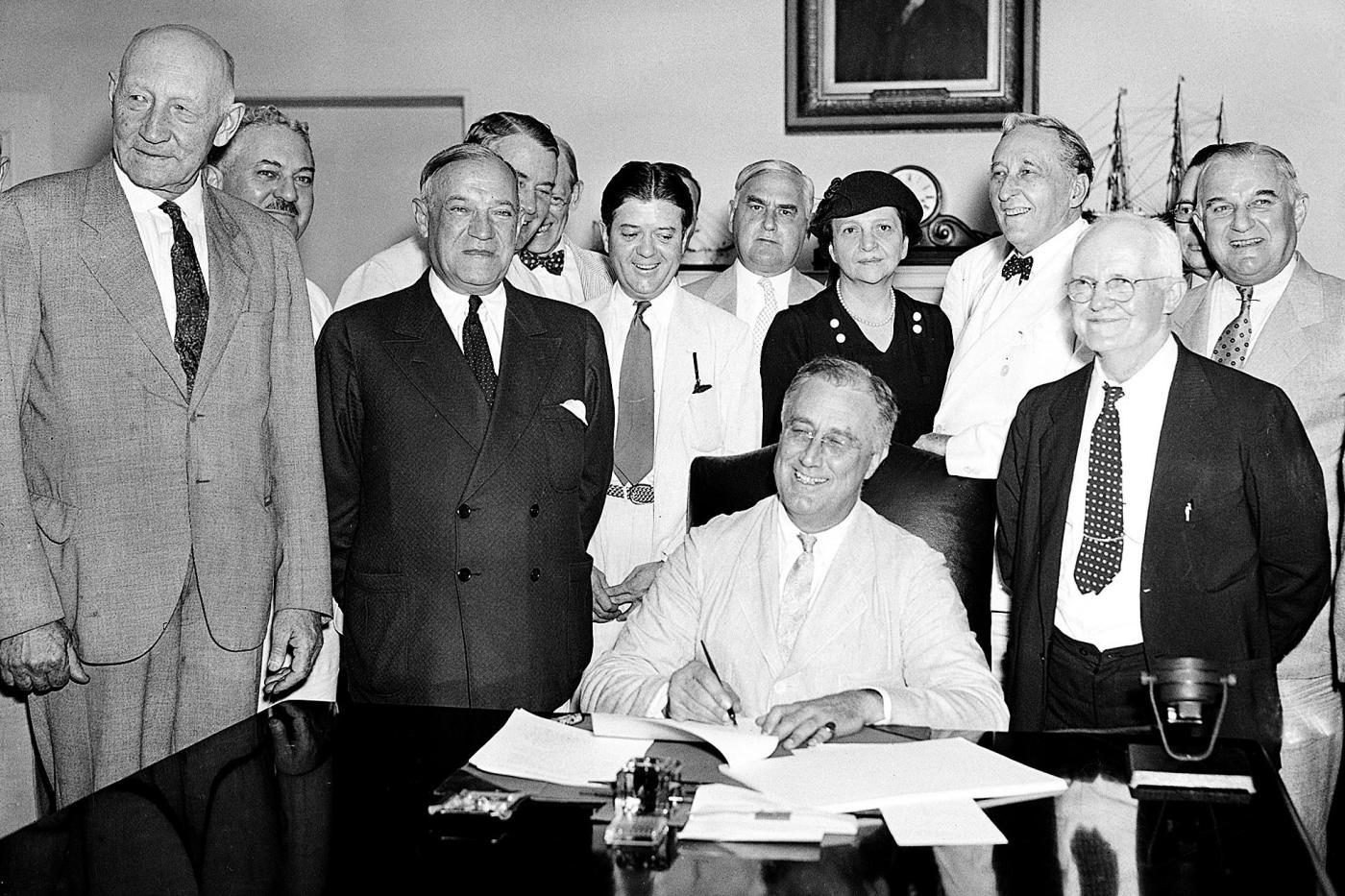
WASHINGTON (AP) — When President Franklin D. Roosevelt signed the Social Security Act into law 90 years ago this week, he vowed it would provide economic stability to older people while giving the U.S. “an economic structure of vastly greater soundness.”
Today, the program provides benefits to almost 69 million Americans monthly. It’s a major source of income for people over 65 and is popular across the country and political lines.
It also looks more threatened than ever.
Just as it has for decades, Social Security faces a looming shortfall in money to pay full benefits. Since President Donald Trump took office the program has faced more tumult. Agency staffing has been slashed. Unions and advocacy groups concerned about sharing sensitive information have sued. Trump administration officials including the president for months falsely claimed millions of dead people were receiving Social Security benefits. Former top adviser Elon Musk called the program a potential “Ponzi scheme.”
Trump and other Republicans have said they will not cut Social Security benefits. Yet the program remains far from the sound economic system that FDR envisioned 90 years ago, due to changes made — and not made — under both Democratic and Republican presidents.
Here’s a look at past and current challenges to Social Security, the proposed solutions and what it could take to shore up the program.
The go-broke date has been moved up
The so-called go-broke date — or the date at which Social Security will no longer have enough funds to pay full benefits — has been moved up to 2034, instead of last year’s estimate of 2035. After that point, Social Security would only be able to pay 81% of benefits, according to an annual report released in June. The earlier date came as new legislation affecting Social Security benefits have contributed to earlier projected depletion dates, the report concluded.
The Social Security Fairness Act, signed into law by former President Joe Biden and enacted in January, had an impact. It repealed the Windfall Elimination and Government Pension Offset provisions, increasing Social Security benefit levels for former public workers.
Republicans’ new tax legislation signed into law in July will accelerate the insolvency of Social Security, said Brendan Duke at the Center on Budget and Policy Priorities.
“They haven’t laid out an idea to fix it yet,” he said.
The privatization conversation has been revived
The notion of privatizing Social Security surfaced most recently when Treasury Secretary Scott Bessent this month said new tax-deferred investment accounts dubbed “ Trump accounts ” may serve as a “ backdoor to privatization,” though Treasury has walked back those comments.
The public has been widely against the idea of privatizing Social Security since former President George W. Bush embarked on a campaign to pitch privatization of the program in 2005, through voluntary personal retirement accounts. The plan was not well-received by the public.
Glenn Hubbard, a Columbia University professor and top economist in Bush’s White House, told The Associated Press that Social Security needs to be reduced in size in order to maintain benefits for generations to come. He supports limiting benefits for wealthy retirees.
Related Articles
Trump’s nod to Europe on a future peace force for Ukraine vastly improves its chances of success
As Canada wildfires choke US with smoke, Republicans demand action. But not on climate change
Trump’s friendly-to-frustrated relationship with Putin takes the spotlight at the Alaska summit
Judge weighs whether Trump violated federal law by deploying National Guard to Los Angeles
“We will have to make a choice,” Hubbard said. “If you want Social Security benefits to look like they are today, we’re going to have to raise everyone’s taxes a lot. And if that’s what people want, that’s a menu, and you pay the high price and you move on.”
Another option would be to increase minimum benefits and slow down benefit growth for everyone else, which Hubbard said would right the ship without requiring big tax increases, if it’s done over time.
“It’s really a political choice,” he said, adding “Neither one of those is pain free.”
Nancy Altman, president of Social Security Works, an advocacy group for the preservation of Social Security benefits, is more worried that the administration of benefits could be privatized under Trump, rather than a move toward privatized accounts. The agency cut more than 7,000 from its workforce this year as part of the Department of Government Efficiency’s effort to reduce the size of the government.
Martin O’Malley, who was Social Security agency commissioner under Biden, said he thinks the problems go deeper.
“There is no openness and there is no transparency” at the agency, he said. “And we hear about field offices teetering on the brink of collapse.”
A Social Security Administration representative didn’t respond to a request for comment.
“So much of what we hear is that its running out of money,” said Becky Boober, 70, from Rockport, Maine, who recently retired after decades in public service. She relies on Social Security to keep her finances afloat, is grateful for the program and thinks it should be expanded.
“In my mind there are several easy fixes that are not a political stretch,” she said. They include raising the income tax cap on high-income earners and possibly raising the retirement age, which is currently 67 for people born after 1960, though she is less inclined to support that change.
Some call for shrinking the program
Rachel Greszler is a senior research fellow at the Heritage Foundation, the group behind the Project 2025 blueprint for Trump’s second term. It called for an increase in the retirement age.
Greszler says Social Security no longer serves its intended purpose of being a social safety net for low-income seniors and is far too large. She supports pursuing privatization, which includes allowing retirees to put their Social Security taxes into a personal investment account.
She also argues for shrinking the program to a point where every retiree would receive the same Social Security benefit so long as they worked the same number of years, which she argues would increase benefits for the bottom one-third of earners. How this would impact middle-class earners is unclear.
“When talking about needing to reform the system, we need to reform it so that we don’t have indiscriminate 23% across the board cuts for everybody,” Greszler said. “We need to reform the system in a more thoughtful way, so that we are protecting those who are most vulnerable and reliant on Social Security.”
“A person who is unhoused before incarceration is no less vulnerable after release. But our current policy treats time in jail as if it erases their homelessness. It doesn’t—it makes it worse.”
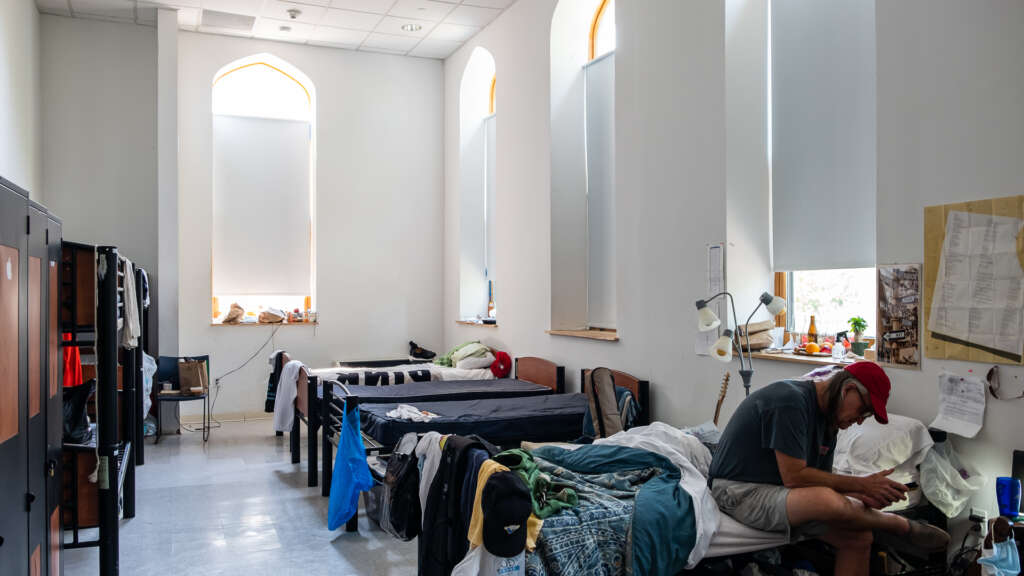
A dormitory at Fortune Society’s transitional housing program Manhattan. (Adi Talwar)
Every day, New Yorkers with mental illness or substance use disorder are discharged from Rikers Island with no place to go. Too many of our neighbors are trapped in a revolving door of homelessness, incarceration, and emergency hospitalizations. Each of these issues is deeply connected: homelessness is 10 times more prevalent among formerly incarcerated individuals than it is for the general public, and 50 percent of individuals on Rikers Island have been diagnosed with a mental illness.
Despite the well-documented link between housing instability and incarceration, most supportive housing programs in New York City currently require applicants to meet the federal definition of being chronically homeless. This definition mandates that an individual be homeless for 12 or more months in the past three years, or have four or more separate episodes of homelessness that total 12 or more months in the past three years—a timeline that can easily be interrupted by detention or incarceration.
In an effort to end and prevent homelessness, city agencies have mainly focused on helping people who are chronically homeless. However, being homeless for a long time is not the only sign that someone needs help. Even a brief jail stay can disqualify someone from supportive housing, especially people with serious mental illness or addiction.
When they’re released, they often have nowhere to go but the streets or a shelter. From there, they’re likely to return to jail, trapped in a cycle of harm. City law must catch up with reality. A person who is unhoused before incarceration is no less vulnerable after release. But our current policy treats time in jail as if it erases their homelessness. It doesn’t—it makes it worse.
An estimated 2,600 individuals detained on Rikers each year could greatly benefit from supportive housing, which is a proven model to reduce recidivism, decrease reliance on emergency services, and cut public spending.
That is why alongside advocates and those with lived experience, we have worked with experts in supportive housing to put forward Introduction 1100-2024, which would amend eligibility criteria for wholly city-subsidized supportive housing projects to include time spent incarcerated toward time spent homeless. This simple yet transformative change would remove barriers that keep thousands of vulnerable New Yorkers from achieving the stability they need to build their lives.
The evidence in favor of expanding supportive housing eligibility is overwhelming. Studies have consistently shown that stable housing reduces reentry into the criminal justice system, minimizes reliance on costly emergency medical care, and improves long-term health and social outcomes.
For example, Corporation for Supportive Housing has demonstrated that access to supportive housing significantly reduces the likelihood of re-incarceration and prolonged shelter stays, saving millions in public funds while fostering community stability. Furthermore, providing supportive housing for 2,600 individuals on Rikers annually who could qualify for programs would cost approximately $108 million per year—far less than the staggering $1.4 billion it costs to incarcerate these individuals.
Expanding access to supportive housing is also essential to meeting New York City’s legal and moral obligation to close Rikers Island by 2027. Without adequate housing options, the city risks perpetuating the very conditions that contribute to high jail populations and repeated cycles of incarceration.
The Independent Budget Office reported that one-third of individuals admitted to New York City jails in 2023 were experiencing homelessness before their incarceration. That same year, over 40 percent of people released to New York City from state prisons were discharged directly into city shelters. Without stable housing options, many of them will continue cycling through jails, shelters, and emergency rooms, at enormous costs.
A jail is not a home. It is a destabilizing, dangerous, and deeply expensive response to unmet needs. When individuals have access to safe, permanent housing, they are less likely to return to jail or rely on emergency services.
Passing Introduction 1100 and ensuring that supportive housing is accessible to justice-involved individuals diagnosed with mental illness or substance use disorder is an investment in a safer, healthier and more just city. We must reduce our over reliance on incarceration and cannot afford to maintain policies that prioritize putting people in jail cells over housing. We can help break the cycle of homelessness and incarceration by ensuring that everyone who needs supportive housing can access it.
Carlina Rivera represents the 2nd Council District which includes Greenwich Village, Union Square, East Village, and Kips Bay.
Lauren Velez is the director with the Metro Team at the Corporation for Supportive Housing, focusing on advancing supportive housing initiatives in New York, New Jersey and Pennsylvania.
LONDON (AP) — Russian President Vladimir Putin on Thursday praised U.S. President Donald Trump’s efforts to end the war in Ukraine, more than three years after Moscow launched its invasion, as the two leaders prepared for a pivotal U.S.–Russia summit Friday in Alaska.
Following a meeting Thursday with top government officials on the summit, Putin said in a short video released by the Kremlin that the Trump administration was making “quite energetic and sincere efforts to stop the hostilities” and to “reach agreements that are of interest to all parties involved.”
Putin also suggested that “long-term conditions of peace between our countries, and in Europe, and in the world as a whole,” could be reached under an agreement with the U.S. on nuclear arms control.
Britain’s Prime Minister Keir Starmer co-chairs a videoconference call with European leaders on Ukraine, in London, Wednesday, Aug. 13, 2025. (Jack Taylor/Pool Photo via AP)
Britain’s Prime Minister Keir Starmer, left, welcomes Ukraine’s President Volodymyr Zelenskyy to Downing Street in London, Thursday, Aug. 14, 2025. (AP Photo/Kirsty Wigglesworth)
Britain’s Prime Minister Keir Starmer, left, welcomes Ukraine’s President Volodymyr Zelenskyy to Downing Street in London, Thursday, Aug. 14, 2025. (AP Photo/Kirsty Wigglesworth)
Britain’s Prime Minister Keir Starmer, right, walks out with Ukraine’s President Volodymyr Zelenskyy after a meeting at Downing Street in London, Thursday, Aug. 14, 2025. (AP Photo/Kirsty Wigglesworth)
Britain’s Prime Minister Keir Starmer, left, welcomes Ukraine’s President Volodymyr Zelenskyy to Downing Street in London, Thursday, Aug. 14, 2025. (AP Photo/Kirsty Wigglesworth)
1 of 5
Britain’s Prime Minister Keir Starmer co-chairs a videoconference call with European leaders on Ukraine, in London, Wednesday, Aug. 13, 2025. (Jack Taylor/Pool Photo via AP)
U.K. Prime Minister Keir Starmer welcomed Zelenskyy to London on Thursday in a show of British support for Ukraine a day before the critical Trump-Putin meeting. The two embraced warmly outside Starmer’s offices at 10 Downing Street without making any comments, and Zelenskyy departed about an hour later.
Zelenskyy’s trip to the British capital came a day after he took part in virtual meetings from Berlin with Trump and the leaders of several European countries. Those leaders said that Trump had assured them that he would make a priority of trying to achieve a ceasefire in Ukraine when he meets with Putin.
Israel announces a settlement that critics say will effectively sever the West Bank in two
South Korean Supreme Court dismisses US composer’s ‘Baby Shark’ copyright claim
Human Rights Watch says Israeli airstrike on Iranian prison was an ‘apparent war crime’
Today in History: August 14, FDR signs Social Security Act
Qatar sentences the country’s Baha’i leader to 5 years for social media posts
While some European leaders, including German Chancellor Friedrich Merz and French President Emmanuel Macron, praised Wednesday’s video conference with Trump as constructive, uncertainty remained over how the U.S. leader — whose rhetoric toward both Zelenskyy and Putin has evolved dramatically since retaking office this year — would conduct negotiations in the absence of any other interested parties.
Both Zelenskyy and the Europeans have worried that the bilateral U.S.-Russia summit would leave them and their interests sidelined, and that any conclusions could favor Moscow and leave Ukraine and Europe’s future security in jeopardy.
Kremlin spokesperson Dmitry Peskov tamped down expectations for any breakthroughs from the Friday summit, saying there were no plans to sign documents and that it would be a “big mistake” to predict the results of the negotiations, according to Russian news outlet Interfax.
The Kremlin on Thursday said the meeting between Trump and Putin would begin at 11:30 a.m. local time. Putin’s foreign policy adviser, Yuri Ushakov, told reporters that Trump and Putin will first sit down for a one-on-one meeting followed by a meeting between the two delegations. Then talks will continue over “a working breakfast.” A joint news conference will follow.
Ukraine’s territorial integrity
Starmer said Wednesday that the Alaska summit could be a path to a ceasefire in Ukraine, but he also alluded to European concerns that Trump may strike a deal that forces Ukraine to cede territory to Russia. He warned that Western allies must be prepared to step up pressure on Russia if necessary.
During a call Wednesday among leaders of countries involved in the “coalition of the willing” — those who are prepared to help police any future peace agreement between Moscow and Kyiv — Starmer stressed that any ceasefire deal must protect the “territorial integrity” of Ukraine.
“International borders cannot be, and must not be changed by force,’’ he said.
Kyiv has long insisted that safeguards against future Russian attacks provided by its Western allies would be a precondition for achieving a durable end to the fighting. Yet many Western governments have been hesitant to commit military personnel.
Countries in the coalition, which includes France and the U.K., have been trying for months to secure U.S. security backing, should it be required. Following Wednesday’s virtual meetings, Macron said Trump told the assembled leaders that while NATO must not be part of future security guarantees, “the United States and all the parties involved should take part.”
“It’s a very important clarification that we have received,” Macron said.
Trump did not reference any U.S. security commitments during his comments to reporters on Wednesday.
Some Ukrainians are skeptical
With another high-level meeting on their country’s future on the horizon, some Ukrainians expressed skepticism about the summit’s prospects.
Oleksandra Kozlova, 39, who works at a digital agency in Kyiv, told The Associated Press on Wednesday that she believes Ukrainians “have already lost hope” that meaningful progress can be made toward ending the war.
“I don’t think this round will be decisive,” she said. “There have already been enough meetings and negotiations promising us, ordinary people, that something will be resolved, that things will get better, that the war will end. Unfortunately, this has not happened, so personally I don’t see any changes coming.”
Anton Vyshniak, a car salesman in Kyiv, said Ukraine’s priority now should be saving the lives of its military service members, even at the expense of territorial concessions.
“At the moment, the most important thing is to preserve the lives of male and female military personnel. After all, there are not many human resources left,” he said. “Borders are borders, but human lives are priceless.”
Russia and Ukraine trade strikes
Zelenskyy said Thursday that Ukraine had secured the release of 84 people from Russian captivity, including both soldiers and civilians. Those freed included people held by Russia since 2014, 2016 and 2017, as well as soldiers who had defended the now Russian-occupied Ukrainian city of Mariupol, Zelenskyy wrote on Telegram.
The Russian Defense Ministry said Thursday that it too had received 84 soldiers as part of a prisoner exchange.
In other developments, Russian strikes in Ukraine’s Sumy region overnight Wednesday resulted in numerous injuries, Ukrainian regional officials said. A missile strike on a village in the Seredyna-Budska community wounded a 7-year-old girl and a 27-year-old man, according to regional governor Oleh Hryhorov. The girl was hospitalized in stable condition.
In Russia, a Ukrainian drone attack damaged several apartment buildings in the southern city of Rostov-on-Don, near the border with Ukraine, where 13 civilians were wounded, according to acting governor of the region, Yuri Slyusar. Two of the wounded were hospitalized in serious condition, Slyusar said.
Associated Press writers Lorne Cook in Brussels; Hanna Arhirova in Kyiv, Ukraine; Katie Marie Davies in Manchester, England; and Dasha Litvinova in Tallinn, Estonia, contributed to this report.