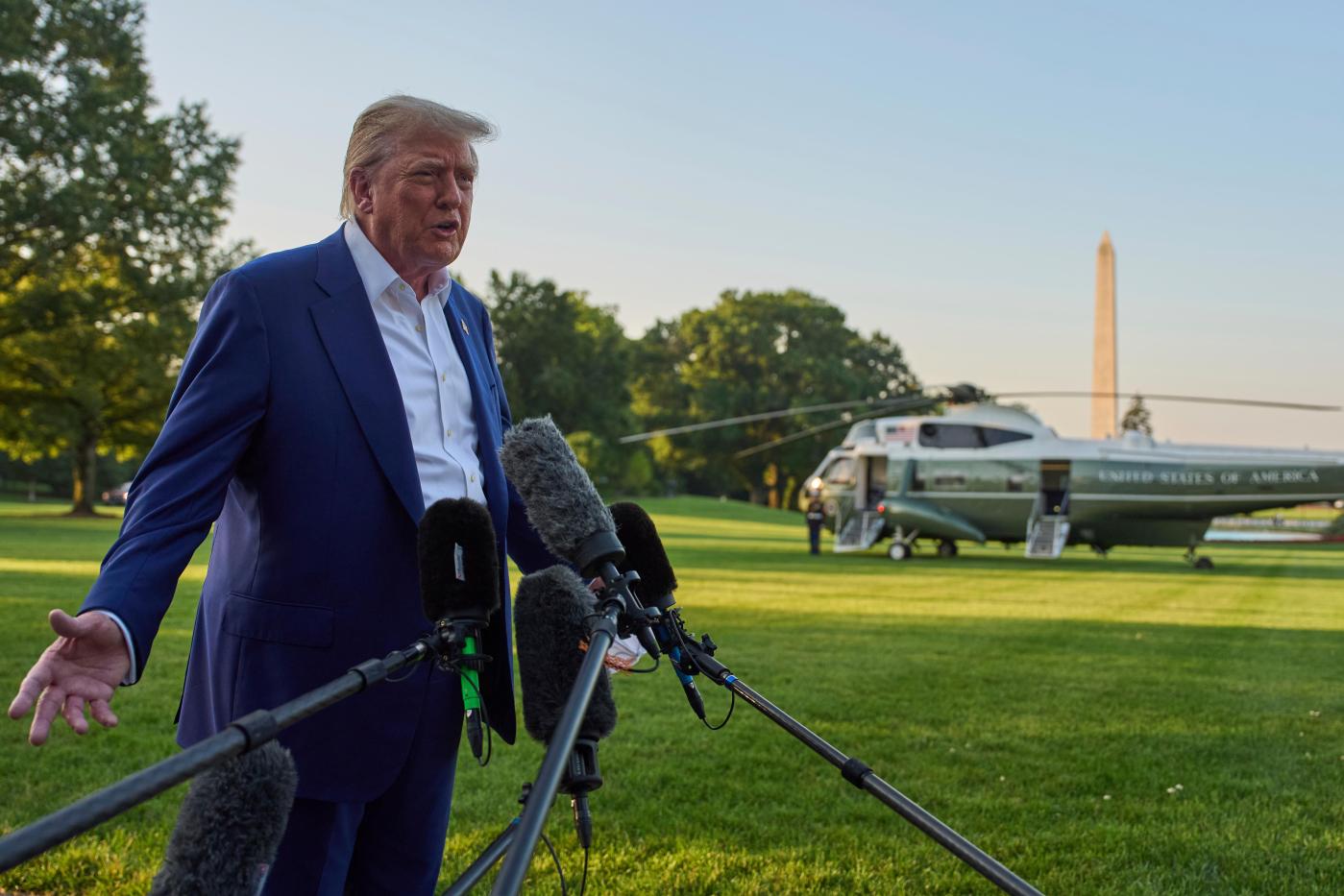
Trump says whether he’ll commit to NATO mutual defense guarantee ‘Depends on your definition’

posted in: All news | 0

By SEUNG MIN KIM

WASHINGTON (AP) — President Donald Trump on Tuesday injected some uncertainty over whether the U.S. would abide by the mutual defense guarantees outlined in the NATO treaty as he headed to its summit — comments that could revive longstanding concern from European allies about his commitment to the military alliance.

“Depends on your definition,” Trump told reporters on Tuesday as he was headed to The Hague, where this year’s summit is being held. “There’s numerous definitions of Article Five, you know that, right? But I’m committed to being their friends.” Asked later to clarify, Trump said he is “committed to saving lives” and “committed to life and safety” but did not expand further, saying he didn’t want to elaborate while flying on an airplane.

The remarks, which came to reporters on Air Force One as Trump traveled to the Netherlands, previewed what could be another volatile appearance by Trump at a summit celebrating an alliance that the Republican president has often derided.

And it comes amid a backdrop of tumult in the Middle East, after Trump moved to strike three nuclear enrichment facilities in Iran as well as the president’s sudden announcement that Israel and Iran had reached a “complete and total ceasefire.” The sharp U-turn in hostilities — followed hours later by Trump’s declaration that both parties violated the agreement — had already started to shape the summit, with NATO Secretary-General Mark Rutte publicly dancing around the issue even as hundreds of people showed up in The Hague on Sunday to denounce the conflict in a protest that was initially focused on defense spending.

Still, other NATO countries have become accustomed to the unpredictable when it comes to Trump, who has made no secret of his disdain for the alliance, which was created as a bulwark against threats from the former Soviet Union.

Trump’s debut on the NATO stage at the 2017 summit was perhaps most remembered by his shove of Dusko Markovic, the prime minister of Montenegro, as the U.S. president jostled toward the front of the pack of world leaders during a NATO headquarters tour.

And he began the 2018 summit by questioning the value of the decades-old military alliance and accusing its members of not contributing enough money for their defense — themes he has echoed since. In Brussels, Trump floated a 4% target of defense spending as a percentage of a country’s gross domestic product, a figure that seemed unthinkably high at the time.

“NATO was broke, and I said, ‘You’re going to have to pay,’” Trump said Tuesday, recounting his initial encounters with the alliance. “And we did a whole thing, and now they’re paying a lot. Then I said, ‘You’re going to have to lift it to 4% or 5%, and 5% is better.’”

That 5% figure is “good,” Trump said, adding: “It gives them much more power.”

Sen. Jeanne Shaheen of New Hampshire, the top Democrat on the Senate Foreign Relations Committee, will also attend the NATO summit this week. She said if Trump does anything to sow division within the alliance, it would benefit Xi Jinping of China, which NATO countries have accused of enabling Russia as it invades Ukraine.

“That does not help America, does not help our national security,” Shaheen said in an interview. “What it does is hand a victory to our adversaries, and for an administration that claims to be so concerned about the threat from (China), to behave in that way is hard to understand.”

Trump heavily telegraphed his attitude toward global alliances during his presidential campaigns.

As a candidate in 2016, Trump suggested that he as president would not necessarily heed the alliance’s mutual defense guarantees outlined in Article 5 of the NATO treaty. And during a campaign rally in 2024, Trump recounted a conversation with another NATO leader during which Trump said he would “encourage” Russia “to do whatever the hell they want” to members who weren’t meeting the alliance’s military spending targets.

In The Hague, Trump will tout the pledge to hike military spending, which requires other NATO countries to invest in their defense at an unprecedented scale. In a private message from Rutte that Trump posted on his Truth Social account on Tuesday, the secretary-general praised him for driving NATO “to a really, really important moment for America and Europe, and the world.”

“You will achieve something NO American president in decades could get done,” Rutte wrote in the message that Trump published, which NATO confirmed he sent. “Europe is going to pay in a BIG way, as they should, and it will be your win.”

Last week, the president went as far as to argue that the U.S. should not have to abide by the 5% spending pledge he wants imposed on the other NATO countries, although he appeared to soften those comments on Tuesday.

Related Articles


Justice Department official suggested ignoring court orders on deportations, whistleblower claims


Presidents vs. Congress: Trump is only the latest to test the War Powers Act


Truckers fear job loss as new English language rules take effect


Powell says Fed can wait to reduce interest rates as Trump demands cuts


Trump says Israel-Iran ceasefire ‘is in effect’ and Israeli planes won’t attack anymore

That 5% is effectively divided into two parts. The first, 3.5%, is meant to be made up of traditional military spending such as tanks, warplanes and air defense. What can comprise the remaining 1.5% is a bit fuzzier, but it can include things like roads and bridges that troops could use to travel. According to NATO, the U.S. was spending about 3.4% of its gross domestic product on defense as of 2024.

Most NATO countries — with Spain as the key holdout — are preparing to endorse the pledge, motivated not just by Russian President Vladimir Putin’s invasion of Ukraine to bolster their own defenses but also perhaps appease the United States and its tempestuous leader.

“He hasn’t said this in a while, but there are still a lot of worries in Europe that maybe the United States will pull out of NATO, maybe the United States won’t honor Article 5,” said Matthew Kroenig, vice president and senior director of the Atlantic Council’s Scowcroft Center for Strategy and Security and a former Pentagon official. “I think there is a real fear among Europeans that we need to deliver for Trump in order to keep the United States engaged in NATO.”

Kroenig added: “Like it or not, I do think Trump’s tougher style does get more results.”

European allies have taken note of potential signs of a broader U.S. retreat. France and other NATO countries have been concerned that the Trump administration is considering reducing troop levels in Europe and shift them over to the Indo-Pacific, which Cabinet officials have signaled is a higher priority.

Still, Secretary of State Marco Rubio and U.S. Ambassador to NATO Matt Whitaker have underscored the U.S.’ commitment and have said the Trump administration is only seeking a stronger alliance.

The White House has not said which world leaders Trump will meet with at the World Forum in The Hague. Trump said Tuesday that he’ll “probably” see Ukrainian President Volodymyr Zelenskyy. The two leaders were scheduled to meet at the Group of 7 summit in Kananaskis, Alberta, earlier this month before Trump abruptly cut his trip short and returned to Washington as the Israel-Iran conflict was intensifying.

But Trump does get quite the royal treatment this week: He plans to stay Tuesday night at Huis Ten Bosch palace, home to Dutch King Willem-Alexander.

Associated Press writers Mike Corder and Lorne Cook in The Hague, Netherlands, and Darlene Superville in Washington contributed to this report.
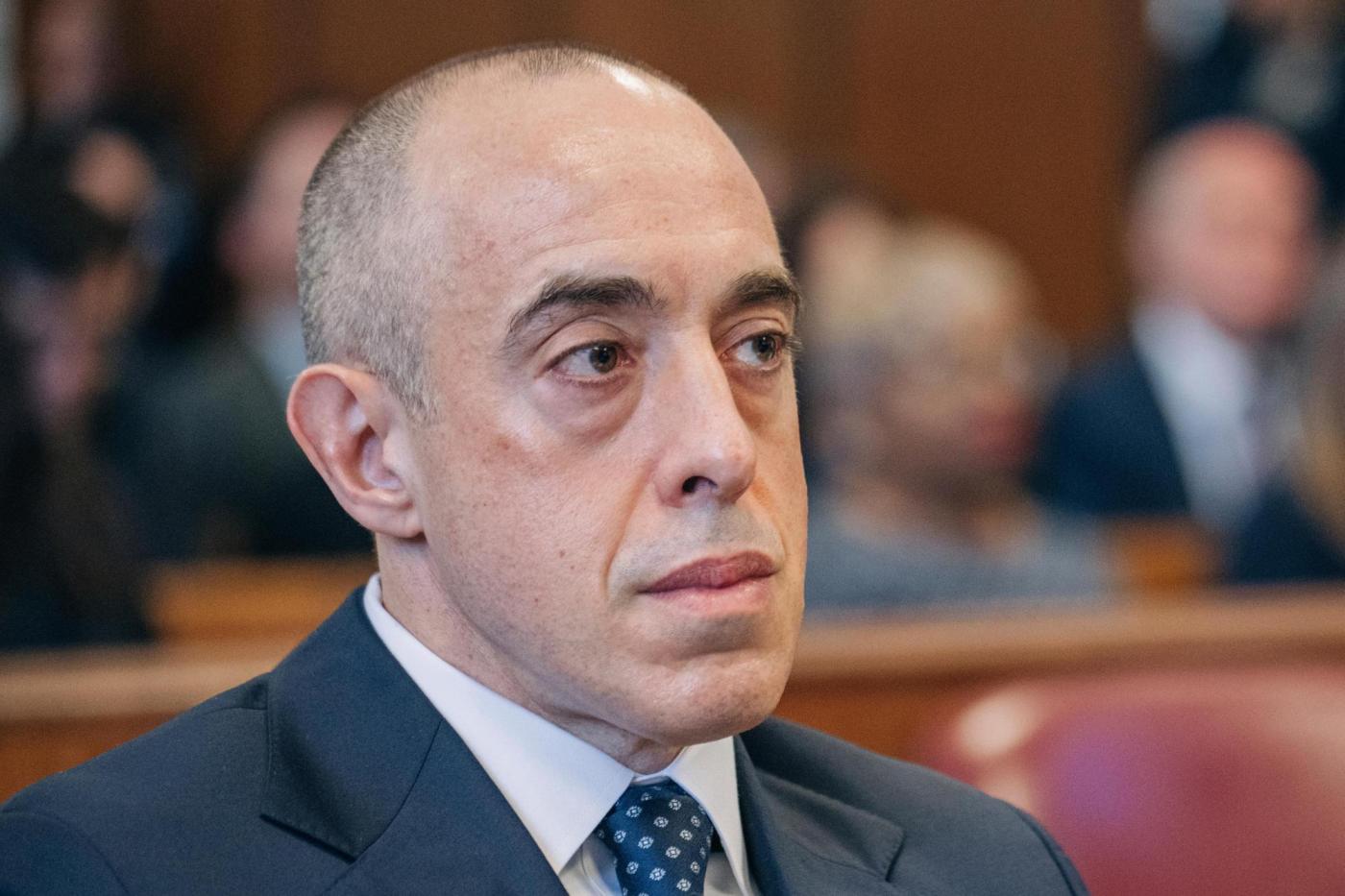

Justice Department official suggested ignoring court orders on deportations, whistleblower claims

posted in: All news | 0

By ALANNA DURKIN RICHER

WASHINGTON (AP) — A top Justice Department official suggested the Trump administration might have to ignore court orders as it prepared to deport Venezuelan migrants it accused of being gang members, a fired department lawyer alleged in a whistleblower complaint made public Tuesday.

Related Articles


Presidents vs. Congress: Trump is only the latest to test the War Powers Act


Truckers fear job loss as new English language rules take effect


Powell says Fed can wait to reduce interest rates as Trump demands cuts


Trump says Israel-Iran ceasefire ‘is in effect’ and Israeli planes won’t attack anymore


Supreme Court allows Trump to restart swift deportation of migrants away from their home countries

The filing seeks an investigation into the claims about Principal Assistant Deputy Attorney General Emil Bove, who is set to face lawmakers Wednesday for his confirmation hearing to become a federal appeals court judge.

The former DOJ lawyer, Erez Reuveni, was fired after he conceded in a court hearing that Kilmar Abrego Garcia should not have been deported to El Salvador, and expressed frustration over a lack of information about the administration’s actions.

The whistleblower filing from Reuveni’s lawyers describes a Justice Department meeting in March after Trump invoked the Alien Enemies Act over what he claimed was an invasion by the Venezuelan gang Tren de Aragua. The filing alleges that Bove raised the possibility that a court might block the deportations before they could be carried out. Reuveni claims Bove used a profanity, saying the department would need to consider telling the courts “f— you,” and “ignore any such order,” according to the filing.

“Mr. Reuveni was stunned by Bove’s statement because, to Mr. Reuveni’s knowledge, no one in DOJ leadership – in any Administration – had ever suggested the Department of Justice could blatantly ignore court orders, especially with” an expletive, the filing says.

Reuveni’s claims were first reported Tuesday by The New York Times.

Deputy Attorney General Todd Blanche denied the allegations in a post on X Tuesday morning. Blanche said Reuveni’s claims are “utterly false,” adding that he was at the meeting and “at no time did anyone suggest a court order should not be followed.”

“Planting a false hit piece the day before a confirmation hearing is something we have come to expect from the media, but it does not mean it should be tolerated,” Blanche wrote.

Reuveni was fired shortly after he had been promoted to serve as acting deputy director of the Office of Immigration Litigation. He had worked for the Justice Department for nearly 15 years under both Republican and Democratic administrations.

What to know about Kilmar Abrego Garcia’s release and risk of deportation

posted in: All news | 0

By BEN FINLEY

Kilmar Abrego Garcia, whose mistaken deportation to El Salvador became a flashpoint in President Donald Trump’s immigration crackdown, has been back in the United States for more than two weeks after being charged with human smuggling in Tennessee.

But the 29-year-old Maryland construction worker’s future is far from certain.

A federal judge has raised questions about the strength of the government’s smuggling allegations, including its claim Abrego Garcia is in the violent MS-13 street gang. The judge on Sunday denied federal prosecutors’ request to keep Abrego Garcia in jail while he awaits trial. The conditions of his release will be discussed at a court hearing on Wednesday.

Federal prosecutors have said they will appeal the judge’s decision. Even if Abrego Garcia is released, U.S. Immigration and Customs Enforcement is expected to detain him and try to deport him.

Here’s what to know about Abrego Garcia’s case:

The smuggling charges

Abrego Garcia is charged with smuggling throughout the U.S. hundreds of people living in the country illegally, including children and members of MS-13, from 2016 to 2025.

The charges stem from a 2022 traffic stop for speeding in Tennessee during which he was driving a vehicle with nine passengers who didn’t have any luggage.

Body camera footage shows a calm exchange between officers and Abrego Garcia. The officers discussed among themselves their suspicions of smuggling. One of the officers says, “He’s hauling these people for money.” Another says Abrego Garcia had $1,400 in an envelope.

Abrego Garcia was allowed to continue driving with only a warning.

A Department of Homeland Security special agent, Peter Joseph, testified at a June 13 court hearing in Nashville that witnesses testified to a grand jury that they saw Abrego Garcia smuggling people, guns or drugs and that he earned upward of $100,000 a year.

A not guilty plea

Abrego Garcia pleaded not guilty at the June 13 hearing. His attorneys have characterized the case as an attempt by Trump’s Republican administration to justify his mistaken deportation in March.

Abrego Garcia’s lawyers told the judge that some government witnesses cooperated to get favors regarding their immigration status or criminal charges they were facing. Joseph, the special agent, acknowledged in testimony that one witness was living in the U.S. illegally with a criminal record and is now getting preferred status.

Casting doubt, an assistant federal public defender, Richard Tennent, noted that a witness claimed that Abrego Garcia would drive from Maryland to Houston — a 1,400-mile (2,250-kilometer) trip taking about 24 hours — two or three times per week.

Judge raises questions

In her ruling Sunday, U.S. Magistrate Judge Barbara Holmes rejected the government’s request to keep Abrego Garcia in jail.

The judge echoed defense attorneys’ doubts that Abrego Garcia could make multiple roundtrips per week from Maryland to Houston, which she wrote would “approach physical impossibility.”

The judge also noted inconsistencies about Abrego Garcia’s alleged ties to MS-13, writing that two witnesses offered “general statements” and “hearsay.”

Meanwhile, a third witness who’d known Abrego Garcia for 10 years said “there were no signs or markings, including tattoos, indicating that Abrego is an MS-13 member,” the judge wrote.

Holmes also noted the contrast between the government’s allegations and the fact that Abrego Garcia “has no reported criminal history of any kind.”

Original MS-13 allegation

Abrego Garcia grew up in El Salvador’s capital, San Salvador, and helped his family run a business selling pupusas, tortilla pouches filled with cheese, beans or pork.

In 2011, the year he turned 16, he fled a local gang that extorted and terrorized his family, court records state. He traveled illegally to Maryland, where his brother already lived as a U.S. citizen.

Abrego Garcia found work in construction and began a relationship with an American woman, Jennifer Vasquez Sura. In 2018, he moved in with her and her two children after she became pregnant with his child. They lived in Prince George’s County, just outside Washington.

Related Articles


As US cities heighten security, Iran’s history of reprisal points to murder-for-hire plots


Today in History: June 24, Sally Ride completes historic space shuttle mission


Supreme Court will hear case of Rastafarian whose dreadlocks were shaved by Louisiana prison guards


Early-season heat dome brings highest temperatures in years to parts of Eastern US


Weekend tornadoes kill 6 in North Dakota and New York, toss trees and train cars

In March 2019, Abrego Garcia went to a Home Depot seeking work as a laborer when he and three other men were detained by local police, court records say. They were suspected of being in MS-13 based on tattoos and clothing.

A criminal informant told police that Abrego Garcia was in MS-13, court records state, but police did not charge him and turned him over to ICE.

Abrego Garcia then went before a U.S. immigration judge and sought asylum, which was denied. The judge, however, granted him protection from being deported back to El Salvador.

The judge said Abrego Garcia had demonstrated a “well-founded fear” of gang persecution there, court records state. He was released.

Abrego Garcia checked in with ICE yearly while Homeland Security issued him a work permit, his attorneys said. He joined a union and was employed full-time as a sheet metal apprentice.

In February, the Trump administration designated MS-13 as a foreign terrorist organization, and in March it deported Abrego Garcia to a notorious prison in El Salvador.

The administration described its violation of the immigration judge’s 2019 order as an administrative error. Trump and other officials doubled down on claims Abrego Garcia was in MS-13.

US could try to deport him again

Holmes acknowledged in Sunday’s ruling that considering release was “little more than an academic exercise.” Prosecutors had told Holmes that ICE would take Abrego Garcia into custody if he were released.

Another public defender, Will Allensworth, told the judge he expects a full hearing before an immigration judge, who would have to consider Abrego Garcia’s 2019 protection order from deportation to El Salvador.

If the U.S. wanted to try to deport Abrego Garcia somewhere else, the government would have to prove the other country wouldn’t just send him to El Salvador, Allensworth said.

César Cuauhtémoc García Hernández, an Ohio State University law professor, said the Trump administration would be “fully within its legal power to attempt to remove him to some other country.”

“The Trump administration would have to pull its diplomatic levers,” the professor added. “It’s unusual. But it’s not unheard of.”

Abrego Garcia could contest the criminal allegations in immigration court while demonstrating his ties to the U.S., García Hernández said.

“The fact that he has become the poster boy for the Trump administration’s hard-line approach to immigration bolsters his persecution claim,” the professor said. “Because he’s a known quantity at this point, and not just in El Salvador or Central America, but really across much of the world.”

Associated Press reporter Travis Loller in Nashville, Tenn., contributed to this report.

NATO leaders gather for historic summit with unity on the line

posted in: All news | 0

By MOLLY QUELL, LORNE COOK and MIKE CORDER

THE HAGUE, Netherlands (AP) — NATO leaders gathered in the Netherlands on Tuesday for a historic two-day summit that could unite the world’s biggest security organization around a new defense spending pledge or widen divisions among the 32 allies.

The allies are likely to endorse a goal of spending 5% of their gross domestic product on their security, to be able to fulfil the alliance’s plans for defending against outside attack. Still, Spain has said it cannot, and that the target is “unreasonable.” President Donald Trump has said the U.S. should not have to.

Slovakia said that it reserves the right to decide how to reach the target by NATO’s new 2035 deadline.

“There’s a problem with Spain. Spain is not agreeing, which is very unfair to the rest of them, frankly,” Trump told reporters on Air Force One on his way to the summit.

NATO’s first summit with Trump, in 2018, unraveled due to a dispute over defense spending.

Ahead of the meeting, Britain, France and Germany committed to the 5% goal. Host country the Netherlands is also onboard. Nations closer to the borders of Ukraine, Russia and its ally Belarus had previously pledged to do so.

“We are not living in happy land after the Berlin Wall came down. We are living in much more dangerous times and there are enemies, adversaries who might want to attack us,” NATO Secretary-General Mark Rutte said ahead of the summit in The Hague.

“We have to make sure that we defend our beautiful way of life and systems and our values,” he said.

Trump’s first appearance at NATO since returning to the White House was supposed to center on how the U.S. secured the historic military spending pledge from others in the security alliance — effectively bending it to its will.

But the spotlight has shifted to Trump’s decision to strike three nuclear enrichment facilities in Iran that the administration says eroded Tehran’s nuclear ambitions, as well as the president’s sudden announcement that Israel and Iran had reached a “complete and total ceasefire.”

Ukraine has also suffered as a result of that conflict. It has created a need for weapons and ammunition that Kyiv desperately wants, and shifted the world’s attention away. Past NATO summits have focused almost entirely on the war in Ukraine, now in its fourth year.

Still, Rutte insisted NATO could manage more than one conflict at a time.

Related Articles


As US cities heighten security, Iran’s history of reprisal points to murder-for-hire plots


Trump says Israel-Iran ceasefire is in effect after deal initially faltered


Trump says Israel-Iran ceasefire ‘is in effect’ and Israeli planes won’t attack anymore


Today in History: June 24, Sally Ride completes historic space shuttle mission


US strikes on Iran add to global travel disruptions and flight cancellations

“If we would not be able to deal with … the Middle East, which is very big and commanding all the headlines, and Ukraine at the same time, we should not be in the business of politics and military at all,” he said. “If you can only deal with one issue at a time, that will be that. Then let other people take over.”

Ukrainian President Volodymyr Zelenskyy arrived in The Hague for a series of meetings, despite his absence from a leaders’ meeting aiming to seal the agreement to boost military spending.

It’s a big change since the summit in Washington last year, when the military alliance’s weighty communique included a vow to supply long-term security assistance to Ukraine, and a commitment to back the country “on its irreversible path” to NATO membership.

Zelenskyy’s first official engagement was with Dutch caretaker Prime Minister Dick Schoof at his official residence just across the road from the summit venue.

But in a telling sign of Ukraine’s status at the summit, neither leader mentioned NATO. Ukraine’s bid to join the alliance has been put in deep freeze by Trump.

“Let me be very clear, Ukraine is part of the family that we call the Euro-Atlantic family,” Schoof told Zelenskyy, who in turn said he sees his country’s future in peace “and of course, a part of a big family of EU family.”

Schoof used the meeting to announce a new package of Dutch support to Kyiv including 100 radar systems to detect drones and a move to produce drones for Ukraine in the Netherlands, using Kyiv’s specifications.

The U.S. has made no new public pledges of support to Ukraine since Trump took office six months ago.

Meeting later with Rutte and top EU officials, Zelenskyy appealed for European investment in Ukraine’s defense industry, which can produce weapons and ammunition more quickly and cheaply than elsewhere in Europe.

“No doubt, we must stop (Russian President Vladimir) Putin now and in Ukraine. But we have to understand that his objectives reach beyond Ukraine. European countries need to increase defense spending,” he said. He said that NATO’s new target of 5% of GDP “is the right level.”

He thanked them for their unity in supporting Ukraine, saying: “I think this is the most important thing.”