Trump is trying to script the perfect ending to war in Iran. Will the rest of the world go along?

posted in: All news | 0

By CHRIS MEGERIAN, Associated Press

WASHINGTON (AP) — President Donald Trump wanted the brief and explosive American intervention in the Middle East to end with the satisfying tidiness of a prime-time season finale.

After days of stoking suspense over whether he would help Israel’s attacks on Iran, followed by a spectacular bombing mission against nuclear facilities, he announced a surprise ceasefire deal to bring the war to a close.

Trump even gave the conflict a definitive name — “THE 12 DAY WAR” — leaving no doubt that he viewed the storyline as complete.

Now the question is whether the rest of the world will follow the script that Trump has laid out.

An unsteady ceasefire adds uncertainty

The ceasefire has already proven shaky, with Israel and Iran bombarding each other after the truce took effect. Trump upbraided at both countries on Tuesday morning, saying “I’m not happy with them,” using the f-word in derision and demanding that they stop fighting.

Thus far, they’ve obliged. However, it could be years before the world knows whether this latest round of warfare will mark a turn toward greater peace or be the harbinger of more bloodshed.

In this image provided by the White House, President Donald Trump and Secretary of State Marco Rubio, right, sit in the Situation Room, Saturday, June 21, 2025, at the White House in Washington. (The White House via AP)

The terms of the ceasefire remain unclear, and there are lingering questions about how much of Iran’s nuclear program survived the strikes over the weekend, despite Trump’s claims that it was “totally obliterated.” In addition, the country’s theocratic leadership could retrench, jeopardizing the potential for durable diplomatic solutions to conflicts that have percolated in the region for decades.

“In the moment, he looks like a tough guy who produces results,” said Brian Katulis, senior fellow at the Middle East Institute. “But when the dust settles and the blowback comes, you’re left thinking, wait a second, are we any better off?”

For now, those issues appeared far from Trump’s mind as the Republican president reveled in emerging unscathed from a foreign policy gamble that his predecessors never attempted. On social media, he posted a picture of himself kissing the American flag with the phrase “Trump was right about everything.”

How it unfolded

The fighting began nearly two weeks ago when Israeli attacked on Iran, targeting military leaders, scientists, missile launchers and anti-air defenses.

However, only the United States has the bombers and the weapons needed to penetrate Iranian nuclear facilities that are buried deep underground. Although Tehran has maintained that its atomic ambitions are only for peaceful purposes, U.S. and Israeli leaders have long feared that it would build a nuclear weapon.

American spy agencies did not believe the Iranian government had decided to take that step, despite enriching uranium to levels beyond what’s needed for civilian use. However, Trump seized an opportunity to strike with war already underway, brushing aside fears that he could become mired in exactly the kind of open-ended conflict in the Middle East that he had pledged to avoid.

In this image provided by the White House, President Donald Trump, right, and Vice President JD Vance sit in the Situation Room, Saturday, June 21, 2025, at the White House in Washington. (The White House via AP)

He ordered U.S. bombers to fly halfway around the world to attack three nuclear facilities, then threatened more strikes if American troops faced retaliation.

It was the kind of dramatic action that has always appealed to Trump, who has cultivated an air of unpredictability and aggression on the global stage.

Iran was a top target of his brinksmanship during his first term. He called off U.S. strikes after Iran shot down an American drone, fearing that his response would be disproportionate, but he also assassinated one of the country’s top generals.

Two days after the U.S. strike on nuclear facilities, he announced that Israel and Iran had agreed to a ceasefire.

“CONGRATULATIONS TO EVERYONE!” Trump wrote on social media, where he had been narrating every twist and turn of the conflict. “This is a War that could have gone on for years, and destroyed the entire Middle East, but it didn’t, and never will!”

Related Articles


GOP plan to sell more than 2 million acres of federal lands is found to violate Senate rules


Trump administration asks Supreme Court to clear the way for a South Sudan-bound deportation flight


Rep. Robert Garcia elected top Democrat on Oversight panel, setting new path for party’s opposition


Cuomo is trying a comeback in New York’s mayoral primary, but Zohran Mamdani stands in his way


Trump administration postpones classified briefings for lawmakers on Iran

Approval is coming from unusual corners

Praise came from some unlikely corners of the American foreign policy establishment.

For example, Brett McGurk, who coordinated Middle East policy under President Joe Biden, said “this is about the best place we can be” and “I give extremely high marks to this national security team and President Trump for managing this crisis.”

Katulis isn’t so sure. He said the Trump administration “seems to be operating without a cogent diplomatic playbook” and “fixated on military tactics and operations in absence of an overall strategy.”

Before the war, Trump had been pressuring Iran to abandon its nuclear program as part of a negotiated settlement. There’s no guarantee that Tehran will return to the bargaining table, although the president insisted that “IRAN WILL NEVER REBUILD THEIR NUCLEAR FACILITIES!”

“It was my great honor to Destroy All Nuclear facilities & capability, and then, STOP THE WAR!” Trump wrote on Tuesday as he flew to the annual summit of the North Atlantic Treaty Organization in the Netherlands.

Leon Panetta, who held top national security roles under President Barack Obama, chuckled at Trump’s stream of consciousness on social media.

“We always know what he’s thinking,” Panetta said, “but we don’t know whether what he’s thinking is really happening.”
Bobby Sherman, teen idol in the 1960s and ’70s, and later a CPR teacher, dies at 81

posted in: All news | 0

By MARK KENNEDY, AP Entertainment Writer

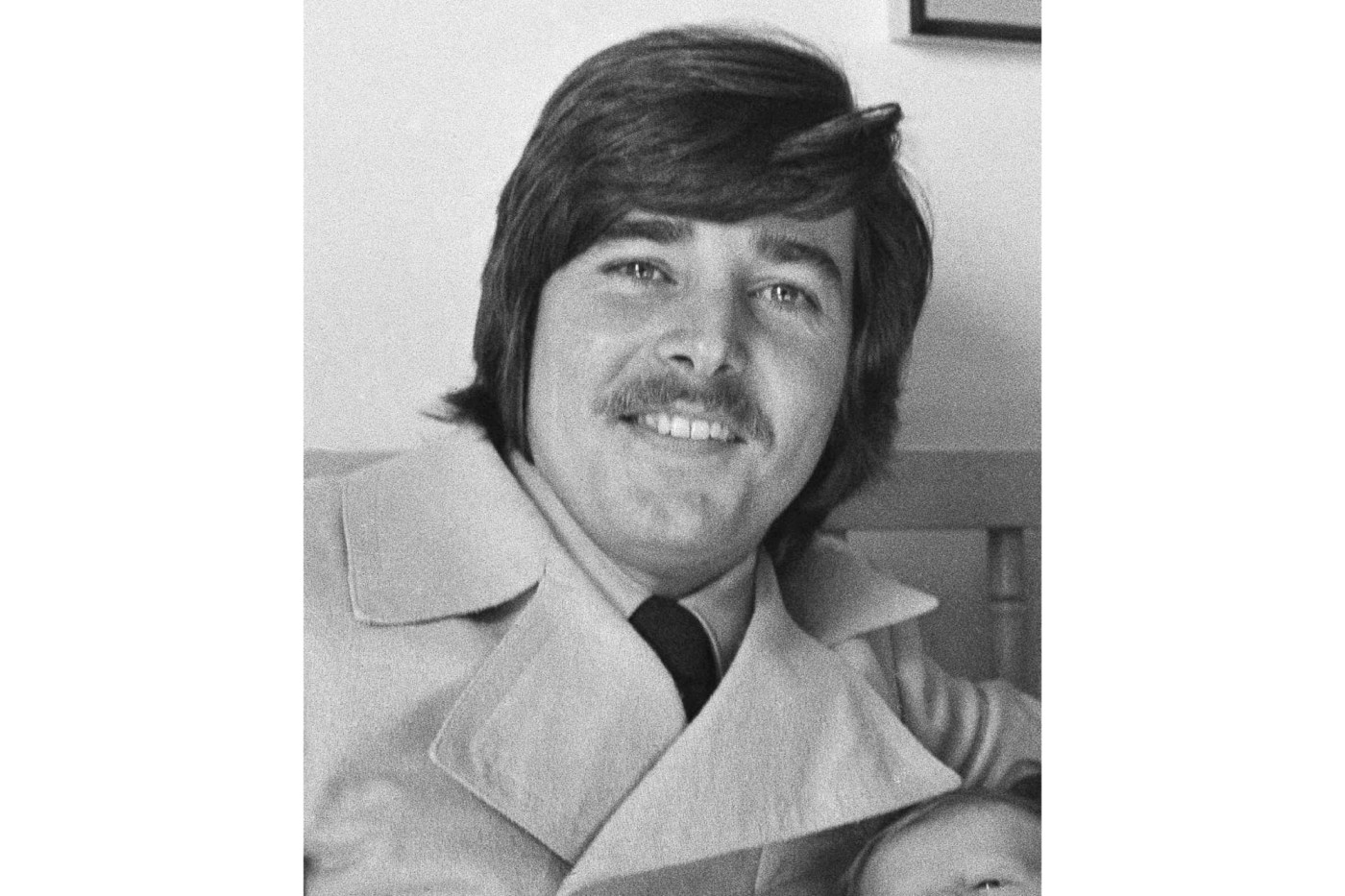
Bobby Sherman, whose winsome smile and fashionable shaggy mop top helped make him into a teen idol in the 1960s and ’70s with bubblegum pop hits like “Little Woman” and “Julie, Do Ya Love Me,” has died. He was 81.

His wife, Brigitte Poublon, announced the death Tuesday and family friend John Stamos posted her message on Instagram: “Bobby left this world holding my hand — just as he held up our life with love, courage, and unwavering grace.” Sherman revealed he had Stage 4 cancer earlier this year.

Sherman was a squeaky-clean regular on the covers of Tiger Beat and Sixteen magazines, often with hair over his eyes and a choker on his neck. His face was printed on lunchboxes, cereal boxes and posters that hung on the bedroom walls of his adoring fans. He landed at No. 8 in TV Guide’s list of “TV’s 25 Greatest Teen Idols.”

He was part of a lineage of teen heartthrobs who emerged as mass-market, youth-oriented magazines and TV took off, connecting fresh-scrubbed Ricky Nelson in the 1950s to David Cassidy in the ’60s, all the way to Justin Bieber in the 2000s.

Sherman had four Top 10 hits on the Billboard Hot 100 chart — “Little Woman,” “Julie, Do Ya Love Me,” “Easy Come, Easy Go,” and “La La La (If I Had You).” He had six albums on the Billboard 200 chart, including “Here Comes Bobby,” which spent 48 weeks on the album chart, peaking at No. 10. His career got its jump start when he was cast in the ABC rock ’n’ roll show “Shindig!” in the mid-’60s. Later, he starred in two television series — “Here Come the Brides” (1968-70) and “Getting Together” (1971).

FILE – Singer Bobby Sherman, his wife Patricia, and their newborn son Christopher Noel, appear in Los Angeles on Dec. 21, 1972. (AP Photo/George Brich, File)

After the limelight moved on, Sherman became a certified medical emergency technician and instructor for the Los Angeles Police Department, teaching police recruits first aid and CPR. He donated his salary.

“A lot of times, people say, ‘Well, if you could go back and change things, what would you do?’” he told The Tulsa World in 1997. “And I don’t think I’d change a thing — except to maybe be a little bit more aware of it, because I probably could’ve relished the fun of it a little more. It was a lot of work. It was a lot of blood, sweat and tears. But it was the best of times.”

A life-changing Hollywood party

Sherman, with sky blue eyes and dimples, grew up in the San Fernando Valley, singing Ricky Nelson songs and performing with a high-school rock band.

“I was brought up in a fairly strict family,” he told the Sunday News newspaper in Lancaster, Pennsylvania, in 1998. “Law and order were important. Respect your fellow neighbor, remember other people’s feelings. I was the kind of boy who didn’t do things just to be mischievous.”

He was studying child psychology at a community college in 1964 when his girlfriend took him to a Hollywood party, which would change his life. He stepped onstage and sang with the band. Afterward, guests Jane Fonda, Natalie Wood and Sal Mineo asked him who his agent was. They took his number and, a few days later, an agent called him and set him up with “Shindig!”

Sherman hit true teen idol status in 1968, when he appeared in “Here Come the Brides,” a comedy-adventure set in boom town Seattle in the 1870s. He sang the show’s theme song, “Seattle,” and starred as young logger Jeremy Bolt, often at loggerheads with brother, played by David Soul. It lasted two seasons.

Following the series, Sherman starred in “Getting Together,” a spinoff of “The Partridge Family,” about a songwriter struggling to make it in the music business. He became the first performer to star in three TV series before the age of 30. That television exposure soon translated into a fruitful recording career: His first single, “Little Woman,” earned a gold record in 1969.

“While the rest of the world seemed jumbled up and threatening, Sherman’s smiling visage beamed from the bedroom walls of hundreds of thousands of teen-age girls, a reassuring totem against the riots, drugs, war protests and free love that raged outside,” The Tulsa World said in 1997.

His movies included “Wild In Streets,” “He is My Brother” and “Get Crazy.”

From music to medicine

Sherman pulled back from his celebrity career after several years of a frantic schedule, telling The Washington Post: “I’d film five days a week, get on a plane on a Friday night and go someplace for matinee and evening shows Saturday and Sunday, then get on a plane and go back to the studio to start filming again. It was so hectic for three years that I didn’t know what home was.”

Sherman’s pivot to becoming an emergency medical technician in 1988 was born out of a longtime fascination with medicine. Sherman said that affinity blossomed when he raised his sons with his first wife, Patti Carnel. They would get scrapes and bloody noses and he became the family’s first-aid provider. So he started learning basic first aid and cardiopulmonary resuscitation from the Red Cross.

“If I see an accident, I feel compelled to stop and give aid even if I’m in my own car,” he told the St. Petersburg Times. “I carry equipment with me. And there’s not a better feeling than the one you get from helping somebody out. I would recommend it to everybody.”

In addition to his work with the Los Angeles Police Department, he was a reserve deputy with the San Bernardino County Sheriff’s Department, working security at the courthouse. Sherman estimated that, as a paramedic, he helped five women deliver babies in the backseats of cars or other impromptu locations.

In one case, he helped deliver a baby on the sidewalk and, after the birth, the new mother asked Sherman’s partner what his name was. “When he told her Bobby, she named the baby Roberta. I was glad he didn’t tell her my name was Sherman,” he told the St. Petersburg Times in 1997.

Related Articles


Prosecution rests in Sean ‘Diddy’ Combs’ sex trafficking trial


Should the U.S. ban drug advertising to consumers?


Woman with ties to a cultlike group to appear in court after border agent’s killing


Tropical Storm Andrea forms, becomes 1st named storm of Atlantic hurricane season


U.S. Border Patrol is increasingly seen far from the border as Trump ramps up deportation arrests

The teen idols grow up

He was named LAPD’s Reserve Officer of the Year for 1999 and received the FBI’s Exceptional Service Award and the “Twice a Citizen” Award by the Los Angeles County Reserve Foundation.

In a speech on the floor of the U.S. House of Representatives in 2004, then-Rep. Howard McKeon wrote: “Bobby is a stellar example of the statement ‘to protect and serve.’ We can only say a simple and heartfelt thank you to Bobby Sherman and to all the men and women who courageously protect and serve the citizens of America.”

Later, Sherman would join the 1990s-era “Teen Idols Tour” with former 1960s heartthrobs Micky Dolenz and Davy Jones of the Monkees and Peter Noone of Herman’s Hermits.

The Chicago Sun-Times in 1998 described one of Sherman’s performances: “Dressed to kill in black leather pants and white shirt, he was showered with roses and teddy bears as he started things off with ‘Easy Come, Easy Go.’ As he signed scores of autographs at the foot of the stage, it was quickly draped by female fans of every conceivable age group.”

Sherman also co-founded the Brigitte and Bobby Sherman Children’s Foundation in Ghana, which provides education, health, and welfare programs to children in need.

He is survived by two sons, Christopher and Tyler, and his wife.

“Even in his final days, he stayed strong for me. That’s who Bobby was — brave, gentle, and full of light,” Poublon wrote.

GOP plan to sell more than 2 million acres of federal lands is found to violate Senate rules

posted in: All news | 0

By MATTHEW DALY, Associated Press

WASHINGTON (AP) — A plan to sell more than 2 million acres of federal lands has been ruled out of Republicans’ big tax and spending cut bill after the Senate parliamentarian determined the proposal by Senate Energy Chairman Mike Lee would violate the chamber’s rules.

Lee, a Utah Republican, has proposed selling public lands in the West to states or other entities for use as housing or infrastructure. The plan would revive a longtime ambition of Western conservatives to cede lands to local control after a similar proposal failed in the House earlier this year.

The proposal received a mixed reception Monday from the governors of Western states. New Mexico Gov. Michelle Lujan Grisham, a Democrat, called it problematic in her state because of the close relationship residents have with public lands.

Wyoming Gov. Mark Gordon, a Republican, voiced qualified support.

“On a piece-by-piece basis where states have the opportunity to craft policies that make sense … we can actually allow for some responsible growth in areas with communities that are landlocked at this point,” he said at a news conference in Santa Fe, New Mexico, where the Western Governors’ Association was meeting.

Lee, in a post on X Monday night, said he would keep trying.

“Housing prices are crushing families and keeping young Americans from living where they grew up. We need to change that,” he wrote, adding that a revised plan would remove all U.S. Forest Service land from possible sale. Sales of sites controlled by the U.S. Bureau of Land Management would be significantly reduced, Lee said, so that only land within 5 miles of population centers could be sold.

Related Articles


Trump is trying to script the perfect ending to war in Iran. Will the rest of the world go along?


Trump administration asks Supreme Court to clear the way for a South Sudan-bound deportation flight


Rep. Robert Garcia elected top Democrat on Oversight panel, setting new path for party’s opposition


Cuomo is trying a comeback in New York’s mayoral primary, but Zohran Mamdani stands in his way


Trump administration postpones classified briefings for lawmakers on Iran

Environmental advocates celebrated the ruling late Monday by Senate Parliamentarian Elizabeth MacDonough, but cautioned that Lee’s proposal was far from dead.

“This is a victory for the American public, who were loud and clear: Public lands belong in public hands, for current and future generations alike,” said Tracy Stone-Manning, president of The Wilderness Society. “Our public lands are not for sale.”

Carrie Besnette Hauser, president and CEO of the nonprofit Trust for Public Land called the procedural ruling in the Senate “an important victory in the fight to protect America’s public lands from short-sighted proposals that would have undermined decades of bipartisan work to protect, steward and expand access to the places we all share.”

“But make no mistake: this threat is far from over,” Hauser added. “Efforts to dismantle our public lands continue, and we must remain vigilant as proposals now under consideration,” including plans to roll back the bipartisan Great American Outdoors Act and cut funding for land and water conservation, make their way through Congress, she said.

MacDonough, the Senate parliamentarian, also ruled out a host of other Republican-led provisions Monday night, including construction of a mining road in Alaska and changes to speed permitting of oil and gas leases on federal lands.

While the parliamentarian’s rulings are advisory, they are rarely, if ever, ignored. Lawmakers are using a budget reconciliation process to bypass the Senate filibuster to pass President Donald Trump’s tax-cut package by a self-imposed July Fourth deadline.

Lee’s plan revealed sharp disagreement among Republicans who support wholesale transfers of federal property to spur development and generate revenue, and other lawmakers who are staunchly opposed.

Land in 11 Western states from Alaska to New Mexico would be eligible for sale. Montana was carved out of the proposal after lawmakers there objected. In states such as Utah and Nevada, the government controls the vast majority of lands, protecting them from potential exploitation but hindering growth.

“Washington has proven time and again it can’t manage this land. This bill puts it in better hands,” Lee said in announcing the plan.

Housing advocates have cautioned that federal land is not universally suitable for affordable housing. Some of the parcels up for sale in Utah and Nevada under a House proposal were far from developed areas.

New Mexico Sen. Martin Heinrich, the ranking Democrat on the energy committee, said Lee’s plan would exclude Americans from places where they fish, hunt and camp.

“I don’t think it’s clear that we would even get substantial housing as a result of this,” Heinrich said earlier this month. “What I know would happen is people would lose access to places they know and care about and that drive our Western economies.”

Prosecution rests in Sean ‘Diddy’ Combs’ sex trafficking trial

posted in: All news | 0

By MICHAEL R. SISAK and LARRY NEUMEISTER, Associated Press

NEW YORK (AP) — The prosecution rested Tuesday at Sean “Diddy” Combs ’ sex trafficking trial, capping a more than six-week-long presentation of evidence against the hip-hop maven that confronted him with former employees and two former girlfriends who expressed regret at his treatment of them over the past two decades.

The move came after defense lawyer Teny Geragos finished questioning the government’s final witness: Joseph Cerciello, a Homeland Security Investigations agent.

Prosecutors have cited the “freak offs” as proof of sex trafficking and racketeering conspiracy charges that resulted in Combs’ arrest last September.

Defense lawyers, though, say they were consensual sexual encounters consistent with the swingers lifestyle.

Combs, 55, has pleaded not guilty and has remained incarcerated without bail in a federal lockup in Brooklyn after multiple judges concluded last fall that he was a danger to the community.

FILE – This courtroom sketch depicts Sean “Diddy” Combs sitting at the defense table during his bail hearing in New York on Wednesday, Sept. 18, 2024. (Elizabeth Williams via AP, File)

The government’s case has consisted of 34 witnesses, including former employees of Combs’ Bad Boy Entertainment companies, but the bulk of its proof has come from the testimony of two former girlfriends: Casandra “Cassie” Ventura and a model and internet personality known to jurors only by the pseudonym “Jane.”

Ventura, 38, testified for four days during the trial’s first week, saying she felt pressured to engage in hundreds of “freak offs” because the encounters would enable her to be intimate with Combs after performing sexually with male sex workers while he watched them slather one another with baby oil and sometimes filmed the encounters.

Jane testified for six days about the sexual performances she labeled “hotel nights,” saying that she was putting them into perspective after beginning therapy three months ago. She said she felt coerced into engaging in them as recently as last August, but did so because she loved and still loves Combs.

Ventura was in a relationship with Combs from 2007 to 2018, while Jane was frequently with him from 2021 until his arrest, which canceled her plan to meet him at the New York hotel where he was taken into custody.

Related Articles


Bobby Sherman, teen idol in the 1960s and ’70s, and later a CPR teacher, dies at 81


Should the U.S. ban drug advertising to consumers?


Woman with ties to a cultlike group to appear in court after border agent’s killing


Tropical Storm Andrea forms, becomes 1st named storm of Atlantic hurricane season


U.S. Border Patrol is increasingly seen far from the border as Trump ramps up deportation arrests

The Associated Press doesn’t generally identify people who say they are victims of sexual abuse unless they come forward publicly, as Cassie has done.

After prosecutors rest on Tuesday, a defense presentation is expected to be completed by the end of the day without any witnesses.

Throughout the trial, defense lawyers have made their case for exoneration through their questioning of witnesses, including several who testified reluctantly or only after they were granted immunity from any crimes they may have committed.

Combs has been active in his defense, writing notes to his lawyers and sometimes helping them decide when to stop questioning a witness.

He was admonished once by the judge for nodding enthusiastically toward jurors during a successful stretch of cross-examination by one of his lawyers. Prosecutors complained that his gestures were a form of testifying without being subject to cross-examination. The judge warned that he could be excluded from his trial if it happened again.

In the past week, prosecutors and defense lawyers have shown jurors over 40 minutes of recordings Combs made of the “freak offs” or “hotel nights.”

Several jurors occasionally seemed squeamish as they viewed and listened to audio of the encounters, but most did not seem to react.

In her opening statement, Geragos had called the videos “powerful evidence that the sexual conduct in this case was consensual and not based on coercion.”

Closing arguments were tentatively scheduled for Thursday.