Twins pitching staff searching for answers amid tough stretch

posted in: All news | 0

After watching his pitchers give up a combined 46 runs in the past four games, Twins pitching coach Pete Maki convened a meeting of the group before Tuesday night’s game. It seemed like the right time for it.

The Twins entered Wednesday night’s game against Seattle losers of 11 of their past 12 games. They had a league-worst 6.73 earned-run average in the month of June — by almost a run and a half. They’re searching for answers.

Sure, they lost their ace Pablo López to a shoulder injury early in the month; that certainly has not helped matters. But the issues run far deeper than just López’s absence.

“We have very talented guys in the bullpen and rotation. This is part of any season,” Maki said. “Has it been bad? Yeah, it’s been bad, man. The run getting to fourth base has been a little insane. The way to really evaluate is each outing. What led to it today? What do you want back?”

It’s been a little different on a nightly basis, but a big culprit has been free bases. Jhoan Duran, for example, hit a pair of batters on Tuesday night in the ninth inning of a tied game, leading to a Mariners run in the Twins’ one-run loss.

And the Twins’ strikeout-to-walk ratio, once tops in the majors, has plummeted. Heading into Wednesday, the 76 walks the pitching staff has issued in June was tied for sixth in the majors. In May, a month during which they had a collective 3.11 earned-run average, they walked just 60 batters, tied for first in the majors.

“The past month we’re kind of the opposite of No. 1,” Maki said. “So, what’s leading to that? We’re walking a few too many guys.”

Yes, walks have been a problem, but really there is no easy answer to what has ailed the pitching staff as a whole, which carried the team earlier in the season, considering it varies pitcher to pitcher, day to day.

The pitchers meeting on Tuesday focused heavily on checking back in on the goals they had set for themselves as a group during spring training and assessing where they were at with those, starter Chris Paddack said. Manager Rocco Baldelli said another focus was on controlling what they could control and starting from there, calling it a “good reminder for everyone in the room.”

Paddack, Baldelli said, was one of the guys who stepped up to address the group and “spoke from the heart,” delivering what the manager described as an emotional message to the pitching staff.

“Obviously, whenever you’re going through a tough stretch, you need to have each other’s backs and try to support one another whenever we’re going through hard times like we have been the last couple weeks,” starter Bailey Ober said. “Just being able to come together as a group and support each other, it always means a lot. It was a good, successful meeting. I thought it was well needed, and hopefully we come out of that and kind of turn the script.”

Briefly

The Twins have Friday’s starter against Detroit listed as TBA. That would be David Festa’s day to start. Baldelli said it’s possible that Festa starts that game or it’s possible they use an opener, as they did during Festa’s last turn through the rotation. … Simeon Woods Richardson is scheduled to start the series finale against the Seattle Mariners on Thursday afternoon.

Related Articles


Twins battle back but fall yet again to Mariners


Report: Twins pick up option on manager Rocco Baldelli’s contract for 2026


Twins blown out yet again — this time by Mariners


Twins say selling at deadline ‘not at all our focus’


Coulombe used as opener against Brewers
Trump gets ‘golden share’ power in US Steel buyout. US agencies will get it under future presidents

posted in: All news | 0

By MARC LEVY

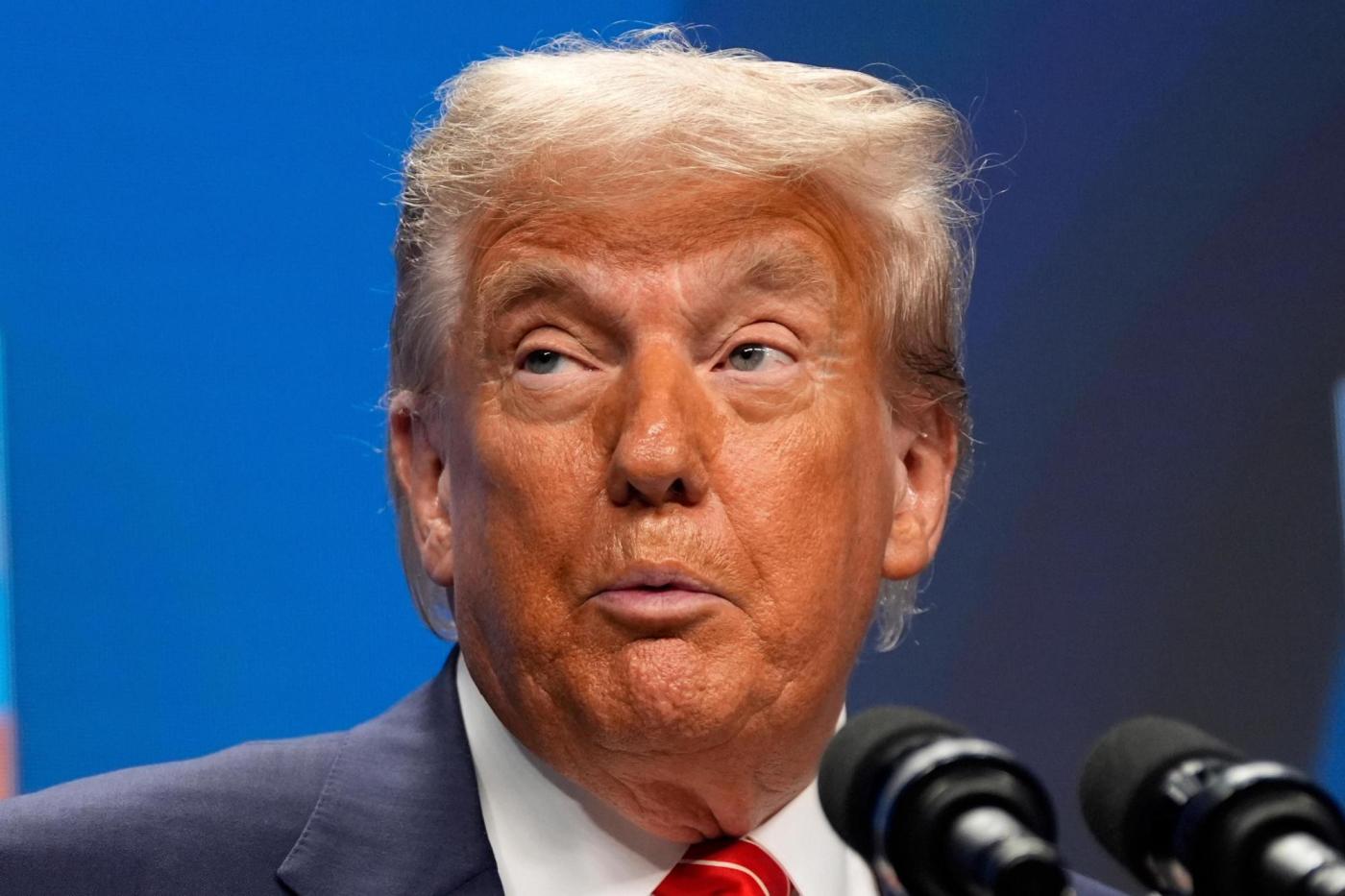
HARRISBURG, Pa. (AP) — President Donald Trump will control the so-called “golden share” that’s part of the national security agreement under which he allowed Japan-based Nippon Steel to buy out iconic American steelmaker U.S. Steel, according to disclosures with the U.S. Securities and Exchange Commission.

Related Articles


Trump representative Kari Lake on Voice of America’s fate: ‘Scrap the whole thing and start over’


Democrats fret about national fallout after Mamdani stuns in New York City


Who is Zohran Mamdani? State lawmaker seeks to become NYC’s first Muslim and Indian American mayor


Fannie Mae, Freddie Mac ordered to consider crypto as an asset when buying mortgages


Trump voters cheer his move against Iran. MAGA leaders had warned the bombing could backfire

The provision gives the president the power to appoint a board member and have a say in company decisions that affect domestic steel production and competition with overseas producers.

Under the provision, Trump — or someone he designates — controls that decision-making power while he is president. However, control over those powers reverts to the Treasury Department and the Commerce Department when anyone else is president, according to the filings.

The White House didn’t immediately respond to questions Wednesday about why Trump will directly control the decision-making and why it goes to the Treasury and Commerce departments under future presidents.

Nippon Steel’s nearly $15 billion buyout of Pittsburgh-based U.S. Steel became final last week, making U.S. Steel a wholly owned subsidiary.

Trump has sought to characterize the acquisition as a “partnership” between the two companies after he at first vowed to block the deal — as former President Joe Biden did on his way out of the White House — before changing his mind after he became president.

The national security agreement became effective June 13 and is between Nippon Steel, as well as its American subsidiary, and the federal government, represented by the departments of Commerce and Treasury, according to the disclosures.

The complete national security agreement hasn’t been published publicly, although aspects of it have been outlined in statements and securities filings made by the companies, U.S. Steel said Wednesday.

The pursuit by Nippon Steel dragged on for a year and-a-half, weighed down by national security concerns, opposition by the United Steelworkers and presidential politics in the premier battleground state of Pennsylvania, where U.S. Steel is headquartered.

The combined company will become the world’s fourth-largest steelmaker in an industry dominated by Chinese companies, and bring what analysts say is Nippon Steel’s top-notch technology to U.S. Steel’s antiquated steelmaking processes, plus a commitment to invest $11 billion to upgrade U.S. Steel facilities.

The potential that the deal could be permanently blocked forced Nippon Steel to sweeten the deal.

That included upping its capital commitments in U.S. Steel facilities and adding the golden share provision, giving Trump the right to appoint an independent director and veto power on specific matters.

Those matters include reductions in Nippon Steel’s capital commitments in the national security agreement; changing U.S. Steel’s name and headquarters; closing or idling U.S. Steel’s plants; transferring production or jobs outside of the U.S.; buying competing businesses in the U.S.; and certain decisions on trade, labor and sourcing outside the U.S.

Follow Marc Levy on X at: https://x.com/timelywriter.

Judge dismisses authors’ copyright lawsuit against Meta over AI training

posted in: All news | 0

By MATT O’BRIEN and BARBARA ORTUTAY

A federal judge on Wednesday sided with Facebook parent Meta Platforms in dismissing a copyright infringement lawsuit from a group of authors who accused the company of stealing their works to train its artificial intelligence technology.

Related Articles


Nestle says it will remove artificial dyes from US foods by 2026


Fannie Mae, Freddie Mac ordered to consider crypto as an asset when buying mortgages


Apple Valley senior living community adding independent living apartments


Asked on Reddit: Should I repair or replace my broken appliance?


Kroger announces closure of 60 stores across U.S.

The ruling from U.S. District Judge Vince Chhabri was the second in a week from San Francisco’s federal court to dismiss major copyright claims from book authors against the rapidly developing AI industry.

Chhabri found that 13 authors who sued Meta “made the wrong arguments” and tossed the case. But the judge also said that the ruling is limited to the authors in the case and does not mean that Meta’s use of copyrighted materials is lawful.

Lawyers for the plaintiffs — a group of well-known writers that includes comedian Sarah Silverman and authors Jacqueline Woodson and Ta-Nehisi Coates — didn’t immediately respond to a request for comment Wednesday. Meta also didn’t immediately respond to a request for comment.

“This ruling does not stand for the proposition that Meta’s use of copyrighted materials to train its language models is lawful,” Chhabri wrote. “It stands only for the proposition that these plaintiffs made the wrong arguments and failed to develop a record in support of the right one.”

On Monday, from the same courthouse, U.S. District Judge William Alsup ruled that AI company Anthropic didn’t break the law by training its chatbot Claude on millions of copyrighted books, but the company must still go to trial for illicitly acquiring those books from pirate websites instead of buying them.

But the actual process of an AI system distilling from thousands of written works to be able to produce its own passages of text qualified as “fair use” under U.S. copyright law because it was “quintessentially transformative,” Alsup wrote.

Chhabria, in his Meta ruling, criticized Alsup’s reasoning on the Anthropic case, arguing that “Alsup focused heavily on the transformative nature of generative AI while brushing aside concerns about the harm it can inflict on the market for the works it gets trained on.”

Chhabria suggested that a case for such harm can be made.

In the Meta case, the authors had argued in court filings that Meta is “liable for massive copyright infringement” by taking their books from online repositories of pirated works and feeding them into Meta’s flagship generative AI system Llama.

Lengthy and distinctively written passages of text — such as those found in books — are highly useful for teaching generative AI chatbots the patterns of human language. “Meta could and should have paid” to buy and license those literary works, the authors’ attorneys argued.

Meta countered in court filings that U.S. copyright law “allows the unauthorized copying of a work to transform it into something new” and that the new, AI-generated expression that comes out of its chatbots is fundamentally different from the books it was trained on.

“After nearly two years of litigation, there still is no evidence that anyone has ever used Llama as a substitute for reading Plaintiffs’ books, or that they even could,” Meta’s attorneys argued.

Meta says Llama won’t output the actual works it has copied, even when asked to do so.

“No one can use Llama to read Sarah Silverman’s description of her childhood, or Junot Diaz’s story of a Dominican boy growing up in New Jersey,” its attorneys wrote.

Accused of pulling those books from online “shadow libraries,” Meta has also argued that the methods it used have “no bearing on the nature and purpose of its use” and it would have been the same result if the company instead struck a deal with real libraries.

Such deals are how Google built its online Google Books repository of more than 20 million books, though it also fought a decade of legal challenges before the U.S. Supreme Court in 2016 let stand lower court rulings that rejected copyright infringement claims.

The authors’ case against Meta forced CEO Mark Zuckerberg to be deposed, and has disclosed internal conversations at the company over the ethics of tapping into pirated databases that have long attracted scrutiny.

“Authorities regularly shut down their domains and even prosecute the perpetrators,” the authors’ attorneys argued in a court filing. “That Meta knew taking copyrighted works from pirated databases could expose the company to enormous risk is beyond dispute: it triggered an escalation to Mark Zuckerberg and other Meta executives for approval. Their gamble should not pay off.”

“Whatever the merits of generative artificial intelligence, or GenAI, stealing copyrighted works off the Internet for one’s own benefit has always been unlawful,” they argued.

The named plaintiffs are Jacqueline Woodson, Richard Kadrey, Andrew Sean Greer, Rachel Louise Snyder, David Henry Hwang, Ta-Nehisi Coates, Laura Lippman, Matthew Klam, Junot Diaz, Sarah Silverman, Lysa TerKeurst, Christopher Golden and Christopher Farnsworth.

Most of the plaintiffs had asked Chhabria to rule now, rather than wait for a jury trial, on the basic claim of whether Meta infringed on their copyrights. Two of the plaintiffs, Ta-Nehisi Coates and Christopher Golden, did not seek such summary judgment.

Chhabri said in the ruling that while he had “no choice” but to grant Meta’s summary judgment tossing the case, “in the grand scheme of things, the consequences of this ruling are limited. This is not a class action, so the ruling only affects the rights of these 13 authors — not the countless others whose works Meta used to train its models.”

Ramsey County board accepts $3 million grant for Capitol area safety project

posted in: All news | 0

The Ramsey County board of commissioners accepted a $3 million legislative grant for a public safety and livability initiative in the area surrounding the state Capitol.

Funding will be used by the Ramsey County Sheriff’s Office for a public safety and livability plan in the area, which includes around 60 blocks surrounding the state Capitol. It’s focus is additional police presence, youth and family programming, community partnerships – such as with area residents, businesses, non-profits and service providers – addressing public transit and other concerns as well as beautification.

The funding is available to the county from July 1 this year until June 30, 2029 and comes from the Legislature’s Capitol Area Community Vitality Account. Expenses are to be higher during the project’s first year, which is expected to include the establishment of a store-front location.

The project must be developed in partnership with the Capitol Area Architectural and Planning Board — a state agency — and community partners. The board’s purpose is to “preserve and enhance the dignity, beauty, and architectural integrity of the capitol, the buildings adjacent to it, the capitol grounds, and the capitol area,” according to its website.

The partnership must focus on improving “the livability, economic health and safety of communities” within the area. The project also will include street and neighborhood cleanup and ambassadors.

Project objectives include reducing quality-of-life issues and criminal activity, such as illegal drug use and promoting violence prevention, enhancing safety and strengthening partnerships with public agencies and neighborhood organizations. There also is a focus on sustainability and beautification of the area and improving community access to social services.

As part of the initiative, funding is planned for two full-time deputy sheriffs dedicated to patrols and referrals, as well as four full-time community service officers.

The sheriff’s office also will provide extra patrols and visibility, including through its Carjacking and Auto Theft Unit, and there will be an increased presence in key locations, such as light rail stations and other areas of public transportation.

A mobile camera, monitored by personnel, also will be at Park Street and University Avenue.

The initiative also focuses on youth services such as outreach to families in the area in order to prevent crime and promote learning through academics, literacy, physical activities and leadership development.

Prior to any use of funds involving the Capitol complex, the county sheriff’s office is required to consult with the state commissioner of Public Safety and the three-year project is expected to have measurable outcomes and periodic evaluations.

Related Articles


Funeral set for Metro Transit officer who drowned in White Bear Lake


Ramsey County board to vote on 3% raises for themselves next Tuesday


St. Paul man’s crime spree included a carjacking, crash, shots fired, charges say


Woman who drowned in White Bear Lake ID’d as Metro Transit sergeant


Volunteers make 100 blankets in St. Paul for homeless outreach event