US pulls funding from global vaccines group, saying it has ‘ignored the science’

posted in: All news | 0

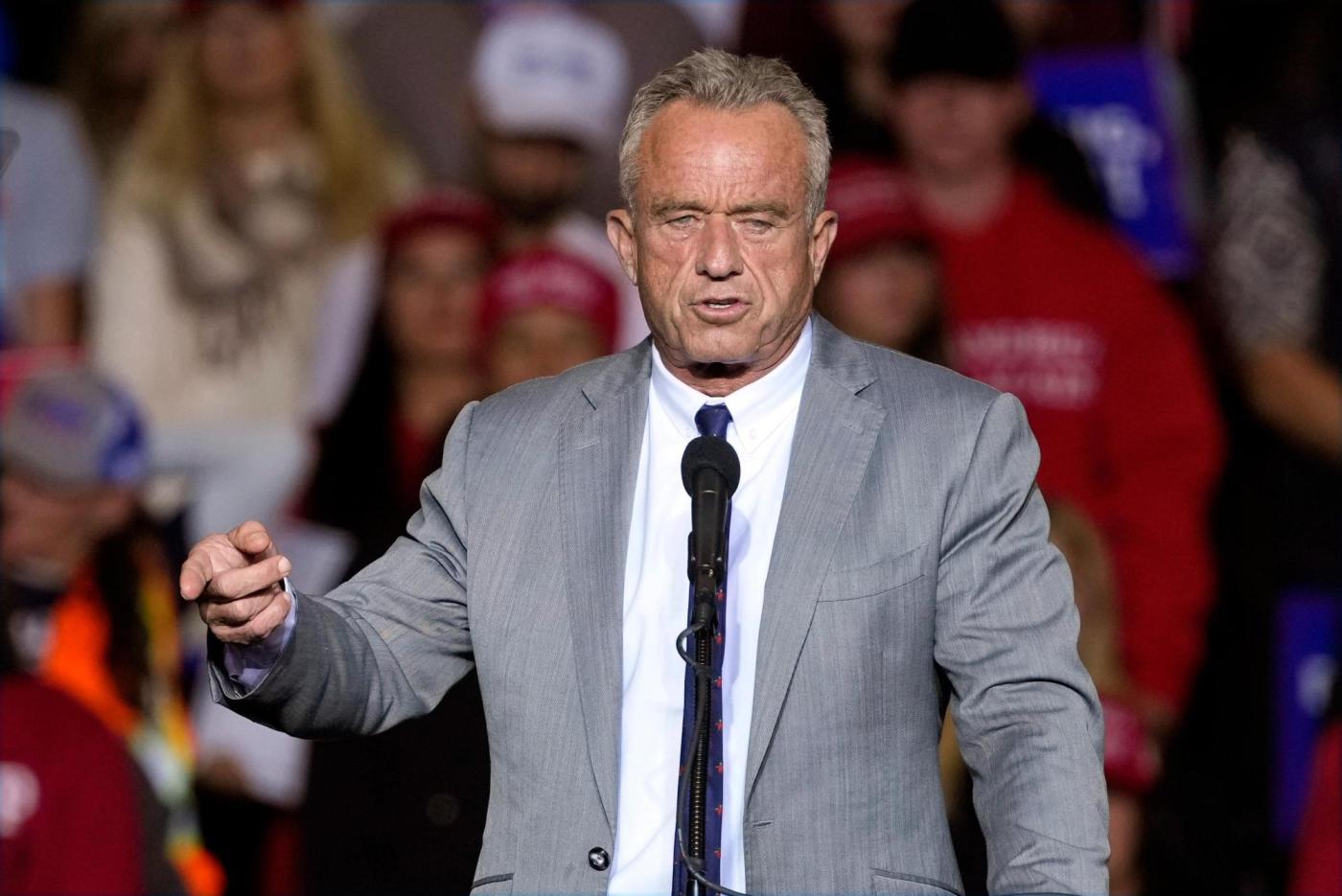
LONDON (AP) — U.S. Health Secretary Robert F. Kennedy Jr. said the country is pulling its support from the vaccines alliance Gavi, saying the organization has “ignored the science” and “lost the public trust.”

A video of Kennedy’s speech was shown to participants at a Gavi meeting in Brussels on Wednesday, where the vaccines group was hoping to raise at least $9 billion for the next five years.

Related Articles


Iran’s supreme leader makes first public statement since ceasefire declared in Israel-Iran war


Federal judge orders US Labor Department to keep Job Corps running during lawsuit


Faith leaders and families sue to block Texas’ new Ten Commandments in schools law


Senate struggle over Medicaid cuts threatens progress on Trump’s big bill


A judge resisted Trump’s order on gender identity. The EEOC just fired her

Gavi is a public-private partnership including WHO, UNICEF, the Gates Foundation and the World Bank. It has paid for more than 1 billion children to be vaccinated through routine immunization programs, saving an estimated 18 million lives. The United States has long been one of its biggest supporters; before Donald Trump’s re-election, the country had pledged $1 billion through 2030.

Kennedy called on Gavi “to re-earn the public trust and to justify the $8 billion America has provided in funding since 2001,” saying officials must “consider the best science available, even when that science contradicts established paradigms.” Kennedy said until that happens, the U.S. won’t contribute further to Gavi.

Kennedy, a longtime vaccine skeptic, said he and President Trump were concerned about how Gavi and the World Health Organization partnered together during the COVID-19 pandemic to work with social media companies “to silence dissenting views, to stifle free speech and legitimate questions” during a time when many people had questions about vaccine safety.

Kennedy said Gavi continues to make “questionable recommendations,” like advising pregnant women to get immunized against COVID-19 and funding the roll-out of a vaccine against diphtheria, tetanus and pertussis in poorer countries.

WHO and other health authorities have recommended pregnant women get vaccinated against COVID-19, saying they are at higher risk of severe disease.

Kennedy said he has seen research that concluded that young girls vaccinated against diphtheria, tetanus and pertussis were more likely to die from all other causes than children who weren’t immunized.

Some observational studies have shown that vaccinated girls do have a higher death rate compared to unvaccinated children, but there is no evidence the deaths are caused by the vaccine.

Gavi said in a statement Thursday that its “utmost concern is the health and safety of children.” The organization said any decision it makes on vaccines to buy is done in accordance with recommendations issued by WHO’s expert vaccine group.

“This ensures Gavi investments are grounded in the best available science and public health priorities,” it said. Gavi said scientists had reviewed all available data, including any studies that raised concerns, and that the diphtheria, tetanus and pertussis vaccine has “played a key role in helping halve childhood mortality.”

The British government said Wednesday it would give 1.25 billion pounds ($1.7 billion) between 2026 and 2030 to Gavi. It said the money would help Gavi protect up to 500 million children in some of the world’s poorest countries from diseases including meningitis, cholera and measles.

The Associated Press Health and Science Department receives support from the Howard Hughes Medical Institute’s Department of Science Education and the Robert Wood Johnson Foundation. The AP is solely responsible for all content.

As NYC’s Asylum Seeker Arrival Center Closes, What’s Next for Migrants in Shelter?

posted in: All news | 0

As of June 24, anyone looking for shelter—including newly arrived immigrants—should go to the Department of Homeless Services’ regular intake centers, City Limits has learned.

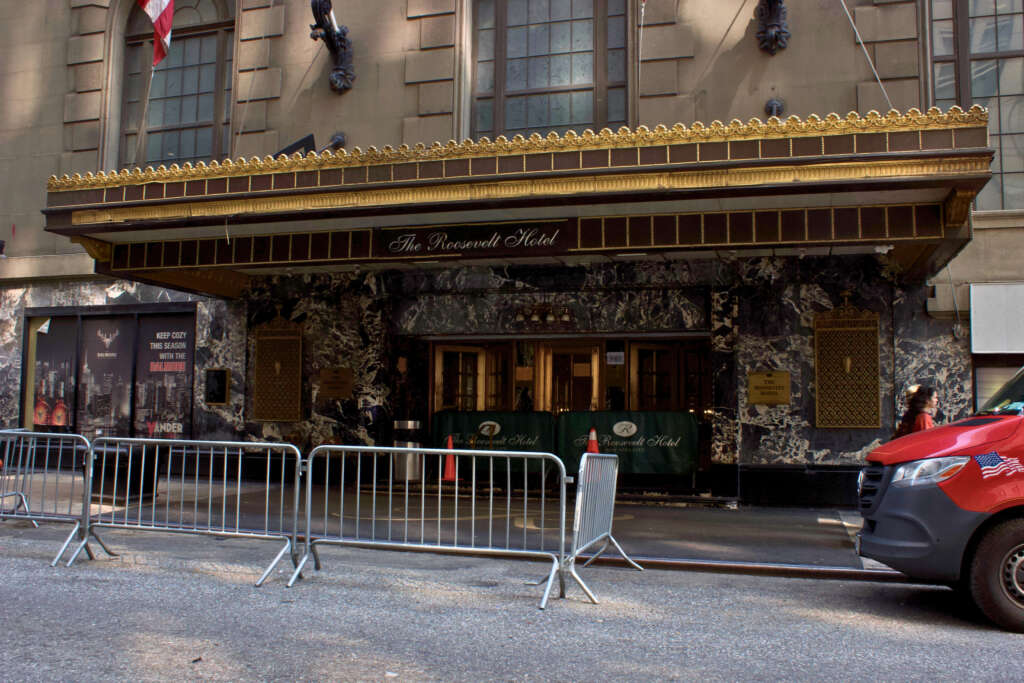
Outside the Roosevelt Hotel last week, which housed the city’s Asylum Seeker Arrival Center. The scene is in stark contrast to two years ago, when migrants waiting for a shelter bed regularly lined up outside. (Victoria Moran Garcia/City Limits)

With the closing of the Asylum Seeker Arrival Center at the Roosevelt Hotel this week, New York City is not only closing a chapter in its long immigration history, but dismantling its two-tier system of separate shelters for migrants after more than two years. 

Department of Homeless Services (DHS) traditional intake centers will serve as the starting point for migrants seeking shelter in the city, City Hall explained.

As of June 24, migrant families with children under 21, single pregnant individuals, and families with a pregnant member should go to the Prevention Assistance and Temporary Housing (PATH) office in the Bronx when looking for a bed.

Also beginning on that date, single men over the age of 18 must register at the 30th Street Intake Center in Manhattan, while single women should go to the HELP Women’s Center in Brooklyn.

While it was reported that City Hall would be returning control of all city shelters to DHS—winding down its sprawling network of Humanitarian Emergency Response and Relief Centers (HERRCs) for immigrants—officials said they will continue operating a limited number of non-DHS temporary emergency shelters.

The Roosevelt shelter, which has over a thousand rooms, had approximately 50 shelter households remaining as of June 11. In addition to the closure of the Arrival Center, the hotel will stop operating as a shelter by July 1, officials told City Limits.

Many of those who were staying at the Roosevelt—dubbed the “new Ellis Island” because it was the first stop for tens of thousands of migrants seeking shelter—were transferred to one of the last remaining HERCCs, at the Row Hotel near Times Square, according to advocates and families in shelter.

The city has moved to close 62 migrant shelter sites since last June, as the number of new arrivals continues to decline. The Row Hotel is not among those scheduled to shutter this year, a spokesperson said. 

In February, when Mayor Eric Adams announced plans to close the Arrival Center, he called it a significant milestone in New York City’s nearly three-year response to the humanitarian crisis of asylum seekers.

An MTA shuttle brings newly-arrived immigrants to one of the city’s Humanitarian Emergency Response and Relief Centers (HERRCs) on Randall’s Island on Oct. 18, 2023. The tent shelter complex closed in February, among the dozens of migrant shelters the city’s closed in recent months. (Adi Talwar/City Limits)

In the spring of 2023, the city opened the site as it received thousands of migrants arriving by air and land on a weekly basis. During its years of operation, the hotel went through several political flashpoints.

The first occurred during the summer of 2023, when people vying for a shelter bed slept on the streets during a heat wave. Its name was brought up again in the political arena this year when President Donald Trump took back $80 million in federal grants, intended to cover services for migrants, from New York City’s coffers.

In addition to its role as an intake center for migrant families looking for a place to stay, the Arrival Center also offered immigration assistance, medical checkups, vaccinations run by NYC Health + Hospitals, and many more services.

Homeless advocates say their chief worry about the site’s closure is whether people will still be able to access these resources in the wider DHS system. 

“Whenever a facility closes, whether it is a new arrival facility or otherwise, one of our ultimate concerns has always been whether or not the city has adequate capacity to meet the needs of the people that are being displaced,” said Will Watts, deputy executive director for advocacy with the Coalition for the Homeless. “We remain skeptical as to whether or not that’s the case.”

When asked which facility would replace the Arrival Center as the one-stop shop for migrant families, the mayor’s office said that DHS will provide case management services through its contracted organizations. 

“It is obviously important for the city to take into account the unique needs of this population,” said Kathryn Kliff, staff attorney at Legal Aid Society. “We will certainly be pushing them to ensure [DHS] staff are receiving training about the kind of unique situation that these clients may be in that maybe the non-new arrival DHS clients don’t.”

At the remaining HERRCs, the city will have Behavioral Health teams to provide mental health support, crisis intervention, and trauma-related response, a City Hall spokesperson said (though Watts, of Coalition for the Homeless, said this will only be available to families at The Row).   

“We continue to be concerned about the lack of case management, real case management services that folks need in order to be connected to resources, as well as legal services,” Watts said.

President Donald Trump’s administration has ramped up immigration enforcement in recent months, directing agents to detain people showing up to court for routine immigration case hearings and fast-tracking their deportations. Many don’t have lawyers. 

For migrants in shelter, City Hall said it will use the Mayor’s Office of Immigrant Affairs’ connections with community-based legal assistance groups for referrals. People can call the MOIA Legal Support Hotline directly at 800-354-0365 (open Monday through Friday between 9 a.m. and 6 p.m.) for assistance.

According to the City Limits’ Homeless Shelter Tracker, most migrants and asylum seekers were already at DHS-run sites as of April. 

Many new arrivals are still subject to controversial 30- and 60-day shelter deadlines. Coalition for the Homeless said the time limits remain in place for all migrants who are in non-DHS shelters, and for single adult and adult family migrants in DHS shelters. 

When their time expires, however, they are no longer required to return to intake centers to seek out more time, but can request an extension at their existing shelter and should receive it, according to Legal Aid and Coalition for the Homeless. 

Advocates have criticized the shelter deadline policy as disruptive to migrants’ lives, particularly for families with children who had to move each time the clock on their stays ran out. 

“It completely gets in the way of services that they have access to, and let alone if the families have to move to different shelters and the kids have to change schools,” said Caroline Schwab, a neighborhood organizer with the Open Hearts Initiative, an advocacy organization that supports people in shelter. “It’s just really disruptive and makes it so much harder for families to gain stability while they’re figuring it out here.”

To reach the reporters behind this story, contact Daniel@citylimits.org and Victoriam@Citylimits.org. To reach the editor, contact Jeanmarie@citylimits.org

Want to republish this story? Find City Limits’ reprint policy here.

The post As NYC’s Asylum Seeker Arrival Center Closes, What’s Next for Migrants in Shelter? appeared first on City Limits.

Iran’s supreme leader warns against further American attacks in his first statement since ceasefire

posted in: All news | 0

By FARNOUSH AMIRI and DAVID RISING

DUBAI, United Arab Emirates (AP) — Iran’s Supreme Leader Ayatollah Ali Khamenei said on Thursday his country had delivered a “slap to America’s face” with its strike on an American base in Qatar, and warned against any further U.S. attacks in his first public comments since a ceasefire was declared with Israel after 12 days of war.

Khamenei spoke in a recorded video broadcast on Iranian state television, his first appearance since June 19. The 86-year-old looked and sounded more tired than he did only a week ago, speaking in a hoarse voice and occasionally stumbling over his words.

The more-than 10 minute speech by the supreme leader was filled with warnings and threats directed toward the United States and Israel.

He downplayed Sunday’s U.S. strikes on three Iranian nuclear sites using bunker-buster bombs and cruise missiles, saying that U.S. President Donald Trump — who said the attack “completely and fully obliterated Iran’s nuclear program — had “exaggerated” its impact.

“They could not achieve anything significant,” he said.

UN nuclear watchdog confirms damage to Iran sites

The head of the U.N. nuclear watchdog, International Atomic Energy Agency Director Rafael Grossi, reiterated on Thursday that the damage done by Israeli and U.S. strikes at Iranian nuclear facilities “is very, very, very considerable.”

“I think annihilated is too much but it suffered enormous damage,” Grossi told French broadcaster RFI.

Iran’s Foreign Ministry spokesman, Esmail Baghaei, on Wednesday also conceded that “our nuclear installations have been badly damaged, that’s for sure.”

Khamenei has not been seen in public since taking shelter in a secret location after the outbreak of the war June 13 when Israel attacked Iranian nuclear facilities and targeted top military commanders and scientists.

Following Sunday’s U.S. attack on Iran’s nuclear facilities, Trump was able to help negotiate a ceasefire that came into effect on Tuesday.

Iranian leader warns US against further attacks

Khamenei claimed the U.S. had only intervened in the war because “it felt that if it did not intervene, the Zionist regime would be utterly destroyed.”

“It entered the war to save them, yet it gained nothing,” he said.

He said his country’s attack on the U.S. base in Qatar on Monday was significant, since it shows Iran “has access to important U.S. centers in the region and can act against them whenever it deems necessary.”

“The Islamic Republic was victorious and, in retaliation, delivered a hand slap to America’s face,” he said, adding “this action can be repeated in the future.”

“Should any aggression occur, the enemy will definitely pay a heavy price,” he said.

Since the ceasefire, life has been gradually returning to normal in Iran.

On Thursday, Iran partially reopened its airspace, which had been shut down since the war broke out, and shops in the capital of Tehran began to reopen, with traffic returning to the streets.

With the ceasefire, life slowly returns to normal in Iran

Majid Akhavan, spokesperson for the Ministry of Roads and Urban Development, said Iran had reopened the airspace for the eastern half of the country to domestic and international flights, including those transiting Iranian airspace.

Earlier this week, Tehran said 606 people had been killed in the conflict in Iran, with 5,332 people wounded. The Washington-based Human Rights Activists group released figures Wednesday suggesting Israeli strikes on Iran had killed at least 1,054 and wounded 4,476.

The group, which has provided detailed casualty figures from multiple rounds of unrest in Iran, said 417 of those killed were civilians and 318 were security forces.

At least 28 people were killed in Israel and more than 1,000 wounded, according to officials there.

Related Articles


Iran’s supreme leader makes first public statement since ceasefire declared in Israel-Iran war


Today in History: June 26, US Supreme Court legalizes same-sex marriage


POWs, abductees, defectors and separated families are the legacy of the Korean War


Iranian-backed hackers go to work after US strikes


‘Not something to celebrate’: As it turns 80 and faces dwindling global clout, can the UN survive?

During the 12-day war, Iran fired more than 550 missiles at Israel with a 90% interception rate, according to new statistics released by Israeli authorities on Thursday. Israel, meantime, hit more than 720 Iranian military infrastructure targets and eight nuclear-related sites, Israel said.

Trump has also asserted that American and Iranian officials will talk next week, giving rise to cautious hope for longer-term peace.

Iran has not acknowledged any such talks would take place, though U.S. Mideast envoy Steve Witkoff has said there has been direct and indirect communication between the countries. A sixth round of U.S.-Iran negotiations was scheduled for earlier this month in Oman but was canceled after Israel attacked Iran on June 13.

Iran has insisted that it will not give up its nuclear program. In a vote underscoring the tough path ahead, its parliament agreed Wednesday to fast-track a proposal that would effectively stop the country’s cooperation with the IAEA, which has monitored the program for years.

Associated Press writer John Leicester in Paris and Natalie Melzer in Nahariya, Israel, contributed to this report.

What spaces and places built memories for you, Minnesota? Share them with the North Star Story Map

posted in: All news | 0

Drinking a Cherry Coke and reading the comics at Leng’s Fountain in Grand Marais.

Visiting the horses at the Lee & Rose Warner Coliseum at the Minnesota State Fairgrounds.

Eating mango pancakes at Victor’s 1959 Cafe in Minneapolis just before the pandemic shut everything down.

These are some of the Minnesota places and spaces — and memories — shared with the North Star Story Map, a public initiative launched by the American Institute of Architects Minnesota in collaboration with the Minnesota Historical Society (MNHS) and funded by an MNHS Legacy Partnership.

What place — past or present — would you add to the map, Minnesota?

AIA Minnesota is asking the public to engage with the initiative by sharing their own stories of the “built spaces” in Minnesota that hold meaning for them.

The stories — they can be one sentence or many paragraphs, an anecdote or a bit of history — along with photos or illustrations can be submitted at northstarstorymap.org.

Over time, the goal is to create a people’s history of Minnesota, as told through its buildings, perhaps even redefining what we consider the most “significant” places in our state.

What Minnesota places have shaped your life?

This initiative encompasses more than a website: AIA Minnesota has partnered with organizations across the state, including historical societies and museums, to inspire storytelling of places through activities, booths and exhibits. This includes the upcoming Little Africa Festival at Hamline Park in St. Paul on Aug. 3.

A collaboration between AIA Minnesota, Mill City Museum and the Minnesota Historical Society, it’s administered by the Minnesota Historical Society and made possible by the Arts and Cultural Heritage Fund through the vote of Minnesotans on Nov. 4, 2008.

The public engagement for this story map started recently, but it’s been brewing for awhile.

Related Articles


Ramsey County board accepts $3 million grant for Capitol area safety project


Walz visits Bemidji, surveys damage from hurricane-strength windstorm


Ramsey County board to vote on 3% raises for themselves next Tuesday


Have a great idea for Stillwater area? You could win $10,000 to make it happen.


Thousands still without power, cleanup continues after severe storms in northern Minnesota

“We were talking about the idea of engaging people with significant buildings in the state and what that could look like,” says Ann Mayhew, public outreach manager for AIA Minnesota. “Because, of course, as the American Institute of Architects, some of what we do is not just supporting architects, but helping people connect to their built environment.

“But while design might be part of what makes someone think a building is important or meaningful, I think for a lot of people, it’s actually what happens in that building, what they’ve done there and how it makes them feel, if they have good memories in there or not.”

When you consider your own memories, moments that have shaped your life, do you consider the buildings where they took place?

That question is at the heart of this project.

A cafe in St. Paul, a lake place in Aitkin

Mickey’s Diner, listed on the National Register of Historic Places, shines like a gem in downtown St. Paul on June 14, 1999. (Joe Oden / Pioneer Press)

In St. Paul, there are many special places, from the State Capitol to Mickey’s Diner to the Marjorie McNeely Conservatory at Como Park. But some spaces, well known or not, are special to individuals for the particular memories they spark.

Like Nina’s Coffee Cafe, the familiar favorite on the corner of Selby and Western Avenues in the Cathedral Hill neighborhood of St. Paul.

“Where I wrote my first screenplay — and have had some of the best conversations there,” wrote a visitor at AIA Minnesota’s STEM Day at the Fair Booth.

While we don’t know how the screenplay turned out, the unknown writer sketched out a drawing to go with their memory, a cafe table with two steaming cups and the title, “Nina’s,” that is now included on the North Star Story Map’s website.

The places don’t have to be public spaces, but they might represent our shared experiences of life in this land of 10,000 lakes, as shared by another Minnesota State Fair visitor in a sketch titled, “Aitkin, Minn.”

“Parents lake place growing up,” they wrote with a drawing of a boat. “We spent a lot of time there in the water. Lots of fun!”

Built places can also be significant due to the time periods connected to them — like when “MJ” ate those mango pancakes in March 2020 at Victor’s 1959 Cafe at 3756 Grand Ave. S. in Minneapolis.

“It’s a notable memory,” MJ wrote, “because it was the last place we visited before Covid became a strong factor in public life and our workplaces closed. We had heard about the illness, but in other places. We didn’t yet know how much everyone’s lives would change due to the pandemic. Victor’s is the place I associate with carefree times and feeling relaxed before this major shift in our lives.”

Questions to ponder

The soda fountain at St. Paul Corner Drug on Aug. 6, 2020. (Nancy Ngo / Pioneer Press)

If you’re stuck on what to share, here are some questions AIA Minnesota suggests pondering:

What place has shaped your life? What place do you miss? Where do you feel free to be yourself? What building inspires you? Where do you feel alive? What place gives you a feeling of belonging?

Related Articles


Music as meditation: Guitars for Vets provides outlet for MN vets


Have a great idea for Stillwater area? You could win $10,000 to make it happen.


A village for vets: New housing for veterans at risk of homelessness takes shape in Eagan


Volunteers make 100 blankets in St. Paul for homeless outreach event


Somali-American basketball star creates North End hoops haven for girls

Some of the places on the Story Map — there are only about 50 so far — include the Giant Slide at the Minnesota State Fair, the cousins’ cabin (whereabouts unknown) and the soda fountain at St. Paul Corner Drug.

“As a kid back in the 90s,” wrote Lauren Breitbarth of Minneapolis, “my mom used to walk with me and my siblings down to St. Paul Corner Drug (then Sunberg’s Pharmacy) to get 25 cent ice cream cones at their old fashioned soda fountain. Adults would get 10 cent coffee. The soda fountain is still intact today, although prices may have gone up just a little since!”

Actually, St. Paul Corner Drug, located at the corner of Snelling and St. Clair avenues, officially “retired” its soda fountain recently. When we told Breitbarth the news, she was surprised.

“That’s so sad!” she replied.

The store’s old-fashioned soda fountain is preserved, at least, in Breitbarth’s memory — and on the story map.