Trump says US has signed a deal with China on trade, without giving details

posted in: All news | 0

By ELAINE KURTENBACH, AP Business Writer

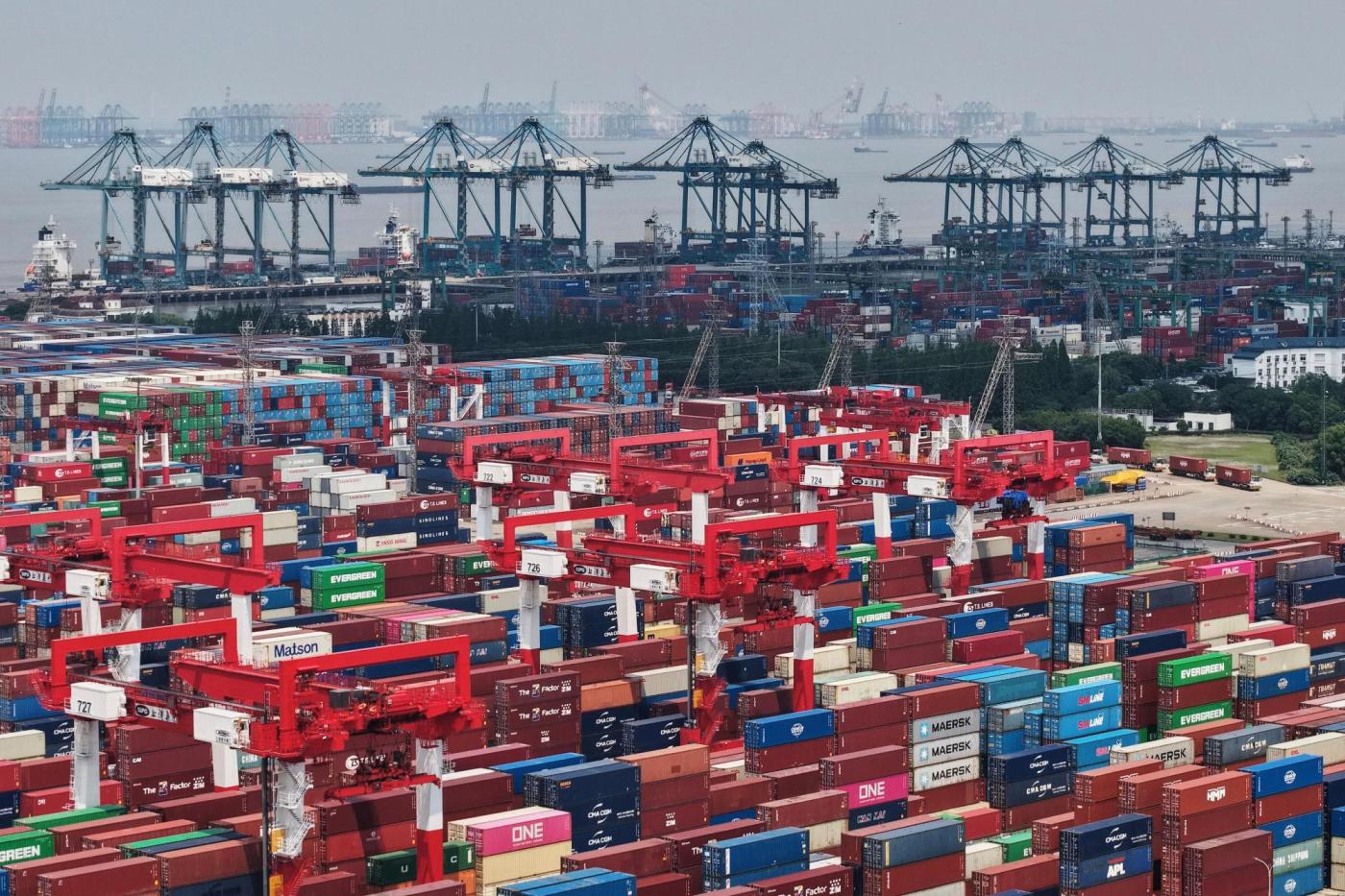
BANGKOK (AP) — The U.S. and China have signed an agreement on trade, President Donald Trump said, adding he expects to soon have a deal with India.

Commerce Secretary Howard Lutnick told Bloomberg TV that the deal was signed earlier this week. Neither Lutnick nor Trump provided any details about the agreement.

“We just signed with China the other day,” Trump said late Thursday.

Lutnick said the deal was “signed and sealed” two days earlier.

It was unclear if the latest agreement was different from the one Trump announced two weeks earlier that he said would make it easier for American industries to obtain much-needed needed magnets and rare earth minerals. That pact cleared the way for the trade talks to continue, while the U.S. agreed to stop trying to revoke visas of Chinese nationals on U.S. college campuses.

China’s Commerce Ministry said Friday that the two sides had “further confirmed the details of the framework.” But its statement did not explicitly mention U.S. access to rare earths, minerals used in high-tech applications that have been at the center of the negotiations.

“China will approve the export applications of controlled items that meet the conditions in accordance with the law. The United States will cancel a series of restrictive measures taken against China accordingly. It is hoped that the United States and China will meet each other halfway,” it said.

The agreement follows initial talks in Geneva in early May that led both sides to postpone massive tariff hikes that were threatening to freeze much trade between the two countries. Later talks in London set a framework for negotiations and the deal mentioned by Trump appeared to formalize that agreement.

“The president likes to close these deals himself. He’s the dealmaker. We’re going to have deal after deal,” Lutnick said.

China has not announced any new agreements, but it announced earlier this week that it was speeding up approvals of exports of rare earths, materials used in high-tech products such as electric vehicles. Beijing’s limits on exports of rare earths have been a key point of contention.

The Chinese Commerce Ministry said Thursday that Beijing was accelerating review of export license applications for rare earths and had approved “a certain number of compliant applications.”

Export controls of the minerals apparently eclipsed tariffs in the latest round of trade negotiations between Beijing and Washington after China imposed permitting requirements on seven rare earth elements in April, threatening to disrupt production of cars, robots, wind turbines and other high-tech products in the U.S. and around the world.

Related Articles


Canadian man held by immigration officials dies in South Florida federal facility, officials say


Trumps drop ‘Made in the USA’ label for new phone and a debate ensues: How to define ‘made’?


Meet the Senate parliamentarian, the official tying Republicans in knots over their tax bill


Native leaders blast construction of Florida’s ‘Alligator Alcatraz’ on land they call sacred


US signs agreements with Guatemala and Honduras to take asylum seekers

China also has taken steps recently on the fentanyl issue, announcing last week that it would designate two more substances as precursor chemicals for fentanyl, making them subject to production, transport and export regulations. Trump has demanded that Beijing do more to stop the flow of such precursor ingredients to Mexican drug cartels, which use them to make fentanyl for sale in the U.S. He imposed 20% tariffs on Chinese imports over the fentanyl issue, the biggest part of current 30% across-the-board taxes on Chinese goods.

The agreement struck in May in Geneva called for both sides to scale back punitive tariff hikes imposed as Trump escalated his trade war and sharply raised import duties. Some higher tariffs, such as those imposed by Washington related to the trade in fentanyl and duties on aluminum and steel, remain in place.

The rapidly shifting policies are taking a toll on both of the world’s two largest economies.

The U.S. economy contracted at a 0.5% annual pace from January through March, partly because imports surged as companies and households rushed to buy foreign goods before Trump could impose tariffs on them.

In China, factory profits sank more than 9% from a year earlier in May, with automakers suffering a large share of that drop. They fell more than 1% year-on-year in January-May.

Trump and other U.S. officials have indicated they expect to reach trade deals with many other countries, including India.

“We’re going to have deal after deal after deal,” Lutnick said.

Key read on inflation rose last month and Americans cut back on spending

posted in: All news | 0

By CHRISTOPHER RUGABER, AP Economics Writer

WASHINGTON (AP) — A key inflation gauge moved higher in May in the latest sign that prices remain stubbornly elevated while Americans also cut back on their spending last month.

Prices rose 2.3% in May compared with a year ago, up from just 2.1% in April, the Commerce Department said Friday. Excluding the volatile food and energy categories, core prices rose 2.7% from a year earlier, an increase from 2.6% the previous month. Both figures are modestly above the Federal Reserve’s 2% target. The Fed tracks core inflation because it typically provides a better guide to where inflation is headed.

At the same time, Americans cut back on spending for the first time since January, as overall spending fell 0.1%. Incomes dropped a sharp 0.4%. Both figures were distorted by one-time changes: Spending on cars plunged, pulling down overall spending, because Americans had moved more quickly to buy vehicles in the spring to get ahead of tariffs.

And incomes dropped after a one-time adjustment to Social Security benefits had boosted payments in March and April. Social Security payments were raised for some retirees who had worked for state and local governments.

Still, the data suggests that growth is cooling as Americans rein in spending, in part because President Donald Trump’s tariffs have raised the cost of some goods, such as appliances, tools, and audio equipment. Consumer sentiment has also fallen sharply this year in the wake of the sometimes-chaotic rollout of the duties. And while the unemployment rate remains low hiring has been weak, leaving those without jobs struggling to find new work.

Consumer spending rose just 0.5% in the first three months of this year and has been sluggish in the first two months of the second quarter.

“Because consumers are not in a strong enough shape to handle those (higher prices), they are spending less on recreation, travel, hotels, that type of thing,” said Luke Tilley, chief economist at Wilmington Trust.

Spending on airfares, restaurant meals, and hotels all fell last month, Friday’s report showed.

At the same time, the figures suggest that President Donald Trump’s broad-based tariffs are still having only a modest effect on overall prices. The increasing costs of some goods have been partly offset by falling prices for new cars, airline fares, and apartment rentals, among other items.

Related Articles


Trumps drop ‘Made in the USA’ label for new phone and a debate ensues: How to define ‘made’?


Judge blocks Georgia’s social media age verification law, citing free speech concerns


Windows’ infamous ‘blue screen of death’ will soon turn black


‘A purpose in this world’: Older adults fear elimination of program that helps them find work


As ICE raids intensify, how do employers know if their workers are legal?

On a monthly basis, in fact, inflation was mostly tame. Prices rose just 0.1% in May from April, according to the Commerce Department, the same as the previous month. Core prices climbed 0.2% in May, more than economists expected and above last month’s 0.1%. Gas prices fell 2.6% just from April to May.

Economists point to several reasons for why Trump’s tariffs have yet to accelerate inflation, as many analysts expected. Like American consumers, companies imported billions of dollars of goods in the spring before the duties took full affect, and many items currently on store shelves were imported without paying higher levies.

There are early indications that that is beginning to change.

Nike announced this week that it expects U.S. tariffs will cost the company $1 billion this year. It will institute “surgical” price increases in the fall. It’s not the first retailer to warn of price hikes when students are heading back to school.

Walmart said last month that that its customers will start to see higher prices this month and next as back-to-school shopping goes into high gear.

Also, much of what the U.S. imports is made up of raw materials and parts that are used to make goods in the U.S. It can take time for those higher input costs to show up in consumer prices. Economists at JPMorgan have argued that many companies are absorbing the cost of the tariffs, for now. Doing so can reduce their profit margins, which could weigh on hiring.

Cooling inflation has put more of a spotlight on the Federal Reserve and its chair, Jerome Powell. The Fed ramped up its short-term interest rate in 2022 and 2023 to slow the economy and combat inflation, which jumped to a four-decade high nearly three years ago. With price increases now nearly back to the Fed’s target, some economists — and some Fed officials — say that the central bank could reduce its rate back to a level that doesn’t slow or stimulate growth.

Trump has also repeatedly attached the Fed for not cutting rates, calling Powell a “numskull” and a “fool.”

But Powell said in congressional testimony earlier this week that the Fed wants to see how inflation and the economy evolve before it cuts rates. Most other Fed policymakers have expressed a similar view.

Iran’s top diplomat says talks with US ‘complicated’ by American strike on nuclear sites

posted in: All news | 0

By DAVID RISING

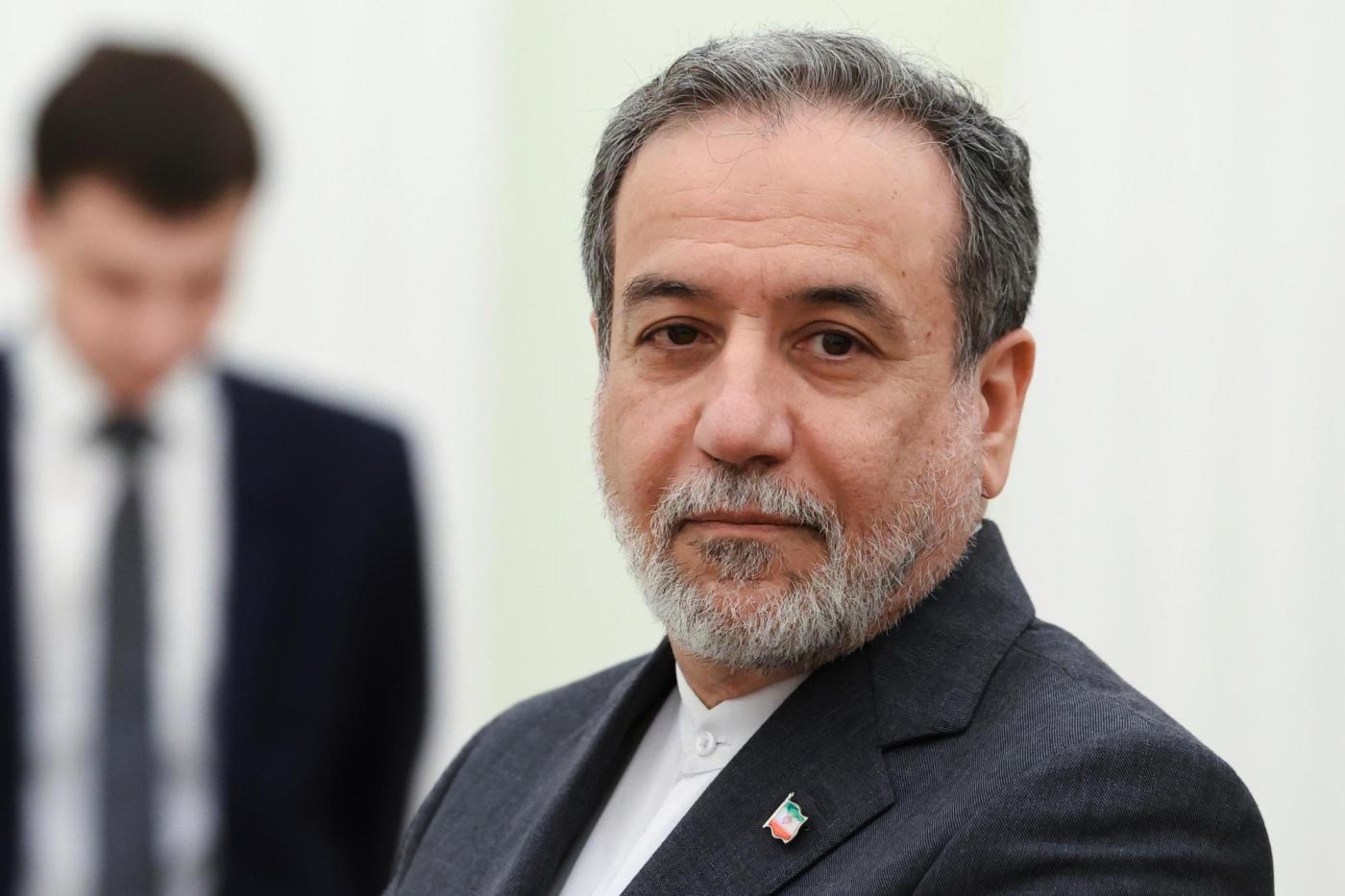
DUBAI, United Arab Emirates (AP) — Iran’s top diplomat said the possibility of new negotiations with the United States on his country’s nuclear program has been “complicated” by the American attack on three of the sites, which he conceded caused “serious damage.”

The U.S. was one of the parties to the 2015 nuclear deal in which Iran agreed to limits on its uranium enrichment program in exchange for sanctions relief and other benefits.

That deal unraveled after U.S. President Donald Trump pulled the U.S. out unilaterally during his first term. Trump has suggested he is interested in new talks with Iran and said the two sides would meet next week.

In an interview on Iranian state television broadcast late Thursday, Foreign Minister Abbas Araghchi left open the possibility that his country would again enter talks on its nuclear program, but suggested it would not be anytime soon.

“No agreement has been made for resuming the negotiations,” he said. “No time has been set, no promise has been made, and we haven’t even talked about restarting the talks.”

The American decision to intervene militarily “made it more complicated and more difficult” for talks on Iran’s nuclear program, Araghchi said.

In Friday prayers, many imams stressed Supreme Leader Ayatollah Ali Khamenei’s message from the day before that the war had been a victory for Iran.

Cleric Hamzeh Khalili, who also is the deputy chief justice of Iran, vowed during a prayer service in Tehran that the courts would prosecute people accused of spying for Israel “in a special way.”

During the war with Israel, Iran hanged several people who it already had in custody on espionage charges, sparking fears from activists that it could conduct a wave of executions after the conflict ended. Authorities reportedly have detained dozens in various cities on the charge of cooperation with Israel.

Israel attacked Iran on June 13, targeting its nuclear sites, defense systems, high-ranking military officials and atomic scientists in relentless attacks.

In 12 days of strikes, Israel said it killed some 30 Iranian commanders and 11 nuclear scientists, while hitting eight nuclear-related facilities and more than 720 military infrastructure sites. More than 1,000 people were killed, including at least 417 civilians, according to the Washington-based Human Rights Activists group.

Iran fired more than 550 ballistic missiles at Israel, most of which were intercepted but those that got through caused damage in many areas and killed 28 people.

Israeli military spokesperson Brig. Gen Effie Defrin said Friday that in some areas it had exceeded its operational goals, but needed to remain vigilant.

“We are under no illusion, the enemy has not changed its intentions,” he said.

Related Articles


Today in History: June 27, Hurricane Audrey makes Gulf Coast landfall


Tampa Bay Rays’ Wander Franco found guilty in sex abuse case, receives 2-year suspended sentence


US signs agreements with Guatemala and Honduras to take asylum seekers


FACT FOCUS: Posts misrepresent report to falsely claim nearly 400,000 Palestinians are missing


Experts and officials are still assessing what remains of Iran’s nuclear program

The U.S. stepped in on Sunday to hit Iran’s three most important strikes with a wave of cruise missiles and bunker-buster bombs dropped by B-2 bombers, designed to penetrate deep into the ground to damage the heavily-fortified targets. Iran, in retaliation, fired missiles at a U.S. base in Qatar on Monday but caused no known casualties.

Trump said the American attacks “completely and fully obliterated” Iran’s nuclear program, though Khamenei on Thursday accused the U.S. president of exaggerating the damage, saying the strikes did not “achieve anything significant.”

There has been speculation that Iran moved much of its highly-enriched uranium before the strikes, something that it told the U.N. nuclear watchdog, the International Atomic Energy Agency, that it planned to do.

Even if that turns out to be true, IAEA Director Rafael Grossi told Radio France International that the damage done to the Fordo site, which was built into a mountain, “is very, very, very considerable.”

Among other things, he said, centrifuges are “quite precise machines” and it’s “not possible” that the concussion from multiple 30,000-pound bombs would not have caused “important physical damage.”

“These centrifuges are no longer operational,” he said.

Araghchi himself acknowledged “the level of damage is high, and it’s serious damage.”

He added that Iran had not yet decided whether to allow in IAEA inspectors to assess the damage, but they would be kept out “for the time being.”

Julia Frankel in Jerusalem contributed to this story.

F.D. Flam: Quantum computing could be the future of drug development

posted in: All news | 0

One of the first and most promising uses scientists envision for the rapidly evolving technology of quantum computing is a new approach to drug development. A quantum computer could, in theory, eliminate much of the trial and error involved in the process to help researchers more quickly zero in on ways to treat aggressive cancers, prevent dementia, kill deadly viruses or even slow aging by sifting through the trillions of molecules that might potentially be synthesized to create pharmaceuticals.

As proof of the technology’s potential, a group of researchers published a paper in Nature Biotechnology earlier this year showing how they could use a small-scale quantum computer designed by IBM and AI to identify a potential cancer drug.

While several dozen quantum computers are working in labs worldwide, they’re not yet advanced enough or big enough to beat existing supercomputers except for certain special test problems. Still, there have been some surprising leaps in progress.

“We’re not making the claim that it’s faster, cheaper, better or anything … we’re showing it’s possible,” said Alex Zhavoronkov, a co-author of the paper and founder of Insilico Medicine. He compares these early uses with the first airplane flights — essential for demonstrating a new mode of transportation once deemed impossible.

Until recently, quantum computers were severely limited by their tendency to make errors. They use units of information storage called qubits, and stringing them together only compounds the error rate. Last year, the startup Quantinuum and later Google announced they’d found a way to resolve the problem so that adding more qubits decreased the error rate by building in a kind of redundancy.

While ordinary computers store information in bits, which can take the values 0 or 1, a qubit can take on both values simultaneously, enabling quantum computers to process data in fundamentally different and often more powerful ways.

Quantum computing harnesses the famously strange behavior of quantum physics, where atoms, light and subatomic particles exist in states of uncertainty until observed — even their position can resemble a smeared-out wave rather than a single point in space.

Qubits can be created in various ways — from electrons moving through supercooled materials to atoms suspended in place by lasers. Most current systems connect only a handful of qubits, but Google set a milestone last December by implementing error correction in a system of 105. If this approach can be scaled to thousands of them, scientists believe it could revolutionize how we tackle real-world complexity — enabling breakthroughs in medicine, energy storage, high-efficiency solar panels, next-generation space suits, and innovations we haven’t yet imagined.

It’s exciting how quickly the field is advancing, said Brian DeMarco, a physicist who studies quantum computing at the University of Illinois, Urbana-Champaign.

In DeMarco’s lab, researchers make qubits from the spin of single atoms. He said these atoms can be isolated from their environment so well that their quantum behavior dominates, enabling them to be used as qubits for quantum computing.

The scientists involved in the cancer drug research used a system with just 16 qubits to find a new molecule capable of binding to a protein called KRAS. The protein has proved hard to target with existing drugs.

Christoph Gorgulla, a biologist at St. Jude Children’s Research Hospital in Memphis, said the researchers eventually hope to be able to specify an action for a drug to carry out and then use quantum computers to search for the right molecules for the job. He said the number of drugs that could potentially be developed through this process could be described as 10, followed by about 60 zeros.

It’s not so much that the quantum computer is fast, he said, but it speaks the language of matter, so it takes fewer steps to get to the same place. “On this atomic level, it’s really quantum mechanics that governs what is happening … how the atoms move, how they interact, and how strongly,” said Gorgulla, one of the study’s co-authors.

DeMarco agreed. “The reason that protons and neutrons and electrons can arrange themselves into atoms is because of quantum physics,” he said. He said the rules of chemistry are sometimes enough, but often, they fall short. Quantum physics offers a master formula — the Schrödinger equation — for predicting how matter behaves. The problem is that it’s unusable for the complex molecules that make up our bodies; solving it with conventional computers would take millions of years.

Scientists are reluctant to predict precisely when quantum computers will be capable of speeding the discovery of drugs, chemicals and new materials, but many envision it happening within a decade. Last month, DARPA launched its “Quantum Benchmarking Initiative,” aiming to chart a path toward an industrially viable quantum computer by 2033.

More research is needed to continue progressing in the field and for the US to maintain its place in the race. This spring, several of the industry’s leaders appeared before Congress to advocate for continued government support.

Michael Kratsios, President Donald Trump’s science adviser, has championed quantum computing and AI. However, there are concerns that the administration’s budget cuts — especially in research — will set efforts back. The drastic cuts have already led some scientists to work elsewhere. The Nature Biotechnology paper’s lead author, physicist Alán Aspuru-Guzik, left Harvard for the University of Toronto following Trump’s first election in 2016, citing concerns about the country’s political climate.

Uncertainty is part of the nature of science — we can’t always predict where a pursuit will lead or how long it will take to produce practical results. One thing we can predict is that giving up guarantees we’ll fall behind.

F.D. Flam is a Bloomberg Opinion columnist covering science. She is host of the “Follow the Science” podcast.

Related Articles


Kristina Becvar: Americans still believe in democracy — but disagree on what threatens it most


Martin Schram: The remaking of a president


Thomas Friedman: How the attacks on Iran are part of a much bigger global struggle


Karl, Jarvis: #SkinnyTok rebranded eating disorders dangerously fast


Brendan Steinhauser: Secure AI for America’s future … and humanity’s too