Music history is littered with projects planned, anticipated, even completed — and then scrapped

posted in: All news | 0

By DAVID BAUDER, AP Entertainment Writer

NEW YORK (AP) — The idea that Bruce Springsteen wrote, recorded and ultimately shelved entire albums of music may seem odd to the casual listener. Why put yourself through all that work for nothing?

Yet “lost albums” are embedded in music industry lore. Some were literally lost. Some remained unfinished or unreleased because of tragedy, shortsighted executives or creators who were perfectionist — or had short attention spans.

Often, the music is eventually made public, like Springsteen is doing now, although out of context from the times in which it was originally made.

So in honor of Springsteen’s 83-song “Tracks II: The Lost Albums” box set being released Friday, The Associated Press has collected 10 examples of albums that were meant to be but weren’t.

FILE – The Beach Boys, from left, Al Jardine, Carl Wilson, Brian Wilson and Mike Love, hold their trophies after being inducted into the Rock ‘n’ Roll Hall of Fame in New York, Jan. 21, 1988. (AP Photo/Ron Frehm, File)

“Smile,” The Beach Boys

Back in the news with the death of Brian Wilson, this album “invented the category of the lost masterpiece in popular music,” says Anthony DeCurtis, contributing editor at Rolling Stone. Some of the material that surfaced suggested Wilson, the Beach Boys’ chief writer, was well on his way: the majestic single “Good Vibrations,” the centerpiece “Heroes and Villains” and the reflective “Surf’s Up.” Wilson succumbed to internal competitive pressure worsened by mental illness and drug abuse while making it in 1966 and 1967, eventually aborting the project. He later finished it as a solo album backed by the Wondermints in 2004. The better-known songs were joined with some psychedelic-era curios that displayed Wilson’s melodic sense and matchless ability as a vocal arranger, along with lyrics that some fellow Beach Boys worried were too “out there.”

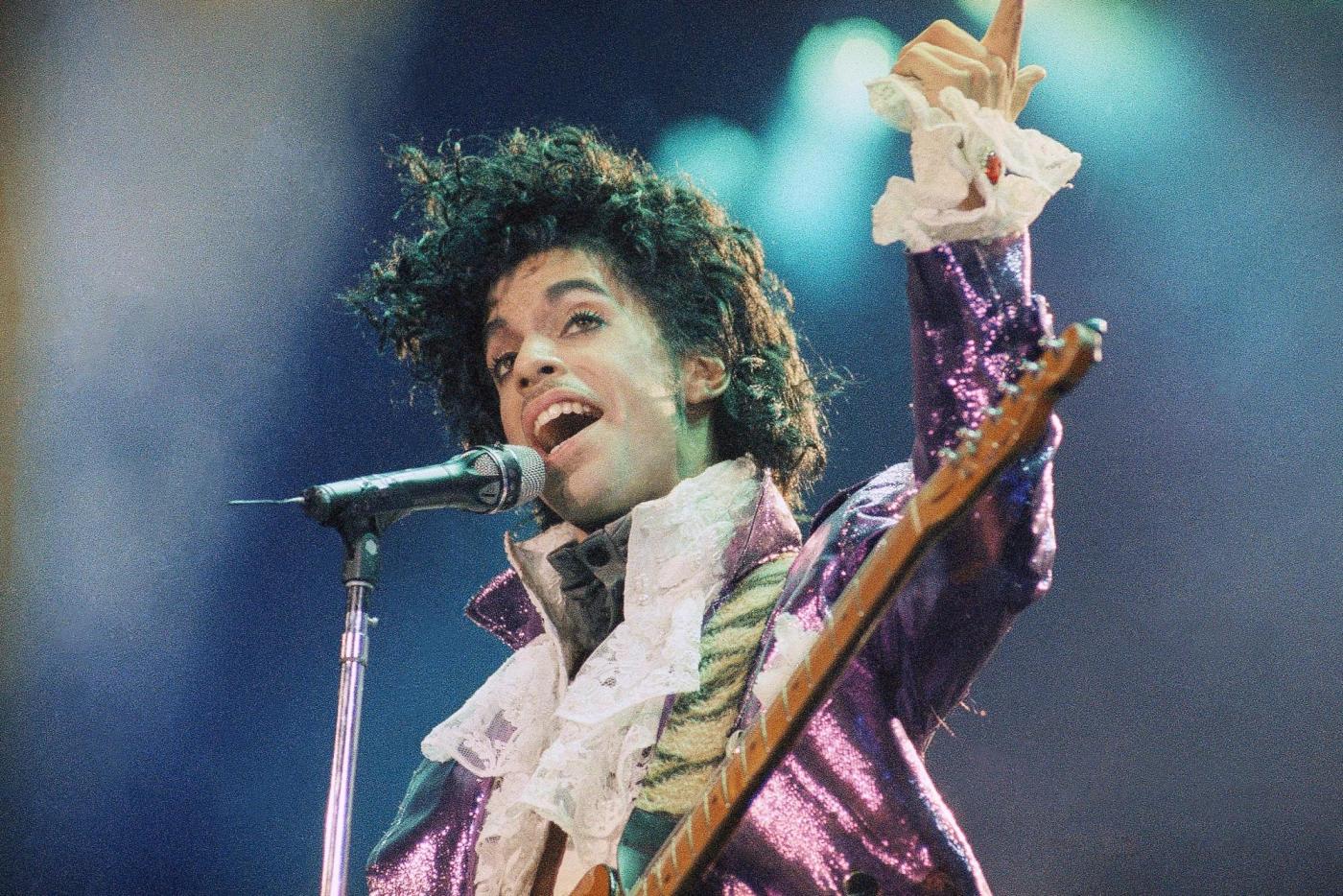
FILE – Prince performs at the Forum in Inglewood, Calif., on Feb. 18, 1985. (AP Photo/Liu Heung Shing, File)

“The Black Album,” Prince

The mercurial Prince pulled back this disc, set for release in December 1987, at the last minute. Some promo copies had already slipped out, and it was so widely bootlegged that when Warner Bros. officially put it out in limited release in 1994, the company billed it as “The Legendary Black Album.” Encased in an all-black sleeve, the project was said to be Prince’s nod to Black fans who may have felt they had lost him to a pop audience. It’s almost nonstop funk, including a lascivious Cindy Crawford tribute and the workout “Superfunkycalifragisexy.” The maestro’s instincts were well-placed, though. Coming after “Sign O’ the Times” — arguably his peak — this would have felt like a minor project.

FILE – Members of Green Day, from left, Billie Joe Armstrong,, Tre Cool and Mike Dirnt pose in their hotel room in Toronto on Sept. 23, 2004. (Adrian Wyld/The Canadian Press via AP, File)

“Cigarettes and Valentines,” Green Day

Written and recorded in 2003, Green Day’s “Cigarettes and Valentines” was actually lost; someone apparently stole the master tapes. Feeling on a creative roll, the rock trio decided against recreating what they’d done and pressed on with new material. Smart move. The result was “American Idiot,” the band’s best work. Perhaps the robbery was “just a sign that we made a crappy record and we should make a better one,” songwriter Billie Joe Armstrong told MTV. The title cut later surfaced on a 2010 live album. The rest was lost to time.

FILE – Dr. Dre poses for a photo at Le Meridien Hotel in Beverly Hills, Calif., on Nov. 12, 2001. (AP Photo/Chris Pizzello, File)

“Detox,” Dr. Dre

To say anticipation was high for Dr. Dre’s third album when he started recording in 2002 puts it mildly. The theme disc about a hitman, which Dre described as a “hip-hop musical,” had an all-star squad of contributors including Eminem, 50 Cent, Mary J. Blige, Busta Rhymes and Kendrick Lamar. “I’d describe it as the most advanced rap album musically and lyrically we’ll probably ever have a chance to listen to,” co-producer Scott Storch told MTV. But we never have. When he announced a different third album in 2015, Dre explained on his radio show what happened to “Detox”: “I didn’t like it. It wasn’t good. … I worked my ass off on it, and I don’t think I did a good enough job.”

FILE – Jimi Hendrix performs on tour at the Rheinhalle in Dusseldorf, Germany on Jan. 14, 1969. (AP Photo/Hinninger, File)

“Black Gold,” Jimi Hendrix

A series of unfinished demos, “Black Gold” was a taste of where guitar god Jimi Hendrix might have gone creatively if he hadn’t died at 27 in 1970. He was composing a song suite about an animated Black superhero, says Tom Maxwell, whose podcast “Shelved” unearths stories behind lost music. Hendrix sent a tape of his work to longtime drummer Mitch Mitchell for advice on fleshing it out. That music was set aside at Mitchell’s home and forgotten for two decades after Hendrix died. To date, Hendrix’s estate has made only one of these recordings public, a song called “Suddenly November Morning.” Hendrix, after clearing his throat, slips in and out of falsetto while accompanying himself on an acoustic guitar.

FILE – Yoko Ono performs during a charity concert at Madison Square Garden in New York on Aug. 30, 1972. (AP Photo/Dave Pickoff, File

“A Story,” Yoko Ono

Written while Yoko Ono was separated from John Lennon during his infamous “lost weekend” in 1973-74, “A Story” had the potential of changing the musical narrative around her. It was a strong album — without the avant-garde stylings that made Ono a challenge for mainstream listeners — recorded with musicians who worked on Lennon’s “Walls & Bridges.” Maxwell calls it “an emancipation manifesto” that was set aside when Ono reconciled with Lennon. She’s never publicly explained why, Maxwell says, although one song seems clearly about an affair she had while Lennon was away. Some of the material from “A Story” was included as part of the “Onobox” project that came out in 1992, and the album was released separately in 1997. Ono also re-recorded some of its songs in 1980, and Lennon was holding a tape of her composition “It Happened” when he was shot and killed. In it, she sings about an unspecified, seemingly traumatic event: “It happened at a time of my life when I least expected.” That wasn’t even the most chilling premonition. Her song “O’Oh” ended with firecrackers that sound like gunshots. It was left off the 1997 release.

FILE – Guns N’ Roses, from left, Michael “Duff” McKagan, Dizzy Reed, Axl Rose, Saul “Slash” Hudson and Matt Sorum, accept the Michael Jackson Video Vanguard Award at the MTV Video Music Awards in Los Angeles on Sept. 9, 1992. (AP Photo/Kevork Djansezian, File)

“Chinese Democracy,” Guns N’ Roses

Guns N’ Roses was at the top of the hard rock world when they began recording a new album in 1994. It didn’t go well. Inconclusive sessions slogged on for years, and all but singer Axl Rose left the group. Recording costs exceeded a staggering $13 million, by some accounts the most expensive rock album ever. One witness told The New York Times in 2005: “What Axl wanted to do was to make the best record that had ever been made. It’s an impossible task. You could go on indefinitely, which is what they’ve done.” When “Chinese Democracy” was finally released in 2008, the world yawned.

FILE – Marvin Gaye, winner of Favorite Soul/R&B Single, “Sexual Healing,” attends the American Music Awards in Los Angeles on Jan. 17, 1983. (AP Photo/Doug Pizac, File)

“Love Man,” Marvin Gaye

Not even a decade after the triumph of “What’s Going On,” Marvin Gaye was floundering. His “Here, My Dear” divorce album flopped, he struggled with drugs and searched for relevance in the disco era. The single “Ego Tripping Out,” meant to herald a new album, laid bare the problems: Over a melody cribbed from Donna Summer’s “Hot Stuff,” the famously cool “Love Man” boasted like an insecure rapper. He scrapped the album, repurposing some its material for the 1981 disc “In Our Lifetime,” a process so fraught he bitterly left his longtime label Motown. Gaye went to CBS, made a huge comeback with “Sexual Healing,” then was shot dead by his father in 1984.

FILE – Neil Young performs during the Live Aid concert for famine relief at JFK Stadium in Philadelphia on July 13, 1985. (AP Photo/George Widman, File)

“Homegrown,” Neil Young

Neil Young rivals Prince in the volume of material left in his vault, and he’s been systematically releasing much of it. The mostly acoustic “Homegrown” was recorded as 1974 bled into 1975, during Young’s breakup with actor Carrie Snodgress. Instead of releasing it in 1975, he put out another heartbreak album, the well-regarded “Tonight’s the Night,” about losing friends to drug abuse. When Young finally dropped “Homegrown” in 2020, he wrote in his blog, “Sometimes life hurts. This is the one that got away.”

FILE – Bruce Springsteen speaks to the audience during a concert with the E Street Band at the Olympic Stadium in Berlin, Germany, on June 11, 2025. (AP Photo/Markus Schreiber, File)

“Streets of Philadelphia Sessions,” Bruce Springsteen

Of the discs included in Springsteen’s “Tracks II” set, this was reportedly the closest to being released, in the spring of 1995. After the success of the Oscar-winning song “Streets of Philadelphia,” Springsteen recorded an album in the same vein, with a synthesizer and West Coast rap-inspired drum loops setting the musical motif. Strikingly contemporary for its time, Springsteen ultimately felt it was too similar to previous releases dominated by dark stories about relationships. “I always put them away,” he said of his lost albums. “But I don’t throw them away.”

This image released by Sony Music shows cover art for “Tracks II: The Lost Albums” by Bruce Springsteen. (Sony Music via AP)

David Bauder writes about the intersection of media and entertainment for the AP. Follow him at http://x.com/dbauder and https://bsky.app/profile/dbauder.bsky.social.
Supreme Court doesn’t rule on Louisiana’s second majority Black congressional district

posted in: All news | 0

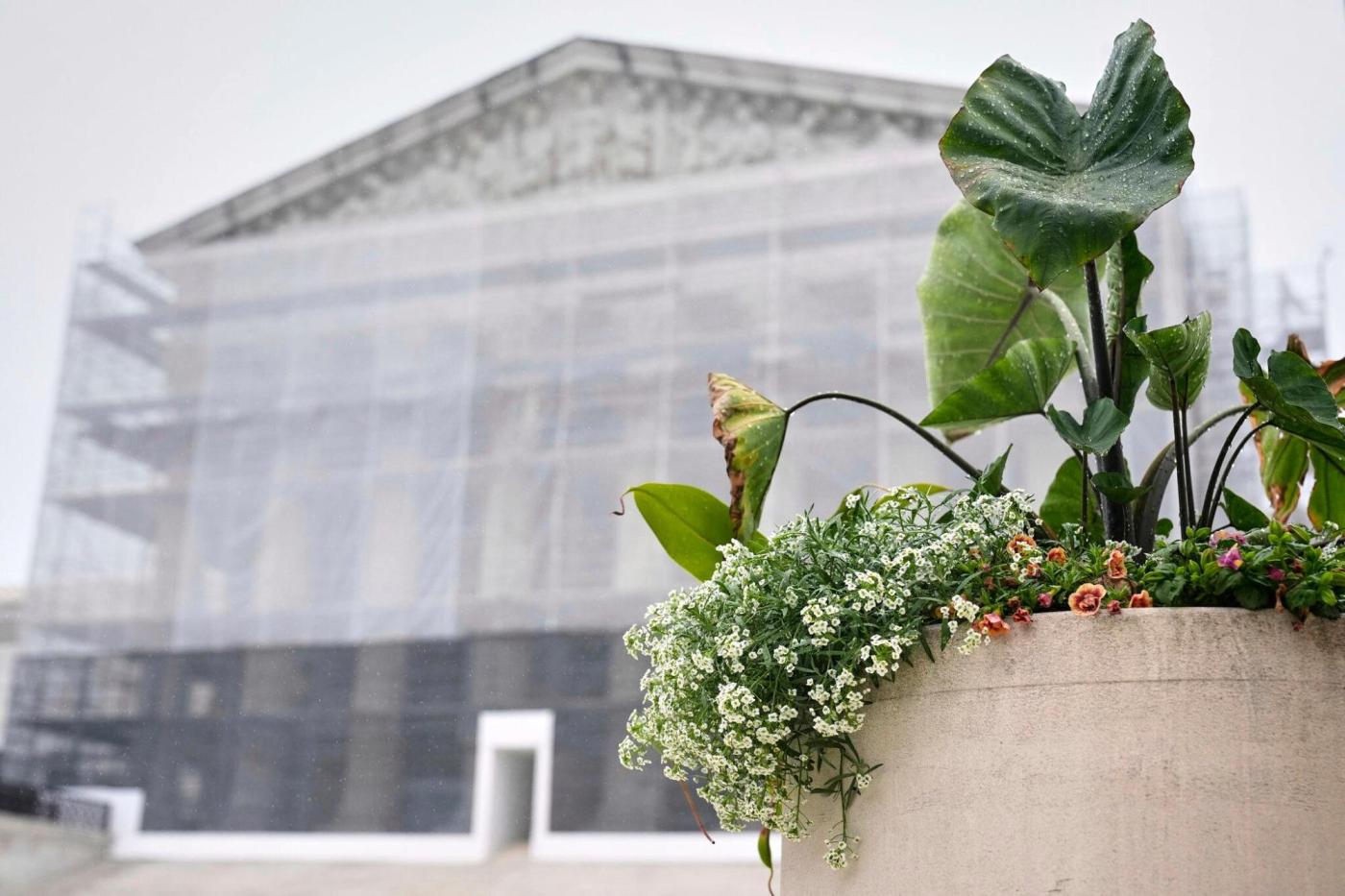
WASHINGTON (AP) — The Supreme Court on Friday put off ruling on a second Black majority congressional district in Louisiana, instead ordering new arguments in the fall.

The case is being closely watched because at arguments in March several of the court’s conservative justices suggested they could vote to throw out the map and make it harder, if not impossible, to bring redistricting lawsuits under the Voting Rights Act.

Related Articles


RFK Jr.’s made promises about vaccines. Here’s what he’s done as health secretary


Supreme Court upholds Texas law aimed at blocking kids from seeing pornography online


Supreme Court says Maryland parents can pull their kids from public school lessons using LGBTQ books


Supreme Court preserves key part of Obamacare coverage requirements


Supreme Court OKs fee that subsidizes phone, internet services in schools, libraries and rural areas

The case involves the interplay between race and politics in drawing political boundaries in front of a conservative-led court that has been skeptical of considerations of race in public life.

Justice Clarence Thomas noted in a brief dissent from Friday’s order that he would have decided the case now and imposed limits on “race-based redistricting.”

The order keeps alive a fight over political power stemming from the 2020 census halfway to the next one. Two maps were blocked by lower courts, and the Supreme Court intervened twice. Last year, the justices ordered the new map to be used in the 2024 elections, while the legal case proceeded.

The call for new arguments probably means that the district currently represented by Democratic Rep. Cleo Fields probably will remain intact for the 2026 elections because the high court has separately been reluctant to upend districts as elections draw near.

The state has changed its election process to replace its so-called jungle primary with partisan primary elections in the spring, followed by a November showdown between the party nominees.

The change means candidates can start gathering signatures in September to get on the primary ballot for 2026.

The state’s Republican-dominated legislature drew a new congressional map in 2022 to account for population shifts reflected in the 2020 census. But the changes effectively maintained the status quo of five Republican-leaning majority white districts and one Democratic-leaning majority Black district in a state in which Black people make up a third of the population.

Civil rights advocates won a lower-court ruling that the districts likely discriminated against Black voters.

The Supreme Court put the ruling on hold while it took a similar case from Alabama. The justices allowed both states to use congressional maps in the 2022 elections even though both had been ruled likely discriminatory by federal judges.

The high court eventually affirmed the ruling from Alabama, which led to a new map and a second district that could elect a Black lawmaker. The justices returned the Louisiana case to federal court, with the expectation that new maps would be in place for the 2024 elections.

The 5th U.S. Circuit Court of Appeals gave lawmakers in Louisiana a deadline of early 2024 to draw a new map or face the possibility of a court-imposed map.

The state complied and drew a new map, with two Black majority districts.

But white Louisiana voters claimed in their separate lawsuit challenging the new districts that race was the predominant factor driving the new map. A three-judge court agreed.

Louisiana appealed that ruling to the Supreme Court.

Follow the AP’s coverage of the U.S. Supreme Court at https://apnews.com/hub/us-supreme-court.

Anoka sex offender sentenced to prison for asking fellow inmate to drug accuser

posted in: All news | 0

A 27-year-old woman stood in an Anoka County courtroom and faced Kelly Eugene Jenkins, who wanted her killed after she accused him of sexually assaulting her in 2023.

A jury last month convicted Jenkins, 34, of Anoka, of aggravated first-degree tampering with a witness. After he was arrested and charged with assaulting the woman, he concocted a plot by which she would be lured into a coffee shop to drink coffee laced with fentanyl. He tried to convince his cellmate to carry it out.

“What I experienced was not simply a traumatic event,” the woman told the courtroom at his Thursday sentencing. “It was the beginning of a prolonged nightmare that shattered every sense of safety.”

Kelly Eugene Jenkins (Courtesy of the Anoka County Sheriff’s Office)

Anoka County District Judge Dyanna Street went on to give Jenkins a 6-year, one-month prison term, which was the maximum sentence available, and in doing so added, “The justice system has failed this victim. Repeatedly.”

In December, the sexual assault charges against Jenkins were dismissed. Anoka County District Judge Michele Davis found that his constitutional right to a speedy trial was violated because of a three-month delay caused by the prosecution.

“The length of the delay is presumptively prejudicial, and the unjustifiable reason for it is attributed wholly to the State, the factor which weighs heaviest in the Court’s analysis,” Davis wrote in her Dec. 10 order to dismiss the charges.

Spiked coffee scheme

The woman reported to Anoka police on Oct. 17, 2023, that Jenkins raped her hours before at her apartment. He was less than five months into his supervised release after spending nearly nine years in prison for raping a 16-year-old girl in Oak Grove in August 2013.

She reported that Jenkins asked to come over late at night on Oct. 16 and that she said it was a bad idea because he was on intensive supervised release. He said he wasn’t worried because he had a “burner phone” and couldn’t be tracked. She tried to dissuade him, but he showed up 15 minutes later.

While they were watching a movie, Jenkins began touching and kissing her. She told him they were not going to be intimate, but he forced himself on top of her and raped her despite her repeatedly telling him to stop, the criminal complaint said.

Jenkins was arrested and told police the sex was consensual. He pleaded not guilty and was held at the Anoka County jail without bail ahead of a trial.

Sheriff’s detectives began monitoring his jail phone calls in late October 2023. In one, Jenkins told his ex-girlfriend the woman’s name and said “she needs to recant her statements,” according to the criminal complaint. In another, he told her the woman “needs to understand the severity of this and it’s not a (expletive) game … you understand where I’m coming from?”

Detectives were given screenshots of Facebook messages between the woman and Jenkins’ ex-girlfriend that showed her “attempts to impress upon the victim the severity of the accusations the victim made,” the complaint said.

Detectives were then told that Jenkins was asking inmates at the jail to kill his accuser for money.

Detectives met with his cellmate, who began keeping notes on each time Jenkins would ask him to kill the woman. He told detectives that during the night between December 31, 2023 and January 1, 2024, Jenkins asked him “how he could get this girl to disappear before trial” and believed the inmate would be released in time to carry that out, the complaint said.

Jenkins then told the cellmate the woman’s name and age, and described where she lived and the color of her apartment building. He described the vehicle she drove.

He told his cellmate she “likes to go to coffee” and that he would pay him $3,000 to lure her to a coffee shop and put the powerful synthetic opioid in her drink.

Jenkins admitted to the inmate that he violated his supervised release to go to the woman’s apartment and said that if she disappeared he would do much less prison time, the complaint said.

Escape attempt

Jenkins did not look at the woman as she read her victim impact statement Thursday. He spoke briefly before hearing his sentence, which included credit for 544 days already served in custody.

“I just wanted to say that I apologize for anything that has impacted the person involved in this situation with this case,” he said. “I just …”

“Stop there,” Giancola, his attorney, told him.

Related Articles


Minneapolis woman gets nearly 24 years for driving SUV into crowd, killing Fridley teen


Burnsville man called ‘serial fraudster’ sentenced to seven years in prison


St. Paul man’s crime spree included a carjacking, crash, shots fired, charges say


Mahmoud Khalil vows to continue protesting Israel and the war in Gaza after release from detention


N.D. man charged with threatening federal official, in wake of Minnesota violence

Earlier in the hearing, Giancola told Judge Street they may be filing an appeal in the case and that he had advised Jenkins to exercise his Fifth Amendment right and not participate in a presentence investigation.

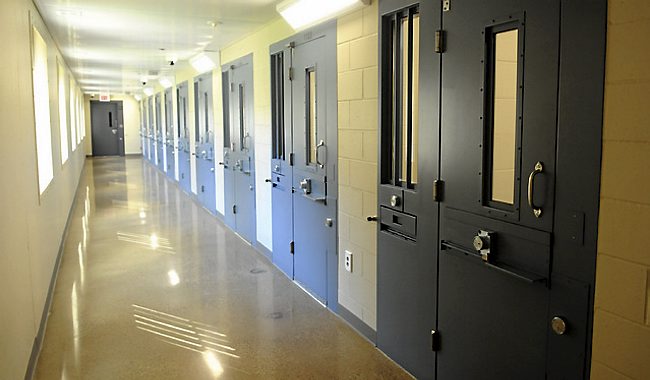
Jenkins still must face a probation violation relating to his 2013 conviction, as well as another case he picked up while jailed on the latest sexual assault charges. In July, he damaged a concrete countertop and then used pieces of it to smash a window of his cell and damage the door and walls, according to the charges. He also fashioned a rope out of blankets that measured approximately 35 feet in length.

Jenkins was charged with attempting to escape from custody and first-degree criminal damage to property after causing more than $12,000 in damage. He’s due back in court on the charges Oct. 7.

RFK Jr.’s made promises about vaccines. Here’s what he’s done as health secretary

posted in: All news | 0

By The Associated Press

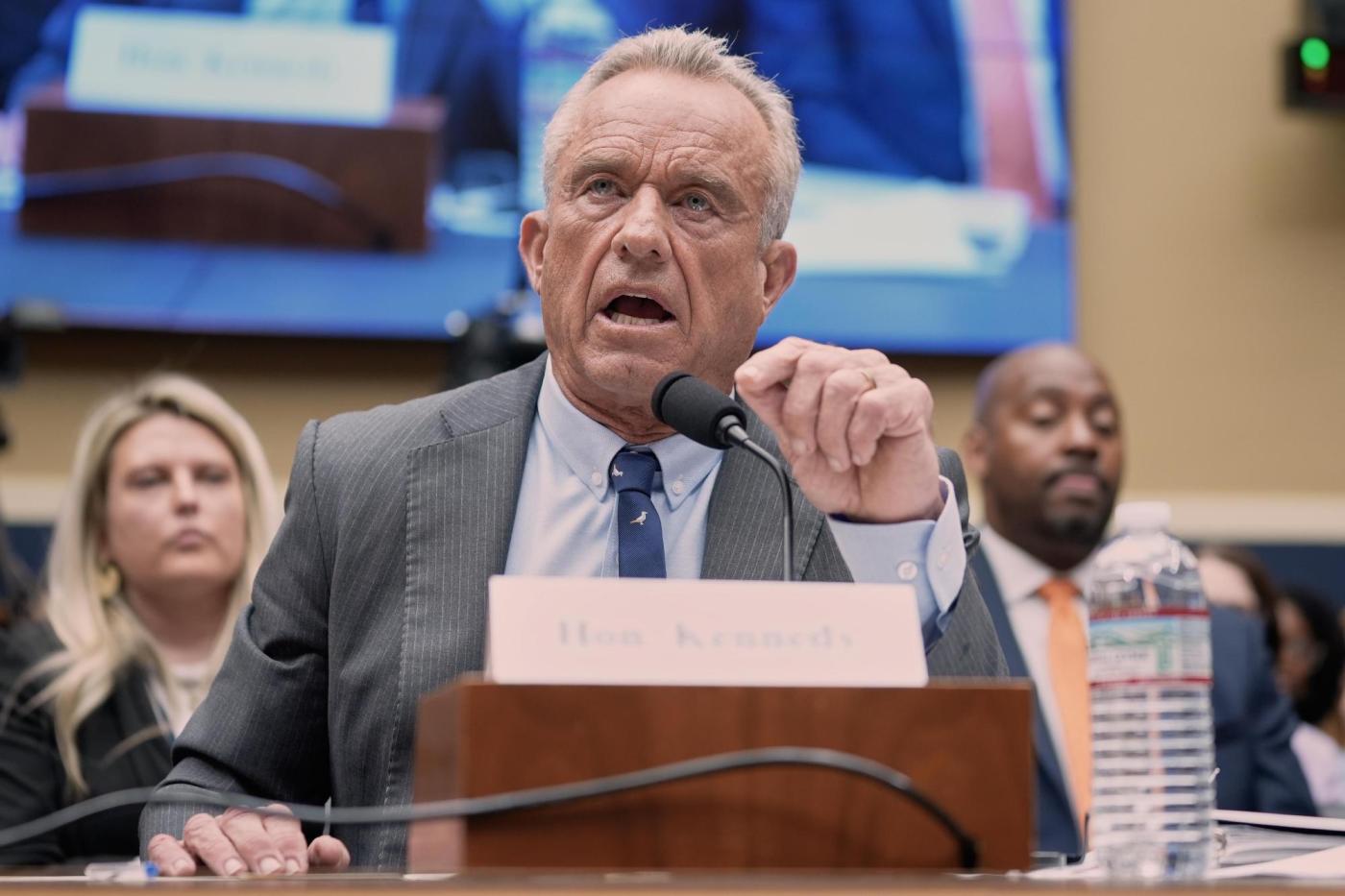
During his Senate confirmation hearings, Health Secretary Robert F. Kennedy Jr. suggested he wouldn’t undermine vaccines.

“I am not going to go into HHS and impose my preordained opinions on anybody at HHS,” he said. “I’m going to empower the scientists at HHS to do their job and make sure that we have good science that is evidence based.”

He also said he wouldn’t halt congressionally mandated funding for vaccination programs, nor impose conditions that would force local, state or global entities to limit access to vaccines or vaccine promotion.

“I’m not going to substitute my judgment for science,” he said.

Yet the Department of Health and Human Services under Kennedy has taken unprecedented steps to change how vaccines are evaluated, approved and recommended — sometimes in ways that run counter to established scientific consensus.

Here’s a look at what Kennedy has said and done since becoming the nation’s top health official on Feb. 13.

Kennedy and the childhood vaccine schedule

Sen. Bill Cassidy, a physician who was unsettled about Kennedy’s antivaccine work, said Kennedy pledged to him that he wouldn’t change existing vaccine recommendations.

“I recommend that children follow the CDC schedule. And I will support the CDC schedule when I get in there,” Kennedy said at his Senate confirmation hearing.

Kennedy also said he thought the polio vaccine was safe and effective and that he wouldn’t seek to reduce its availability.

Feb. 18: Kennedy vows to investigate the childhood vaccine schedule that prevents measles, polio and other dangerous diseases.

Early March: The National Institutes of Health cancels studies about ways to improve vaccine trust and access.

April 9: Kennedy tells CBS News that “people should get the measles vaccine, but the government should not be mandating those,” before then continuing to raise safety concerns about vaccines.

May 22: Kennedy issues a report that, among other things, questioned the necessity of mandates that require children to get vaccinated for school admission and suggested that vaccines should undergo more clinical trials, including with placebos. The report has to be reissued later because the initial version cited studies that don’t exist.

May 30: The Centers for Disease Control and Prevention removes COVID-19 vaccination guidance for pregnant women and says healthy children “may” get the shots.

June 25: A group of vaccine advisers picked by Kennedy announce they are establishing a work group to evaluate the “cumulative effect” of the children’s vaccine schedule.

June 25: Kennedy announces the U.S. will stop supporting the vaccines alliance Gavi. He accuses the group, along with the World Health Organization, of silencing “dissenting views” and “legitimate questions” about vaccine safety.

Kennedy on revising CDC vaccine recommendations

At the confirmation hearing, Cassidy asked Kennedy: “Do you commit that you will revise any CDC recommendations only based on peer review, consensus based, widely accepted science?”

Kennedy replied, “Absolutely,” adding he would rely on evidence-based science.

Feb. 20: HHS postpones a meeting of outside vaccine advisers.

April 16: The CDC’s vaccine advisory panel meets and recommends that people 50 to 59 with certain risk factors should be able to get vaccinated against respiratory syncytial virus, and endorses a new shot that protects against meningococcal bacteria. As of late June, the CDC and HHS haven’t acted on the recommendations.

Related Articles


Supreme Court upholds Texas law aimed at blocking kids from seeing pornography online


Supreme Court says Maryland parents can pull their kids from public school lessons using LGBTQ books


Supreme Court preserves key part of Obamacare coverage requirements


Supreme Court OKs fee that subsidizes phone, internet services in schools, libraries and rural areas


Supreme Court limits nationwide injunctions, but fate of Trump birthright citizenship order unclear

May 27: Kennedy announces that COVID-19 vaccines are no longer recommended for healthy children and pregnant women — a move immediately questioned by several public health experts. No one from the CDC, the agency that makes such recommendations, is present in the video announcing the changes.

June 9: Kennedy ousts all 17 members of the science panel that advises the CDC on how vaccines should be used.

June 11: Kennedy names new vaccine policy advisers to replace the panel that he dismissed. They include a scientist who rose to prominence by relaying conspiracy theories around the COVID-19 pandemic and the vaccines that followed, a leading critic of pandemic-era lockdowns, a business school professor, and a nurse affiliated with a group that is widely considered to be a leading source of vaccine misinformation.

June 26: Kennedy’s vaccine advisers recommend that people receive flu shots free of an ingredient that antivaccine groups have falsely tied to autism. The vote comes after a presentation from an antivaccine group’s former leader. A CDC staff analysis of past research on the topic is removed from the agency’s website because, according to a committee member, the report hadn’t been authorized by Kennedy’s office.

Kennedy on vaccine approvals and review standards

At the Senate hearing, Cassidy asked Kennedy if he would keep FDA’s historically rigorous vaccine review standards.

“Yes,” Kennedy replied.

March 29: Kennedy forces the FDA’s top vaccine official to resign. The official, Peter Marks, says he feared Kennedy’s team might manipulate or delete data from a vaccine safety database.

May 6: Kennedy names Dr. Vinay Prasad, an outspoken critic of the FDA’s handling of COVID-19 boosters, as the FDA’s vaccine chief.

May 16: After a delay, the FDA grants Novavax full approval for its COVID-19 vaccine but with unusual restrictions: The agency says it’s for use only in adults 65 and older – or those 12 to 64 who have at least one health problem that puts them at increased risk from COVID-19.

May 20: Top officials limit the approval for seasonal COVID-19 shots to seniors and others at high risk, pending more data on everyone else. The FDA urges companies to conduct large, lengthy studies before tweaked vaccines can be approved for healthier people, a stark break from the previous federal policy recommending an annual COVID-19 shot for all Americans six months and older.

May 30: FDA approves a new COVID-19 vaccine made by Moderna but with the same limits on who can get it as Novavax’s shot.

Kennedy on bird flu vaccine

At his confirmation hearing, Kennedy said he would support the development of a vaccine for H5N1 bird flu.

“I’m going to continue research on every kind of vaccine,” he said.

May 28: The Biomedical Advanced Research and Development Authority, an HHS agency, cancels $766 million in awards to Moderna to develop a vaccine against potential pandemic influenza viruses, including the H5N1 bird flu.

The Associated Press Health and Science Department receives support from the Howard Hughes Medical Institute’s Science and Educational Media Group and the Robert Wood Johnson Foundation. The AP is solely responsible for all content.