Man pleads not guilty to hate crimes in attack on Colorado demonstration for Israeli hostages

posted in: All news | 0

By COLLEEN SLEVIN, Associated Press

DENVER (AP) — A man accused of hurling Molotov cocktails at a group of people who were demonstrating in Boulder, Colorado, in support of Israeli hostages pleaded not guilty Friday to federal hate crime charges.

Mohamed Sabry Soliman was indicted earlier this week on 12 hate crime counts in the June 1 attack. He is accused of trying to kill eight people who were hurt by the Molotov cocktails and others who were nearby.

Investigators say Soliman told them he intended to kill the roughly 20 participants at the weekly demonstration on Boulder’s Pearl Street pedestrian mall. But he threw just two of his over two dozen Molotov cocktails while yelling “Free Palestine.”

Related Articles


Lawyers for Kilmar Abrego Garcia ask judge to keep him in jail over deportation concerns


Sean ‘Diddy’ Combs’ lawyer mocks sex trafficking case in closing, says charges ‘badly exaggerated’


Today in History: June 27, Hurricane Audrey makes Gulf Coast landfall


The best that Bezos’ money can buy: The billionaire’s Venice wedding to Lauren Sánchez causes a stir


Home reportedly owned by Brad Pitt was ransacked by burglars, police say

Soliman, who is also being prosecuted in state court for attempted murder and other charges, told investigators he tried to buy a gun but was not able to because he was not a “legal citizen.”

He posed as a gardener, wearing a construction vest, to get close to the group before launching the attack, according to court documents. He was also indicted for having explosives, which was included in the hate crime counts.

Federal authorities say Soliman, an Egyptian national, has been living in the U.S. illegally with his family.

Soliman is being represented in state and federal court by public defenders who do not comment on their cases to the media.

Prosecutors say the victims were targeted because of their perceived or actual national origin.

At a hearing last week, Soliman’s defense attorney, David Kraut, urged Magistrate Judge Kathryn Starnella not to allow the case to move forward. Kraut said the alleged attack was not a hate crime. He said it was motivated by Soliman’s opposition to Zionism, the movement to establish and sustain a Jewish state in Israel.

An attack motivated by someone’s political views is not considered a hate crime under federal law.

Republican plan for nationwide private school vouchers deemed in violation of Senate rules

posted in: All news | 0

By COLLIN BINKLEY, Associated Press

WASHINGTON (AP) — A Republican plan to expand private school vouchers nationwide was dealt a major setback Friday when the Senate parliamentarian said the proposal would run afoul of procedural rules.

The years-in-the-making plan would have created a federal tax credit supporting scholarships to help families send their children to private schools or other options beyond their local public schools. But in an overnight announcement, the Senate parliamentarian advised against including the proposal in President Donald Trump’s tax cut and spending bill.

It added to mounting problems for Republicans as key proposals were deemed ineligible for the filibuster-proof reconciliation package. The parliamentarian’s rulings are advisory but are rarely, if ever, ignored. It’s unclear if Republicans will try to rewrite the provisions or simply drop them from the bill.

Another education plan deemed ineligible for reconciliation would have exempted religious colleges from a federal endowment tax. The proposal sought to raise the tax rate on wealthier colleges’ endowments while carving out religious institutions like Hillsdale College, a conservative, Christian school in Michigan and an ally of the Trump administration.

Oregon Sen. Jeff Merkley, the top Democrat on the Senate Budget Committee, said, “We have been successful in removing parts of this bill that hurt families and workers, but the process is not over, and Democrats are continuing to make the case against every provision in this Big, Beautiful Betrayal of a bill that violates Senate rules.”

Related Articles


The government cuts key data used in hurricane forecasting, and experts sound an alarm


Democrats are trying to figure out what to do about John Fetterman. One of them is stepping up


Pardon applications are being carefully crafted with one man in mind: Donald Trump


Rural schools feel the pinch from Trump administration’s cuts to mental health grants


Family sues over US detention in what may be first challenge to courthouse arrests involving kids

School voucher provision had been seen as a win for supporters

The school voucher provision was seen as a breakthrough victory for proponents who have been pushing the idea for years. A similar plan failed to gain support from Congress in 2019 when it was championed by Betsy DeVos, the education secretary during Trump’s first term. Campaigning for his second term, Trump again promised to deliver some form of “universal school choice.”

Under the reconciliation plan, donors who gave money or stock to K-12 scholarship programs would receive 100% of the contribution back in the form of a discount on their tax bills. It would allow stock holders to avoid paying taxes they would usually face if they donated or transferred their stock.

Nearly all families would qualify to receive scholarships except those making more than three times their area’s median income.

A House version of the bill allowed up to $5 billion in tax credits a year, running through 2029. The Senate version reduced it to $4 billion but included no end date.

Supporters said the proposal would expand education options for families across the country, offering alternatives to students in areas with lower-performing public schools. Opponents said it would siphon money from public schools and open the door for fraud and abuse.

Republican-led states have similar programs

Similar scholarship and voucher programs have proliferated in Republican-led states such as Texas, which recently passed a $1 billion program. States have increasingly offered vouchers to families beyond only the neediest ones, contributing to budget concerns as expenses rapidly pile up.

The Senate’s college endowment proposal sought to raise a tax on schools’ investment income, from 1.4% now to 4% or 8% depending on their wealth. It would apply only to colleges with endowments of at least $500,000 per student, and it excluded all religious institutions. It would have exempted a small number of colleges, including Hillsdale, which lobbied against it.

Some small colleges that would have been hit hard by the proposal are now hopeful that Republicans will carve out an exemption for all smaller schools.

“The religious schools exemption showed senators were concerned about the endowment tax hike’s impact on small colleges,” said Lori White, president of DePauw University, a private liberal arts school in Indiana. “After the parliamentarian’s rulings, the best way to protect those and other small institutions from that impact is now to exempt all colleges with fewer than 5,000 undergraduate students.”

The Associated Press’ education coverage receives financial support from multiple private foundations. The AP is solely responsible for all content. Find the AP’s standards for working with philanthropies, a list of supporters and funded coverage areas at AP.org.

The government cuts key data used in hurricane forecasting, and experts sound an alarm

posted in: All news | 0

By ALEXA ST. JOHN, Associated Press

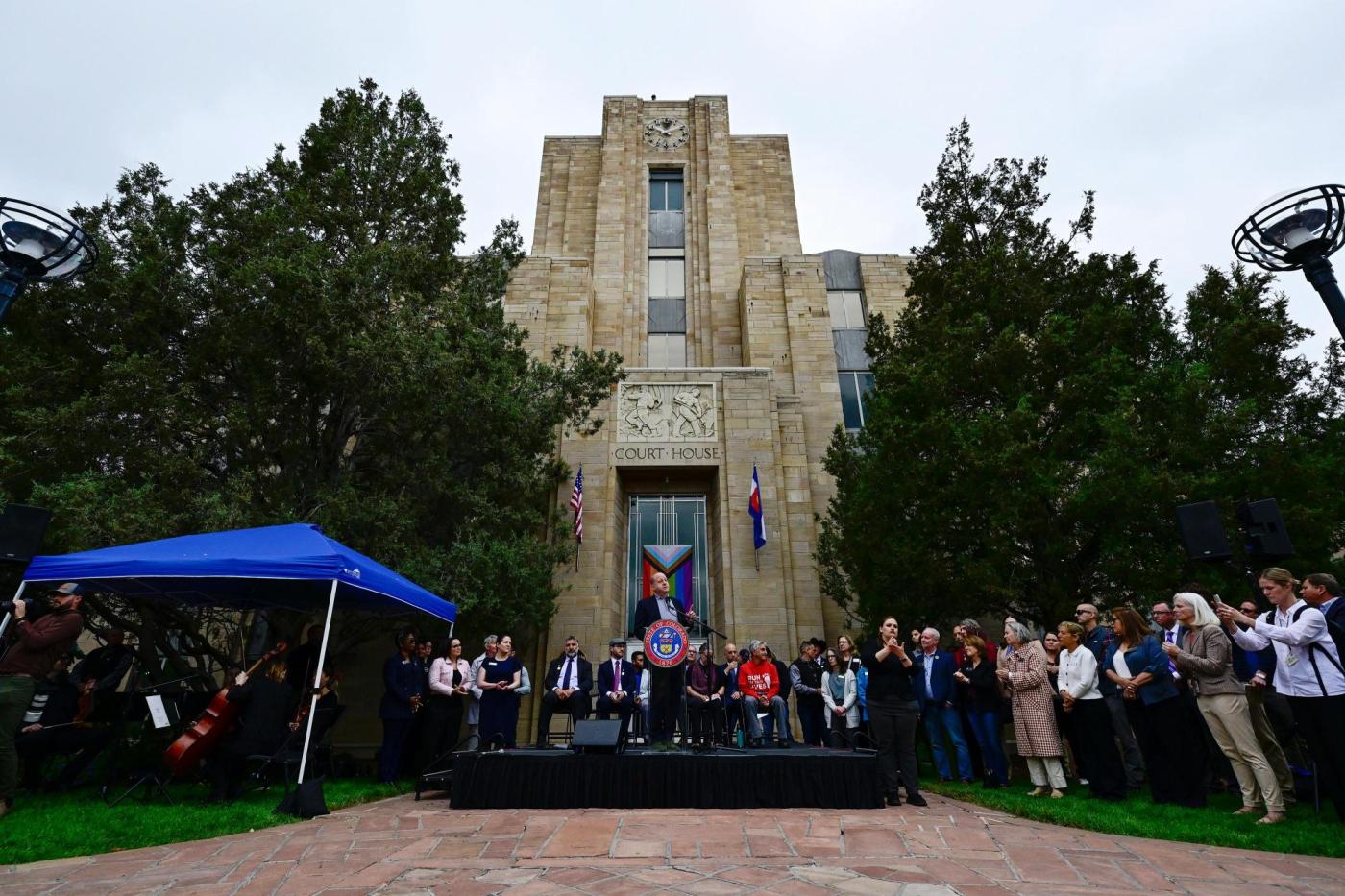
Weather experts are warning that hurricane forecasts will be severely hampered by the upcoming cutoff of key data from U.S. Department of Defense satellites, the latest Trump administration move with potential consequences for the quality of forecasting.

The National Oceanic and Atmospheric Administration said it would discontinue the “ingest, processing and distribution” of data collected by three weather satellites that the agency jointly runs with the Defense Department. The data is used by scientists, researchers and forecasters, including at the National Hurricane Center.

It wasn’t immediately clear why the government planned to cut off the Defense Meteorological Satellite Program’s microwave data by Monday. The Defense Department referred questions to the Air Force, which referred them to the Navy, which did not immediately provide comment. NOAA did not immediately respond to a message.

Unlike traditional weather satellites, the microwave data helps peer under a regular image of a hurricane or a tropical cyclone to see what is going on inside the storm, and it is especially helpful at night.

Related Articles


Republican plan for nationwide private school vouchers deemed in violation of Senate rules


Democrats are trying to figure out what to do about John Fetterman. One of them is stepping up


Pardon applications are being carefully crafted with one man in mind: Donald Trump


Rural schools feel the pinch from Trump administration’s cuts to mental health grants


Family sues over US detention in what may be first challenge to courthouse arrests involving kids

The news is especially noteworthy during the ongoing hurricane season and as lesser storms have become more frequent, deadly and costly as climate change is worsened by the burning of fossil fuels.

Microwave imagery allows researchers and forecasters to see the center of the storm. Experts say that can help in detecting the rapid intensification of storms and in more accurately plotting the likely path of dangerous weather.

“If a hurricane, let’s say, is approaching the Gulf Coast, it’s a day away from making landfall, it’s nighttime,” said Union of Concerned Scientists science fellow Marc Alessi. “We will no longer be able to say, OK, this storm is definitely undergoing rapid intensification, we need to update our forecasts to reflect that.”

Other microwave data will be available but only roughly half as much, hurricane specialist Michael Lowry said in a blog post. He said that greatly increases the odds that forecasters will miss rapid intensification, underestimate intensity or misplace the storm.

That “will severely impede and degrade hurricane forecasts for this season and beyond, affecting tens of millions of Americans who live along its hurricane-prone shorelines,” he said.

University of Miami hurricane researcher Brian McNoldy called the loss of data “alarmingly bad news” in a post on Bluesky.

“Microwave data are already relatively sparse, so any loss — even gradual as satellites or instruments fail — is a big deal; but to abruptly end three active functioning satellites is insanity.”

NOAA and its National Weather Service office have been the target of several cuts and changes in President Donald Trump’s second term. The Department of Government Efficiency gutted the agency’s workforce, local field offices and funding.

Already, hurricane forecasts were anticipated to be less accurate this year because weather balloons launches have been curtailed because of the lack of staffing.

“What happened this week is another attempt by the Trump administration to sabotage our weather and climate infrastructure,” Alessi said.

Alexa St. John is an Associated Press climate reporter. Follow her on X: @alexa_stjohn. Reach her at ast.john@ap.org.

The Associated Press’ climate and environmental coverage receives financial support from multiple private foundations. AP is solely responsible for all content. Find AP’s standards for working with philanthropies, a list of supporters and funded coverage areas at AP.org.
Increased bear sightings in Forest Lake: What to know

posted in: All news | 0

The Forest Lake Police Department has seen an increase in calls about bear sightings in the city’s residential areas. Black bears are most common in northern and central Minnesota, but they can live throughout the state and occasionally wander into cities and residential areas.

“If you live in Minnesota, you live in bear country, ” the police department said in a Facebook post about the sightings.

Minnesota’s black bear range has been gradually expanding southward and westward, according to the Minnesota Department of Natural Resources.

Preventing bear encounters

The Forest Lake Police Department said bears are attracted to things that seem like food to them, including birdseed, dog food, fruits, grease on grills, trash and fish. Cleaning these things up, moving them inside and securing garbage cans can help prevent bears from approaching a home.

What to do if a bear approaches

Wild Minnesota black bears are usually shy and wary of people, and attacks by black bears are rare, according to the DNR. However, if a bear approaches someone’s home, the DNR recommends taking these precautions:

Watch from inside the house or from a safe distance and and see if the bear leaves on its own.
If the bear approaches the house, such as climbing on the deck or putting its paws on the windows or doors, try to scare it away by shouting, slamming a door or banging pots.
If bear spray is available, remove the safety and be ready to use it if the bear approaches you.

If people spot a black bear outside its usual range, they can report it to the DNR at dnr.state.mn.us/hunting/bear/bear-sightings.html.

Related Articles


Health care workers at Stillwater clinic gives notice of intent to strike


‘Had to do it’: St. Paul Park man to receive Carnegie Medal for fiery St. Paul rescue


Forest Lake mayor urges school board to keep dress-code restrictions


Music as meditation: Guitars for Vets provides outlet for MN vets


Funeral set for Metro Transit officer who drowned in White Bear Lake