By ANGELA HART/KFF Health News and DEVI SHASTRI/The Associated Press
SACRAMENTO, Calif. (AP) — The Trump administration is taking its immigration crackdown to the health care safety net, launching Medicaid spending probes in at least six Democratic-led states that provide comprehensive health coverage to poor and disabled immigrants living in the U.S. without permanent legal status.
The Centers for Medicare and Medicaid Services is scouring payments covering health care for immigrants without legal status to ensure there isn’t any waste, fraud or abuse, according to public records obtained by KFF Health News and The Associated Press. While acknowledging that states can bill the federal government for Medicaid emergency and pregnancy care for immigrants without legal status, federal officials have sent letters notifying state health agencies in California, Colorado, Illinois, Minnesota, Oregon and Washington that they are reviewing federal and state payments for medical services, such as prescription drugs and specialty care.
The federal agency told the states it is reviewing claims as part of its commitment to maintain Medicaid’s fiscal integrity. California is the biggest target after the state self-reported overcharging the federal government for health care services delivered to immigrants without legal status, determined to be at least $500 million, spurring the threat of a lawsuit.
“If CMS determines that California is using federal money to pay for or subsidize healthcare for individuals without a satisfactory immigration status for which federal funding is prohibited by law,” according to a letter dated March 18, “CMS will diligently pursue all available enforcement strategies, including, consistent with applicable law, reductions in federal financial participation and possible referrals to the Attorney General of the United States for possible lawsuit against California.”
The investigations come as the White House and a Republican-controlled Congress slashed taxpayer spending on immigrant health care through cuts in President Donald Trump’s spending-and-tax law passed this summer. The administration is also pushing people living in the U.S. illegally off Medicaid rolls. Health policy experts say these moves could hamper care and leave safety net hospitals, clinics and other providers financially vulnerable. Some Democratic-led states — California, Illinois and Minnesota — have already had to end or slim down their Medicaid programs for immigrants due to ballooning costs. Colorado is also considering cuts due to cost overruns.
At the same time, 20 states are pushing back on Trump’s immigration crackdown by suing the administration for handing over Medicaid data on millions of enrollees to deportation officials. A federal judge temporarily halted the move. California’s attorney general, Rob Bonta, who led that challenge, says the Trump administration is launching a political attack on states that embrace immigrants in Medicaid programs.
FILE – California Attorney General Rob Bonta speaks during a news conference in Ceres, Calif., April 16, 2025. (AP Photo/Noah Berger, File)
“The whole idea that there’s waste, fraud and abuse is contrived,” Bonta said. “It’s manufactured. It’s invented. It’s a catchall phrase that they use to justify their predetermined anti-immigrant agenda.”
Trump administration targets immigrants
Immigrants lacking permanent legal status are not eligible to enroll in comprehensive Medicaid coverage. However, states bill the federal government for emergency and pregnancy care provided to anyone.
Fourteen states and Washington, D.C., expanded their Medicaid programs with their own funds to cover low-income children without legal status. Seven of those states, plus Washington, D.C., have also provided full-scope coverage to some adult immigrants living in the country illegally.
The Trump administration appears to be targeting only states with full Medicaid coverage for both kids and adults without legal status. Utah, Massachusetts and Connecticut, which provide Medicaid coverage only to immigrant children, have not received letters, for instance. CMS declined to provide a full list of states it is targeting.
Trump admin ditches Biden-era plan to make airlines pay compensation for flight disruptions
Trump will seek ‘Department of War’ rebrand for Pentagon
US immigration officers raid Georgia site where Hyundai makes electric vehicles
Immigrant pleads guilty to being in US illegally after judge allegedly helped him evade agents
Trump-backed plan to redraw Missouri congressional districts draws opposition at first hearing
Federal officials say it is their legal right and responsibility to scrutinize states for misspending on immigrant health coverage and are taking “decisive action to stop that.”
“It is a matter of national concern that some states have pushed the boundaries of Medicaid law to offer extensive benefits to individuals unlawfully present in the United States,” CMS spokesperson Catherine Howden said about the agency’s probe of selected states. The oversight is intended to “ensure federal funds are reserved for legally eligible individuals, not for political experiments that violate the law,” she said.
Health policy researchers and economists say providing Medicaid coverage to immigrants for preventive services and treatment of chronic health conditions staves off more costly care for patients down the road. It also tamps down insurance premium increases and the amount of uncompensated care for hospitals and clinics.
Francisco Silva, president and CEO of the California Primary Care Association, said the Trump administration is threatening to drive up health care costs and make it more difficult to access care.
“The impact is emergency rooms would get so crowded that ambulances have to be diverted away and people in a real emergency can’t get into the hospital, and public health threats like disease outbreaks,” Silva said.
California has taken a health-care-for-all approach, providing coverage to 1.6 million immigrants without legal status. The expansion, which was rolled out from 2016 to 2024, is estimated to cost $12.4 billion this year. Of that, $1.3 billion is paid by the federal government for emergency and pregnancy-related care.
As California rolled out its expansion, the state erroneously billed the federal government for care provided to immigrants without legal status — details that have not previously been reported and that former state officials shared with KFF Health News and the AP. The state improperly billed for services such as mental health and addiction services, prescription drugs and dental care.
Jacey Cooper, who served as California’s Medicaid director from 2020 to 2023, said she discovered the error and reported it to federal regulators. Cooper said the state had been working to pay back at least $500 million identified by the federal government.
“Once I identified the problem, I thought it was really important to report it and we did,” Cooper said. “We take waste, fraud and abuse very seriously.”
It’s not clear whether that money has been repaid. The state’s Medicaid agency says it does not know how CMS calculated the overpayments or “what is included in that amount, what time period it covers, and if or when it was collected,” said spokesperson Tony Cava.
California has an enormously complicated Medicaid program: It serves the largest population in the nation — nearly 15 million people — with a budget of nearly $200 billion this fiscal year.
Matt Salo, a national Medicaid expert, said these types of mistakes happen in states throughout the country because the program is rife with overlapping federal and state rules. Salo and other policy analysts agreed that states have the authority to administer their Medicaid programs as they see fit and root out misuse of federal funds.
And Michael Cannon, director of health policy studies at the libertarian Cato Institute, said the Trump administration’s actions “persecute a minority that’s unpopular with the powers that be.”
“The Trump administration cannot maintain that this effort has anything to do with maintaining the fiscal integrity of the Medicaid program,” Cannon said. “There are so much bigger threats to Medicaid’s fiscal integrity, that that argument just doesn’t wash.”
Immigrants’ Medicaid under attack
National Republicans have targeted health spending on immigrants in different ways. The GOP spending law, which Trump calls the “One Big Beautiful Bill,” will lower reimbursement to states around the country in October 2026. In California, for example, federal reimbursement for immigrants without legal status will go to 50% for emergency services, down from 90% for the Medicaid expansion population, according to Cava.
The Trump administration is also scaling back Medicaid coverage to immigrants with temporary legal status who were previously covered and announced in August that it would provide states with monthly reports pointing out enrollees whose legal status could not be confirmed by the Department of Homeland Security.
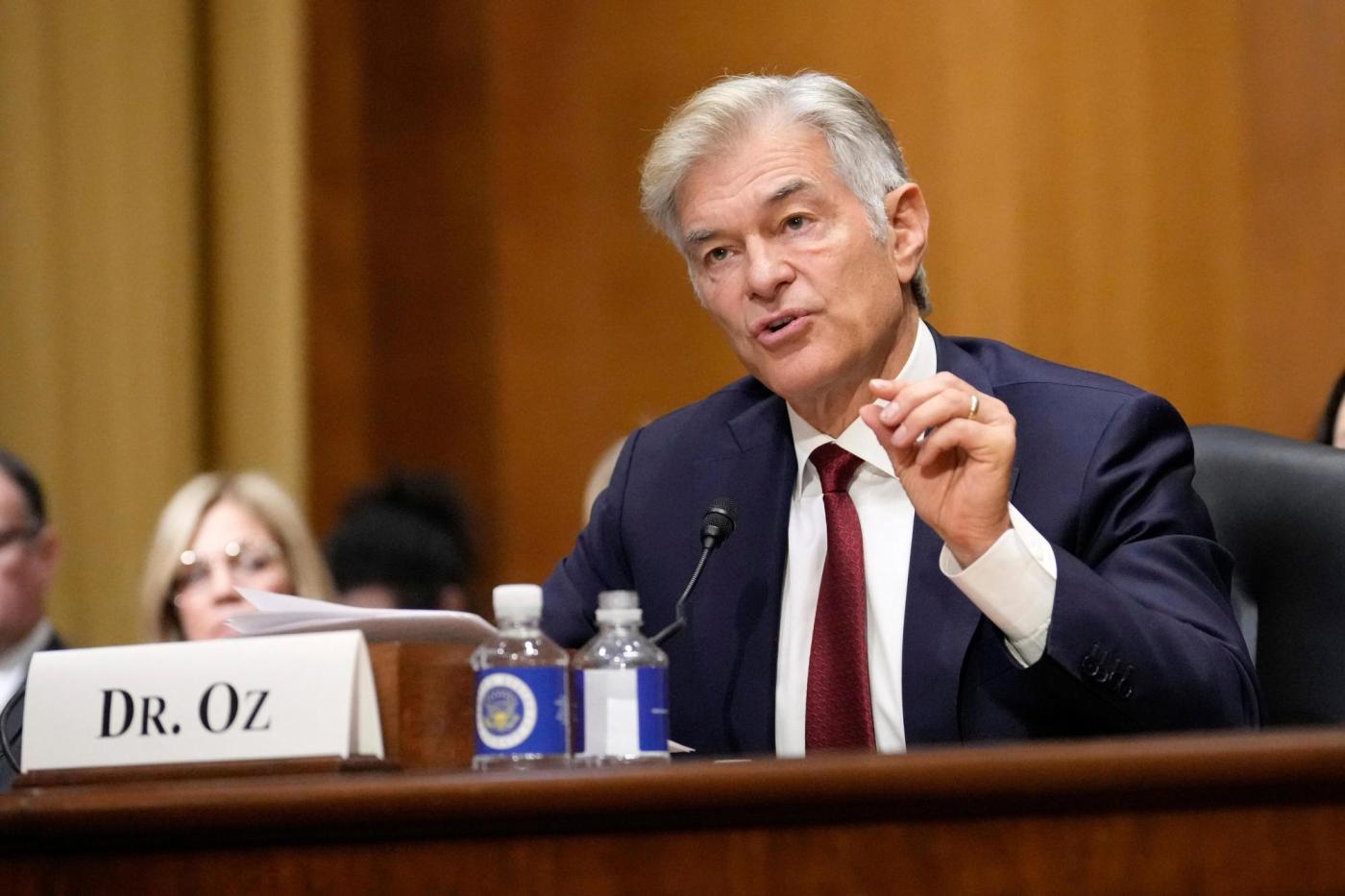
“Every dollar misspent is a dollar taken away from an eligible, vulnerable individual in need of Medicaid,” CMS Administrator Mehmet Oz said in a statement. “This action underscores our unwavering commitment to program integrity, safeguarding taxpayer dollars, and ensuring benefits are strictly reserved for those eligible under the law.”
States under review say they are following the law.
“Spending money on a congressionally authorized medical benefit program that helps people get emergency treatments for cancer, dialysis and anti-rejection medications for organ transplants is decidedly not waste, fraud and abuse,” said Mike Faulk, deputy communications director for Washington state Attorney General Nick Brown.
Records show Washington Medicaid officials have been inundated with questions from CMS about federal payments covering emergency and pregnancy care for immigrants without legal status.
Emails show Illinois officials met with CMS and sought an extension to share its data. CMS denied that request and federal regulators told the state that its funding could be withheld.
“Thousands of Illinois residents rely on these programs to lawfully seek critical health care without fear of deportation,” said Melissa Kula, a spokesperson for the Illinois Department of Healthcare and Family Services, noting that any federal cut would be “impossible” for the state to backfill.
Shastri reported from Milwaukee.
KFF Health News is a national newsroom that produces in-depth journalism about health issues and is one of the core operating programs at KFF — the independent source for health policy research, polling and journalism.
The Associated Press Health and Science Department receives support from the Howard Hughes Medical Institute’s Department of Science Education and the Robert Wood Johnson Foundation. The AP is solely responsible for all content.