Hulu series names new suspect in Jodi Huisentruit case

posted in: All news | 0

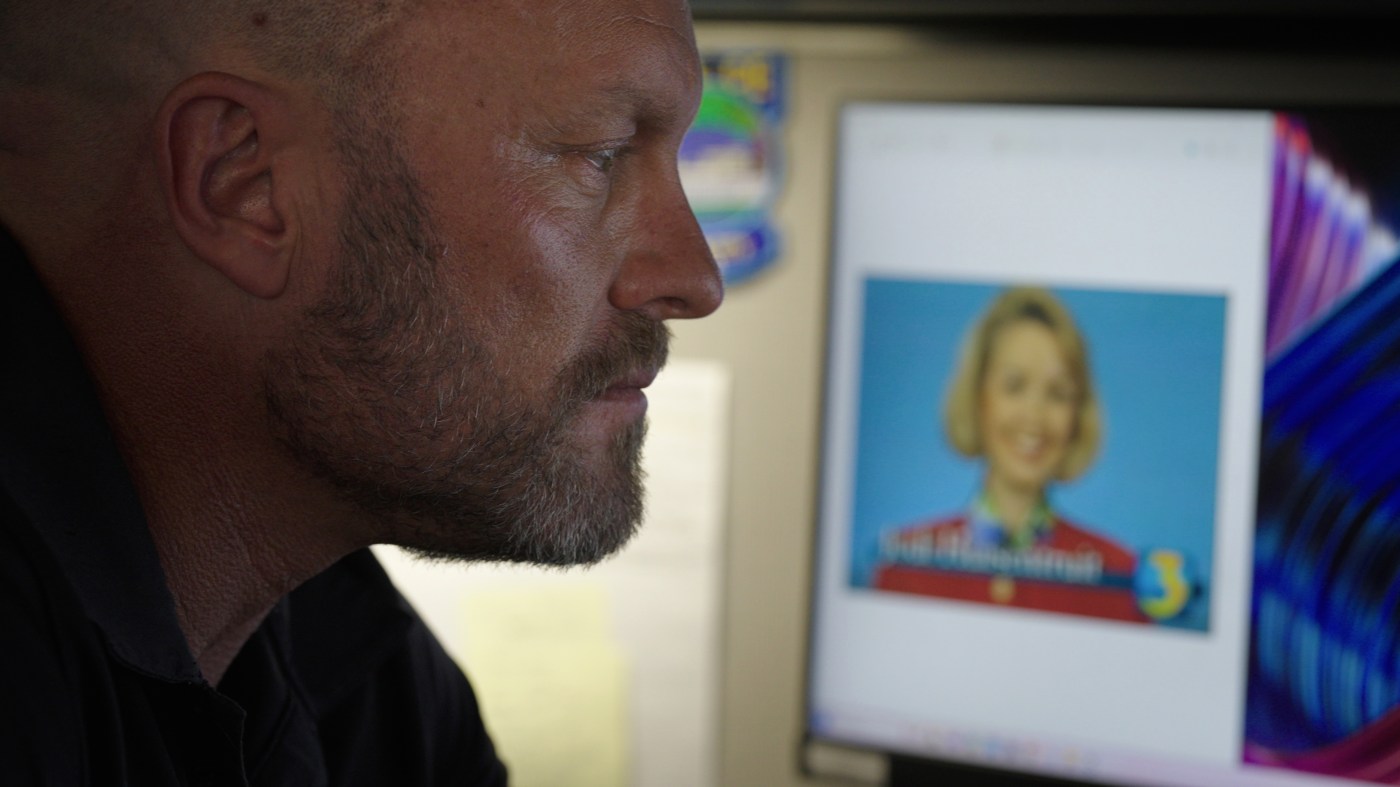
A new suspect in the abduction of Mason City, Iowa, TV news anchor Jodi Huisentruit is identified in an ABC News’ documentary that premieres Tuesday on Hulu and Hulu on Disney+.

The three-part series, “Her Last Broadcast: The Abduction of Jodi Huisentruit,” names – for the first time – a Wisconsin resident, the ex-husband of a friend of Huisentruit’s, as a person of interest in the June 27, 1995, case.

Huisentruit’s friend said she reached out in 2022 to Mason City, Iowa, police about her ex-husband for a second time after a 20/20 segment, “Gone at Dawn,” on the Huisentruit case aired. The woman said she had emailed police in 2017 about her suspicions, but nothing came of it, according to “Her Last Broadcast.”

“The 20/20 show, that’s why I reached out to Mason City police,” the woman says in the documentary. “I’m positive he went to Mason City, and he met with Jodi. I’m 100-percent positive. He always asked about Jodi. He needs to be looked at.”

The couple’s divorce was finalized on June 23, 1995; Huisentruit went missing four days later. This year marked the 30th anniversary of her disappearance.

Mason City, Iowa, Police Investigator Terrance Prochaska, who is featured prominently in the new documentary, talks with the friend on camera: “We’ve had a lot of people call and say, ‘My ex-husband did it,’” Prochaska said. “But we know that you were one of her close friends. We call this a very high-priority lead.”

The tip led investigators last year to Winsted, Minn., where they searched for human remains in an area near where the man had owned property. No human remains were found. The search is featured in “Her Last Broadcast.”

The man reportedly drove a white Ford Econoline van for work; a van matching that description was seen near Huisentruit’s apartment around the time of her abduction, according to the series. A composite sketch of a man neighbors saw in the parking lot of Huisentruit’s apartment complex looked so much like the friend’s ex-husband that she got “goosebumps” when she saw it, she says in the series.

He also reached out to his ex-wife on the 10th anniversary of Huisentruit’s abduction, according to the series.

The man, who was questioned by police, declined to be interviewed for “Her Last Broadcast.” The Pioneer Press typically does not name suspects until they are charged.

Persons of interest

The man is one of four suspects named as persons of interest in the case in “Her Last Broadcast.”

Maria Awes, the documentary’s director and executive producer, said it was important to “examine all the evidence” to see if any of the four may have had something to do with Huisentruit’s abduction.

“It’s also to show that for Mason City police, this isn’t really a cold-case for them,” she said. “They’ve been working on it for decades. We wanted to get all this information out there, keep Jodi and her story, her legacy, top of mind. Hopefully, somebody who has any missing piece of information pertaining to any person of interest featured here or otherwise, will contact police. That’s just so critical for getting this case solved.”

A tipster reported seeing a white van in the parking lot of Huisentruit’s apartment around the time frame that they think she disappeared, Awes said.

“It wasn’t as though somebody saw her being put into this van or something like that, but it’s always been a vehicle that law enforcement has wanted to find,” she said. “They did an enormous amount of work trying to locate white vans. As you can imagine, there’s a lot of those. Trying to sift through literally every white van in Iowa, you know, and also even in Minnesota, I know that they were looking and trying to figure out whose van could this have been, and so the fact that (this man) had a white van, that was certainly something that piqued Mason City Police Department’s interest.”

Local celebrity

Awes, who grew up in Richfield, was studying broadcast-journalism at the University of St. Thomas in St. Paul when Huisentruit disappeared, and Huisentruit’s case was discussed at length in class, she said.

In the 1990s, local TV news anchors like Huisentruit were celebrities, according to Awes.

“It was very different then,” she said. “People recognized them all over the place, and there are dangers that come with that type of local fame. You really can’t discount that. It was a serious thing. You also have just that generalized fear that all, you know, women kind of have where you’re alone. It’s dark. You’re going to your car. ‘Could something happen to you?’ And in this case, something did.

Related Articles


Charges dropped against Utah doctor accused of throwing away $28,000 in COVID vaccine doses


Man accused of sending threats to federal, North Dakota officials pleads not guilty


‘Today we get justice,’ sister of chef fatally shot at St. Paul funeral reception says in court


‘He cared for everybody:’ Mother remembers Columbia Heights teen allegedly killed by father


Two charged after gunfight at downtown St. Paul pool party

“I think most women know what that experience is like. I think that’s one of the reasons Jodi’s case resonates so much with people is because of that fear. It’s something very identifiable for a lot of people.”

Who does Awes think is responsible?

“People ask me that all the time,” she said. “I always say it’s really not for me to necessarily comment on that other than to say, you know, I think my job is really I just want to get that information out there. I think people can evaluate it on their own and come to their own conclusions. And certainly the most important thing is not what I think or what anybody thinks, but really, who actually did it – and what’s the evidence? The hard evidence. And how can you prove that in court?”

Jodi Huisentruit documentary

“Her Last Broadcast: The Abduction of Jodi Huisentruit” premieres Tuesday, July 15, on Hulu and Disney+.

The three-part series was produced by ABC News Studios and Committee Films, a Minneapolis company that produced an ABC “20/20” episode on Huisentruit’s abduction in 2022.


Tesla’s Autopilot system is in the spotlight at a Miami trial over a student killed while stargazing

posted in: All news | 0

By BERNARD CONDON and TOM KRISHER, Associated Press

NEW YORK (AP) — A rare trial against Elon Musk’s car company began Monday in Miami where a jury will decide if it is partly to blame for the death of a stargazing university student after a runaway Tesla sent her flying 75 feet through the air and severely injured her boyfriend.

Lawyers for the plaintiff argue that Tesla’s driver-assistance feature called Autopilot should have warned the driver and braked when his Model S sedan blew through flashing red lights, a stop sign and a T-intersection at nearly 70 miles an hour in the April 2019 crash. Tesla lays the blame solely on the driver, who was reaching for a dropped cell phone.

“The evidence clearly shows that this crash had nothing to do with Tesla’s Autopilot technology,” Tesla said in a statement. “Instead, like so many unfortunate accidents since cellphones were invented, this was caused by a distracted driver.”

The driver, George McGee, was sued separately by the plaintiffs. That case was settled.

Related Articles


The biggest piece of Mars on Earth is going up for auction in New York


Judge orders LA prosecutors to explain why Menendez brothers’ conviction shouldn’t be re-examined


Andrea Gibson — Colorado state poet laureate, queer activist and spoken-word artist — dies at 49


New tax break for auto loans could save some buyers thousands of dollars. But will it boost sales?


Retired Army officer pleads guilty to sharing classified info on Russia-Ukraine war on dating site

A judgement against Tesla could be especially damaging as the company works to convince the public its self-driving technology is safe during a planned rollout of hundreds of thousands of Tesla robotaxis on U.S. roads by the end of next year. A jury trial is rare for the company, which often settles lawsuits, and this one is rarer yet because a judge recently ruled that the family of the stricken Naibel Benavides Leon can argue for punitive damages.

The judge, Beth Bloom of the U.S. District Court for the Southern District of Florida, issued a partial summary judgement last month, throwing out charges of defective manufacturing and negligent misrepresentation against Tesla. But she also ruled plaintiffs could argue other claims that would make the company liable and ask for punitive damages, which could prove costly.

“A reasonable jury could find that Tesla acted in reckless disregard of human life for the sake of developing their product and maximizing profit,” Bloom said in a filing.

The 2021 lawsuit alleges the driver relied on Autopilot to reduce speed or come to a stop when it detected objects in its way, including a parked Chevrolet Tahoe that Benavides and her boyfriend, Dillon Angulo, had gotten out of near Key West, Florida, to look up at the sky. The Tesla rammed the Tahoe at highway speeds, causing it to rotate and slam into Benavides, tossing her into a wooded area and killing her.

In legal documents, Tesla denied nearly all of the lawsuit’s allegations and said it expects that consumers will follow warnings in the vehicle and instructions in the owners’ manual, as well as comply with driving laws. Tesla warns owners in manuals that its cars cannot drive themselves and they need to be ready to intervene at all times.

Former AP auto writer Krisher reported from Detroit.

St. Croix River bridge inspection underway; delays expected

posted in: All news | 0

Motorists using the St. Croix River bridge south of Stillwater will encounter single-lane closures this week as the bridge undergoes inspection by Wisconsin Department of Transportation engineers.

From now until Thursday, daily lane closures will occur between 7 a.m. and 2 p.m. for eastbound traffic and between 9 a.m. and 4 p.m. for westbound traffic, according to WisDOT officials.

Motorists might experience delays and should plan accordingly.

The bridge, which opened to traffic in August 2017, is inspected every two years.

Related Articles


What to expect at Lumberjack Days 2025


‘What makes a team win?’ 10 things a Woodbury podcaster learned from local leaders


After nearly 50 years, a retiring local fire chief shares tips and tales


Strike to end Saturday for health care workers at Stillwater clinic; issues not resolved


Man charged with trafficking 14-year-old in Mahtomedi, another man accused of sexually assaulting her

Opinion: A Housing Blueprint for New York

posted in: All news | 0

“My comprehensive housing initiative—called the ‘Blueprint for New York’—proposes the addition of over 50,000 units annually, with a groundbreaking approach to affordability: setting rents at 25 percent of each borough’s median income.”

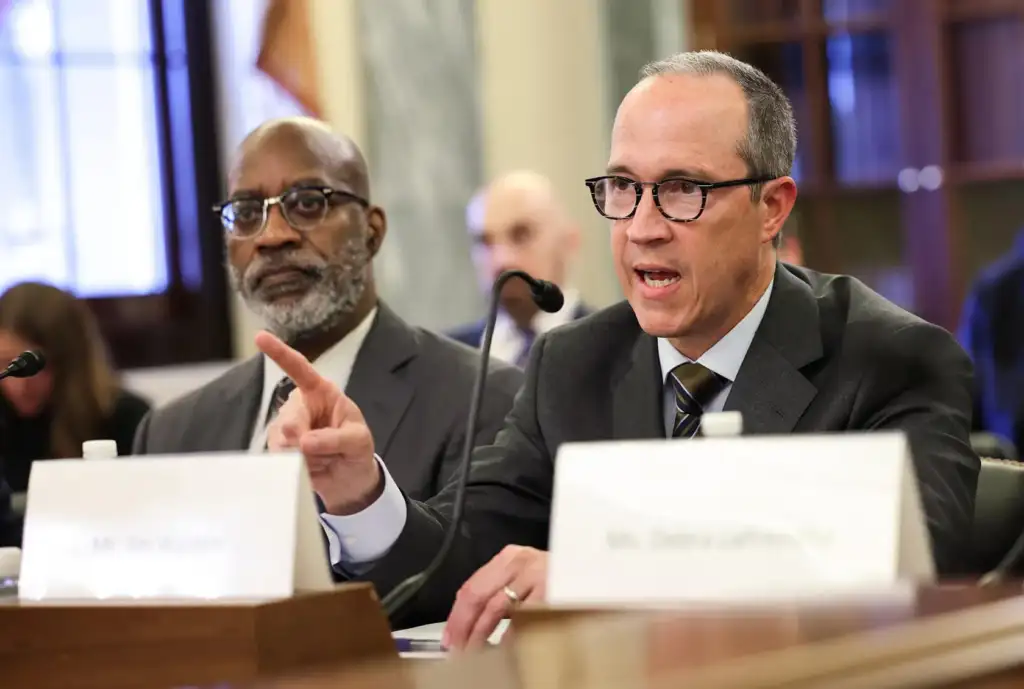
Jim Walden, an attorney and former federal prosecutor, who is running for mayor in November. (Courtesy Jim Walden’s campaign)

Editor’s Note: City Limits has offered similar op-ed space to the other candidates running for NYC mayor this year to share their housing plans. If you’re a candidate interested in submitting a piece, email editor@citylimits.org.

Read Zohran Mamdani’s housing op-ed here.

Every day, New Yorkers face the difficult choice between paying rent and meeting their other basic needs. The city’s housing crisis is not just a policy failure; it’s a moral one. Our housing system has left too many behind, with sky-high rents, options that are not truly affordable, an aged and deteriorating housing stock, and public housing in disrepair. 

This crisis is not insurmountable. With bold leadership and innovative solutions, we can rebuild New York’s promise for all who call it home. My comprehensive housing initiative—called the “Blueprint for New York”—proposes the addition of over 50,000 units annually, with a groundbreaking approach to affordability: setting rents at 25 percent of each borough’s median income. 

Too often, “affordable housing” is affordable in name only. Rents are pegged to the Area Median Income (AMI), a metric skewed by the city’s wealthiest zip codes (as well as parts of Westchester, Putnam and Rockland counties), leaving many New Yorkers priced out. One report aptly concluded that the current AMI calculation was “wildly divergent from actual income levels in New York City.”  We will replace this broken model with a revolutionary approach: rent set at 25 percent of each borough’s median income. 

At the core of any meaningful housing solution must be a commitment to revitalizing NYCHA, our city’s public housing lifeline. My plan centers on increasing NYCHA’s quality of life through a pilot program that builds out to the street, transforming underused lawns and parking lots into new, modern homes.

The added benefit is transforming segregated and capital-starved communities into economically integrated ones, but with supports to guard against gentrification. By adopting a “build-first” approach, current residents will move into new buildings before older ones are demolished so that no one is displaced. The plan also offers a path toward economic independence, a program for ownership and a key to unlock the door to generational wealth.

My initiative tackles New York City’s housing shortage through a variety of other strategies, including a re-evaluation of laws like 485-x to restore effective developer incentives that spur both construction and job creation. It also proposes repurposing underused assets among the city’s 15,000 properties to make them available for new residential development. To convert vacant commercial buildings into homes, the plan would adjust zoning codes and relax certain design requirements. making these transformations faster and more cost-effective.

More than 1,000 acres of abandoned lots—including sites in need of environmental remediation—would be rehabilitated and put to productive use as affordable housing. We will auction unnecessary properties, pre-approve building designs to speed construction, and allow flexible design rules for affordable units—maximizing every square foot for the benefit of New Yorkers. We will also acquire and auction vacant commercial spaces and “zombie” buildings, which are a blight on our neighborhoods and a wasted opportunity.

In short, we will use all available tools and leave no stone unturned. But we will not force large developments in communities that do not want or need them, giving local communities more control over development. We will empower local boards to approve targeted upzoning so that housing meets the needs and character of each neighborhood.

To cut through bureaucratic red tape, my plan creates a single, dedicated agency—partnering with the Real Estate Board of New York—to shepherd projects from approval to ribbon-cutting, with a goal of six months for small developments and 10 months for larger ones.

While doing all this, we will also innovate to make our existing system better for landlords and tenants. To better protect tenants, we will create a new licensing system that holds bad landlords accountable, and, in extreme circumstances, will take away their right to be landlords at all. For landlords, we will create a better system to extract abusive tenants through private arbitration—streamlining the process and reducing the backlog that plagues our housing courts. This means faster resolutions and real consequences for bad actors.

Finally, with all these benefits realized, developers will certainly make considerable profits. But, there is one more important innovation:  after projects are completed, we will impose a value-added tax (VAT) on profits. Why? Because my plan aims to give disadvantaged kids a head start in life—paid for by developers.

The VAT will fund a “Kids in Poverty” program, which I devised based on an idea from Bill Ackman. For the roughly 29,000 kids born into poverty, the KIP will assign a numerical account to each newborn, where the money will grow during their pre-adult lives. As long as these kids attend school regularly, it will provide at least $100,000 to each at adulthood, which would be ample for funding college, putting a downpayment on a home, or simply having a nest egg. In this way, we can use our housing solutions to help erase poverty.

Unlike other proposals, the Blueprint for New York is supported by a comprehensive 100-page blueprint, which identifies funding sources for its components. By speeding the development, we will add more than 50,000 truly affordable units annually. In the earliest years of the program, there will be set-asides for seniors, public servants and young professionals.

These set-asides reflect a necessary commitment to our senior and public servants (and will help with recruiting more police, firefighters and corrections officers) but will also help our business community attract the best and brightest young workers, on which our economy and prosperity depends.

While detailed and ambitious, this plan is specific and achievable. It is a plan that puts people ahead of politics and delivers real results, not more excuses.

Jim Walden is an attorney and former federal prosecutor who is running as an independent in the November general election for New York City mayor.


The post Opinion: A Housing Blueprint for New York appeared first on City Limits.