Weeklong burglary trial for Minnesota Sen. Nicole Mitchell begins

posted in: All news | 0

The first day of a felony burglary trial for a Minnesota senator was dominated by jury selection Monday in Becker County District Court.

Sen. Nicole Mitchell is accused of burglarizing her stepmother’s house in Detroit Lakes in April 2024. According to court documents, when Mitchell was arrested, she told police officers she was retrieving items that belonged to her late father.

Mitchell was charged with two felony burglary counts: first-degree burglary and possession of burglary or theft tools. She pleaded not guilty to the charges. If found guilty, Mitchell could face prison time.

In a Facebook post in the days after her arrest, Mitchell said her family was “watching a loved one decline due to Alzheimer’s and associated paranoia.” The post went on to say she went to check on that family member. After she entered the house, Mitchell startled the relative and was accused of stealing, she wrote, an accusation she denied.

As Mitchell’s attorney, Bruce Ringstrom Jr., questioned the pool of prospective jurors, he asked about their affinity to grabbing a gun if somebody broke into their house, and experiences with break-ins and unexpected people showing up at their houses.

He polled them on experience with Alzheimer’s, dementia and memory loss, and how jurors would feel seeing a witness with memory loss being questioned.

Ringstrom touched on Mitchell’s status as a state lawmaker, asking prospective jurors whether lawmakers should be held to a higher standard than the average person. Questions mostly steered clear of politics but touched on how prospective jurors handle political disagreements and the fact that some may see the outcome of the trial as a political statement.

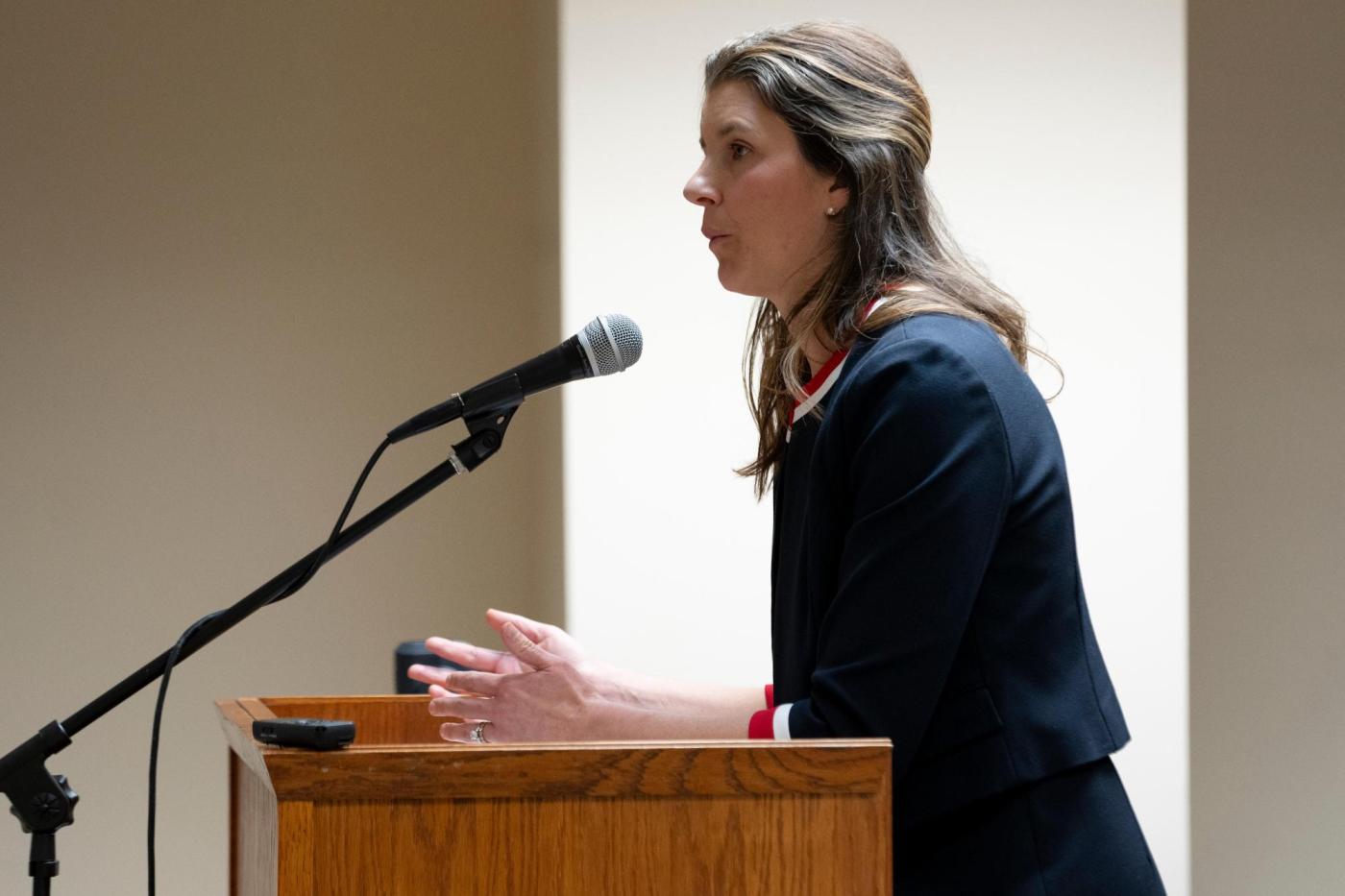
As the prosecutor, Becker County Attorney Brian McDonald, took the podium, he asked if jurors had been involved in disagreements over inheritance or family property. He also asked follow-up questions to some of Ringstrom’s inquiries related to their experiences with crimes, such as break-ins and burglaries.

Following jury questioning, attorneys whittled the group of 23 prospective jurors questioned down to a group of 15.

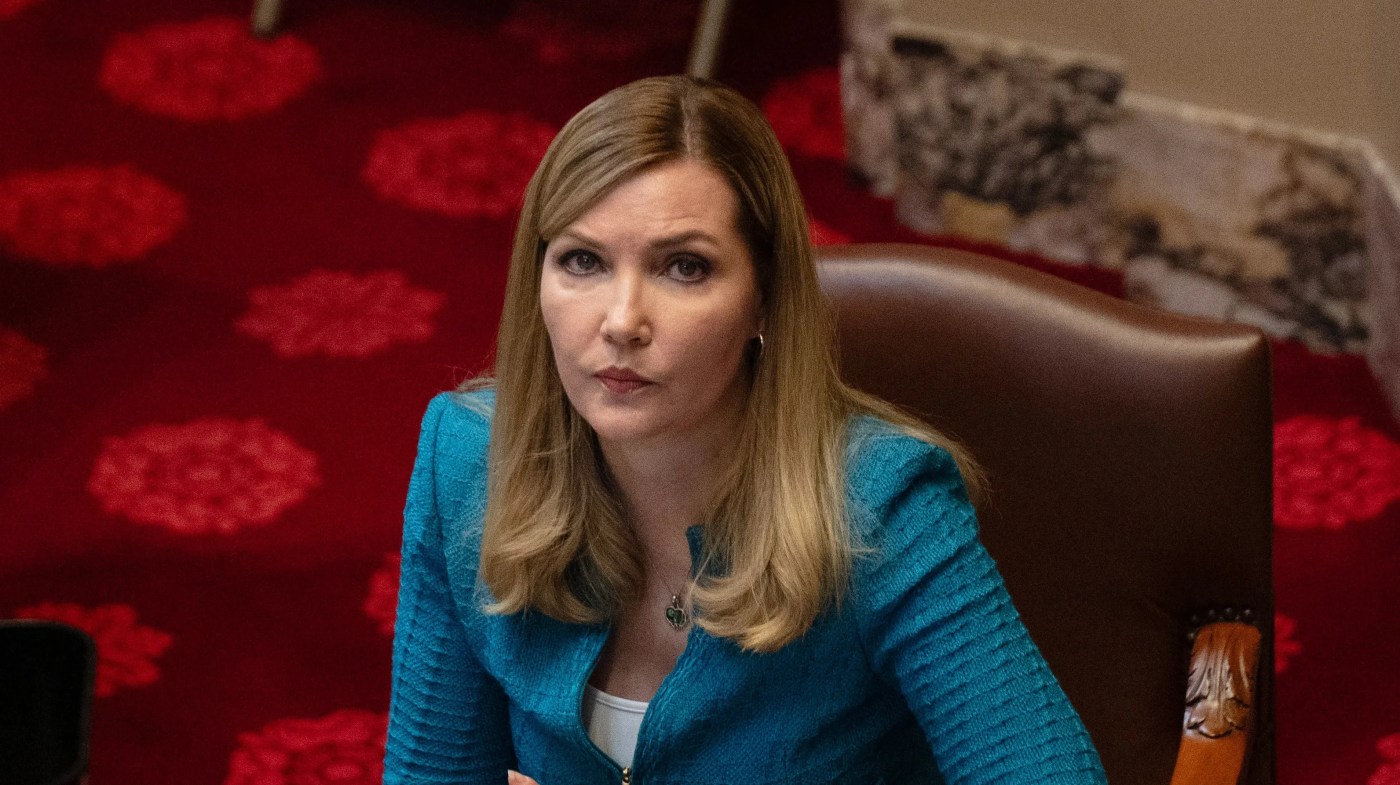
Mitchell, a Democratic-Farmer-Laborer lawmaker from Woodbury, was charged during the 2024 Minnesota legislative session. She was arrested in her stepmother’s house on April 22, 2024.

Nicole Mitchell (Courtesy of the Becker County Sheriff’s Office)

According to an amended complaint filed Feb. 10, around 4:45 a.m. April 22, 2024, Detroit Lakes police officers were dispatched to the home of Mitchell’s stepmother for a report of a break-in. There, officers found Mitchell in a basement bathroom, dressed in black clothing.

The complaint said Mitchell claimed she was trying to retrieve a couple of her father’s things. Mitchell’s father died in 2023 without a will, according to court documents. His surviving spouse, Nicole Mitchell’s stepmother, was awarded 100% of his estate.

On Feb. 10, McDonald added the possession of burglary tools charge, focusing on items found at the house. Court documents say Mitchell was carrying a flashlight covered by a black sock and that her stepmother found a crowbar in an egress window well. Mitchell denied that the crowbar belonged to her.

Charges against Mitchell were a point of contention in a divided Senate during the last two legislative sessions. DFL leaders barred Mitchell from participating in committee assignments or party caucus meetings. Senate Republicans called for her resignation and unsuccessfully tried to oust her from the Senate.

The trial has been pushed back multiple times. It was scheduled for January but was rescheduled to allow Mitchell to participate in the legislative session.

Related Articles


Hulu series names new suspect in Jodi Huisentruit case


Wisconsin woman injured in black bear attack


Man accused of sending threats to federal, North Dakota officials pleads not guilty


After nearly 50 years, a retiring local fire chief shares tips and tales


‘Today we get justice,’ sister of chef fatally shot at St. Paul funeral reception says in court

The trial was then scheduled to begin June 16 but was pushed back again in the aftermath of the assassination of Minnesota Rep. Melissa Hortman and her husband, and the attempted assassination of Sen. John Hoffman and his wife.

This week, the trial is scheduled to continue through Friday.

The felony burglary charge carries a mandatory minimum sentence of at least six months in jail or a county workhouse, and a maximum sentence of 20 years in prison and a $35,000 fine. Felony possession of burglary tools carries a maximum sentence of 3 years in prison and a $5,000 fine.
‘Natural organic reduction,’ or human composting, now burial option in MN

posted in: All news | 0

Minnesotans will soon no longer need to leave the state to return their remains to nature by converting them into nutrient-rich soil.

As of July 1, human composting — also known as natural organic reduction — is legal in the state. But it likely will be another year before the process becomes available locally. At least one company plans to open a facility in the Twin Cities metro by next summer.

Legalization of the process comes after a push at the state Capitol to allow the emerging green burial option, which still currently requires a trip to another state to complete.

That was the case for Steve Wheeler, a longtime social studies teacher at Mahtomedi High School, who died in September 2023 after being diagnosed with pancreatic cancer. Wheeler, who had multiple sclerosis, started searching for burial options with his wife after learning he had a terminal diagnosis.

“He’d kind of always known that he didn’t traditional burial and he didn’t want cremation, because those things are just so incredibly bad for the environment,” said Katie Wheeler, Steve’s wife. “He didn’t want to leave, you know, such a large negative mark on the world, on the environment, in his death.”

Truly green option

The couple had some initial frustration finding what they felt was a truly green burial option. Some funeral homes allowed for the burial of un-embalmed bodies, but still provided protective burial vaults — something the Wheelers felt ran counter to a truly environmentally-friendly burial. Vaults are typically made of inorganic materials like concrete.

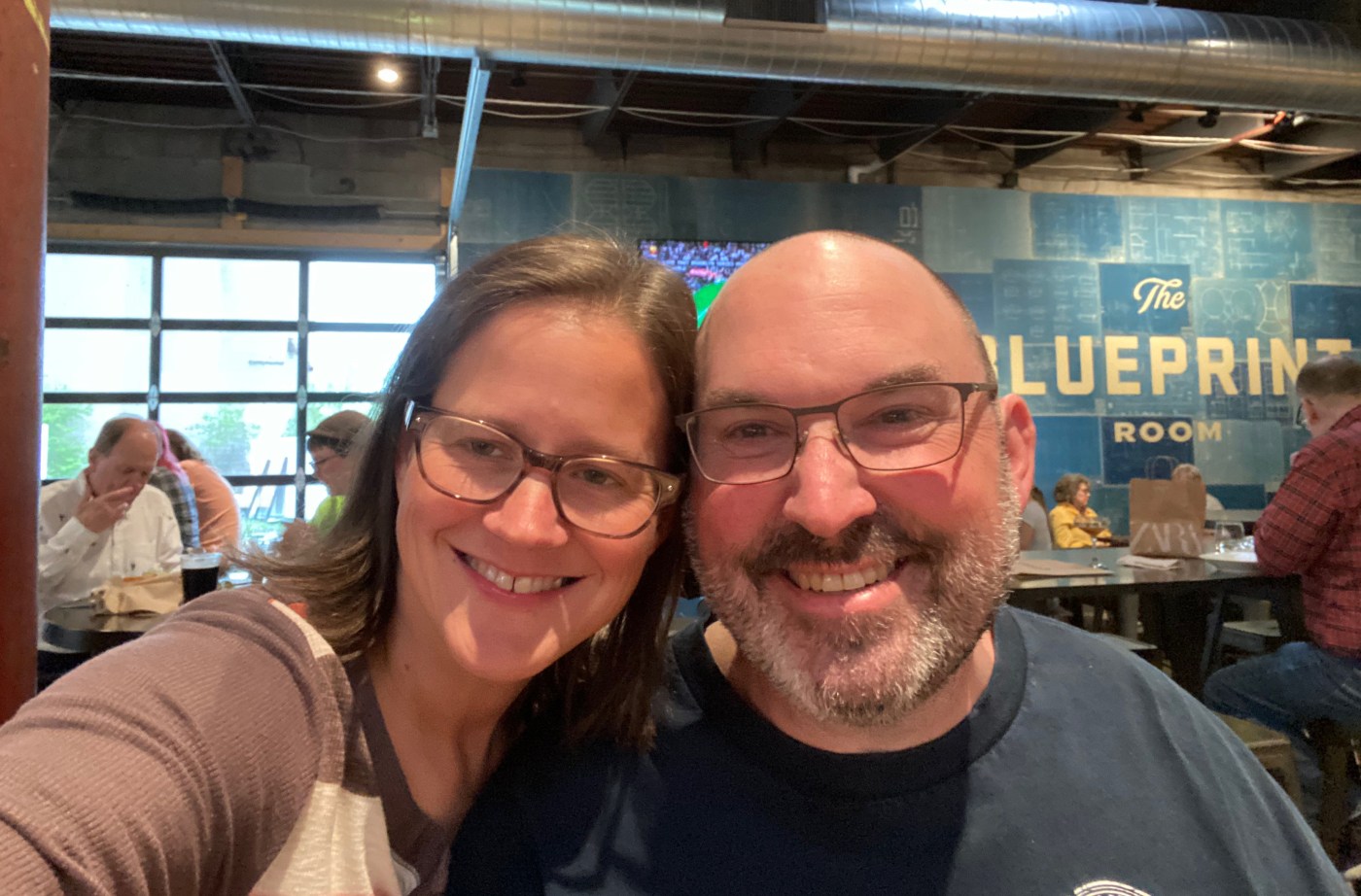
Katie Wheeler and her husband, Steve, in a spring 2023 photo. Steve Wheeler died of cancer in Sept. 2023 and chose to have his remains turned into compost through a process known as natural organic reduction. (Courtesy of Katie Wheeler)

Eventually, they found an ideal option, human composting, a process where a body is placed in a ventilated container with organic materials like alfalfa, straw, and sawdust and allowed to naturally decompose over 60 days or so until it becomes soil.

Steve was excited about the option, Katie said, but there was one problem — the practice was illegal in Minnesota. Only a handful of states have legalized human composting — 13 as of 2025. Washington was the first to do so in 2020.

The Wheelers eventually found a way forward. Mueller Memorial, a White Bear Lake-based funeral home, had recently started working with a provider of natural organic reductions in Washington. Return Home in Auburn, Wash., a Seattle Suburb, had a well-established operation and was able to accept remains from other states.

The process

Other green burials, which avoid embalming chemicals and use biodegradable caskets, already are legal in Minnesota. Human composting is a different, newer process.

“Green burial, quite honestly … has been has been around since people have died,” said Scott Mueller, funeral director and owner of Mueller Memorial. Though in recent years, more people have been seeking environmentally friendly burials, he added.

“People are really looking for more sustainable options in every way that they live, and now they’re looking at it in how they die as well,” Mueller said.

So, what happens when a body goes under natural organic reduction? Remains are placed inside a vessel made of insulated plastic along with biodegradable materials. The container is well ventilated and about twice the size of a refrigerator, said Mueller.

What then starts is a roughly 30-day process where the body naturally decomposes and becomes nutrient-rich dirt. Airflow is pumped through the vessel, which becomes warm to the touch as its temperature reaches around 130 degrees Fahrenheit, Mueller said.

In natural organic reduction burials, after initial decomposition takes place, human remains are transferred to a second vessel for a “curing” process that lasts another 30 days or so. Family and friends can visit at any time during the process at Return Home, a funeral home in Auburn, Wash., where some Minnesotans’ remains have gone for composting. (Courtesy of Scott Mueller)

Once the temperature decreases, it’s a sign that the primary decomposition is complete. Remaining bones are pulverized and mixed with the compost, which is then put in another vessel and allowed to sit for another 30 days or so. The compost continues to produce heat at this point, Mueller said, and the vessel’s temperature can reach 80 degrees.

Mueller said he visited a site where 60 bodies were undergoing the composting process and there was no hint of the scent of decay or decomposition. Instead, the facility had the smell of earth. Families are free to visit during the process, and the funeral home provides live streams of the containers.

After around 60 or 65 days, all that remains is 230 to 260 pounds of compost. Families have the option of receiving all the compost in about a dozen bags, distributing it in a woodland area managed by Return Home in Washington, or keeping some of the compost.

Katie Wheeler decided to keep about 20 pounds of her husband’s compost. At first, she kept the bag at home. Last summer, she spread some at Minnehaha Falls in Minneapolis, one of Steve’s favorite places, and used it to plant two trees. She still has two or three pounds left.

Steve Wheeler wanted to testify before the Legislature to advocate for legalizing natural organic reduction and recorded a video outlining his reasons for choosing the process.

“With this act, I can at least go out on a high note and say I have left the world just a little bit better than when I found it,” he said.

Bill passed last year

State lawmakers passed a bill legalizing natural organic reduction during the 2024 legislative session and it went into effect this July 1.

The Minnesota Funeral Directors Association had initially opposed the bill because it had concerns about unlicensed and untrained people performing natural organic reduction. In testimony on the bill in 2024, the association said it had concerns about health, safety and dignity.

Lawmakers addressed their concerns about human composting by including licensing requirements in the bill, according to Funeral Directors Association Executive Director Miki Tufto.

“The association is completely in support of options for disposition for families in Minnesota,” she said.

The Minnesota Catholic Conference testified against legalizing human composting at a 2024 House hearing. They raised concerns about dignity and compared the practice to treating human remains like “fertilizer.”

Mueller, himself a Catholic, said he believes views will shift over time. The Catholic Church opposed cremation until 1963, but now allows for remains to be burned, though with a strong preference for the burying of ashes.

Mueller Memorial has sent seven bodies from Minnesota to Washington since it started working with Return Home. About 900 bodies have undergone composting at the facility since it first opened earlier this decade.

Natural organic reduction costs around $5,000 to $7,000. It’s more expensive to fly remains out of state. Return Home, for instance, charges a base rate of about $5,500 and $2,500 more for transporting remains from out of state.

Return Home said it hopes to open a facility for natural organic reduction by next summer.

Related Articles


Letters: Yes, what does happen ‘when laws are only applied based on who is in power?’


Gov. Tim Walz calls special election for Melissa Hortman’s House seat


Sheriff Bob Fletcher critiques agency info-sharing after lawmaker shootings


MN counties could see strain, 250K could lose coverage under Medicaid changes in Trump’s big bill


Letters: It’s our duty to rediscover the hope and promise of America

Voting in Wisconsin’s governor’s race is a year away, but the ads are starting

posted in: All news | 0

MADISON, Wis. — Wisconsin’s race for governor is hitting the airwaves more than a year before voting begins.

Republican candidate Bill Berrien announced the purchase of about $400,000 in cable TV, radio and online ads Monday. The buy comes 13 months before the Aug. 11, 2026, primary. Berrien is the first candidate to purchase ads of any kind in the race.

Berrien and Washington County Executive Josh Schoemann have announced bids as Republicans. It is the first campaign for each of them. Several other Republicans, including U.S. Rep. Tom Tiffany, two-time losing U.S. Senate candidate Eric Hovde and state Senate President Mary Felzkowski are all considering running.

Schoemann has been traveling the state and meeting with voters since he launched his campaign in May, but he has yet to spend any money on ads like Berrien is doing.

“Money buys ads, but as we’ve seen far too often in Wisconsin, it can’t buy wins,” Schoemann adviser Ben Voelkel said. “It takes hard work and authenticity to earn voters’ support, not just slick ads.”

Democratic Gov. Tony Evers hasn’t said whether he will seek a third term. He has suggested that he will announce his decision within weeks. A spokesperson for Evers had no immediate comment on the Berrien ads.

Berrien’s ads are slated to begin airing Tuesday, less than a week after he launched his campaign. The ads lean into Berrien’s support for President Donald Trump, which has been questioned by influential conservative talk radio hosts.

Berrien criticized Trump’s handling of the COVD-19 pandemic and said during an August 2020 interview with Fox Business that he hadn’t decided whether to support Trump for president that year. In 2024, Berrien supported former United Nations Ambassador Nikki Haley’s run for president in the GOP primary and donated more than $30,000 to her campaign.

Berrien was also a member of the bipartisan group Democracy Found, which advocates for using ranked-choice voting and making primaries nonpartisan. But Berrien told the Milwaukee Journal Sentinel last week that he no longer supports those ideas.

Related Articles


‘Beautiful’ or ‘Ugly,’ Trump’s big bill shapes the battle for House control in 2026 midterms


Union organizer to run for Minnesota’s 8th Congressional District


Gov. Tim Walz calls special election for Melissa Hortman’s House seat


St. Paul Ward 4 council race: Forums scheduled, endorsements roll in


Applications sought for open seat on Oakdale City Council

Berrien is positioning himself as a staunch Trump backer in his first ads of the race. They are airing statewide, but with an emphasis on Milwaukee and Green Bay, his campaign said. The largest number of Republican voters in the state are in the Milwaukee media market, and Green Bay is a critical GOP area, especially in primaries.

In the ads, Berrien calls himself “an outsider and a businessman just like President Trump.” Berrien says he’s running for governor to ”advance the Trump agenda, shake up Madison and put Wisconsin citizens first.”

Berrien, 56, served nine years as a Navy SEAL and has been owner and CEO of Pindel Global Precision and Liberty Precision, manufacturers of precision-machined components in New Berlin, a Milwaukee suburb, for the past 13 years.

Senate confirms Trump’s first judicial nominee of his second term

posted in: All news | 0

By MARY CLARE JALONICK, Associated Press

WASHINGTON (AP) — The Senate has confirmed President Donald Trump’s first judicial pick of his second term, voting to approve Whitney Hermandorfer as a judge for the Sixth U.S. Circuit Court of Appeals.

The confirmation of Hermandorfer, who worked for Tennessee’s attorney general, comes after the Democratic-led Senate under former President Joe Biden confirmed 235 federal judges and the Republican-led Senate in Trump’s first term confirmed 234 federal judges.

The two presidents each worked to reshape the judiciary, with Trump taking advantage of a high number of judicial vacancies at the end of President Barack Obama’s term and Democrats working to beat Trump’s number after he had the opportunity to nominate three Supreme Court justices.

So far in his second term, Trump has fewer vacancies to fill. While he inherited more than 100 vacancies from Obama, who was stymied by a Republican Senate in his final two years, Trump now has 49 vacancies to fill out of almost 900 federal judgeships.

Senate Majority Leader John Thune said last week that the Senate would work to quickly confirm Trump’s judicial nominees, even though “we’re not facing the number of judicial vacancies this Congress we did during Trump’s first term.”

Sen. Majority Leader John Thune, R-S.D., center, talks after a policy luncheon on Wednesday, July 9, 2025, at the Capitol in Washington. (AP Photo/Mariam Zuhaib)

Hermandorfer, who was confirmed 46-42 along party lines, has defended many of Trump’s policies as director of strategic litigation for Tennessee’s attorney general, including his bid to end birthright citizenship. Democrats and liberal judicial advocacy groups criticized her as extreme on that issue and others, also citing her office’s defense of the state’s strict abortion ban.

Before working for the Tennessee Attorney General, she clerked for three Supreme Court justices. But at her confirmation hearing last month, Democratic Sen. Chris Coons of Delaware criticized what he called a “striking brevity” of court experience since Hermandorfer graduated from law school a decade ago.

Related Articles


A chaotic raid, 360 arrests, and a tragic death: What happened at California’s Glass House Farms


US imposes a 17% duty on fresh Mexican tomatoes in hopes of boosting domestic production


Trump administration says it won’t publish major climate change report on NASA website as promised


How Trump plans to dismantle the Education Department after Supreme Court ruling


MAGA faithful are angry about the Epstein case. Here’s what to know.

Illinois Sen. Dick Durbin, the top Democrat on the Senate Judiciary Committee, said Monday that Trump is only focused on “a nominee’s perceived loyalty to him and his agenda — and a willingness to rule in favor of him and his administration.”

The Judiciary panel is scheduled to vote on additional judges this week, including top Justice Department official Emil Bove, a former lawyer for Trump who is nominated for the 3rd U.S. Circuit Court of Appeals. Bove’s nomination has come under scrutiny after a fired department lawyer claimed in a complaint that Bove used an expletive when he said during a meeting that the Trump administration might need to ignore judicial commands. Bove has pushed back against suggestions from Democrats that the whistleblower’s claims make him unfit for the federal bench.

Bove has also accused FBI officials of “insubordination” for refusing to hand over the names of agents who investigated the U.S. Capitol riot and ordered the firings of a group of prosecutors involved in the Jan. 6 criminal cases.