FDA proposes ban on Orange B, a food dye not used for decades

posted in: All news | 0

By JONEL ALECCIA, AP Health Writer

Federal regulators are proposing to remove another artificial dye from the U.S. food supply — Orange B, a synthetic color that hasn’t been used in the U.S. for decades.

Related Articles


Deadly disease caused by blood-sucking insects spreading in US, CDC says


Trump’s Medicaid cuts were aimed at ‘able-bodied adults.’ Hospitals say kids will be hurt


Fact check: RFK Jr. said ‘everybody can get’ a COVID vaccine. Is that true?


Fighting a health insurance denial? Here are 7 tips to help


Fired CDC chief Susan Monarez warns senators that RFK Jr. is endangering public health

The U.S. Food and Drug Administration said Wednesday that it would seek to repeal the regulation allowing use of the dye approved in 1966 to color sausage casings and frankfurters. No batches of the dye have been certified, or asked to be used, since 1978, FDA officials said.

“Its use has been abandoned by industry,” the agency said in a statement. “The color additive regulation is outdated and unnecessary.”

But consumer advocates who have called for tougher FDA regulation of food dyes and other additives for decades have suggested it was an empty gesture.

“It says they are currently willing to take mandatory steps only where it has no impact,” said Sarah Sorscher, who directs regulatory affairs for the Center for Science in the Public Interest, an advocacy group.

The move follows the FDA’s decision in January to ban Red No. 3 because of potential cancer risk. That dye has been used far more widely in candies, snack foods and medicines.

The Orange B proposal is separate from a successful push by the Trump administration this year to pressure top food manufacturers to voluntarily remove artificial food dyes from products ranging from cereals and yogurt to sodas. After a brief public comment period, it would take effect within 45 days.

U.S. Health Secretary Robert F. Kennedy Jr. and FDA Commissioner Marty Makary have pledged to remove petroleum-based dyes from U.S. foods, citing concerns about children’s health.

Mixed studies have indicated that exposure to food dyes can cause behavioral problems in some children, including hyperactivity and attention issues. However, the FDA has maintained that approved dyes are safe and that “the totality of scientific evidence shows that most children have no adverse effects when consuming foods containing color additives.”

Recently, the FDA included six food dyes widely used in the U.S. — Green No. 3, Red No. 40, Yellow No. 5, Yellow No. 6, Blue No. 1 and Blue No. 2 — on a list of chemicals under agency review. Another approved dye, Citrus Red No. 2, is rarely used and found in small amounts in the skin of some citrus products.

The Associated Press Health and Science Department receives support from the Howard Hughes Medical Institute’s Department of Science Education and the Robert Wood Johnson Foundation. The AP is solely responsible for all content.

New Tribal Flag Plaza at Capitol highlights Minnesota’s past, present

posted in: All news | 0

A new addition at the state Capitol grounds is meant to highlight an important aspect of Minnesota’s past and present.

Eleven flags were raised earlier this month in front of the Capitol to recognize Native American tribes in the state. The Tribal Flag Plaza is intended to inform the public about their contributions.

Minnesota is the second state to have tribal flags at their capitol after Montana, reported MPR News.

Flags from Minnesota’s 11 Native American tribes fly over state Capitol grounds in St. Paul. Photographed on Thursday, Sept. 11, 2025. (John Autey / Pioneer Press)

The 11 flags represent the relationship between the state and the tribes. At the base of each flag are plants chosen by each tribe, each with cultural and ecological significance.

The initial idea came after Montana raised their tribes’ flags in 2020, according to Patina Park, the executive director of State Tribal Relations. Several of the tribes reached out to the Minnesota officials for a similar plaza, Park said.

The plaza design was approved by the Capitol Area and Architectural Planning Board in 2024. Construction started early this year and finished in September, according to Erik Cederleaf Dahl, the executive secretary for the Capitol Area and Architectural Planning Board.

At the grand opening on Sept. 5, Lt. Gov. Peggy Flanagan said the plaza is more than just a new landscape.

​“The Capitol should tell the full story of the history of Minnesota, one that honors all 11 federally recognized tribal nations, acknowledges complex histories and builds a future rooted in inclusion, beauty and truth,” Flanagan said at the celebration.

The plaza is a part of the large Minnesota 2040 plan, a project to make the Capitol mall area more accessible to all residents.

Park said the flags show the progress between the state government and Native American tribes.

“I think it reflects the intentional partnership and relationship building we have been doing over the last six years, governor’s two terms,” Park said.

For Michael Child Jr., the Prairie Indian Community Tribal Council treasurer, the flags are a way to represent the contributions of the native community.

“The plaza to me, kind of reminds people of history, but also reminds people that we are still here. We’re not some historical long gone and forgotten people,” Child said.

Dahl said the next step for the plaza is signage at the bottom of each flag, explaining each tribe’s seal. The signs will have the tribe’s name in their native language and English, there will also be information about the tribe in English, according to Park.

Both Park and Dahl hope when people walk by they will want to stop near the flags and learn more.

“I hope it triggers people to have a curiosity, to want to learn more, maybe travel, visit the tribal lands and go to their cultural sites or their cultural buildings,” Park said.

Minnesota’s federally recognized tribes

The 11 federally recognized tribes are:

• Lower Sioux Indian Community.

• White Earth Nation.

• Leech Lake Band of Ojibwe.

• Grand Portage Band of Lake Superior Chippewa.

• Shakopee Mdewakanton Sioux Community.

• Mille Lacs Band of Ojibwe.

• Red Lake Nation.

• Fond du Lac Band of Lake Superior Chippewa.

• Upper Sioux Community.

• Prairie Island Indian Community.

• Bois Forte Band of Chippewa.

Related Articles


Prairie Island Indian Community welcomes home ancestral remains


North Dakota tribes denied in appeal of new district map

Amazon spends $1 billion to increase pay and lower health care costs for US workers

posted in: All news | 0

By ANNE D’INNOCENZIO, AP Retail Writer

NEW YORK (AP) — Amazon says it’s making a $1 billion investment to raise wages and lower the cost of health care plans for its U.S. fulfillment and transportation workers.

Related Articles


What a possible Fed rate cut would mean for your finances


Tariffs, bird flu and severe weather are pushing some everyday groceries to record prices


US stocks are stuck on pause as the countdown ticks to a decision by the Federal Reserve


Is DoorDash eating into your retirement?


Federal Reserve cuts key rate by quarter-point and signals two more cuts this year

The Seattle-based company said Wednesday the average pay is increasing to more than $23 per hour and said that some of its most tenured employees will see an increase between $1.10 and $1.90 per hour. Full-time employees, on average, will see their pay increase by $1,600 per year.

Amazon also said it was lowering the cost of its entry health care plan to $5 per week and $5 for co-pays, starting next year. Amazon said that will reduce weekly contributions by 34% and co-pays by 87% for primary care, mental health and most non-specialist visits for employees using the basic plan.

Amazon has a global workforce of 1.5 million workers.

Last December, seven Amazon facilities went on strike, an effort by the Teamsters union to pressure the e-commerce company for a labor agreement during a key shopping period.

That same month, Amazon reached a settlement with the Occupational Safety and Health Administration that requires the online behemoth to adopt corporatewide ergonomic measures at facilities across the country. The agency claimed hazardous working conditions led to serious lower back and other musculoskeletal disorders at Amazon facilities.

In January 2024, Walmart, the nation’s largest private employer, said that average wages for hourly workers would exceed $18, up from $17.50. The increase was due to Walmart introducing some higher-paying hourly roles in its Auto Care Centers last year, among other changes, the company said.

Walmart had announced in January 2023 that U.S. workers would get pay raises the following month, increasing starting wages to between $14 and $19 an hour. Starting wages had previously ranged between $12 and $18 an hour, depending on location.

Wild coach John Hynes will be Olympic assistant

posted in: All news | 0

While much of the NHL will take a two-week break for the Winter Olympics in February, Minnesota Wild coach John Hynes will be in Italy, chasing gold.

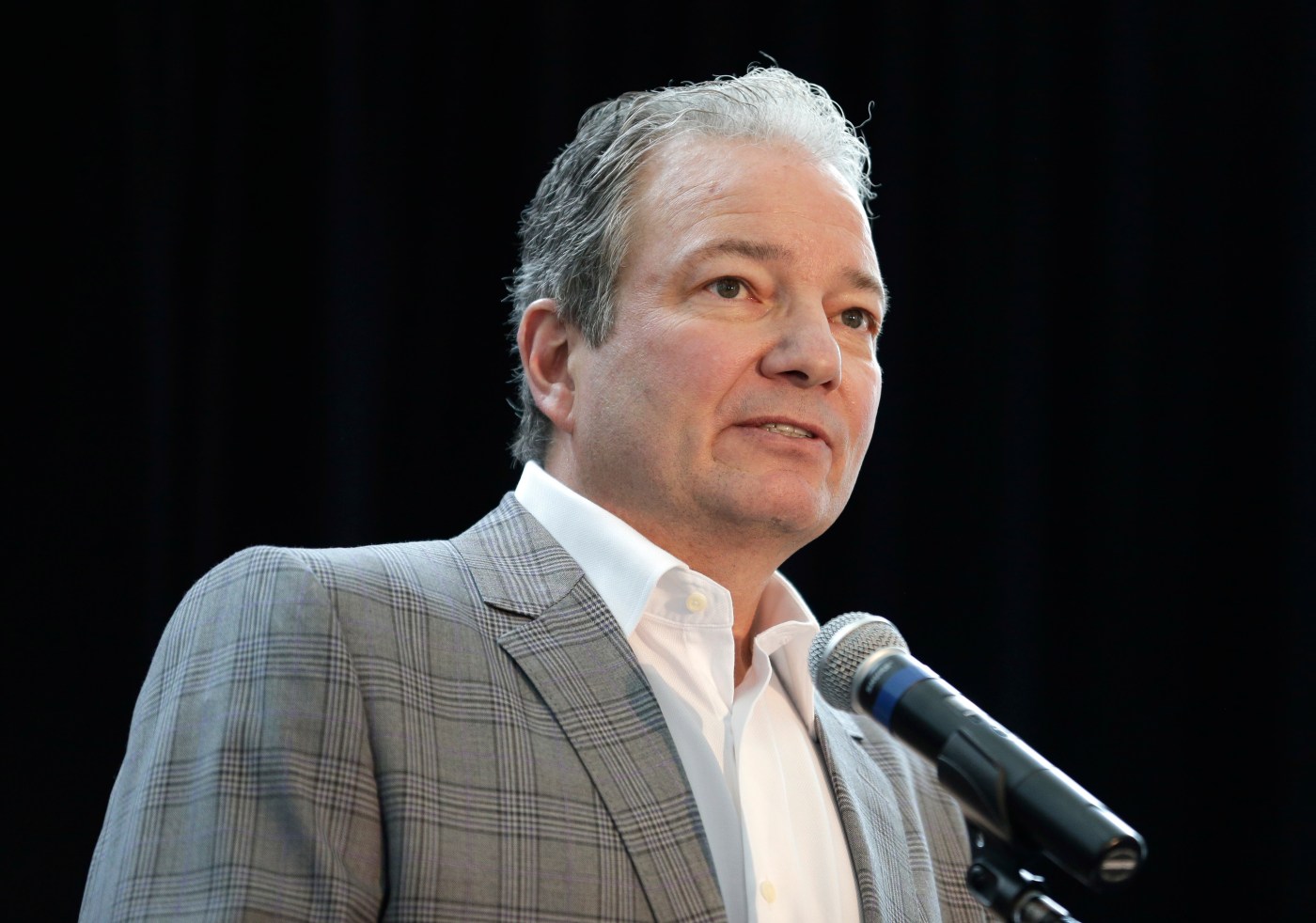
On Wednesday, Hynes was named an assistant coach for Team USA, which will be seeking its first Olympic gold medal since the 1980 Miracle On Ice. Wild general manager Bill Guerin, serving the same role for Team USA, has named Hynes, David Quinn and John Tortorella as assistants to head coach Mike Sullivan.

Hynes also served as an assistant coach for the Americans last spring when they won their first IIHF World Championship gold in nearly a century.

Also named to the Team USA staff were Wild trainers John Worley and Travis Green, and Wild team physician Dr. Joel Boyd. The Olympic tournament begins on Feb. 11 in Milan.

Related Articles


New Iowa Wild coach brings wealth of NHL and AHL experience


Jonas Brodin expected to miss Wild training camp


High AAV, fewer years might be right for Kirill Kaprizov — and Wild


In-season trade an iffy option if Wild, Kirill Kaprizov reach impasse


Shipley: Not a great start to the Kirill Kaprizov negotiations