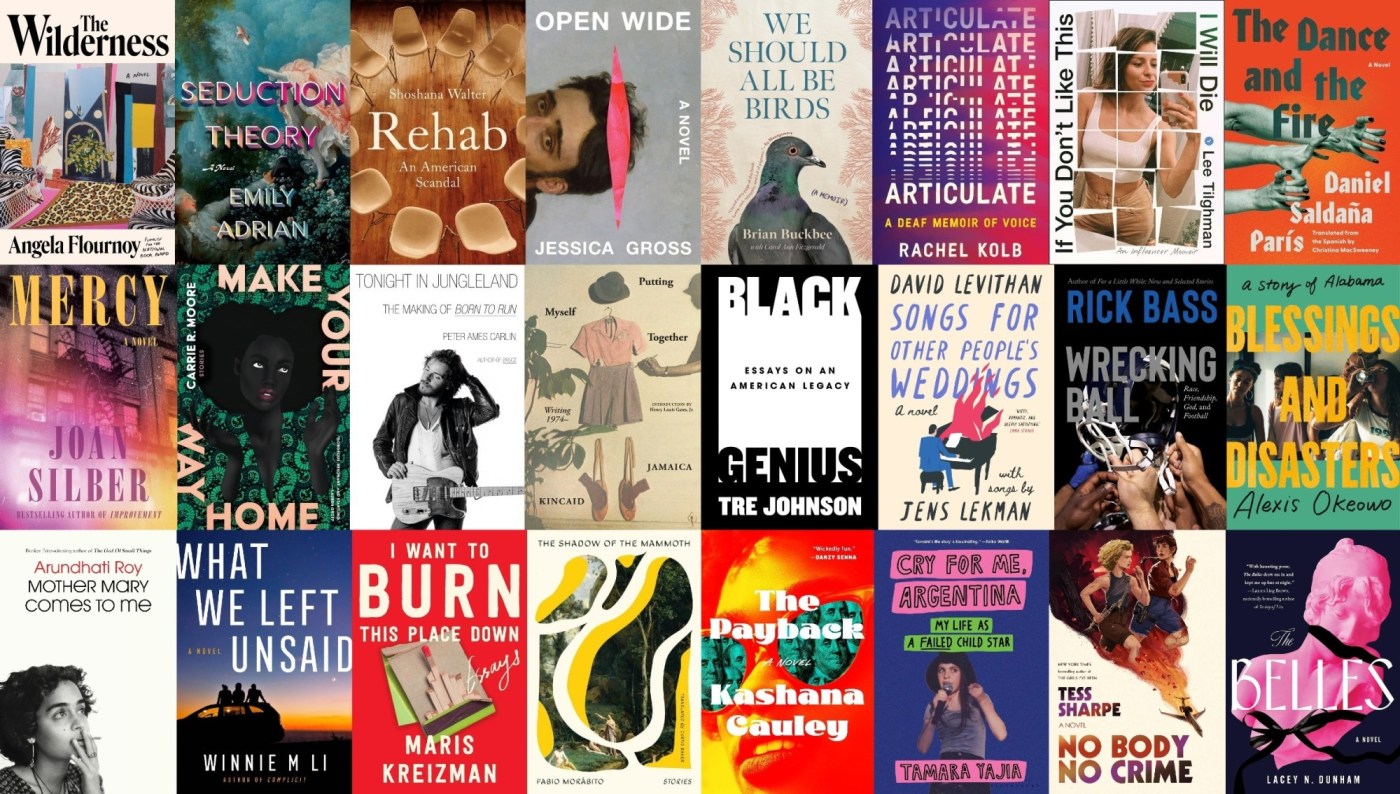
Summertime means vacations — and vacations mean books. (And sunscreen and cold drinks. But mostly books.)
The season is traditionally a busy one for publishers, who often release some of their most exciting titles over the next few months. This summer is no exception: July, August, and September will see the publication of page-turning fiction and fascinating nonfiction.
Whatever your tastes, you’re bound to find something in these 33 books worth buying from your favorite local store and taking to the beach (or just your backyard) with an iced beverage in hand.
“I Want to Burn This Place Down”
Author: Maris Kreizman
What It’s About: The debut book from culture blog pioneer and Literary Hub columnist Kreizman is the funny and angry account of her disillusionment with the Democratic Party (among other U.S. institutions) and her move further to the left over the past several years.
Publication Date: Out now
—
“Cry for Me, Argentina: My Life As a Failed Child Star”
Author: Tamara Yajia
What It’s About: Los Angeles-based comedian Yajia grew up in both Argentina and the U.S., and she worked as a child actress before reaching her teen years. Her book chronicles not only the misadventures of growing up in an oddball family, but also creative endeavors that include joining a band and putting on her own one-woman show.
Publication Date: Out now
—
“Archive of Unknown Universes”
Author: Ruben Reyes Jr.
What It’s About: Southern California native Reyes had a very good 2024. His debut book, the short story collection “There Is a Rio Grande in Heaven,” was published to glowing reviews and was a finalist for the California Book Award and the Story Prize. His first novel follows two young people who use a device that can look into alternate versions of lives to discover the truth about their Salvadoran families.
Publication Date: Out now
—
“Wanting”
Author: Claire Jia
What It’s About: The debut novel from Los Angeles author Jia, who also writes for television and video games, follows Lian, a woman in Beijing whose life is changed when her longtime friend, Wenyu, comes back to China after spending a decade in California. Wenyu lets Lian in on a long-kept secret that throws Lian’s life into disarray.
Publication Date: Out now
—
“Sunburn”
Author: Chloe Michelle Howarth
What It’s About: Irish author Howarth’s novel, set in a small town in the early 1990s, tells the story of Lucy, a young woman who chafes against the expectation that she’ll marry a man and have kids. She develops romantic feelings for her best friend, Susannah, who doesn’t want to keep their relationship a secret.
Publication Date: Out now
—
“Make Your Way Home”
Author: Carrie R. Moore
What It’s About: Moore, the inaugural writer-in-residence at the Steinbeck Writers’ Retreat, makes her book debut with this short story collection that tells the story of Black men and women searching for home in various locations across the American South.
Publication Date: Out now
—
“The Payback”
Author: Kashana Cauley
What It’s About: Television writer Cauley’s first novel, “The Survivalists,” was a hit with critics. She brings the same insight and dark humor to her new one. Partially set in the Glendale Galleria, the novel follows Jada, a recently unemployed woman on the run from the “Debt Police” who teams up with two friends in an attempt to take down her student loan company.
Publication Date: Out now
—
“No Body No Crime”
Author: Tess Sharpe
What It’s About: The latest novel from California-raised author Sharpe (“The Girl in Question”) tells the story of Mel Tillman, a rural private investigator who goes searching for her long-lost friend Chloe — a woman who she fell in love with as a teenager, and with whom she killed a boy who had been terrorizing them. She does find Chloe, but that leads to a whole new mess of trouble, and the two are forced to go on the run.
Publication Date: Out now
ALSO SEE: 17 must-read summer romance novels
—
“The Dance and the Fire”
Author Daniel Saldaña París, translated by Christina MacSweeney
What It’s About: Saldaña París, who writes fiction, poetry, and essays, is one of Mexico’s most exciting and acclaimed writers. His latest novel follows three high school friends — once members of a love triangle — who reunite in Cuernavaca as wildfires threaten the city.
Publication Date: July 29
—
“Black Genius: Essays on an American Legacy”
Author: Tre Johnson
What It’s About: Journalist and educator Johnson’s book is a reflection on the innovations of brilliant Black creators, artists, and everyday people. He tackles subjects including fashion inspired by 1990s street art, and the comedy of pioneering performer and author Dick Gregory.
Publication Date: July 29
—
“Tonight in Jungleland: The Making of ‘Born to Run’”
Author: Peter Ames Carlin
What It’s About: Journalist Carlin told the story of alternative-rock legends R.E.M. in his last book. In his newest one, he returns to a favorite subject: Bruce Springsteen, about whom he wrote a book, “Bruce,” in 2012. The new one tells the story behind the recording of the Boss’s classic 1975 album. (Fans who prefer the stark, acoustic Bruce might also want to read Warren Zanes’ book about the making of “Nebraska,” and see the movie based on it, which opens in October.)
Publication Date: Aug. 5
—
“Moderation”
Author: Elaine Castillo
What It’s About: Bay Area native Castillo made literary waves with her debut novel, “America Is Not the Heart,” in 2018. Her new novel introduces readers to Girlie Delmundo, a virtual reality moderator whose life becomes complicated when she falls for her company’s co-founder.
Publication Date: Aug. 5
—
“We Should All Be Birds”
Author: Brian Buckbee with Carol Ann Fitzgerald
What It’s About: Montana author Buckbee was reeling from the loss of a loved one and from a mysterious illness that left him unable to read or write because of agonizing headaches. His life is changed when he encounters an injured baby pigeon and nurses it back to health. Buckbee wrote the memoir with help from his fellow author Fitzgerald.
Publication Date: Aug. 5
—
“Blessings and Disasters: A Story of Alabama”
Author: Alexis Okeowo
What It’s About: New Yorker staff writer Okeowo, who won the 2018 PEN Open Book Award for “A Moonless, Starless Sky: Ordinary Women and Men Fighting Extremism in Africa,” returns with a book about her family and her home state — it’s an innovative mix of memoir and journalism.
Publication Date: Aug. 5
—
“Songs for Other People’s Weddings”
Author: David Levithan with songs by Jens Lekman
What It’s About: The new novel from Levithan (“Boy Meets Boy”) follows a wedding singer whose girlfriend has gone to New York to work, leaving him unhappy and confused. The book contains original songs by Swedish indie-pop singer Lekman.
Publication Date: Aug. 5
—
“Putting Myself Together: Writing 1974 –”
Author: Jamaica Kincaid
What It’s About: The latest offering from Antiguan American author Kincaid (“The Autobiography of My Mother”) collects her nonfiction writing over the past 50 years, including pieces about her move to New York at the age of 16 and her interest in gardening.
Publication Date: Aug. 5
—
“Open Wide”
Author: Jessica Gross
What It’s About: “Hysteria” author Gross’s latest is a surreal, darkly comic novel about an awkward radio host who becomes obsessed with a surgeon and former soccer player she meets at a party, and is determined to do whatever it takes to get close to him.
Publication Date: Aug. 5
ALSO SEE: 12 new books to send restless readers on a summer road trip
—-
“Hotshot: A Life on Fire”
Author: River Selby
What It’s About: Selby, who has written essays on fire preparation for this newspaper, had a challenging early life, surviving homelessness, drug abuse and sexual assault. Their life changed when they were hired as a “hotshot” wildland firefighter; this memoir tells the story of life on the job and examines how climate change and colonization have forced the world to enter a new, terrifying era.
Publication Date: Aug. 12
—
“Seduction Theory”
Author: Emily Adrian
What It’s About: “Everything Here Is Under Control” author Adrian returns with a novel about two married creative writing professors whose marriage is rocked by infidelity. It’s one of the summer’s most anticipated novels.
Publication Date: Aug. 12
—
“If You Don’t Like This, I Will Die: An Influencer Memoir”
Author: Lee Tilghman
What It’s About: Better known as “Lee From America,” Tilghman was a wellness influencer with a large following and a steady income. But she was hiding something: Her constant need for attention and likes was hurting her to the point that she entered a mental health facility. This book tells the story of her decision to give up her carefully curated online life.
Publication Date: Aug. 12
—
“Rehab: An American Scandal”
Author: Shoshana Walter
What It’s About: Pulitzer Prize finalist Walter’s new book is an exposé of how the U.S. fumbled its response to the opioid crisis by focusing on punishment over rehabilitation. She tells the story of four real people in the book, including a woman in a Los Angeles suburb who started investigating for-profit rehab programs after her son died in a sober living home.
Publication Date: Aug. 12
—
“To Lose a War: The Fall and Rise of the Taliban”
Author: Jon Lee Anderson
What It’s About: New Yorker staff writer Anderson is a veteran of war-zone reporting. His latest book collects his pieces about Afghanistan, covering the period before the September 11, 2001, terror attacks to the Taliban’s return to power in 2021.
Publication Date: Aug. 12
—
“What We Left Unsaid”
Author: Winnie M. Li
What It’s About: The third novel from Li, following the well-received “Dark Chapter” and “Complicit,” follows the three estranged Chu siblings on a road trip to visit their ailing mother; their voyage takes them on Route 66 and to the Grand Canyon.
Publication Date: Aug. 19
—
“Where Are You Really From”
Author: Elaine Hsieh Chou
What It’s About: California author Chou delighted readers with her 2022 debut, the funny and sweet novel “Disorientation.” She’s following that up with this short story collection that spans genres, including one about a mail-order bride from Taiwan who is shipped to California in a cardboard box.
Publication Date: Aug. 19
—
“The Story of CO2 Is the Story of Everything: How Carbon Dioxide Made Our World”
Author: Peter Brannen
What It’s About: Brannen, the science journalist and “The Ends of the World” author, explains how carbon dioxide is more important than most of us realize. While it’s true that the chemical compound is contributing to climate change, it also has made the world a livable place for billions of years.
Publication Date: Aug. 26
—
“Mercy”
Author: Joan Silber
What It’s About: Silber is one of America’s most underappreciated fiction authors. In her new novel, her first since “Secrets of Happiness” in 2021, she tells the story of Ivan, a man living in 1970s New York who is haunted by his decision to leave his best friend in a hospital emergency room after the two experiment with heroin.
Publication Date: Sept. 2
—
“Wrecking Ball: Race, Friendship, God, and Football”
Author: Rick Bass
What It’s About: Bass is a double threat, known for his beautiful fiction and incisive nonfiction about the natural world. His latest is a departure: a chronicle of his unlikely stint playing semi-pro football in Brenham, Texas, in his sixties.
Publication Date: Sept. 2
—
“Mother Mary Comes to Me”
Author: Arundhati Roy
What It’s About: Roy’s debut novel, “The God of Small Things,” was a literary sensation when it was published in 1997. Her latest book — its title inspired by the Beatles’ “Let It Be” — is a memoir about her relationship with her mother, Mary Roy, the Indian women’s rights activist who died in 2022.
Publication Date: Sept. 2
—
“The Shadow of the Mammoth”
Author: Fabio Morábito, translated by Curtis Bauer
What It’s About: The latest book from Mexican poet Morábito to be translated into English is a short story collection that touches on themes such as loneliness, imagination, and deception. Morábito’s first story collection, “Mothers and Dogs,” also translated by Bauer, is also worth seeking out.
Publication Date: Sept. 2
ALSO SEE: 33 new books you’ll want to read this summer from independent publishers
—
“The Belles”
Author: Lacey N. Dunham
What It’s About: The debut novel from Dunham is a perfect fit for readers into the dark academia genre. The book tells the story of Deena Williams, who attends a private college in 1951 and joins an alliance with five other students. Deena has a secret past, though, that she fears might be revealed.
Publication Date: Sept. 9
—
“Kaplan’s Plot”
Author: Jason Diamond
What It’s About: Diamond is the author of the critically acclaimed nonfiction books “Searching for John Hughes” and “The Sprawl”; his debut novel follows Elijah Mendes, who moves back to Chicago to care for his ailing mother. He discovers that his family owns a Jewish cemetery, which leads him to explore their secret history, bringing him closer to his mother.
Publication Date: Sept. 16
—
“The Wilderness”
Author: Angela Flournoy
What It’s About: Flournoy’s majestic debut, “The Turner House,” was a finalist for the National Book Award. Her new novel, 10 years in the making, follows five Black women navigating their sometimes messy lives over the course of 20 years.
Publication Date: Sept. 16
—
“Articulate: A Deaf Memoir of Voice”
Author: Rachel Kolb
What It’s About: Stanford-educated Kolb made history as the first signing deaf Rhodes scholar at Oxford University. In her memoir, she writes about learning American Sign Language and spoken language, and how people express themselves and communicate with one another.
Publication Date: Sept. 16
Readers and writers: Thriller, memoir and political history are perfect summer reads
Literary calendar for week of July 20
Book Review: ‘Algospeak’ shows just how much social media is changing us
Fans say new romance bookstores and online groups are giving the genre some overdue respect
Column: Of fighting and surviving, ‘Baddest Man’ is a soaring biography of Mike Tyson