US sets stage for tariffs on robotics, medical devices

posted in: All news | 0

By Jennifer A. Dlouhy, Bloomberg News

The Trump administration launched investigations into imports of robotics, industrial machinery and medical devices, setting the stage for fresh duties as President Donald Trump moves to expand his tariff regime.

Related Articles


What to know about the opposition around renaming new Pell grants after Trump


Judge fails to appear for court hearing in Eswatini over 4 men deported by the US


Hegseth abruptly summons top military commanders to a meeting in Virginia next week


Greenspan, Bernanke and Yellen urge Supreme Court to let Lisa Cook keep her job as a Fed governor


Donald Trump heads to the Ryder Cup, embraced by a golf world that once shunned him

The Department of Commerce is conducting the probes under Section 232 of the Trade Expansion Act, according to Federal Register notices. The inquiries started on Sept. 2. Under the law, which allows the president to tariff goods deemed critical to national security, the department has 270 days to deliver its policy recommendations.

The newly announced probes expand the potential sectors that could be exposed to tariffs, as Trump looks to encourage domestic manufacturing in key industries by hiking the cost of imports.

Investigations into imports of pharmaceuticals, semiconductors, aircraft, critical minerals, medium- and heavy-duty trucks, and other products are currently ongoing. The Trump administration has already used the law to impose levies on automobiles, copper, steel and aluminum.

Any levies resulting from the industry-specific probes would come in addition to Trump’s country-based tariffs, though some major economies such as the European Union and Japan have struck agreements to prevent the charges from stacking on top of one another.

The trade authorities are also seen as a backstop for Trump, should those sweeping tariffs on dozens of economies imposed under emergency powers be struck down by federal courts. The Supreme Court has agreed to consider a challenge to those tariffs, which have already been declared illegal by two lower courts.

Tariffs enacted under Section 232 can be more long-lived, even through changes in presidential administrations, though they take longer to implement than the duties Trump implemented under the International Emergency Economic Powers Act.

The new probes reflect some Trump administration officials’ concern about U.S. reliance on foreign countries for a range of medical consumables, including syringes, sutures, catheters and gauze. The Commerce Department will also scrutinize trade in personal protective equipment, such as the gloves and face masks that became ubiquitous during the COVID-19 pandemic.

The newly announced medical-equipment probe will not address prescription drugs, biologics and other pharmaceuticals, which already are being examined as part of the Commerce Department’s separate investigation.

The inquiry into robotics and industrial machinery will focus on computer-controlled mechanical systems, milling machines and stamping and pressing machines widely used in factories, according to the register notice.

(With assistance from Laura Curtis.)

©2025 Bloomberg L.P. Visit bloomberg.com. Distributed by Tribune Content Agency, LLC.
What to know about the opposition around renaming new Pell grants after Trump

posted in: All news | 0

By KIMBERLEE KRUESI

PROVIDENCE, R.I. (AP) — A proposal to brand a new type of federal Pell Grant as “Trump Grants” has sparked pushback from Rhode Island lawmakers who want the program to retain the name of its creator — the state’s longest-serving U.S. senator.

Related Articles


US sets stage for tariffs on robotics, medical devices


Judge fails to appear for court hearing in Eswatini over 4 men deported by the US


Hegseth abruptly summons top military commanders to a meeting in Virginia next week


Greenspan, Bernanke and Yellen urge Supreme Court to let Lisa Cook keep her job as a Fed governor


Donald Trump heads to the Ryder Cup, embraced by a golf world that once shunned him

The name change is currently tucked inside a House spending bill for the U.S. Departments of Labor, Health and Human Services, and Education for the upcoming fiscal year.

Rhode Island’s congressional delegation this week argued that the proposal would “erase Senator Pell’s name from a program that has uplifted generations and replace it with a President whose record on education is defined by cuts and dismantlement is a profound insult to that legacy.”

Here’s what you need to know.

Pell grants have long been a fixture of federal student aid

Created as a way to promote access to education, Pell grants are special scholarships reserved for undergraduates and other students with the most significant financial need. Rhode Island’s longstanding former U.S. Sen. Claiborne Pell, a Democrat, was pivotal in getting the program enacted in 1973.

Through the program, lower-income Americans can currently receive up to $7,395 annually for roughly six years. Unlike loans, the grants generally don’t need to be paid back but often don’t cover the full cost of college. According to the Department of Education, $31 billion in Pell grants went to approximately 6.5 million undergraduate students in fiscal year 2023.

With new tweak to Pell Grant program, controversy erupts

Under the massive tax and spending cuts package that President Donald Trump signed into law in July, the Pell Grant program was tweaked to include a new grant called the Workforce Pell Grant. Starting next year, students enrolled in eligible career training programs can now receive Pell grants as long as they are in “in-demand industry sectors or occupations.”

A separate House of Representatives appropriations bill has since proposed renaming Workforce Pell Grants as “Trump Grants,” a change Rhode Island’s congressional delegation objected to in a letter released earlier this week.

Democratic U.S. Reps. Gabe Amo and Seth Magaziner said Trump’s record on education includes efforts to dissolve the federal Department of Education, freeze federal funding for education and research, and pressure schools to roll back initiatives like those focusing on diversity, equity and inclusion.

“These grants should remain rooted in the legacy of Senator Pell, whose name symbolizes opportunity, integrity and the belief that education is the cornerstone of a strong democracy,” the two Rhode Island congressmen wrote.

Who was the father of the Pell Grant program?

Claiborne Pell was a quirky blue blood who represented the smallest state in the country as its U.S. Senator for 36 years, the longest ever to serve in the role.

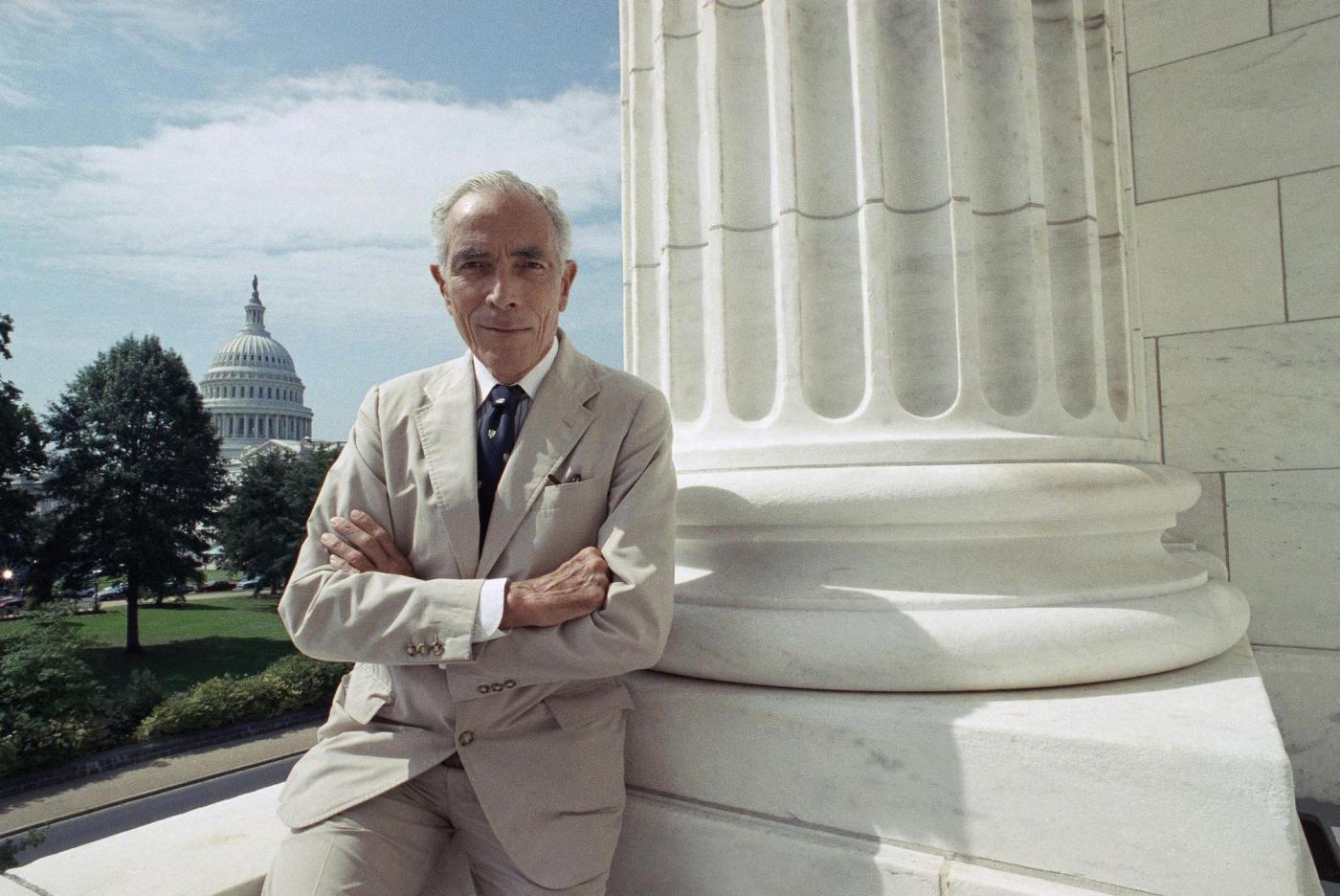
FILE – Rhode Island Sen. Claiborne Pell, (D-R.I ) shown Feb. 17, 1981 in Washington. (AP Photo/ Charles Harrity)

Pell, the son of a New York congressman, was first elected to the Senate in 1960 and quickly became known as an unabashed liberal who prioritized eliminating financial barriers to higher education — even as a descendant of early New York landowners who lived among the old-money families in Rhode Island’s affluent Newport.

Pell was a multimillionaire who often wore old, ill-fitting suits and sometimes jogged in a tweed coat. He also had a deep fascination with UFOs and extrasensory perception.

Pell devised legislation that Congress eventually enacted in 1973 that began providing direct aid to college students. At the time, the funding was called Basic Education Opportunity Grants, but eventually changed to Pell Grants in 1980.

He also helped establish the National Endowment for the Arts and National Endowment for the Humanities.

When asked his greatest achievement, Pell always was quick to answer, “Pell Grants.”

Pell died in 2009 after having Parkinson’s disease. He was 90.

Latinos in Memphis worry about possible immigration crackdown by Trump’s crime task force

posted in: All news | 0

By ADRIAN SAINZ, Associated Press

MEMPHIS, Tenn. (AP) — When President Donald Trump created a task force to fight crime in Memphis, his order included the deployment of the National Guard and various federal agencies to, among other goals, enforce federal immigration law in the Tennessee city.

Related Articles


On North Carolina’s rivers and streams, the cleanup of Helene’s fury seems never-ending


LA County response to deadly fires slowed by lack of resources, outdated alert process, report says


Judge plans speedy ruling on whether charges can be dropped against Sean ‘Diddy’ Combs


Texas man facing execution for fatally beating 13-month-old girl during ‘exorcism’


Hard pass. Cold brew. Dad bod. Merriam-Webster adds over 5,000 words to ‘Collegiate’ dictionary

One of the departments included in the Memphis Safe Task Force is Homeland Security, which oversees Immigration and Customs Enforcement. That has some Latinos worried that the surge will be used to target them at homes, schools and where they work as part of Trump’s plan for mass detentions and deportations of immigrants around the country.

Sandra Pita, a mother of six who is a U.S. citizen of Mexican descent, said she and other Hispanic people in Memphis fear that their friends and relatives, even those who are legally in the U.S., could be caught up in the crackdown.

“My concern as a Latina is they will be targeting people with brown skin color, Black skin color, even my children who are citizens, and the children of other mothers who are born here in Memphis,” said Pita, who was born in California.

Memphis Mayor Paul Young speaks about the deployment of the National Guard to the city during a news conference Friday, Sept. 12, 2025, in Memphis, Tenn. (Patrick Lantrip/Daily Memphian via AP)

Mixed reactions to National Guard presence

Opponents of the deployment call it an unnecessary move and a federal occupation of a city that instead needs more funding to address poverty and other drivers of crime. Supporters say it’s a welcomed infusion of law enforcement personnel that, despite recent improvements in crime statistics, still needs help battling violent acts such as carjackings and murders.

“This is no occupation. It’s an investment,” Tennessee state Sen. Brent Taylor, a Republican who supports the deployment, said during a recent GOP rally.

Tennessee Republican Gov. Bill Lee has said publicly he would not expect more than 150 National Guard members to be sent to Memphis. Lee has not officially signed an executive order to deploy members yet. An unknown number of officers from other agencies, from federal immigration authorities to drug enforcement agents, would also be involved.

Mayor Paul Young, a Democrat, has said he didn’t ask for the deployment and doesn’t think it’s the way to reduce crime. In his weekly newsletter released Friday, he said he spoke with officials in Washington who said the National Guard in that city served as “eyes and ears on the streets, more like a large-scale neighborhood watch than frontline police officers” who worked to beautify the city and address homelessness, which he said would help Memphis as well.

Still, data from the federal operation in Washington shows that more than 40% of the arrests made over the monthlong operation were related to immigration, an Associated Press analysis found.

It’s unclear when National Guard troops will arrive, though officials have said it could happen within a week.

The governor’s consent to the National Guard stands in sharp contrast to Democratic leaders in states like California and Illinois, who argue similar deployments undermine local authority and inflame tensions. The president has also suggested he could send soldiers to New Orleans, another majority-Black city led by Democrats in a Republican-leaning state.

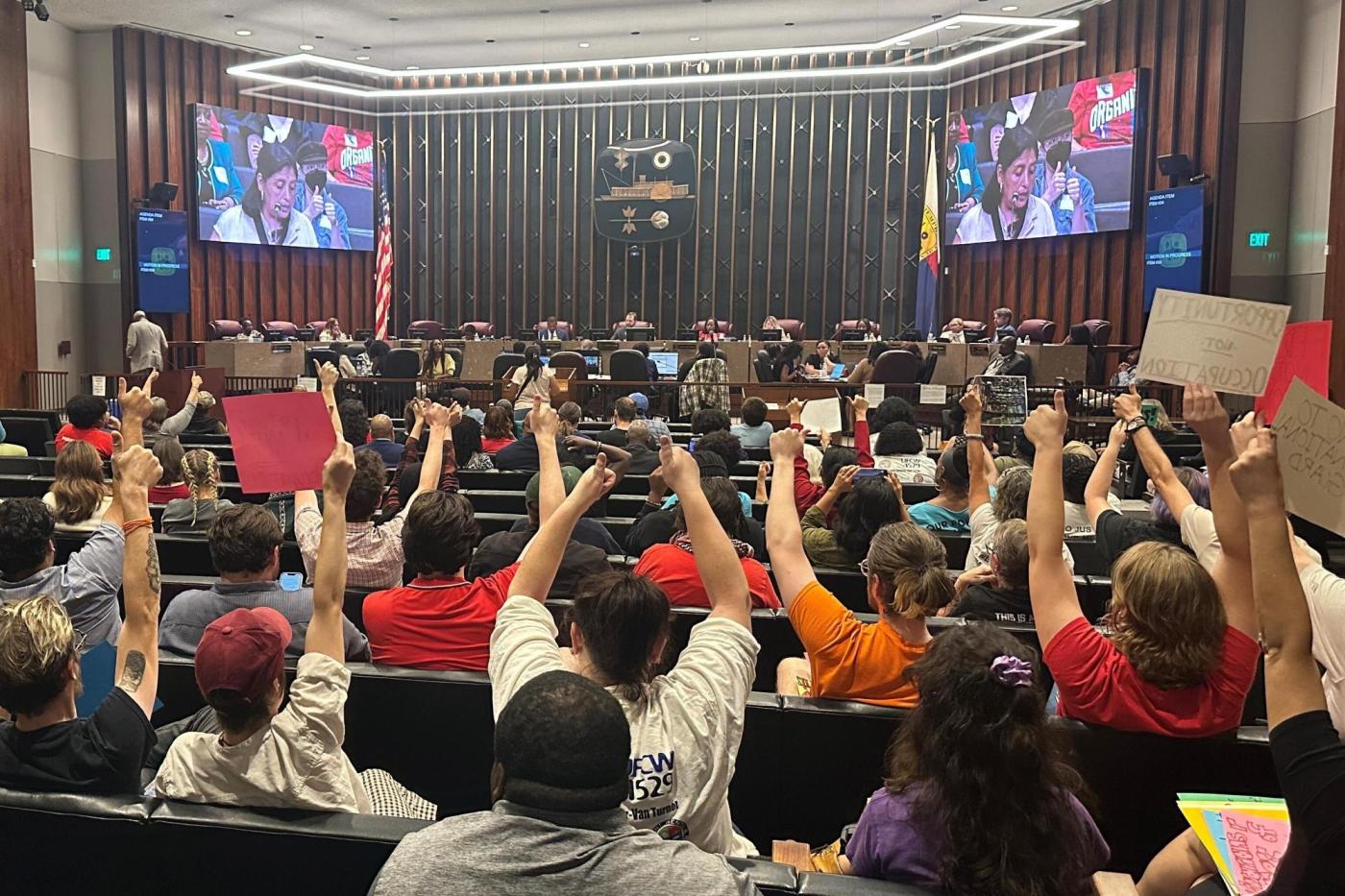
Sandra Pita, at podium and on screen, speaks at a Memphis City Council meeting on Tuesday, Sept. 23, 2025, in Memphis, Tenn. (AP Photo/Adrian Sainz)

Local groups prepare for immigration enforcement

Roughly 10% of Memphis’ population is Hispanic, according to Census data. Since Trump took office in January, community groups have been educating Memphis’ Latinos about their rights and what to do if they are approached by agents questioning their immigration status.

These organizations have handed out small red cards with instructions in English and Spanish, such as people should avoid opening their doors to agents who don’t have a warrant and not sign anything without a lawyer present.

Other groups are working to inform residents on social media about real-time law enforcement activity that could involve immigration operations.

Mauricio Calvo, CEO of Latino Memphis, said he recognizes that crime is an important issue in Memphis, but he does not support the National Guard deployment. Calvo said he was surprised that many Latinos he’s spoken with approve of the deployment, and he worries that some people don’t understand the implications.

“I don’t think they understand the potential consequences on racial profiling and actual deportations,” Calvo said.

Calvo pointed out that a former prison in the rural town of Mason, located east of Memphis, has been turned into an ICE detention facility with hundreds of beds.

“I’m afraid this could rapidly pivot into large numbers of detentions for immigrants or people who look or sound like immigrants,” he said.

Casey Bryant, a lawyer who works with Latino immigrants, said she is concerned that some National Guard and law enforcement agents could be unfamiliar with immigration law.

“It could cause a lot of chaos and confusion and has the potential of depriving people of their due process rights in the immigration context, and probably also in the criminal context,” Bryant said.

Immigrants should be ready for possible run-ins with law enforcement, including making preparations for their families if they are detained and contacting a lawyer who could help them, Bryant said.

“Everybody is trying to prepare for how to live with this kind of presence,” she said.

South Korea says the North has 4 uranium enrichment facilities to build nuclear weapons

posted in: All news | 0

By HYUNG-JIN KIM

SEOUL, South Korea (AP) — A top South Korean official said Thursday that North Korea is operating a total of four uranium enrichment facilities, adding to outside assessments that it has multiple covert atomic plants along with the widely known site near the capital of Pyongyang.

Related Articles


Russia is tracking two satellites used by the German military, defense minister says


Palestinian president: Hamas will have no role in governing postwar Gaza


Israeli strikes kill at least 17 Palestinians in Gaza as leaders ramp up pressure for a ceasefire


Paris court sentences Nicolas Sarkozy to 5 years in prison for criminal conspiracy in Libya case


Today in History: September 25, Military escorts Little Rock Nine into Central High

The North’s leader Kim Jong Un has called for a rapid expansion of his country’s nuclear weapons program and recently said he would never make the arms a negotiating point in response to overtures by U.S. President Donald Trump.

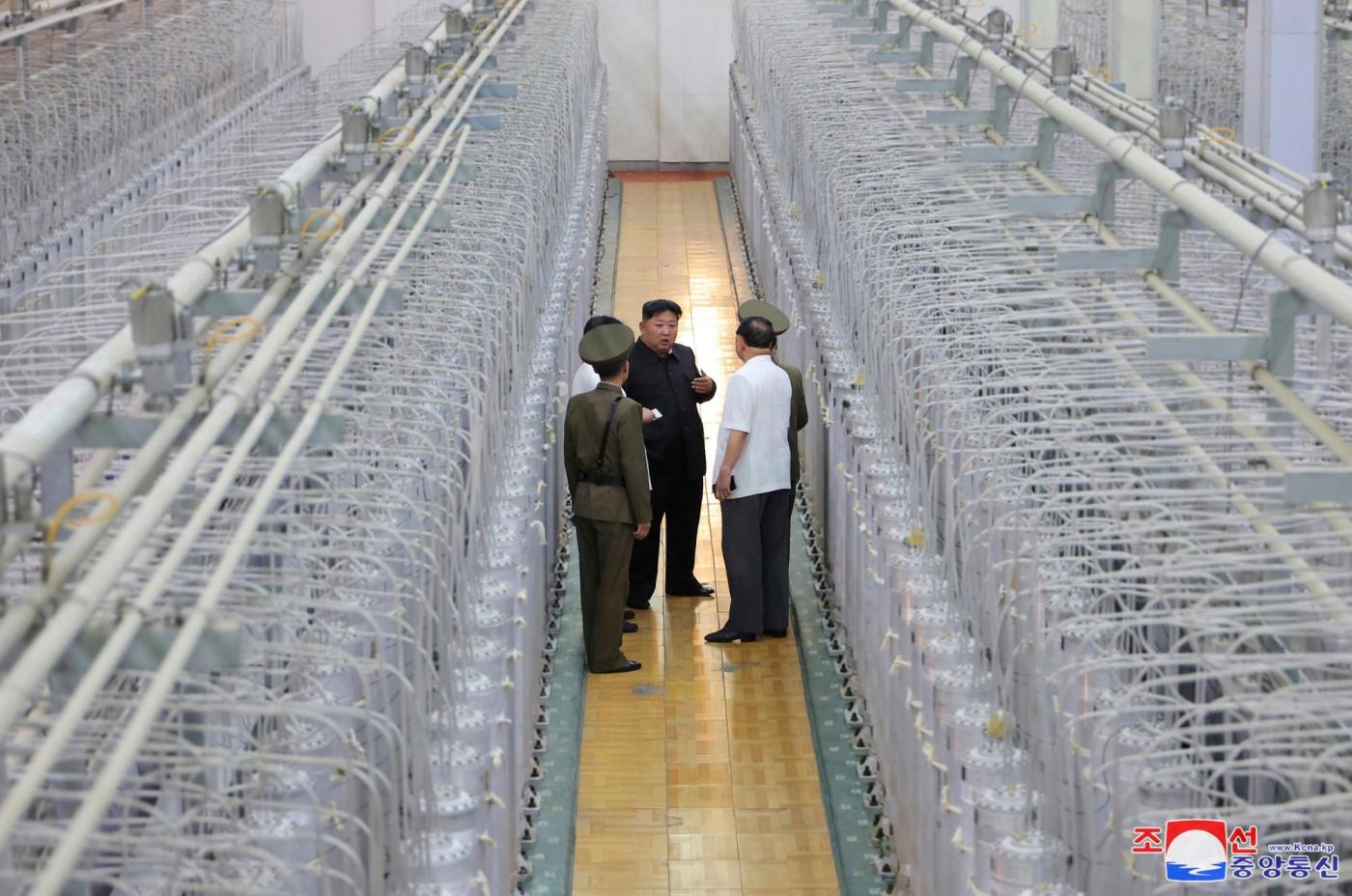
The South’s Unification Minister Chung Dong-young said uranium enrichment centrifuges at the four facilities — which would include the known site at Yongbyon, about 100 kilometers (60 miles) north of Pyongyang — are running everyday and stressed the urgency to stop the North’s nuclear program.

Chung did not elaborate further on the location of the other, undeclared nuclear sites. He spoke about the North with local reporters, according to his ministry.

A nuclear stockpile

Chung cited an assessment that the North possesses 2,000 kilograms (about 4,400 pounds) of highly enriched uranium. He first said that was based on intelligence but the ministry later clarified it was attributed to civilian experts.

If confirmed, the amount would also signal a sharp increase in North Korea’s stockpile of nuclear material.

In 2018, Stanford University scholars, including nuclear physicist Siegfried Hecker who had previously visited the Yongbyon complex, said the North had about 250 to 500 kilograms (550 to 1,100 pounds) of highly enriched uranium, sufficient for 25 to 30 nuclear devices.

Nuclear weapons can be built using either highly enriched uranium or plutonium, and North Korea has facilities to produce both at Yongbyon. Last year, North Korea released photographs of what it said was a uranium enrichment facility, the first such disclosure since it showed the one at Yongbyon to Hecker and others in 2010.

The location and other details of the facility in the photographs remain unknown.

Foreign experts believe North Korea has built additional uranium-enrichment sites as Kim has been pushing hard to expand his nuclear arsenal.

A plutonium plant is typically large and generates much heat, making it easier for outsiders to detect than a uranium enrichment plant, which is more compact and can be easily hidden from satellite cameras. Centrifuges to enrich uranium can be clandestinely operated underground.

North’s atomic bombs

It’s almost impossible to independently confirm how many nuclear weapons North Korea has manufactured, based on nuclear fissile materials it has produced at Yongbyon and elsewhere.

In 2018, a top South Korean official told parliament that North Korea was estimated to have already manufactured 20-60 nuclear weapons, but some experts say the North likely has more than 100. Estimates of how many nuclear bombs North Korea can add to its arsenal every year vary, ranging from six to as many as 18.

International diplomacy on ending North Korea’s nuclear program has stalled since 2019, when high-stakes summitry between Kim and Trump fell apart without any agreement.

At the time, Kim offered to dismantle the Yongbyon complex if he won extensive sanctions relief. But the American side rejected his proposal, because it would be a limited denuclearization step that would leave North Korea’s other, already built nuclear weapons and nuclear facilities intact.

Kim has since shunned any diplomacy with the U.S. and South Korea and focused on running weapons tests and perfecting nuclear missiles that target his rivals.

Since returning to office, Trump has repeatedly expressed hopes of restarting talks with Kim. Earlier this week, Kim said he still has good memories of Trump but urged the U.S. to drop its demand that the North surrender its nuclear arms as a precondition for resuming long-stalled diplomacy.

Analysts assess that Kim would likely perceive an enlarged nuclear arsenal as a source of greater leverage in potential talks with the U.S.

They say that in any potential negotiations, Kim would again seek to win sweeping sanctions relief and improved ties with the U.S. in return for a partial surrender of his nuclear and missile programs.