US stocks hang near their records as tech keeps climbing

posted in: All news | 0

By STAN CHOE, Associated Press Business Writer

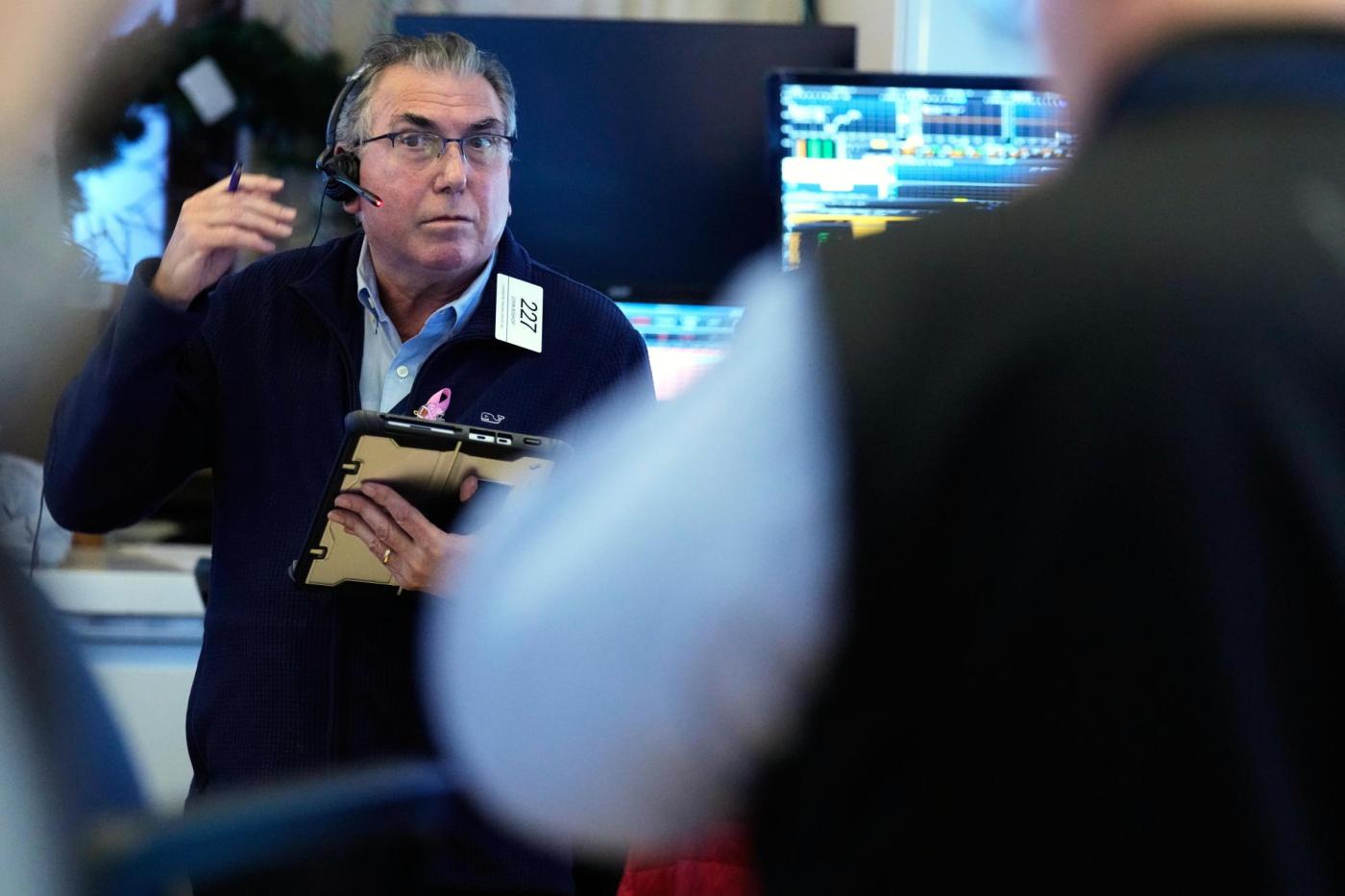
NEW YORK (AP) — Wall Street is hanging near its records on Monday, as technology stocks keep rising.

The S&P 500 rose 0.3%, coming off its latest all-time high. The Dow Jones Industrial Average added 17 points, or less than 0.1%, as of 9:35 a.m. Eastern time, and the Nasdaq composite was 0.4% higher.

Advanced Micro Devices soared 32.6% to help lead the market after announcing a deal where OpenAI will use its chips to power artificial-intelligence infrastructure. As part of the deal, OpenAI could own up to 160 million shares of AMD if it hits certain milestones.

Related Articles


Supreme Court rejects appeal from Ghislaine Maxwell, imprisoned former girlfriend of Jeffrey Epstein


Federal judge temporarily blocks Trump administration from sending National Guard troops to Oregon


ICE ad blitz aims to lure local law enforcement officers to join Trump mass deportation efforts


Today in History: October 6, Anwar Sadat assassinated


Kristi Noem says ICE will be ‘all over’ the Super Bowl

A frenzy around AI has been one of the main reasons Wall Street has been hitting record after record, though that’s also raising worries that prices have potentially shot too high. Much of the furor around AI in the last couple weeks has come from OpenAI, which has quickly become a $500 billion company, announcing deals with businesses around the world to develop more AI infrastructure.

Another chip company, Nvidia, announced a deal last month where it would invest $100 billion in OpenAI as part of a partnership, creating criticism that the AI investment pipeline was beginning to appear like a circle. Nvidia fell 1.5% following the AMD announcement.

Outside of tech, Comerica jumped 16.5% after Fifth Third Bancorp agreed to buy its rival in an all-stock deal valued at $10.9 billion. The combination would create the country’s ninth-largest bank. Fifth Third added 1%.

Elsewhere on Wall Street, trading remained relatively quiet as the stock market continues to largely ignore the U.S. government’s shutdown. Past closures of the federal government have had minimal effect on the stock market or on the economy, and the bet on Wall Street is that something similar will happen again.

Politics are playing a more active role in stock markets abroad, though, as Japanese stocks soared and French stocks slumped following their latest political shake-ups.

Japan’s Nikkei 225 jumped 4.8% after the country’s Liberal Democratic Party chose Sanae Takaichi as its leader and likely Japan’s first woman prime minister. She was an ally of the late Prime Minister Shinzo Abe, who pushed for lower interest rates and market-friendly policies.

The yen’s value dropped against the U.S. dollar on expectations that Takaichi will boost spending, likely adding to inflationary pressures. That in turn helped push up stocks of Japanese exporters, whose products can become more attractive on the global market because of a cheaper yen.

“Obviously, investors like what she has been saying and certainly today judging by the number of stocks that moved and which stocks moved, it seems like pretty much led by foreigners so far,” Neil Newman, head of strategy at Astris Advisory Japan, said about Takaichi.

In Paris, the CAC 40 index slumped 1.2% following the resignation of France’s new prime minister.

Sébastien Lecornu resigned a day after he named his government, drawing a backlash across the political spectrum for his choice of ministers. French politics have been in disarray since President Emmanuel Macron called snap elections last year that produced a deeply fragmented legislature.

In the bond market, the yield on the 10-year Treasury rose to 4.16% from 4.13% late Friday.

The shutdown of the U.S. government means fewer economic data releases this week, though markets will have some earnings reports to comb through, including from Delta Air Lines, PepsiCo and Levi Strauss.

Despite the shutdown, the Federal Reserve will release minutes from its meeting last month when it cut its benchmark interest rate for the first time this year.

AP Business Writers Matt Ott and Elaine Kurtenbach contributed.
Supreme Court rejects appeal from Ghislaine Maxwell, imprisoned former girlfriend of Jeffrey Epstein

posted in: All news | 0

By MARK SHERMAN, Associated Press

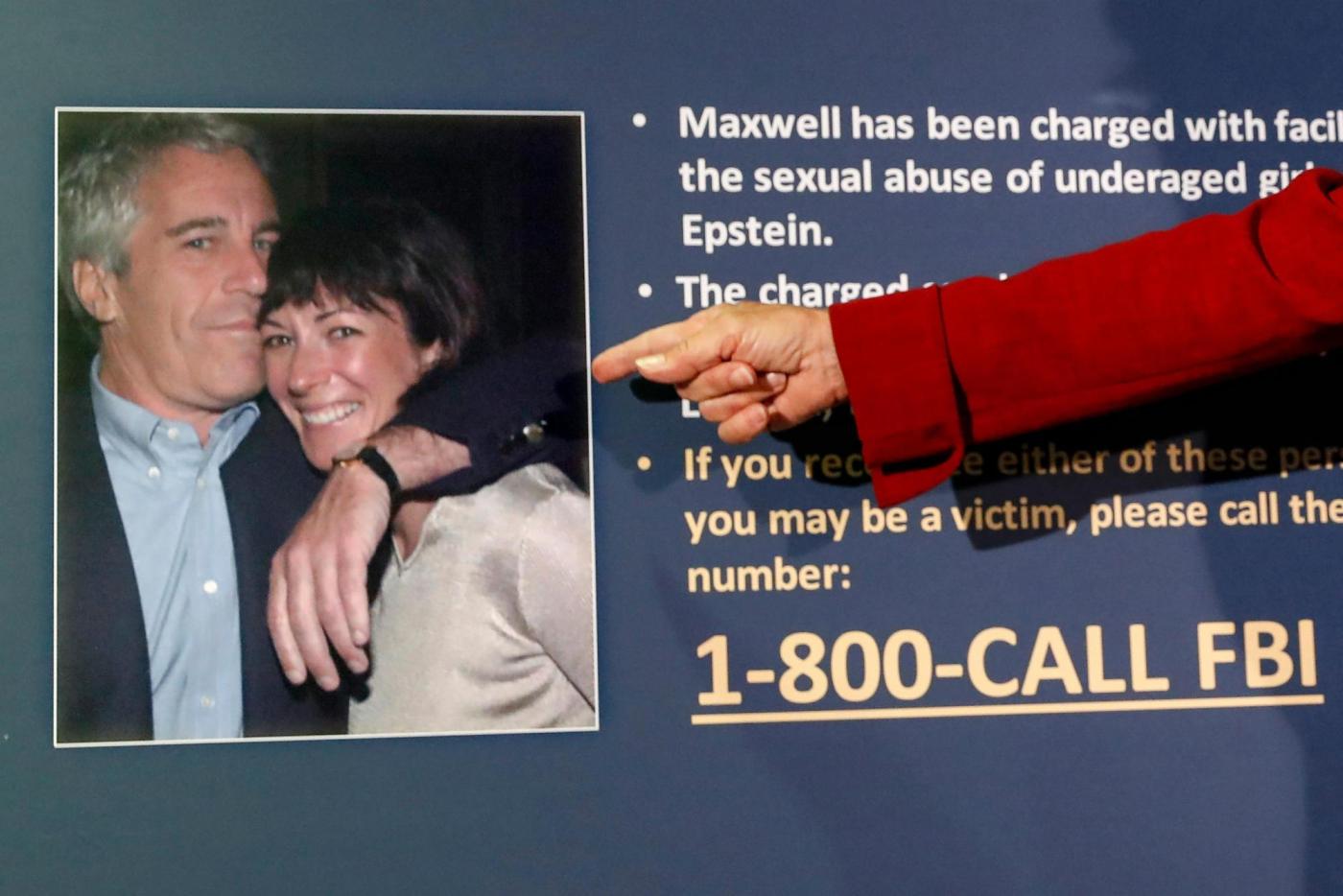
WASHINGTON (AP) — The Supreme Court on Monday rejected an appeal from Ghislaine Maxwell, the imprisoned former girlfriend of Jeffrey Epstein.

On the first day of their new term, the justices declined to take up a case that would have drawn renewed attention to the sordid sexual-abuse saga after President Donald Trump’s administration sought to tamp down criticism over its refusal to publicly release more investigative files from Epstein’s case.

Related Articles


US stocks hang near their records as tech keeps climbing


Federal judge temporarily blocks Trump administration from sending National Guard troops to Oregon


ICE ad blitz aims to lure local law enforcement officers to join Trump mass deportation efforts


Today in History: October 6, Anwar Sadat assassinated


Kristi Noem says ICE will be ‘all over’ the Super Bowl

Lawyers for Maxwell, a British socialite, argued that she never should have been tried or convicted for her role in luring teenage girls to be sexually abused by Epstein, a New York financier. She is serving a 20-year prison term, though she was moved from a low-security federal prison in Florida to a minimum-security prison camp in Texas after she was interviewed in July by Deputy Attorney General Todd Blanche.

As is their custom, the justices did not explain why they turned away the appeal.

Trump’s Republican administration had urged the high court to stay out of the case.

Maxwell’s lawyers contended that a non-prosecution agreement reached in 2007 by federal prosecutors in Miami and Epstein’s lawyers also protected his “potential co-conspirators” from federal charges anywhere in the country.

Maxwell was prosecuted in Manhattan, and the federal appeals court there ruled that the prosecution was proper. A jury found her guilty of sex trafficking a teenage girl, among other charges.

Maxwell’s trial featured accounts of the sexual exploitation of girls as young as 14 told by four women who described being abused as teens in the 1990s and early 2000s at Epstein’s homes.

Neither Maxwell’s lawyers nor the federal Bureau of Prisons has explained the reason for her transfer, but one of her lawyers, David Oscar Markus, has said she is “innocent and never should have been tried, much less convicted.” Markus also was the lead lawyer on her Supreme Court case.

Maxwell was interviewed by Blanche at a Florida courthouse. She was given limited immunity, allowing her to speak freely without fear of prosecution for anything she said except for in the event of a false statement. She repeatedly denied witnessing any sexually inappropriate interactions involving Trump, according to records released in August meant to distance the president from the disgraced financer.

Epstein was arrested in 2019 on sex trafficking charges and was accused of sexually abusing dozens of teenage girls. A month later, he was found dead in a New York jail cell in what investigators described as a suicide.

The Epstein case had consumed Trump’s administration following an announcement from the FBI and the Justice Department in July that Epstein had killed himself despite conspiracy theories to the contrary, that a “client list” that Attorney General Pam Bondi had intimated was on her desk did not actually exist, and that no additional documents from the high-profile investigation were suitable to be released.

The announcement produced outrage from conspiracy theorists and Trump supporters who had been hoping to see proof of a government coverup. That expectation was driven in part by comments from officials, including FBI Director Kash Patel and Deputy Director Dan Bongino, who on podcasts before taking their current positions had repeatedly promoted the idea that damaging details about prominent people were being withheld.

Patel, for instance, said in at least one podcast interview before becoming FBI director that Epstein’s “black book” was under the “direct control of the director of the FBI.”

But the Justice Department said its review of evidence in the government’s possession determined that no “further disclosure would be appropriate or warranted.” The department noted that much of the material was placed under seal by a court to protect victims and “only a fraction” of it “would have been aired publicly had Epstein gone to trial.”

Faced with fury from his base, Trump sought to quickly turn the page, shutting down questioning of Bondi about Epstein at a White House Cabinet meeting and deriding as “weaklings” supporters he said were falling for the “Jeffrey Epstein Hoax.”

Trump says the US has secured $17 trillion in new investments. The real number is likely much less

posted in: All news | 0

By JOSH BOAK, Associated Press

WASHINGTON (AP) — The economic boom promised by President Donald Trump centers on a single number: $17 trillion.

That’s the sum of new investments that Trump claims to have generated with his tariffs, income tax cuts and aggressive salesmanship of CEOs, financiers, tech titans, prime ministers, presidents and other rulers. The $17 trillion is supposed to fund new factories, new technologies, more jobs, higher incomes and faster economic growth.

Related Articles


The Supreme Court will evaluate Trump’s expansive claims of presidential power in its new term


Republicans and Democrats at an impasse as government shutdown enters sixth day


Leader of UK Conservatives vows to deport 150,000 people a year


Kristi Noem says ICE will be ‘all over’ the Super Bowl


Gov. Newsom to sue Trump over sending California Guard to Oregon

“Under eight months of Trump, we’ve already secured commitments of $17 trillion coming in,” the president said in a speech last month. “There’s never been any country that’s done anything like that.”

But based on statements from various companies, foreign countries and the White House’s own website, that figure appears to be exaggerated, highly speculative and far higher than the actual sum. The White House website lists total investments at $8.8 trillion, though that figure appears to be padded with some investment commitments made during Joe Biden’s presidency.

The White House didn’t lay out the math after multiple requests as to how Trump calculated $17 trillion in investment commitments. But the issue goes beyond Trump’s hyperbolic talk to his belief that the brute force of tariffs and shaming of companies can deliver economic results, a strategy that could go sideways for him politically if the tough talk fails to translate into more jobs and higher incomes.

Just 37% of U.S. adults approve of Trump’s handling of the economy, according to a September poll by The Associated Press-NORC Center for Public Affairs. That’s down from a peak of 56% in early 2020 during Trump’s first term — a memory he relied upon when courting voters in last year’s election.

Adam Posen, president of the Peterson Institute of International Economics, said the public commitments announced by Trump do represent a “meaningful increase” — but one that amounts to hundreds of billions of dollars, not trillions. Even then, that comes with long-term costs as countries might be less inclined to invest with the U.S. after being threatened to do so.

“It is a national security mistake because you’re turning allies into colonies of a sort — you’re forcibly extracting from them things that they don’t see as entirely in their interest,” Posen said. “Twisting the arms of governments to then twist the arms of their own businesses is not going to get you the payoff you want.”

Trump banking on foreign countries making good on promises

The Trump administration is betting that tariffs are an effective tool to prod other countries and international companies to invest in the United States, a big stick that other administrations failed to wield. Trump’s pitch to voters is that he will play a role in directly managing the investment commitments made by foreign countries — and that the allocation of that money starting next year will revive what has been a flagging job market.

“The difference between hypothetical investments and ground being broken on new factories and facilities is good leadership and sound policy,” said White House spokesman Kush Desai.

The White House said that Japan will invest $1 trillion, largely at Trump’s direction. The European Union will commit $600 billion. The United Arab Emirates made commitments of $1.4 trillion over 10 years. Qatar pledged $1.2 trillion. Saudi Arabia intends to pony up $600 billion, India $500 billion and South Korea $450 billion, among others.

The challenge is the precise terms of those investments have yet to be fully codified and released to the public, and some numbers are under dispute, potentially fuzzy math or, in the case of Qatar, more than five times the annual gross domestic product of the entire country. The White House maintains that Qatar is good for the money because it produces oil.

South Korea already has misgivings about its investment commitment, which is $100 billion lower than what the White House claims, after immigration agents raided a Hyundai plant under construction in Georgia and arrested Korean citizens. There are also concerns that an investment that large without a better way to exchange currencies with the U.S. could hurt South Korea’s economy.

“From what I’ve seen, these commitments are worth about as much as the paper they’re not written down on,” said Jared Bernstein, who was the chairman of the Council of Economic Advisers in the Biden White House.

As for the $600 billion committed by European companies, that’s based on those businesses having “expressed interest” and having stated “intentions” to do so through 2029 rather than an overt concession, according to European Union documents.

Still too soon to see any investment impact in overall economy

So far, there has yet to be a notable boost in business investment as a percentage of U.S. gross domestic product. As a share of the overall economy, business investment during the first six months of Trump’s presidency has been consistently bouncing around 14%, just as it was before the pandemic.

But economists also note that Trump is double-counting and relying on investments that were initially announced during the Biden administration or investments that were already likely to occur because of the artificial intelligence build out.

For example, the White House lists a $16 billion investment by computer chipmaker Global Foundries. But of that sum, more than $13 billion was announced during the Biden administration and supported by $1.6 billion in grants by the 2022 CHIPS and Science Act, as well as other state and federal incentives.

Similarly, the White House is banking on $200 billion being invested by the chipmaker Micron, but at least $120 billion of that was announced during the Biden era.

‘The tariffs played a big role’

For their part, White House officials largely credit Trump’s tariffs — like those imposed on Oct. 1 on kitchen cabinets, large trucks and pharmaceutical drugs — for forcing companies to make investments in the U.S., saying that the risk of additional import taxes if countries and companies fail to deliver on their promises will ensure that the promised cash comes into the economy.

On Tuesday, Pfizer CEO Albert Bourla endorsed this approach after his pharmaceutical drug company received a three-year grace period on tariffs and announced $70 billion in investments in the U.S.

“The president was absolutely right,” Bourla said. “Tariffs is the most powerful tool to motivate behaviors.”

“The tariffs played a big role,” Trump added.

The Supreme Court will evaluate Trump’s expansive claims of presidential power in its new term

posted in: All news | 0

By MARK SHERMAN and LINDSAY WHITEHURST, Associated Press

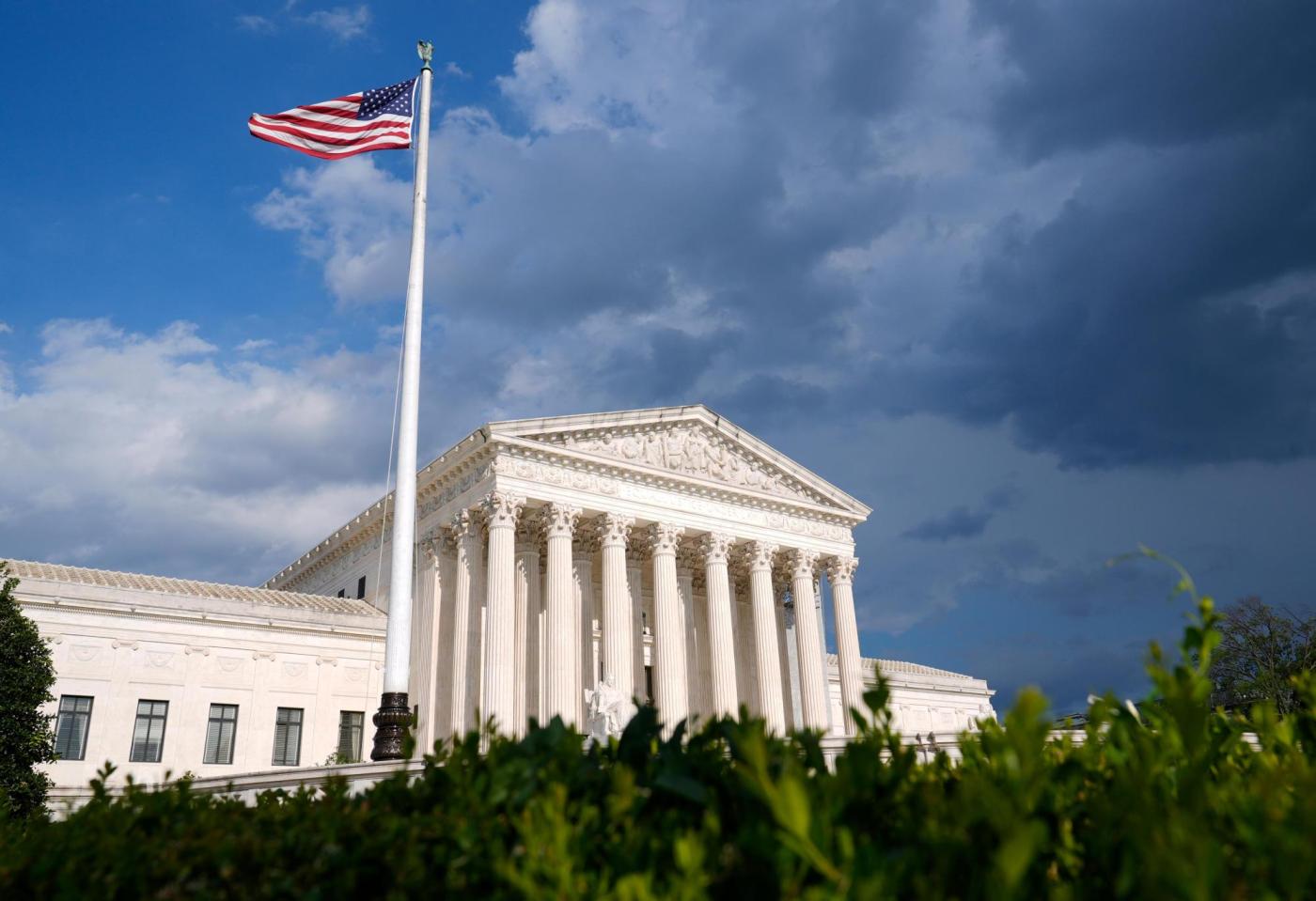
WASHINGTON (AP) — The Supreme Court is beginning a new term with a sharp focus on President Donald Trump’s robust assertion of executive power.

Pivotal cases on voting and the rights of LGBTQ people also are on the agenda. On Tuesday, the justices will hear arguments over bans passed by nearly half of U.S. states on therapy aimed at changing sexual orientation or gender identity.

Related Articles


Republicans and Democrats at an impasse as government shutdown enters sixth day


Leader of UK Conservatives vows to deport 150,000 people a year


Kristi Noem says ICE will be ‘all over’ the Super Bowl


Gov. Newsom to sue Trump over sending California Guard to Oregon


Strong-Armed by Trump, Netanyahu embraces Gaza deal as a personal win

The opening session on Monday has lower-profile cases, including a dispute over the right of a criminal defendant to consult with his lawyer during an overnight break in his testimony. The judge in a Texas murder trial ordered defense lawyers not to talk to their client about his testimony.

A major thrust of the next 10 months, however, is expected to be the justices’ evaluation of Trump’s expansive claims of presidential power.

The court’s conservative majority has so far been receptive, at least in preliminary rulings, to many emergency appeals from Trump’s Republican administration. But there could be more skepticism, however, when the court conducts in-depth examinations of some Trump policies, including the president’s imposition of tariffs and his desired restrictions on birthright citizenship.

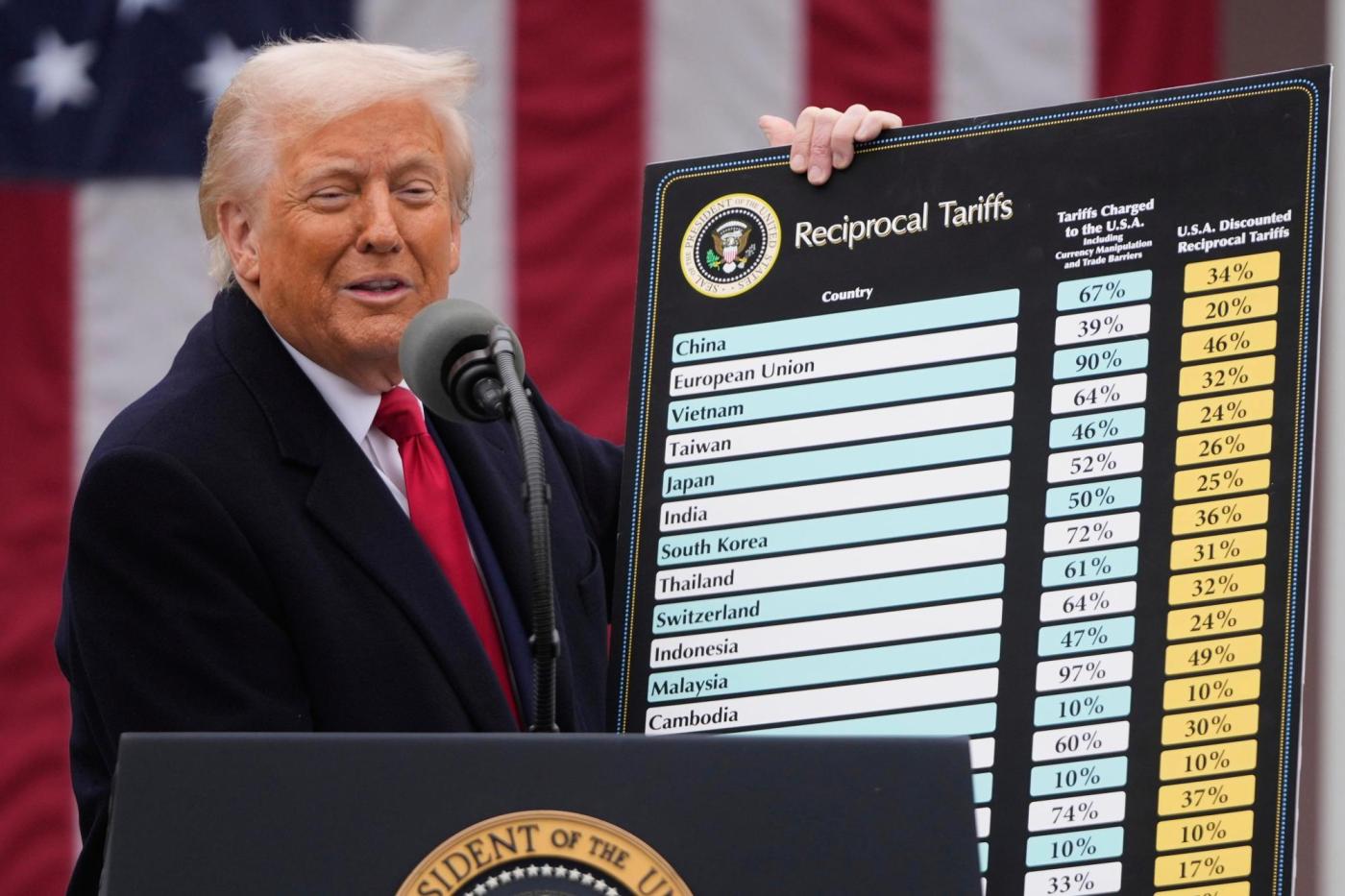
The justices are hearing a pivotal case for Trump’s economic agenda in early November as they consider the legality of many of his sweeping tariffs. Two lower courts have found the Republican president does not have the power to unilaterally impose wide-ranging tariffs under an emergency powers law.

FILE – Members of the Supreme Court sit for a new group portrait at the Supreme Court building in Washington, Oct. 7, 2022. (AP Photo/J. Scott Applewhite, File)

In December, the justices will take up Trump’s power to fire independent agency members at will, a case that probably will lead the court to overturn, or drastically narrow, a 90-year-old decision. It required a cause, like neglect of duty, before a president could remove the Senate-confirmed officials from their jobs.

The outcome appears to be in little doubt because the conservatives have allowed the firings to take effect while the case plays out, even after lower-court judges found the firings illegal. The three liberal justices on the nine-member court have dissented each time.

Another case that has arrived at the court but has yet to be considered involves Trump’s executive order denying birthright citizenship to children born in the United States to parents who are in the country illegally or temporarily.

The administration has appealed lower-court rulings blocking the order as unconstitutional, or likely so, flouting more than 125 years of general understanding and an 1898 Supreme Court ruling. The case could be argued in the late winter or early spring.