Boys hockey: Gentry Academy downs White Bear Lake to reach first 2A state tournament

posted in: All news | 0

Nate Wilke is best known for setting up goals, not scoring them.

But the roles were reversed Friday for the Gentry Academy defenseman who scored twice, helping send the Stars to the boys Class 2A state hockey tournament by beating White Bear Lake 3-0 in the Section 4AA final.

By now, the unlikely should not be surprising for the Stars.

Seeded fifth in the section, Gentry Academy beat No. 4 East Ridge 6-3 and No. 1 Hill-Murray 4-2 to reach the final at a sold-out Aldrich Arena against the third-seeded Bears.

“Sections, crazy stuff happens and we showed it,” co-captain Braden Korba said.

“Everybody hated us and we believed. All that matters is that we believed,” said Wilke, who has eight goals but a team-high 30 assists. “… State is a dream. I’ve dreamed about every night.”

The Stars (17-9-2) will take to the ice Thursday for Class AA quarterfinal at Grand Casino Arena. Brackets are to be announced Saturday.

Gentry Academy, a charter school in Vadnais Heights, has one previous state tournament berth. It won the Class A title in 2021 and moved to Class 2A the following season.

“This is so sweet,” coach Kyle Follmer said.

Riley Helmberger almost single-handedly kept White Bear Lake (13-12-3) within striking distance of another fantastic finish with 28 saves, plenty off Grade A chances for the Stars.

White Bear Lake already had one miraculous rally this week, as Rian Marquardt scored with less than minute left in regulation and Nash Roed scored 32 seconds in overtime and the Bears beat Stillwater 2-1 in Wednesday’s semifinal.

Instead, Brekken Zabrok scored into an empty net with 53 seconds left and Gentry Academy improved to 10-1-1 in its past 12 games after sitting 7-8-1 through 16 contests.

“We actually had a practice here at Aldrich, it was more like a tryout after Christmas,” Follmer said. “In that practice we rehearsed celebrating the section championship, ran the clock out, celebrated, did all that. I think after that the vision just became real for them.”

“It was just believing,” Wilke said. “We believed every single day no matter if we win, we lose, we’re down, we’re up, we’re always going, we’re never stopping.”

A game that started with tremendous flow remained scoreless until midway through the first period when Wilke pinched in and potted a rebound of a shot by Korba. He was set up by a drop pass from Jason Cook.

Eighty-seven seconds later, Wilke was again mobbed by his teammates after his power-play shot from just inside the blue line somehow avoided congestion in front and it was 2-0 Stars.

“He has the most ice time for a reason. He gives it his all every shift. He’s our calmest guy in every situation. He’s a rock star,” Korba said.

“Nate’s one of those guys who’s just kept getting better and better all season and all playoff. He took his game to a different level. It’s scary how good he was down the stretch for us,” Follmer said. “… He’s a White Bear kid so we felt when he got two everything was going our way for sure.”

Related Articles


‘It’s the work that paid off’: How ‘two-a-days’ all season led Simley to another state wrestling title


State wrestling: Simley back on top of Class 2A, St. Michael-Albertville continues dynasty


Boys hockey: Zephyrs maintain Section 4A stranglehold


State wrestling: Simley’s move to Section 1AA has major impact on individual tournaments


Boys hockey: Gentry Academy upsets Hill-Murray in section semis

With only 3 women left, an Amazon tribe faced extinction. An unexpected birth now brings hope

posted in: All news | 0

By GABRIELA SÁ PESSOA

SAO PAULO (AP) — Pugapia and her daughters Aiga and Babawru lived for years as the only surviving members of the Akuntsu, an Indigenous people decimated by a government-backed push to develop parts of the Amazon rainforest. As they advanced in age without a child to carry on the line, many expected the Akuntsu to vanish when the women died.

Related Articles


Trump raises the possibility of a ‘friendly takeover of Cuba’ coming out of talks with Havana


Swedish military says a Russian drone made an unauthorized flight off southern Sweden


The faces of Mexico’s disappeared haunt this city’s streets. Families worry they will be wiped away


A UK election win for the Green Party is a nightmare for Labour and Starmer. Here are the takeaways


A total lunar eclipse will turn the moon blood red on Tuesday across several continents

That changed in December, when Babawru — the youngest of the three, in her 40s — gave birth to a boy. Akyp’s arrival brought hope not just for the Akuntsu line but also for efforts to protect the equally fragile rainforest.

“This child is not only a symbol of the resistance of the Akuntsu people, but also a source of hope for Indigenous peoples,” said Joenia Wapichana, president of Brazil’s Indigenous protection agency, known as Funai. “He represents how recognition, protection and the management of this land are extremely necessary.”

Protecting Indigenous territories is widely seen as one of the most effective ways to curb deforestation in the Amazon, the world’s largest rainforest and a key regulator of global climate. Researchers warn that continued forest loss could accelerate global warming. A 2022 analysis by MapBiomas, a network of nongovernmental groups tracking land use, found Indigenous territories in Brazil had lost just 1% of native vegetation over three decades, compared with 20% on private land nationwide.

In Rondonia state, where the Akuntsu dwell, about 40% of native forest has been cleared, and what remains untouched is largely within conservation and Indigenous areas. The Akuntsu’s land stands out in satellite images as an island of forest surrounded by cattle pasture as well as soy and corn fields.

In the 1980s, deforestation pushed attacks in Rondonia

Rondonia’s deforestation traces back to a government-backed push to occupy the rainforest during Brazil’s military regime in the 1970s. Around the same time, an infrastructure program financed in part by the World Bank promoted domestic migration to the Amazon, including the paving of a highway across the state.

In the 1980s, Rondonia’s population more than doubled, according to census data. Settlers were promised land titles if they cleared the forest for agriculture and risked losing claims if Indigenous people were present, fueling violent attacks by hired gunmen on Indigenous groups such as the Akuntsu.

Funai made first contact with the Akuntsu in 1995, finding seven survivors. Experts believe they had numbered about 20 a decade earlier, when they were attacked by ranchers seeking to occupy the area. Funai agents found evidence of the assault, and when they contacted the Akuntsu, the survivors recounted what happened. Some still bore gunshot wounds.

The last Akuntsu man died in 2017. Since then, Babawru lived with her mother, Pugapia, and Aiga, her sister. The women, whose ages aren’t known for certain, have chosen to remain isolated from the non-Indigenous world, showing little interest in it.

In 2006, Funai granted territorial protection to the Akuntsu, establishing the Rio Omere Indigenous Land, which they have since shared with the Kanoe people. The two groups, once enemies, began maintaining contact, usually mediated by officials. The relationship is complex, with cooperation but also cultural differences and language barriers.

The Associated Press requested a facilitated interview with the women through Funai, but the agency didn’t respond.

Amanda Villa, an anthropologist with the Observatory of Isolated Peoples, said Akuntsu women depend on Kanoe men for tasks considered masculine, such as hunting and clearing fields. The two groups have also exchanged spiritual knowledge — the current Kanoe spiritual leader, for example, learned from the late Akuntsu patriarch.

But the most consequential development for the future of the Akuntsu may have occurred last year, when Babawru became pregnant by a Kanoe man.

Linguist Carolina Aragon is the only outsider able to communicate with the three women after years studying and documenting their language. She works closely with Funai, translating conversations almost daily through video calls. Aragon also supported Babawru remotely during her labor and was with her during an ultrasound exam that confirmed the pregnancy.

Aragon said Babawru was stunned by the news. “She said, ‘How can I be pregnant?’” Aragon recalled. Babawru had always taken precautions to avoid becoming pregnant.

Social collapse shaped the Akuntsu’s choices

The surviving Akuntsu women had decided they would not become mothers. The decision was driven not only by the absence of other men in their community, but also by the belief that their world was disorganized — conditions they felt were not suitable for raising a child.

“You can trace this decision directly to the violent context they lived through,” said Villa, the anthropologist. “They have this somewhat catastrophic understanding.”

The Akuntsu believed they could not bring new life into a world without Akuntsu men who could not only perform but also teach tasks the group considers male responsibilities, such as hunting and shamanism.

“A breakdown of social relations that followed the genocide shaped their lives and deepened over the years. That does lead people to think — and rethink — the future,” Aragon said. “But the future can surprise everyone. A baby boy was born.”

Aragon said the women were embarking on a “new chapter,” choosing to welcome the child and adapt their traditions with support from the Kanoe and Funai. Villa said the fact that the newborn is a boy creates the possibility of restoring male roles like hunter.

Researchers and officials who have long worked with the three women understood that protecting the territory depended on the Akuntsu’s survival as a people. They sought to avoid a repeat of what happened to Tanaru, an Indigenous man who was discovered after living alone and without contact for decades.

After the discovery, authorities struggled to protect Tanaru’s territory. After he died in 2022, non-Indigenous groups began disputing the land. Late last year, the federal government finally secured the area, turning it into a protected conservation unit.

Funai’s Wapichana said Babawru’s child “is a hope that this next generation will indeed include an Indigenous person, an Akuntsu, ensuring the continuity of this people.”

Through years of careful work, Funai secured territorial protection for the Akuntsu and helped foster ties with the Kanoe. The agency also arranged spiritual support from an allied shaman, allowing the women to feel safe bringing new life into the world after decades of fear and loss.

The Akuntsu form emotional bonds with the forest and with the birds. Now, they are strengthening those bonds with a new human life in their world.

“What kind of relationship will this boy have with his own territory?” Aragon said. “I hope it will be the best possible, because he has everything he needs there.”

The Associated Press’ climate and environmental coverage receives financial support from multiple private foundations. AP is solely responsible for all content. Find AP’s standards for working with philanthropies, a list of supporters and funded coverage areas at AP.org.


Sleepy owl found resting among items on a New York antique store shelf

posted in: All news | 0

DURHAM, N.Y. (AP) — Shoppers in upstate New York earlier this month turned up a rare find while perusing a local antique store this month: tucked next to a cookie jar made in the shape of a chicken was a live owl resting peacefully on a shelf.

Related Articles


Federal prosecutors won’t appeal ruling barring death penalty in Luigi Mangione case


Neil Sedaka, the singer-songwriter behind dozens of hits of the 1960s and ’70s, dies at age 86


DHS says deported Babson student skipped flight. Her lawyers say agents wanted to detain her


Despite recent gains, tribal citizens descended from slaves face disparate treatment


US offers $10 million for capture of brothers said to lead Mexico’s Sinaloa cartel in Tijuana

The state Department of Environmental Conservation said Friday that the incident happened on Feb. 21 in the hamlet of East Durham, about 127 miles north of Manhattan.

The agency said customers at The Market Place had spotted “something extremely lifelike” on one of the shelves and alerted store staff.

Environmental conservation police officers arrived to find a brown-and-white owl perched on a shelf with its eyes firmly shut.

The department said officers gently cradled the sleeping owl to remove it from the store, and then released it into a wooded area, where it flew into a nearby tree.

The bird, an eastern screech owl, is nocturnal and typically nests in tree cavities.

It is not immediately clear how it got inside the store. An email was sent to the store’s owners on Friday.

Los Angeles school superintendent placed on paid leave amid federal probe

posted in: All news | 0

By JAIMIE DING and JULIE WATSON

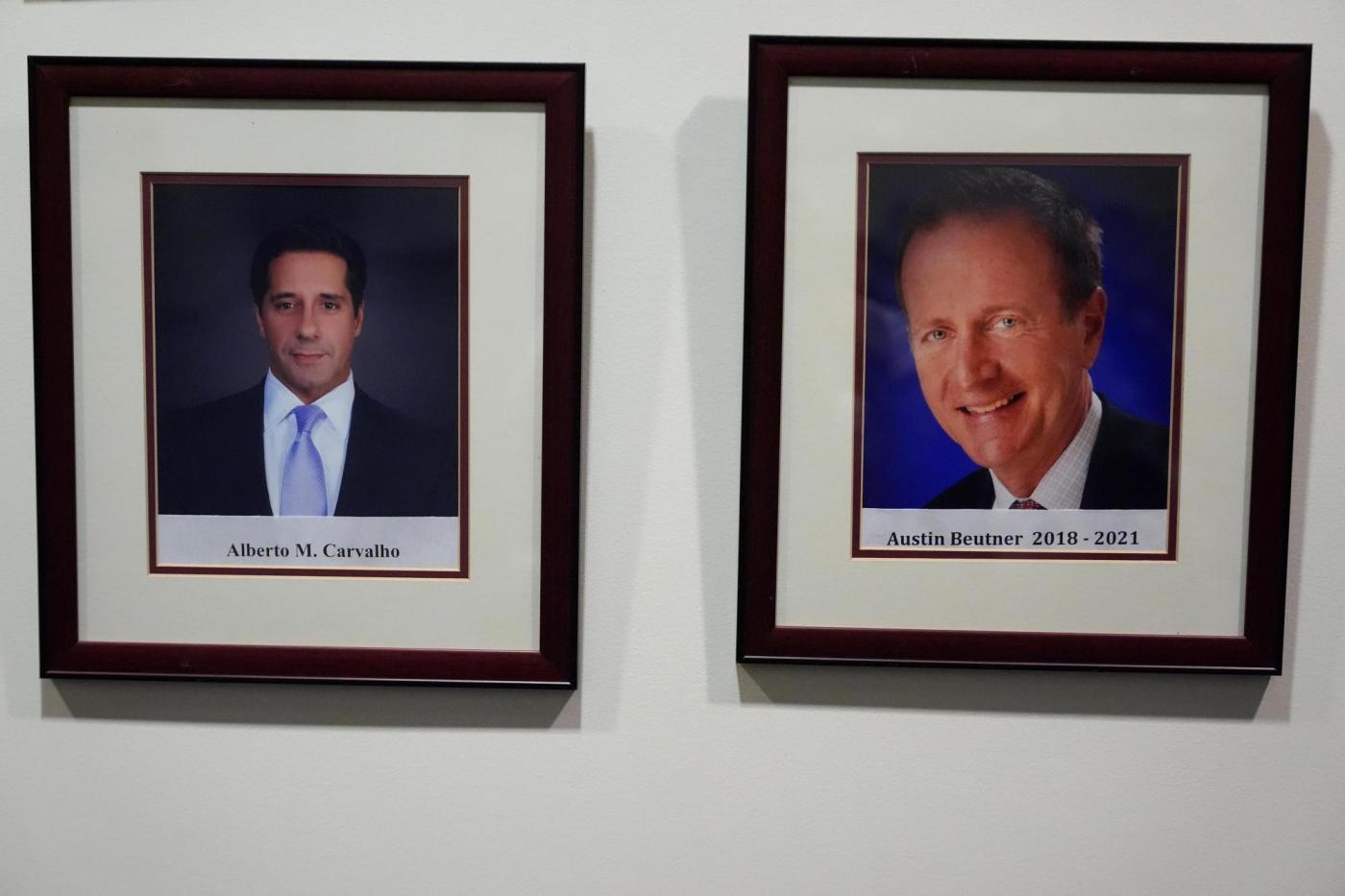
LOS ANGELES (AP) — Los Angeles schools superintendent Alberto Carvalho was put on paid leave Friday while he is part of a federal investigation, two days after the FBI served search warrants at his home and the district’s headquarters.

Related Articles


Federal prosecutors won’t appeal ruling barring death penalty in Luigi Mangione case


Neil Sedaka, the singer-songwriter behind dozens of hits of the 1960s and ’70s, dies at age 86


DHS says deported Babson student skipped flight. Her lawyers say agents wanted to detain her


Despite recent gains, tribal citizens descended from slaves face disparate treatment


US offers $10 million for capture of brothers said to lead Mexico’s Sinaloa cartel in Tijuana

Authorities have not provided details of the nature of the investigation involving the nation’s second-largest school district, which serves more than 500,000 students, nor have they accused Carvalho of any wrongdoing.

The move by the Los Angeles Unified School District Board of Education came after two days of deliberation behind closed doors.

Carvalho became superintendent in 2022. He previously led the public schools in Miami.

Andres Chait, the chief of school operations, will take over the helm while Carvalho is on leave, the district said.

Carvalho has not responded to a request for comment. The FBI on Wednesday also searched a third location near Miami. The Miami Herald reported the Florida property belonged to Debra Kerr, who previously worked with AllHere, an education technology company that had a contract with Los Angeles schools before it collapsed and its leader was indicted for fraud. She could not be reached for comment Thursday.

In 2024, Carvalho heavily touted a deal with AllHere for an AI chatbot named “Ed” designed to help students. But about three months after unveiling the technology and paying the company $3 million, the district dropped its dealings with AllHere, which collapsed into bankruptcy. Months later, founder Joanna Smith-Griffin was charged with securities and wire fraud, along with identity theft.

The school district said in a statement Wednesday that it “is cooperating with the investigation and we do not have further information at this time.”

Carvalho denied personal involvement in the selection of AllHere, according to the Los Angeles Times. After Smith-Griffin was indicted, Carvalho said he would appoint a task force to examine what went wrong with the LA school district’s project, but there have been no public announcements about it since.

Kerr, an education technology salesperson who connects companies with schools, said she was never paid her $630,000 commission for her work in closing the AllHere deal with the LA district, according to a news organization, The 74, that covered the company’s bankruptcy hearings in 2024.

The 74 reported that Kerr had longstanding ties with Carvalho from when he oversaw the Florida district and that her son who worked for AllHere pitched the technology to LA school leaders after he took over the helm there. The Associated Press was unable to reach Kerr for comment.

Over the past five years in Los Angeles, Carvalho has been lauded for the district’s improvements to academic performance. He won similar praise while overseeing Miami-Dade County Public Schools, Florida’s largest school district, where the national superintendents association named him Superintendent of the Year in 2014.

Spain knighted the Portugal-born administrator in 2021 for his work in expanding Spanish-language programs for Miami-Dade County schools.

Months later, Carvalho took the job in California and became a harsh critic of the Trump administration’s aggressive immigration crackdown, especially following raids in Los Angeles last year.

Carvalho arrived in Los Angeles at a critical moment, as the district found itself flush with funding from state and federal COVID-19 relief money but still struggling with the impacts of the pandemic, including learning losses and declining enrollment. He previously sparred with Florida Republican Gov. Ron DeSantis over his order that schools not require masks during the pandemic.

The Miami-Dade school system said in a statement that it was aware of the investigation involving Carvalho but did not have any comment at this time.

Watson reported from San Diego.