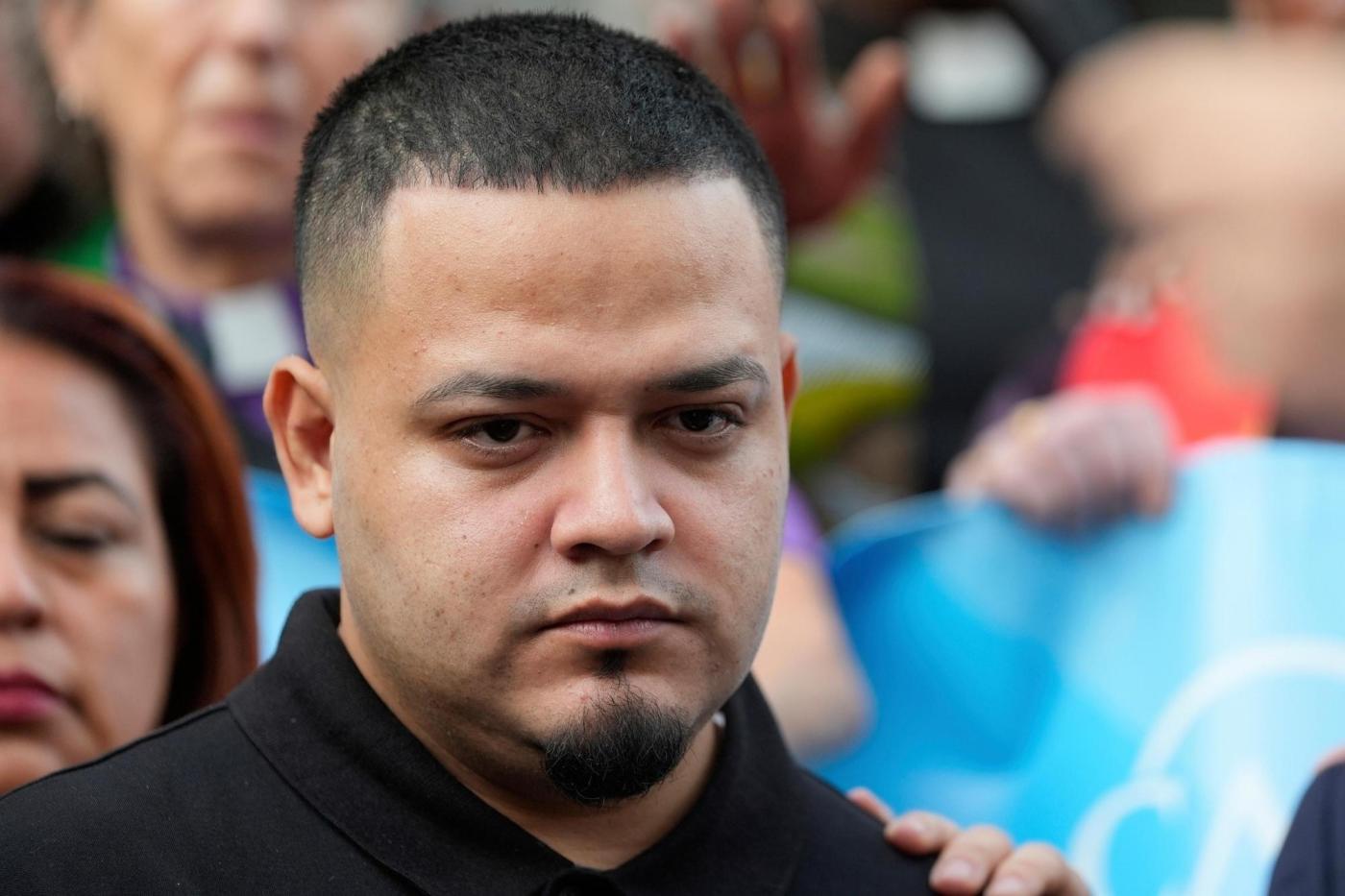
BALTIMORE (AP) — The U.S. government plans to deport Kilmar Abrego Garcia to Liberia, and could do so as early as Oct. 31, according to a Friday court filing.
The Salvadoran national’s case has become a magnet for opposition to President Donald Trump’s immigration policies since he was mistakenly deported to El Salvador, in violation of a settlement agreement. He was returned to the U.S. in June after the U.S. Supreme Court said the administration had to work to bring him back. Since he cannot be re-deported to El Salvador, ICE has been seeking to deport him to a series of African countries.
Meanwhile, a federal judge in Maryland has previously barred his immediate deportation. Abrego Garcia’s lawsuit there claims the Trump administration is illegally using the deportation process to punish him for the embarrassment of his earlier mistaken deportation.
A Friday court filing from the Department of Homeland Security notes that “Liberia is a thriving democracy and one of the United States’s closest partners on the African continent.” Its national language is English; its constitution “provides robust protections for human rights;” and Liberia is “committed to the humane treatment of refugees,” the filing reads. It concludes that Abrego Garcia could be deported as soon as Oct. 31.
“After failed attempts with Uganda, Eswatini, and Ghana, ICE now seeks to deport our client, Kilmar Abrego Garcia, to Liberia, a country with which he has no connection, thousands of miles from his family and home in Maryland,” a statement from attorney Simon Sandoval-Moshenberg reads. “Costa Rica stands ready to accept him as a refugee, a viable and lawful option. Yet the government has chosen a course calculated to inflict maximum hardship. These actions are punitive, cruel, and unconstitutional.”
Related Articles
Cause of Tennessee explosives plant blast that killed 16 people could take months to determine
Government shutdown likely means no inflation data next month for 1st time in decades
The NBA hoped to begin its season on a strong note. Now it faces a gambling scandal
Government shutdown continues to add to stress on air traffic controllers and disrupt flights
Lacking community resilience centers, Houston neighbors opt for solar-powered ‘hub homes’
Abrego Garcia has an American wife and child and lived in Maryland for years, but he immigrated to the U.S. illegally as a teenager. In 2019, an immigration judge granted him protection from being deported back to El Salvador, where he faces a “well-founded fear” of violence from a gang that targeted his family, according to court filings. In a separate action in immigration court, Abrego Garcia has applied for asylum in the United States.
Additionally, Abrego Garcia is facing criminal charges in federal court in Tennessee, where he has pleaded not guilty to human smuggling. He has filed a motion to dismiss the charges, claiming the prosecution is vindictive.
By MATTHEW LEE and FATIMA HUSSEIN, Associated Press
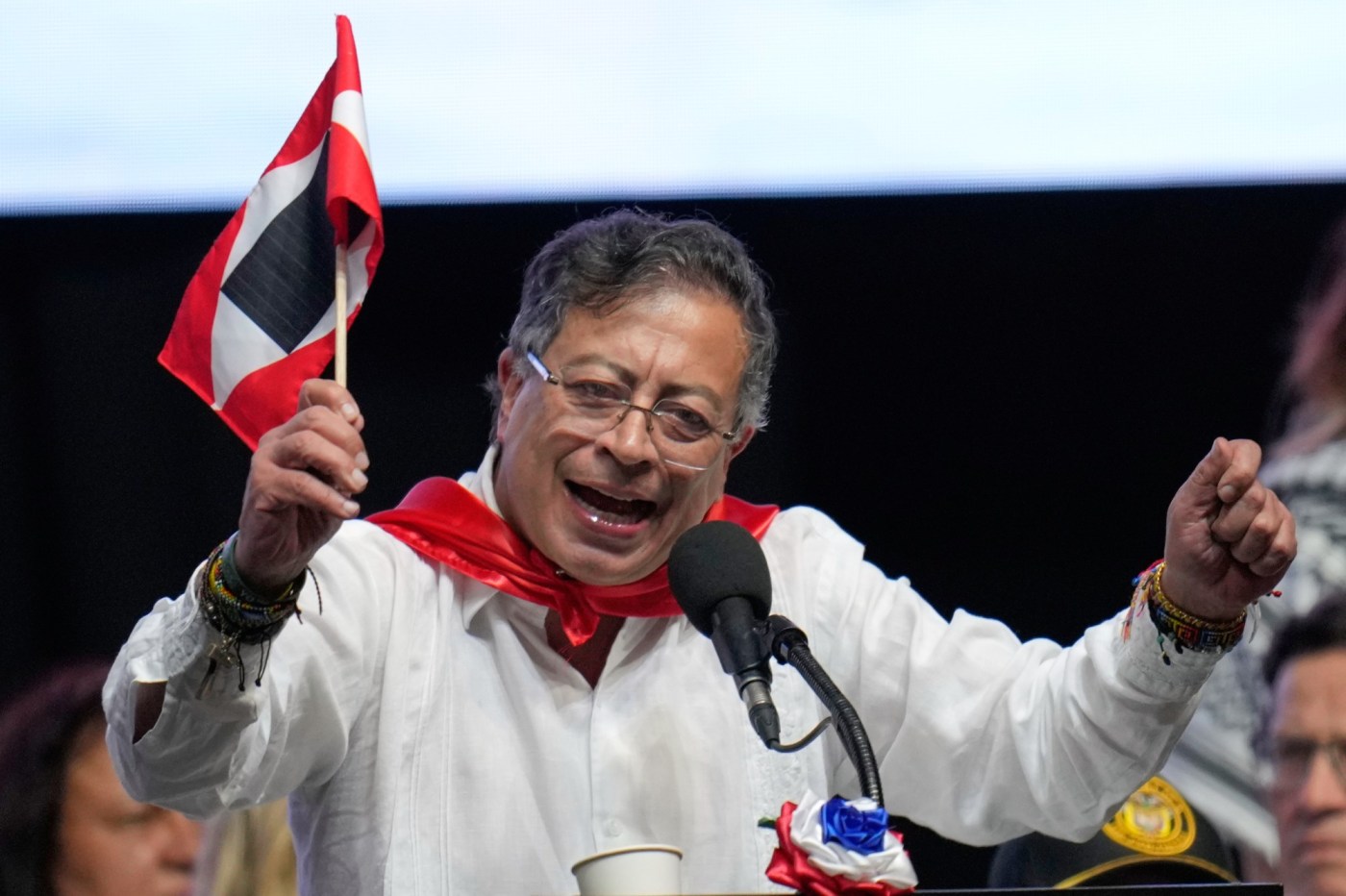
WASHINGTON (AP) — The Trump administration imposed sanctions Friday on Colombian President Gustavo Petro, his family and a member of his government over accusations of involvement in the global drug trade, sharply escalating tensions with the leftist leader of one of the closest U.S. allies in South America.
The Treasury Department leveled the penalties against Petro; his wife, Veronica del Socorro Alcocer Garcia; his son, Nicolas Fernando Petro Burgos; and Colombian Interior Minister Armando Alberto Benedetti.
Petro “has allowed drug cartels to flourish and refused to stop this activity,” Treasury Secretary Scott Bessent said in a statement. “President Trump is taking strong action to protect our nation and make clear that we will not tolerate the trafficking of drugs into our nation.”
The move ramps up a growing clash between the Republican U.S. president and Colombia’s first leftist leader, notably over deadly American strikes on alleged drug-carrying boats off South America.
This week, the Trump administration expanded its crackdown to the eastern Pacific Ocean, where much of the cocaine from the world’s largest producers, including Colombia, is smuggled. And in an escalation of military firepower in the region, the U.S. military is sending an aircraft carrier to the waters off South America, the Pentagon announced Friday.
The U.S. last month added Colombia, the top recipient of American assistance in the region, to a list of nations failing to cooperate in the drug war for the first time in almost 30 years.
The penalties were expected after Trump recently said he would slash assistance to Colombia and impose tariffs on its exports, referring to Petro on social media in recent days as “an illegal drug leader.”
“He’s a guy that is making a lot of drugs,” Trump told reporters in the Oval Office on Wednesday. “He better watch it, or we’ll take very serious action against him and his country.”
After Trump accused him of having ties to drug trafficking, Petro on Wednesday said he would resort to the U.S. court system to defend himself.
“Against the calumnies that high-ranking officials have hurled at me on U.S. soil, I will defend myself judicially with American lawyers in the U.S. courts,” Petro wrote on X without naming Trump but citing a news report about his comments.
A day earlier, Petro’s anti-drug policy was the subject of a meeting between him and the U.S. chargé d’affaires in Colombia, John T. McNamara. McNamara also met with Foreign Minister Rosa Yolanda Villavicencio Mapy on Thursday.
Related Articles
Trump-Kim meeting speculation flares ahead of US president’s visit to South Korea
Trump says a Canadian ad misstated Ronald Reagan’s views on tariffs. Here are the facts and context
Government shutdown likely means no inflation data next month for 1st time in decades
How a 2018 Supreme Court decision paved the way for meteoric growth in legal sports betting
Ukraine’s Zelenskyy urges US to broaden Russian oil sanctions and seeks long-range missiles
Petro has repeatedly defended his policy, which moves away from a repressive approach and prioritizes reaching agreements with growers of coca leaf — the raw material for cocaine — to encourage them to switch to other crops, pursuing major drug lords and combating money laundering. He has said his government has achieved record cocaine seizures and questioned U.N. figures showing record coca leaf cultivation and cocaine production.
The amount of land dedicated to cultivating coca, the base ingredient of cocaine, has almost tripled in the past decade to a record 253,000 hectares (625,000 acres) in 2023, according to the latest report available from the U.N. Office on Drugs and Crime. That is about triple the size of New York City.
The Trump administration has surged military ships and planes to Latin America to target traffickers accused of funneling drugs to the U.S. Petro has pushed back against the strikes that have killed at least 37 people since they started last month, with the latest two targeting vessels in the eastern Pacific, where Colombia has a coastline.
Petro has repeatedly feuded with Trump this year. Petro initially rejected U.S. military flights of deported migrants, leading Trump to threaten tariffs. The State Department said it would revoke Petro’s visa when he attended the U.N. General Assembly in New York because he told American soldiers to disobey Trump’s orders.
Lee reported from Jerusalem. Associated Press writers Will Weissert in Washington and Regina Garcia Cano in Caracas, Venezuela, contributed to this report.
Russell struggled throughout the series, and had just committed yet another turnover when Finch decided to remove his starting point guard from the floor.
Minnesota still lost the game, as Karl-Anthony Towns and Anthony Edwards took one rushed, bad shot after another down the stretch without the ball even touching McLaughlin’s hands.
But a tone was set — Finch was coaching to win. That wouldn’t be sacrificed in fear of hurt feelings, no matter your place in the perceived pecking order.
The coach demonstrated conviction in his instincts. That’s when he’s been at his best throughout his tenure in Minnesota, from benching Edwards in the fourth quarter of a game in his rookie season to send a message about his lack of defense to sitting Towns down the stretch of certain games during the 2023-24 campaign in favor of a rolling Naz Reid.
If Finch felt you were the best person to help Minnesota win, you would be on the floor.
It did feel as though the coach veered away from that M.O. at times last season, when Minnesota was married to the eight players atop its rotation.
The logic made sense. These were the eight best players. They needed to be given every opportunity to gel, even through struggles, in an attempt to be the best version of themselves together when it mattered most.
And, to some degree, the strategy was validated by a return trip to the Western Conference Finals. But the road was rocky and flush with frustration as Minnesota repeatedly banged its head on the wall over the first five months of the regular season.
Finch has had guys he’s trusted to no end in the past. He stuck with Kyle Anderson through thick and thin, but that was because he firmly believed the pros Anderson provided far out-weighed the cons.
Last year may have been the first season in which it occasionally felt as though Finch was beholden to a rotational hierarchy, for one reason or another.
That certainly wasn’t the case Wednesday in Portland.
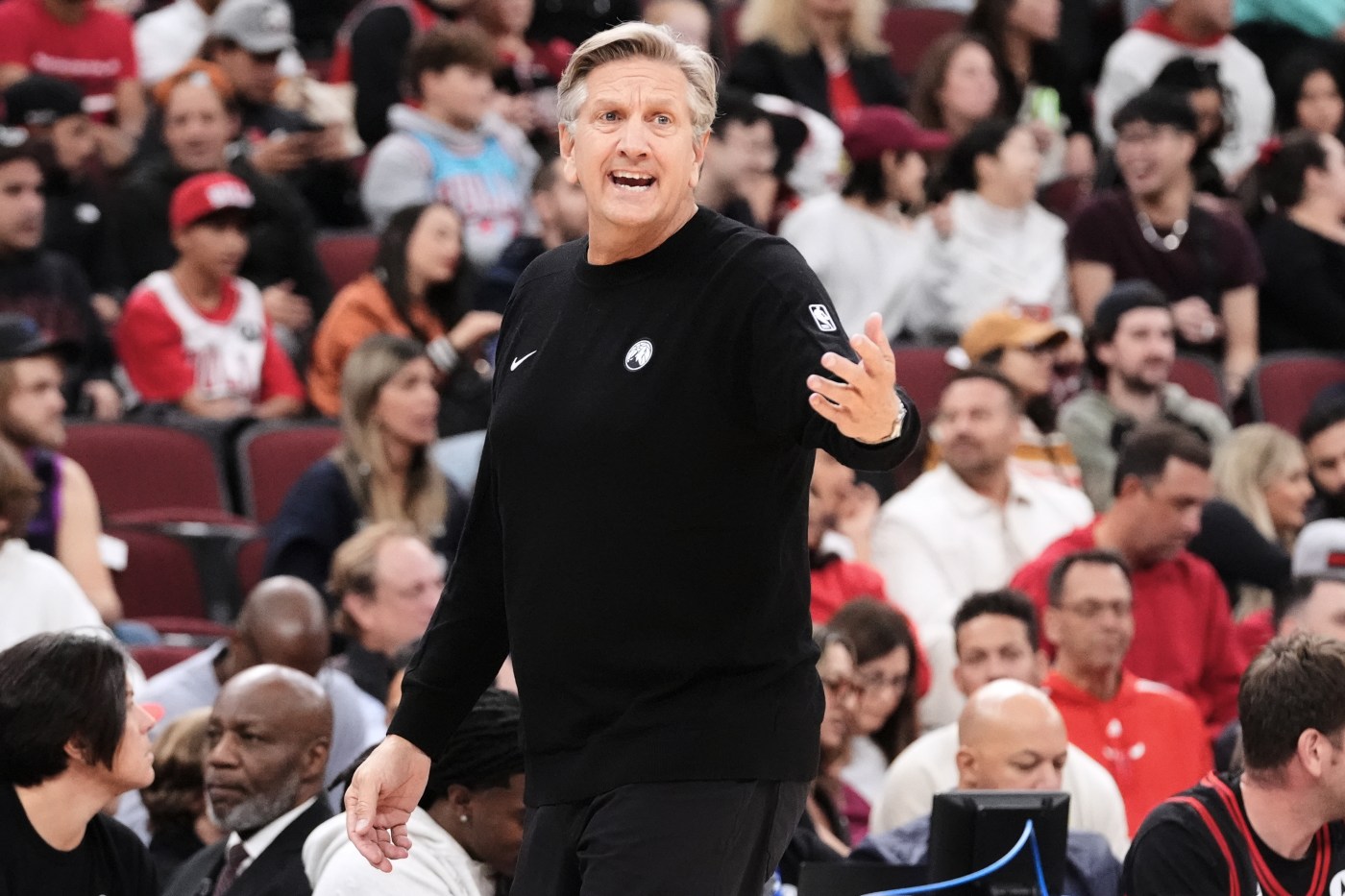
Finch made the call to start Donte DiVincenzo over veteran leader Mike Conley. And then, when neither played well through three quarters, the coach turned to … Bones Hyland?
The guard who re-joined Minnesota on a non-guaranteed deal just a month earlier was suddenly bringing the ball up the floor in the final frame of a tight season opener.
Over Conley. Over DiVincenzo. Over Rob Dillingham, the No. 8 overall pick from the 2024 NBA Draft.
Finch told reporters postgame he felt Minnesota needed someone who could handle Portland’s high-pressure defense on one end while also providing some resistance to the Blazers’ straight-line offensive drives.
The reserve played eight minutes, which Minnesota won by five points. His insertion proved to be the correction choice, and not one Finch likely would’ve made a year ago.
Draft stock and contract status were thrown out the window.
There will be many future games in which DiVincenzo or Conley plays well and take the reins late. Dillingham is sure to get chances over the course of the season. But, against Portland’s harassing, physical lineup, Hyland was the guy.
Naz Reid played just 20 minutes on a night when he struggled, as did DiVincenzo. Conley only played 13. Meanwhile, Terrence Shannon Jr. played 25 minutes off the bench.
In Finch’s mind, that’s who gave Minnesota the best chance to succeed in that situation.
“I’m going to leave myself the license to go anywhere I want with the guys,” Finch told reporters. “That includes who we might start, who we might finish with, who we play along the way. Everybody has to stay ready. Everyone is going to contribute to winning here.”
That’s a philosophy that truly holds players accountable to the standard of performance and winning mentality upon which Finch built the franchise’s foundation.
And, when it’s the guiding force behind his decisions, it’s when the coach is at his best.
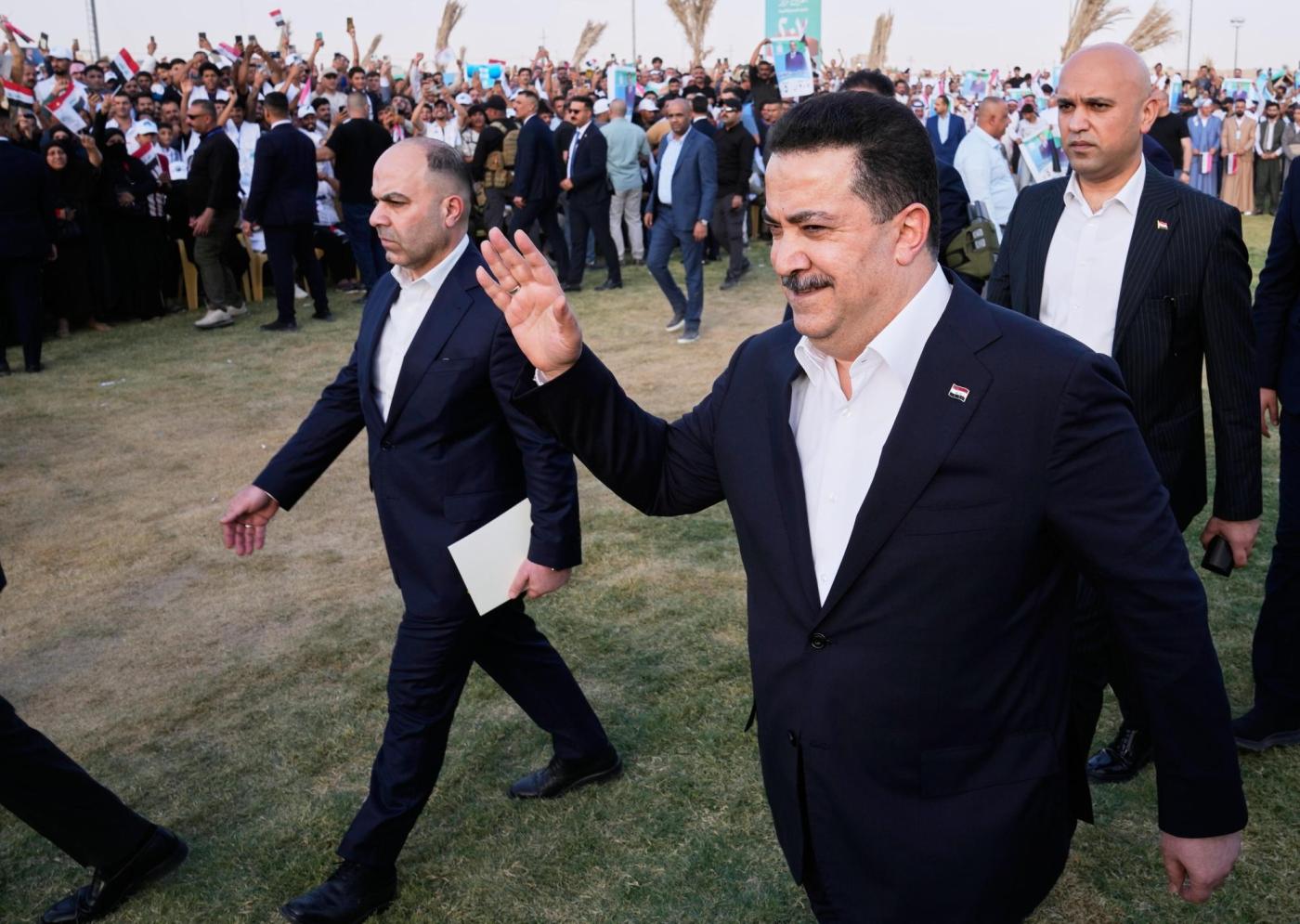
BAGHDAD (AP) — Iraq is weeks away from parliamentary elections that will set the country’s course during one of the Middle East’s most delicate moments in years.
Related Articles
Trump-Kim meeting speculation flares ahead of US president’s visit to South Korea
How a German freight lift became an unexpected social media star in the Louvre heist
What to know about Ireland’s election as the country votes for a new president
Ukraine’s Zelenskyy urges US to broaden Russian oil sanctions and seeks long-range missiles
Rubio tours US-led center in Israel overseeing the ceasefire in Gaza
While the ceasefire in Gaza may have tamped down regional tensions, fears remain of another round of conflict between Israel and Iraq’s neighbor, Iran. Iraq managed to stay on the sidelines during the brief Israel-Iran war in June.
Meanwhile, Baghdad faces increasing pressure from Washington over the presence of Iran-linked armed groups in Iraq.
Iraqi Prime Minister Mohammed Shia al-Sudani came to power in 2022 with the backing of a group of pro-Iran parties but has since sought to balance Iraq’s relations with Tehran and Washington.
The Nov. 11 vote will determine whether he gets a second term — rare for Iraqi premiers in the past.
Who’s missing from the elections
A total of 7,768 candidates — 2,248 women and 5,520 men — are competing for 329 parliament seats.
The strongest political factions running include Shiite blocs led by former Prime Minister Nouri al-Maliki, cleric Ammar al-Hakim, and several linked to armed groups; competing Sunni factions led by former parliament speaker Mohammed al-Halbousi and current speaker Mahmoud al-Mashhadan i; and the two main Kurdish parties, the Kurdistan Democratic Party and the Patriotic Union of Kurdistan.
The contest is just as notable for who is absent.
The popular Sadrist Movement, led by influential Shiite cleric Muqtada al-Sadr, is boycotting. Al-Sadr’s bloc won the largest number of seats in the 2021 elections but later withdrew after failed negotiations over forming a government, and it continues to stay out of elections.
In the suburb known as Sadr City on Baghdad’s outskirts, a banner posted on one street read, “We are all boycotting upon orders from leader al-Sadr. No to America, no to Israel, no to corruption.”
The Victory Coalition, a smaller group led by former Prime Minister Haider al-Abadi, also announced a boycott, alleging corruption in the process.
Meanwhile, some reformist groups emerging from mass anti-government protests that began in October 2019 are participating but have been bogged down by internal divisions and lack of funding and political support.
Vote-buying and political violence
There have been widespread allegations of corruption and vote-buying. Political analyst Bassem al-Qazwini described these elections as “the most exploited since 2003 in terms of political money and state resources.”
A campaign official, who spoke on condition of anonymity because he was talking about alleged illegal conduct, asserted that almost all candidates, including major blocs, are distributing money and buying voter cards, with the price of a card going as high as 300,000 Iraqi dinars (around $200).
The Independent High Electoral Commission asserted its commitment to conducting a fair and transparent process, saying in a statement to The Associated Press that “strict measures have been taken to monitor campaign spending and curb vote-buying.”
It added that any candidate found guilty of violating laws or buying votes will be “immediately disqualified.”
Campaigning has been marred by political violence.
On Oct. 15, Baghdad Provincial Council member Safaa al-Mashhadani, a Sunni candidate in the al-Tarmiya district north of the capital, was killed by a car bomb. Two people were arrested on suspicion of the killing, the First Karkh Investigative Court said Thursday. It did not name the suspects but said the crime was believed to be “related to electoral competition.”
Aisha Ghazal Al-Masari, a member of parliament from the Sovereignty Alliance to which al-Mashhadani belonged, described the killing as “a cowardly crime reminiscent of the dark days of assassinations,” referring to the years of security vacuum after Iraq’s former autocratic leader, Saddam Hussein, was ousted in the 2003 U.S.-led invasion of Iraq.
The role of militias
Political parties linked to Iran-backed militias are leveraging their significant military and financial influence.
A vendor selling clothes in front of an Iraqi parliamentary elections banner in Baghdad, Iraq, Oct. 16, 2025. (AP Photo/Hadi Mizban)
A local walks past a banner calling for a boycott of the elections in Sadr City on the outskirts of Baghdad, Oct. 17, 2025. (AP Photo/Hadi Mizban)
A general view of Basra show election banners for the Iraqi parliament in Basra, Iraq, Oct.12, 2025. (AP Photo/Nabil al-Jourani)
A worker prepares election banners for the Iraqi parliament in Basra, Iraq, Oct. 12, 2025. (AP Photo/Nabil al-Jourani)
1 of 4
A vendor selling clothes in front of an Iraqi parliamentary elections banner in Baghdad, Iraq, Oct. 16, 2025. (AP Photo/Hadi Mizban)
They include the Kataib Hezbollah militia, with its Harakat Huqouq (Rights Movement) bloc, and the Sadiqoun Bloc led by the leader of the Asaib Ahl al-Haq militia, Qais al-Khazali.
The Popular Mobilization Forces, a coalition of militias that formed to fight the Islamic State group, was formally placed under the control of the Iraqi military in 2016 but in practice still operates with significant autonomy.
Al-Sudani told journalists recently that armed factions that have transformed into political entities have the constitutional right to participate in elections.
“We cannot prevent any group from engaging in politics if they renounce arms. This is a step in the right direction,” he said.
However, several militias with affiliated political parties participating in the elections are still active and armed.
The U.S. State Department said in a statement that Secretary of State Marco Rubio spoke with al-Sudani on Monday and “highlighted the urgency in disarming Iran-backed militias that undermine Iraq’s sovereignty, threaten the lives and businesses of Americans and Iraqis, and pilfer Iraqi resources for Iran.”
Al-Sudani seeks another term
Al-Sudani has positioned himself as a pragmatist focused on improving public services. Polling shows that Iraqis are relatively positive about the country’s situation.
Al-Mustakella Research Group, affiliated with Gallup International Association, found that over the past two years, for the first time since 2004, more than half of Iraqis polled believed the country is heading in the right direction.
In the latest poll, in early 2025, 55% of Iraqis surveyed said they had confidence in the central government.
However, only one Iraqi prime minister, Maliki, has served more than one term since 2003.
Ihsan al-Shammari, professor of strategic and international studies at Baghdad University, said that the premiership “does not depend solely on election results but on political bloc agreements and regional and international understandings” to form a government.
He added that disagreements over control of state institutions that have arisen between al-Sudani and some leaders in the Shiite Coordination Framework bloc that brought him to power “may hinder his chances of a second term.”
Some Iraqis said they don’t have high hopes for the country, no matter what the election outcome.
Baghdad resident Saif Ali said he does not plan to vote, pointing to lagging public services.
“What happened with regards to electricity from 2003 until now? Nothing,” he said, referring to regular power cuts. ”What happened with water? Drought has reached Baghdad. These are the basic services, and they are not available, so what is the point of elections?”