Pro-Life, Anti-Death Penalty

posted in: All news | 0

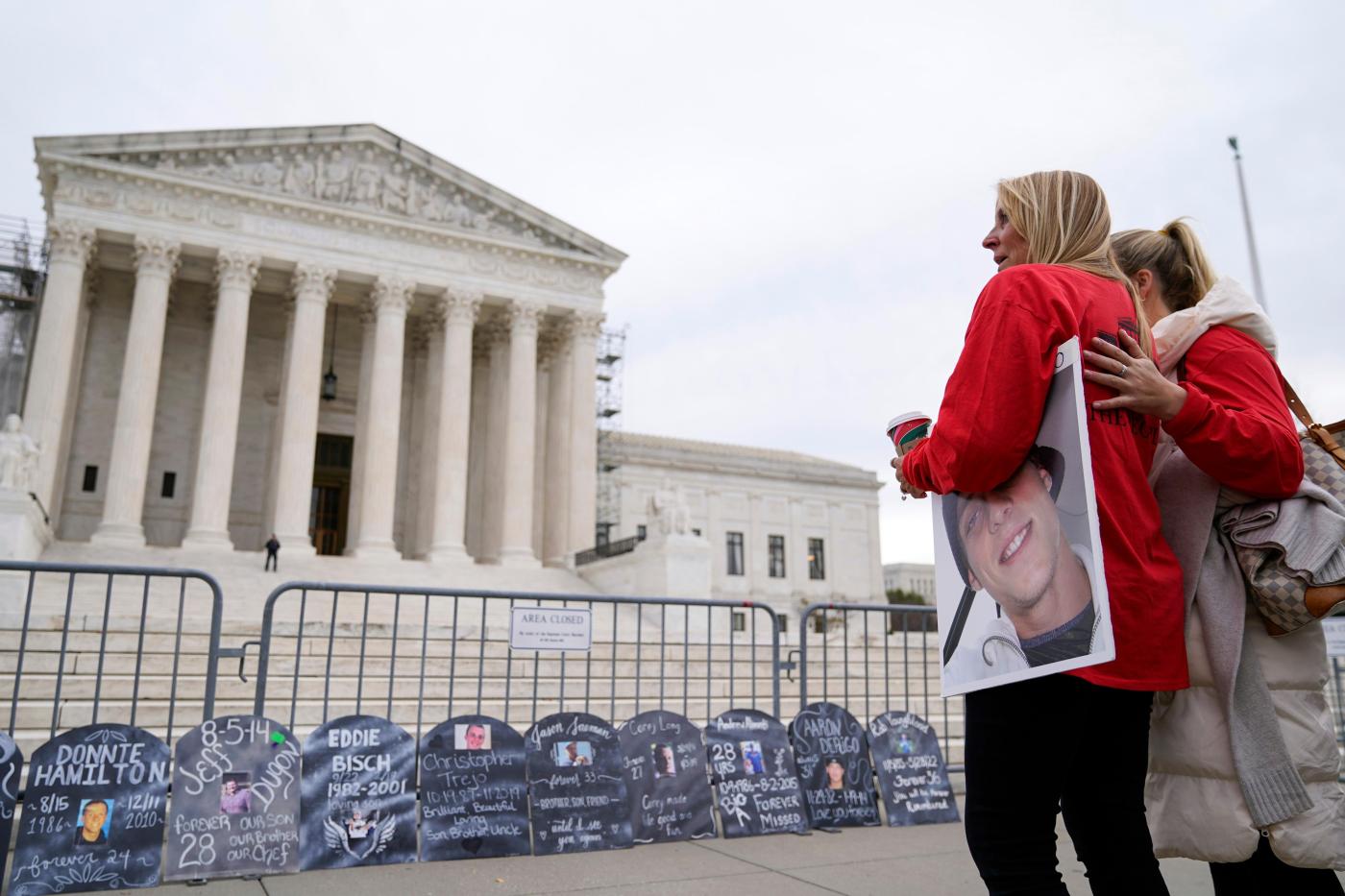
National support for the death penalty is at an all-time low, with younger adults from both major political parties spurning capital punishment. But in Texas’ execution chamber, the pace of lethal injections has not let up, even as some condemned Texans—including Melissa Lucio and Robert Roberson—have had their high-profile executions halted with only days or hours to spare.

Recent outcry against the state’s death penalty has come from both sides of the aisle. On the day of Roberson’s scheduled execution last year, a bipartisan group of legislators made the unprecedented move to subpoena him for a public hearing—scheduled after he was supposed to die—in a successful effort to forestall the killing so the courts could consider his innocence. (On October 9 this year, Roberson’s execution was stayed by the state’s top criminal court a week before he would have died.)

Nan Tolson, who previously worked as chief spokesperson for Governor Greg Abbott, leads the Texas chapter of the national network Conservatives Concerned About the Death Penalty. She sees the punishment as rife with problems: from a political angle or a faith perspective, and as a public safety tool. Since founding the Lone Star State’s affiliate in 2023 as part of the Texas Coalition to Abolish the Death Penalty, she said the organization has engaged with thousands of Republicans across the state—creating what she calls a “safe space for conservatives to talk to like-minded people about the death penalty”—bringing hundreds into the fight against capital punishment. Tolson, 30, was selected for a “40 Under 40” fellowship in 2024 by the Texas Federation of Republican Women for her activism.

The Texas Observer spoke with her in mid-September about the conservative argument against the death penalty, how Texas’ top Republicans think, and the idea of redemption. 

TO: You’re a notable young voice in Texas conservatism. Have you gotten pushback from other Republicans for your views on the death penalty? 

I would say so. There’s pushback on all sides when it comes to the death penalty, which is something I was prepared for. It’s a controversial and emotional topic. But I’ve received more positive reception and curiosity from Republicans than pushback. I’ve been pleasantly surprised by the number of people who are genuinely interested in what we’re doing and want to learn more, even if they may not agree.

The death penalty is an issue a lot of people from all political parties are on the fence about. What made you realize you were firmly against it?

When I was a freshman at Baylor, we had a guest speaker named Shane Claiborne who came to chapel one morning, and he essentially laid out an elevator pitch on why Christians should oppose the death penalty. I had never heard that argument. It totally changed my mind in that moment. 

Have you noticed any change when high-profile cases like Melissa Lucio’s and Robert Roberson’s are in the news? 

Definitely. We have certainly seen a vast number of Republicans supporting Robert. We had the Texas Young Republicans Federation sign onto a letter asking for a new trial; there are very prominent Republicans in the Legislature who are supporting him; and when we have spoken to different conservative groups across Texas, oftentimes, before we even bring up his case, we have people in the audience asking us, “What’s the status with Robert Roberson’s case? I can’t believe this is happening. This has made me question the death penalty.” 

Would you say the execution of innocent people is a significant problem in Texas?

Absolutely. When we’ve talked to conservatives who are against the death penalty or questioning it, the most common thing we’ll hear about is the risk of wrongful execution. The data backs it up. There is strong evidence that Texas has executed at least seven innocent people. As conservatives, we know that the government is not going to get it right every single time.

Why is opposition to the death penalty something you think can be bipartisan, given the big political divides on many criminal justice issues?

The death penalty is extremely fiscally irresponsible. It costs more to sentence someone to death and execute them than to sentence them to life in prison without parole. It’s also an ineffective deterrent to violent crime. The evidence is inconclusive at best as to whether or not it keeps people from committing homicide. 

There’s also a very strong pro-life argument. As a society, we are capable of keeping people safe, and we can do that while honoring that every life has inherent dignity and worth, and that includes people on death row who have committed unspeakable acts.

Are there any cases of Texans who have been executed or exonerated, or who are still on death row, that you think more people should know about? 

Two come to mind that I have worked on over the past couple of years. One is Ramiro Gonzales. He was 100 percent guilty of the crime that he committed when he was essentially a teenager. He ended up on death row for several years. He was finally executed last year, and the person that the State of Texas executed was not the person who committed the crime [because Gonzales had changed]. 

This is something we’ve seen with many people who are executed in Texas. They commit murder at a very young age. They come into prison a very messed-up person, and then they’re given structure, tools, resources, and they’re able to come to a place where they express remorse for their crimes. They apologize to the victims’ families. Many of them even become Christian, or they’re exposed to another form of faith, and they’re completely transformed. It’s hard when the State of Texas gives people like Gonzales the resources to do that, but then we essentially say, “Well, it doesn’t really matter. Your life is still expendable, and we’re going to execute you anyway.” 

There was another gentleman who was executed last year named Ivan Cantu, out of the Dallas area. And he is one of those that we believe might have been wrongfully executed. 

You spent time working at the Capitol with the state’s highest-level Republicans. What did you learn about how the Republican Party thinks about things? 

Republicans and conservatives, especially in Texas, we pride ourselves on being tough on crime. But we need to be willing to think outside the box and recognize what’s working and what’s not. 

Another thing that stuck out to me is that there’s a lot of nuance. There’s not really one way to be a Republican or one way to be a Democrat or a conservative. And I think that’s a positive and something that should be encouraged. Half of what we do is show conservatives that it’s OK to be opposed to the death penalty. It doesn’t mean that you’re not a Republican, that you are not a conservative, that you’re a traitor to your values or your party or your community. It means that you were willing to think critically about a really important issue and recognize that it’s actually not aligned with your values. 

The majority of Republicans nationwide favor the death penalty for murder cases, and Donald Trump has been publicly pushing prosecutors to seek the death penalty. Do you ever feel like you’re fighting an uphill battle? 

I do think it’s an uphill battle, but it’s not an impossible battle. We are not going to end the death penalty overnight. That has never been the goal, and that wouldn’t be realistic. But I do think what is realistic is educating conservatives about the death penalty and giving them space to question it. We certainly don’t want to come out of the gate saying, “You’re wrong about the death penalty and we need to end it tomorrow.” If we approach it strategically, we are going to be able to make progress. 

We also approach everything with a lot of empathy and understanding. There are people who are victims of horrible, unspeakable crimes. It’s normal for us to want justice, or even revenge. It’s important for us to embrace that but also recognize that even if we have this emotional drive to seek revenge and right that wrong, it doesn’t mean that, in a practical sense or in reality, the death penalty is the right way to do it.

This interview has been edited for length and clarity.

The post Pro-Life, Anti-Death Penalty appeared first on The Texas Observer.

US stocks are drifting around their records as AMD rallies

posted in: All news | 0

By STAN CHOE, Associated Press Business Writer

NEW YORK (AP) — U.S. stocks are drifting in mixed trading on Wednesday.

Related Articles


US Mint in Philadelphia to press final penny as the 1-cent coin gets canceled


Small grocers and convenience stores feel an impact as customers go without SNAP benefits


Mega Millions jackpot grows to $965 million for Friday’s drawing


Today in History: November 12, Ellis Island closes its doors


A happy circumstance: Bob Ross paintings sell for more than $600K to help public TV stations

The S&P 500 added 0.1% and remains near the edge of its all-time high set a couple weeks ago. The Dow Jones Industrial Average jumped 416 points, or 0.9%, after setting its own record the day before, while the Nasdaq composite was 0.3% lower, as of 9:50 a.m. Eastern time.

Advanced Micro Devices was one of the strongest forces lifting the market, and it rallied 5.9% after CEO Lisa Su said the chip company is expecting better than 35% of annual compounded growth in revenue over the next three to five years. She credited “accelerating AI momentum.”

Superstar stocks benefiting from the artificial-intelligence frenzy have been shaky recently, as investors question whether they can add much more to their already spectacular gains. Nvidia, for example, came into the day with a 4.6% drop for the month so far after it more than doubled in four of the last five years.

Their sensational growth has been one of the top reasons the U.S. market has hit records despite a slowing job market and high inflation. But their prices have shot so high that critics say they’re reminiscent of the 2000 dot-com bubble, which ultimately burst and dragged the S&P 500 down by nearly half.

Similar questions are also dogging the broad U.S. stock market, though other stocks don’t look as expensive as Big Tech and AI superstars.

One way for stock prices to look less expensive is for companies to deliver big growth in profits.

IBM rose 3.2% and was one of the biggest reasons for the Dow’s strong performance after announcing progress in “bringing truly useful quantum computing to the world,” according to Jay Gambetta, director of IBM Research. Companies across the industry are racing to develop quantum computing in order to solve complex problems beyond the reach of classical computers.

On Holdings jumped 25% after the shoe and apparel company reported a much bigger profit for the latest quarter than analysts expected.

But even beating expectations may not be enough for some stocks. Circle Internet Group fell 6.6% even though its profit for the latest quarter trounced analysts’ estimates.

The stock price of the U.S.-based issuer of one of the most popular cryptocurrencies has been generally falling since it got near $300 in June, just a few weeks after its initial price offering of $31.

Another way for stock prices to look less expensive is if interest rates fall because bonds paying lower yields usually encourage investors to pay higher prices for other investments.

In the U.S. bond market, where trading resumed following Tuesday’s Veterans Day holiday, the yield on the 10-year Treasury eased to 4.07% from 4.13% late Monday.

Traders still see a roughly two-in-three chance that the Federal Reserve will cut its main interest rate at its next meeting in December, according to data from CME Group. That’s despite Fed Chair Jerome Powell saying a third cut for the year to shore up the slowing job market is far from a sure thing. Fed officials are worried about the potential of giving still-high inflation more fuel.

In stock markets abroad, indexes rose across much of Europe and Asia.

France’s CAC 40 jumped 1.2%, and South Korea’s Kospi gained 1.1% for two of the world’s bigger gains.

AP Business Writers Yuri Kageyama and Matt Ott contributed.

Is COVID during pregnancy linked to autism? What a new study shows, and what it doesn’t

posted in: All news | 0

By Céline Gounder, KFF Health News

A large study from Massachusetts has found that babies whose mothers had COVID-19 while pregnant were slightly more likely to have a range of neurodevelopmental diagnoses by age 3. Most of these children had speech or motor delays, and the link was strongest in boys and when the mother was infected late in pregnancy.

The increase in risk was small for any one child, but because millions of women were pregnant during the pandemic, even a small increase matters. The study doesn’t prove that COVID infection during pregnancy causes autism or other brain conditions in the fetus, but it suggests that infections and inflammation during pregnancy can affect how a baby’s brain grows, something scientists have seen before with other illnesses. It’s a reason to help pregnant women avoid COVID and to keep a close eye on children who were exposed in the womb.

What the study found

Researchers at Massachusetts General Hospital examined medical records from more than 18,000 mothers and their children born from March 2020 through May 2021, before vaccines were widely available to pregnant women. Because everyone giving birth during that period was tested for COVID, the team could clearly see which pregnancies were exposed to the virus causing it.

About 5% of those mothers had COVID while pregnant. Their children were modestly more likely to be diagnosed with a neurodevelopmental condition by age 3 than those whose mothers weren’t infected, even after accounting for differences in maternal age, race, insurance status, and preterm birth.

The link appeared strongest among boys and when infection occurred in their mother’s third trimester. Still, most children in both groups showed typical development.

“This was a very clean group to follow,” said Andrea Edlow, a maternal-fetal medicine specialist at Mass General and one of the study’s authors. “Because of universal testing early in the pandemic, we knew who had COVID and who didn’t.”

Independent authorities say COVID, which causes a powerful immune response in some people, fits the biological pattern seen with other infections in pregnancy. Alan Brown, a professor of psychiatry and epidemiology at Columbia University who studies maternal infection and brain development and was not involved in this research, explained, “COVID would be a very strong candidate for it to happen because the amount of inflammation is very extreme.”

How might infection affect brain development?

Scientists are still piecing together how various infections during pregnancy can affect fetal development. Severe illness can cause inflammation that disrupts brain growth or can trigger preterm birth, which carries its own risks.

“There’s a long history of evidence showing that maternal infection can slightly raise the risk for many neurodevelopmental disorders,” said Roy Perlis, the vice chair for research in psychiatry at Massachusetts General Hospital and co-author of the new study.

Edlow’s lab is investigating how infection and inflammation may interfere with brain development. In a healthy brain, immune cells help shape developing neural circuits by trimming away extra or unnecessary connections, a process known as “synaptic pruning,” which sculpts the brain’s wiring. When a mother’s immune system is activated by infection, inflammatory molecules can reach the fetal brain and alter the pruning process.

Animal studies support Edlow’s hypothesis. When scientists trigger inflammation in pregnant mice, their offspring often show changes in how brain cells grow and connect, changes that can alter learning and behavior.

Related Articles


Mounds View veteran overcame mental health challenges, now helps fellow vets


Biovac starts trials on South Africa’s first domestically developed cholera vaccine


Calisthenics are making a comeback. Is body weight enough to get a good workout?


ByHeart recalls all baby formula sold nationwide as infant botulism outbreak grows


At The Hollow in Florida, the ‘medical freedom’ movement finds its base camp

Why late pregnancy and why boys?

In Edlow and Perlis’ study, the link between COVID and developmental delays was strongest when infection occurred late in pregnancy, during the third trimester. That’s also when the fetal brain is growing most rapidly, forming and refining millions of neural connections.

“When we think of organ development, we think earlier in pregnancy, but the brain is an exception in this regard, where there’s a massive amount of brain development in the third trimester. And that continues after birth,” Perlis said. “It is entirely plausible that the third trimester is a period of vulnerability specifically for brain development.”

But not all researchers agree that the third trimester is uniquely vulnerable. Brian Lee, a professor of epidemiology at Drexel University, cautioned that because most mothers in the study were tested at delivery, there were simply more late-pregnancy infections to analyze. “That gives the study more power to find a difference in the third trimester,” he said. “It doesn’t prove earlier infections aren’t important.”

The study also found stronger effects in boys. That pattern is familiar: Boys are generally more likely than girls to have speech or motor delays and to be diagnosed with autism. Researchers suspect that male fetuses may be more susceptible to stress and inflammation, though the biology isn’t fully understood.

What the study can and can’t show

Edlow and Perlis are careful to say the study shows an association, not proof that COVID infection in pregnancy causes developmental problems. Many other factors could explain the correlation.

Mothers who get sick with COVID may have other health issues, such as obesity, diabetes, or mental health conditions, that increase the risk of developmental delays in children. “Persons with mental disorders are much more likely to get COVID. Women with mental disorders are much more likely to have kids with neurodevelopmental problems,” Lee said. “Mothers with worse physical health are also at higher risk of having children with neurodevelopmental problems.”

Lee’s research has shown that even infections before or after pregnancy can be linked to autism, suggesting that shared genetics or environment, rather than the infection itself, could be at play. That’s why experts say much larger, longer studies are needed to understand the extent of any risk from the infection.

Edlow, Perlis, and their team plan to follow the children in their study as they grow older to see whether early differences persist or fade. They’re also studying how inflammation during pregnancy affects the placenta and fetal brain, and how to counteract these effects.

What about vaccination?

Because this study followed pregnancies from early in the pandemic, it doesn’t answer whether vaccination changes the risk. But other research offers reassurance.

A large national study in Scotland found no difference in early developmental outcomes between children whose mothers were vaccinated and those who weren’t. Another study in the U.S. found the same: no link between prenatal COVID vaccination and developmental delays through 18 months. Both align with decades of data showing that vaccination during pregnancy is safe for both the mother and the baby.

“Vaccination is a short spike … your immune system revs up, then it goes back to normal,” Edlow said. “COVID [infection] is much more prolonged, unpredictable, and people can get … a dysregulated immune phenomenon that really doesn’t exist in vaccine responses.”

What this means for parents and clinicians

Since late 2020, there’s been widespread confusion and misinformation about the safety of COVID vaccination during pregnancy. Some women have hesitated to get vaccinated out of fear it might harm their baby. But the evidence since then has been clear: COVID vaccines are safe in pregnancy. The American College of Obstetricians and Gynecologists strongly recommends COVID vaccination to protect both mother and child.

Experts say the broader lesson is that pregnancy is a period of vulnerability, and prevention matters, not only for COVID, but other infections as well.

Janet Currie, a professor of economics at Yale University, said these risks remain “underappreciated,” despite decades of evidence. “Even though the flu vaccine is recommended for pregnant women, very few pregnant women get it,” she said. “Physicians seem to be reluctant to vaccinate pregnant women.”

As Gil Mor, scientific director of the C.S. Mott Center for Human Growth and Development at Wayne State University in Detroit, put it, “Protecting the mother is protecting the long-term health of the offspring. … The best intervention is vaccination.”

A century-old echo

The idea that what happens in the womb can shape life after birth took root with studies of famine, like the Dutch “Hunger Winter” in the final months of World War II. In 1944 and 1945, as German forces blockaded the western Netherlands, rations fell to just a few hundred calories a day. Thousands died of starvation, and women pregnant during that period gave birth to babies who later faced higher risks of heart disease, diabetes, and schizophrenia. The episode became a cornerstone of the “fetal origins” idea, that deprivation or stress in pregnancy can have lifelong effects.

The 1918 flu pandemic broadened that idea to infection. Babies exposed to influenza in utero later showed small but lasting differences in education and earnings, a sign that illness during pregnancy could affect brain development. Researchers in Taiwan, Sweden, Switzerland, Brazil, and Japan found similar consequences. Some argued that those findings reflected the disruptions of World War I, not the flu itself. But later studies, including those from the United Kingdom and Finland, have strengthened the case for a biological effect, reinforcing that the infection itself, not wartime upheaval, was the key driver.

“It isn’t simply influenza that can alter fetal neurodevelopment,” Kristina Adams Waldorf, a professor of obstetrics and gynecology at the University of Washington, explained. “Many types of infections … in the mother can be transmitted as a signal to the fetus, which can alter its brain development.”

A century later, the same question has returned with COVID: Could infection during pregnancy subtly shape how children grow and learn? The new Massachusetts General Hospital study offers an early look at an answer.

©2025 KFF Health News. Distributed by Tribune Content Agency, LLC.

Atlanta Fed president Bostic to retire in February, opening seat on key committee

posted in: All news | 0

By CHRISTOPHER RUGABER, Associated Press Economics Writer

WASHINGTON (AP) — Raphael Bostic, president of the Federal Reserve Bank of Atlanta, will retire at the end of his current term in February, opening up a new seat on the Fed’s interest-rate setting committee at a time that President Donald Trump is seeking to exert more control over the central bank.

Related Articles


Trump urges Israel to pardon Netanyahu, sparking concerns over US influence


Grijalva will be sworn in as the House’s newest member, paving the way for an Epstein files vote


House returns for vote to end the government shutdown after nearly 2 months away


Top diplomats will talk with Ukraine’s foreign minister at the G7 meeting in Canada


Appeals court to hear arguments on law cutting Planned Parenthood Medicaid funds

As president of one of the Fed’s 12 regional banks, Bostic, 59, serves on the 19-member committee that meets eight times a year to decide whether to change a key short-term interest rate that influences borrowing costs throughout the economy. Only 12 of the 19 participants vote on rates at each meeting. The regional Fed presidents rotate as voters, and the Atlanta Fed’s president will next vote in 2027.

Bostic’s replacement will be selected by the Atlanta Fed’s board of directors, which are made up of local business and community leaders, not the Trump administration. The terms of all the regional Fed presidents end in 2026.

Bostic is the first Black and openly gay president of a regional Fed bank in the Fed’s 112-year history. He has recently expressed concerns that inflation is still too high for the Fed to cut its key rate, and in recent months suggested he supported just one rate cut this year, while the Fed has cut twice.

The Fed’s Washington, D.C.-based board of governors will vote on whether to approve Bostic’s replacement. Trump has sought to gain more control over the Fed’s board, which would potentially give the administration more sway over the approval of the regional Fed presidents. Three of the current seven members of the board were appointed by Trump.

Trump has also sought to fire Fed governor Lisa Cook, which would have given him a fourth seat on the board. But Cook has sued to keep her seat and the Supreme Court has allowed her to stay in the job while the issue is fought out in court.

The regional Fed banks were set up specifically to ensure that voices outside Washington and New York would have a say in the central bank’s decisions.

Trump has repeatedly attacked the Fed this year for not cutting interest rates as quickly as he would prefer. The Fed reduced its key rate by a quarter-point at its September and October meetings, but Chair Jerome Powell said at a news conference last month that another cut in December is not a “foregone conclusion.”