South Africa foreign minister says charter flights part of a plan to clear Palestinians out of Gaza

posted in: All news | 0

By GERALD IMRAY

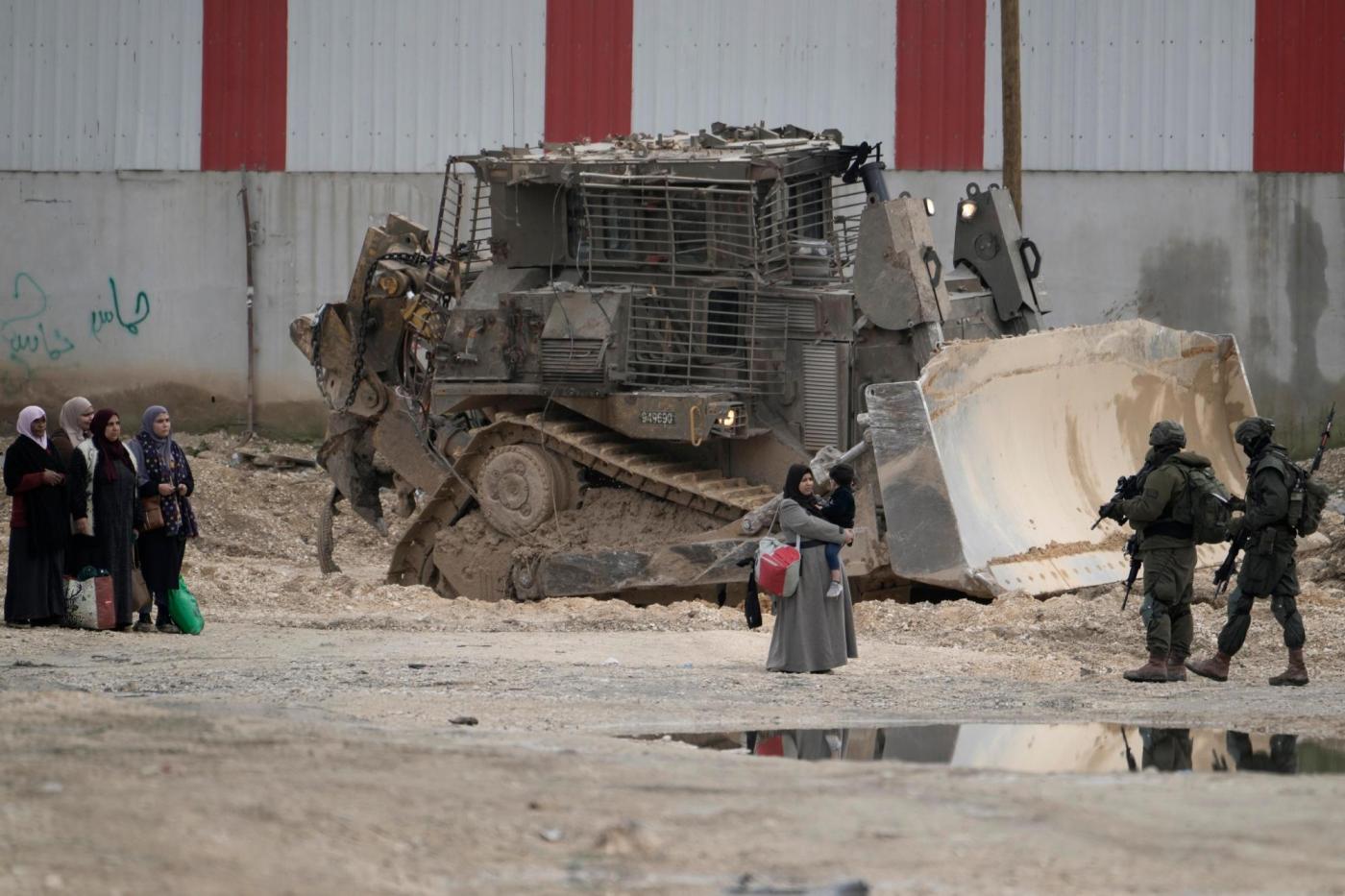
CAPE TOWN, South Africa (AP) — South Africa’s foreign minister on Monday criticized a plane that arrived in the country with more than 150 Palestinians on board as part of a “broader agenda” to clear out Gaza and the West Bank through a network of chartered flights.

Related Articles


President Donald Trump unveils ‘FIFA Pass’ to help World Cup travelers get their visas faster


UN is set to vote on the US plan for next steps in Gaza but it may all come down to Russia


Most of Gaza’s schools are destroyed and hundreds of thousands of children cannot go back to class


South Korea offers talks with North to prevent accidental armed clash at border


What to know about abductions of schoolchildren in Nigeria

Foreign Minister Ronald Lamola did not say who South Africa believed had organized the chartered plane that arrived in Johannesburg on Thursday with 153 Palestinians, but his comments were seen as accusing Israel of being behind a campaign to remove people from the Palestinian territories and send them to other countries.

“Indeed, we are suspicious as the South African government about the circumstances surrounding the arrival of the plane and the passengers that were in the plane,” Lamola said. “It does look like it represents a broader agenda to remove Palestinians from Palestine into many different parts of the world and it’s a clearly orchestrated operation because they are not only being sent to South Africa. There are other countries where such flights have been sent.”

The Israeli authority responsible for implementing civilian policies in the Palestinian territories said the Palestinians on the chartered plane to South Africa left the Gaza Strip after it received approval from a third country to receive them as part of an Israeli government policy allowing Gaza residents to leave. It didn’t name the third country.

Israel’s government has previously embraced a pledge by U.S. President Donald Trump to empty Gaza permanently of its more than 2 million Palestinians in a plan rights groups said would amount to ethnic cleansing. At the time, Trump said they would not be allowed to return.

Trump has since backed away from that plan and brokered a ceasefire between Israel and the militant group Hamas that allows Palestinians to remain in Gaza.

Israel held discussions with South Sudan earlier this year about the possibility of resettling Palestinians there from Gaza as part of a wider Israeli effort to facilitate mass emigration from the territory. It also floated resettlement plans for Palestinians with other African governments.

Saed Mahmoud, 42, reinforces his tent after it was damaged by a storm at a temporary camp on the beach in Deir al-Balah, in the central Gaza Strip, Saturday, Nov. 15, 2025. (AP Photo/Abdel Kareem Hana)

South African President Cyril Ramaphosa said there will be an investigation by intelligence services into who was behind the plane carrying Palestinians that arrived at Johannesburg’s main O.R. Tambo International Airport from the Ramon Airport in southern Israel via a stopover in Kenya.

“We do not want any further flights to come our way because this is a clear agenda to cleanse out the Palestinians out of Gaza and the West Bank,” Lamola said.

South African authorities said the Palestinians — who included families with children and a woman who was nine months pregnant — did not have the correct documents to travel to South Africa or proper exit documents from Israel. They were ultimately granted entry after being blocked from disembarking the plane by immigration officials and held onboard on the airport tarmac for around 12 hours in a move by South African authorities that was fiercely criticized by rights groups.

South Africa has long been a supporter of the Palestinians and a critic of Israel.

Palestinians move along a street flanked by the rubble of residential buildings destroyed in Israeli strikes in the Sheikh Radwan neighborhood of Gaza City, Friday, Nov. 14, 2025. (AP Photo/Jehad Alshrafi)

Lamola’s comments followed accusations made by South African civic groups that a Jerusalem-based organization called Al-Majd organized the charter to South Africa and has ties with Israel. The groups offered no evidence for their claims of Israeli ties.

An Israeli military official, speaking anonymously to discuss confidential information, said Al-Majd arranged the transport of about 150 Palestinians from Gaza to South Africa and acquired proper travel documents for them.

A South African NGO said that the chartered plane that arrived in Johannesburg last week was the second from Israel in recent weeks following a flight that landed on Oct. 28 with more than 170 Palestinians on board.

Follow AP’s Africa coverage at: https://apnews.com/hub/africa

Homeland Security agents make arrest dozens in North Carolina’s largest city. Here’s what to know

posted in: All news | 0

U.S. immigration agents have arrested more than 130 people across Charlotte, North Carolina during the first days of the latest enforcement blitz.

Related Articles


President Donald Trump unveils ‘FIFA Pass’ to help World Cup travelers get their visas faster


America will celebrate its 250th birthday next year. There’s a commemorative ornament for it


Trump says he will sell F-35s to Saudi Arabia on eve of crown prince’s Washington visit


FEMA acting chief David Richardson departs after 6 months on the job, officials say


Epstein files and affordability concerns threaten to knock Trump’s 2nd presidency off course

The immigration sweep that started over the weekend in Charlotte comes on the heels of similar operations in Los Angeles and Chicago.

It’s all part of Republican President Donald Trump’s mass deportation efforts that have sent the the military and immigration agents into Democratic-run cities.

Here’s what to know:

Why Charlotte?

The Department of Homeland Security says it’s focusing on North Carolina’s biggest city because of so-called sanctuary policies that limit cooperation between local authorities and immigration agents.

Charlotte is run by a Democratic mayor, and its police department doesn’t help with immigration enforcement while the county jail won’t hold immigration detainees so that federal agents can pick them up.

The Trump administration also has pointed to the fatal stabbing this summer of a Ukrainian refugee on a Charlotte light-rail train to argue that Democratic-led cities are failing to protect residents.

Local leaders argue that the enforcement isn’t needed, pointing to declining crime rates.

Are there many immigrants in Charlotte?

Charlotte and its suburbs in Mecklenburg County continue to be among the nation’s fastest-growing regions, driven a great deal by international migration.

U.S. Border Patrol agents look on, Monday, Nov. 17, 2025, in Charlotte, N.C. (AP Photo/Matt Kelley)

The city alone is home to about 950,000 residents, including roughly 150,000 people who are foreign-born, according to local officials. The biggest share come from Latin American countries.

How many people have been arrested?

So far, the U.S. Customs and Border Protection agency says more than 130 people have been arrested in Charlotte in just two days.

It says those arrested include people with records of gang membership, aggravated assault, shoplifting and other crimes. But the agency offered few other details, including how many of those had been facing charges.

What is the reaction in Charlotte?

In the days before agents arrived in Charlotte, organizations opposing the sweep began training volunteers how to recognize federal agents and protest what’s happening. The groups also made sure that immigrants are aware of their rights.

At least one store owner closed his shop part this weekend because he said immigration enforcement officers had targeted his customers.

How have North Carolina leaders responded

The state’s governor, Democrat Josh Stein, says the enforcement activity is increasing fears and dividing Charlotte.

He says masked Border Patrol agents are targeting people based on their skin color and picking up random people in parking lots and sidewalks.

Mecklenburg County Republican Party Chairman Kyle Kirby is welcoming the action, saying the county party stands with the rule of law and putting safety first.

Opinion: Bring Back the Mayoral Transition Tent

posted in: All news | 0

“Rather than rely solely on the new mayor or pundits to interpret the results, the transition tents served as an informal poll of what New Yorkers really wanted.”

Former First Lady Chirlane McCray visiting the “Talking Transition Tent” in lower Manhattan in November 2013. (Credit: Rob Bennett for the office of Mayor-elect Bill de Blasio)

More than a decade ago, New York City prepared for a new mayor who’d energized the electorate with big promises. Earlier this month, Zohran Mamdani woke up after election night with the same big challenge Bill de Blasio faced in 2013: how to translate the elegant campaign poetry into practical governing prose.

Our new mayor-elect would be wise to look to New Yorkers for help. Borrowing an idea from 2013 would go a long way to making this happen.

To be sure, newly-elected mayors have precious little time to get ready for Day 1, what’s called the mayoral transition period. For the next month and a half, Mamdani has a lot to do, especially for the staffing of his administration. He’ll need to make appointments at three dozen city agencies and more than 200 commissions and boards.

The work to figure out who to keep and who to replace, as well as how to implement his policy agenda, may have begun during the campaign—but the hard work starts now during the transition.

In 2013, civic leaders recognized this challenge as well as the risks of making all these hard decisions without public input. On Nov. 9, they erected the so-called Talking Transition Tent on Canal Street, and, for three weeks, invited all New Yorkers to visit and share their best ideas on 50 iPad terminals.

Nearly 70,000 people showed up for that experiment in shared governance, including two leaders of de Blasio’s transition team who toured the tent and indicated that they welcomed the input.

One thing the transition tent in 2013 did was to clarify public sentiment. Rather than rely solely on the new mayor or pundits to interpret the results, the transition tents served as an informal poll of what New Yorkers really wanted.

The result was hardly surprising then, and in retrospect, reveals much about why the city just elected a newcomer with bold ideas this time around. Over two-thirds of participants told the transition tent organizers that housing affordability was their number one concern, the most of any issue. In so many ways, the problems of the city remain the same; figuring out new ways to address them is Mamdani’s chief challenge. 

There’s another reason why the Talking Transition Tent provided important new information for the incoming administration. Many of the New Yorkers who showed up at the tent (just under 40 percent) hadn’t voted in the 2013 election. Whether they were too young to vote or simply not eligible for some other reason, these New Yorkers were given the opportunity to participate in the planning of the new administration and they took it.

Newly-elected Mayor Mamdani should invite civic leaders to bring back the transition tent, but to do it even better. Back then, 10 foundations underwrote the cost of the transition tent—the total bill was estimated to be just a couple of million dollars. Surely they can find that money again. 

This time, they should go even bigger. Rather than one tent located in Lower Manhattan, dozens of tents should be set up in all five boroughs. The goal should be to get a half a million New Yorkers of all ages, partisan affiliations, and political ideologies to help the new mayor get ready to govern. 

Mr. Mamdani made a point of visiting every corner of the city during the campaign, seeking out support among voters who’d never before been invited to participate. His mayoral transition offers another opportunity to fulfill his promise to govern for all New Yorkers. Seeking out their advice in tents set up around the city during the transition is the right way to do that.

Heath Brown is a professor of public policy at John Jay College, City University of New York.

The post Opinion: Bring Back the Mayoral Transition Tent appeared first on City Limits.

Despite no original members, Lynyrd Skynyrd and Foreigner will tour in 2026

posted in: All news | 0

Lynyrd Skynyrd and Foreigner — two Rock and Roll Hall of Fame acts that look more like cover bands these days — will hit the road together next summer with an Aug. 16 stop planned at the new Mystic Lake Amphitheater in Shakopee.

Tickets go on sale at 10 a.m. Friday via Ticketmaster.

Both bands had previously embarked on what they called farewell tours and neither feature any original members in the current touring lineups.

Formed in the summer of 1966 by teenage friends in Florida, Lynyrd Skynyrd adopted their memorable name as a dig at a high-school gym teacher named Leonard Skinner who hassled male students with long hair. The band later befriended Skinner after they began to find national success with a sound that blended blues, soul, country and rock. Throughout the early ’70s, Lynyrd Skynyrd established themselves as a must-see live act and scored radio hits with “Sweet Home Alabama” and “Free Bird.”

A 1977 airplane crash killed several band members and seriously injured the others, which led to the end of the group. The surviving members reunited in 1987 and hired Johnny Van Zandt, the younger brother of the late Ronnie Van Zant, to lead them. In the decades since, each of those surviving members died, leaving guitarist Gary Rossington the last original man standing when the band announced their farewell tour in 2018.

That final outing was scheduled to wrap in 2020, but the band ended up postponing or canceling shows due to the pandemic. Lynyrd Skynryd returned to the road in June 2021 and kept the farewell tour running through July 2023, even though Rossington died that March. Six days after the final farewell show, the group launched a joint tour with ZZ Top that continued into 2024.

Foreigner

Kelly Hansen, left, and Bruce Watson of Foreigner perform at Ameris Bank Amphitheater on Wednesday, July 17, 2024, in Atlanta. (Photo by Paul R. Giunta/Invision/AP)

English guitarist Mick Jones formed Foreigner in 1976 and landed 15 Top 20 hits with original vocalist Lou Gramm, including “Hot Blooded,” “Double Vision,” “Waiting for a Girl Like You” and “I Want to Know What Love Is.”

Gramm left the group in 1990, but returned for another decade-long run two years later. After Gramm’s second departure in 2003, Jones briefly put the band on hiatus before returning to action with a new lineup featuring vocalist Kelly Hansen, who turned out to be an ideal fit for the band.

In late 2022, Foreigner announced they were mounting their final tour, which featured Gramm occasionally returning as a special guest. Jones, who had previously sat out tours due to health issues, stopped performing live with Foreigner altogether in 2023 and, the following year, announced he had been diagnosed with Parkinson’s disease.

Like Lynyrd Skynyrd, the end turned out to be not the end at all. Earlier this year, Hansen officially left the group with guitarist Luis Maldonado, who joined in 2021, taking over as lead singer. In the current lineup, bassist Jeff Pilson is the longest tenured member of Foreigner, having joined in 2004.

Related Articles


An ageless Stevie Nicks charms Grand Casino Arena crowd


Pop star Meghan Trainor to play Grand Casino Arena in July


Meghan Trainor says she ‘Still Don’t Care’ — because her new album and tour are about growth


What to know if you’re heading to see Stevie Nicks in St. Paul


Jack Johnson and Train book shows at the new outdoor amphitheater in Shakopee