15-year-old bicyclist fatally struck last weekend in Coon Rapids

posted in: All news | 0

A 15-year-old bicyclist was fatally struck by a vehicle last weekend in Coon Rapids, authorities say.

According to the Anoka County Sheriff’s Office, Isaiah Lewis Whitlock, of Ramsey, was driving a dirt bike on the sidewalk of Northdale Boulevard Northwest around 4:40 p.m. Sunday when he swerved onto the road at the Marigold Street Northwest. He was hit by a pickup truck heading in the opposite direction.

Whitlock was declared dead at the scene. The pickup driver, a 53-year-old Oak Grove man, was not injured.

The collision remains under investigation, the sheriff’s office said Tuesday.

Two other bicyclists were also killed last weekend in separate collisions with pickup trucks in central Minnesota.

Related Articles


Fridley man dressed as UPS driver guilty in slaying of Coon Rapids trio


Coon Rapids man dies in motorcycle accident near State Fairgrounds


Man gets 5-year prison term for fatally stabbing his mother’s boyfriend in Coon Rapids

Walz: Special session on guns ‘sooner or later’ as DFL, GOP apart on deal

posted in: All news | 0

Gov. Tim Walz said he still plans to move forward with a special session on gun control after last month’s deadly violence at Annunciation Catholic School in Minneapolis, even if Democratic-Farmer-Labor and Republican leaders can’t reach an agreement on legislation ahead of time.

Senate and House leaders from both parties met with Walz on Tuesday to discuss what types of legislation they might pass if the governor calls them back to the Capitol in the coming months.

Gov. Tim Walz. (John Autey / Pioneer Press)

Any bills that reach Walz’s desk to be signed into law will require bipartisan support, and the Legislature is narrowly divided.

DFLers want a ban on so-called assault weapons and limits on the size of magazines, while Republicans have made proposals including security funding for private schools and more state money for mental health resources.

The parties so far have not reached any agreement on what a special session might look like, and legislative Republicans have so far resisted calls for new gun control laws.

Walz: ‘I feel a sense of urgency’

Speaking with reporters at the Capitol after a short meeting in the governor’s cabinet room on Tuesday, Walz said Minnesota needs to act to restrict access to firearms after August’s school shooting, which killed an 8-year-old and a 10-year-old, and June’s assassination of former House Speaker Melissa Hortman and her husband.

“I feel a sense of urgency, I think Minnesotans feel a sense of urgency,” he said. “The public is asking us to do something … I will call the special session one way or another.”

Walz said he didn’t want to speculate on when exactly he might call senators and representatives back to the Capitol, but that he wanted to do it “sooner than later.”

GOP response

It will be impossible for one party to act alone, House Republican Leader Lisa Demuth noted after the meeting. She called the discussion “productive,” but did not signal that her caucus was interested in any of the DFL gun control proposals.

“I think this is a conversation that needs to take place,” she said. “Whether or not we can accomplish actual, meaningful change in a special session or not is yet to be seen.”

The House Republican Caucus outlined its special session priorities last week after news emerged of Walz’s plans.

Besides funding for security at private schools and funding mental health resources, Republicans said they also hope to stiffen criminal penalties for repeat gun offenders and people who buy guns for ineligible individuals who end up committing a crime.

“House Republicans are committed to making sure that we are keeping our schools and our communities safe … and getting at the actual foundational root issues that cause someone to act out in such an horrendous way,” Demuth said.

Demuth said Democrats have told her they don’t have enough votes to pass an assault weapons ban or magazine capacity limits.

Special elections

With one vacant seat, the House is divided 67-66 with the Republicans at a one-seat advantage.

That likely will return to a 67-67 tie after a Sept. 16 special election to succeed Hortman.

Two vacancies in the Senate have left DFLers holding 33 seats to Republicans’ 32.

Special elections for those vacancies this November could change the balance of power or preserve the DFL’s one-seat majority.

But right now, they still need 34 votes to pass any bills.

If a special session were to happen right now, DFLers would need one Republican vote in both chambers to get any bill to the governor.

Walz called discussions outside restricting semiautomatic weapons a “distraction” from the central issue — that the wide availability of weapons with features like pistol grips and detachable magazines is the main cause of high-casualty spree shootings in the U.S.

New House DFL Caucus leader Rep. Zack Stephenson, who was elected by his fellow Democrats Monday to succeed Hortman, tied the moment to the debate.

“The reason why I’m standing before all of you right now is because of the lack of doing,” he said.

Possible DFL holdouts

DFLers failed to pass an assault weapons ban when they controlled state government from 2023 to 2025. Though they enacted new laws, including universal background checks for gun sales and a so-called red flag law allowing a court to order people to give up guns if they’re deemed a danger to themselves or others.

At least one northern rural senator could still be a holdout on gun bills.

Sen. Grant Hauschild, a Hermantown DFLer who represents northeast Minnesota’s Arrowhead region, voted for extreme risk protection orders and universal background checks. But he and other DFL senators, including Rob Kupec of Moorhead, would not support any other gun bills.

Asked about potential holdouts in her caucus, Senate Majority Leader Erin Murphy, DFL-St. Paul, said she believed that recent tragedies might persuade them to vote differently than they would have a year or two ago.

“Life’s circumstances intervene and can change hearts and minds,” she said.

Before a special session on guns, the DFL-controlled Senate plans to convene a series of special “working group” hearings to hear testimony and consider various proposals. Murphy said the meetings will be open to the public.

They’re set to meet Sept. 15 and Sept. 17. Demuth said the House will hold similar meetings before a special session.

Related Articles


Rep. Zack Stephenson succeeds Melissa Hortman as House DFL caucus leader


Joe Soucheray: To keep each other safe, we’ll ‘pray with our feet’


Letters: Any law short of banning all semi-automatic weapons would be pointless. Instead …


Doherty, Thiemann: Let’s approach the gun argument differently this time


Minnesota State Auditor Julie Blaha won’t seek reelection

Trump having dinner at a restaurant near the White House to promote his Washington crackdown

posted in: All news | 0

By WILL WEISSERT

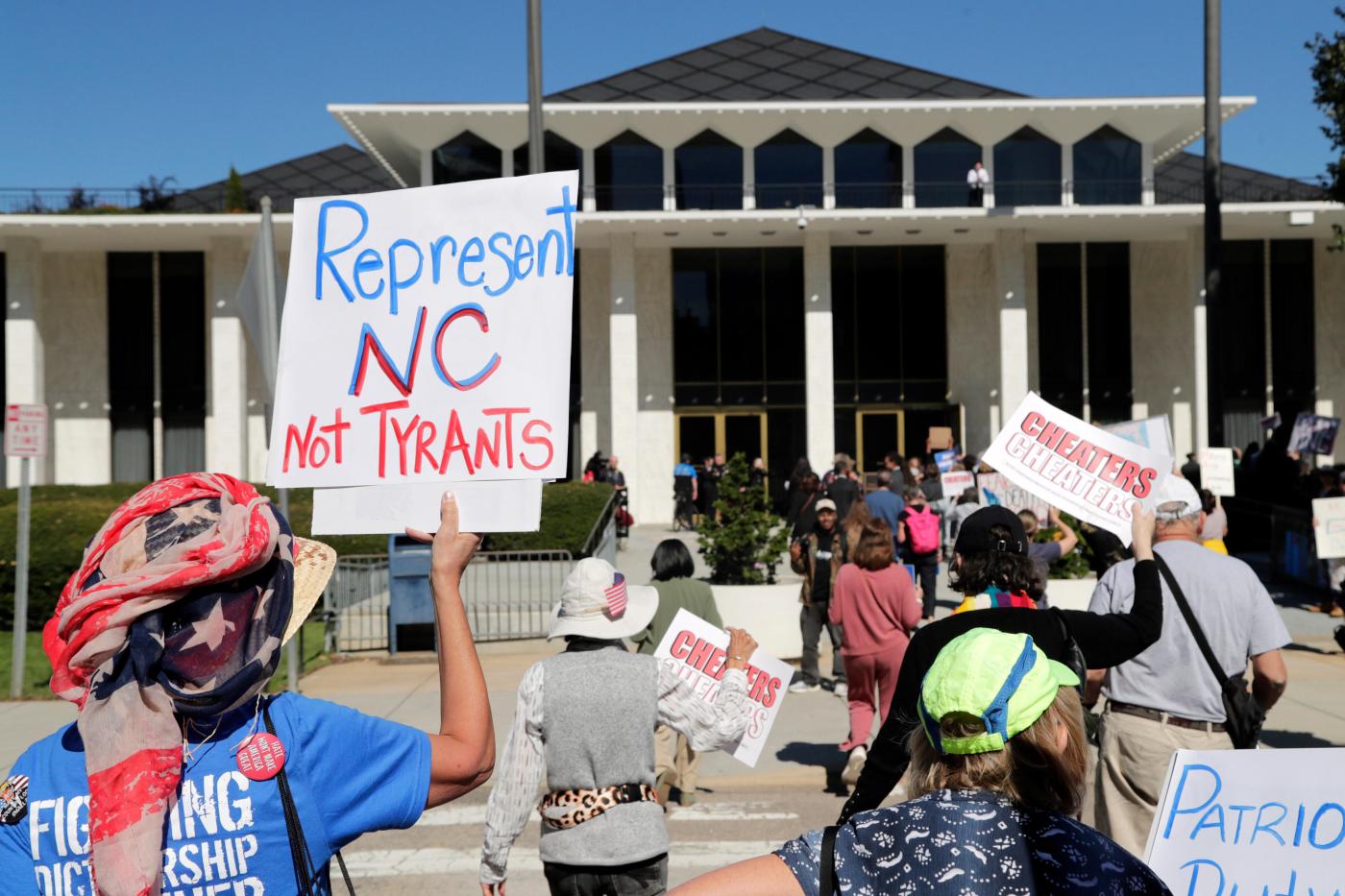
WASHINGTON (AP) — President Donald Trump is having dinner Tuesday night at a seafood restaurant near the White House, promoting his deployment of the National Guard and federalizing the police force in an effort to crack down on crime in the nation’s capital.

Related Articles


Trump tries to soothe Qatar after Israeli strikes but stops short of decrying another ally


Plans in the works for Korean workers detained in raid to go home while fear lingers for residents


Chicagoans change routines as immigration crackdown looms. Some carry passports and avoid stores


Alex Jones asks U.S. Supreme Court to hear appeal of $1.4 billion Sandy Hook judgment


Supreme Court to quickly consider if President Donald Trump has power to impose sweeping tariffs

His motorcade speeding the short distance to Joe’s Seafood, Prime Steak & Stone Crab on 15th Street in the northwestern quadrant of the city follows weeks of the president boasting about mobilizing federal authorities and the military that he says have made Washington “a safe zone.”

Some restaurants have reported drops in reservations since Trump first announced the federal crackdown on Aug. 7, while there have been frequent street protests decrying his actions. Increased military and police presence also has occasionally sparked standoffs between residents and authorities in normally quiet neighborhoods.

Trump has nonetheless said repeatedly that he’s spoken to friends who tell him local restaurants are full and that people have noticed a drop in crime. He says he’s also heard that people appreciate crews working to remove homeless encampments as part of the crackdown.

The president had suggested previously that he might be heading out to dinner for a firsthand look.

“I think it’s something we could consider doing. Love to do it,” Trump told reporters last week in the Oval Office when asked about venturing out to dinner beyond the White House. “I love the White House food, but after a while, I could see going to a nice restaurant. It’s safe.”

Trump rarely dines away from the White House when he’s in Washington. And those outings have gotten even less common since he sold the hotel bearing his name a few blocks away, which was a key meeting point for administration officials and supporters during his first term.

The White House reported Tuesday that there had been nearly 2,200 arrests since Trump first announced the Washington crackdown on Aug. 7.

In addition to Washington, Trump deployed the National Guard to Los Angeles in June and has threatened to send troops to other, largely Democratic cities, including Baltimore, New Orleans and Chicago — where state and local authorities already are bracing for operations to sharply increase immigration enforcement.

On Saturday, Trump posted a parody image from “Apocalypse Now” featuring a ball of flames as helicopters zoom over the lakefront and skyline of Chicago, the nation’s third-largest city.

“‘I love the smell of deportations in the morning,’” Trump wrote on his social media site. “Chicago about to find out why it’s called the Department of WAR.”

In the post, Trump offered no details beyond the label “Chipocalypse Now,” a play on the title of Francis Ford Coppola’s dystopian 1979 film set in the Vietnam War, in which a character says: “I love the smell of napalm in the morning.”

That post came after last week, when Trump signed an executive order seeking to rename the Defense Department as the Department of War — even after months of campaigning to be considered for the Nobel Peace Prize. The renaming requires congressional approval.

In his own post in response, Democratic Illinois Gov. JB Pritzker called Trump a “wannabe dictator.” He has joined state and city officials — and many Chicago residents — in decrying the idea of a federal crackdown as unnecessary.

Over 350 Greenlandic women and girls forcibly given contraception by Danish officials, report says

posted in: All news | 0

COPENHAGEN, Denmark (AP) — More than 350 Greenlandic Indigenous women and girls, including some 12 years old and younger, reported that they were forcibly given contraception by Danish health authorities in cases that date back to the 1960s, according to an independent investigation’s findings released Tuesday.

Related Articles


Nepal internet crackdown part of global trend toward suppressing online freedom


Trump tries to soothe Qatar after Israeli strikes but stops short of decrying another ally


Iran and nuclear watchdog sign agreement seeking path to restart cooperation


Princeton doctoral student kidnapped in Iraq has been freed. ‘We both started sobbing,’ sister says


What to know about the Israeli strike aimed at Hamas leaders in Qatar

The Inuit victims, many of them teenagers at the time, were either fitted with intrauterine contraceptive devices, known as IUDs or coils, or given a hormonal birth control injection. They were not told details about the procedure, or did not give their consent.

The victims described traumatic experiences that left some with feelings of shame as well as physical side effects, ranging from pain and bleeding to serious infections.

The governments of Denmark and Greenland officially apologized in a statement last month for their roles in the historic mistreatment in an apparent attempt to get ahead of the highly anticipated report. An official apology event in Greenland’s capital is set for Sept. 24.

Nearly 150 Inuit women last year sued Denmark and filed compensation claims against its health ministry, saying Danish health authorities violated their human rights. That case remains ongoing.

While Tuesday’s report covers the experiences of more than 350 women who came forward to speak to the investigators, Danish authorities say more than 4,000 women and girls — reportedly half the fertile women in Greenland at the time — received IUDs between the 1960s and mid-1970s.

The alleged purpose was to limit population growth in Greenland by preventing pregnancies. The population on the Arctic island was rapidly increasing at the time because of better living conditions and better health care.

Greenland took over its own health care programs on Jan. 1, 1992.

Centuries of dehumanizing policies

The investigation’s conclusion comes as Greenland is in the headlines alongside U.S. President Donald Trump, who has repeatedly said he seeks U.S. jurisdiction over Greenland. He has not ruled out a military force to take control of the mineral-rich, strategically located Arctic island.

The leaders of Denmark and Greenland say the island is not for sale. Denmark’s foreign minister recently summoned the top U.S. diplomat in the country for talks after the main national broadcaster reported that at least three people with connections to Trump have been carrying out covert influence operations in Greenland.

Greenland, which remains part of the Danish realm, was a colony under Denmark’s crown until 1953, when it became a province in the Scandinavian country. In 1979, the island was granted home rule, and 30 years later Greenland became a self-governing entity.

The forced contraception of Indigenous women and girls was part of centuries of Danish policies that dehumanized Greenlanders and their families.

The policies included the removal of young Inuit children from their parents to be given to Danish foster families for reeducation and controversial parental competency tests that resulted in the forced separation of Greenlandic families.

The report’s findings

The investigators received reports from 354 Greenlandic women who were between 48 and 89 years old when they spoke to authorities for the independent investigation, which began June 1, 2023 following a media outcry.

Almost all victims were between 12 and 37 years old at the time. One girl was under 12, but her exact age was not made public in Tuesday’s report due to anonymity concerns. The vast majority of the procedures occurred in Greenland.

An attorney representing some of the victims could not immediately be reached for comment Tuesday.