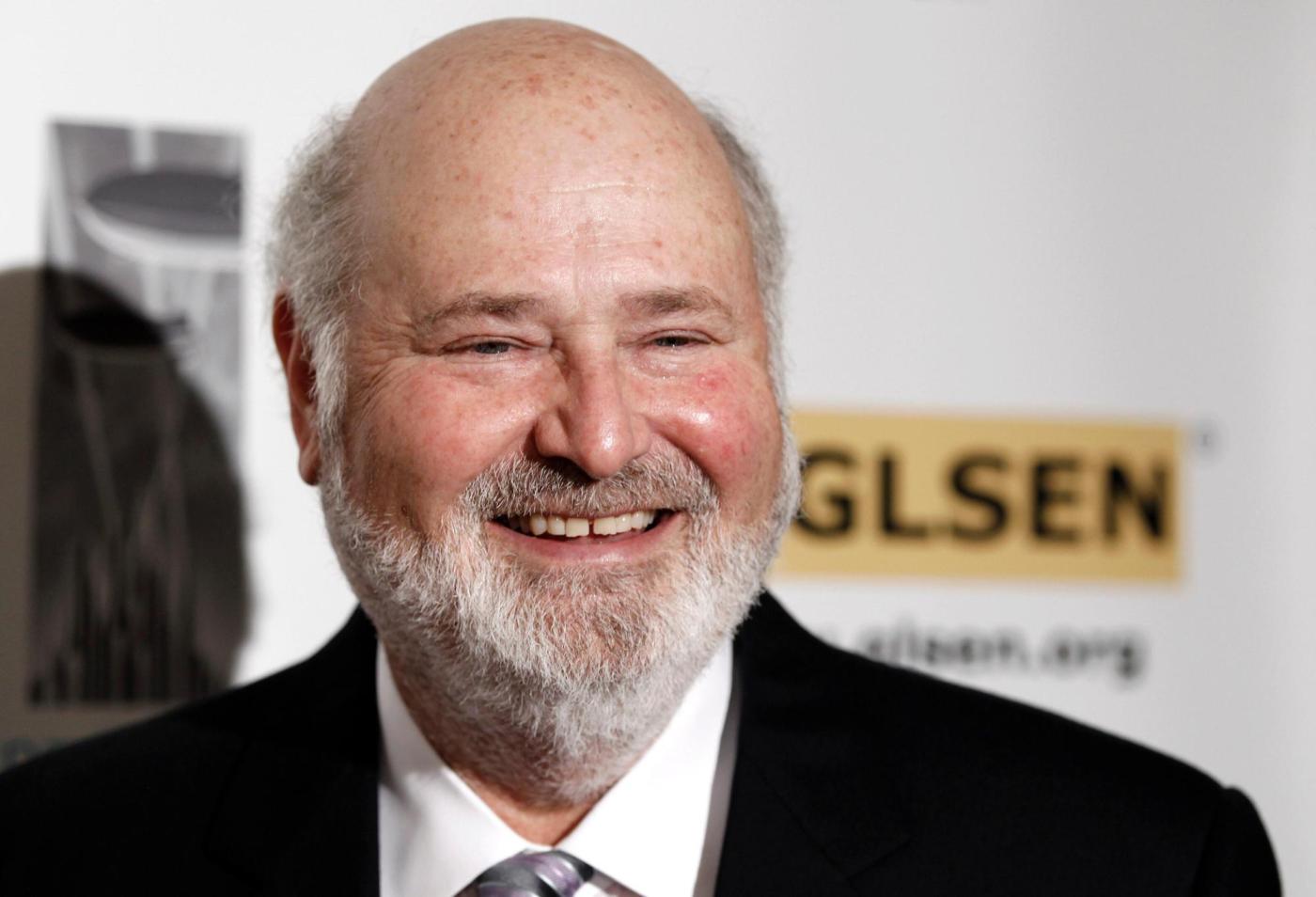
Abby McCloskey: More affordable holidays are a presidential pen-swipe away

posted in: All news | 0

The Trump administration was voted in to turn price hikes around and make things more affordable. It’s time to try harder.

The last six weeks of the year are critical for the U.S. economy — retailers traditionally reap their highest sales figures, create seasonal employment and see a boost in profits.

It’s also, of course, a crucial time for Americans hoping to buy holiday gifts (and maybe snag a little something for themselves). But retailers aren’t offering as many seasonal jobs this year, the forecast for holiday spending is mixed, and prices remain stubbornly high.

Ornaments that previously would have been stocking-stuffers were over my threshold. It’s the same sticker shock I’ve come to expect at the grocery store, especially when stocking up to feed extended family. (Friend to friend: “If you were going to save yourself some work and buy store-bought Christmas cookies this year, the cost of premade baked goods is up too, so pull down the flour.”)

Free-marketeers aren’t usually the life of the party (I say this with love) but their absence will be felt this December. It seems we are stuck between a protectionist regime on the political right and resurgent socialist energy on the political left. Not good news for consumers.

Members of the Trump administration have pointed to data to refute the bad economic vibes. To some extent, they are right. There’s been “savings” from a reduction in inflation relative to the runaway Biden era. Real incomes are up by nearly 1% year-over-year, according to the Bureau of Labor Statistics. Certain things like gasoline and interest rates (and thus mortgage rates) are down. And we mustn’t forget the tax relief passed as part of the reconciliation package.

On the other hand, that tax relief won’t be felt until April 2026, way after holiday presents are bought and paid for.  Although price increases are indeed lower than during the Biden era, prices themselves remain elevated and some are rising. Interest rates still feel high to an electorate accustomed to the historically low levels of the 2010s.

Affordability is a bipartisan concern. Trump is 39 points underwater on the cost of living, according to a recent Reuters/Ipsos poll. Anxiety about inflation is top of mind for voters all across America — in college towns and Evangelical communities, in rural areas and big cities, and among white, Hispanic and Black counties.

Some in the White House say prices are only elevated because we’re coming off the Biden-era bender. By this logic, they just need more time to see things right. But just as during the Biden administration, the rise in prices under the Trump administration is an unforced economic error. Don’t take my word for it: They are admitting it themselves, albeit quietly.

What we are seeing is two sides of the same coin (recall, inflation is too much money chasing too few goods). Although many countries experienced unavoidable pandemic-era inflation from supply chain backups, the Biden administration added to the problem in the U.S. by passing massive stimulus packages after the economy had largely stabilized. A demand-side error. The Trump administration’s rise in certain prices is also an unforced error, simply in reverse, by introducing massive tariffs and workplace raids and limiting the flow of labor and goods. A supply-side error.

Realizing their political liability, the Trump administration has lowered tariffs on household items such as coffee, bananas, beef and tomatoes. This is a good start. If prices fall it will be because of rollbacks like these — and more of them. All it takes is a slice of humble pie (surely there are Thanksgiving leftovers) and the swipe of a pen!

But we’re not there yet. This holiday season, many American small businesses and consumers remain hard-hit. For them, tariffs feel personal. My siblings run an online store selling rugs part-time while raising lots of kids. Turns out, Turkish rugs aren’t made in the U.S. They are taking home less profit, just in time for Christmas.

I have a friend who runs a successful clothing business that heavily relies on foreign imports. During the 2024 presidential campaign, this friend was a big Trump booster, mostly excited about the Make America Healthy Again movement. She even had a keychain on her purse that was what can best be described as a Trump troll, a plastic body with fuzzy long hair. I was with her recently and her business has taken a hit; they are letting someone go and cancelling year-end bonuses.  So much for the funny keychain.

I recently ordered something from Etsy. I was surprised to find that the item wouldn’t be delivered until I wrote an additional $32 check to the U.S. Postal Service for the tariff amount, which will go straight from my pockets into Uncle Sam’s coffers. At first, I thought it was a scam, until I paid and my item was promptly delivered. Try to tell me that a tariff is not a tax.

Here’s the problem with “affordability.” The Trump administration says, we’re better for prices than the Democrats. The Democrats say, we’re better for prices than the GOP. Each side has some good ideas and some bad ones. And around and around we go.

We have to stop and get the fundamentals right, stop being our own worst enemies.  This includes but is not limited to: tax and regulatory restraint, reducing the deficit, free and fair trade, an independent Federal Reserve, predictable policy.

If Santa is listening, can you drop economics textbooks down a few chimneys in Washington, DC?

Abby McCloskey is a columnist, podcast host, and consultant. She directed domestic policy on two presidential campaigns and was director of economic policy at the American Enterprise Institute.


MyPillow’s Mike Lindell files paperwork to run for MN governor

posted in: All news | 0

MyPillow CEO Mike Lindell has filed paperwork to run for Minnesota governor as a Republican in 2026.

The businessman and noted supporter of President Donald Trump filed candidate paperwork with the Minnesota Campaign Finance and Public Disclosure Board on Wednesday.

He joins a crowded field of candidates seeking the GOP nomination to face Democratic-Farmer-Labor Gov. Tim Walz in next November’s election.

Lindell, 64, said he wasn’t certain he would run yet, but that it was highly likely.

“I’m 95, 98 percent there,” he said in a phone interview. “I will be making an announcement one way or another next Thursday.”

Campaign staff said they filed paperwork as a legal precaution and that they would close the committee if Lindell decided not to run.

First known for his pillow business, Lindell became one of Trump’s most visible supporters during the president’s first term in office.

In recent years, Lindell has faced legal troubles stemming from his business and claims of fraud in the 2020 presidential election.

In September, a Minnesota federal judge ruled that Lindell had defamed election technology company Smartmatic by saying its voting machines helped rig the 2020 election, the Associated Press reported.

He also was found liable for defaming an executive of Dominion Voting Systems earlier this year.

Lindell said he would share more details about his priorities as a candidate at a news conference next week.

Other Republicans running for governor in 2026 include state House Speaker Lisa Demuth; 2022 gubernatorial candidate Scott Jensen, a doctor who rose to prominence for his criticism of state COVID policy; state Rep. Robbins; 2022 Republican endorsement contender Kendall Qualls, a former congressional candidate; and businessman Patrick Knight.

Asked if he had any concerns about the crowded primary field, Lindell said he had only heard of a few candidates.

“I don’t even know how crowded,” he said. “It doesn’t matter.”

Walz is seeking an unprecedented third consecutive four-year term as governor. So far, Walz is the only DFLer running for governor in 2026.

In a statement on Lindell’s potential candidacy, the Minnesota DFL called Lindell and Republicans “conspiratorial and extremist.

“He’s an out-of-touch salesman running to turn Minnesota into his next failed business,” Minnesota DFL Chair Richard Carlbom said in a statement.

Related Articles


Medical leave applications opening for Minnesotans who welcomed a child in 2025


MN leaders push back on Somali ‘scapegoating’ ahead of threatened immigration sweep


Treasury Department investigating claims MN fraud funded terrorists


Attorney Chris Madel seeks Republican nomination in MN governor race


How will Kaohly Her’s legislative career shape her leadership of St. Paul?

New Eagan Police Chief Salim Omari cut his teeth in St. Paul

posted in: All news | 0

The city of Eagan officially has a new police chief and he hails from the St. Paul Police Department.

Salim Omari was sworn in as Eagan’s police chief on Dec. 2, 2025. Omari spent the bulk of his 21-year law enforcement career with the St. Paul Police Department. (Courtesy of the city of Eagan)

After a 21-year career in law enforcement ranging from investigations and training to SWAT commander, Salim Omari was sworn in as Eagan’s new chief of police Tuesday night.

“We’re excited to welcome Commander Omari to Eagan,” Mayor Mike Maguire said in a city news release. “He brings a strong record of leadership, experience in complex policing environments, and a commitment to building trust with the community.”

Omari, who began his career with the Bloomington Police Department in 2004, spent more than 18 years with the St. Paul Police Department where he held titles including district chief of St. Paul’s Eastern District and commander of the Major Crimes Division.

As a commander, Omari led the Internal Affairs Unit, Training Unit and Western District Patrol, per the release.

Omari was also appointed by both Gov. Mark Dayton and Gov. Tim Walz to the Minnesota Sentencing Guidelines Commission.

“I’m honored to be chosen to lead the highly respected Eagan Police Department,” Omari said in the release. “I believe in the power of collaboration and community engagement to keep our neighborhoods safe. Eagan is a thriving community, and I look forward to working alongside residents, city leaders, and officers to continue building trust and delivering excellent public safety.”

His departure from the St. Paul Police Department comes at a time when city leaders are raising concerns over the pay of St. Paul’s police chief and top staff.

St. Paul Police Chief Axel Henry oversees 616 officers and has a salary of $207,688, compared to Minneapolis’ chief who oversees 621 officers and makes $312,703, the Pioneer Press recently reported.

Related Articles


Rosemount police chief resigns following complaints levied in anonymous employee survey


South St. Paul: Teen charged with dragging 18-year-old with vehicle over vape cartridge dispute


Dakota County: Tuesday meeting set for 2026 budget, levy increase


Dakota County will host US’s first international horticultural expo


More snow on the way: Here’s how much we could get this weekend

Omari, who has a degree in criminal justice and a master’s degree in police leadership and administration, officially began his new role on Nov. 24, taking over for former police chief Roger New.

After 31 years with the Eagan police department and the last seven of those years as chief, New announced his retirement earlier this year, saying it was time to pass the mantle. At the time of his retirement, New’s salary was reported to be $215,093.

“Commander Omari has a proven track record of effective leadership, operational excellence, and a clear commitment to equity and community engagement,” said Eagan City Administrator Dianne Miller, in the release. “We’re confident he will continue Eagan’s strong tradition of public safety and help shape its next chapter.”

Meet the Chief

What: Open house with Chief Salim Omari

When: 5:30 p.m. Wednesday, Jan. 14

Where: Eagan City Hall, 3830 Pilot Knob Road

Wisconsin Supreme Court to decide whether local jails can hold immigrants for ICE

posted in: All news | 0

By SCOTT BAUER, Associated Press

MADISON, Wis. (AP) — A divided Wisconsin Supreme Court on Wednesday agreed to take a case brought by the American Civil Liberties Union on behalf of an immigrant rights group arguing that it is illegal for local jails to hold immigrant detainees at the request of federal authorities.

The Wisconsin lawsuit comes as federal agents have launched high-profile immigration crackdowns in cities including Chicago and Charlotte, North Carolina. Another operation is expected in the coming days in Minnesota, targeting Somali immigrants. The enforcement tactics have been met with protests and lawsuits.

A majority of justices on the Wisconsin Supreme Court voted to take the ACLU case directly as an original action, rather than have it first work its way through lower courts. The court is controlled 4-3 by liberal justices.

Four justices, who were not named, voted to accept the case, while conservative Justices Annette Ziegler and Rebecca Bradley dissented. Justice Brian Hagedorn, who most often sides with conservative justices, wrote separately to discuss the process, but he did not reveal how he voted.

None of the justices discussed the merits of the case in the order agreeing to take it.

The court’s decision means there could be a final ruling in the case by the middle of 2026, far faster than if it first had to wind its way through lower courts. All briefs in the case are due within two months, and the court will set a date for oral argument sometime after that early next year.

The ACLU brought the lawsuit against five county sheriffs in September on behalf of Voces de la Frontera, an immigrant rights group based in Milwaukee.

“This is a historic step toward ensuring that Wisconsin’s law protects all residents, not just those with power and privilege,” said Christine Neumann-Ortiz, executive director of Voces de la Frontera. “Honoring ICE detainers has subjected hardworking immigrants to unlawful arrests for far too long.”

The lawsuit contends that it is illegal for local jails to hold immigrants on detainers sent by U.S. Immigration and Customs Enforcement to local sheriff’s offices. The lawsuit was filed against sheriffs in Walworth, Brown, Marathon, Kenosha and Sauk counties, all of which honor those requests.

Sam Hall, one of the attorneys for the sheriffs, said they were reviewing the court’s order and evaluating next steps.

“We are confident, however, that Wisconsin sheriffs who honor ICE detainers do so fully within the bounds of Wisconsin law and the federal legal framework governing immigration enforcement,” he said in an email.

Related Articles


4 Republican states will help Homeland Security obtain driver’s license records


Kids and teens go full throttle for E-bikes as federal oversight stalls


Payrolls at US companies fall by most since 2023, ADP says


Grand Canyon cancels overnight stays at South Rim lodges because of water-line breaks


Longest US government shutdown cost Delta Air Lines $200 million

The sheriffs had argued that because the lawsuit involves a complicated area of the law — federal immigration law and the relationship between federal and state and local law enforcement — the case was best “resolved and refined” by first going through the lower courts, rather than skipping directly to the Wisconsin Supreme Court.

Honoring an ICE detainer means the sheriff agrees to hold the person for 48 hours after they otherwise should have been released under state law. The goal of detainers is to give ICE agents more time to pick someone up if they are suspected of being in the country illegally.

The ACLU wants the Wisconsin Supreme Court to prohibit sheriffs from holding people on ICE detainers, which are based on administrative warrants. Holding someone for extra time must be authorized by a judicial warrant, in which a court determines there is probable cause to keep them longer, the ACLU argues in the lawsuit.

The ACLU argues that keeping the person in custody for that extra time constitutes an illegal new arrest. It is illegal because Wisconsin law does not allow officers to make civil arrests except in certain circumstances, none of which apply to immigration enforcement, the lawsuit argues.

In the first seven months of this year, ICE sent more than 700 requests to local jails across Wisconsin, asking them to hold someone 48 hours beyond when they were set to be released, the lawsuit contends.

Republicans in the GOP-controlled Wisconsin Legislature support a bill that would withhold money from counties that don’t comply with ICE detainers. The measure passed the Assembly, and if the Senate approves the bill it would head to Democratic Gov. Tony Evers, who is likely to veto it.