The sun is low over Nuevo Laredo as David Patricio and three friends start unloading gravel and mountain bikes for their evening ride along the Rio Grande, but the weather is still in the 90s and the humidity stifling.
In the early 2000s, the City of Laredo began buying up land to create a series of parks along the river. Those parks are now threatened by President Donald Trump’s planned border wall. But as it turns out, the same Border Patrol that wants to wall off Laredo from the Rio Grande has provided access to the undeveloped river vega, or floodplain. The agency paid for a caliche road that runs for several miles along the river through Laredo, connecting pieces of public land.
Ironically, this man-made scar that environmentalists say is detrimental to the unique Rio Grande ecosystem has created a way for Laredoans like Patricio to access the city’s underappreciated natural beauty.
I met him and his friends on a May evening in the shadow of the cylindrical tower now known as the Landmark Hotel. The river flows almost due south through the city before turning east a little less than a mile from the hotel to run under a railroad bridge and then in front of the Landmark. It continues on past a municipal park that sits in the vega below Laredo’s outlet mall and its historic downtown, under two of the city’s international bridges, then along more public land before gently curving back south. We set off west, all of us on bicycles, on a paved road running under the rail bridge, before turning onto the Border Patrol road, then north onto a city path that leads away from the Rio Grande, into a wide greenspace called the Riverbend Park Nature Preserve.
(Jason Buch)
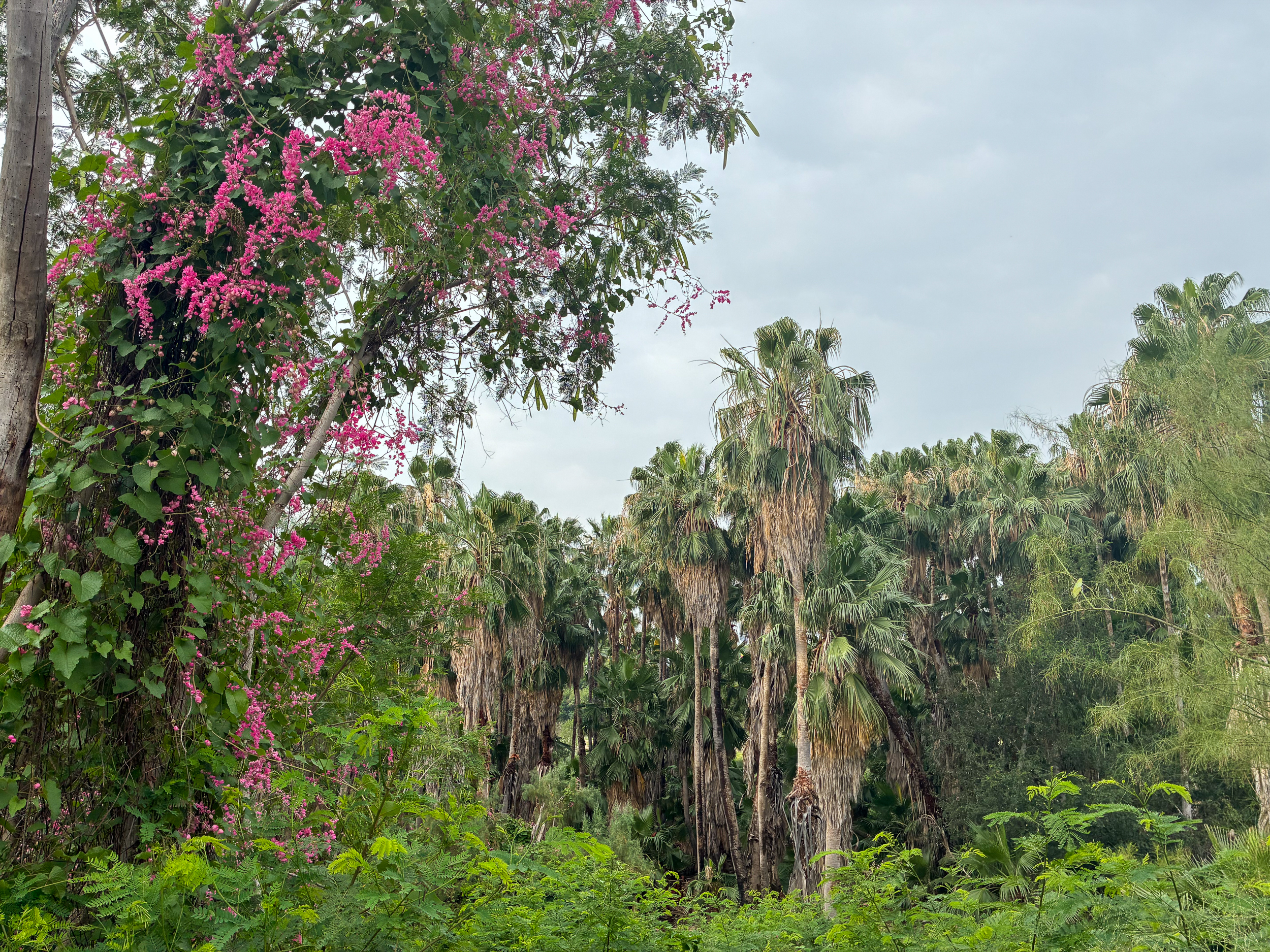
The city has paved paths through the short mesquite trees crowded together here, and built observation decks over a cluster of ponds, though the trailhead and parking area were still under construction. Patricio said that during migration season, the ponds are teeming with waterfowl.
“We’re gonna be riding around areas where most everybody thinks it’s unsafe,” Patricio tells me before we return to the Border Patrol road. “And you’re gonna see that there’s really nothing to be worried about. We’re just out here having a good time.”
Back on the caliche road we cycle north along the river, behind Laredo College’s historic Fort McIntosh campus. The last time I was here, hiking with a friend nearly 20 years ago, the floodplain was choked by invasive carrizo cane that towered over our heads. I remember green-uniformed federal agents popping out of the tall, brown stalks to check on us every time we triggered a sensor. Since then, the nonprofit Rio Grande International Study Center and Border Patrol have cleared out the cane, which is loathed by agents because it blocks their line of sight and by environmentalists because it chokes out native plants. Now, there’s a clear view from the Border Patrol road through the trees, still mostly mesquite but much larger and widely spaced.
Once we’re past the college campus, we’re often only a few yards from residential neighborhoods, but the strip of floodplain where we’re riding is home to wildlife. Along with birds—brilliantly colored Mexican green jays are common here, and my birding app recorded the calls of red-winged blackbirds, cactus wrens, lesser goldfinches, and two kinds of doves—the cyclists said they sometimes see large mammals. They’ve spotted deer, javelina, and even beavers.
“The beavers are so big here they look like javelina,” Patricio says.
(Jason Buch)
Every 50 yards or so we pass Border Patrol agents or National Guard troops who have unloaded coolers and folding chairs from their unmarked rental vehicles. The agents are often from the border or have lived in Laredo for some time and are fairly friendly, Patricio and his friends tell me; they tend to slow down and wave when passing cyclists. The Guard troops, meanwhile, who are on temporary deployment and have been fed propaganda about how dangerous the region is, tear up and down the caliche road. When we pause, about 3.5 miles from our starting point, a red-winged blackbird is perched on surveillance equipment mounted atop a Humvee.
“Not to sound too hippie or anything, but you’ve got all this nature—it’s real calm and peaceful,” Rene Gutierrez, one of Patricio’s friends, tells me.
“I grew up in the Texas sun,” Gutierrez adds, as we prepare to head back to the hustle and bustle of downtown Laredo and its two international bridges. “It was riding bikes, playing football, basketball, just running in the streets, and it just stuck with me. It’s a way to be active, and it’s a way to kind of stay young and healthy. And why not enjoy your community? This is for all of us.”
The post Cycling the Rio Grande as Trump’s Wall Looms appeared first on The Texas Observer.
Leave a Reply