By STAN CHOE, AP Business Writer
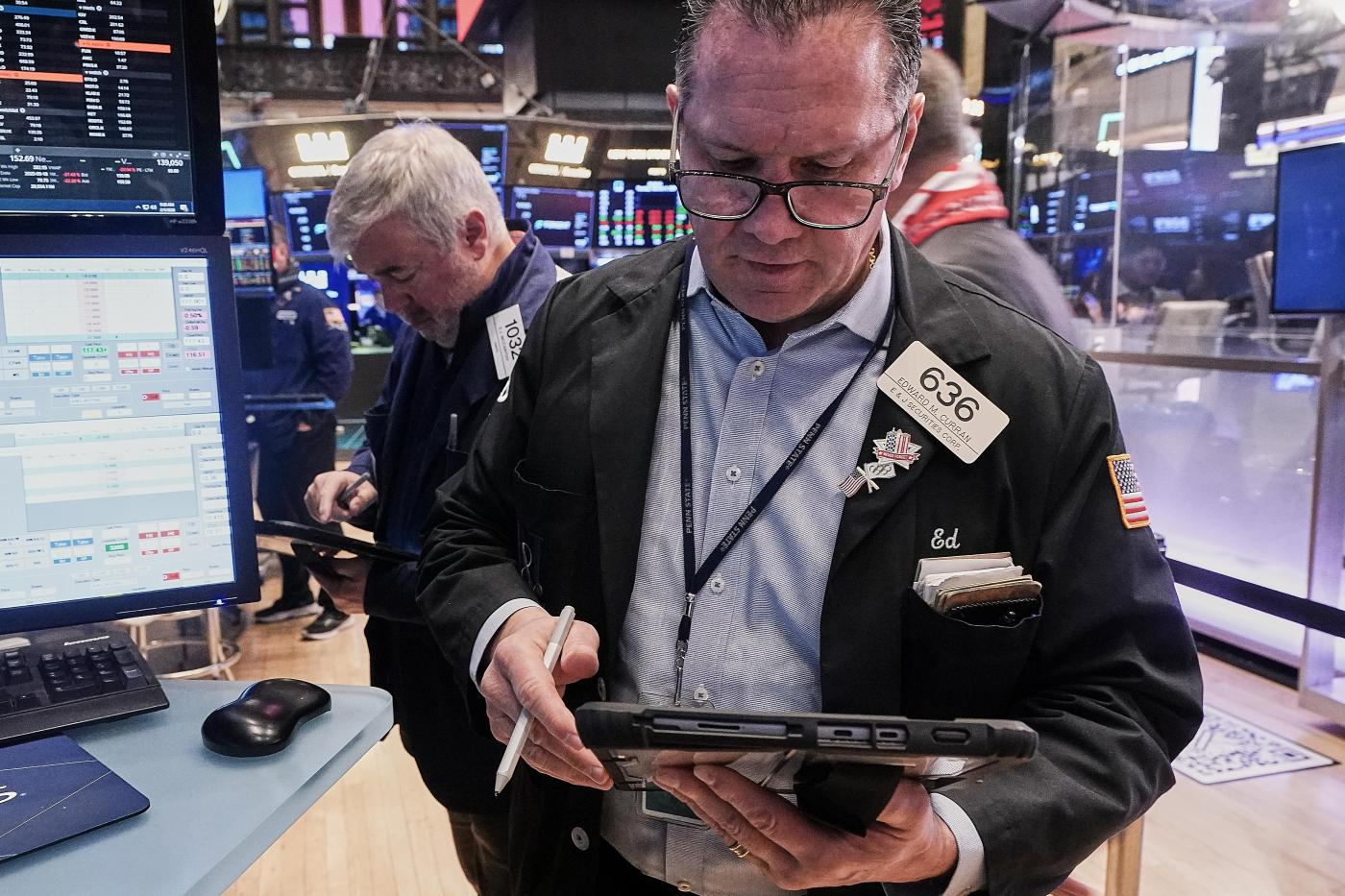
NEW YORK (AP) — Wall Street is bouncing back from big losses taken earlier in the week, as technology stocks recover some of their losses on Friday and bitcoin halts its plunge, at least for now.
Related Articles
How to start saving — even if you’re starting from scratch
Securian, Bush Foundation invest $30M in downtown St. Paul fund
EU accuses TikTok of ‘addictive design’ that harms children, seeks changes to protect users
Hims & Hers launches copy of Wegovy pill, prompting legal threats from drugmaker Novo Nordisk
St. Paul: Owner of Grand/Fairview site — former Grandview Grill — courts developers
The S&P 500 rose 0.9% and was heading for just its second gain in the last eight days. The Dow Jones Industrial Average was up 776 points, or 1.6%, as of 10:15 a.m. Eastern time, and the Nasdaq composite was 0.5% higher.
Chip companies helped drive the gains, and Nvidia rallied 4.9% to trim its loss for the week, which came into the day at just over 10%. Broadcom climbed 3.8% to eat into its drop for the week of 6.3%.
They were the two strongest forces lifting the S&P 500, and they benefited from hopes for big spending on chips by companies to drive their forays into artificial-intelligence technology. Amazon, for example, said late Thursday it expects to spend about $200 billion on investments this year to take advantage of “seminal opportunities like AI, chips, robotics, and low earth orbit satellites.”
Such heavy spending, similar to what Alphabet announced a day earlier, is creating concerns of their own, though. The question is whether all those dollars will prove to be worth it through bigger profits in the future. With doubt remaining about that, Amazon’s stock dropped 8.5%.
Even with Friday’s rebound, the S&P 500 is still heading toward its third losing week in the last four. Besides worries about the big spending on AI by Big Tech companies, whose stocks are the most influential on Wall Street, concerns about AI potentially stealing customers away from software companies also hurt the market through the week.
Bitcoin, meanwhile, steadied itself somewhat following a weekslong plunge that had sent it more than halfway below its record set in October. It climbed back to $68,000 after briefly dropping around $60,000 late Thursday.
Prices in the metals market also calmed a bit following their own wild swings. Gold rose 2% to $4,986.20 per ounce, while silver slipped 0.3%.
Their prices suddenly ran out of momentum last week following jaw-dropping rallies, which were driven by investors clamoring for something safe to own amid worries about political turmoil, a U.S. stock market that critics called expensive and huge debt loads for governments worldwide. By January, though, prices were surging so quickly that critics called it unsustainable.
On Wall Street, the recovery for bitcoin helped stocks of companies enmeshed in the crypto economy. Robinhood Markets jumped 11.7% for the biggest gain in the S&P 500. Crypto trading platform Coinbase Global rose 7.3%. Strategy, the company that’s made a business of buying and holding bitcoin, soared 15.9%.
Stocks of smaller U.S. companies also helped lead the market, along with companies whose profits depend on U.S. households spending more money. They benefited from potentially encouraging data on how U.S. consumers are feeling.
A preliminary report from the University of Michigan suggested sentiment among U.S. consumers is improving slightly, when economists were expecting to see a drop. The improvement was strongest among households who own stocks, which are benefiting from the S&P 500 setting a record late last month.
To be sure, sentiment “remained at dismal levels for consumers without stock holdings,” according to Surveys of Consumers Director Joanne Hsu.
Airline stocks were strong with hopes that more confident customers will translate into more spending on trips. That included gains of 5.4% for United Airlines, 4.6% for American Airlines and 4.4% for Delta Air Lines.
The smaller stocks in the Russell 2000 index, meanwhile, jumped 2.3% to more than double the gain of the S&P 500. Smaller stocks can be more dependent on the strength of the U.S. economy for their profits than their big, multinational rivals.
In stock markets abroad, indexes rose across much of Europe.
That was even though Stellantis, the auto giant whose stock trades in Milan, lost nearly 26% after saying it would take a charge of 22 billion euros, or $26 billion, as it dials back its electric vehicle production. The automaker acknowledged “over-estimating the pace of the energy transition” and said it was resetting its business “to align the company with the real-world preferences of its customers.”
Stocks fell across much of Asia, but Japan’s Nikkei 225 rose 0.8%. It benefited from a 2% climb for Toyota Motor, which said CEO Koji Sato will step down in April and will be replaced by the company’s chief financial officer, Kenta Kon.
In the bond market, Treasury yields held relatively steady. The yield on the 10-year Treasury erased an earlier modest loss and was holding at 4.21%, where it was late Thursday.
AP Business Writers Chan Ho-him and Matt Ott contributed.
Leave a Reply