By JILL LAWLESS and JAMEY KEATEN, Associated Press
LONDON (AP) — The Eurovision Song Contest, which aims to be an upbeat celebration of music and unity, is facing the biggest crisis in its seven-decade history after four countries walked out of the competition over Israel’s participation and others weighed whether to join the boycott.
Spain, the Netherlands, Ireland and Slovenia announced they will not take part in the 2026 contest in Vienna in May after organizers declined to expel Israel over its conduct of the war against Hamas in Gaza. Iceland is considering whether to follow suit.
The walkouts cast a cloud over the future of what’s meant to be a feel-good cultural party, dealing a blow to fans, broadcasters and the contest’s finances.
Eurovision expert Paul Jordan said Friday “it’s unlikely we’ll see a mass exodus” but that 2026 will be a “tense year.”
A contest divided over Israel and Gaza
Founded in 1956, in part to help unite a shattered continent after World War II, Eurovision pits acts from dozens of countries against one another for the continent’s musical crown.
Overtly political symbols and lyrics are prohibited, but global tensions have often imposed themselves. Russia, for example, was expelled in 2022 after its full-scale invasion of Ukraine.
Tensions rose again after Hamas’ Oct. 7, 2023, attack on Israel, which killed some 1,200 people, and Israel’s subsequent campaign in Gaza that has left more than 70,000 people dead. The last two Eurovision contests have seen pro-Palestinian protests both outside the venues and inside, forcing organizers to clamp down on political flag-waving.
A number of performers and countries have called for the exclusion of Israel, which has taken part in Eurovision since 1973, one of a few non-European countries to compete.
Organizers sought a compromise
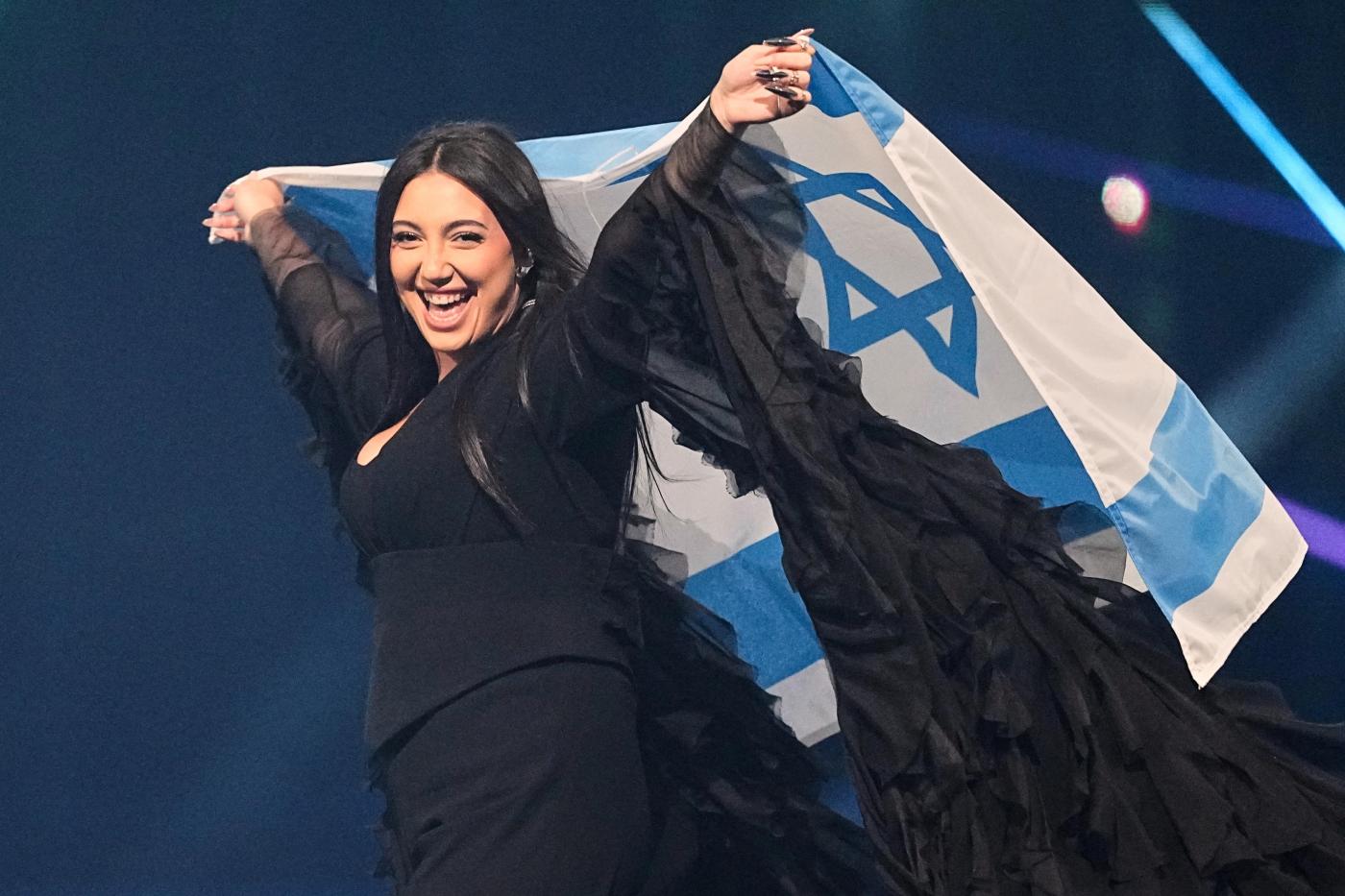
The Geneva-based European Broadcasting Union — a group of public broadcasters from 56 countries that runs Eurovision — tried to assuage concerns by tightening rules on contest voting and campaigning in response to allegations that Israel manipulated the public vote in favor of its competitor Yuval Raphael. She came second in this year’s contest behind Austrian singer JJ.
The EBU’s general assembly approved the new rules Thursday, but did not hold a vote on Israel’s participation. It said “a large majority of members” felt the contest “should proceed as planned, with the additional safeguards in place.”
Eurovision Director Martin Green told Swedish television that the meeting reaffirmed “the belief that the Eurovision Song Contest shouldn’t be used as a political theater. It must retain some sense of neutrality.”
Some countries walked out
Immediately after the EBU decision, broadcasters RTVE in Spain, AVROTROS in the Netherlands, RTÉ in Ireland and Slovenia’s RTVSLO announced they were pulling out.
RTVE said the situation in Gaza, despite the recent ceasefire, and “Israel’s use of the contest for political purposes, make it increasingly difficult to maintain Eurovision as a neutral cultural event.” RTÉ said participation was “unconscionable given the appalling loss of lives in Gaza.”
Related Articles
EU hits Elon Musk’s X with 120 million euro fine for breaching bloc’s social media law
US raid allegedly killed Syrian undercover agent instead of Islamic State group official
Why Somali migrants may still aim for US despite travel restrictions
Today in History: December 5, Great Smog of London descends
Stress of Houthi combat was a key factor in series of costly Navy mishaps, investigations show
Icelandic broadcaster RUV, which had recommended Israel be barred, said its chiefs will meet Wednesday to discuss whether to join the walkout.
Other countries’ broadcasters, including Norway’s NRK and Britain’s BBC, welcomed the decision to keep Israel in the competition.
“We support the collective decision made by members of the EBU,” the BBC said in a statement. “This is about enforcing the rules of the EBU and being inclusive.”
French Foreign Affairs Minister Jean-Noël Barrot said his country opposes a cultural boycott of Israel.
“I am pleased that Eurovision did not give in to pressure, and that France helped prevent a boycott of Israel in this forum,” he wrote on X. “I deeply regret that several European television channels made a different choice.”
Israel welcomed organizers’ decision
Israeli President Isaac Herzog said on social platform X that he was “pleased” Israel will again take part and hoped “the competition will remain one that champions culture, music, friendship between nations and cross-border cultural understanding.”
Some Israelis said they were glad their country was participating but felt the debate around them was unfair.
“I’m happy but I’m not dancing in the streets,” Izhar Cohen, who won Eurovision in 1978, told The Associated Press in Tel Aviv. “Eurovision should be a meeting and gathering together with no politics of all the people from all nations,” he said.
Tel Aviv resident Bret Katz said “it’s a terrible, terrible thing to ostracize a country and not to understand who was attacked on October 7, 2023.”
A blow for fans and finances
The boycotting countries will not send a musical act to the 2026 contest and will not broadcast it. That will likely cut into viewership of a contest that typically draws more than 150 million viewers.
Fans in the boycotting countries should still be able to watch on digital platforms including YouTube, and another Dutch broadcaster, NPO, said it will air the show in the Netherlands.
The boycotts are a financial blow to Eurovision, which is funded largely by participating broadcasters — and to boycotting public broadcasters at a time when many are under financial pressure from government funding cuts and competition from social media.
The EBU does not disclose how much each country pays, but the pullouts include Spain, one of the “Big Five” large-market countries that contribute the most to the contest.
So far, more than two dozen countries have confirmed they will compete in Vienna, including heavyweights like seven-time champion Sweden. The EBU says a final list of participants will be released before Christmas.
The boycott is offset to an extent by the return of Bulgaria, Moldova and Romania to Eurovision after periods of absence because of financial and artistic reasons.
Jordan said viewing figures would be closely watched, “and if they are significantly down, then that’ll probably raise alarm bells.
“But I think overall the contest is a sturdy thing,” he said.
Keaten reported from Geneva. Associated Press writers Paz Bar in Tel Aviv and Samuel Petrequin contributed to this story.
Leave a Reply