Call 911 or risk losing the baby? Raids force some immigrants to avoid care

posted in: All news | 0

By Halle Parker, Verite News, KFF Health News

As immigrants in southeastern Louisiana and Mississippi braced for this month’s U.S. Homeland Security operation, Cristiane Rosales-Fajardo received a panicked phone call from a friend.

The friend’s Guatemalan tenant, who didn’t know she was pregnant, had just delivered a premature baby in the New Orleans house. The parents lacked legal residency, and the mother refused to go to a hospital for fear of being detained by federal immigration officers.

“There’s blood everywhere, and the baby’s dead,” Rosales-Fajardo recalled her friend saying.

Rosales-Fajardo put on her sandals, grabbed surgical gloves, and rushed to the house.

Rosales-Fajardo, herself an immigrant from Brazil, is a grassroots organizer and advocate in the New Orleans East community, where many immigrants live. She has no formal medical training, but she has experience with delivering babies.

She scanned the room when she arrived. A 3-year-old child stood to one side while the mother sat on the edge of the bed. The father held their swaddled newborn son, who wasn’t breathing and was wrapped in blood-soaked towels.

“The baby was completely gray,” Rosales-Fajardo later said.

Rosales-Fajardo wiped fluid away from his small mouth and rubbed his back before performing tiny chest compressions and breathing air into his lungs.

She told the parents she had to call 911 to get the mother and newborn to a hospital for care. The baby was out, but the delivery wasn’t over.

“I assured her. I promised her that she was going to be safe,” Rosales-Fajardo said.

Fear hung over the room. Still, she made the call and continued performing CPR. Finally, the newborn revived and squirmed in Rosales-Fajardo’s arms. When the ambulance arrived, the mother tried to keep her husband from riding with her, terrified they would both be arrested. He went, anyway.

“These are hard-working people,” Rosales-Fajardo said. “All they do is work to provide for their family. But they were almost at risk of losing their child rather than call 911.”

Putting Safety Over Health

Nearly two weeks into the Department of Homeland Security’s Operation Catahoula Crunch, which launched Dec. 3, health professionals and community advocates in Louisiana and Mississippi report that a significantly higher-than-usual number of immigrant patients have skipped health care appointments and experienced heightened stress levels.

According to a press release, DHS said it had arrested more than 250 people as of Dec. 11. Though federal officials say they’re targeting criminals, The Associated Press reported that most of the 38 people arrested in the first two days of the New Orleans operation had no criminal record.

Since President Donald Trump took office in January, immigrant families nationwide have become more likely to skip or delay health care, due in part to concerns about their legal status, according to a recent survey by KFF and The New York Times.

The survey found that nearly 8 in 10 immigrants likely to be living in the U.S. without legal permission say they’ve experienced negative health impacts this year, from increased anxiety to sleeping problems to worsened health conditions such as high blood pressure or diabetes. The federal immigration raids in California, Illinois, North Carolina, and now Louisiana and Mississippi add to the health care barriers that these families already face, including access to services, language barriers, lack of insurance, and high costs.

That hesitancy to receive even emergency care appears justified amid the ongoing raids. Hospitals and health facilities generally must allow federal agents in areas where the public is allowed, according to the American Civil Liberties Union. In California this year, federal agents have staked out hospital lobbies, shown up at community clinics, and guarded detainees in hospital rooms. Even driving to and from appointments poses a risk, as traffic stops are a popular place for immigration agents to make arrests.

University Medical Center nurse Terry Mogilles said that immigrants typically make up at least half the patients in her orthopedic trauma clinic in New Orleans, many of them with construction-related, bone-crushing injuries that require surgery. But now, Mogilles said, many of those patients aren’t coming in for follow-up appointments, despite the risk of infection.

“When we call, we can’t get through,” Mogilles said. “It is so upsetting because we have no idea what’s happening to them post-op.”

Terry Mogilles, a registered nurse at University Medical Center in New Orleans, says that immigrants typically make up at least half the patients in her orthopedic trauma clinic. (Christiana Botic/KFF Health News/TNS)

A Chill Spreads in the South

Federal officials said the Catahoula Crunch operation extends to southern Mississippi, though the bulk of the initial arrests have occurred in the Greater New Orleans area. Immigrant families throughout Mississippi are hunkering down in anticipation.

Michael Oropeza, executive director of El Pueblo, a nonprofit serving low-income immigrant communities in Biloxi and Forest, said the organization has witnessed families delay care, cancel children’s checkups, and go without refilling medication.

“It’s not because they don’t value their health; it’s because they don’t feel safe,” Oropeza said. “When hospitals and clinics are no longer that safe place, people withdraw trust that took years to build up. It can disappear overnight.”

Maria, a Biloxi resident from Honduras, said, in Spanish, she and her two children have missed routine doctors’ appointments because they are “terrified” to leave the house amid an increased presence of federal immigration officers. Her husband, who is authorized to work in the U.S., was detained for two months this year.

Her children are U.S. citizens. They previously qualified for Medicaid, but Maria opted to disenroll them three years ago out of concern that using public benefits would jeopardize her family’s residency applications, she said. The family now pays for their children’s care out-of-pocket.

When it feels safe to attend doctors’ appointments again, Maria said, her priority will be seeking mental health care to address the stress her family has endured.

“I definitely need to see a doctor to get checked out, because I don’t feel well,” she said, describing her anxiety, depression, and insomnia.

A handwritten sign states“ ICE IS NOT ALLOWED TO ENTER” at the chained-off entrance of a neighborhood in New Orleans in December. (Christiana Botic/KFF Health News/TNS)

In Louisiana, Marcela Hernandez of Familias Unidas en Acción, a nonprofit that provides direct aid to immigrants, said many of the families she works with live paycheck to paycheck. Sheltering at home and missing work only adds to the stress. Hernandez said she received 800 calls for food in two days from families afraid to leave home.

The federal operation in Louisiana and Mississippi could last more than two months, according to the AP. The longer it goes on, Hernandez said, the more she worries evictions will come next as people can’t pay rent, further traumatizing a community whose members often had to make difficult and dangerous journeys to flee hardships in their countries of origin to reach the U.S.

“You don’t leave your country knowing that you’re gonna get raped on the way just simply because you wanna come and meet Mickey Mouse,” she said.

Rosales-Fajardo, who runs a nonprofit called El Pueblo NOLA, said families tell her how children have started urinating on themselves due to stress and fear. Nationally, immigrants who are likely to lack legal status report that some of their children have had problems sleeping and that they’ve seen changes in school performance or behavior, according to the KFF and New York Times survey.

Community groups said they hope people step up locally to deliver food and hygiene products to immigrant homes, and that health care professionals provide more at-home or telehealth visits.

Like at other hospitals, UMC’s waiting rooms are considered public spaces, Mogilles noted. But the nurses union is calling for the hospital to create safe spaces for patients that federal agents can’t access and clearer policies to protect health care workers who shield patients. Post-op appointments can’t be done virtually, so patients need to feel safe enough to come in, Mogilles said.

Prenatal and postnatal care is also challenging to provide virtually, leaving the health of new and expecting mothers vulnerable, said Latona Giwa, executive director of Repro TLC, a national sexual and reproductive health training nonprofit.

Related Articles


Archbishop Hebda: Immigration officials won’t target holiday church services


Noah Feldman: The Supreme Court generals failed their troops this year


Trump approves deployment of 350 National Guard members to New Orleans


Trump administration moves to overhaul how H-1B visas are granted, ending lottery system


DOJ sues Illinois’ governor over laws protecting immigrants at courthouses and hospitals

Since the Chicago immigration sweeps began in September, Giwa said, the clinics and health providers her organization works with have reported that 30% of patients had missed appointments. She said pharmacies saw a 40% drop in medication pickups.

“What we know about management of chronic conditions, especially in pregnancy, but in general, is that even missing one appointment can impact the trajectory of that condition and worsen a patient’s outcomes,” Giwa said.

In Louisiana, which already has poor maternal health outcomes, the fear of arrest could exacerbate the crisis worsened by the overturning of Roe v. Wade and threaten lives. She’s especially concerned about families with preterm babies in the neonatal intensive care unit, or NICU.

“Imagine your child is in the hospital, and so vulnerable, and you are terrified to go visit and care for your newborn infant because you’re worried about being deported,” Giwa said, noting that a newborn’s health partly relies on parental visits.

That’s the position the Guatemalan family in New Orleans is navigating.

On a recent day in December, Rosales-Fajardo acted as the family’s translator and advocate on their first visit to see their son in the NICU at a hospital on Lake Pontchartrain’s Northshore. Hospital staffers told the parents they would need to make the long and risky trip to the hospital repeatedly for at least a month to provide skin-to-skin contact and breast milk.

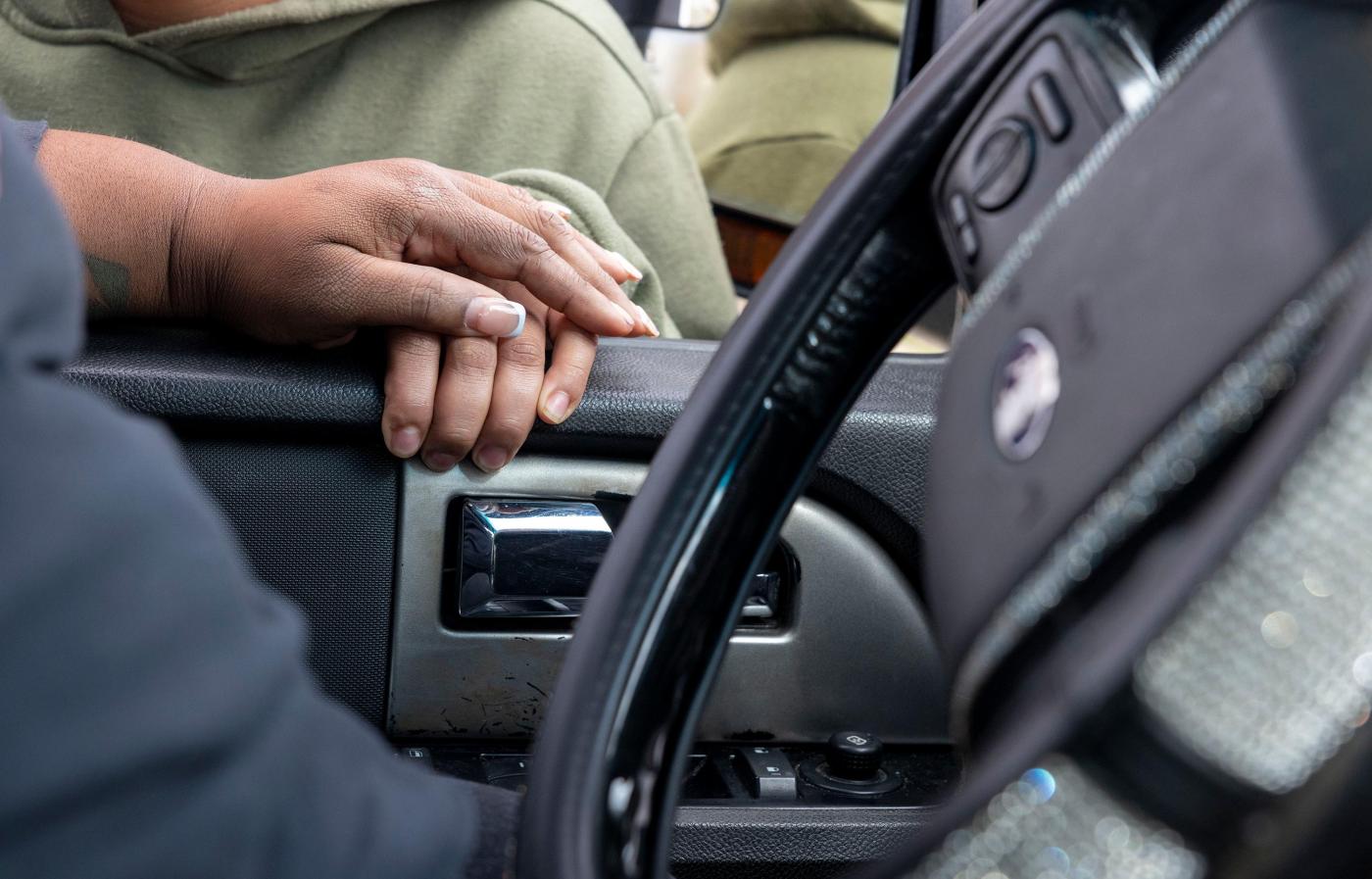
Rosales-Fajardo drove the parents, who were afraid to travel alone out of fear of being pulled over and arrested on a bridge. She said she’ll keep driving them as long as she needs to.

“Whenever they see a Hispanic driving or anything like that, that’s suspicious to them,” she said of federal agents.

But the baby is safe and healthy. And the parents have named Rosales-Fajardo his godmother.

Gwen Dilworth of Mississippi Today and Christiana Botic of Verite News contributed to this report.

©2025 KFF Health News. Distributed by Tribune Content Agency, LLC.
Photos of Christmas celebrations around the world

posted in: All news | 0

The Associated Press

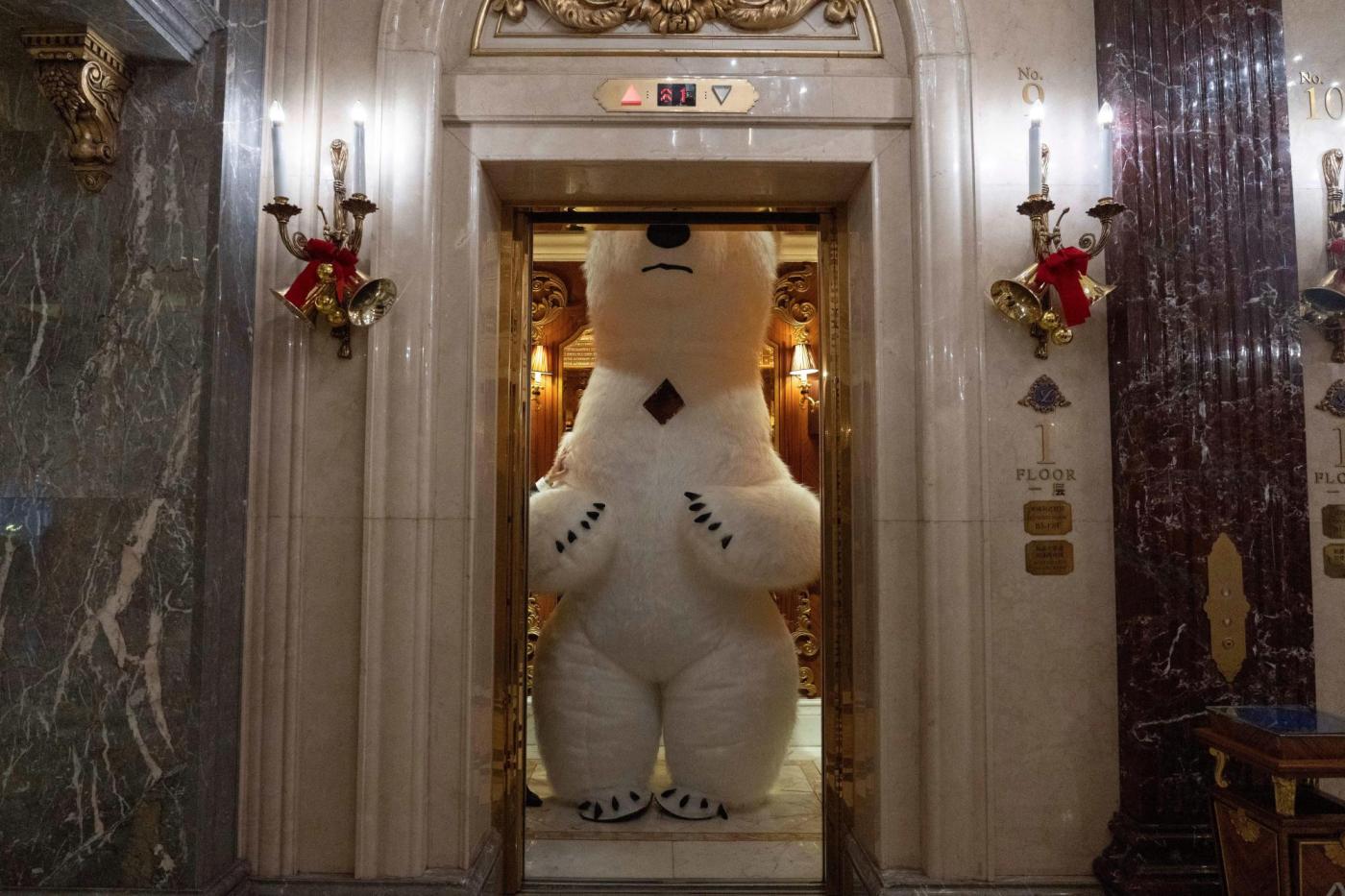
From Bethlehem to Beijing, people around the world are celebrating the Christmas season. A polar bear mascot boards an elevator during holiday revelry. Swimmers plunge into frigid waters off Northern Ireland for a charity event. Singers fill a stadium in Indonesia.

Associated Press photographers have captured diverse, mesmerizing images such as these as they chronicle a holiday period abounding in joy, reverence and dazzling lights.

This is a photo gallery curated by AP photo editors.

People drive up to the top of the Feldberg mountain near Frankfurt, Germany, to join the traditional Christmas Eve meeting of tractor and motorbike drivers early Wednesday, Dec. 24, 2025. (AP Photo/Michael Probst)
People take to the sea at Helen’s Bay, Northern Ireland, for the annual Christmas Eve swim in the cold waters in Belfast Lough to raise money for Dementia NI & Air Ambulance NI, Wednesday, Dec. 24, 2025. (AP Photo/Peter Morrison)
People gather at Roemerberg square to attend the city’s bell ringing on Christmas Eve in Frankfurt, Germany, Wednesday, Dec. 24, 2025. (AP Photo/Michael Probst)
People wearing traditional Ukrainian clothes sign carols on the Christmas Eve at a subway station in central Kyiv, Ukraine, Wednesday, Dec. 24, 2025. (AP Photo/Danylo Antoniuk)
Christians attend prayer on Christmas Eve, Wednesday, Dec. 24, 2025, at St. Mary Cathedral in Yangon, Myanmar. (AP Photo/Thein Zaw)
Catholic clergy walk in procession next to the Church of the Nativity, traditionally believed to be the birthplace of Jesus, on Christmas Eve, in the West Bank city of Bethlehem, Wednesday, Dec. 24, 2025. (AP Photo/Mahmoud Illean)
Latin Patriarch Pierbattista Pizzaballa, the top Catholic clergyman in the Holy Land, is received by local community while crossing an Israeli military checkpoint from Jerusalem ahead of celebrations at the Church of the Nativity, traditionally believed to be the birthplace of Jesus, on Christmas Eve, in the West Bank city of Bethlehem, Wednesday, Dec. 24, 2025. (AP Photo/Mahmoud Illean)
People hold electric candles as they sing during a Christmas Eve service at Indonesia Arena stadium in Jakarta, Indonesia, Wednesday, Dec. 24, 2025. (AP Photo/Tatan Syuflana)
Ukrainian servicemen attend a parade on Orthodox Christmas eve in downtown Lviv, Ukraine, on Wednesday, Dec. 24, 2025. (AP Photo/Mykola Tys)
Wearing Santa Claus costumes, children watch the 40th annual Christmas parade heading towards the Basilica of the Annunciation in Nazareth, Israel, Wednesday, Dec. 24, 2025. (AP Photo/Ariel Schalit)
A man walks past an illuminated church on the eve of Christmas in Ahmedabad, India, Wednesday, Dec. 24, 2025. (AP Photo/Ajit Solanki)
Children celebrate Christmas Eve in the southern Lebanese border village of Alma al-Shaab, near the Israeli border, Wednesday, Dec. 24, 2025. (AP Photo/Mohammed Zaatari)
A piece of meat is thrown to the buyer in the crowd during the annual Christmas Eve meat auction at Smithfield Market in London, Wednesday, Dec. 24, 2025. (AP Photo/Kirsty Wigglesworth)

Related Articles


Trump-backed candidate Nasry Asfura declared winner of Honduras’ presidential vote


Thousands flock to Bethlehem to revive the Christmas spirit after 2 years of war in Gaza


A blast in Gaza wounds a soldier and Israel accuses Hamas of ceasefire violation


Everything you need to know about Christmas, and how it has evolved into a global holiday


Zelenskyy says he’s open to creating demilitarized zone in Ukraine’s industrial heartland

Kennedy Center Christmas Eve jazz concert canceled after Trump name added to building

posted in: All news | 0

By HILLEL ITALIE, AP National Writer

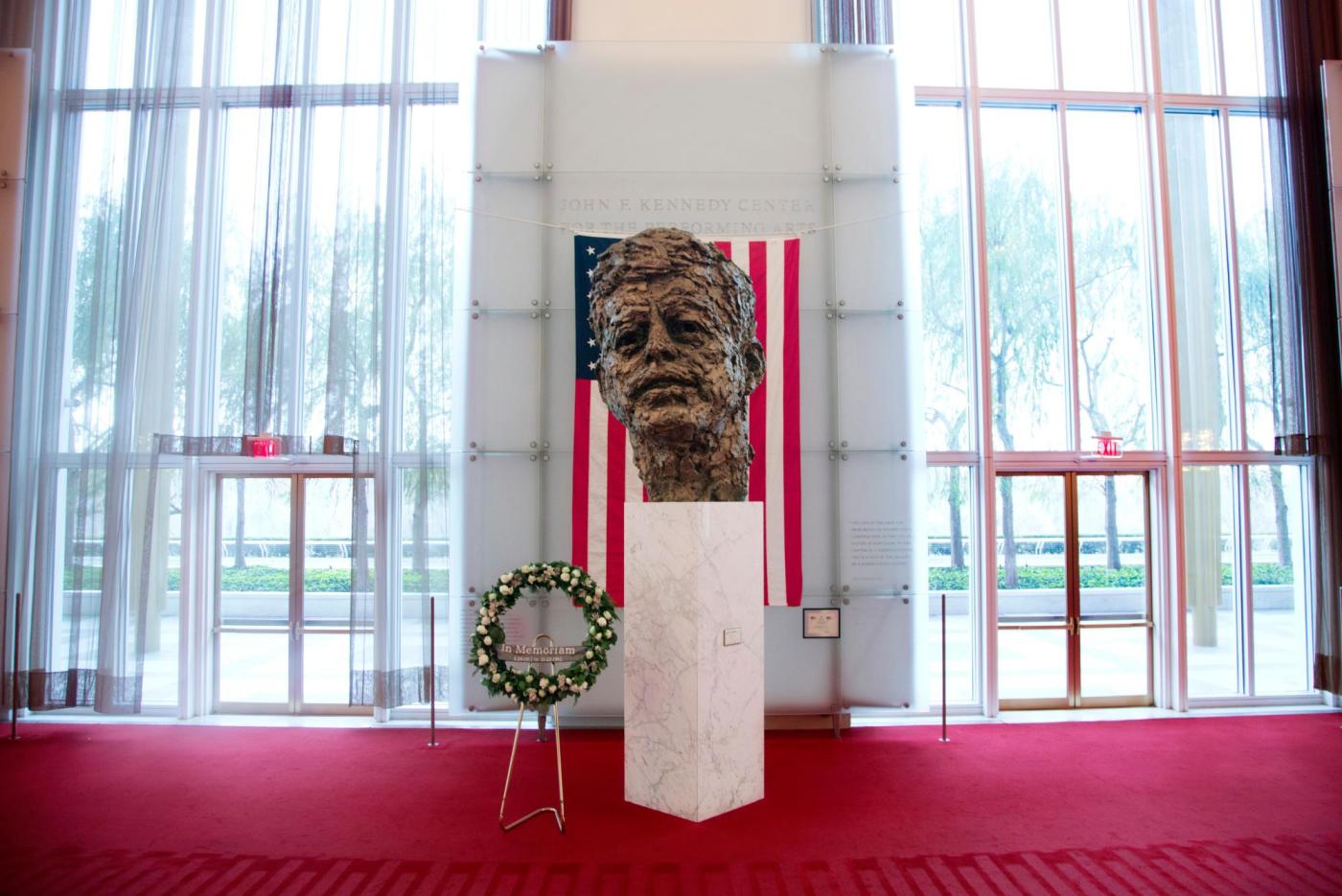
NEW YORK (AP) — A planned Christmas Eve jazz concert at the Kennedy Center, a holiday tradition dating back more than 20 years, has been canceled. The show’s host, musician Chuck Redd, says that he called off the performance in the wake of the White House announcing last week that President Donald Trump’s name would be added to the facility.

As of last Friday, the building’s facade reads The Donald J. Trump and The John F. Kennedy Memorial Center for the Performing Arts. According to the White House, the president’s handpicked board approved the decision, which scholars have said violates the law. Trump had been suggesting for months he was open to changing the center’s name.

“When I saw the name change on the Kennedy Center website and then hours later on the building, I chose to cancel our concert,” Redd told The Associated Press in an email Wednesday. Redd, a drummer and vibraphone player who has toured with everyone from Dizzy Gillespie to Ray Brown, has been presiding over holiday “Jazz Jams” at the Kennedy Center since 2006, succeeding bassist William “Keter” Betts.

The Kennedy Center did not immediately respond to email seeking comment. The center’s website lists the show as canceled.

President Kennedy was assassinated in 1963, and Congress passed a law the following year naming the center as a living memorial to him. Kennedy niece Kerry Kennedy has vowed to remove Trump’s name from the building once he leaves office and former House historian Ray Smock is among those who say any changes would have to be approved by Congress.

The law explicitly prohibits the board of trustees from making the center into a memorial to anyone else, and from putting another person’s name on the building’s exterior.

Related Articles


Pediatrics group sues HHS for cutting funds for children’s health programs


Federal judge upholds Hawaii’s new climate change tax on cruise passengers


After missing deadline, DOJ says it may need a ‘few more weeks’ to finish releasing Epstein files


Judge blocks Trump effort to strip security clearance from attorney who represented whistleblowers


How a fast-moving $50 cash relief program buoyed needy families when SNAP payments were paused

Trump, a Republican, has been deeply involved with the center named for an iconic Democrat after mostly ignoring it during his first term. He has forced out its leadership, overhauled the board while arranging for himself to head it, and personally hosted this year’s Kennedy Center honors, breaking a long tradition of presidents mostly serving as spectators. The changes at the Kennedy Center are part of the president’s larger mission to fight “woke” culture at federal cultural institutions.

Numerous artists have called off Kennedy Center performances since Trump returned to office, including Issa Rae and Peter Wolf. Lin-Manuel Miranda canceled a planned production of “Hamilton.”

Former MN Gov. Tim Pawlenty says 2026 is ‘best chance’ for GOP to win statewide

posted in: All news | 0

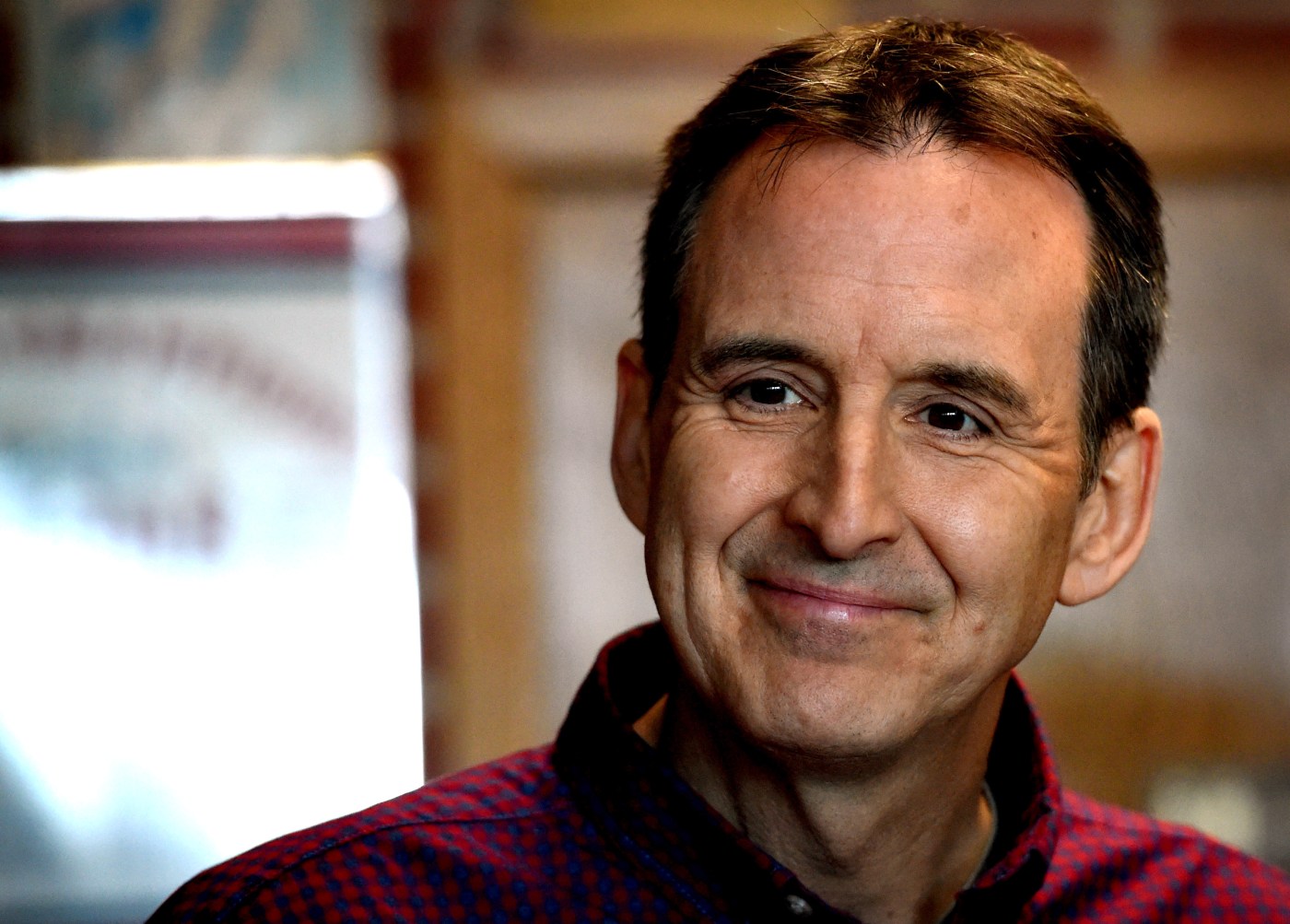
Tim Pawlenty was the last Republican to win statewide office after he was re-elected to his second term as Minnesota’s governor in 2006.

The former governor thinks 2026 might be Minnesota Republicans’ “best chance” to achieve the same feat 20 years later, he told Forum News Service in November.

The GOP race is crowded, with MyPillow founder Mike Lindell, House Speaker Lisa Demuth, state Rep. Kristin Robbins, attorney Chris Madel, and previous gubernatorial candidates Kendall Qualls and physician Scott Jensen.

“The 2026 elections are the best chance for Republicans to win statewide here in a long time. Those chances will be impacted by (President Donald) Trump and (Gov. Tim) Walz’s popularity a year from now, the state of the economy, whether key consumer items are affordable, the quality of our candidates, and the growing sense things are off track in Minnesota,” Pawlenty wrote in an email.

‘Political climate more polarized’

Last year, a few Republicans and former Republicans declared themselves in support of former Vice President Kamala Harris for president.

Pawlenty was not one of them, but when asked to reflect on the “Republicans for Harris wave,” he said, “If you haven’t closed a sale with your product in nearly 20 years, it’s long past the time to get a better product, better marketing, or both.”

Pawlenty said he thinks Republicans currently in office have done a good job addressing “concerns about illegal immigration, crime, out-of-control wokeness and more,” but that more efforts are needed toward affordability.

“Almost nothing stays the same in politics for long, and recent changes have featured MAGA taking over the Republican Party and socialists taking over the Democratic Party. The political climate is now markedly more polarized than when I was governor,” he wrote.

During his tenure, Pawlenty focused on not raising taxes. He turned a budget deficit into a surplus — that later turned into a budget deficit. He passed a concealed carry law, and oversaw major infrastructure projects like the Northstar Commuter Rail and Target Field.

Before he was governor, he served 10 years in the Minnesota Legislature. He also had an unsuccessful run for the 2012 Republican nomination for president in 2010. He finished second to former Alaska Gov. Sarah Palin to be U.S. Sen. John McCain’s presidential running mate in 2008. Pawlenty sought a third term as governor in 2018 but lost the Republican primary to Jeff Johnson.

‘A chilling effect on our discourse’

Now, Pawlenty serves on various boards, periodically writes and speaks about policy and politics, and sometimes appears on cable news shows.

Two of those appearances were on Twin Cities-based KARE 11 in the wake of the June 14 Minnesota lawmaker shootings.

In one appearance on June 18, he provided context on misinformation regarding the appointment of accused assassin Vance Boelter to a government board. In another appearance on June 14, he said Minnesota’s “civic and political fabric seems to be so torn.”

“It’s going to have a chilling effect on our discourse, on our political leaders, but importantly, also their families,” Pawlenty said on KARE 11. “Can you imagine being the child or a spouse, a significant other, of a political leader in this environment — every time you open the door, every time you go to the grocery store, you don’t know who is just going to question you or who might harm you?”

Fraud cases

On Dec. 5, he weighed in on Minnesota’s fraud investigations and the rhetoric about Minnesota’s Somali community that has followed.

“Over 80 people have been charged … criminally for that fraud, and the vast majority of almost all of them are, in fact, Somali,” he said on News Nation. “So we don’t want to stigmatize any group because they belong to an ethnic group or another group, but we also don’t want to excuse illegal behavior or misconduct because they’re in that group.”

When asked about how the current administration has handled the issue, Pawlenty responded, “There’s no question … that the early signals around this fraud were ignored.”

When Forum News Service asked what’s ahead for him, Pawlenty didn’t rule out all elected office but did comment on one 2026 race.

“While I’ve been asked to run for the U.S. Senate, I don’t think I could win my party’s endorsement at the convention or in a primary because I guess I’m now viewed as too ‘mainstream’ — which I find kinda funny,” he wrote.

Related Articles


Pediatrics group sues HHS for cutting funds for children’s health programs


Federal judge upholds Hawaii’s new climate change tax on cruise passengers


After missing deadline, DOJ says it may need a ‘few more weeks’ to finish releasing Epstein files


Judge blocks Trump effort to strip security clearance from attorney who represented whistleblowers


How a fast-moving $50 cash relief program buoyed needy families when SNAP payments were paused