Supreme Court takes up Republican attack on Voting Rights Act in case over Black representation

posted in: All news | 0

By MARK SHERMAN, Associated Press

WASHINGTON (AP) — A Republican attack on a core provision of the Voting Rights Act that is designed to protect racial minorities comes to the Supreme Court this week, more than a decade after the justices knocked out another pillar of the 60-year-old law.

Related Articles


World leaders gathering in Egypt throw their weight behind the Gaza ceasefire deal


The Latest: Palestinians journey back home as aid convoys enter Gaza and truce holds


Israel expects hostages to be freed from Gaza ‘in a few hours’ as ceasefire holds


Palestinians return to ruins and US expects hostages freed on Monday as Gaza ceasefire holds


America’s aging prison population is posing challenges for states

In arguments Wednesday, lawyers for Louisiana and the Trump administration will try to persuade the justices to wipe away the state’s second majority Black congressional district and make it much harder, if not impossible, to take account of race in redistricting.

“Race-based redistricting is fundamentally contrary to our Constitution,” Louisiana Attorney General Elizabeth Murrill wrote in the state’s Supreme Court filing.

A mid-decade battle over congressional redistricting already is playing out across the nation, after President Donald Trump began urging Texas and other Republican-controlled states to redraw their lines to make it easier for the GOP to hold its narrow majority in the House of Representatives. A ruling for Louisiana could intensify that effort and spill over to state legislative and local districts.

The conservative-dominated court, which just two years ago ended affirmative action in college admissions, could be receptive. At the center of the legal fight is Chief Justice John Roberts, who has long had the landmark civil rights law in his sights, from his time as a young lawyer in the Reagan-era Justice Department to his current job.

“It is a sordid business, this divvying us up by race,” Roberts wrote in a dissenting opinion in 2006 in his first major voting rights case as chief justice.

In 2013, Roberts wrote for the majority in gutting the landmark law’s requirement that states and local governments with a history of discrimination, mostly in the South, get approval before making any election-related changes.

“Our country has changed, and while any racial discrimination in voting is too much, Congress must ensure that the legislation it passes to remedy that problem speaks to current conditions,” Roberts wrote.

The challenged provision relies on current conditions

Challenges under the provision known as Section 2 of the voting rights law must be able to show current racially polarized voting and an inability of minority populations to elect candidates of their choosing, among other factors.

“Race is still very much a factor in current voting patterns in the state of Louisiana. It’s true in many places in the country,” said Sarah Brannon, deputy director of the American Civil Liberties Union’s Voting Rights Project.

The Louisiana case got to this point only after Black voters and civil rights groups sued and won lower court rulings striking down the first congressional map drawn by the state’s GOP-controlled Legislature after the 2020 census. That map created just one Black majority district among six House seats in a state that is one-third Black.

Louisiana appealed to the Supreme Court but eventually added a second majority Black district after the justices’ 5-4 ruling in 2023 that found a likely violation of the Voting Rights Act in a similar case over Alabama’s congressional map.

Roberts and Justice Brett Kavanaugh joined their three more liberal colleagues in the Alabama outcome. Roberts rejected what he described as “Alabama’s attempt to remake our section 2 jurisprudence anew.”

That might have settled things, but a group of white voters complained that race, not politics, was the predominant factor driving the new Louisiana map. A three-judge court agreed, leading to the current high court case.

Instead of deciding the case in June, the justices asked the parties to answer a potentially big question: “Whether the state’s intentional creation of a second majority-minority congressional district violates the Fourteenth or Fifteenth Amendments to the U. S. Constitution.”

FILE – President Lyndon Johnson, at podium, speaks in the rotunda of the Capitol in Washington, before to signing the Voting Rights Act, Aug. 6, 1965. (AP Photo, File)

Those amendments, adopted in the aftermath of the Civil War, were intended to bring about political equality for Black Americans and gave Congress the authority to take all necessary steps. Nearly a century later, Congress passed the Voting Rights Act of 1965, called the crown jewel of the civil rights era, to finally put an end to persistent efforts to prevent Black people from voting in the former states of the Confederacy.

A second round of arguments is rare at the Supreme Court

The call for new arguments sometimes presages a major change by the high court. The Citizens United decision in 2010 that led to dramatic increases in independent spending in U.S. elections came after it was argued a second time.

“It does feel to me a little bit like Citizens United in that, if you recall the way Citizens United unfolded, it was initially a narrow First Amendment challenge,” said Donald Verrilli, who served as the Obama administration’s top Supreme Court lawyer and defended the voting rights law in the 2013 case.

Among the possible outcomes in the Louisiana case, Verrilli said, is one in which a majority holds that the need for courts to step into redistricting cases, absent intentional discrimination, has essentially expired. Kavanaugh raised the issue briefly two years ago.

The Supreme Court has separately washed its hands of partisan gerrymandering claims, in a 2019 opinion that also was written by Roberts. Restricting or eliminating most claims of racial discrimination in federal courts would give state legislatures wide latitude to draw districts, subject only to state constitutional limits.

A shift of just one vote from the Alabama case would flip the outcome.

With the call for new arguments, Louisiana changed its position and is no longer defending its map.

The Trump administration joined on Louisiana’s side. The Justice Department had previously defended the voting rights law under administrations of both major political parties.

Rep. Cleo Fields has been here before

For four years in the 1990s, Louisiana had a second Black majority district until courts struck it down because it relied too heavily on race. Fields, then a rising star in the state’s Democratic politics, twice won election. He didn’t run again when a new map was put in place and reverted to just one majority Black district in the state.

Fields is one of the two Black Democrats who won election to Congress last year in newly drawn districts in Alabama and Louisiana.

He again represents the challenged district, described in March by Roberts as “a snake that runs from one end of the state to the other,” picking up Black residents along the way.

If that’s so, civil rights lawyer Stuart Naifeh told Roberts, it’s because of slavery, Jim Crow laws and the persistent lack of economic opportunity for Black Louisianans.

Fields said the court’s earlier ruling that eliminated federal review of potentially discriminatory voting laws has left few options to protect racial minorities, making the preservation of Section 2 all the more important.

They would never win election to Congress, he said, “but for the Voting Rights Act and but for creating majority minority districts.”

Associated Press writer Gary Fields contributed to this report.

Living hostages and Palestinian prisoners are released as part of ceasefire in Gaza

posted in: All news | 0

By WAFAA SHURAFA, SAMY MAGDY and MELANIE LIDMAN, Associated Press

DEIR AL-BALAH, Gaza Strip (AP) — Hamas released all 20 remaining living hostages held in Gaza on Monday, while Israel began releasing hundreds of Palestinian prisoners as part of a ceasefire pausing two years of war that pummeled the territory, killed tens of thousands of Palestinians, and had left scores of captives in Hamas’ hands.

Related Articles


Today in History: October 13, Hedge fund billionaire sentenced in insider-trading case


The Latest: Palestinians journey back home as aid convoys enter Gaza and truce holds


Israel expects hostages to be freed from Gaza ‘in a few hours’ as ceasefire holds


Today in History: October 12, First woman lights Olympic flame


Palestinians return to ruins and US expects hostages freed on Monday as Gaza ceasefire holds

The hostages, all men, arrived back in Israel, where they will reunite with their families and undergo medical checks. The bodies of the remaining 28 dead hostages are also expected to be handed over as part of the deal, although the exact timing remained unclear.

Buses carrying dozens of freed Palestinian prisoners arrived in the West Bank city of Ramallah and in the Gaza Strip, as Israel began releasing more than 1,900 prisoners and detainees as part of the ceasefire deal.

Cheering crowds met the buses arriving in Ramallah from Ofer prison, in the Israel-occupied West Bank. At least one bus also crossed into the Gaza Strip, the Hamas-run Prisoners Office said.

While major questions remain about the future of Hamas and Gaza, the exchange of hostages and prisoners raised hopes for ending the deadliest war ever between Israel and the group. The ceasefire is also expected to be accompanied by a surge of humanitarian aid into Gaza, parts of which are experiencing famine.

Israeli Prime Minister Benjamin Netanyahu pledged that he was “committed to this peace” in a speech to the Knesset, the Israeli parliament.

U.S. President Donald Trump is also expected to address the Knesset, and later will attend a summit to discuss the U.S.-proposed deal and postwar plans with other leaders.

The war began when Hamas launched a surprise terrorist attack on southern Israel on Oct. 7, 2023, in which some 1,200 people, mostly civilians, were killed and 251 taken hostage.

In Israel’s ensuing offensive, more than 67,000 Palestinians have been killed, according to Gaza’s Health Ministry, which doesn’t differentiate between civilians and combatants but says around half the dead were women and children. The ministry is part of the Hamas-run government, and the U.N. and many independent experts consider its figures to be the most reliable estimate of wartime casualties.

The toll is expected to grow as bodies are pulled from rubble previously made inaccessible by fighting.

The war has destroyed large swaths of Gaza and displaced about 90% of its some 2 million residents. It has also triggered other conflicts in the region, sparked worldwide protests and led to allegations of genocide that Israel denies.

“Much of Gaza is a wasteland,” U.N. humanitarian chief Tom Fletcher told the AP on Sunday.

Hostages freed

In Tel Aviv, families and friends of the hostages who gathered in a square broke into wild cheers as Israeli television channels announced that the first group of hostages was in the hands of the Red Cross. Tens of thousands of Israelis watched the transfers at public screenings across the country.

Israel released the first photos of the freed hostages, including one showing 28-year-old twins Gali and Ziv Berman embracing as they were reunited. Hostages previously released had said the twins from Kfar Aza were held separately.

The photos of the first seven hostages showed them looking pale but less gaunt than some of the hostages freed in January.

Earlier, while Palestinians awaited the release of hundreds of prisoners held by Israel, an armored vehicle flying an Israeli flag fired tear gas and rubber bullets at a crowd. As drones buzzed overhead, the group scattered.

The tear gas followed the circulation of a flier warning that anyone supporting what it called “terrorist organizations” risked arrest. Israel’s military did not respond to questions about the flier, which The Associated Press obtained on site.

The prisoners being released include 250 people serving life sentences for convictions in attacks on Israelis, in addition to 1,700 seized from Gaza during the war and held without charge. They will be returned to the West Bank or Gaza or sent into exile.

A painful chapter

The hostages’ return caps a painful chapter for Israel. Since they were captured in the attack that ignited the war, newscasts have marked their days in captivity and Israelis have worn yellow pins and ribbons in solidarity. Tens of thousands have joined their families in weekly demonstrations calling for their release.

As the war dragged on, demonstrators accused Netanyahu of dragging his feet for political purposes, even as he accused Hamas of intransigence. Last week, under heavy international pressure and increasing isolation for Israel, the bitter enemies agreed to the ceasefire.

It remains unclear when the remains of 28 dead hostages will be returned. An international task force will work to locate deceased hostages who are not returned within 72 hours, said Gal Hirsch, Israel’s coordinator for the hostages and the missing.

Trump in Israel and Egypt

Trump arrived Monday in Israel, where he was to speak at the Knesset, Israel’s parliament. Vice President JD Vance said Trump was likely to meet with newly freed hostages.

“The war is over,” Trump told to reporters as he departed — even though his ceasefire deal leaves many unanswered questions about the future of Hamas and Gaza.

Among the most thorny is Israel’s insistence that a weakened Hamas disarm. Hamas refuses to do that and wants to ensure Israel pulls its troops completely out of Gaza.

So far, the Israeli military has withdrawn from much of Gaza City, the southern city of Khan Younis and other areas. Troops remain in most of the southern city of Rafah, towns of Gaza’s far north, and the wide strip along the length of Gaza’s border with Israel.

The future governance of Gaza also remains unclear. Under the U.S. plan, an international body will govern the territory, overseeing Palestinian technocrats running day-to-day affairs. Hamas has said Gaza’s government should be worked out among Palestinians.

Later Monday, Trump will head to Egypt, where he and Egyptian President Abdel-Fattah el-Sissi will lead a summit with leaders from more than 20 countries on the future of Gaza and the broader Middle East.

Mahmoud Abbas, leader of the internationally recognized Palestinian Authority, will attend, according to a judge and adviser to Abbas, Mahmoud al-Habbash.

Egypt’s presidency said Netanyahu would attend as well, but the Israel leader’s office later said he would not because due to a Jewish holiday.

The plan envisions an eventual role for the Palestinian Authority — something Netanyahu has long opposed. But it requires the authority, which administers parts of the West Bank, to undergo a sweeping reform program that could take years.

The plan also calls for an Arab-led international security force in Gaza, along with Palestinian police trained by Egypt and Jordan. It said Israeli forces would leave areas as those forces deploy. About 200 U.S. troops are now in Israel to monitor the ceasefire.

The plan also mentions the possibility of a future Palestinian state, another nonstarter for Netanyahu.

Magdy reported from Cairo and Lidman from Jerusalem. Associated Press writers Josef Federman in Truro, Massachusetts; Bassem Mroue in Beirut; Jalal Bwaitel in Ramallah, West Bank, and Sam Mednick in Tel Aviv, Israel contributed to this report.

Conley’s Corner: Turning the page on heartbreak

posted in: All news | 0

Editor’s note: Mike Conley is one of the best sources of information in the NBA.

Entering his 19th NBA season, the 38-year-old Timberwolves point guard has seen it all and has the knowledge and willingness to explain what’s taken place and what’s to come with the media and, thus, the fans. That breadth of insight and analysis extends from the on-court Xs and Os to team dynamics and development.

Conley is just as good at explaining why two teammates came to blows in the middle of a timeout as he is on what the team needs to do to decode a switch-heavy defense.

So who better to sit down with twice a month to tackle different topics ranging from the Timberwolves to the NBA at large to, well, Mike Conley, than Conley himself?

This is the third season of Conley’s Corner.

Conley’s Corner: Turning the page

Mike Conley was overtaken by tears last May as he left the floor following Game 5 of the Western Conference Finals in Oklahoma City.

It had happened again. For the second straight year, the Timberwolves were denied on the doorstep of the veteran floor general’s first-ever NBA Finals appearance.

Minnesota Timberwolves guard Mike Conley speaks with referee Tyler Ford (39) during the first half of Game 1 of an NBA basketball Western Conference Finals playoff series against the Oklahoma City ThunderTuesday, May 20, 2025, in Oklahoma City. (AP Photo/Nate Billings)

Minnesota felt as though it let an opportunity slip through its fingers in 2024 against Dallas. The Wolves had home-court advantage in that series, and allowed themselves to get beat by the Mavericks’ two best players in critical spots too many times in succession.

The loss to Oklahoma City was different. The things that got Minnesota to the West Finals no longer worked against the Thunder. The Wolves simply weren’t good enough in key areas to hang with the eventual champs. That was apparent by the series’ end.

And yet, this loss hit Conley harder.

Last season was following a script – of a movie, of champions of years past. You get knocked down in pursuit of the pinnacle one year only reach the mountaintop the next.

“The second time in a row is like, ‘Oh, we learned something from last year.’ You look back at all those teams, this is how it happened,” Conley said. “It’s part of the deal, and we’re just next in line. Let’s do it.”

It didn’t work out that way.

“Frustrating,” he said.

Conley said his emotions as he left floor were “probably the most real for me” than they’d ever been. He knows how precious opportunities to contend for a championship are. Minnesota missed out on another one. Suddenly, a flood of emotions and thoughts entered his mind, ranging from how far he has come as a player to now to wondering if he’d get another real shot at a championship.

Black hole

Conley likens the hours following a playoff exit to the immediate aftermath of a minor car accident.

“It happens and you’re like ‘What just happened? That was scary,’ ” he said. “You start thinking about all the things that could have been or not been, and you’re just thankful — but you’re like, ‘Whoa, that was crazy.’ It’s like that kind of shock.”

Then it hits you: The season is over. Players like Conley are so goal-driven that during a season, few thoughts enter their minds beyond what they and the team can do to improve their chances of claiming a championship. He calls these eight-to-nine months “like a black hole.”

“You just go in, and then when it’s done, it clicks and you’re out and you’re like, ‘What just happened?’ ” Conley said. “Like, I was just gone for six months, you know what I mean? You’re in a trance state for a while.”

So, what happens when you pop back out and realize you didn’t complete the ultimate mission?

“It’s tough to get through all those emotions, all those things that may be hovering in the background that you don’t let get to you. So, you feel something,” he said. “Like, ‘Was that my last game?’ Whatever it is, whatever your situation is. All those thoughts, feelings rush in.”

They multiply for Conley with each passing season. He knows how hard it is to play into May and June. The Timberwolves have similar designs this season, but there are no guarantees in sports. So, when you get close, you feel like you have to finish the job. And when you don’t, “real grief” is waiting for you on the other side.

“It’s depressing,” he said. “I’m sure people can’t relate, but not too many guys get the chance to play in the NBA, and when you get that opportunity like we do, and you come up short, it’s like real depression for like weeks.”

Back to work

You won’t see Conley out enjoying himself in public shortly after a playoff exit.

Minnesota Timberwolves guard Mike Conley (10) dribbles down the court during the first half of an NBA basketball preseason game against the Indiana Pacers, Tuesday, Oct. 7, 2025, in Minneapolis. (AP Photo/Abbie Parr)

“I don’t want to be seen out eating. I don’t want to go nowhere,” he said. “It’s almost like an embarrassment. I don’t want to be seen by anybody. You just feel so terrible about the situation.”

So, Conley goes back to the place he knows best, the gym. There, he can bury himself in his work. Just 36 hours after that last game, he was at the Wolves’ practice facility. At 7 a.m. Anthony Edwards was there, as well.

“You can’t run from (the hurt). You’re going to feel that way anyway,” Conley said. “The best way for me is always to try to get right back into my routine.”

“Every time you’re in the weight room, every time you’re shooting or something, you’re like, ‘Man, I’m not going to miss this shot again,’ ” he added. “It just kind of gets you going forward toward another year. It’s probably why I keep trying, year after year: to give myself another chance.”

It’s why retirement isn’t an option. Ending the pursuit short of the ultimate destination would require some emotional management training.

“I don’t know how to cope, bro,” Conley joked. “I’ll be around. Even if I don’t play a minute, I’m just going to be around. I’ll be dressed up, in my routine, doing what I do until I somehow get a ring.”

The chase continues

The birth of a new league season brings the NBA Draft, Summer League and a fresh cycle. That’s when Conley feels himself turning the page and transforms thoughts from “What went wrong?” into “How can we improve?”

But that’s in July, at which point it’s time for him to begin gearing up physically for the upcoming campaign. Inevitably, he’s confronted with the fact that he spent most of his true “offseason” wallowing in his disappointment.

“Before I knew it, it was August and I was coming back (to Minnesota) for my kids to start school,” Conley said. “It just happens really quickly. If I could get out of that (rut), I could enjoy my summer a lot more.”

But it seems as if Conley’s only chance to break the cycle is to break through and win that elusive first title. So, the chase continues into Year 19. Conley joked that he now checks in with his body in the morning in the same way people open their car hoods to inspect the engine.

“I’ll be like, ‘This don’t work today. My ankle don’t work today. My knee don’t work today. My hip, my back, whatever — something random,” Conley said. “And I’m like, ‘Forget it.’ I’m still going to go down (to the facility) and do what I’ve got to do and get after this thing again.”

“Because the thought of the goal, achieving the goal, is so great to me that is just pushes me to want to do it more, regardless of how I feel.”

Aches and pains don’t compare to the agony of an unrealized dream.

“Hopefully, I ain’t got to feel that again,” Conley said. “Hopefully, we can figure it out.”

Related Articles


Timberwolves guard Mike Conley talks Wolves, his health and golf

Today in History: October 13, Hedge fund billionaire sentenced in insider-trading case

posted in: All news | 0

Today is Monday, Oct. 13, the 286th day of 2025. There are 79 days left in the year.

Today in history:

On Oct. 13, 2011, Raj Rajaratnam (rahj rah-juh-RUHT’-nuhm), the hedge fund billionaire at the center of one of the biggest insider-trading cases in U.S. history, was sentenced by a federal judge in New York to 11 years behind bars. He was released early, in 2019.

Also on this date:

In 1792, the cornerstone of the executive mansion, later known as the White House, was laid by President George Washington during a ceremony in the District of Columbia.

Related Articles


From barks to words: Researchers aim to translate dog sounds with AI


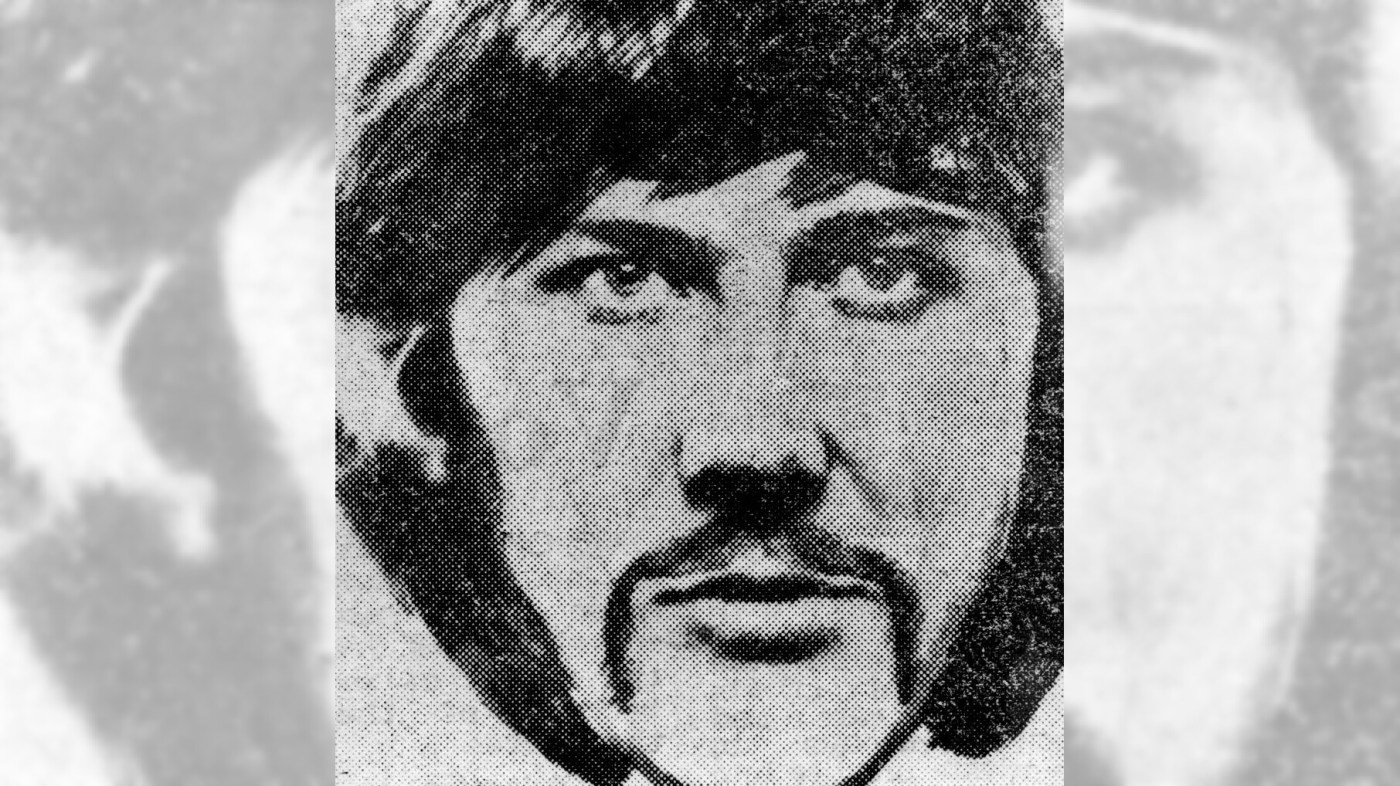
True crime: 1925 slaying of FBI agent set off manhunt for ‘dapper sheik’ car thief


The Latest: Palestinians journey back home as aid convoys enter Gaza and truce holds


Israel expects hostages to be freed from Gaza ‘in a few hours’ as ceasefire holds


Today in History: October 12, First woman lights Olympic flame

In 1932, President Herbert Hoover and Chief Justice Charles Evans Hughes laid the cornerstone for the U.S. Supreme Court building in Washington.

In 1943, Italy declared war on Germany, its one-time Axis partner.

In 1960, the Pittsburgh Pirates won the World Series, defeating the New York Yankees in Game 7, 10-9, on a home run hit by Bill Mazeroski.

In 1972, a Uruguayan chartered flight carrying 45 people crashed in the Andes. In order to stay alive, survivors resorted to feeding off the remains of some of the dead; 16 people were rescued more than two months later.

In 1999, in Boulder, Colorado, the JonBenet Ramsey grand jury was dismissed after 13 months of work with prosecutors saying there wasn’t enough evidence to charge anyone in the 6-year-old beauty queen’s slaying.

In 2010, 33 men were rescued from a collapsed Chilean mine after being lifted one by one in capsules 69 days after they were trapped 2,300 feet (700 meters) underground.

In 2016, Bob Dylan was named winner of the Nobel prize in literature.

In 2021, Hollywood’s Captain Kirk, 90-year-old William Shatner, blasted into space aboard a ship built by Jeff Bezos’ Blue Origin company; the “Star Trek” actor and three fellow passengers reached an altitude of 66.5 miles (107 kilometers) during a flight lasting just over 10 minutes.

Today’s Birthdays:

Gospel singer Shirley Caesar is 87.
Singer-musician Paul Simon is 84.
Dallas Cowboys owner Jerry Jones is 83.
Singer-musician Sammy Hagar is 78.
Model Beverly Johnson is 73.
Sen. Maria Cantwell, D-Wash., is 67.
Singer/TV personality Marie Osmond is 66.
NBA coach Doc Rivers is 64.
Actor T’Keyah Crystal Keymah (tuh-KEE’-ah KRYS’-tal kee-MAH’) is 63.
Football Hall of Famer Jerry Rice is 63.
Comedian and actor Matt Walsh is 61.
Baseball Hall of Famer Trevor Hoffman is 58.
Actor Kate Walsh is 58.
Actor Tisha Campbell is 57.
Olympic silver medal figure skater Nancy Kerrigan is 56.
Actor Sacha Baron Cohen is 54.
Olympic gold medal swimmer and TV personality Summer Sanders is 53.
Football Hall of Famer Brian Dawkins is 52.
Basketball Hall of Famer Paul Pierce is 48.
Singer Ashanti is 45.
Olympic gold medal swimmer Ian Thorpe is 43.
Rep. Alexandria Ocasio-Cortez, D-N.Y., is 36.
First daughter Tiffany Trump is 32.
Actor Caleb McLaughlin is 24.