Opinion: Getting It Right For Hunters Point North

posted in: All news | 0

“This half mile of shoreline just south of the Queensboro Bridge has the potential to become the city’s next great waterfront—if we prioritize public interest over private profit.”

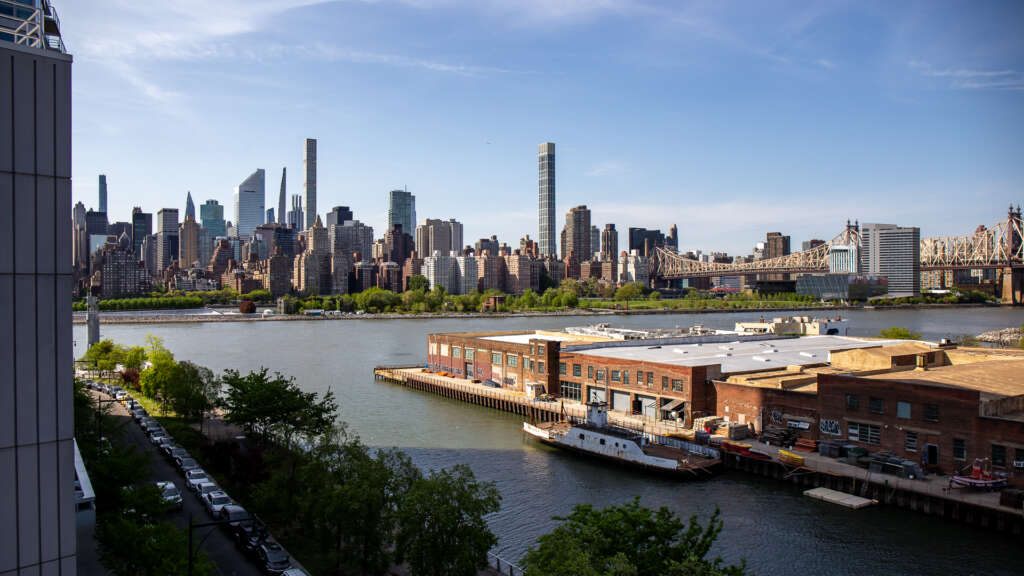
Part of the waterfront stretch of Long Island City that was recently rezoned. (Adi Talwar/City Limits)

New Yorkers treasure every inch of waterfront, yet too often the public loses out. Hunters Point  North—with its panoramic views of Midtown Manhattan, rich industrial history, and vibrant, creative community—is uniquely positioned for revitalization on one of the last remaining underutilized stretches of the East River.

This half mile of shoreline just south of the Queensboro Bridge has the potential to become the city’s next great waterfront—if we prioritize public interest over private profit. 

The city’s recently approved OneLIC rezoning for over 50 blocks of Long Island City threatens to repeat mistakes of the Greenpoint rezoning on the Hunters Point North waterfront. Despite OneLIC’s marketing as a Neighborhood Plan, it is the opposite: it serves private interests while  failing to address the community’s critical needs. What’s more, it creates a false choice between housing and everything else, exploiting the simplistic YIMBY vs NIMBY divide. Rather than a plan, it is a formula for unchecked development that has failed New Yorkers before.  

OneLIC claims to provide 14,700 new apartments—but at a high price. Its massive scale will  compound existing problems, including soaring rents resulting from the nearly 40,000 mostly luxury apartments built here since the early 2000s. Rents for “affordable” units, calculated as a  percentage of the city’s inflated Area Median Income, will be out of reach to most of those in  need. Most egregiously, city-owned waterfront property (over seven acres), as well as several  public streets to the waterfront, will be handed to private developers, and towers could soar as high as 100 stories, dwarfing their surroundings and casting shadows as far as Midtown Manhattan.

Meanwhile, the neighborhood’s per capita open space—currently third lowest in the city—will  plummet to the lowest. And nearly one million square feet, about half, of LIC’s industrial space that could be revitalized for new, clean manufacturing jobs will be sacrificed for luxury high rises or for office space the city does not need.  

All of this with no cohesive plan for infrastructure, schools, stormwater management, sewers, or transit to support nearly 50,000 new residents and workers—let alone to address LIC’s existing  problems and deficits. And while we applaud our councilmember’s efforts to secure necessary funding as part of the rezoning deal, past experience shows that such promises are far from guaranteed.

The most serious violation to the public good is the plan’s lack of resiliency safeguards. It leaves  resiliency across LIC’s vulnerable floodplain to a patchwork of protections dependent on private  developers. This cavalier approach to safety places the larger community at risk and counters the city’s more rigorous coastline planning in Manhattan. 

Hunters Point North could become a resilient, sustainably developed neighborhood with generous, world-class public waterfront parks, like those at Battery Park City, Brooklyn Bridge Park, and  nearby Hunters Point South. But to do that we must learn from past mistakes. Two decades ago, the Greenpoint-Williamsburg rezoning promised 54 acres of parks and true affordability in exchange for private developments. Instead, a wall of luxury towers went up, rents soared, and the community is still fighting to keep Bushwick Inlet Park.

There is a better way forward. Over the past year, Long Island City Coalition and Hunters Point Community Coalition—along with other local groups and the support of State Senators Michael Gianaris and Kristen Gonzalez—led a grassroots planning process that created the Hunters Point North Vision Plan for Resiliency. 

The award-winning Vision Plan presents a cohesive alternative for sustainable and holistic  development rooted in four principles: resiliency, equity, balance, and connection. Resiliency is an existential need and must come first. When Superstorm Sandy hit in 2012, six feet of fast-moving floodwaters tore through Hunters Point. Today, rising sea levels and extreme rainfalls make the risks even worse. 

The Vision Plan proposes a continuous, elevated waterfront park that combines green infrastructure and engineered solutions for long-term, robust flood mitigation. It would safeguard the community while saving the city millions of dollars in avoided damage—up to $6 for every $1 invested, according to the Mayor’s Office of Climate and Environmental Justice. 

Equity means public land should stay in public hands and be used appropriately to serve public  needs—including for schools and essential services. We cannot build “affordable housing” where it is unsafe or while undercutting the very foundations that make communities livable. 

Balance means keeping what works. LIC’s industrial sector is home to hundreds of artists, makers, and small manufacturers—an economic ecosystem that fuels the city’s creative engine. The Vision Plan offers a true mixed-use model of development with human-scaled live/work buildings that complement the character of the neighborhood while generating sustainable growth. 

Connection means designing to bring communities together. The Vision Plan proposes a network of  tree-lined streets linking inland parks and open spaces—like those at Court Square and  MoMA/PS1—to the riverfront. They would protect against intensifying heatwaves, expand waterfront access, and help unify the neighborhood. 

Importantly, the Vision Plan calls for capturing a larger share of the enormous value created by  rezonings and reinvesting these funds back into the community. Development rights, climate resiliency funds, and infrastructure levies can all be tools for supporting what communities need—if New Yorkers demand them.

The city faces an important choice. We’ve seen what happens when short-term profit drives long term planning. Waterfront communities like Greenpoint are promised public benefits that rarely  materialize, while private gains soar. Hunters Point North can be different—but only if decision-makers listen and vote to prioritize lasting values. 

Decades ago, the LIC community insisted on an alternative development plan for Hunters Point South. It included a continuous waterfront park that has made Long Island City the desirable neighborhood it is today. Hunters Point North could be the next great waterfront neighborhood on the East River if we follow the community’s lead once again. Let’s get it right.

Lisa Goren is president of the Long Island City Coalition. Tom Paino is a registered architect and the founder and president of Hunters Point Community Coalition. The Coalitions are sister organizations that have collaborated with other local community groups to support holistic, community-based urban planning grounded in sustainability, equity, and resiliency.

The post Opinion: Getting It Right For Hunters Point North appeared first on City Limits.
Justice Department is examining handling of mortgage fraud investigation into Sen. Adam Schiff

posted in: All news | 0

By BRIAN SLODYSKO, ERIC TUCKER and ALANNA DURKIN RICHER, Associated Press

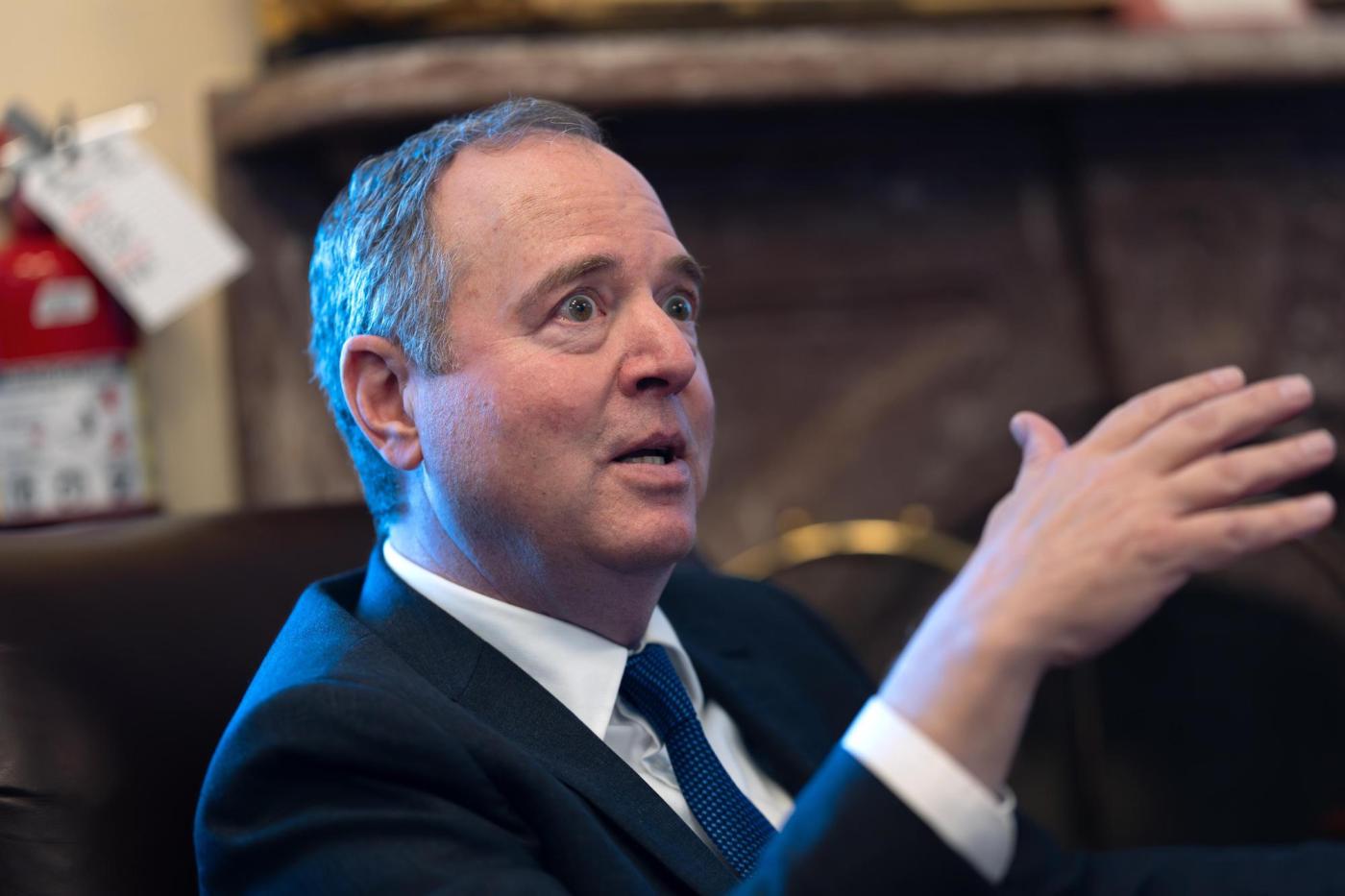
WASHINGTON (AP) — The Justice Department is examining the handling of the mortgage fraud investigation into Sen. Adam Schiff, including the potential involvement of people who claimed to be acting at the behest or direction of two Trump administration officials who have been pushing the probe of the California Democrat, according to a document reviewed by The Associated Press.

Federal authorities involved in the Schiff investigation in Maryland interviewed a Republican congressional candidate on Thursday who has promoted the mortgage fraud allegations against the lawmaker and quizzed her about any communications she may have had with Justice Department official Ed Martin and Federal Housing Finance Agency Director Bill Pulte. The interview came after the woman received a subpoena seeking information about communications she may have had with people claiming to be working at the direction of Pulte and Martin.

Christine Bish, a real estate agent who is running for a congressional seat in California, told the AP that she was prepared to speak to investigators about her own yearslong effort to draw attention to Schiff’s mortgages. But authorities instead were focused on potential interactions she has had with Pulte and Martin, Bish said.

“I expected to be asked questions, a lot of questions, about, ’How did you come about investigating Adam Schiff and what were your findings?” Bish said. “What they wanted to know was if I was in communication with Ed Martin or Director Pulte — and I was not.”

Related Articles


Judge orders Trump administration to end National Guard deployment in DC


Trump administration announces plan for new oil drilling off the coasts of California and Florida


Vance says Americans need patience on prices but says ‘We hear you’ on affordability concerns


As US debates gender roles, some women in male-led faiths dig in on social and political issues


Trump says Democrats’ video message to military is ‘seditious behavior’ punishable by death

Bish said she kept trying to return to the Schiff allegations, but that the officials “are trying to, in my opinion, investigate the investigators.”

The revelation that authorities are turning their attention to the handling of the Schiff investigation is likely to bring fresh scrutiny to the already criticized efforts by Pulte and Martin to investigate Trump political foes for mortgage fraud.

In recent months, Bish had been contacted by multiple times by Robert Bowes, who worked in the first Trump administration and purported to work for Pulte, according to a person familiar with the conversations who spoke on the condition of anonymity due to concern about retribution.

Bowes, who is listed on the subpoena, asked Bish to investigate the mortgages of multiple people, the person said. On one occasion, Bowes asked Bish to serve as a source to a national news outlet he claimed was working on a negative story about mortgages held by Deputy Attorney General Todd Blanche, the person said.

Bowes did not respond to a request for comment Thursday

Pulte did not immediately respond to a message seeking comment. A message seeking comment was also left with a spokesperson for Martin. The Justice Department declined to comment.

In August, the department named Martin as a special prosecutor to help conduct investigations into Schiff and New York Attorney General Letitia James. Prosecutors have separately issued subpoenas as part of a mortgage fraud investigation into Lisa Cook, the Federal Reserve governor whom Trump has sought to fire.

Lawyers for all three have denied the allegations.

The investigation into Schiff is being conducted by prosecutors in Maryland, though the status of the inquiry is unclear. The investigation into James resulted in criminal charges last month in Virginia. She has pleaded not guilty and, in a filing this week, her lawyers decried what they said was “outrageous” government conduct that resulted in her indictment.

Bish told the AP that she previously submitted her work on Schiff to congressional ethics officials, but that nothing came of it. After Pulte put out a call for mortgage fraud tips, she resubmitted her research to the agency he leads as well as the FBI. Pulte called her and left a voicemail asking for more information, she said, but Bish said she has never had a conversation with him.

The subpoena Bish received seeks any communications she may have had with Pulte or any persons claiming to be working at his “behest,” including anyone claiming to be Pulte’s chief of staff. It also seeks information about communications with anyone “claiming to be working for or at the direction of” the Justice Department or “anyone claiming to be acting at the direction or request of” Martin.

Judge orders Trump administration to end National Guard deployment in DC

posted in: All news | 0

WASHINGTON (AP) — A federal judge on Thursday ordered the Trump administration to end its monthslong deployment of National Guard troops to help police the nation’s capital.

U.S. District Judge Jia Cobb concluded that President Donald Trump’s military takeover in Washington, D.C., illegally intrudes on local officials’ authority to direct law enforcement in the district. She put her order on hold for 21 days to allow for an appeal, however.

District of Columbia Attorney General Brian Schwalb sued to challenge the Guard deployments. He asked the judge to bar the White House from deploying Guard troops without the mayor’s consent while the lawsuit plays out.

Related Articles


Justice Department is examining handling of mortgage fraud investigation into Sen. Adam Schiff


Trump administration announces plan for new oil drilling off the coasts of California and Florida


Vance says Americans need patience on prices but says ‘We hear you’ on affordability concerns


As US debates gender roles, some women in male-led faiths dig in on social and political issues


Trump says Democrats’ video message to military is ‘seditious behavior’ punishable by death

Cobb found that while the president does have authority to protect federal functioning and property, he can’t unilaterally deploy the D.C. National Guard to help with crime control as he sees fit or call in troops from other states.

After her ruling, Schwalb called for troops to be sent home. “Normalizing the use of military troops for domestic law enforcement sets a dangerous precedent, where the President can disregard states’ independence and deploy troops wherever and whenever he wants — with no check on his military power,” Schwalb said.

The White House, though, stood by the deployment.

“President Trump is well within his lawful authority to deploy the National Guard in Washington, D.C., to protect federal assets and assist law enforcement with specific tasks,” said spokeswoman Abigail Jackson. “This lawsuit is nothing more than another attempt — at the detriment of DC residents — to undermine the President’s highly successful operations to stop violent crime in DC.”

In August, President Donald Trump issued an executive order declaring a crime emergency in Washington. Within a month, more than 2,300 National Guard troops from eight states and the district were patrolling the city under the command of the Secretary of the Army. Trump also deployed hundreds of federal agents to assist in patrols.

It’s unclear how long the deployments will last, but attorneys from Schwalb’s office said Guard troops are likely to remain in the city through at least next summer.

“Our constitutional democracy will never be the same if these occupations are permitted to stand,” they wrote.

Government lawyers have said Congress empowered the president to control the D.C. National Guard’s operation. “There is no sensible reason for an injunction unwinding this arrangement now, particularly since the District’s claims have no merit,” Justice Department attorneys wrote.

Trump’s Guard deployments have led to other court challenges, including in Portland, Chicago and Los Angeles. The Supreme Court is also weighing the administration’s emergency appeal to be allowed to deploy National Guard troops in the Chicago area in support of the immigration crackdown. A lower court has indefinitely prevented the deployment.

In Washington, the Trump administration deputized Guard troops to serve as special U.S. Marshal Service deputies. Schwalb’s office said out-of-state troops are impermissibly operating as a federal military police force in D.C., inflaming tensions with residents and diverting local police resources.

“Every day that this lawless incursion continues, the District suffers harm to its sovereign authority to conduct local law enforcement as it chooses,” his office’s attorneys wrote.

Trump administration announces plan for new oil drilling off the coasts of California and Florida

posted in: All news | 0

By MATTHEW DALY, Associated Press

WASHINGTON (AP) — The Trump administration announced on Thursday new oil drilling off the California and Florida coasts for the first time in decades, advancing a project that critics say could harm coastal communities and ecosystems, as President Donald Trump seeks to expand U.S. oil production.

The oil industry has been seeking access to new offshore areas, including Southern California and off the coast of Florida, as a way to boost U.S. energy security and jobs. The federal government has not allowed drilling in federal waters in the eastern Gulf of Mexico, which includes offshore Florida and part of offshore Alabama, since 1995, because of concerns about oil spills. California has some offshore oil rigs, but there has been no new leasing in federal waters since the mid-1980s.

Since taking office for a second time in January, Trump has systematically reversed former President Joe Biden’s focus on slowing climate change to pursue what the Republican calls U.S. “energy dominance” in the global market. Trump, who recently called climate change “the greatest con job ever perpetrated on the world,” created a National Energy Dominance Council and directed it to move quickly to drive up already record-high U.S. energy production, particularly fossil fuels such as oil, coal and natural gas.

Meanwhile, Trump’s administration has blocked renewable energy sources such as offshore wind and canceled billions of dollars in grants that supported hundreds of clean energy projects across the country.

Even before it was released, the offshore drilling plan has been met with strong opposition from California Gov. Gavin Newsom, a Democrat who is eyeing a 2028 presidential run and has emerged as a leading Trump critic. Newsom pronounced the idea “dead on arrival” in a social media post. The proposal also is likely to draw bipartisan opposition in Florida. Tourism and access to clean beaches are key parts of the economy in both states.

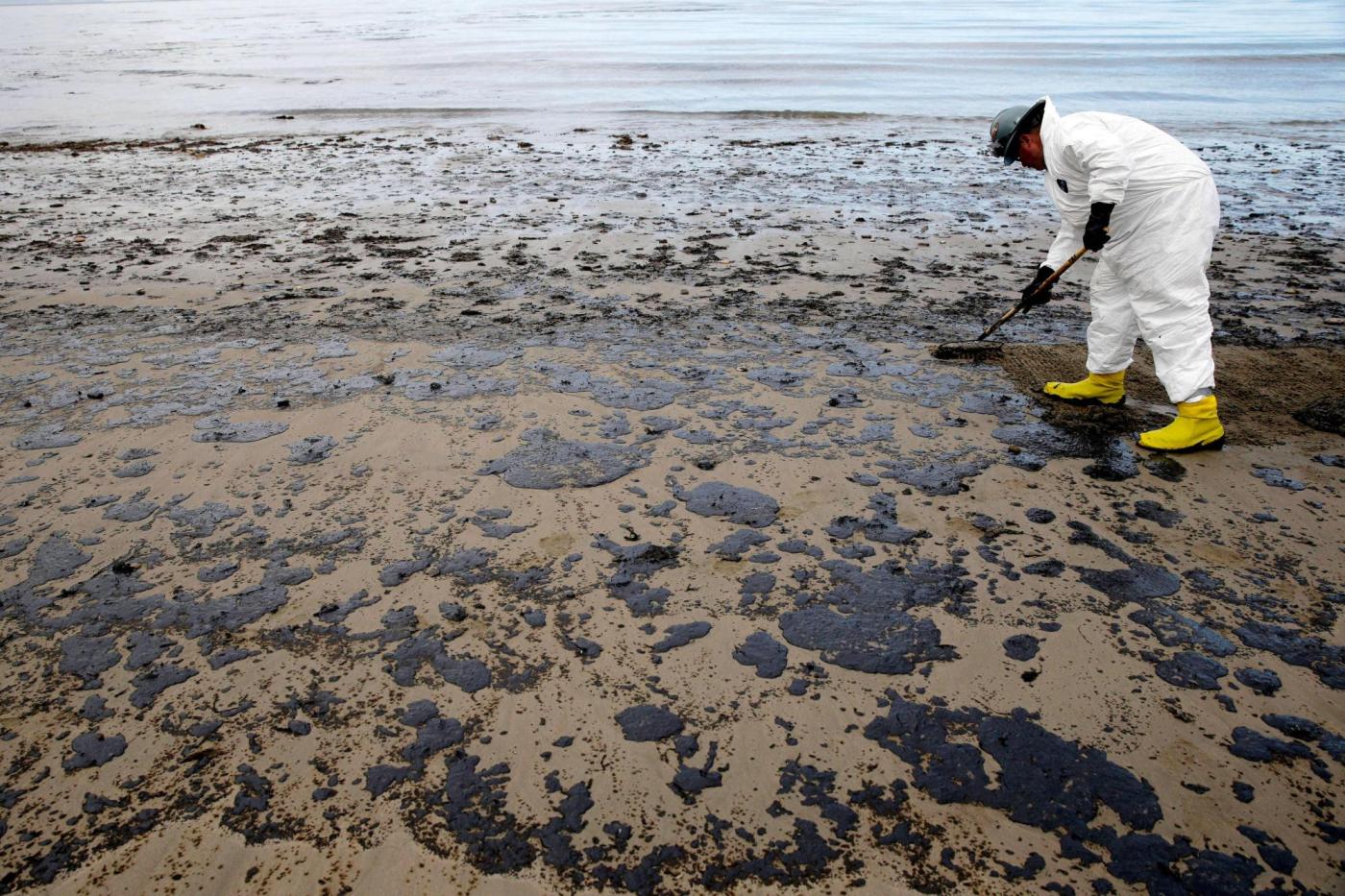
FILE – Workers prepare an oil containment boom at Refugio State Beach, north of Goleta, Calif., May 21, 2015. (AP Photo/Jae C. Hong, File)

Plans to allow drilling off California, Alaska and Florida’s coast

The administration’s plan proposes six offshore lease sales off the coast of California.

It also calls for new drilling off the coast of Florida in areas at least 100 miles from that state’s shore. The area targeted for leasing is adjacent to an area in the Central Gulf of Mexico that already contains thousands of wells and hundreds of drilling platforms.

The five-year plan also would compel more than 20 lease sales off the coast of Alaska, including a newly designated area known as the High Arctic, more than 200 miles offshore in the Arctic Ocean.

All offshore areas “with the potential to generate jobs, new revenue and additional production to advance America’s energy dominance should be considered for inclusion,” the American Petroleum Institute and other groups said in a joint letter to the Trump administration in June.

The groups cited California’s history as an oil-producing state. “Undiscovered resources could be readily produced given the array of existing infrastructure in the area, particularly in southern California,” the letter said.

California Gov. Gavin Newsom speaks during an interview with The Associated Press at the COP30 U.N. Climate Summit, Tuesday, Nov. 11, 2025, in Belem, Brazil. (AP Photo/Joshua A. Bickel)

Opposition from California and Florida

Sen. Rick Scott, a Florida Republican and Trump ally, helped persuade Trump officials to drop a similar offshore plan in 2018 when he was governor. Last week, Scott and fellow Florida Republican Sen. Ashley Moody’ co-sponsored a bill to maintain a moratorium on offshore drilling in the state that Trump signed in his first term.

“As Floridians, we know how vital our beautiful beaches and coastal waters are to our state’s economy, environment and way of life,″ Scott said in a statement. “I will always work to keep Florida’s shores pristine and protect our natural treasures for generations to come.”

A Newsom spokesman said Trump officials had not formally shared the plan, but said “expensive and riskier offshore drilling would put our communities at risk and undermine the economic stability of our coastal economies.”

California has been a leader in restricting offshore oil drilling since the infamous 1969 Santa Barbara spill that helped spark the modern environmental movement. While there have been no new federal leases offered since the mid-1980s, drilling from existing platforms continues.

Newsom expressed support for greater offshore controls after a 2021 spill off Huntington Beach and has backed a congressional effort to ban new offshore drilling on the West Coast.

A Texas-based company, with support from the Trump administration, is seeking to restart production in waters off Santa Barbara damaged by a 2015 oil spill. The administration has hailed the plan by Houston-based Sable Offshore Corp. as the kind of project Trump wants to increase U.S. energy production as the federal government removes regulatory barriers.

Trump signed an executive order on the first day of his second term reversing former President Joe Biden’s ban on future offshore oil drilling on the East and West coasts. A federal court later struck down Biden’s order to withdraw 625 million acres of federal waters from oil development.

Related Articles


Vance says Americans need patience on prices but says ‘We hear you’ on affordability concerns


As US debates gender roles, some women in male-led faiths dig in on social and political issues


Trump says Democrats’ video message to military is ‘seditious behavior’ punishable by death


Beliefs clash among students, parents and teachers as the Ten Commandments go up in Texas classrooms


These are the sights and sounds of Trump’s immigration crackdown in Chicago

Environmental and economic concerns over oil spills

Democratic lawmakers, including California Sens. Alex Padilla and Adam Schiff and Rep. Jared Huffman, the top Democrat on the House Natural Resources Committee, warned that opening vast coastlines to new offshore drilling “would devastate coastal economies, jeopardize our national security, ravage coastal ecosystems, and put millions of Americans’ health and safety at risk.”

Oil spills “not only cause irreparable environmental damage, but also suppress the value of coastal homes, harm tourism economies and weaken coastal infrastructure,” the lawmakers said in a letter signed by dozens of Democrats. One disastrous oil spill can cost taxpayers billions in lost revenue, cleanup costs and ecosystem restoration, they said.

Joseph Gordon, campaign director for the environmental group Oceana, called the Trump administration’s latest plan “an oil spill nightmare.”

Coastal communities “depend on healthy oceans for economic security and their cherished way of life,” he said. “We need to protect our coasts from more offshore drilling, not put them up for sale to the oil and gas industry. There’s too much at stake to risk more horrific oil spills that will haunt our coastlines for generations to come.”