Timberwolves player net ratings through 15 games: Jaylen Clark now No. 1 for Minnesota

posted in: All news | 0

We all know about points, rebounds, assists, etc.

The counting stats get much of the glory in basketball. But how does your team perform when you’re on the floor?

That’s what net rating measures — the points per 100 possessions for your team versus your opponents. The more positive your number, the better your team is playing with you on the court. The more negative? Well, you get it.

Here are Minnesota’s updated individual numbers, with the offensive rating (points scored per 100 possessions), defensive rating (points allowed per 100 possessions) and net rating (offense and defense combined) through 15 games of the season, with the biggest takeaway from each:

Offensive Ratings

Minnesota Timberwolves forward Julius Randle (30) dunks during the first half of an NBA basketball game against the Washington Wizards, Wednesday, Nov. 19, 2025, in Minneapolis. Randle leads Minnesota in offensive rating through 15 games. (AP Photo/Abbie Parr)

Julius Randle: 125.4

Anthony Edwards: 123.6

Donte DiVincenzo: 120.8

Jaden McDaniels: 119.2

Mike Conley: 114.2

Rudy Gobert: 117.1

Jaylen Clark: 114.3

Naz Reid: 113.4

Bones Hyland: 111.3

Rob Dillingham: 100.3

Takeaway: The Wolves’ offense is dominant when Randle is on the floor. That 125.4 number is tied with Houston’s Josh Okogie (yes, that Josh Okogie) for tops in the NBA among all non-Denver Nuggets.

Edwards’ offensive rating ranks 10th in the league.

And since Nov. 1, Randle’s 128.2 offensive rating is tops in the entire NBA. He’s one of four players currently averaging 25-plus points, seven-plus rebounds and six-plus assists, joining Nikola Jokic, Luka Doncic and Giannis Antetokounmpo.

Defensive Ratings

Jaylen Clark: 103.1

Rudy Gobert: 106.1

Bones Hyland: 108.0

Rob Dillingham: 110.9

Donte DiVincenzo: 111.7

Jaden McDaniels: 113.0

Naz Reid: 113.6

Mike Conley: 114.2

Anthony Edwards: 114.7

Julius Randle: 115.7

Takeaway: These are slowly crawling down for everyone as Minnesota looks at least closer to the defensive team it wants to be.. Reid’s defensive rating was north of 119 at the 10-game check in, but the Wolves have found more answers as to how to get stops with the Reid-Randle frontcourt (see: Clark).

McDaniels, Reid, DiVincenzo, Randle and Clark all saw improvements of at least 2.5 points per 100 defensive possessions over the last five games.

Net Ratings

Jaylen Clark: 11.2

Rudy Gobert: 11.0

Julius Randle: 9.7

Donte DiVincenzo: 9.1

Anthony Edwards: 8.9

Jaden McDaniels: 6.2

Mike Conley: 3.7

Bones Hyland: 3.2

Naz Reid: -0.2

Rob Dillingham: -10.5

Takeaway: Clark is king. Minnesota’s reserve defensive stopper now sports the team’s best net rating, though Gobert, Randle, Edwards and DiVincenzo are all in close pursuit.

It does feel notable that Minnesota’s two best defenders top this list at the moment.

Related Articles


Frederick: No, Anthony Edwards is not an MVP candidate. This week reminds us why


Jaden McDaniels’ iron-man streak comes to end


Is Timberwolves guard Jaylen Clark a … defensive superstar?


Five takeaways from the Wolves win over Dallas


Timberwolves fall to Denver, now 0-5 against teams with winning records

Once a patient’s in custody, ICE can be at hospital bedsides — but detainees have rights

posted in: All news | 0

By Claudia Boyd-Barrett, KFF Health News

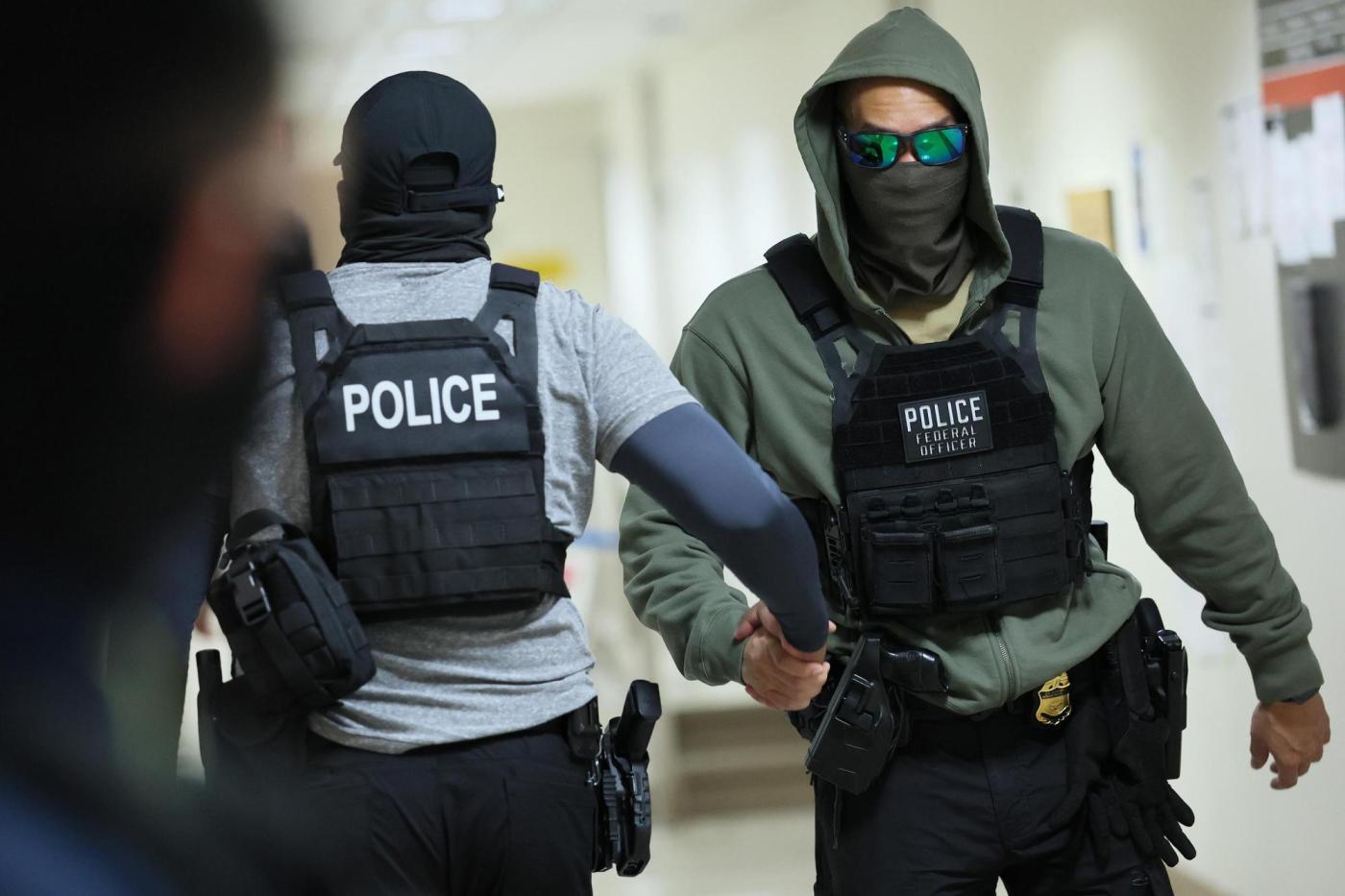
In July, federal immigration agents took Milagro Solis-Portillo to Glendale Memorial Hospital just outside Los Angeles after she suffered a medical emergency while being detained. They didn’t leave.

Related Articles


ICE courthouse arrests meet resistance from Democratic states


Latino US citizens racially profiled by federal immigration agents in Chicago: ‘I felt like a piece of trash’


MAHA idealism meets political reality as RFK Jr. attempts to wrangle a growing movement


Trump and Mamdani meet Friday in the Oval Office. They’ve cast each other as adversaries for months


Schools fear disruptions as the White House begins dismantling the Education Department

For two weeks, Immigration and Customs Enforcement contractors sat guard in the hospital lobby 24 hours a day, working in shifts to monitor her movements, her attorney Ming Tanigawa-Lau said.

ICE later transferred the Salvadoran woman to Anaheim Global Medical Center, against her doctor’s orders and without explanation, her attorney said. There, Tanigawa-Lau said, ICE agents were allowed to stay in Solis-Portillo’s hospital room round-the-clock, listening to what should have been private conversations with providers. Solis-Portillo told her attorney that agents pressured her to say she was well enough to leave the hospital, telling her she wouldn’t be able to speak to her family or her attorney until she complied.

“She described it to me as feeling like she was being tortured,” Tanigawa-Lau said.

Legal experts say ICE agents can be in public areas of a hospital, such as a lobby, and can accompany already-detained patients as they receive care, illustrating the scope of federal authority. Detained patients, however, have rights and can try to advocate for themselves or seek legal recourse.

Earlier this year, California set aside $25 million to fund legal services for immigrants, and some local jurisdictions — including Orange County, Long Beach, and San Francisco— have put money toward legal aid efforts. The California Department of Social Services lists some legal defense nonprofits that have received funds.

Sophia Genovese, a supervising attorney and clinical teaching fellow at Georgetown Law, said law enforcement officers, including federal immigration agents, can guard and even restrain a person in their custody who is receiving health care, but they must follow constitutional and health privacy laws regardless of the person’s immigration status. Under those laws, patients can ask to speak with medical providers in private and to seek and speak confidentially with legal counsel, she said.

“ICE should be stationed outside of the room or outside of earshot during any communication between the patient and their doctor or medical provider,” Genovese said, adding that the same applies to a patient’s communication with lawyers. “That’s what they’re supposed to do.”

ICE guidelines

When it comes to communication and visits, ICE’s standards state that detainees should have access to a phone and be able to receive visits from family and friends, “within security and operational constraints.” However, these guidelines are not enforceable, Genovese said.

If immigration agents arrest someone without a warrant, they must tell them why they’ve been detained and generally can’t hold them for more than 48 hours without making a custody determination. A federal judge recently granted a temporary restraining order in a case in which a man named Bayron Rovidio Marin was monitored by immigration agents in a Los Angeles hospital for 37 days without being charged and was registered under a pseudonym.

In the past, perceived violations by agents could be reported to ICE leadership at local field offices, to the agency’s headquarters, or to an oversight body, Genovese said. But earlier this year, the Department of Homeland Security cut staffing at ombudsman offices that investigate civil rights complaints, saying they “obstructed immigration enforcement by adding bureaucratic hurdles.”

The assistant secretary for public affairs at DHS, Tricia McLaughlin, said that agents arrested Marin for being in the country illegally and that he admitted his lack of legal status to ICE agents. She said agents took him to the hospital after he injured his leg while trying to evade federal officers during a raid. She said officers did not prevent him from seeing his family or from using the phone.

“All detainees have access to phones they can use to contact their families and lawyers,” she said.

McLaughlin said the temporary restraining order was issued by an “activist” judge. She did not address questions about staffing cuts at the ombudsman offices.

DHS also said Solis-Portillo was in the country illegally. The department said she had been removed from the United States twice and arrested for the crimes of false identification, theft, and burglary.

“ICE takes its commitment to promoting safe, secure, humane environments for those in our custody very seriously,” McLaughlin said. “It is a long-standing practice to provide comprehensive medical care from the moment an alien enters ICE custody. This includes access to medical appointments and 24-hour emergency care.”

Protections in California

Anaheim Global Medical Center did not respond to a request for comment. In a statement, Dignity Health, which operates Glendale Memorial Hospital, said it “cannot legally restrict law enforcement or security personnel from being present in public areas which include the hospital lobby/waiting area.”

California enacted a law in September that prohibits medical establishments from allowing federal agents without a valid search warrant or court order into private areas, including places where patients receive treatment or discuss health matters. But many of the most high-profile news reports of immigration agents at health care facilities have involved detained patients brought in for care.

Erika Frank, vice president of legal counsel for the California Hospital Association, said hospitals have always had law enforcement, including federal agents, bring in people they’ve detained who need medical attention.

Hospitals will defer to law enforcement on whether a patient needs to be monitored at all times, according to association spokesperson Jan Emerson-Shea. If law enforcement officers overhear medical information about a patient while they’re in the hospital, it doesn’t constitute a patient-privacy violation, she added.

“This is no different, legally, from a patient or visitor overhearing information about another patient in a nearby bed or emergency department bay,” Emerson-Shea said in a statement.

She didn’t address whether patients can demand privacy with providers and attorneys, and she said hospitals don’t tell family and friends about the detained patient’s location, for safety reasons.

Sandy Reding, who is president of the California Nurses Association and visited the Glendale facility when Solis-Portillo was there, said nurses and patients were frightened to see masked immigration agents in the hospital’s lobby. She said she saw them sitting behind a registration desk where they could hear people discuss private health information.

“Hospitals used to be a sanctuary place, and now they’re not,” she said. “And it seems like ICE has just been running rampant.”

The Los Angeles County Board of Supervisors is scheduled to vote Nov. 18 on a proposal to provide more protections for detainees at county-operated health facilities. These include limiting the ability of immigration officials to hide patients’ identities, allowing patients to consent to the release of information to family members and legal counsel, and directing staff to insist immigration agents leave the room at times to protect patient privacy. The county would also defend employees who try to uphold its policies.

Solis-Portillo’s lawyer, Tanigawa-Lau, said her client ultimately decided to self-deport to El Salvador rather than fight her case, because she felt she couldn’t get the medical care she needed in ICE custody.

“Even though Milagro’s case is really terrible, I’m glad that there’s more awareness now about this issue,” Tanigawa-Lau said.

©2025 KFF Health News. Distributed by Tribune Content Agency, LLC.

ICE courthouse arrests meet resistance from Democratic states

posted in: All news | 0

By Jonathan Shorman, Stateline.org

A day after President Donald Trump took office, U.S. Immigration and Customs Enforcement issued a new directive to its agents: Arrests at courthouses, restricted under the Biden administration, were again permissible.

Related Articles


Latino US citizens racially profiled by federal immigration agents in Chicago: ‘I felt like a piece of trash’


MAHA idealism meets political reality as RFK Jr. attempts to wrangle a growing movement


Trump and Mamdani meet Friday in the Oval Office. They’ve cast each other as adversaries for months


Schools fear disruptions as the White House begins dismantling the Education Department


Supreme Court meets to weigh Trump’s birthright citizenship restrictions, blocked by lower courts

In Connecticut, a group of observers who keep watch on ICE activity in and around Stamford Superior Court have since witnessed a series of arrests. In one high-profile case in August, federal agents pursued two men into a bathroom.

“Is it an activity you want to be interfering with, people fulfilling their duty when they’re called to court and going to court? For me, it’s insanity,” said David Michel, a Democratic former state representative in Connecticut who helps observe courthouse activity.

Fueled by the Stamford uproar, Connecticut lawmakers last week approved restrictions on civil arrests and mask-wearing by federal law enforcement at state courthouses. And on Monday, a federal judge tossed a lawsuit brought by the U.S. Department of Justice that had sought to block similar restrictions in New York.

They are the latest examples of a growing number of Democratic states, and some judges, pushing back against ICE arrests in and around state courthouses. State lawmakers and other officials worry the raids risk keeping people from testifying in criminal trials, fighting evictions or seeking restraining orders against domestic abusers.

The courthouse arrests mark an intensifying clash between the Trump administration and Democratic states that pits federal authority against state sovereignty. Sitting at the core of the fight are questions about how much power states have to control what happens in their own courts and the physical grounds they sit on.

In Illinois, lawmakers approved a ban on civil immigration arrests at courthouses in October. In Rhode Island, lawmakers plan to again push for a ban after an earlier measure didn’t advance in March. Connecticut lawmakers were codifying limits imposed by the state Supreme Court chief justice in September. Democratic Gov. Ned Lamont is expected to sign the bill.

States that are clamping down on ICE continue to allow the agency to make criminal arrests, as opposed to noncriminal civil arrests. Many people arrested and subsequently deported are taken on noncriminal, administrative warrants. As of Sept. 21, 71.5% of ICE detainees had no criminal convictions, according to the Transactional Records Access Clearinghouse, a data research organization.

Some states, such as New York, already have limits on immigration enforcement in courthouses that date back to the first Trump administration, when ICE agents also engaged in courthouse arrests. New York’s Protect Our Courts Act, in place since 2020, prohibits civil arrests of people at state and local courthouses without a judicial warrant. The law also applies to people traveling to and from court, extending protections beyond courthouse grounds.

“One of the cornerstones of our democracy is open access to the courts. When that access is denied or chilled, all of us are made less safe and less free,” said Oren Sellstrom, litigation director at Lawyers for Civil Rights, a Boston-based group that works to provide legal support to immigrants, people of color and low-income individuals.

But in addition to challenging the New York law, the Justice Department is prosecuting a Wisconsin state judge, alleging she illegally helped a migrant avoid ICE agents.

“We aren’t some medieval kingdom; there are no legal sanctuaries where you can hide and avoid the consequences for breaking the law,” U.S. Department of Homeland Security Assistant Secretary for Public Affairs Tricia McLaughlin said in a statement to Stateline. “Nothing in the constitution prohibits arresting a lawbreaker where you find them.”

Some Republican lawmakers oppose efforts to limit ICE arrests in and near courthouses, arguing state officials should stay out of the way of federal law enforcement. The Ohio Senate in June passed a bill that would prohibit public officials from interfering in immigration arrests or prohibiting cooperation with ICE; the move came after judges in Franklin County, which includes Columbus, imposed restrictions on civil arrests in courthouses.

“The United States is a nation of immigrants, but we are also a nation of law and order. To have a civilized society, laws must be respected, this includes immigration laws,” Ohio Republican state Sen. Kristina Roegner, the bill’s sponsor, said in a news release at the time.

Roegner didn’t respond to Stateline’s interview request. The legislation remains in a House committee.

Knowing where a target will be

Courthouses offer an attractive location for ICE to make immigration arrests, according to both ICE and advocates for migrants.

Court records and hearing schedules often indicate who is expected in the building on any given day. Administrative warrants don’t allow ICE to enter private homes without permission, but the same protections don’t apply in public areas, such as courthouses. And many people have a strong incentive to show up for court, knowing that warrants can potentially be issued for their arrest if they don’t.

“So in some respects, it’s easy pickings,” said Steven Brown, executive director of the ACLU of Rhode Island.

In June, ICE arrested Pablo Grave de la Cruz at Rhode Island Traffic Tribunal in Cranston. A 36-year-old Rhode Island resident, he had come from Guatemala illegally as a teenager.

“They pulled up on him like he was a murderer or a rapist,” friend Brittany Donohue told the Rhode Island Current, which chronicled de la Cruz’s case. “He was leaving traffic court.”

An immigration judge has since granted de la Cruz permission to self-deport.

McLaughlin, the Homeland Security assistant secretary, said in her statement that allowing law enforcement to make arrests “of criminal illegal aliens in courthouses is common sense” — conserving law enforcement resources because officers know where a target will be. The department said the practice is safer for officers and the community, noting that individuals have gone through courthouse security.

Still, ICE’s directive on courthouse arrests sets some limits on the agency’s activity.

Agents “should, to the extent practicable” conduct civil immigration arrests in non-public areas of the courthouse and avoid public entrances. Actions should be taken “discreetly” to minimize disruption to court proceedings, and agents should generally avoid areas wholly dedicated to non-criminal proceedings, such as family court, the directive says.

Crucially, the directive says ICE can conduct civil immigration arrests “where such action is not precluded by laws imposed by the jurisdiction.” In other words, the agency’s guidance directs agents to respect state and local bans on noncriminal arrests.

Trump administration court actions

But the Trump administration has also gone to court to try to overcome state-level restrictions.

The Justice Department sued in June over New York’s Protect Our Courts Act, arguing that it “purposefully shields dangerous aliens” from lawful detention. The department says the law violates the U.S. Constitution’s supremacy clause, under which federal law supersedes state law.

New York Democratic Attorney General Letitia James argued the state law doesn’t conflict with federal law and sought the lawsuit’s dismissal.

U.S. District Court Judge Mae D’Agostino, an appointee of President Barack Obama, on Monday granted James’ motion. The judge wrote that the “entire purpose” of the lawsuit was to allow the federal government to commandeer New York’s resources — such as court schedules and court security screening measures — to aid immigration enforcement, even though states cannot generally be required to help the federal government enforce federal law.

“Compelling New York to allow federal immigration authorities to reap the benefits of the work of state employees is no different than permitting the federal government to commandeer state officials directly in furtherance of federal objectives,” the judge wrote.

The Justice Department didn’t immediately respond to a request for comment.

The department is also prosecuting Wisconsin Judge Hannah Dugan, who prosecutors allege helped a person living in the country illegally avoid ICE agents in April inside a Milwaukee courthouse by letting him exit a courtroom through a side door. (Agents apprehended the individual near the courthouse.) A federal grand jury indicted Dugan on a count of concealing an individual and a count of obstructing a proceeding.

In court documents, Dugan’s lawyers have called the prosecution “virtually unprecedented and entirely unconstitutional.”

Dugan has pleaded not guilty, and a trial is set for December.

Lawmakers seek ‘order’ in courthouses

Rhode Island Democratic state Sen. Meghan Kallman is championing legislation that would generally ban civil arrests at courthouses. The measure received a hearing, but a legislative committee recommended further study.

Kallman hopes the bill will go further next year. The sense of urgency has intensified, she said, and more people now understand the consequences of what is happening.

“In order to create a system of law that is functioning and that encourages trust, we have to make those [courthouse] spaces safe,” she said.

Back in Connecticut, Democratic state Rep. Steven Stafstrom said his day job as a commercial litigator brings him into courthouses across the state weekly. Based on his conversations with court staff, other lawyers and senior administration within the judicial branch, he said “there’s a genuine fear, not just for safety, but for disruptions of orderly court processes in our courthouses.”

Some Connecticut Republicans have questioned whether a law that only pertains to civil arrests would prove effective. State Rep. Craig Fishbein, the ranking Republican on the House Judiciary Committee, noted during floor debate that entering the United States without permission is a criminal offense — a misdemeanor for first-time offenders and a felony for repeat offenders. Because of that, he suggested the measure wouldn’t stop many courthouse arrests.

“The advocates think they’re getting no arrests in courthouses, but they’ve been sold a bill of goods,” he said.

Stafstrom, who chairs the Judiciary Committee, said in response that he believed the legislation protects many people who are in the country illegally because that crime is often not prosecuted.

“All we’re asking is for ICE to recognize the need for order in our courthouses,” Stafstrom said.

Stateline reporter Jonathan Shorman can be reached at jshorman@stateline.org.

©2025 States Newsroom. Visit at stateline.org. Distributed by Tribune Content Agency, LLC.

Pope tweaks a law allowing a woman to head the Vatican City State, months after a nun was appointed

posted in: All news | 0

By NICOLE WINFIELD, Associated Press

ROME (AP) — Pope Leo XIV fixed a technical glitch on Friday in a Vatican law that became problematic after Pope Francis named the first-ever woman to head the Vatican City State administration.

Related Articles


France will investigate Musk’s Grok chatbot after Holocaust denial claims


Nations and environmental groups slam proposals at UN climate talks, calling them too weak


Iran rejects UN atomic agency’s resolution and threatens more reprisal actions


Zelenskyy says Ukraine faces choice of losing dignity or risking loss of key partner with US plan


Leaders arrive for a first African G20 summit overshadowed by a rift between the host and the US

Leo amended the 2023 law to remove a reference that had said the president of the Vatican City State administration must be a cardinal.

Francis in February appointed Sister Raffaella Petrini, a 56-year-old Italian nun, as president of the city state. The appointment was one of many Francis made during his 12-year papacy to elevate women to top decision-making jobs in the Vatican, and it marked the first time a woman had been named governor of the 44-hectare (110-acre) territory in the heart of Rome.

But the appointment immediately created technical and legal problems that hadn’t existed before because Petrini’s predecessors had all been priestly cardinals.

For example, Petrini wasn’t invited to deliver the economic status report of the Vatican City State to the closed-door meetings of cardinals in spring that preceded the May conclave that elected Leo.

Normally, the cardinal-president of the Vatican City State would have delivered the briefing. But those pre-conclave meetings, known as general congregations, are for cardinals only.

In changing the law Friday to allow a non-cardinal to be president of the Vatican administration, Leo suggested that Petrini’s appointment was not a one-off. He wrote that the governance of the territory was a form of service and responsibility that must characterize communion within the church hierarchy.

“This form of shared responsibility makes it appropriate to consolidate certain solutions that have been developed so far in response to governance needs that are proving increasingly complex and pressing,” Leo wrote.

Petrini’s office is responsible for the main revenue sources funding the Holy See coffers, including the Vatican Museums, but it also handles the infrastructure, telecommunications and healthcare for the city state. The Vatican City State commission she heads is responsible for approving laws governing the territory, and approving the annual budgets and accounts.

The Catholic Church reserves the priesthood for men. While women made strides in reaching top management jobs in the Vatican during Francis’ pontificate, there was no movement or indication that the all-male hierarchy would change rules barring women from ministerial ordination.

Associated Press religion coverage receives support through the AP’s collaboration with The Conversation US, with funding from Lilly Endowment Inc. The AP is solely responsible for this content.