UN General Assembly chief says curbing climate change would make world more peaceful and safer

posted in: All news | 0

By SETH BORENSTEIN, AP Science Writer

BELEM, Brazil (AP) — Harms from climate change are the biggest threat to world peace, the president of the United Nations General Assembly says.

“To those who are arguing that in these times we have to focus more on peace and security, one can only say the climate crisis is the biggest security threat of our century,” General Assembly President Annalena Baerbock told The Associated Press in an interview at the U.N. climate talks at the edge of the Amazon.

“We can only ensure long-lasting peace and security over the world if we fight the climate crisis altogether and if we join hands in delivering on sustainable development because they are heavily interconnected,” said Baerbock, a former German foreign minister.

U.N. General Assembly President Annalena Baerbock speaks during a plenary session at the COP30 U.N. Climate Summit, Monday, Nov. 17, 2025, in Belem, Brazil. (AP Photo/Fernando Llano)

Baerbock pointed to droughts and other damage from climate extremes in places such as Chad, Syria and Iraq. When crops die, people go hungry and then migrate elsewhere or fight over scarce water, she said.

“This is a vicious circle,” Baerbock said. “If we do not stop the climate crisis it will fuel hunger and poverty which will fuel again displacement and by that will challenge regions in a different way, leading again to instability, crisis and most often also conflict. So, fighting the climate crisis is also the best security insurance.”

But at the same time, dealing with climate change’s problems can make the world more peaceful, Baerbock said, pointing to conflicts over water in Central Asia. There, an agreement on water became “a booster for peaceful cooperation and peaceful settlement.”

Drought can take a long time to make an impact, but storms made worse by Earth’s warming atmosphere can strike in a flash. Baerbock pointed to last month’s Hurricane Melissa decimating Jamaica and two typhoons smacking the Philippines.

“Achievements of sustainable development can be diminished in just hours,” Baerbock said. That’s why foreign aid from rich nations to poor to help deal with climate disasters and adapt to future ones “are also investments in stable societies and regions,” she said.

Related Articles


At UN climate conference, some activists and scientists want more talk on reforming agriculture


Nations and environmental groups slam proposals at UN climate talks, calling them too weak


A drying-up Rio Grande basin threatens water security on both sides of the border


Trump administration announces plan for new oil drilling off the coasts of California and Florida


Trump administration revives rollbacks of species protections from first term

Baerbock, a veteran of climate conferences, said people scoffed at the young people of small island nations who filed a suit in the International Court of Justice about climate change, damage and their future. But the court’s ruling in July that action must be taken to limit warming “shows the power of the world if it works together,” she said.

Small island nations have said they will take the court’s decision to the U.N. General Assembly, where votes are decided by majority unlike the veto power of the U.N. security council or the consensus unanimity of U.N. climate talks.

“Now it’s up to the majority of the member states if they want to bring a resolution forward underlining the importance of this case,” said Baerbock, adding that she has to follow the desires of the majority of the 193 U.N. member states.

“The vast majority of member states has called not only at the last climate conferences but also here in Belem for transitioning away from our fossil world, not because of the climate crisis, but because they underline that this is the best security investment for all of us,” Baerbock said.

The Associated Press’ climate and environmental coverage receives financial support from multiple private foundations. AP is solely responsible for all content. Find AP’s standards for working with philanthropies, a list of supporters and funded coverage areas at AP.org.

Progress on overdose deaths could be jeopardized by federal cuts, critics say

posted in: All news | 0

Shalina Chatlani, Stateline.org

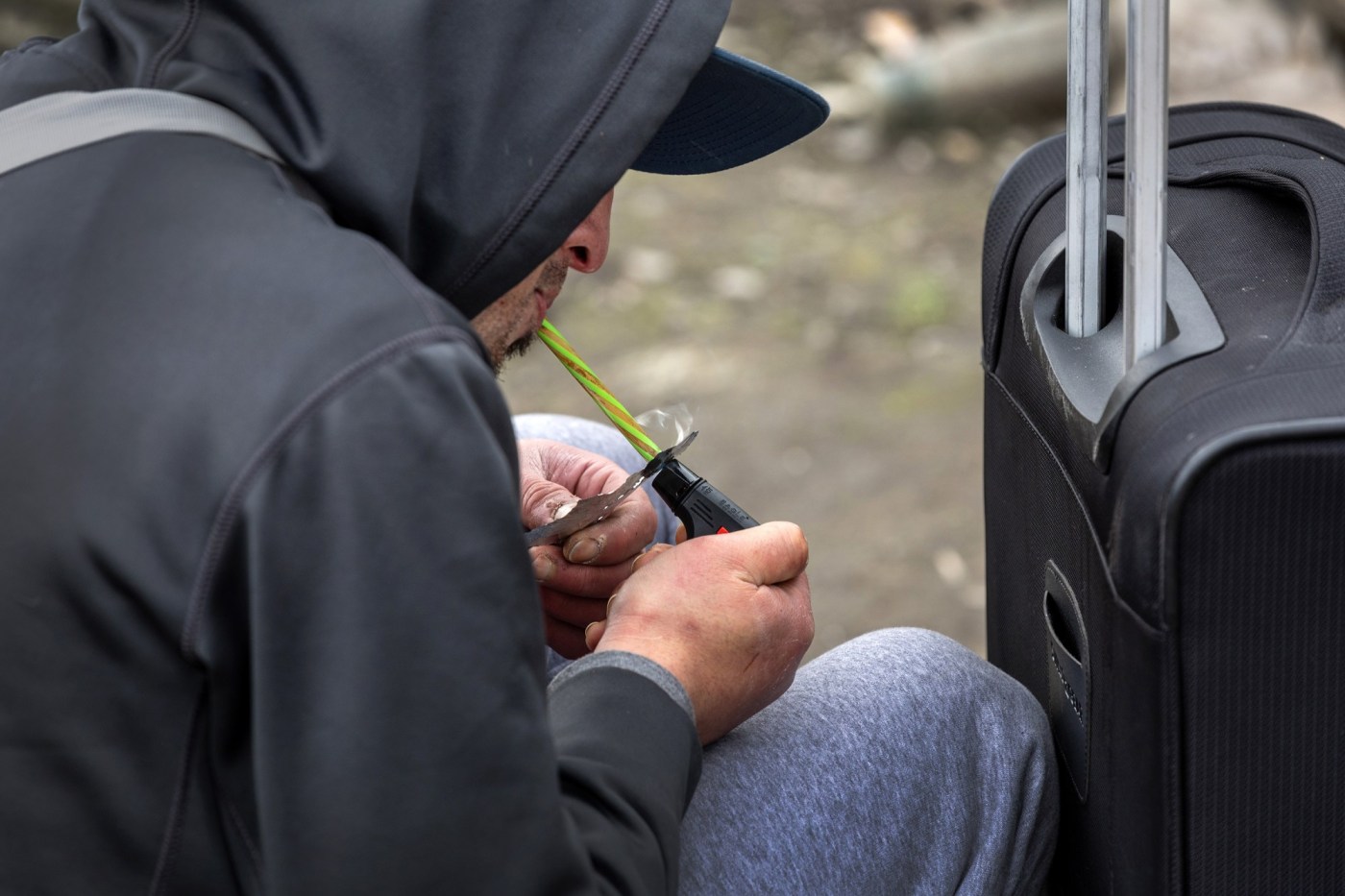
The Trump administration has made deep cuts to the main federal agency focused on fighting opioid addiction, potentially jeopardizing the nation’s recent progress on reducing overdose deaths, some public health officials and providers say.

Related Articles


FDA’s plan to boost biosimilar drugs could stall at the patent office


Once a patient’s in custody, ICE can be at hospital bedsides — but detainees have rights


ICE courthouse arrests meet resistance from Democratic states


Latino US citizens racially profiled by federal immigration agents in Chicago: ‘I felt like a piece of trash’


MAHA idealism meets political reality as RFK Jr. attempts to wrangle a growing movement

Created in 1992, the Substance Abuse and Mental Health Services Administration, known as SAMHSA, hands out billions in grants for mental health and addiction services. The agency, which is part of the U.S. Department of Health and Human Services, had a budget of about $7.5 billion last year.

Since January, the Trump administration has reduced the agency’s staff by more than half, scrapped $1.7 billion in block grants for state health departments and eliminated roughly $350 million in addiction and overdose prevention funding, according to a recent analysis by STAT, a health news website. The agency is currently without an administrator and is missing 12 of its 17 senior leaders.

Dr. Yngvild Olsen, the former director of the Center for Substance Abuse Treatment at SAMHSA, said almost all of SAMHSA’s substance misuse funding flows to state and local health departments, nonprofits and behavioral health providers on the front lines of the fight against addiction. She noted that the agency has worked with state and local partners to make sure naloxone, the overdose-reversal medication, is “in the hands of every person who needs it.”

“I’m not sure that a very reduced SAMHSA is going to really be able to continue that focus,” said Olsen, now an adviser to the consulting firm Manatt.

But Andrew Nixon, communications director for the Health and Human Services Department, said the Trump administration is “committed to tackling addiction with compassion and accountability, ensuring taxpayer dollars fund programs that lead to real recovery.”

“SAMHSA is prioritizing treatment, prevention and long-term recovery while ensuring all federally funded programs comply with the law,” Nixon said in an email.

In March, the administration announced that as part of a major restructuring of the Department of Health and Human Services, it planned to fold SAMHSA and four other agencies into a new Administration for a Healthy America. HHS Secretary Robert F. Kennedy Jr., said the reorganization would reduce “bureaucratic sprawl.”

“We are realigning the organization with its core mission and our new priorities in reversing the chronic disease epidemic,” Kennedy said in a statement.

In July, a federal judge in Rhode Island issued a preliminary injunction temporarily blocking the planned reorganization.

The cuts come at a time of steady progress in the fight against opioid addiction.

Overdose deaths have fallen consistently since 2023. As of April, the latest figures available, there were 76,500 deaths over the previous 12 months — the lowest year-over-year tally since March 2020. The pandemic drove the number as high as nearly 113,000 in the summer of 2023, according to federal statistics.

A more timely indicator of overdoses — nonfatal suspected overdose patients in hospital emergency departments — was down 7% this year through August compared with 2024, according to a recent Stateline analysis of statistics from the federal Centers for Disease Control and Prevention.

Only a few states and the District of Columbia saw a rise in nonfatal overdoses for the year. The largest increases were 17% in the district, 16% in Rhode Island, 15% in Delaware, 11% in Connecticut and 10% in New Mexico, with smaller increases in Colorado, Pennsylvania, Wyoming, South Dakota, Utah, New Jersey and Minnesota.

Sara Goldsby, director of the South Carolina Department of Behavioral Health and Developmental Disabilities, said the SAMHSA cuts come at a time when her state is making “good progress, like other states are, to get a handle on the drug crisis.” But Goldsby cautioned that “constant surveillance of the trends” is essential.

In New York, the staff cuts at SAMHSA have created uncertainty, according to Jihoon Kim, president and CEO of the Albany-based InUnity Alliance, which advocates for mental health and substance use organizations across the state. Federal grants account for about half of his members’ funding, he said.

“As the Trump administration has been dismantling SAMHSA and other agencies, the points of contact for a lot of my members have just vanished,” Kim said in an interview.

“We have a lot of providers who have no information — they just do not know what’s happening with their contract renewals. They continue to deliver services, and at some point they will be delivering services without the resources to do so from the federal government.”

COVID-era grants

Some of the SAMHSA grants the administration terminated earlier this year were COVID-era expenditures scheduled to expire in September. Since the pandemic is over, HHS argued, there was no need for money to continue to flow.

Some state health officials Stateline contacted, including in California, Idaho, Maryland, Missouri and West Virginia, said the early cutoff hadn’t had much of an impact, either because they had already spent the money they were promised or resisted spending it on ongoing services.

But health officials and providers in other states told a different story.

Texas was counting on SAMHSA to provide about 77% of the agency’s annual budget for substance use programs, Thomas Vazquez, assistant press officer at the Texas Health and Human Services Commission, wrote in an email. The early cancellation of the COVID-era money deprived the state of more than $24.7 million it planned to use to combat substance misuse.

In South Carolina, Wendy Hughes, president and CEO of the Lexington/Richland Alcohol and Drug Abuse Council, said her organization didn’t have enough money before the pandemic. So the loss of the extra money, combined with inflation, “feels like a major cut.”

“The cuts had a very significant impact on my organization in particular, as well as the others throughout the state,” Hughes said. “What it meant was a fairly significant cut to a lot of our outpatient services. We also got a cut to our inpatient services, or detox. And for us, what that meant was we ended up eliminating some of our positions.”

Hughes said her organization secured some additional state funding to mitigate some of the losses and has tried to preserve what it views as the most essential services, such as drug treatment for pregnant women and new mothers.

Uncertain future

Some public health officials and providers of addiction services worry this year’s SAMHSA grant cuts are only the beginning.

The Biden administration strongly supported efforts to make drug use less dangerous, such as increasing the availability of naloxone kits and training on how to use them. But President Donald Trump in July signed an executive order stating that SAMHSA grants will no longer “fund programs that fail to achieve adequate outcomes, including so-called ‘harm reduction’ or ‘safe consumption’ efforts that only facilitate drug use and its attendant harm.”

In addition to making naloxone more widely available, harm reduction measures include needle exchanges, overdose prevention sites, fentanyl tests and wound care. Olsen, the former director of the Center for Substance Abuse Treatment at SAMHSA, said Trump’s order has created widespread confusion.

“States have now become very anxious and nervous about the use of any federal funds for any part of their harm reduction organization, including staff that may have been involved in handing out naloxone,” Olsen said. “Because of the wording of some of the messages and some of the guidance from SAMHSA, it’s just very unclear as to what it is that they’re really allowed to do versus not allowed to do, with respect to harm reduction.”

Meanwhile, the Medicaid changes included in the One Big Beautiful Bill Act that Trump signed in July, including new work requirements and more than $900 billion in spending cuts over the next decade, will result in many people with substance use disorder losing their health care coverage and, potentially, their access to treatment.

The Medicaid changes in the law will decrease the number of people with health insurance by about 7.5 million people by 2034, according to the Congressional Budget Office. Medicaid, which is funded jointly by the federal government and the states, pays for a significant portion of mental health and substance use care in the United States.

“States were already struggling to meet the demand for treatment,” said Hanna Sharif-Kazemi, a policy manager at the nonprofit Drug Policy Alliance, which advocates for health care instead of punishment for drug users.

“While the Trump administration says that they are trying to do these federal funding cuts as a way to get rid of duplicate funding streams, what they’re actually doing is removing … tools in our tool belt. And this is not the time for us to be getting rid of tools. We actually needed more tools and more funding in our tool belt to begin with. So it is really disappointing.”

Stateline reporter Shalina Chatlani can be reached at schatlani@stateline.org.

Stateline is part of States Newsroom, a national nonprofit news organization focused on state policy.

©2025 States Newsroom. Visit at stateline.org. Distributed by Tribune Content Agency, LLC.

Netanyahu convenes cabinet on settler violence in the West Bank that continues unabated

posted in: All news | 0

By JULIA FRANKEL, Associated Press

JERUSALEM (AP) — Israel’s prime minister met with top security officials to discuss a rising tide of Israeli settler violence in the West Bank, an Israeli official said Friday, as fresh allegations surfaced of Israeli settlers hurling rocks at passing Palestinian vehicles in the West Bank village of Huwara.

Related Articles


Pope tweaks a law allowing a woman to head the Vatican City State, months after a nun was appointed


France will investigate Musk’s Grok chatbot after Holocaust denial claims


Nations and environmental groups slam proposals at UN climate talks, calling them too weak


Iran rejects UN atomic agency’s resolution and threatens more reprisal actions


Zelenskyy says Ukraine faces choice of losing dignity or risking loss of key partner with US plan

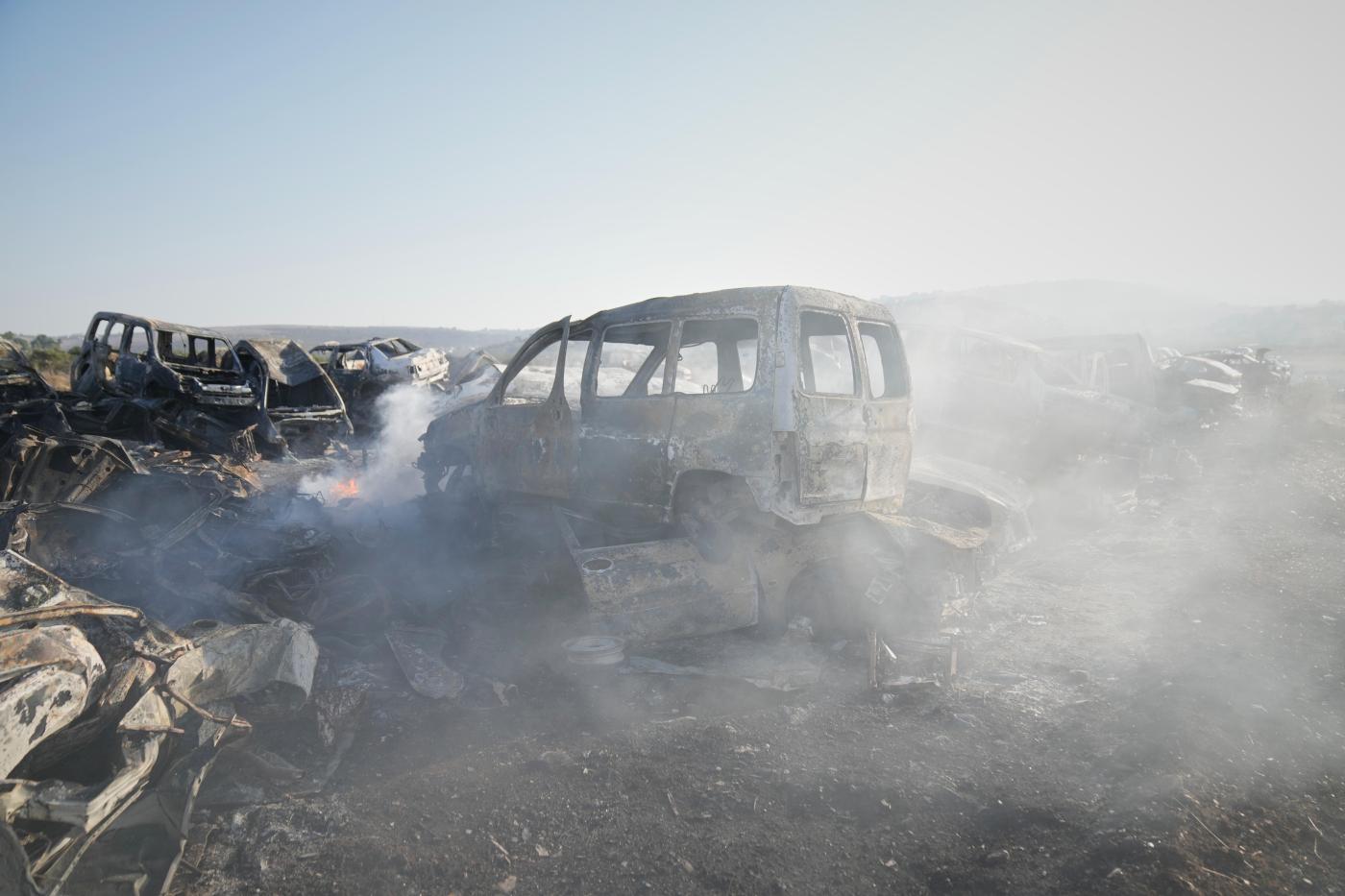
Huwara Mayor Jihad Ouda said the stone throwing was quickly followed by a huge fire at a nearby scrapyard. Flames lit up the evening sky and sent massive columns of smoke into the air, images and video on social media showed. The military said it had reports that Israelis set the fire and that police were investigating.

At the meeting, Prime Minister Benjamin Netanyahu and officials from the military, the country’s Shin Bet domestic security service and the police discussed the recent spike in violence and proposals on curbing it, according to an Israeli official who spoke on condition of anonymity because they were not permitted to talk about a closed-door gathering. The official said proposals floated at the meeting included getting violent settlers to attend educational programs.

The Prime Minister’s office did not immediately respond to request for comment about what was discussed. The Israeli official said there would be a follow-up meeting.

Settler attacks ramped up during the Palestinian olive harvest season in October and early November and have continued since. Netanyahu has called the perpetrators “a handful of extremists” and urged law enforcement to pursue them for “the attempt to take the law into their own hands.” But rights groups and Palestinians say the problem is far greater than a few bad apples, and attacks have become a daily phenomenon across the territory.

Separately, the Palestinian Health Ministry said two Palestinian youths aged 18 and 16 were killed by Israeli gunfire overnight. The circumstances of the shootings were not immediately clear. Israeli police did not immediately respond when asked to comment.

Stones hurled at Palestinian cars, scrapyard torched

Mohammad Dalal, the owner of the torched Huwara scrapyard, claimed that witnesses told him Israeli settlers were seen throwing rocks Thursday from an overpass at passing Palestinian vehicles below. He said the massive fire began soon after.

He said the Israeli army arrived later to force the perpetrators away.

“If the army had not removed them, they would have done even more,” Dalal said. “These settlers are causing destruction everywhere here. … Where can we go? We want to remain steadfast on our land, no matter what.”

An Israeli investigation unit of soldiers and border police officers on Friday collected evidence at the scorched scrapyard, according to an Associated Press crew who was asked to leave by the investigators.

Asked about the incident, the Israeli military said it dispatched soldiers to the area after receiving reports that settlers were throwing rocks at Palestinian cars. It also said other reports indicated that “several” Israeli civilians had set fires and damaged property in the area. It said soldiers searched the area but didn’t find any suspects and that the police were now handling the case.

Huwara has been the target of numerous attacks over recent years. In February 2023, scores of Israeli settlers went on a violent rampage there, setting dozens of cars and homes on fire after two settlers were killed by a Palestinian gunman. Palestinian medics said one man was killed and four others were badly wounded.

Settler violence surges

U.N. humanitarian office figures show 2,920 Israeli settler attacks took place between January and October this year.

Israel’s government is dominated by far-right proponents of the settler movement including Finance Minister Bezalel Smotrich, who formulates settlement policy, and Cabinet minister Itamar Ben-Gvir, who oversees the nation’s police force.

The security cabinet meeting came shortly after Israeli settlers celebrated the creation of a new, unauthorized settlement near Bethlehem.

Israel’s Civil Administration also recently announced plans to expropriate large swaths of Sebastia, a major archaeological site in the West Bank. Peace Now, an anti-settlement watchdog group, said the site is around 1,800 dunams (450 acres) — Israel’s largest seizure of archaeologically important land.

Singapore slaps sanctions on Israeli settlers

Singapore said Friday it will impose targeted financial sanctions and entry bans on four Israeli individuals for what it said was their involvement in violence against Palestinians in the West Bank. Singapore’s Foreign Ministry named the individuals as Meir Ettinger,Elisha Yered, Ben-Zion Gopstein and Baruch Marzel. Some are currently under international sanction by the European Union, the U.K. and other countries.

In a statement, Singapore’s Foreign Ministry said the settlers have been involved in “egregious acts of extremist violence against Palestinians in the West Bank” and urged the Israeli government to stop the violence and hold the perpetrators accountable.

“Such actions are unlawful and undermine and jeopardize prospects for a two-State solution,” the Foreign Ministry said, adding that it viewed Israeli settlements in the West Bank as illegal and that their presence and expansion make it much more difficult to reach a viable two-State solution.

FDA’s plan to boost biosimilar drugs could stall at the patent office

posted in: All news | 0

By Arthur Allen, KFF Health News

While the FDA is streamlining regulation of copycat versions of the expensive drugs that millions take for arthritis, cancer, and other diseases, the U.S. patent office is making it harder for the cheaper medicines to get on the market, industry officials say.

Related Articles


ICE courthouse arrests meet resistance from Democratic states


Latino US citizens racially profiled by federal immigration agents in Chicago: ‘I felt like a piece of trash’


MAHA idealism meets political reality as RFK Jr. attempts to wrangle a growing movement


Trump and Mamdani meet Friday in the Oval Office. They’ve cast each other as adversaries for months


Schools fear disruptions as the White House begins dismantling the Education Department

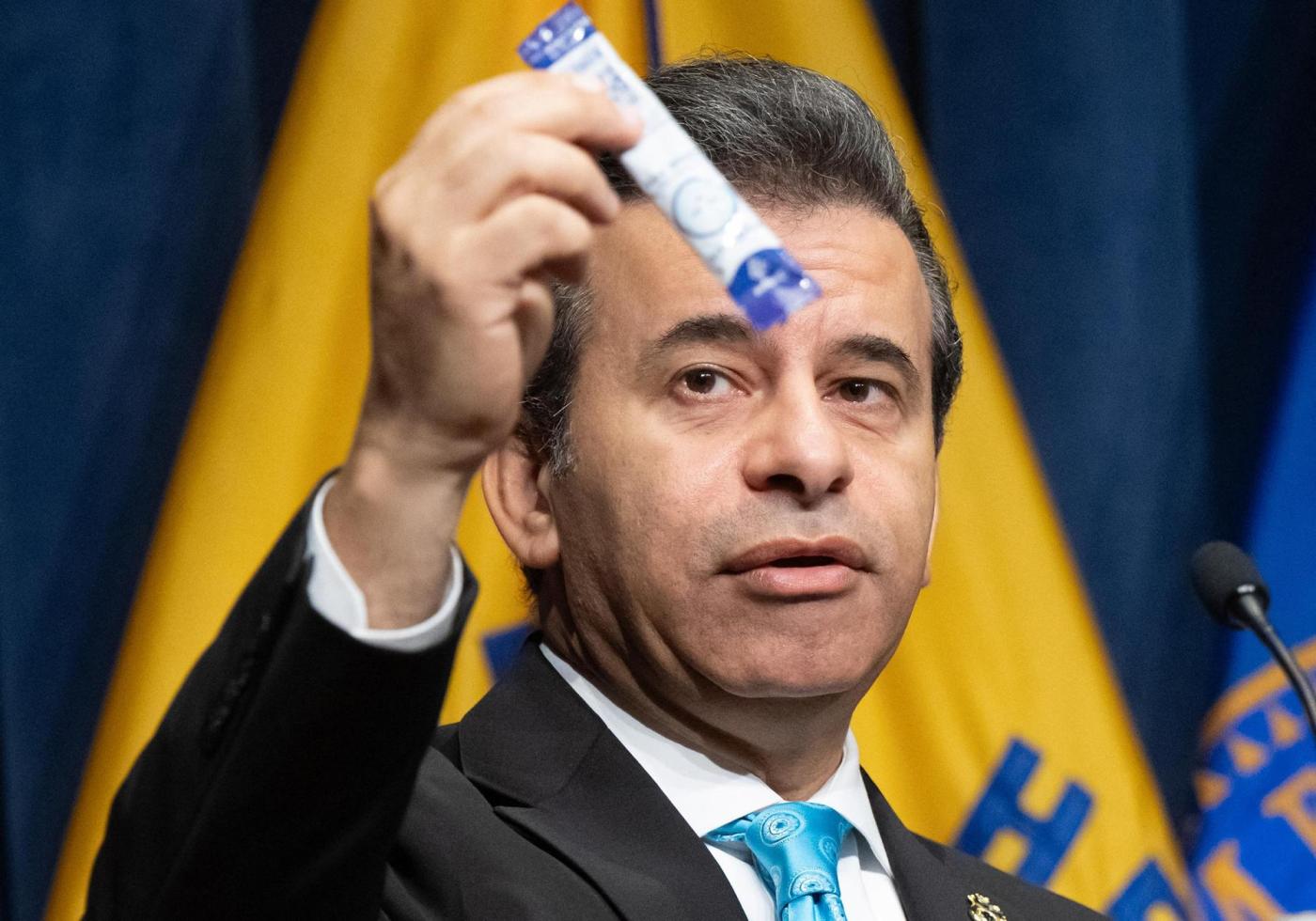
These officials were thrilled Oct. 29 when FDA Commissioner Marty Makary announced the agency’s plan, which he said would halve the time and money needed to get what are called “biosimilar” drugs to market. Biosimilars are essentially generic versions of biologics — such as Humira, Keytruda, and Xolair — which are made from living organisms. Biosimilars can cost up to 90% less.

Under the guidance the FDA proposed, the agency would begin overseeing biosimilars similarly to the way it regulates generics, which are copies of simpler molecules, usually pills. This change in approach could allow companies to save up to $100 million for each drug they develop, enabling them to make more products for underserved patients, said Stefan Glombitza, CEO of Formycon AG, a maker of biosimilars based in Germany.

But President Donald Trump’s patent office is working at cross-purposes with the FDA, biosimilar makers charge, by narrowing the opportunities for companies that try to challenge the throngs of patents that brand-name drugmakers file to protect their products from competition.

In the past, biosimilar makers have been able to invalidate some of those patents through a sped-up process called “inter partes review,” or IPR. But the new administration has denied most IPR requests and issued a proposed rule in October that makes IPRs harder to get.

Heavyweights on pricing

Biosimilars have the potential to nibble or even gouge away at a major U.S. health care cost. Only 5% of prescriptions are for biologic drugs, but they account for more than half of the$600 billion the nation annually spends on medicines.

“Generic and biosimilar competition is the crucial way that we bring down prescription drug prices,” said William Feldman, a pharmaceuticals policy researcher at UCLA.

The FDA announcement “is a good thing that may ease barriers,” he added, “but there are a lot of caveats.”

In fact, biosimilar industry officials say, FDA regulation is often the least of the three major hurdles they face in marketing their products.

To protect their market share, brand-name biologics makers file scores or even hundreds of patents, continuing to do so long after their drugs hit the market. The “patent dance” that occurs when biosimilar makers seek to launch competitor drugs can drag on for many years.

For example, the FDA approved the first biosimilar of the rheumatoid arthritis drug Humira in 2016, but legal battles delayed competitors from entering the market — until nine FDA-approved products were launched in 2023. At his Oct. 29 news conference, Makary blamed FDA “red tape” for the delay, but it was mostly due to the baffling patent machinery, industry officials say.

The new rules, which could take effect next year, would formalize recent FDA practices aimed at speeding along approval for biosimilars. For example, the FDA has recently allowed drugmakers to waive expensive clinical testing contemplated under a 2009 law. The agency now lets companies employ less costly analytical tests, if they can show that the biosimilar has no clinically meaningful differences from the brand-name drug.

A ‘switching’ burden

Because biologic drugs are large molecules produced from live cells, copies of them cannot be chemically identical. So the FDA had required biosimilars to go through clinical studies like the ones required for the original drugs. But research has shown that analytic techniques can replace the need to test biosimilars on large numbers of patients.

The new rules would also confirm the FDA’s move away from requiring what are known as “switching” tests, in which patients first go on the brand-name drug and then the biosimilar, or vice versa, to see if their responses are the same. Such tests are required in many states for the biosimilar to obtain “interchangeable” status, which enables pharmacists to substitute an often cheaper version for the prescribed brand-name drug.

In short, the new rules would mean biosimilar makers would spend less money getting drugs to market, said Sean Tu, a law professor at the University of Alabama. “What that won’t do is get you on the market earlier,” he added.

After biosimilars launch, it can take years for them to gain a foothold. In 2023, Humira biosimilars made barely a dent in the market, and in 2024 they accounted for only about a quarter of sales, though they cost as little as 10% of the roughly $6,500 monthly price tag for the brand-name drug.

That’s because brand-name drug companies offer lucrative rebates for sales of their drugs to the go-between companies that design formularies — tiered lists that tell doctors and pharmacies which drugs are covered by insurance. These middlemen, pharmacy benefit managers, pass along some of that money to health plans.

Essentially, the insurance plans are “charging higher costs to people who require expensive drugs as a way to subsidize the whole population,” said Wayne Winegarden, an economist at the Pacific Research Institute.

The patent thicket thickens

Biosimilar makers are particularly worried about the direction the U.S. Patent and Trademark Office has taken under Trump.

Patent challenges are already 10 to 20 times as expensive in the United States as in Europe, and restricting inter partes reviews is making it worse, said Formycon’s Glombitza.

The FDA recently gave his company a waiver from conducting a costly clinical trial of its biosimilar substitute for Keytruda, a blockbuster cancer drug. But Merck & Co., which got about half of its $17 billion third-quarter revenue from Keytruda, is expected to fight tooth and nail to protect its many patents on the drug. The Trump administration’s new obstacles to challenge them “counteract the waiver,” Glombitza said.

Merck protects its innovations, said spokesperson Julie Marie Cunningham. However, noting that Merck is touting a new, injectable Keytruda formulation, she said the company does not expect it to affect “the potential marketing” of biosimilars for the older, intravenous form of the drug.

The Pharmaceutical Research and Manufacturers of America, or PhRMA, the industry group representing most large brand-name companies, “welcomes the administration’s focus on increasing biosimilar access and affordability,” said spokesperson Alex Schriver.

But Big Pharma companies favor the patent office’s swing toward more protection of filed patents, according to attorneys who work in intellectual property litigation.

“I don’t think the Trump administration has any kind of coherent plan here,” said Mark Lemley, director of the Stanford Program in Law, Science & Technology. While Trump officials want to bring drug costs down, “they also want to make it more expensive to figure out whether patents are valid by effectively eliminating IPRs,” he said.

The patent office did not respond to repeated phone calls and emails.

Patents and patent litigation are the biggest impediments to getting biosimilars onto the market, UCLA’s Feldman said.

For instance, the FDA licensed Sandoz’s biosimilar for Enbrel, a popular drug to treat autoimmune disorders, in 2016, but Sandoz won’t be able to market its competitor in the U.S. until 2029 at the earliest because of patent challenges. Without insurance, Enbrel costs about $7,000 to $9,000 a month.

A patient’s perspective

Judy Aiken, a retired Portland, Maine, nurse who has taken Enbrel since 2007 to treat psoriatic arthritis, would be interested in trying the copycat if it costs her less. After retiring in 2019 and going on Medicare, she has spent thousands each year on the drug.

The Biden-era Inflation Reduction Act capped her out-of-pocket drug costs at $2,000 this year, and Aiken and her husband used the savings to replace their roof and furnace. But with health care changes on the horizon, “now I’m scared the other shoe is going to drop,” she said.

Only about 10% of the 118 biologics set to come off patent in the next decade have biosimilars in development, reflecting poor incentives in a system that biosimilar makers and patient advocates say is stacked against them.

But lower costs could enable companies like Formycon to expand their product lines — focused now on cancer and autoimmune diseases — to less common or even rare conditions, said CEO Glombitza.

“People have talked about the promise of biosimilars reducing out-of-pocket costs and creating more choices for consumers, and I feel like we’re still waiting,” said Anna Hyde, chief of advocacy and access for the Arthritis Foundation, which lobbies for research and treatment.

Although biosimilars could save everyone money, patients generally don’t care whether they get one or not, Hyde noted. Some don’t want to switch if they’ve found a brand-name drug that works for them, since the search can be grueling for people suffering from autoimmune diseases, she said.

“Generally, they can’t access them anyway,” she said, “because they are not available on the formulary.”

©2025 KFF Health News. Distributed by Tribune Content Agency, LLC.