Filling roles: Marcus Foligno’s first hat trick keeps Wild rolling

posted in: All news | 0

MONTREAL — John Hynes is a realistic guy. The Minnesota Wild coach knows that all the call-ups from Iowa he can employ aren’t going to take the place of missing second line, or the presence of two of his more veteran defensemen.

Heading into Tuesday night’s game against the Canadiens at Centre Bell Arena, the Wild were without five key veterans: Marcus Johansson, Matt Boldy, Joel Eriksson Ek, Zach Bogosian and Jonas Brodin. The best hope, Hynes said, is that there be good news waiting when the team returns to St. Paul for a Thursday night meeting with Detroit.

In the meantime, Hynes made it clear that no amount of reserves could replace everyone missing amid a rash of injuries among key contributors but added that healthy players still needed to fill their roles, and in a lopsided win in Toronto on Monday, a national TV audience in Canada saw what secondary scoring looks like.

Minnesota Wild left wing Marcus Foligno (17) greets right wing Mats Zuccarello (36) after Zuccarello made the game-winning goal in overtime against the Seattle Kraken in an NHL hockey game Thursday, Jan. 8, 2026, in Seattle. (Lindsey Wasson / Associated Press)

Marcus Foligno scored three for his first career hat trick, and Vladimir Tarasenko added two goals to make the difference in a 6-3 victory in the first game of back-to-backs in Ontario.

“When we had the guys out, we talked to the team that you’re not gonna replace individual guys, but there’s gonna be parts of their game and situations that … other guys are gonna get opportunities to (fill),” Hynes said after Monday’s win. “And I think that, Foligno and and Vladdy tonight, are two good examples.”

The Wild have won the first two of this three-game road trip and went into Tuesday’s game second in the West and 65 points, second to only Central Division rival Colorado in the NHL.

For Foligno, playing in front of his father and other relatives a few hours from his hometown of Sudbury, the timing could not have been better for the first three-goal night after more than 900 games in the NHL. The last hat trick, he said, came when he was playing major junior for the Sudbury Wolves of the OHL.

“I’ve gotten two goals many games and I’ve been snakebit,” Foligno said. “It was in the back of my mind. I was getting negative: ‘It’s never going to happen.’ But empty net, Vladdy Tarasenko with a great, unselfish (assist) — and he’s got two, as well. So, I was just like, ‘He’s got a couple hat tricks, so he can give me this one.’ ”

With the Toronto goalie on the bench, Tarasenko took a long-range shot at the empty net, trying for his first hat trick with the Wild. He missed, and when he got another chance a short time later, he passed to Foligno, who ended it.

“He was in a better spot. I took my chance before, missed the net, and, I mean, he was wide open, so …” Tarasenko said. “I learned after (that) this is his first career hat trick, and very happy for him. He’s awesome person. He invited me over for dinner when I came by myself, my first couple of weeks in Minnesota. So, I get the chance to know him, his wife, his kids, and he’s a very nice person.”

And then it was on to Montreal having already secured a winning road trip, and another chance for new heroes to step up while five players sit home in Minnesota, getting healthier for what they hope is a post-Olympics stretch run.

“Going on this trip, when you get on the plane and you see (five) seats empty, and you realize that it’s Bolds, Jojo, Eriksson Ek and (Brodin) and Bogosian, you just look at yourself in the mirror and you’ve got to stop up for the team,” Foligno said. “I’m fortunate right now, two games where I’ve stepped up, and we’ve collected wins.

“That’s what happens with this team: Guys go down but we seem always to have guys fill the void and fill the hole, and it’s special. It’s a special group, and I’m just happy I’m able to help as part of the leadership group and collect some wins when we have certain guys out.”

Related Articles


Wild rake in Toronto, blowing past Leafs


Toronto-area Wild players look to harness homecoming energy


Five veterans missing, but Wild seek no excuses in road win


Depleted Wild rally for overtime win in Buffalo


No place like road for funk-mired Wild?
Slave descendants take a fight to protect their Georgia island homes to voters

posted in: All news | 0

By RUSS BYNUM

SAVANNAH, Ga. (AP) — Voters in a coastal Georgia county will decide Tuesday whether large homes should be allowed on remote Sapelo Island, where Black landowners fear the change could saddle them with unaffordable property taxes in one of the South’s few remaining Gullah-Geechee communities founded by freed slaves.

The referendum organized by island residents seeks to override McIntosh County commissioners’ 2023 decision to double the size of homes allowed in the tiny Hogg Hummock community. Their vote weakened building limits that for decades helped keep property taxes low for one of America’s most culturally unique Black populations.

Tensions between Hogg Hummock’s Black landowners and county officials have been high for more than a decade, fueled by outsiders buying land in the community and building vacation homes. Island natives worry their taxes will balloon as wealthy buyers build larges homes, increasing property values. Commissioners have blamed the changing landscape on native owners who sold their land.

Black residents and their supporters brought the fight to voters after gathering more than 2,300 petition signatures and challenging commissioners before the Georgia Supreme Court to force a special election.

Regardless of the outcome, the vote wasn’t expected to settle the dispute.

“I strongly believe we’re going to win,” said Jazz Watts, a Hogg Hummock descendant and landowner who was among the organizers of the referendum push. “What happens next is still kind of a legal question based on what the county does.”

Island may see land values spike in new tax assessment

Commissioners have said that if voters repeal their zoning changes, they will consider Hogg Hummock to be without any limits on development rather than go back to building restrictions that protected the community for three decades.

That could lead to another court fight. Dana Braun, an attorney for the Hogg Hummock landowners, accused county officials of “pushing this ludicrous argument” in an effort to defeat the referendum.

Commissioners could also try to push through a new zoning law for Hogg Hummock.

Related Articles


Netflix revises its offer for Warner Bros. Discovery to make it an all-cash transaction


Trump’s ICE force is sweeping America. Billions in his tax and spending cuts bill are paying for it


Wall Street slumps and Europe stocks sink as Trump threatens tariffs on 8 NATO members


Today in History: January 20, FBI orchestrates massive Mafia takedown


Parts of the U.S. could see northern lights Monday

“I do believe there exists a willingness by the Board to consider a moratorium on zonings and building permits,” Commission Chairperson Kate Pontello Karwacki told The Associated Press in an email “However, the Board will have to collectively agree on next steps.”

Meanwhile, county assessors are weighing a proposal to recalculate the taxable value of Hogg Hummock properties for the first time since 2012. Their chief appraiser, Blair McLinn, predicts landowners could see painful increases, with values per half-acre possibly jumping from an average of $27,500 to $145,000.

McLinn said he plans to meet with island residents to hear their concerns. But given nearly 20 sales in recent years with half-acre lots fetching up to $210,000, he said, steep increases seem unavoidable.

“To leave it alone is not going to be an option, as far as revaluation goes,” McLinn said in a phone interview.

Recognized as a US treasure, island relies on local protection

Located about 60 miles (95 kilometers) south of Savannah, Sapelo Island remains largely unspoiled. The state of Georgia owns most of its 30 square miles (78 square kilometers), and there are no roads linking the island to the mainland.

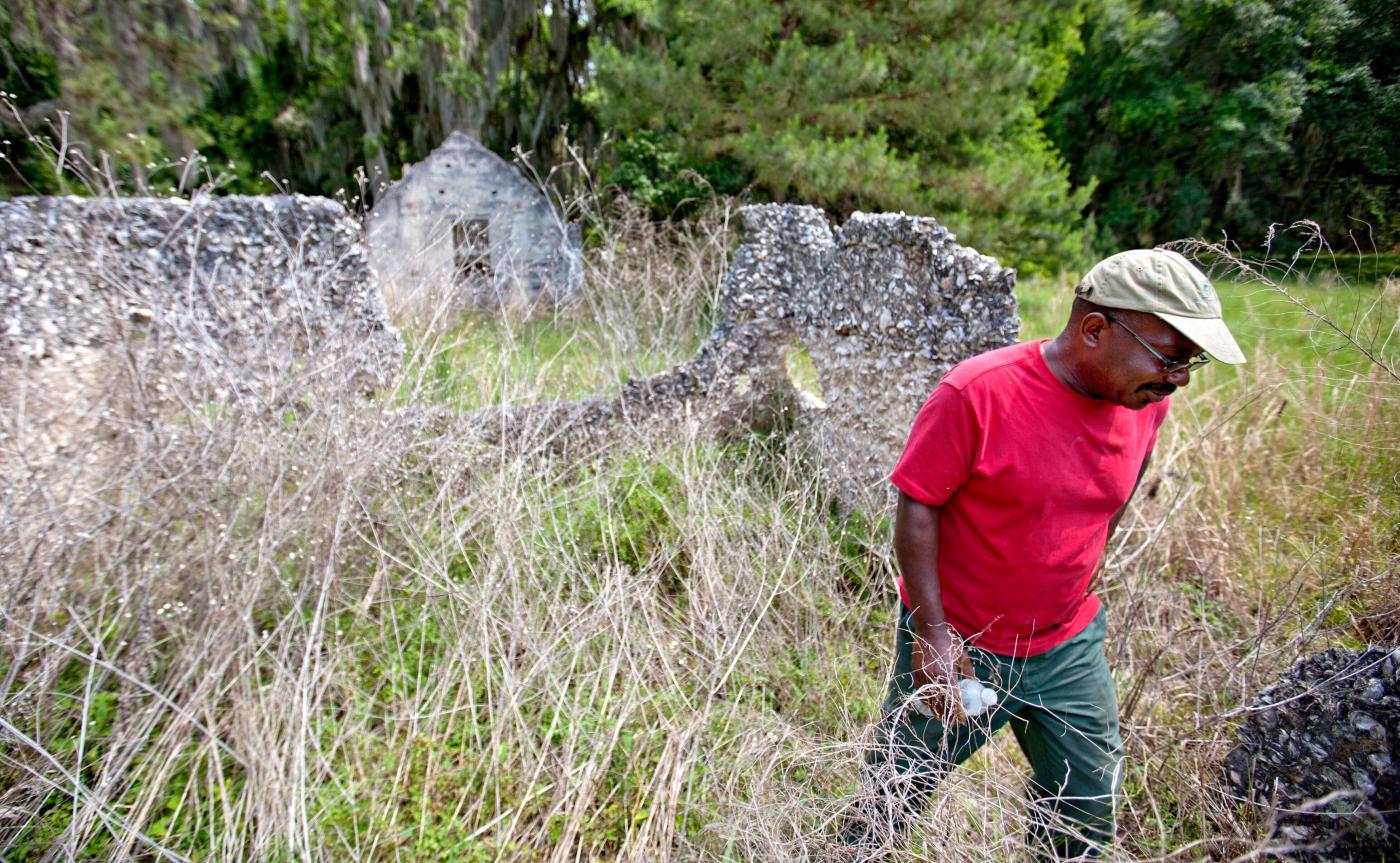
Hogg Hummock, also known as Hog Hammock, sits on less than a square mile. About 30 to 50 Black residents still live in modest homes along dirt roads in the community.

Gullah-Geechee communities are scattered along the Southeast coast from North Carolina to Florida, where they have endured since the Civil War ended. Scholars say separation from the mainland caused these communities to retain much of their African heritage, including a unique dialect.

Hogg Hummock earned a place in 1996 on the National Register of Historic Places, the official list of treasured U.S. historic sites. But for protections to preserve the community, residents depend on the local government in McIntosh County, where 65% of the 11,100 residents are white.

“People worked hard to get this land on Sapelo and they worked hard to preserve who they are,” said Maurice Bailey, an island native who runs a program aimed at boosting farming in the community. “Without this land, all of our descendants lose their connection.”

Dozens of the island’s Black landowners protested after being hit with sharp property tax increases in 2012, and county officials rolled back their tax bills. Island residents followed up with a lawsuit accusing McIntosh County of taxing them while providing minimal services. A 2022 settlement froze island property assessments through last year.

Island residents said they were blindsided in 2023 when commissioners moved swiftly to weaken a special zoning ordinance enacted three decades earlier to protect Hogg Hummock landowners from unaffordable tax increases.

Commissioners voted to increase the maximum size of homes in Hogg Hummock from 1,400 to 3,000 square feet (130 to 278 square meters). They said the changes would allow more living space for families and denied seeking to displace Black landowners.

Trump threats and Bukele model on crime back Latin American progressives into corner

posted in: All news | 0

By MEGAN JANETSKY

MEXICO CITY (AP) — Latin American progressive leaders are increasingly being backed into a corner on organized crime by pressure from the Trump administration and from their own voters, who point to the results from El Salvador president’s war on gangs.

Related Articles


Russia’s top diplomat says NATO faces a deep crisis over Greenland


Baby dies from cold in Gaza as leaders meet to discuss Trump’s Board of Peace


Despite Greenland, France’s Macron and NATO’s head make nice with Trump behind the scenes


Trump slams UK deal to hand over Chagos Islands after he previously backed it


Today in History: January 20, FBI orchestrates massive Mafia takedown

The hunger for a more heavy-handed response to endemic problems has been mounting for years in Latin America. El Salvador President Nayib Bukele’s punitive tactics launched against his country’s gangs in 2022, resulted in a sharp decline in homicides and soaring approval by Salvadorans.

Bukele not only touts the success at home, but has also looked to export his approach, winning fans among voters and conservative populists across the hemisphere, including U.S. President Donald Trump.

Over the past year, Trump has taken a more confrontational approach toward Latin America than any U.S. president in recent history. He’s declared a slew of Latin American criminal groups foreign terrorist organizations, deposed former Venezuela President Nicolás Maduro for trial on drug-trafficking charges, threatened military action on an array of countries and pointed to Bukele as an example of what he wants to see for the rest of the region.

That ratcheted up pressure on more progressive administrations in Mexico, Colombia and Guatemala that had pitched more holistic solutions to endemic problems, like rooting out corruption and offering youth economic opportunities.

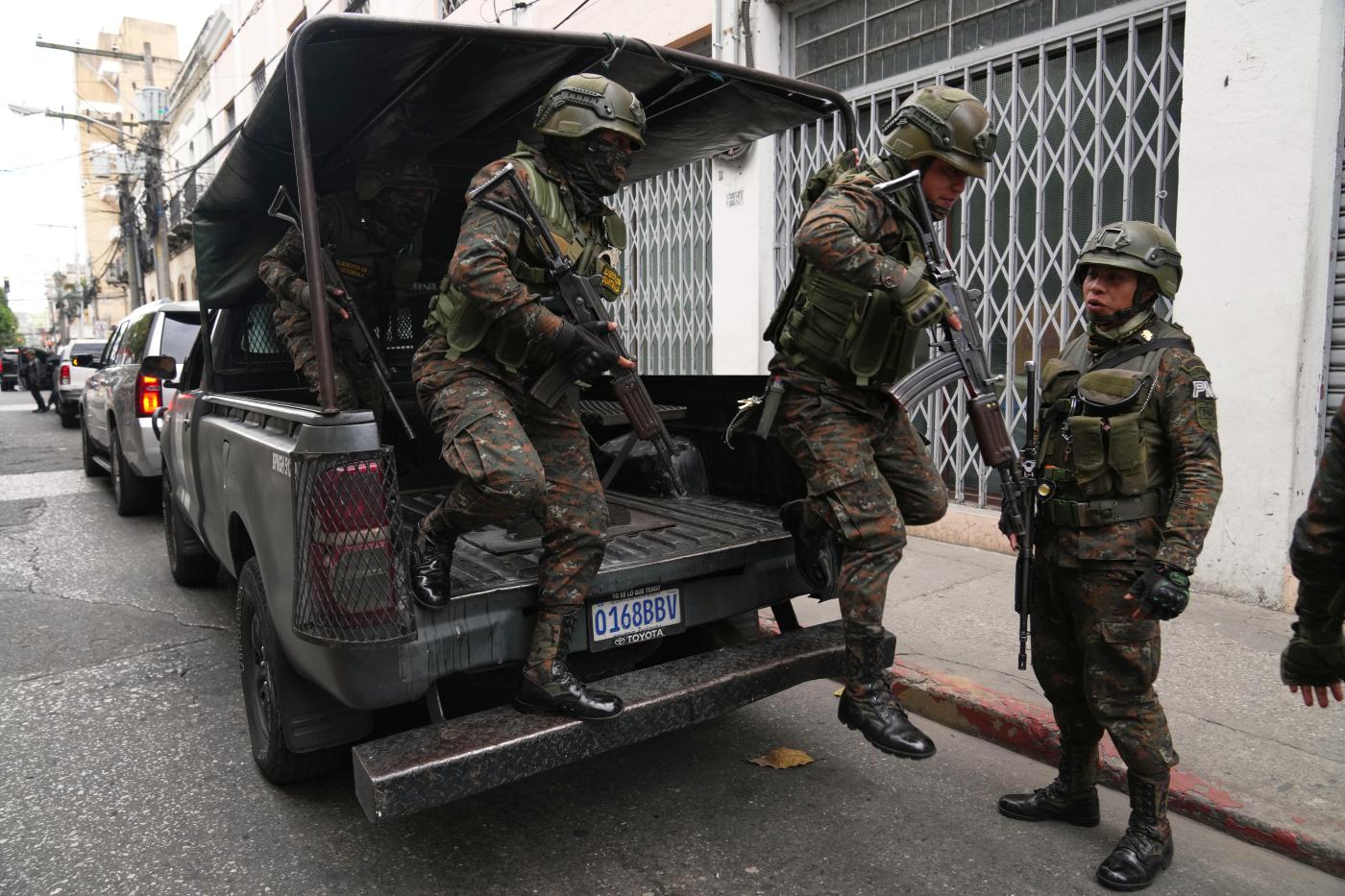
Guatemala President Bernardo Arévalo was the latest to feel that pressure when suspected gang members killed 10 police officers in apparent retaliation for the government denying privileges to imprisoned gang leaders. On Sunday evening, he declared a state of emergency curtailing some constitutional rights.

“The mix of growing U.S. pressure and the rightward reference of Bukele that gives an answer to security issues has … forced governments to pragmatically balance their own principles with the growing requests for a crackdown,” said Tiziano Breda, a senior analyst for Latin America and the Caribbean for the conflict analysis group, ACLED.

Guatemala state of emergency may limit rights

Things came to a head in an eruption of violence in Guatemala over the weekend when inmates in prisons notoriously controlled by gangs rioted and took guards hostage. When authorities retook one prison, suspected gang members in the capital slayed 10 police officers.

Arévalo said the emergency would stay in place for 30 days to combat the gangs, which he described as “violent criminals who commit acts of terrorism.” The declaration can limit some constitutional rights like the freedoms of movement, gathering and protest, and was approved by Guatemala’s congress Monday night.

“We will spare no resources to punish, to pursue, to find those responsible for these crimes,” Arévalo said in a speech Monday at the funeral of the officers.

Arévalo’s move echoed actions taken by his neighbor Bukele in 2022. El Salvador’s state of emergency remains in place nearly four years later and more than 90,000 Salvadorans have been arrested under it, fueling accusations of human rights abuses. But the country recorded just 82 homicides in 2025, compared to 6,656 in 2015.

‘Projecting toughness’

Arévalo is just the latest leader in Latin America to take a page out of Bukele’s book, following in the footsteps of Ecuador, Honduras and Costa Rica, which just last week broke ground on a prison modeled after El Salvador’s infamous prison for alleged gang members.

But efforts to piggyback on Bukele’s political success have largely fallen flat even as the region experiences a rightward political shift. That is in part because many leaders are hesitant to go as far as Bukele, who has detained more than 1% of his country’s population and is regularly criticized for what civil society groups describe as authoritarian tendencies.

When Arévalo was elected in 2023, the son of a former progressive president said bolstering legal institutions, including legislative reforms and rooting out corruption, was a solution to endemic gang violence, straying from competitors who called for a more Bukele-esque approach.

The Guatemalan president also proposed boosting security and building a maximum security prison, but the state of emergency marks an escalation. Arévalo said in a Jan. 15 interview with the Associated Press that combating drug trafficking and organized crime is a shared interest with the U.S.

“A lot of it is political theater and taking strong measures, but from there to actually being effective and actually delivering is the challenge,” said Michael Shifter, a senior fellow at the Washington-based Inter-American Dialogue. “Projecting toughness is a political winner.”

Leaders face political pressure

Breda, the ACLED analyst, attributed the shift both to Trump’s pressure and upcoming judicial elections in Guatemala, a decisive moment for Arévalo’s anti-corruption agenda.

In Mexico, under mounting threats by Trump, President Claudia Sheinbaum has gone after cartels far more aggressively than her predecessor, who instead pushed a policy known as “hugs, not bullets,” which sought to address poverty and the lack of opportunities as “root causes” of violence instead of directly confronting cartels.

In Colombia, President Gustavo Petro is facing a similar dilemma.

Petro, an ex-rebel, became Colombia’s first leftist leader in 2022 on a promise that he would consolidate “total peace” and unravel decades of conflict in the Andean nation. Namely, he aimed to reach peace agreements with a range of illegal armed groups and provide opportunities to youth.

But as peace talks have stalled with guerrillas from the National Liberation Army, known as the ELN, and other armed groups, Petro has failed to follow through on his bold agenda. Frustration toward Colombia’s left has simmered in much of the country in the months leading up to Colombia’s presidential elections.

At the same time, Trump has threatened military intervention in Colombia and accused Petro of being a drug trafficker, most recently days after a U.S. military operation in Venezuela that ousted Maduro. Trump had accused Maduro too of being a drug trafficker and now he awaits trial in U.S. federal court.

Under pressure from Trump and fed up Colombians, Petro has turned to the same entity he once sharply criticized: the Colombian military, said Elizabeth Dickinson, a Colombia analyst at the International Crisis Group.

Last week, in a forceful pivot from his hopeful campaign discourse, the leftist threatened a joint military action with Venezuela if the ELN did not enter a peace process with his government.

“It takes a very long time to mobilize action on these holistic ideas, and even longer for those holistic ideas to yield results,” Dickinson said. “What Bukele did, the reason it’s attractive across the region is that it appears to provide a fast and simple, straightforward solution to a very complex problem.”

Russia’s top diplomat says NATO faces a deep crisis over Greenland

posted in: All news | 0

By VLADIMIR ISACHENKOV, Associated Press

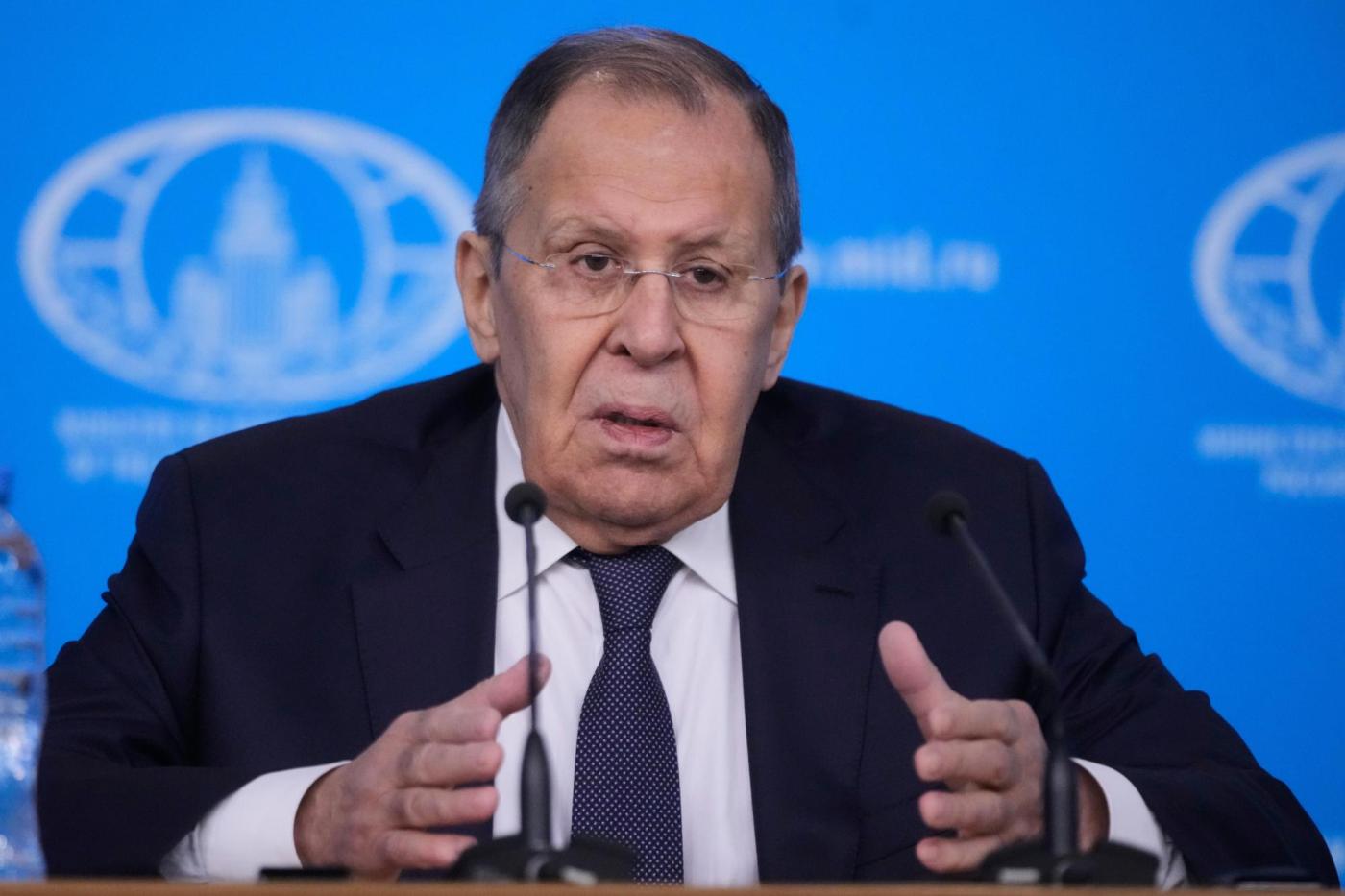
MOSCOW (AP) — The bid by U.S. President Donald Trump to take over Greenland heralds a “deep crisis” for NATO and raises questions about the alliance’s preservation as a single military-political bloc, Russia’s top diplomat said Tuesday.

Related Articles


Baby dies from cold in Gaza as leaders meet to discuss Trump’s Board of Peace


Despite Greenland, France’s Macron and NATO’s head make nice with Trump behind the scenes


Trump slams UK deal to hand over Chagos Islands after he previously backed it


Today in History: January 20, FBI orchestrates massive Mafia takedown


Hackers disrupt Iran state TV to support exiled crown prince as deaths from crackdown exceed 4,000

“It was hard to imagine before that such a thing could happen,” Foreign Minister Sergey Lavrov said at a news conference, noting it could create a scenario in which “one NATO member is going to attack another NATO member.”

He said Trump’s actions upended the Western concept of the “rule-based global order” that Russia has long criticized, even after Moscow sent troops into neighboring Ukraine nearly four years ago.

“Now it’s not the Collective West writing the rules but just one its representative,” Lavrov said sardonically. “It’s a major upheaval for Europe, and we are watching it. The Euro-Atlantic concept of ensuring security and cooperation has discredited itself.”

Denmark’s control over Greenland was a vestige of the colonial past, Lavrov claimed.

“In principle, Greenland isn’t a natural part of Denmark,” he added.

At the same time, Lavrov strongly denied Trump’s suggestions that Russia and China have any intentions to threaten the Arctic island.

“We have no relation to that,” he said. “We are certainly watching this serious geopolitical situation and will make our conclusions when it’s settled.”

Speaking at an annual news conference on Moscow’s foreign policy priorities, Lavrov also offered cautious approval of Trump’s initiative to set up a Board of Peace. The organization initially was seen as a mechanism focused on ending the Israel-Hamas war in Gaza but is taking shape with ambitions to have a far broader mandate of other global crises, potentially rivaling the United Nations.

The Kremlin said that it was studying Trump’s invitation to join the board and waiting to hear more details from Washington.

“This initiative reflects the U.S. understanding that even with the foreign policy philosophy it has it considers necessary to rally a group of nations that would cooperate with them,” Lavrov said.

He praised Trump’s initiatives to negotiate an end to fighting in Ukraine, describing the U.S. as the only Western country that has “expressed understanding of the need to take Russian interests into account and offered solutions taking into consideration the root causes of the crisis.”

At the same time, Lavrov scolded Kyiv’s European allies for trying to amend the U.S. proposals as the Ukrainian army facing a relentless Russian onslaught.

The top Russian diplomat argued that while the initial Trump’s proposal that was accepted by President Vladimir Putin at their summit in Alaska envisioned protections for Russian speakers in Ukraine and Moscow-affiliated Ukrainian Orthodox Church, it was removed from the plan’s latest version proposed by Kyiv and its European allies.

Moscow wouldn’t accept such changes, he said.

“We won’t allow the luxury of once again letting the Kyiv regime to take a break and rearm,” Lavrov said.

He noted that while Moscow doesn’t rule out contacts with European leaders, “most likely, we won’t be able to agree with them on anything as they drove themselves too deeply into hating Russia.”

But Lavrov also criticized the U.S. for its capture of Venezuelan leader Nicolás Maduro, and his transfer to the U.S. to face drug trafficking charges in the U.S., calling it a “crude military intervention.” He said Moscow is still waiting for the U.S. to make good on a promise to release two Russian crewmembers from a Russia-flagged tanker seized by the U.S. earlier this month, and he also noted U.S. threats to Cuba and other Latin American nations.

Lavrov noted Washington’s refusal to accept Putin’s proposal to respect the limits on nuclear weapons set by the New START arms control treaty for another year after it expires next month.

Russia is ready to continue dialogue with the U.S. on the basis of mutual respect for national interests, Lavrov said. He said that during U.S.-Russian talks in Riyadh in February, U.S. Secretary of State Marco Rubio emphasized the need for cooperation where their interests allow it and prevent disagreements from growing into a confrontation.

“I responded that I fully share this philosophy and logic,” Lavrov said.