How lawmakers in Texas and Florida undermine COVID vaccination efforts

posted in: News | 0

Amy Maxmen | KFF Health News (TNS)

Katherine Wells wants to urge her Lubbock, Texas, community to get vaccinated against COVID-19. “That could really save people from severe illness,” said Wells, the city’s public health director.

But she can’t.

rule added to Texas’ budget that went into effect Sept. 1 forbids health departments and other organizations funded by the state government to advertise, recommend, or even list COVID vaccines alone. “Clinics may inform patients that COVID-19 vaccinations are available,” the rule allows, “if it is not being singled out from other vaccines.”

Texas isn’t the only state curtailing the public conversation about COVID vaccines. Tennessee’s health department homepage, for example, features the flu, vaping, and cancer screening but leaves out COVID and COVID vaccines. Florida is an extreme case, where the health department has issued guidance against COVID vaccines that runs counter to scientific studies and advice from the Centers for Disease Control and Prevention.

Notably, the shift in health information trails rhetoric from primarily Republican politicians who have reversed their positions on COVID vaccines. Fierce opposition to measures like masking and business closures early in the pandemic fueled a mistrust of the CDC and other scientific institutions and often falls along party lines: Last month, a KFF poll found that 84% of Democrats said they were confident in the safety of COVID vaccines, compared with 36% of Republicans. It’s a dramatic drop from 2021, when two-thirds of Republicans were vaccinated.

As new vaccines roll out ahead of the expected winter surge of COVID, some health officials are treading carefully to avoid blowback from the public and policymakers. So far, vaccine uptake is low, with less than 5% of Americans receiving an updated shot, according to the Department of Health and Human Services. Wells fears the consequences will be dire: “We will see a huge disparity in health outcomes because of changes in language.”

study published in July found that Republicans and Democrats in Ohio and Florida died at roughly similar rates before COVID vaccines emerged, but a disparity between parties grew once the first vaccines were widely available in 2021 and uptake diverged. By year’s end, Republicans had a 43% higher rate of excess deaths than Democrats.

Public health initiatives have long been divisive — water fluoridation, needle exchanges, and universal health care, to name a few. But the pandemic turned up the volume to painful levels, public health officials say. More than 500 left their jobs under duress in 2020 and 2021, and legislators in at least 26 states passed laws to prevent public officials from setting health policies. Republican Arkansas state Sen. Trent Garner told KFF Health News in 2021, “It’s time to take the power away from the so-called experts.”

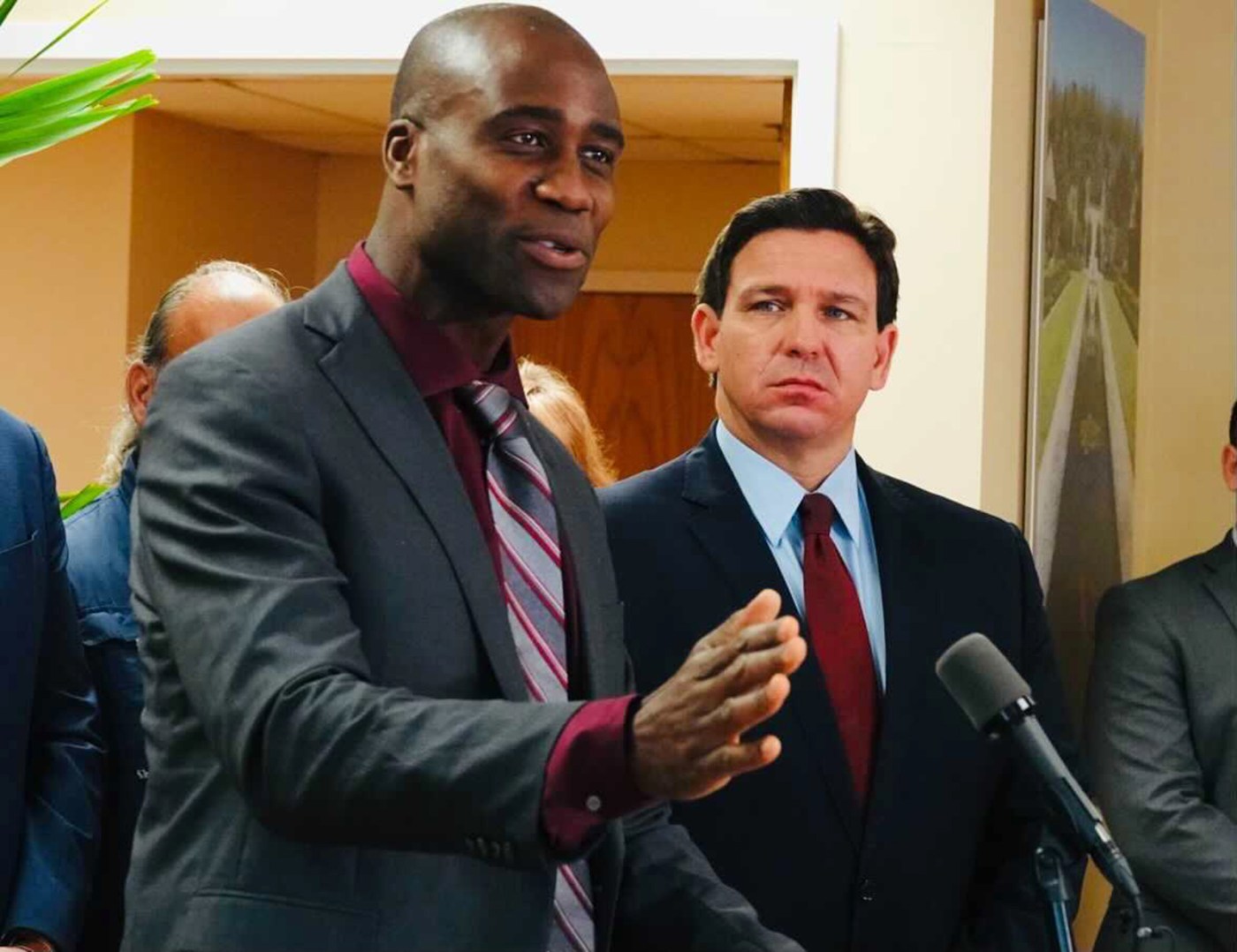
At first, vaccine mandates were contentious but the shots themselves were not. Scott Rivkees, Florida’s former surgeon general, now at Brown University, traces the shift to the months after Joe Biden was elected president. Though Florida Gov. Ron DeSantis initially promoted COVID vaccination, his stance changed as resistance to COVID measures became central to his presidential campaign. In late 2021, he appointed Joseph Ladapo surgeon general. By then, Ladapo had penned Wall Street Journal op-eds skeptical of mainstream medical advice, such as one asking, “Are COVID Vaccines Riskier Than Advertised?”

As bivalent boosters rolled out last year, the Florida health department’s homepage removed information on COVID vaccines. In its place were rules against mandates and details on how to obtain vaccine exemptions. Then, early this year, the department advised against vaccinating children and teens.

The state’s advice changed once more when the CDC recommended updated COVID vaccines in September. DeSantis incorrectly said the vaccines had “not been proven to be safe or effective.” And the health department amended its guidance to say men under age 40 should not be vaccinated because the department had conducted research and deemed the risk of heart complications like myocarditis unacceptable. It refers to a short, authorless document posted online rather than in a scientific journal where it would have been vetted for accuracy. The report uses an unusual method to analyze health records of vaccinated Floridians. Citing serious flaws, most other researchers call it misinformation.

Scientifically vetted studies, and the CDC’s own review, contradict Florida’s conclusion against vaccination. Cases of myocarditis following mRNA vaccines have occurred but are much less frequent than cases triggered by COVID. The risk is sevenfold higher from the disease than from mRNA vaccines, according to an analysis published in a medical journal based on a review of 22 other studies.

Since leaving his post, Rivkees has been stunned to see the state health department subsumed by political meddling.

About 28,700 children and adults from birth to age 39 have died of COVID in the United States. Florida’s anti-vaccine messaging affects people of all ages, Rivkees added, not just those who are younger.

He points out that Florida performed well compared with other states in 2020 and 2021, ranking 38th in COVID deaths per capita despite a large population of older adults. Now it has the sixth-highest rate of COVID deaths in the country.

“There is no question that the rise of misinformation and the politicization of the response has taken a toll on public health,” he said.

As in Florida, the Texas health department initially promoted COVID vaccines, warning that Texans who weren’t vaccinated were about 20 times as likely to suffer a COVID-associated death. Such sentiments faded last year, as state leaders passed policies to block vaccine mandates and other public health measures. The latest is a prohibition against the use of government funds to promote COVID vaccines. Uptake in Texas is already low, with fewer than 4% of residents getting the bivalent booster that rolled out last year.

At Lubbock’s health department, Wells managed to put out a press release saying the city offers COVID vaccines but stopped short of recommending them. “We aren’t able to do as big a push as other states,” she said.

Some health officials are altering their recommendations, given the current climate. Janet Hamilton, executive director at the Council of State and Territorial Epidemiologists, said clear-cut advice to get vaccinated against COVID works when people trust the scientific establishment, but it risks driving others away from all vaccines. “It’s important for public health to meet people where they are,” Hamilton said.

Missouri’s health department took this tack on X, formerly known as Twitter: “COVID vaccines will be available in Missouri soon, if you’re in to that sort of thing. If not, just keep scrolling!”

___

(KFF Health News, formerly known as Kaiser Health News (KHN), is a national newsroom that produces in-depth journalism about health issues and is one of the core operating programs of KFF — the independent source for health policy research, polling and journalism.)

©2023 KFF Health News. Distributed by Tribune Content Agency, LLC.
Orioles arbitration FAQ: What you need to know about Baltimore’s first big offseason decisions

posted in: News | 0

The first big decisions of the Orioles’ offseason are approaching.

Baltimore had no contract options to sort out. None of its five free agents were going to receive the $20.325 million qualifying offer. The club has hardly any top prospects who need to be protected from the Rule 5 draft. So, the arbitration tender deadline Friday marks the first significant offseason benchmark for the Orioles’ roster.

Here’s what you need to know.

What is arbitration?

Arbitration is a system that provides pay raises to players who have established themselves as big leaguers but haven’t yet spent enough time in the majors to become free agents.

Players who have at least three years of MLB service time but fewer than the six necessary to become a free agent are eligible, as long as they don’t already have a set salary through a guaranteed contract. A year of service time is equivalent to 172 regular-season days spent on the major league roster or injured list. A player can earn no more than one year of service time in a given season, even if they are active for more than 172 days.

A portion of players with between two and three years are also eligible, with the top 22% of that group by service time receiving “Super Two” status. These players don’t become free agents any sooner, but they receive four years of arbitration eligibility instead of the typical three, which results in higher career earnings before they reach free agency. This year’s Super Two cutoff is two years and 118 days of service time, according to the Associated Press.

How does the process work?

Before Friday’s deadline, teams will decide whether to tender contracts to their arbitration-eligible players. Any players who are non-tendered become free agents. Players are typically non-tendered because the salary they would likely receive through arbitration exceeds the salary the club is willing to pay them, and the sides weren’t able to agree on a lower figure ahead of the deadline.

Teams and tendered players can continue negotiating contract terms after the initial deadline. If they haven’t come to an agreement by Jan. 12, the sides will then each suggest a potential 2024 salary for that player.

If the team and the player remain unable to agree to terms, a panel of arbitrators will pick either the team’s or the player’s suggested salary — and no other possible value — after a hearing, which will take place in late January or early February.

Which Orioles are arbitration-eligible?

The Orioles will have 16 players who are eligible for arbitration, which MLB Trade Rumors estimates as tied for the second-largest group of any team. It’s a tally executive vice president and general manager Mike Elias called “an earmark of having a good roster these days” at the end of the season.

Outfielder Anthony Santander and left-handers John Means and Danny Coulombe are in their final year of eligibility before becoming free agents; Santander is 10 days shy of already having six years of service time. Outfielders Cedric Mullins and Austin Hays, first baseman Ryan O’Hearn, shortstop Jorge Mateo and reliever Dillon Tate have between four and five years of service time.

First baseman Ryan Mountcastle, infielder Ramón Urías, right-hander Jacob Webb, and left-handers Cionel Pérez, Cole Irvin and Keegan Akin all reached three years of service time in 2023 and are arbitration-eligible for the first time. Joining them are outfielder Ryan McKenna and right-handers Tyler Wells, who are eligible as Super Twos. Right-hander Dean Kremer came six days of service short of Super Two eligibility.

How much will they earn?

If the 16 eligible Orioles are all tendered contracts, they would receive more than $50 million collectively, based on projections from MLB Trade Rumors, Cot’s Baseball Contracts and Spotrac. That total represents almost double what that group earned in 2023.

About a quarter of that $50 million is expected to go to Santander, a switch-hitter who led Baltimore in home runs each of the past two seasons. The three forecasts’ average projection for Santander’s 2024 salary is $12.8 million; he earned $7.4 million in 2023.

Mullins ($6.2 million), Hays ($5.8 million) and Means ($5.6 million) have the next highest average projections. Mountcastle is projected for the largest salary of Baltimore’s first-time recipients at $3.9 million, a significant raise after he made about $740,000 in 2023.

The remaining members of what would currently be the Orioles’ season-opening roster are projected to make about $10 million combined in 2024, according to Spotrac. That total will likely increase should Baltimore make trades and free-agent signings.

Who could get non-tendered?

Some of these decisions could come down to next week’s deadline, with the possibility some players agree to lesser deals beforehand to avoid being non-tendered. The majority of the Orioles’ eligible players will be tendered contracts, though there are a handful of decisions to be made.

It’s difficult to imagine Baltimore parting with Santander in this fashion, though it’s worth noting his projected salary would be the largest Elias has given out in his five years running the club.

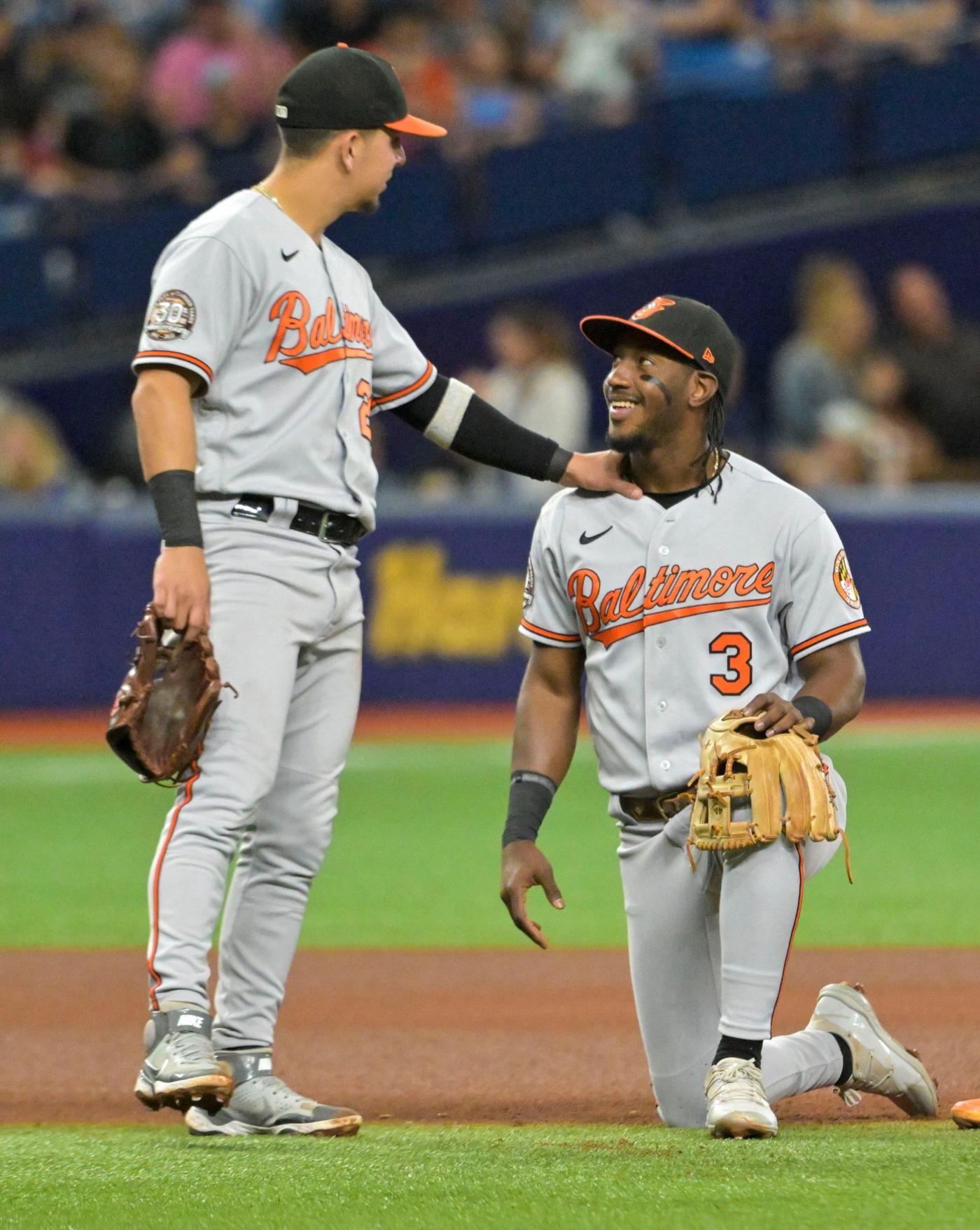
Mateo and Urías are both projected to make between $2 million and $3 million in 2024. Both are right-handed-hitting infielders who ended this season in part-time roles, with the pair effectively splitting a platoon. Each excelled defensively in 2022 but took a step back in 2023, while their offensive contributions were below average. With top overall prospect Jackson Holliday set to join Gunnar Henderson and Jordan Westburg in the majors — and prospects Joey Ortiz, Coby Mayo and Connor Norby also in the mix for big league time at some point next season — it’s possible there isn’t room for Mateo, Urías or both.

Tate and Akin each ended the season on the 60-day injured list but have played key roles in Baltimore’s bullpen in recent years. Tate, who missed all of 2023 with an elbow injury, led the Orioles in games pitched in both 2021 and 2022. He made $1.5 million in 2023 and likely would receive a similar figure for next season. Akin had a 3.20 ERA in 2022 and a 3.66 mark through his first 20 appearances of 2023, then gave up 13 runs while recording 12 outs in his final four outings before going on the IL with a lower back injury. At $850,000, Akin has the lowest average projected salary of Baltimore’s arbitration-eligible players.

McKenna’s eligibility could put him at risk, though he’s not projected to make much above the league minimum. With Aaron Hicks entering free agency, the Orioles have a need for a right-handed hitter who can play all three outfield spots, a mold McKenna fits. But he’s mainly been an up-and-down defensive replacement in his career, and he’s out of minor league options, meaning the team would have to expose him to waivers to send him to Triple-A. If the Orioles don’t think they’ll have space for him come opening day, this would be a prudent move to make now.

()

3 takeaways from the Chicago Cubs at the GM meetings, including what rotation will look like after Marcus Stroman’s opt-out

posted in: News | 0

The annual MLB general managers meetings lay the groundwork for the rest of the offseason.

The Chicago Cubs’ unexpected hiring of manager Craig Counsell added a wrinkle to what should have been an otherwise normal beginning to free agency. But it didn’t change the mission this week for President Jed Hoyer and the Cubs front office: getting an early feel for the free-agent market and the trade landscape and meeting with agents, including Scott Boras.

As the Cubs prepare to formally introduce Counsell next week, here are three takeaways from the GM meetings.

1. Craig Counsell’s departure to a rival a surprise for Brewers GM.

Thirty-six hours after the Cubs named Counsell their manager, Brewers general manager Matt Arnold stated he was surprised by Counsell leaving for a division rival but still spoke highly of his friend.

“From our perspective, it’s always been about people, that’s something Craig and I talked about a lot after working together for eight years, and I think that’s really important for us to put people first,” Arnold said Wednesday. “In this situation, we put Craig first throughout the process, and I’m thrilled for him and his outcome. At the same time, we’re in a position where we have to put our best foot forward and we’re going to do exactly that.

“Everything that Craig has done, all the accolades he deserves. I certainly enjoyed our time together and I’ll always have good memories of working with Craig Counsell. But at the same time we’re going to be competing against each other, and it should be a lot of fun.”

Pat Murphy, Counsell’s bench coach in Milwaukee, is in a “very real” discussion for the Brewers manager opening, Arnold said. If he is not hired, Arnold wants to make sure the incoming manager brings on his own bench coach. That could create a path to Murphy joining Counsell as the Cubs work through who will be retained from David Ross’ staff.

Arnold would not discuss other names the Brewers are considering for the job, including whether their list includes Ross.

“If it ends up with Pat Murphy not being our manager, he will absolutely have a home here with the Brewers,” Arnold said.

Arnold did not close the door on letting members of the Brewers coaching staff follow Counsell to the Cubs, stating if it’s a good opportunity for someone, he would be open to having that discussion.

“Having come from the Tampa Bay Rays, there are a lot of places where you get raided when you have good people, and we’ve had that happen here in Milwaukee and that’s something we should be proud of,” Arnold said. “That speaks to our culture and the good people that we’ve produced here.”

2. Christopher Morel will get offseason work at first base.

One of the Cubs’ biggest internal roster questions centers on Morel’s positional future with the team.

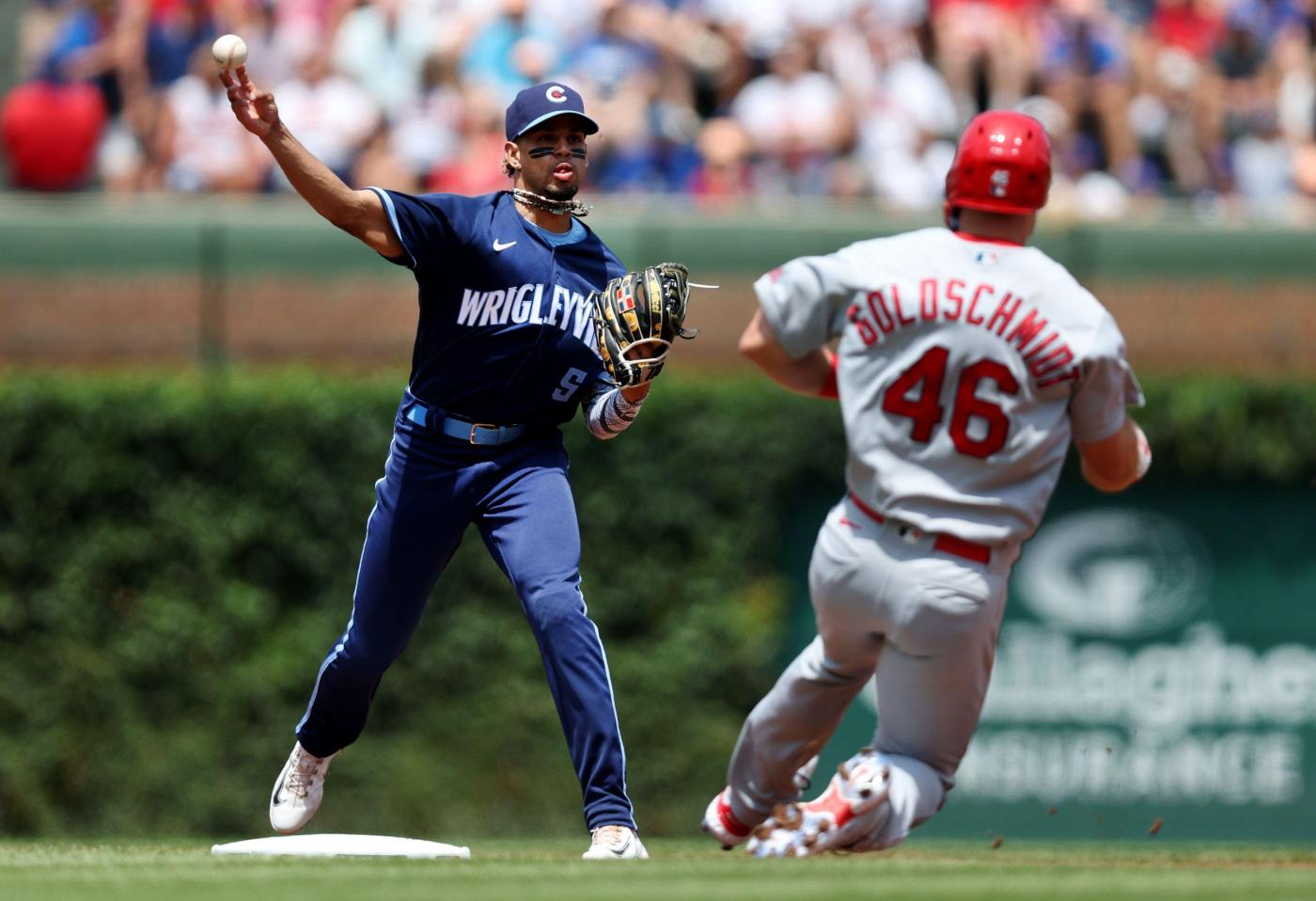
The Cubs have had ongoing conversations about his best fit and believe Morel, 24, would benefit from sticking at one position defensively rather than being used in a utility role. Ideally the right-handed Morel would play second base, where his athleticism and arm strength could shine, but that spot is locked down by Gold Glove award winner Nico Hoerner for at least the next three years. They have tried Morel at third base, where he logged a majority of his starts in the minors. He put in work pregame there, too, in his last two big-league seasons to complement his 17 starts at the hot corner for the Cubs, but inaccuracy with his throws has been a continuing issue.

It’s a balance between blending Morel’s strengths and skill set with the team’s personnel.

“He’s a very capable second baseman, (but) we have (Hoerner), so that’s not the spot we’re going to put him,” Hoyer said Wednesday. “Another team might be able to put him there and have him do that.”

With limited everyday options for a non-designated hitter role, the Cubs want Morel to get offseason work at first base in winter ball and see how he handles the position.

“Finding a home for him is something that would be really valuable,” Hoyer said. “(First base) fits our needs and potentially his needs. … With that position, too, you’ve got to put a lot of work in.

“The hard part about first base is that certainly it doesn’t require a lot of things that third base or second base do, but the footwork around the bag, understanding positioning can be really challenging, so that’s a big part of it.”

The Cubs do not have an obvious option within the organization at first base and used Cody Bellinger — now a free agent — more in the second half of the season. Lefty slugger Matt Mervis could get another look in spring training and show he learned from his first taste of the majors. Otherwise, their first baseman would need to come through a trade or free agency if they want a non-platoon setup — perhaps re-signing Bellinger, Jeimer Candelario or signing Rhys Hoskins. Candelario, though, preferred playing third base, which prompted former manager David Ross to instead use Patrick Wisdom at first when both were in the lineup.

There is no harm in seeing if Morel can handle first base in the offseason. He also represents a trade asset the Cubs can use to help acquire a better roster fit, namely a star player. Morel is not arbitration-eligible until after the 2025 season and boasts easy power, both attractive qualities to organizations.

3. After Marcus Stroman’s opt-out, Cubs will explore internal and external options for rotation opening.

Hoyer didn’t know which way right-hander Marcus Stroman was leaning in the leadup to his opt-out decision.

Hoyer had multiple lengthy conversations with Stroman’s agent, Brodie Van Wagenen, on Friday and Saturday about what the pitcher wanted to do by Monday’s deadline. Even at the moment Van Wagenen called to inform Hoyer of the decision, he was unsure whether Stroman would return for the remaining one-year and $21 million on his contract.

“I think he felt like in this market he’d secure a multiyear deal and I think that was a priority,” Hoyer said. “It’s not often when I truly didn’t know what direction that was going to go. That’s why we had a bunch of conversations because I think they were kind of feeling it out and thinking about it too.

“He was a very hard worker, really diligent with his preparation, really cares about winning. He wants to sort of do his own thing in terms of how he does his preparation and that’s great. We gave him that freedom because he deserves that and he always gets his work done. He’s always prepared. I thought it was a good match for us.”

Stroman’s departure opens a spot in the rotation, and Hoyer wants to give opportunities to pitchers within the organization, pointing to the depth they had this year. It’s a big-league group that featured right-handers Javier Assad and Hayden Wesneski and left-handers Jordan Wicks and Drew Smyly, plus arms at the upper levels in the minors that most notably include right-handers Ben Brown and Cade Horton.

“I do like the fact that we can give some young guys some opportunities,” Hoyer said.

But as Hoyer likes to preach: Teams never can have enough pitching. So expect the Cubs to explore the starting pitching market. The Cubs pitching staff needs more swing-and-miss stuff, which Hoyer said he would look to add.

“I still don’t feel like the stuff of our staff can still continue to ramp up,” Hoyer said. “It’s gotten better, but the stuff in the big leagues isn’t where our minor-league system is. We’ve got to continue to migrate that up and have more swing-and-miss.”

()

Instant analysis from Ravens’ 33-31 loss to Cleveland Browns

posted in: News | 0

Here’s what The Baltimore Sun sports staff had to say immediately after the Ravens’ 33-31 loss to the visiting Cleveland Browns in Sunday’s Week 10 game at M&T Bank Stadium.

Brian Wacker: The Ravens were on the verge of another blowout. Then their self-inflicted wounds set in, much the way they did against the Colts and Steelers earlier this season.

First there was Lamar Jackson’s interception at the Browns’ 37-yard line with under a minute to play in the first half. Jackson didn’t put enough on the throw, he said, and that halted any chance of the Ravens adding to their 17-3 lead. But the real dagger was his tipped pass to fullback Patrick Ricard in the fourth quarter that was returned for a touchdown by cornerback Greg Newsome II. Despite trailing by one, 31-30, after the missed extra point attempt, the Browns looked poised to climb all the way back.

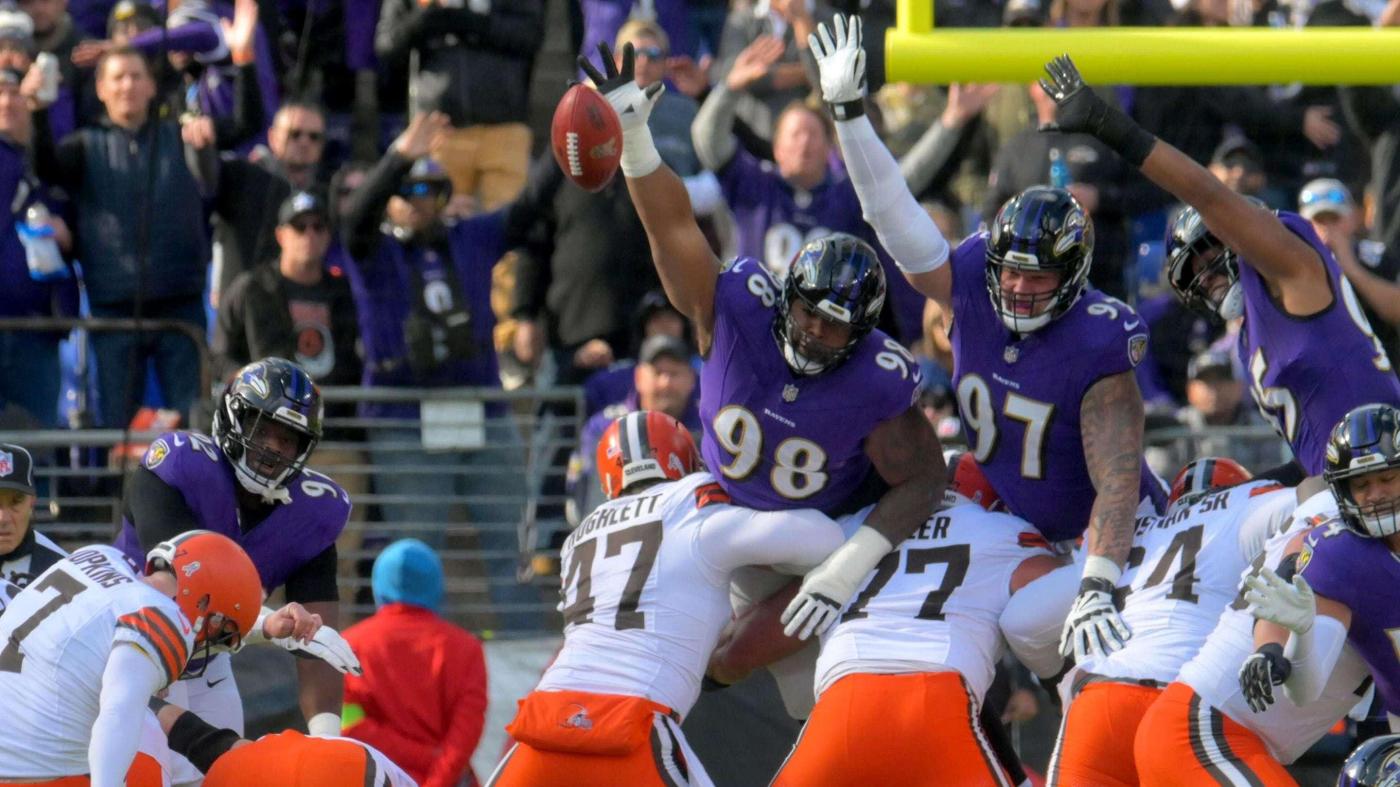
Another special teams snafu also proved costly, with Justin Tucker’s 55-yard field goal try with 2:27 left in the second quarter blocked. That gave the ball back to the Browns, who turned it into what turned out to be a critical three points.

There were other curious decisions, notably running back Keaton Mitchell getting just one touch in the second half after a 39-yard touchdown run and a 32-yard catch-and-run in the first half. Coach John Harbaugh said that’s just the way the game went and Mitchell said he’s not complaining about the lack of touches, but it was odd to go away from a player who has emerged as a significant weapon over the past two weeks.

Lastly, the Ravens have to find a way to close out games. Blowing leads of 24-9 and 31-17 in the second half is unacceptable, no matter what.

Mike Preston: This loss proved the Ravens can’t be trusted, not yet anyway. It’s way too early to conclude this team has reached its peak and it showed Sunday. The offense couldn’t find its rhythm and the defense couldn’t get off the field in the fourth quarter when the outcome was still in doubt. There is a lot of room for improvement and two months for this team to get better before the postseason.

Jacob Calvin Meyer: Nothing like a fourth-quarter collapse to really ruin a Sunday afternoon, eh? It appeared as if the Ravens were going to win their fifth straight game and improve to 8-2. Instead, it was another late collapse. For the third time this season, the Ravens have let what seemed like a sure win slip through their fingers. However, the last time Baltimore had a loss like this, it ripped off four straight wins. The Ravens have the opportunity to start another streak Thursday night against the Bengals.

C.J. Doon: A game that started out with so much promise thanks to Kyle Hamilton’s stunning pick-six ended with so much frustration. The injuries to cornerback Marlon Humphrey and left tackle Ronnie Stanley loom large, not just for a short week of preparation for the AFC North rival Cincinnati Bengals on “Thursday Night Football,” but the rest of the season. This Ravens team is aiming for the top seed in the conference and a trip to the Super Bowl, after all.

But Baltimore sure didn’t look like a title contender Sunday. How does this Ravens defense allow this Browns offense to score 24 of the game’s final 31 points? Deshaun Watson looked hobbled all game after suffering what appeared to be an ankle injury in the first quarter, and yet he might have outplayed Lamar Jackson. Watson even broke away from what looked like a sure tackle to help move the chains on the Browns’ final drive.

The Ravens have been so successful grinding down opponents with their running game to seal wins this season, which makes that pick-six on a batted ball with 8:16 to go so frustrating. Rookie sensation Keaton Mitchell also got just three carries — and just one touch in the second half — despite averaging 11.3 yards per attempt.

But what’s really shocking is the performance of a Ravens defense that couldn’t get off the field in the second half, allowing back-to-back 75-yard touchdown drives and a methodical 12-play, 58-yard march that set up Dustin Hopkins’ game-winning 40-yard field goal as time expired. If not for a muffed punt by former Ravens wideout James Proche early in the fourth quarter, it could have been even worse.

Tim Schwartz: Ah, the AFC North. It doesn’t seem to matter what the records are, these games are always a dogfight. A pick-six for each of the NFL’s best defenses? Check. Fumbles caused by massive defenders clamping down on quarterbacks? Check. Wild swings that nobody expected? Check. The Ravens letting another opponent back in the game in the second half? Check.

This was the Ravens of old (at least earlier this season, before they seemingly turned a corner and stopped playing down to opponents), and they will lament giving away a home game they seemed to have won in the first quarter. All they can do is move on quickly to prepare for Thursday night’s prime-time battle against a Bengals team that was stunned by the Texans on Sunday.

()